By Daniel Carter
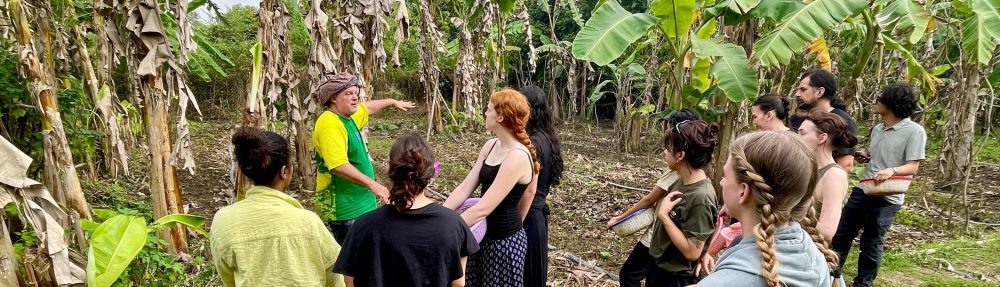
In a tranquil corner of Auroville, India, sits a small 5.5-acre haven on a mission of “Cultural Redemption.” Solitude Farm, an initiative quietly thriving since the 90s, is a testament to simplicity, inner reflection, and a profound connection with nature. Founded by Krishna McKenzie urges us to reevaluate our relationship with the source of our sustenance. “The most valuable thing we can learn is where our food comes from” he proclaims to the group of students from the American University of Paris visiting the farm community.

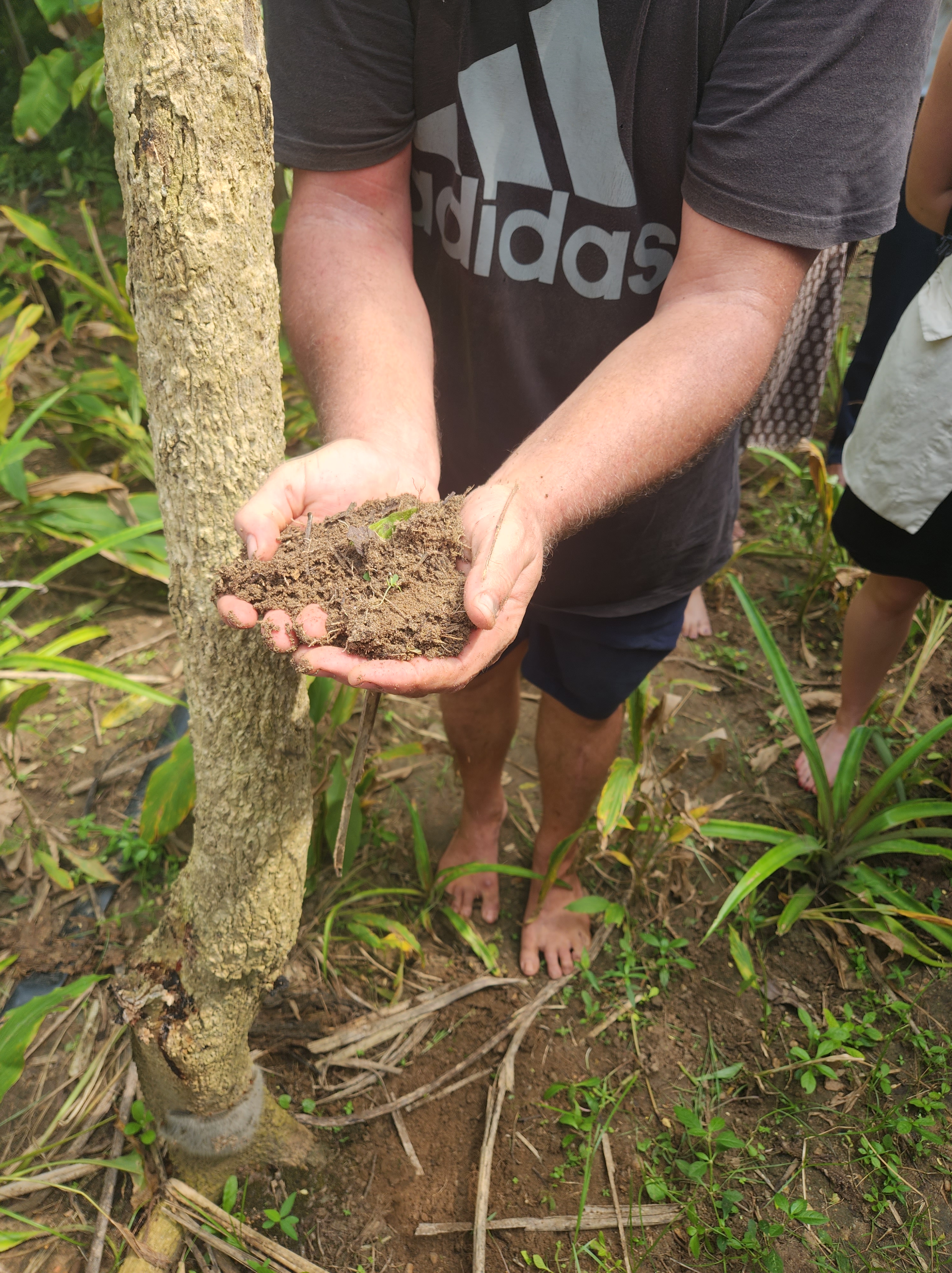
While walking barefoot (yes, barefoot!) through the farmland, Krishna expounds Solitude Farm’s philosophy, an appreciation for and relationship with the land. His belief is that our culture emanates from a people having a relationship with where their food comes from. This can be seen in strong cultural identities in the world that are strongly tied to the foods of their lands. For culture starts in the mind, which in turn, stems from the body, which gains nourishment from the food we consume, which at its root (pun intended) comes from the soil, which many cultures revered as divinity. Recognizing the intricate web of life and biodiversity it harbors, Krishna highlights the interconnectedness of soil, food, body, mind, and culture.
In a world preoccupied with competition and economic gain, Solitude Farm advocates for a return to the basics – understanding where our food comes from. In a society that has severed its ties with the roots of sustenance, the farm believes that culture is lost.
Their chosen method for this cultural renaissance is permaculture, a practice often referred to as “permanent farming.” Embracing the concept of “do nothing farming,” Solitude Farm believes in letting the land guide the way. The only currency here is time, and the land, when cared for, reciprocates abundantly, yielding a diverse range of plants like peppers, mangos, and bananas, each with unique and valuable health benefits.
An essential principle of Solitude Farm is the non-exclusivity of common foods. Here, the beggar and the king share the same nourishment, fostering a sense of equality and interconnectedness. This commitment extends to their environmental footprint – prioritizing local foods over global agricultural practices to combat climate change. As Krishna asserts, they are not merely planting a farm; they are cultivating a menu, a diverse and sustainable approach to living that echoes the renaissance of Auroville.
The primary technique employed by Solitude Farm is the return of organic matter to the soil – leaves, branches, and other natural remnants nourish the land, creating a sustainable ecosystem. The second technique emphasizes valuing the gifts of the land, encouraging the use of local resources. However, the farm acknowledges that this transformation is incomplete without the third technique – community.
Celebration, an integral part of permaculture at Solitude Farm, underscores the communal aspect of sustainable living. It’s a reminder that the journey towards cultural redemption cannot be solitary – it requires collective effort and shared experiences.
At Solitude Farm, contrary to its name, the world comes together, sharing a plate, a smile, and an idea for a better world. In the midst of global challenges, Solitude Farm stands as a beacon of hope, inviting us to reconsider our relationship with the land. It beckons us to rediscover our cultural roots by nurturing a profound connection with the land that sustains us.

 AUP Sustainable Development Practicum in Auroville, India