By Carolin Melz
Have you ever paused to consider where your food comes from? What about the food you eat at lunch – where was it grown, and does it contain any chemicals? How was it transported and stored? These are questions that Krishna McKenzie, the steward of Solitude Farm in Auroville, India, invites us to reflect on. In today’s industrialized world, food is often transported over vast distances and preserved to last longer than ever before. This has led to a loss of connection with the food we consume and the natural systems that sustain it.
At the heart of Solitude Farm’s philosophy is the belief that healthy plants begin with healthy soil. Industrial agriculture often depletes soil biodiversity, leaving it lifeless. At Solitude, however, organic matter is returned to the earth, creating a vibrant ecosystem of microorganisms, insects, earthworms, and fungi. Walking through the farm, you’ll notice dead plants left to decompose naturally, enriching the soil and fostering resilience. This approach nurtures fertility and enables over 100 plant species to thrive in harmony.

Guided by permaculture, Solitude Farm prioritizes sustainability and biodiversity. The focus is not on maximizing profits but on celebrating the nutritional, medicinal, cultural, and social significance of crops. Even plants often dismissed as weeds are cherished as superfoods.
McKenzie champions the cultivation of regional plants, which are naturally suited to the environment. These plants require less water, fewer resources, and eliminate the need for long-distance transport, making them accessible to all and promoting equality. By honoring local flora, the farm embodies resilience, sustainability, and the intrinsic value of nature.
1. Community Café: A space where meals highlight the social, nutritional, and ecological value of food.
2. Farm-to-Table Practices: On-site cultivation eliminates transportation and storage, preserving the produce’s full nutritional benefits while reducing the farm’s carbon footprint.
3. Community Celebrations: Festivals infused with music, art, and traditional foods foster creativity and strengthen social bonds.
Solitude Farm also highlights the medicinal properties of plants. The soursop tree, moringa, and green papaya are just a few examples of nature’s treasures, offering remedies for conditions such as cancer and gastrointestinal issues. McKenzie’s outreach programs encourage schools and colleges to embrace moringa as a daily staple, raising awareness of its antioxidant properties and cognitive benefits.
As McKenzie reminds us, the wisdom of Masanobu Fukuoka rings true:
“Food and medicine are not two different things: they are the front and back of one body. Chemically grown vegetables may be eaten for food, but they cannot be used as medicine.”
This philosophy underpins the farm’s practices, bridging the gap between nourishment and healing.
The broader implications of our food choices are undeniable. The food system contributes between 25–34% of global greenhouse gas emissions, alongside other detrimental environmental impacts, including biodiversity loss and soil acidification. Shockingly, approximately 30% of produced food is lost or wasted globally. This encompasses postharvest losses, processing and distribution inefficiencies, and wastage at the consumer level (Sadiq 1). These figures highlight the urgency of adopting sustainable practices, like those championed at Solitude Farm, to mitigate environmental degradation and reduce waste.
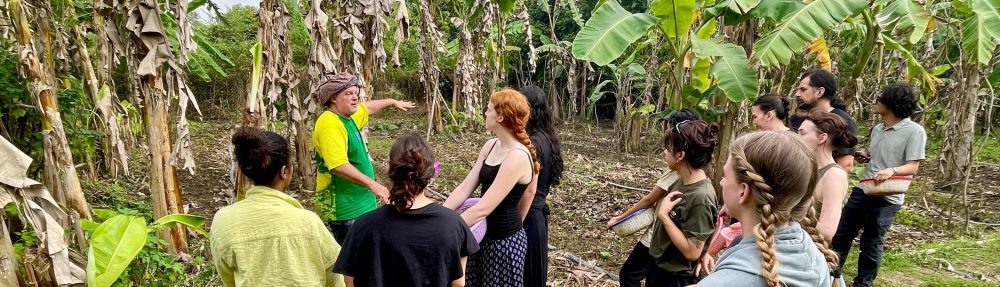
Visitors to Solitude Farm experience firsthand the joys of farm-to-table living. With baskets in hand, we harvested cucumbers, spinach, berries, and leaves, which we transformed into a colorful, nutrient-rich salad with turmeric, lemon zest, coconut, and a nut-based dressing. The shared preparation of the meal fostered group bonding and cherishing for the process :).


McKenzie’s nature demonstrations further inspire wonder, such as showing how hibiscus leaves change color when mixed with lemon juice, revealing the beauty and chemistry of nature.
The message of Solitude Farm is clear: our food choices profoundly affect our health, community, and the planet. Industrial agriculture fuels climate change, degrades soil, and strains society. By embracing locally grown, biodiverse food, we nurture ourselves and contribute to a healthier, more sustainable world.
This invites reflection: What are we truly eating? Is our food medicine or merely a processed substitute? How can we integrate superfoods and healthier options into our daily lives to align with nature and promote the well-being of both humanity and the planet?
Works Cited:
“The Journey.” Krishna McKenzie, krishnamckenzie.com/. Accessed 6 Jan. 2025.
Sadiq, Muhammad Bilal, et al. “Editorial: Nutrition and Sustainable Development Goal 12: Responsible Consumption.” Frontiers in Nutrition, U.S. National Library of Medicine, 22 Mar. 2024, pmc.ncbi.nlm.nih.gov/articles/PMC10996280/.
 AUP Sustainable Development Practicum in Auroville, India