By: Sachi Hauser
India faces significant challenges in waste management, especially in rural areas. While urban centers have made strides with compactor trucks and green community waste bins, rural areas often lack any form of systematic waste collection. The issue stems from a combination of inadequately used funding, poor implementation, and political inefficiencies. Politicians sometimes trade jobs as garbage workers for votes, but many of these workers are unmotivated and fail to show up. As a result, most rural communities are left to manage their waste independently.
The Waste Problem
Waste in India is generally separated into three categories: dry, compostable, and toxic. Despite this classification, waste is often dumped openly, creating environmental and health hazards. Toxic waste, including medical waste, is particularly concerning as it poses significant risks to communities. Compounding this issue, the lack of public awareness and education leads to poor waste segregation and disposal practices.
The Founding of Wasteless
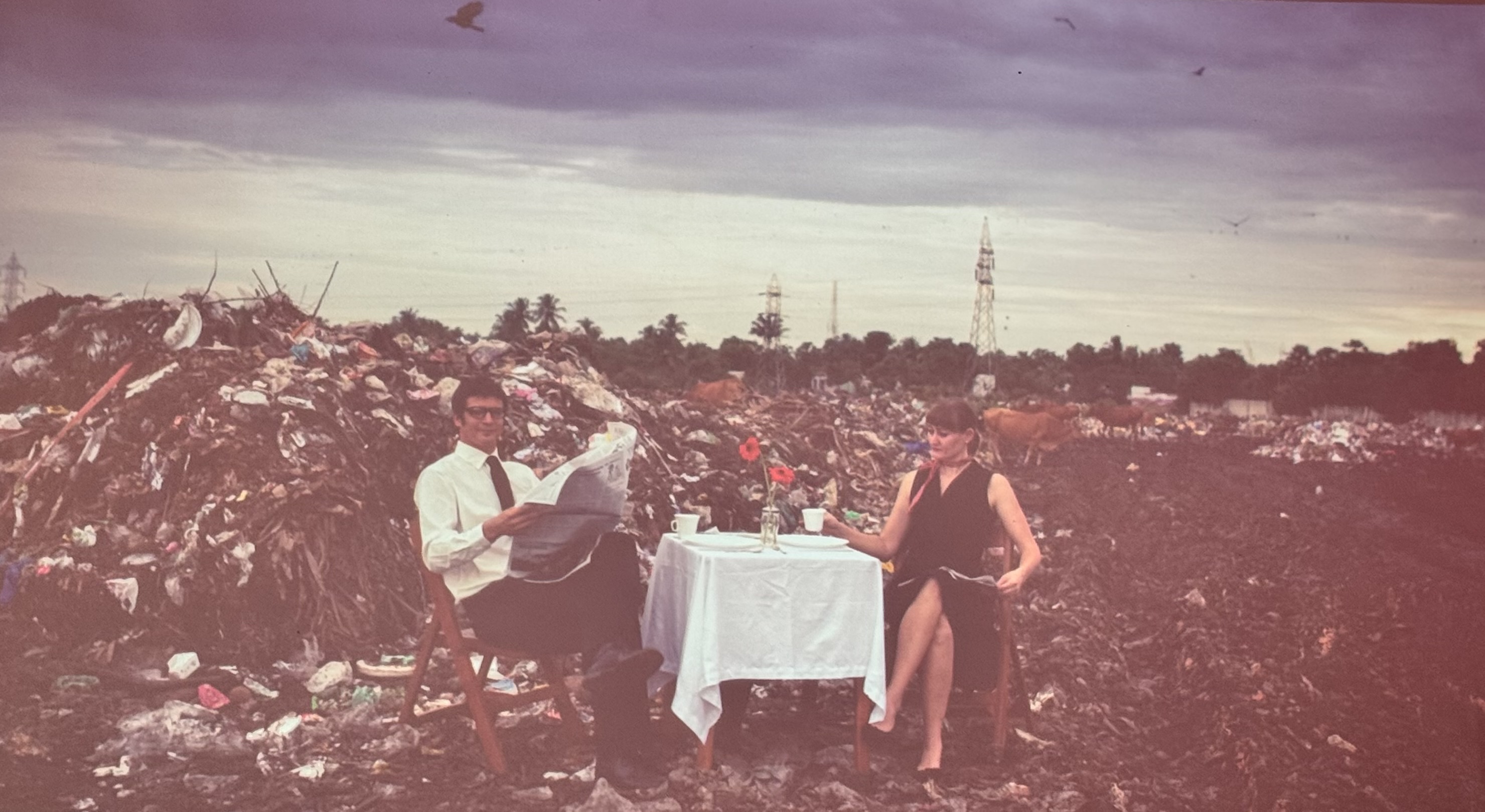
Wasteless, an organization dedicated to waste education and reduction, was born out of necessity. One summer, Auroville residents suffered from suffocating smoke caused by widespread fires, spurring action. The organization began with innovative outreach efforts, including a “trashion show” where teenagers modeled fashion made from trash, as well as using shock photography to highlight the scale of the problem. While these efforts caught attention, Wasteless found that engaging children was the most effective way to inspire change.

Background on Wasteless
Founded in Auroville, Tamil Nadu, Wasteless is a non-profit organization committed to transforming waste management practices through education. The team is comprised of environmental scientists, educators, and community leaders who believe in the power of education to drive change. Wasteless aims to instill lifelong habits by focusing on children to inspire the next generation to take responsibility for their environment.
The organization works closely with schools, governments, and communities to design engaging programs that simplify complex issues like waste segregation, recycling, and the impact of plastics. Their mission aligns with several United Nations Sustainable Development Goals (SDGs), including:
- Goal 12: Responsible Consumption and Production — Promoting sustainable practices and reducing waste generation through education.
- Goal 13: Climate Action — Raising awareness about the environmental impact of improper waste management and advocating for climate-friendly solutions.
- Goal 14: Life Below Water — Addressing plastic pollution in oceans and its effects on marine ecosystems.
- Goal 17: Partnerships for the Goals — Collaborating with global organizations to strengthen efforts toward sustainable development.
Educating Through Innovation
Wasteless focuses on bridging science and education to create awareness without instilling fear. They collaborate with schools and develop creative tools, such as a memory game that teaches children about toxic chemicals, and using mnemonics like the song “3,6,7 numbers beware toxic chemicals hiding in there.” Through focus groups, they learned that children often lack an understanding of plastics, viewing them as uniform materials. By teaching them to identify plastics using the seven resin codes, Wasteless empowers students to make informed decisions.
Key insights include:
- Plastic Types and Risks: Certain plastics, like polystyrene (resin code 6), contain styrene, a known carcinogen. Plastics with code 7, including polycarbonate, often contain hormone-disrupting additives like BPA, BPS, or BPF.
- Recycling Challenges: Recycling requires sorting plastics by resin type and color. Mixing colors necessitates the addition of dark pigments, complicating the process.
- Misleading Symbols: The recycling symbol can be deceptive, leading to confusion about what is recyclable.

Addressing Plastic Pollution
Plastic pollution extends beyond landfills to oceans. A National Geographic-funded project revealed how plastics break down into microplastics that are often mistaken by fish for food due to algae films that mimic the appearance and smell of plankton. Experiments demonstrated how microplastics enter the food chain, with humans consuming an estimated four credit cards’ worth (28 grams) of microplastics each month through food and water. Alarmingly, microplastics have been detected in almost all breast milk, amniotic fluid, and prostates during medical examinations.
Wasteless raises awareness through interactive activities like a tag game where participants distinguish between food and microplastics. These hands-on experiences spark curiosity and foster understanding without relying on fear tactics.

A Global Perspective
India’s waste problem reflects a broader global crisis. Plastic production continues to outpace solutions for its management. Movements like the “Break Free from Plastic” campaign and international agreements like the UN’s Sustainable Development Goal 17, in addition to Wasteless, emphasize the need for collective action. However, significant work remains to curb plastic production and address its environmental impact.
The Path Forward
Wasteless demonstrates that education and community engagement can drive meaningful change. The organization creates a ripple effect of awareness by focusing on children, fostering curiosity, and providing actionable knowledge. India’s waste management challenges require scalable solutions, political will, and widespread education to ensure a cleaner, healthier future for all.
 AUP Sustainable Development Practicum in Auroville, India