By Ava Goldfarb

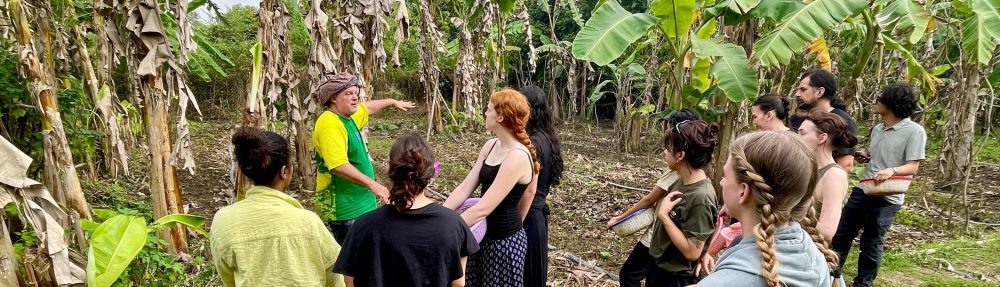
(Image from the first school we visited)
After spending the majority of my month in Auroville working with Pitchandikulam Forrest alongside a fellow AUP student, we got to go with the organization to visit two schools in villages outside of Auroville that incorporate practices from eco-manuals we got to help Pitchandikulam with. These eco manuals incorporate sustainable practices into daily lessons for elementary school children in Tamil Nadu.
While working with the Pitchandikulam organization throughout our time in Auroville, we spent a lot of our time learning about ‘Blue-Green Corners’ and their benefits. Pitchandikulams mission is identifying local government schools in the bioregion that are interested in implementing sustainable practices, helping them become modern eco-sustainable schools through integral education. Through providing information and lesson plans these schools are able to sustain organic vegetable gardens and slowly impact the cleanliness, vegetation, and sustainability of their respective villages, helping to create Blue-Green corners.

(Image of the second school we got to visit)
While speaking with a few of the children at the school, one younger student wanted to show us her “green refrigerator” project she created (part of an eco-mannual lesson plan). This was one large clay pot with a smaller pot inside of it surrounded by sand that they wet every 2 days to maintain cool internal temperatures. This form of refrigeration keeps its contents fresh for up to 14 days without the use of electricity. Incorporating this practice not only stores food in an eco-friendly way, but also helps limit the amount of food waste. This is one example of many ways the Pitchandikulam lesson plans teach and promote green learning and practices. The children also learn about composting and other ways to reduce their impact on the environment.
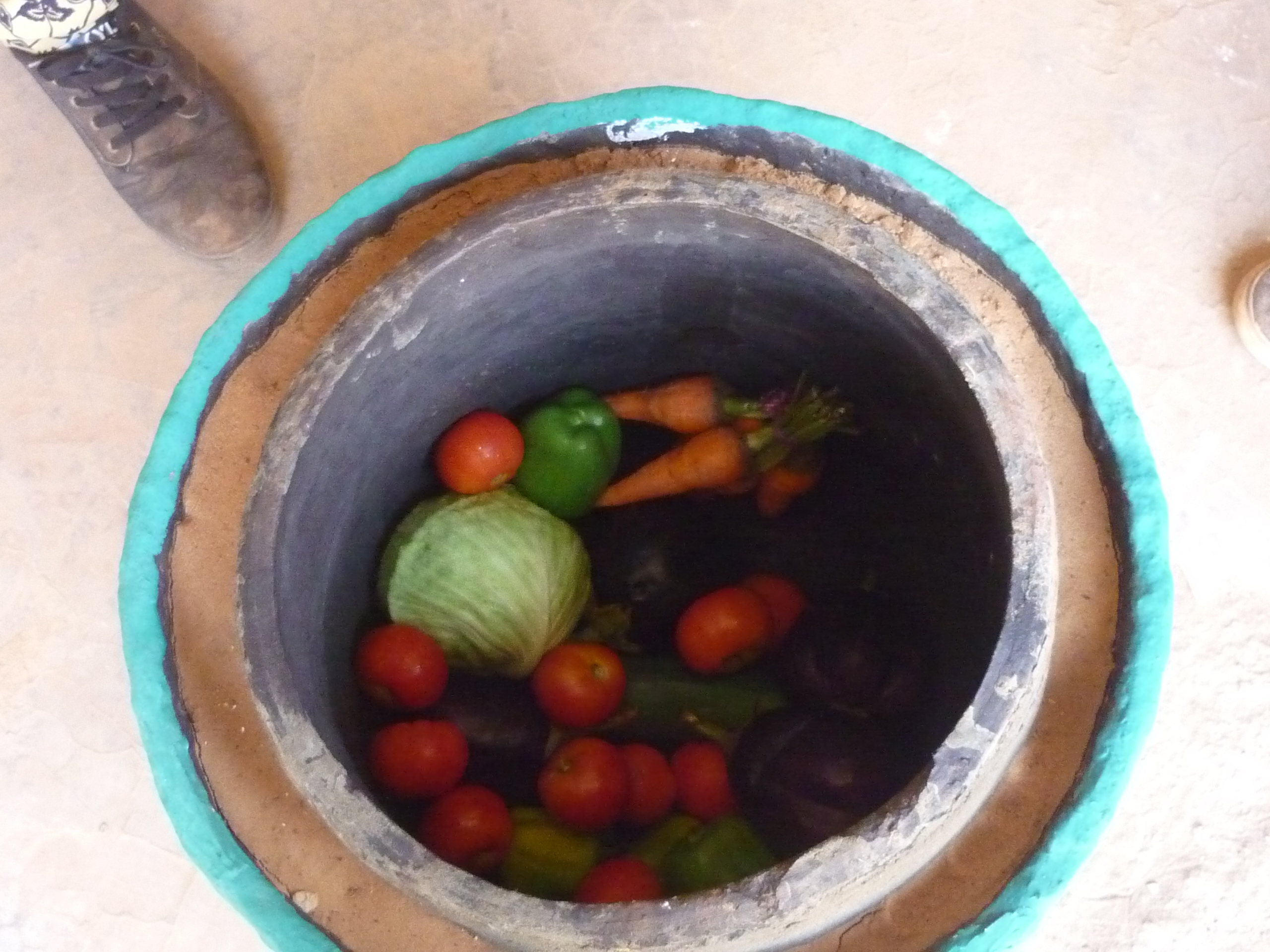
Visual example from online: (https://en.wikipedia.org/wiki/Pot-in-pot_refrigerator)
Through the use of their eco-manuals, the Pitchandikulam Forrest Organization aligns with SDG 4 (Quality Education) by promoting environmental literacy and SDG 15 (Life on Land) by raising awareness about biodiversity conservation.
Actively engaging in reforestation and protection of existing forests, Pitchandikulam contributes to SDG 15 (Life on Land) by combating deforestation and restoring degraded ecosystems. These efforts also help mitigate climate change, aligning with SDG 13 (Climate Action).
By demonstrating sustainable practices such as organic farming and rainwater harvesting, Pitchandikulam inspires students and communities to adopt eco-friendly lifestyles. This aligns with SDG 12 (Responsible Consumption and Production).
More about Pitchandikulam here: https://www.pitchandikulamforest.org/
 AUP Sustainable Development Practicum in Auroville, India