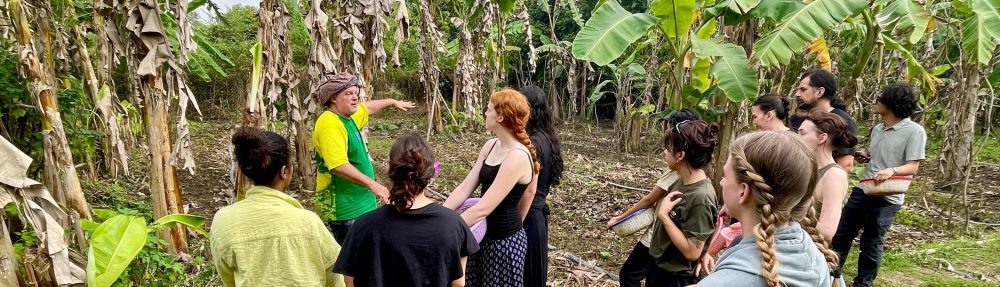
While staying at the Tibetan Pavillion I had the chance to read a couple of books from the library to learn about this nation and how politics has influenced it’s culture and day-to-day management. Tibet, or as it’s often called ‘the Roof of the World’ because of its Himalayan plateau, remains one of the most politically sensitive and internationally debated regions on the planet. As of this year, the situation now reflects decades of historical struggle, contested sovereignty, cultural resilience and human rights controversies.
A Brief History
Before the middle of the 20th century, Tibet operated as a theocratic polity centered around Lhasa with the Dalai Lama serving as both a spiritual and political leader at its apex. Tibetan society as a whole was structured around Buddhist institutions and distinctive local traditions and its interactions with the neighbouring powers like China and Mongolia had varied over centuries. Modern Chinese claims to sovereignty were very drastically strengthened under the People’s Republic of China (PRC) after its foundation in 1949.
In 1950-51, the People’s Liberation Army entered eastern Tibet. What came out of this was the Seventeen Point Agreement signed in 1951 between the PRC and representatives of the Tibetan government. The treaty promised to guarantee autonomy and respect for Tibetan culture under Chinese sovereignty. However, many Tibetans have argued that the agreement was out of coercion and not free consent from Tibet. Little by little, tensions over Chinese rule escalated and on March 10, 1959, a widespread uprising broke out in Lhasa. Chinese forces brutally suppressed the rebellion, leading to thousands of deaths. The 14th Dalai Lama fled into exile in India, where he established the Tibetan Government – in – Exile (in Dharamsala), a focal point for global advocacy of Tibetan autonomy and rights. Since then, March 10 has become Tibetan Uprising Day observed by Tibetans and supporters worldwide.
In 1965 China designated Tibet as the Tibet Autonomous Region (TAR), intending to institutionalise minority rights within the PRC framework. Although the autonomy is largely symbolic and that real authority lies firmly with Communist Party structures. Tighter controls, especially after periods of unrest, have contributed to the ongoing political and cultural tensions.
As of 2025
Looking at reports by Human Rights Watch, there is documentation of systematic restrictions on daily life and expression in Tibetan areas. Chinese authorities have been arresting ordinary Tibetans for using cellphones, posting content that those same authorities have deemed ‘banned;, or celebrating Buddhist figures and cultural heritage online. Similar to that many Tibetan language websites have been shut down and those who advocated for their functioning have faced detention and harsh sentences. As I mentioned earlier, March remains a particularly sensitive month, authorities prepare heightened security for this period of historical commemorations. Deployments in Lhasa and at monasteries intensify that month to preempt gatherings or protests.
Religious expression is a cornerstone of Tibetan identity but numerous reports, including European Parliament resolutions, highlight violations of religious freedom, interference in the selection of spiritual leaders and the transnational repression of Tibetans abroad including those in Southeast Asian countries. Cultural advocates argue that measures such as the cancellation of Tibetan language instruction, replaced by Mandarin Chinese in schools and monitoring of religious institutions are part of broader forced assimilation policies. Local restrictions even extend to symbols traditionally important to
Throughout 2025. Tibet has remained a subject of international concern. EU authorities have expressed serious concern over deteriorating human rights that point to limits on freedom of speech, movement and religious practice. Countries at the UN Human Rights Council including more than two dozen democracies, have raised the situation in Tibet and called for stronger protections. During the various General Assembly debates on the topic (1950, 1959, 1961, 1965), several members spoke passionately, denouncing the Communist government’s aggression against Tibet as a violation of its independence. However, while two of the resolutions referred to the principle of self-determination, all three skirted the issue of Tibet’s status under international law, focusing instead on human rights violations. To this day, the United Nations’ unfinished consideration of the question of Tibet remains one of the global body’s most notable and longstanding acts of omission.
China on the other hand, routinely pushes back, accusing foreign governments like the United States of ‘meddling’ and labeling Tibetan advocacy as separatist or anti-China activity. China maintains that Tibet is securely and peacefully governed within the PRC and rejects external criticism as interference in internal affairs.
Tibetan Exiled Leadership
Even as security tightens in the region, Tibetan activists and the Central Tibetan Administration work internationally to keep the issue visible. In August of 2025, activists protested outside the Chinese Embassy in New Delhi during a high-level visit by China’s foreign minister. In the diaspora, political life remains active. Preparations are underway for the 2025-2026 general elections of the Tibetan Government – in – Exile, signaling continued democratic engagement among Tibetans worldwide.
Economic and Infrastructural Developments
The Chinese government often highlights economic transformation in Tibet, emphasising infrastructure achievements and development goals. In 2025, Tibet marked the 60th anniversary of TAR, with celebrations focused on modernisation, enhanced transportation networks and energy projects. One of the most ambitious and controversial developments is the Yarlung Zangbo (Brahmaputra) hydropower project which could potentially be the world’s largest hydroelectric series of dams when completed. Construction, including a mammoth dam at Medog/Fengdu began in July of 2025. Proponents argue these projects enhance power supply, economic growth and carbon reduction, critics of the project have highlighted the environmental degradation, displacement and threats to downstream water security for India and Bangladesh.
Despite systemic pressures, Tibetan culture, especially Buddhism, remains resilient. Pilgrimages, monastic scholarships, arts and diaspora celebrations reinforce identity. Communities that have gathered outside Tibet such as the one in Portland showcase traditional music, dance and food. Inside, religious festivals and ceremonies like the Sakya Monlam draw thousands of devotees, a reminder that sacred traditions endure even under surveillance.
Looking to the Future
The core dispute over Tibet remains one of human rights and cultural autonomy versus centralised state control. Many Tibetan activists, exiles and international observers see the situation as one of cultural survival. Meanwhile Beijing keeps stating stability, economic development and territorial integrity. 2025 marked the Dalai Lama’s 90th year. A milestone that has stimulated a global reflection and discussion on his role and succession. Recently the talk of succession has opened potential negotiations about reincarnation and underscores how spiritual leadership remains central to Tibetan identity and political symbolism.
China day by day increasingly asserts control over the recognition of future Tibetan Buddhist leaders, a policy that directly affects the future of the Dalai Lama’s institution – a point of continued dispute. Global attention to Tibet will likely continue rising. Calls for diplomatic pressure, sanctions and human rights monitoring features prominently in European and US policy discussions. At the same time geopolitical priorities, including China’s economic influence, temper how far governments are willing to challenge Beijing.
In conclusion, Tibet remains a disputed region with day to day life being impacted and the government being in exile. Staying at the Pavillion I had the opportunity to learn even more about Tibetan food, culture, music, ceremonies and Buddhism as a whole through my daily interactions with Kalsung.
by Sofie Mihaylova
 AUP Sustainable Development Practicum in Auroville, India