Solitude Farms

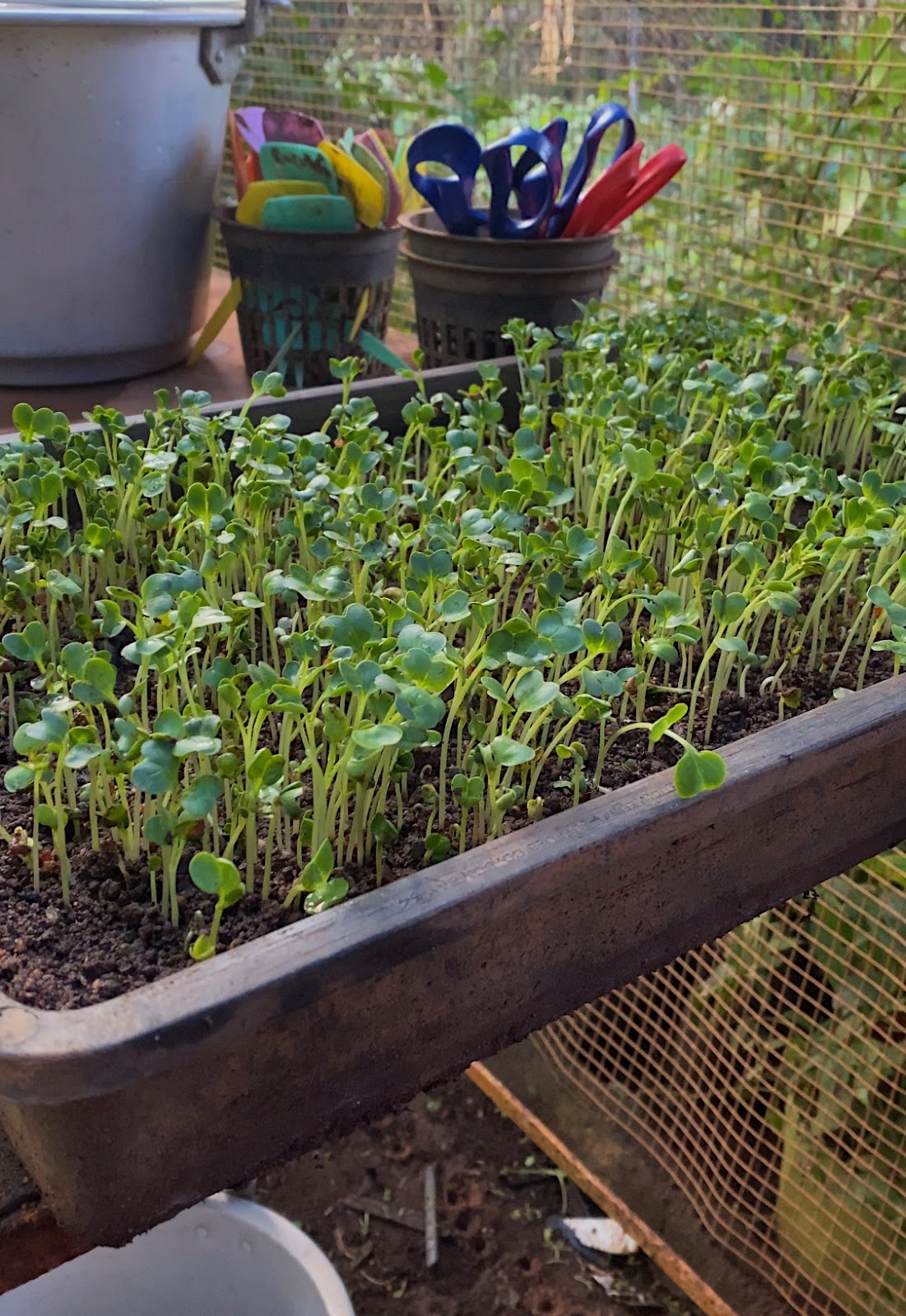
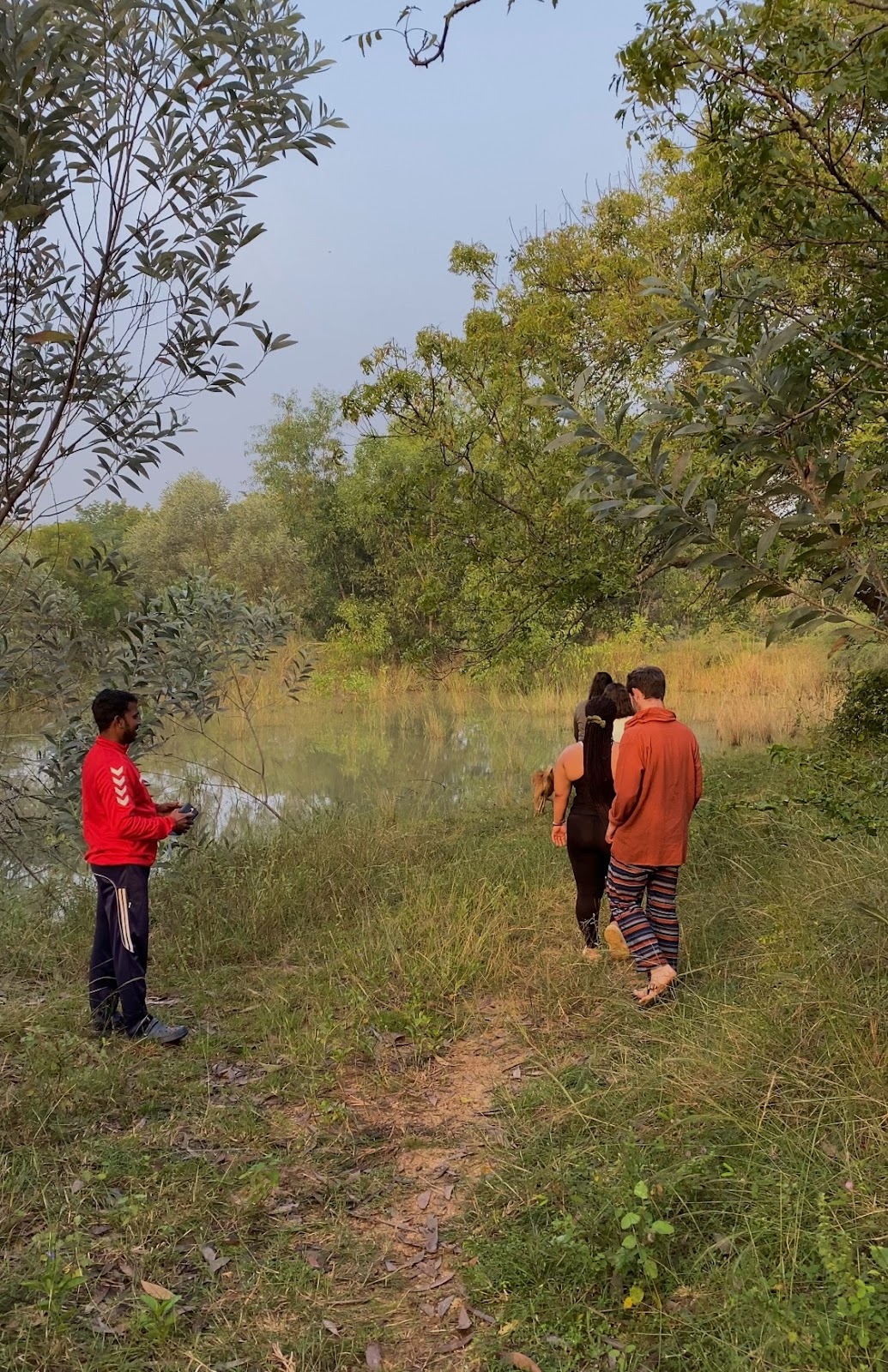
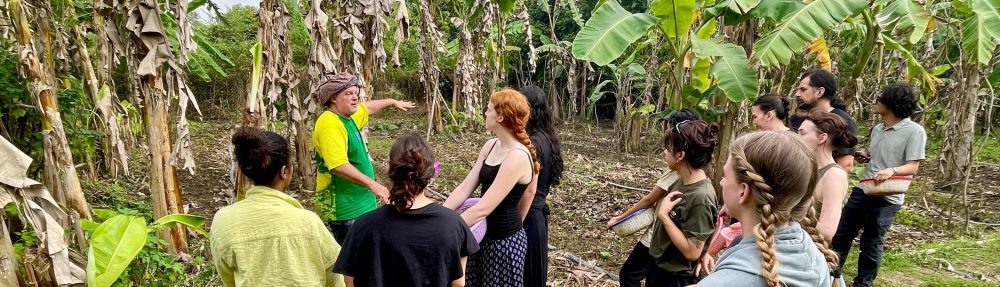
Where once stood a vacant lot of barren earth is now a lush garden. Garden may be a strong term for the operation at Solitude Farms however, one can not disagree when the produce it bears is of such high quality. The entropy of solitude farm is entirely intentional, allowing nature to rebound back to its lush vibrant interconnected self while also benefiting from the bountiful fruit it bears. Like the nutrients in the soil which were brought in by composting and anti-desertification efforts the progenitor of Solitude Farms is also a transplant, and much like the plants and vegetables in the farm, Krishna, not his birth name, has become completely enmeshed in the homeostasis of the environment. A wealth of information, Krishna, who is originally front the United Kingdom, is seldom seen without his signature turban shading his bare head from the sun. As he walks through his fields navigating a seemingly invisible path to the untrained eye he can pluck any bean, leaf, or branch up and talk at length about its health benefits, and how to cultivate and cook it. His loud boisterous voice commands attention just as much as the sparkle in his eye or the warm demeanor he radiates when talking passionately about his farm. Almost the entirety of the food that is served at Solitude Farms is grown on premises. The only thing not grown on site are the grains which require much more space for cultivation. On the menu, written in chalk, as it is ever-changing are today’s options. There is always the “thali of the day” and the “farmers’ salad” which change daily based on their harvest each morning. Next to each of the ingredients are listed their health benefits and properties. Some vegetables are described as good to fight inflammation, while others are cited as good immune boosters, and still, others are advertised as mood boosters or good for autism and ADHD. While rice is a staple in Indian cuisine it is rarely seen at Solitude Farms. The “thali of the day” usually favors local grains that are richer in nutrients over rice, which also usually consumes more water in its cultivation. The cafe itself is a place of community, with large family-style tables that encourage people to mingle and enjoy their meals together. Locals and adventurers alike bump elbows and share meals trading stories over a hyperlocal lunch. Solitude Farms also holds community events, often featuring Krishna’s band. The Krishna sings in both English and Tamil, and the band features western instruments like the electric guitar as well as local percussion instruments. If you’re lucky enough you’re even able to hear the band practicing while enjoying your freshly picked lunch.

Community in a Cup

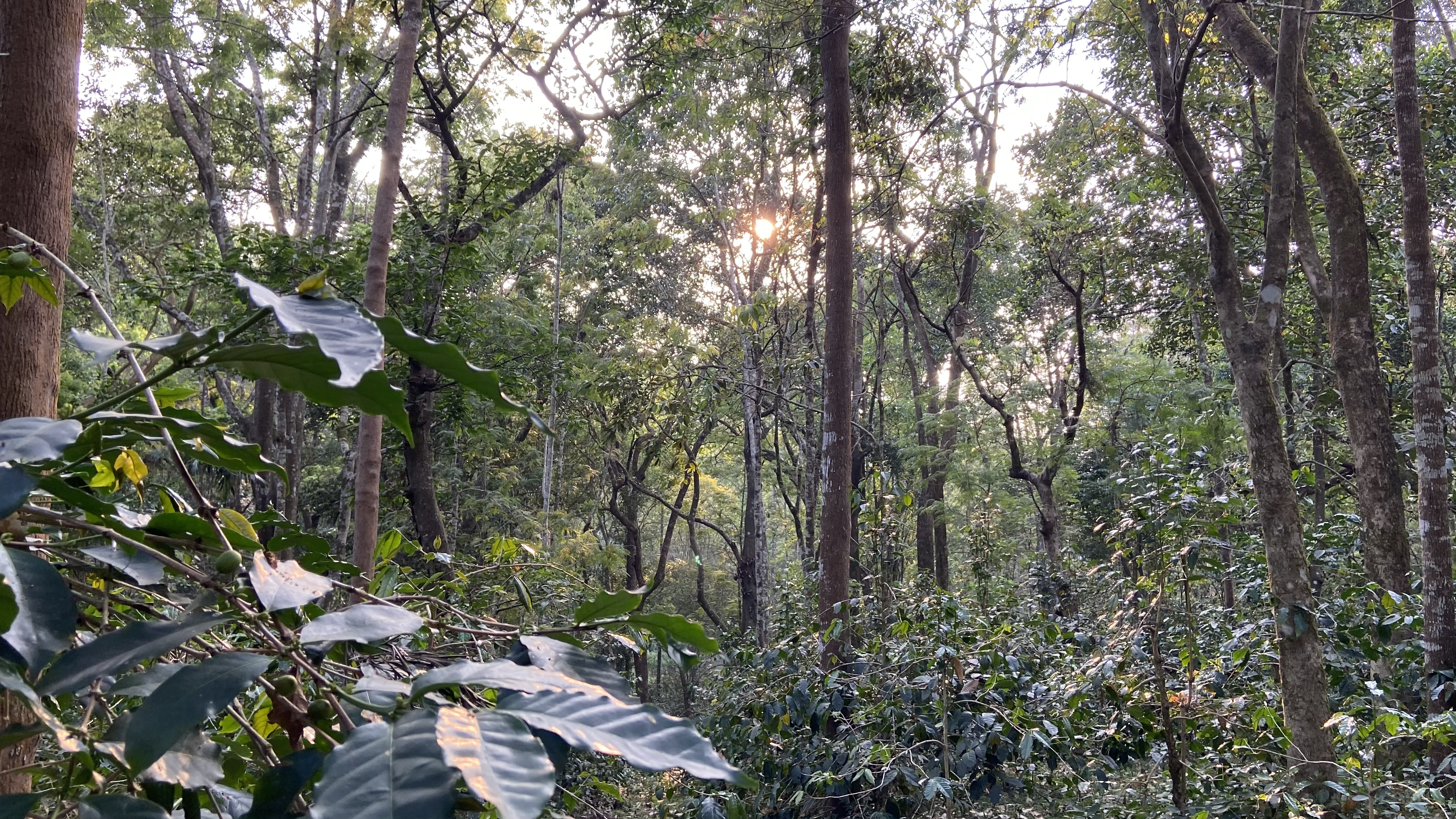
Serving their first batch of crop-to-cup coffee in 2008 Marks coffee of Auroville has become a local landmark and winner of the 2022 aromatic brew & beanery award. Founded by Marc Tormo who arrived in Auroville in 1997, they now produce 12 tons of roasted coffee a year. Their holistic approach empowers the people it touches at all levels from farmers to drinkers without compromising the environment. Specially chosen beans from across India ensure a delicious brew every time, and sourcing directly from farmers helps to bolster producers’ income while maintaining ecological integrity and nurturing the communities that produce their coffee. In establishing a link directly from the producers to the consumers, and doing all roasting in-house Marc’s Coffee is able to ensure fair wages for the growers and hand-pick only the finest beans. All coffee purchased by Marcs Coffee is bought at premium prices. In line with the ethics of Auroville, all the coffee purchased is produced in a sustainable fashion. This is due to India’s coffee plants being entirely shade-grown instead of clearing forests for production, trees are actually encouraged for the shade they produce, allowing coffee groves to easily coincide with the native permaculture. One of the best examples of Marc’s selections is the Halli Barry estate, an estate run entirely by women. The business is a family affair, consisting of Marc, the owner, his wife, in charge of logistics, and their son, Eden, in charge of quality control for other places that use their product. Beyond the beans, the cafe also gives back to the village of Auroville. The cafe is a place of community and a regular hang-out for locals and travelers alike. The interior is built and furbished entirely with repurposed wood, and all of their accouterments are sourced from local artisans, nurturing the community that supports them. Another example of their dedication to community building is their sourcing of products for their delicious homemade baked goods, such as their eggs. They pay half of their year’s order in advance to allow farmers to produce the quantity they need without taking out loans which are usually at astronomical interest rates. The cafe is also staffed predominantly by members of surrounding villages. This brings income back to local communities that otherwise have few other options and shares the knowledge of food service and hospitality cultivated by Mark through his years in the F&B industry in Spain. In a new chapter of their project coffee is working towards educational opportunities and training of high-level baristas, something not widely available in India. In Marks’ philosophy, coffee brings people together, and is a source of community, it uplifts people in both its cultivation and consumption. In his own words “who would have thought all this could fit in a humble cup of coffee”

After The Weeds: 6am in Auroville’s Buddha Garden

By Donatella Jackson

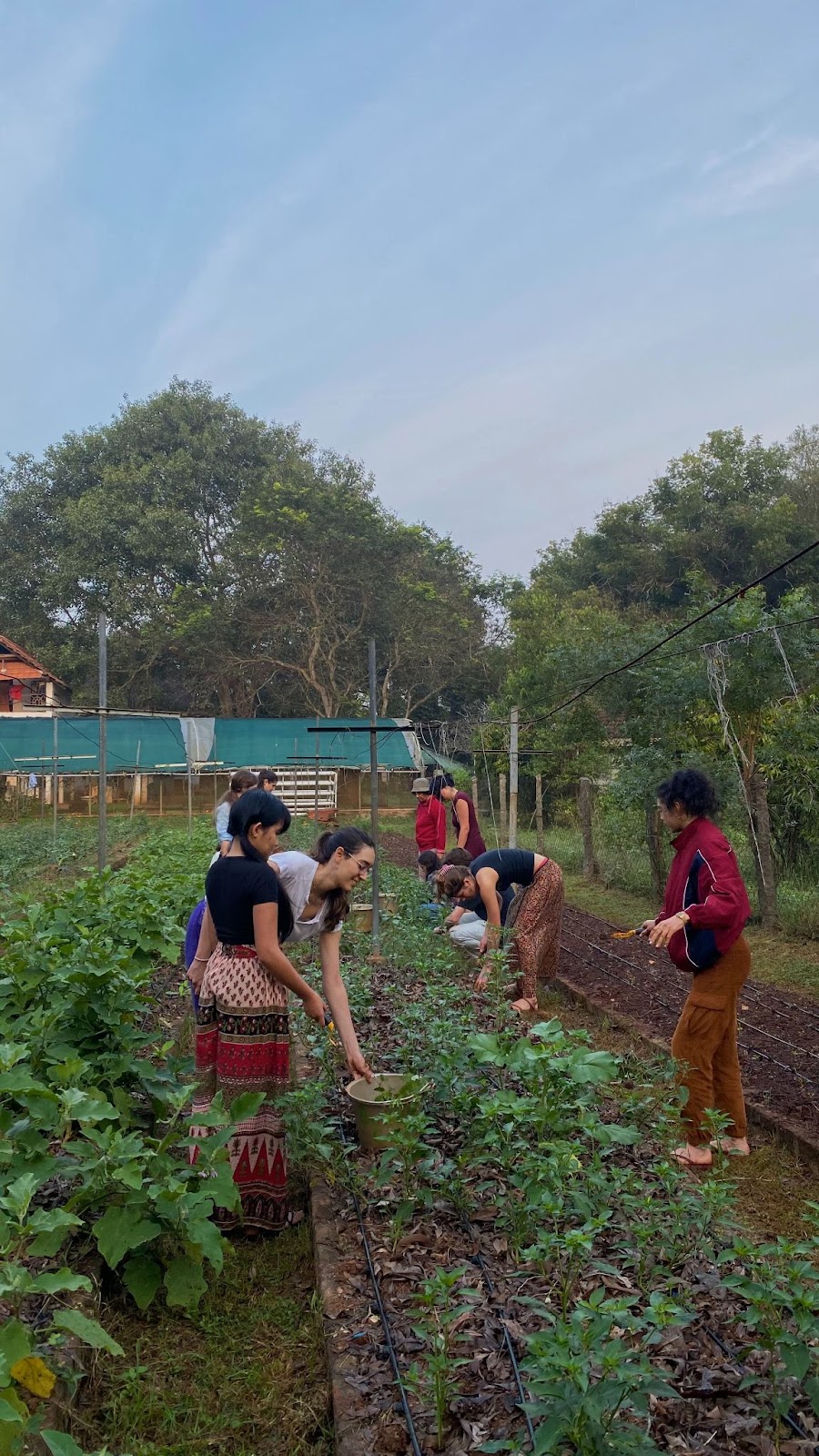
Is there a simpler therapy than sinking our fingers into rich soil and uprooting what prevents us from growing into our best selves? I arose early on Thursday morning, surrounded by air still heavy with mist, to weed the ground of what prevents its lasting success. Anticipating a rain that wouldn’t grace our skin until Christmas Sunday, the first gift to be opened by many, my bike cut through the fog from the Tibetan Pavilion to a garden rooted in the spirit of peace and giving. With morning gusts of wind gliding past my sunscreen-soaked cheeks, I was reminded of summers spent with my nose buried in tomatoes, slapping watermelons and pinching peaches, white sneakers meeting the caress of wet grass and suddenly when the gravel rocked my front wheels and I struggled to keep steady I hit the brakes.

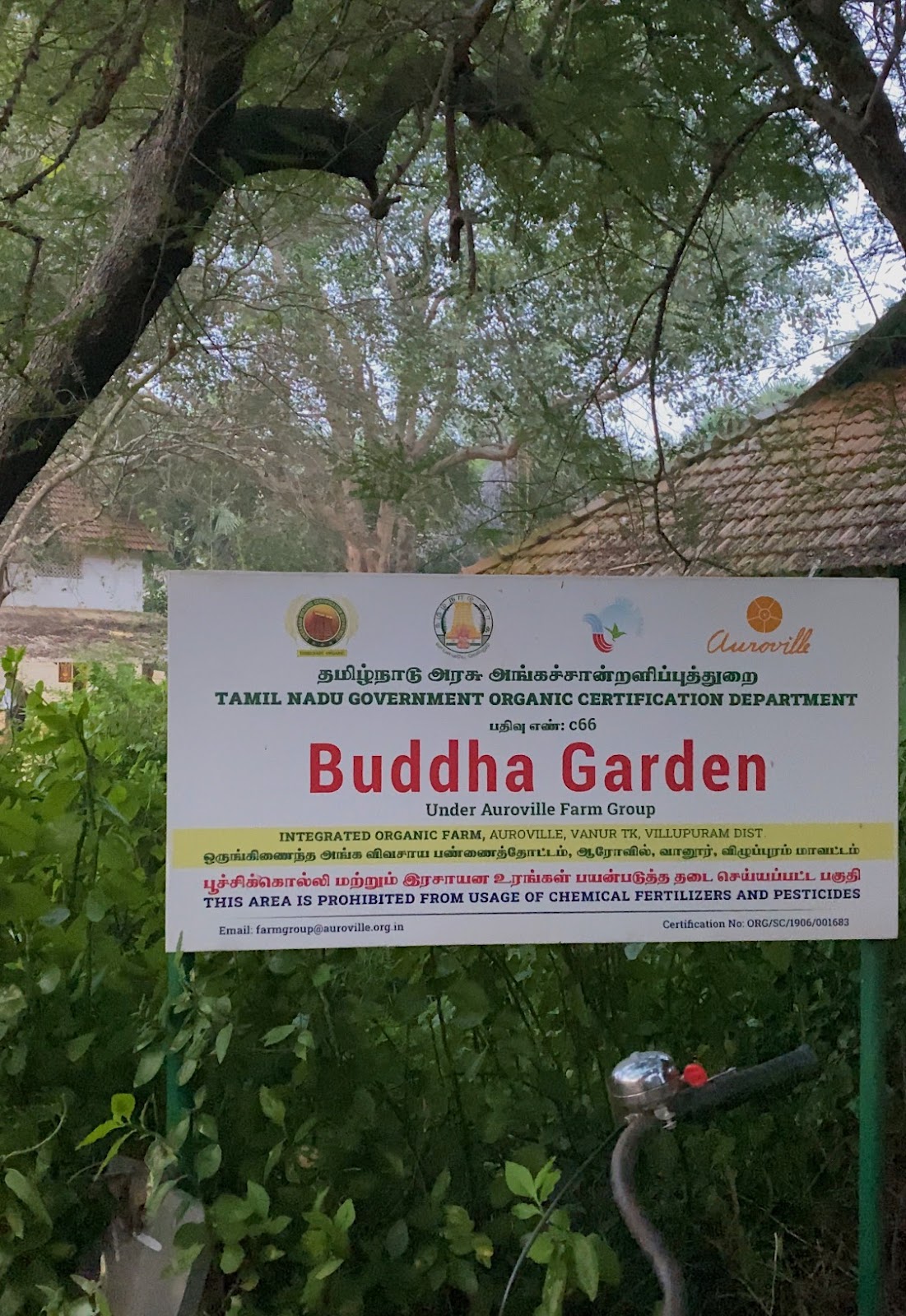
Buddha Garden is the oasis that Octavia Butler dreamed of. A garden, curated with the intention of growing food with the awareness and love of community. Buddha Garden is the promise of life everlasting. Their produce is grown with the purpose of connecting and nourishing every part of our physical and spiritual being. How many gardens are conceived with the dream of food produced with the aim to nurture our loved ones and the earth that we receive it from? 

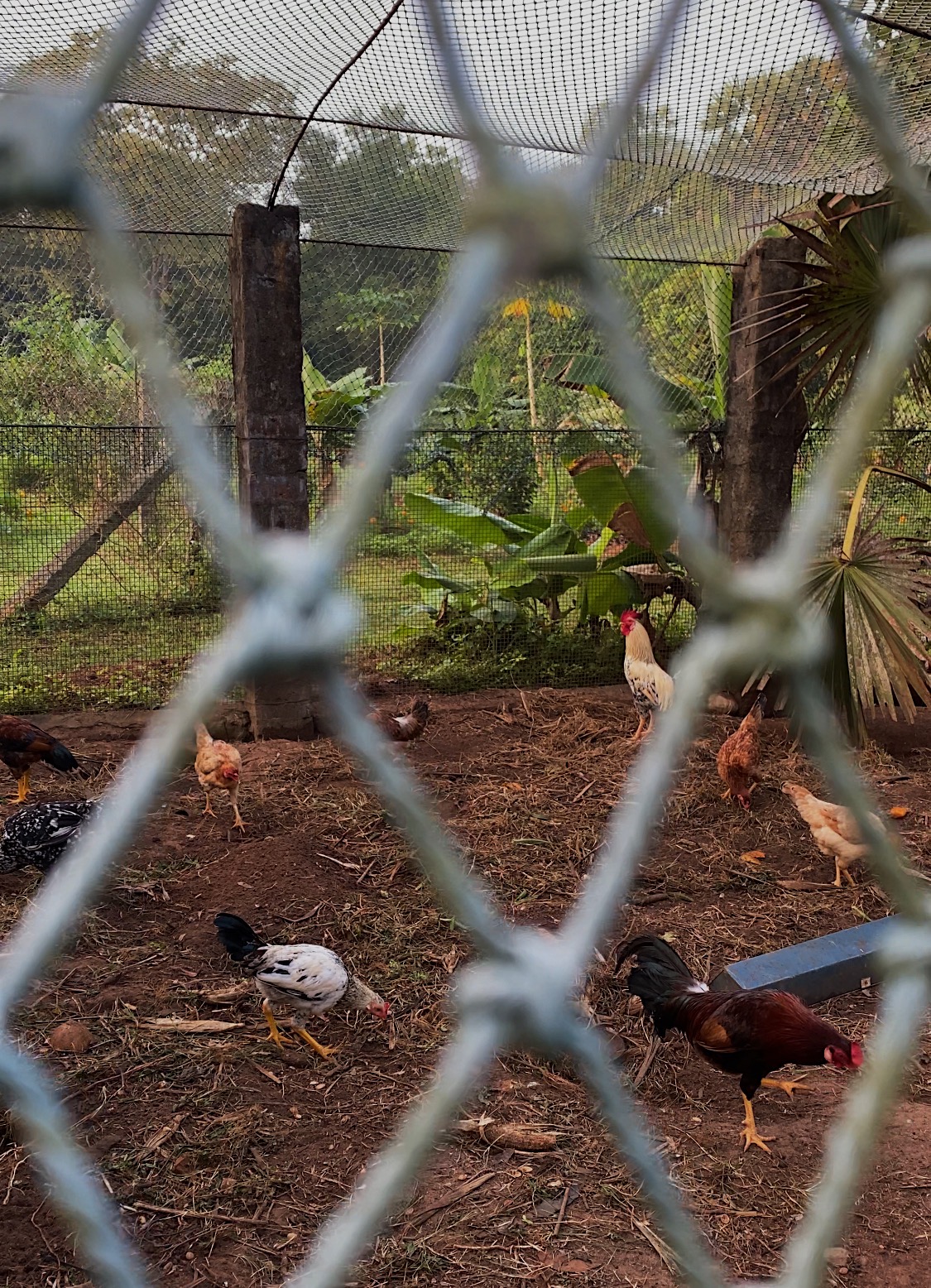
Buddha Garden pledges sustainability by possessing everything it needs to grow food on its ten acres of land. They use three out of the ten beds in the garden to carry out smart water research that hopes to avoid overwatering and subsequent waste of water on crops. Paces away from abundant plant beds stand a chicken coop where surely eggs are harvested for the morning egg white omelet -a personal favorite- but the compost composed of the chicken waste is then repurposed into fertilizer for the very herbs that add the finishing touch to any meal.

For Buddha Garden, sustainability is about teaching and ensuring the value of farming so that the next generation is not only able to sustain themselves but that they become active participants in the maintenance of their ecosystem. It falls perfectly in line with UN SDG goals of zero hunger and responsible production and consumption. Sustainable gardening’s more than just an ethical practice, the prohibited use of chemical fertilizers and pesticides ensures the safety of local wildlife and the longevity of the ecosystem overall. The maintenance of healthy soil and vibrant plant life also prevents flooding in an area rocked by the monsoon season. ​​This model of gardening is something to aspire to. As the world around us changes for the worst due to our own negligence, it is inspiring to appreciate a pocket of lush, green, hope where we emphasize being present in a system that values our added contribution rather than senseless extraction.

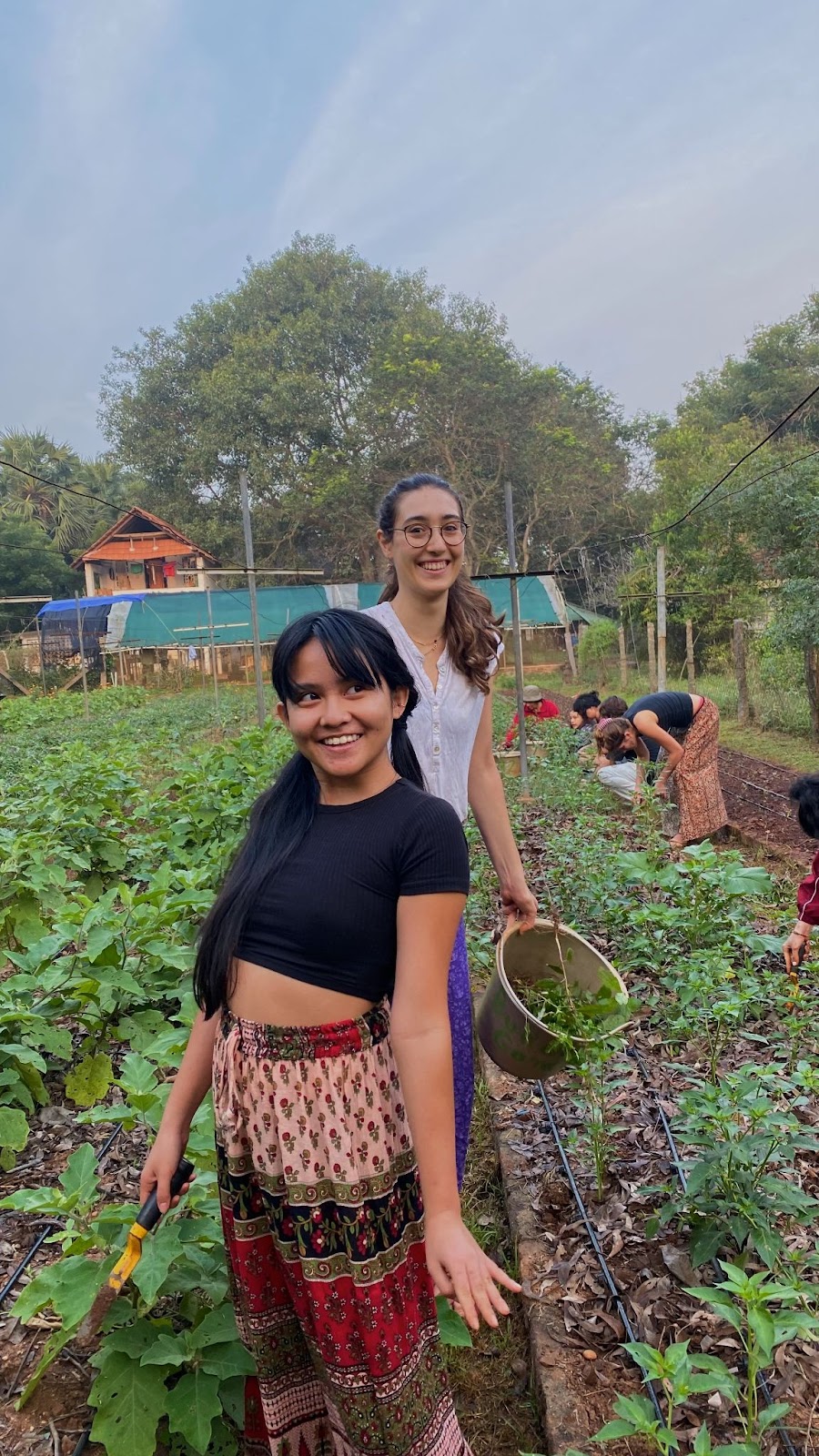
Sustainable gardening can also strengthen communities. By sharing produce with neighbors and participating in community gardens, you can build relationships and create a sense of community around healthy and sustainable food production, as we did.

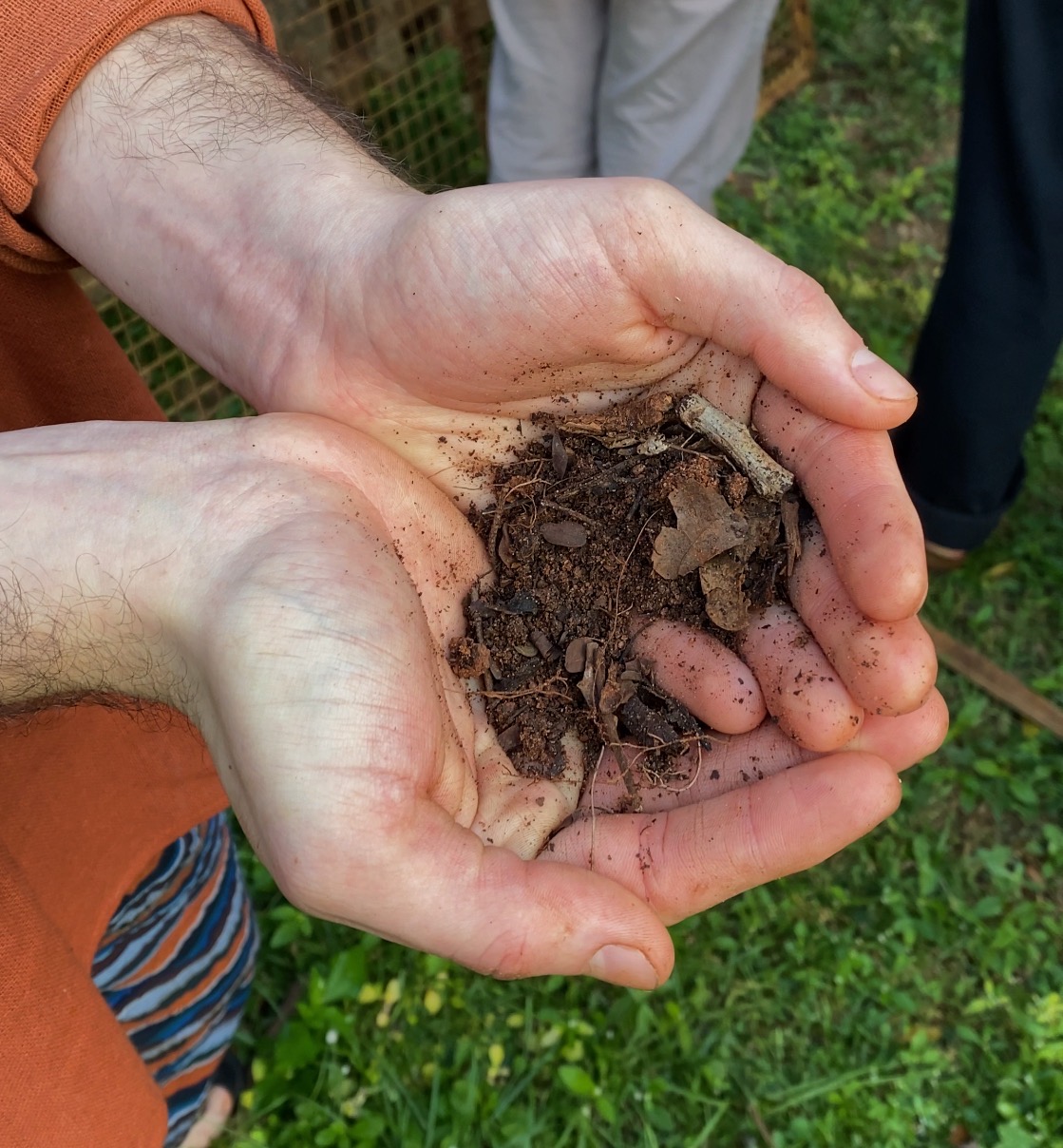
Early this morning, my fingertips rooted themselves in the holes left by the weeds, and I laughed. I laughed as someone with exhaustion sitting heavy on my shoulders and wrapping its arms around my forehead, but also as someone who had finally laid on the couch after a long day away from home and put that child to rest. The soil beneath my nail bed had never known comfort like this and even when they were later scrubbed into oblivion, swirling down a drain alongside the element that breathes life into them and 70% of which flows through me, it was not a goodbye but a see you in the next field.  

There is an unspoken romance… a poem – yet to be written-about giving a piece of yourself to a planet that has already given so much to you. I think that Buddha Garden captures that love story in a way I struggle to depict with words. What is love if not pouring the best of ourselves into something so that it may be returned to us ten-fold?

If there is anything to be taken away from this experience, it’s that to be in community with each other, we must first be in community with the ground that sustains us. To give to her is to give back to us, and her perseverance ensures our longevity. 

Pondicherry

By Donatella Jackson

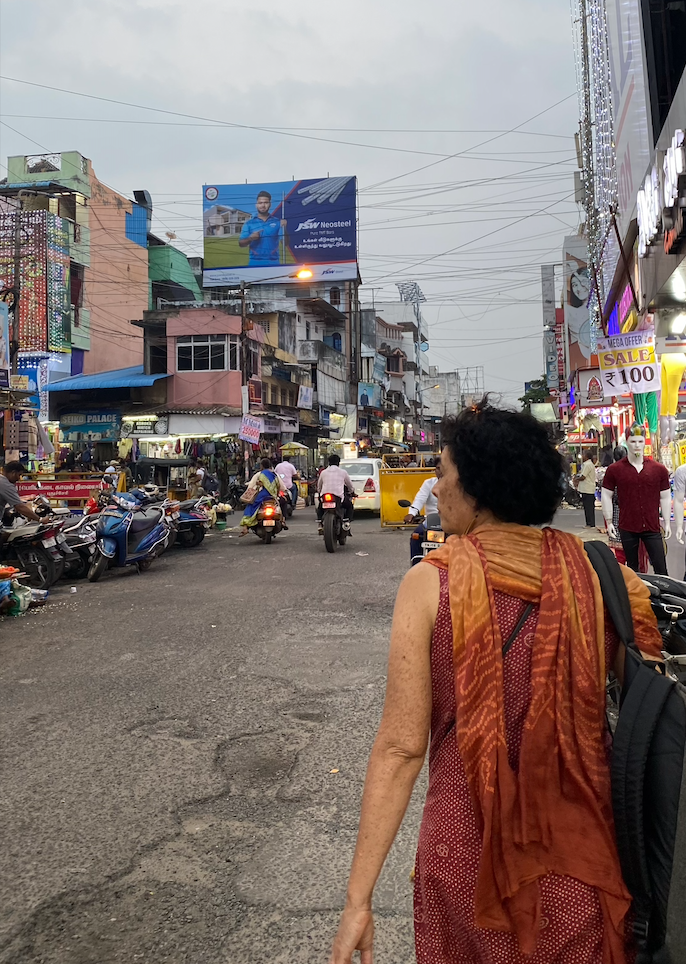
Pondicherry is a city beaming with life, as vibrant as its architecture. Houses dressed in bright blues, bubblegum pinks, and lemon yellows provide a stark contrast to the dull grays and beiges of Paris, France. Pondy, a city of 877,00 people is located in the southeast coast of India, 3 hours from Chennai and 30 minutes from the city of dawn, Auroville. First occupied by the Portuguese in 1523 and then later by the French and the French East India Company, Pondy got its name from the French interpretation of “Puducherry”, pondi meaning new and chery meaning settlement. Replete with history and culture, Pondy’s main language is Tamil, one of the living classical languages with over 74 million speakers worldwide and with writings that can be traced back to as early as 3 BCE. 

Despite its eclectic beauty and rich history, the city is marred by the pungent smell of slow-melting plastic waste left In untreated standing water. Waste management in Pondy is poor and as the Yatra Foundation demonstrated it is not solely an issue of lack of access to proper facilities, but it is also a lack of education and a distancing from historical cultural practices after colonization. 6% of India’s total population lacks access to safe water and 15% continues to practice open defecation. Additionally, there are more cell phones per household than there are toilets. In a society, where wastewater, sewage, fertilizer, pesticides, and industrial waste are some of the most common sources of water pollution, it also contributes to waterborne illnesses and death. 

Since our arrival in Pondy, I’ve been fascinated with waste management and the apparent neglect of safe water practices. What I had thought was an over-exaggeration made by the Yatra foundation video was almost an underrepresentation of the sad reality of day-to-day life. After later visiting the Mohanam cultural center, I was almost surprised to learn that water was considered sanctimonious in Indian culture. Holding not only spiritual significance, but an intrinsic connection to Indian society and culture as notions of purity and pollution determine much of the caste-based social hierarchy, as well as who has access to clean water and who doesn’t. 

Water, since the Vedic period, has been recognized as a spiritual symbol and a reflection of self through its connection to our physical and cosmic being. What then do polluted water sources say about how we view ourselves? 

In visiting Sahodoran, I carefully stepped over mounds of plastic mixed with animal waste, observed chickens and their chicks scavenge for food amongst the rubbish, and stared in awe at plates of food that sat idly alongside standing water. In the context of this, I was taken with the concepts of liberation, access, representation, and what it means not just to be seen but to be acknowledged and then in time, hopefully, understood. We engaged in these conversations about transgender life in Pondy and the reality of the community turning a blind eye to your truth for years… seeing you but refusing to understand. I sat with that in the context of our current physical environment, surrounded by mounds of rubbish, behind a mote of polluted water, sitting inside a building that could be repossessed at any moment on the basis of intolerance and I questioned permanence and longevity as it corresponds to our identity and our surroundings. 

I wondered then if it was even possible to conceptualize liberation and accessibility if the foundation that we use to construct our plans is unstable, inequitable, inaccessible, and ultimately dangerous to our health. What would it take for something to move beyond being seen and stand in acknowledgment? 

There is so much beauty to behold here. So much life to fill your cup with and enough warmth to ensure that It overflows. There is enough art at every corner with the attention to detail of mathematicians, depicting the story of a culture that has lasted through the ages…

 If that same attention to detail and warmth could only be applied to environmental education and reunification of the spirituality of water with a love for community and ourselves, it would not only ensure Pondy’s permanence and longevity but that of the people which make its colors so vibrant in the first place.