Auroville Prosperity Services: Serving Sustainable Community Action

The Solar Kitchen and Prosperity area began with the construction of the Solar Kitchen and its spacious dining room in the late 90s, which served as the main hub for the community members to gather for lunch. You can judge the scope of this community dining hall by knowing that it was serving close to 1500 lunches per day, including food for Auroville school children during the pre-pandemic days. 

On the huge terrace of the Solar Kitchen, also known as SK, a cafeteria known as “La Terrace”, began serving multi-cuisine snacks and meals. This self-service restaurant has steadily gained popularity over the years. Alongside this food outlet, the Auroville Guest Service was created where guests could use wifi to browse or gain more information about Auroville. Both Solar Kitchen and La Terrace do not accept cash payments. If you’d like to dine at one of these places, visit the Auroville Financial Centre to add funds to your Aurocard.

Our visit was brief, but warm. Through the Free store and Pour Tous Distribution Centre, we were able to better understand the lives Aurovillians lead. The Free Store operates on a donation basis, by allowing people the freedom to drop and take as they please, you’ll be sure to find what you’re looking for. Pour Tous Distribution Centre provides groceries and lunches to the people of Auroville. It is a co-operative food service and provides healthy snacks, household cleaning supplies, and different food items from all over the world. The services offered to guests and community members is vast. They range from the ones listed above to bike charging and repair areas, recycling areas that provide the community with the tools needed to properly recycle, Prosperity Office and Service Link, Transport Services to get around Auroville, The Library of Shared Things (LOT) which people can just go and borrow misc. things like home appliances, tools, camping gear, etc., take what they need when they need it and return it for the next person, and many more.

These services and more are offered to the community as long as everyone pitches in. This is what makes Auroville such a unique and sustainable place to be!

Naturellement: 

The Most Important Meal of the Day

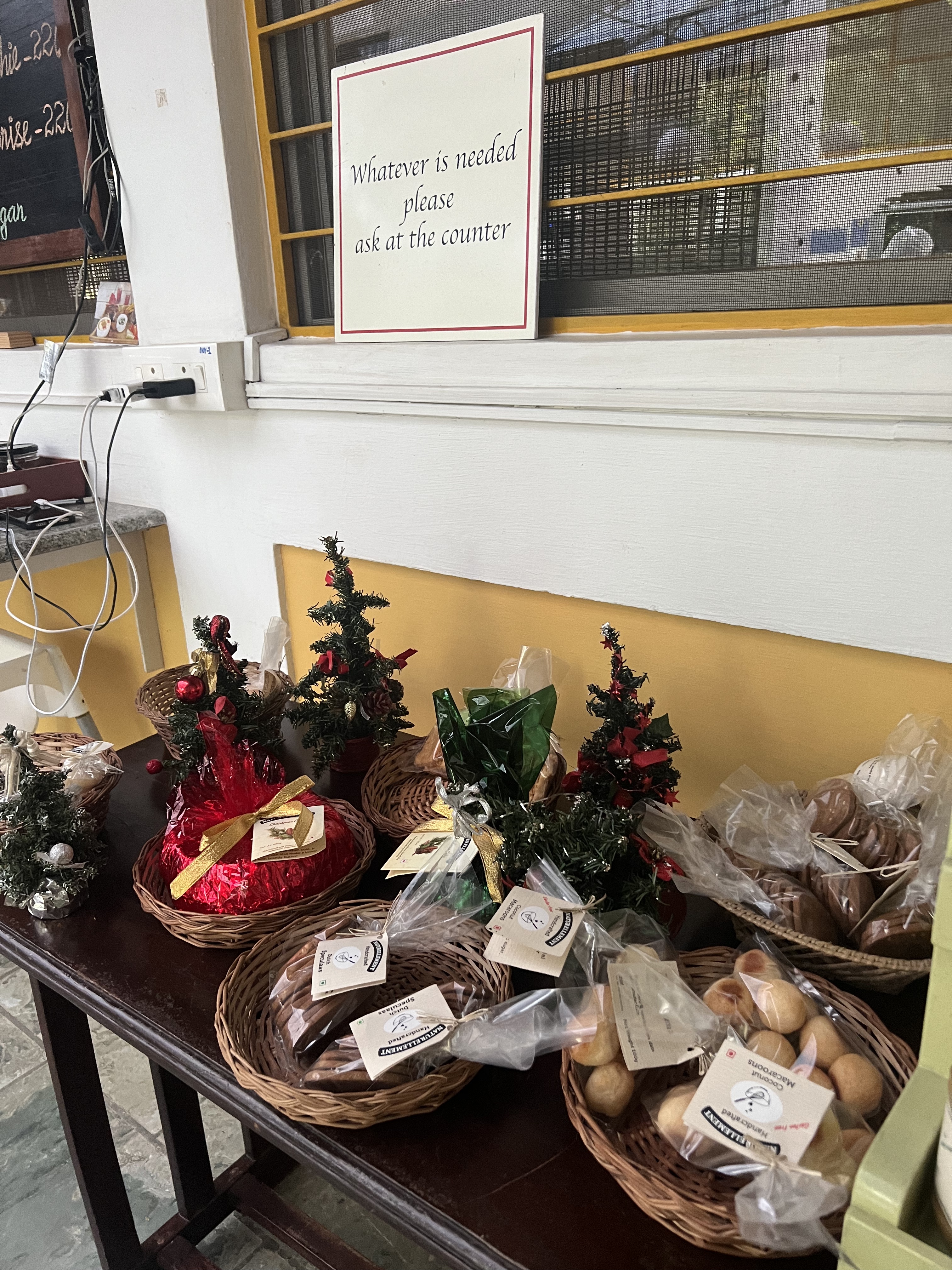
Breakfast for Auroville using sustainable methods, local resources, and an emphasis on women’s empowerment.

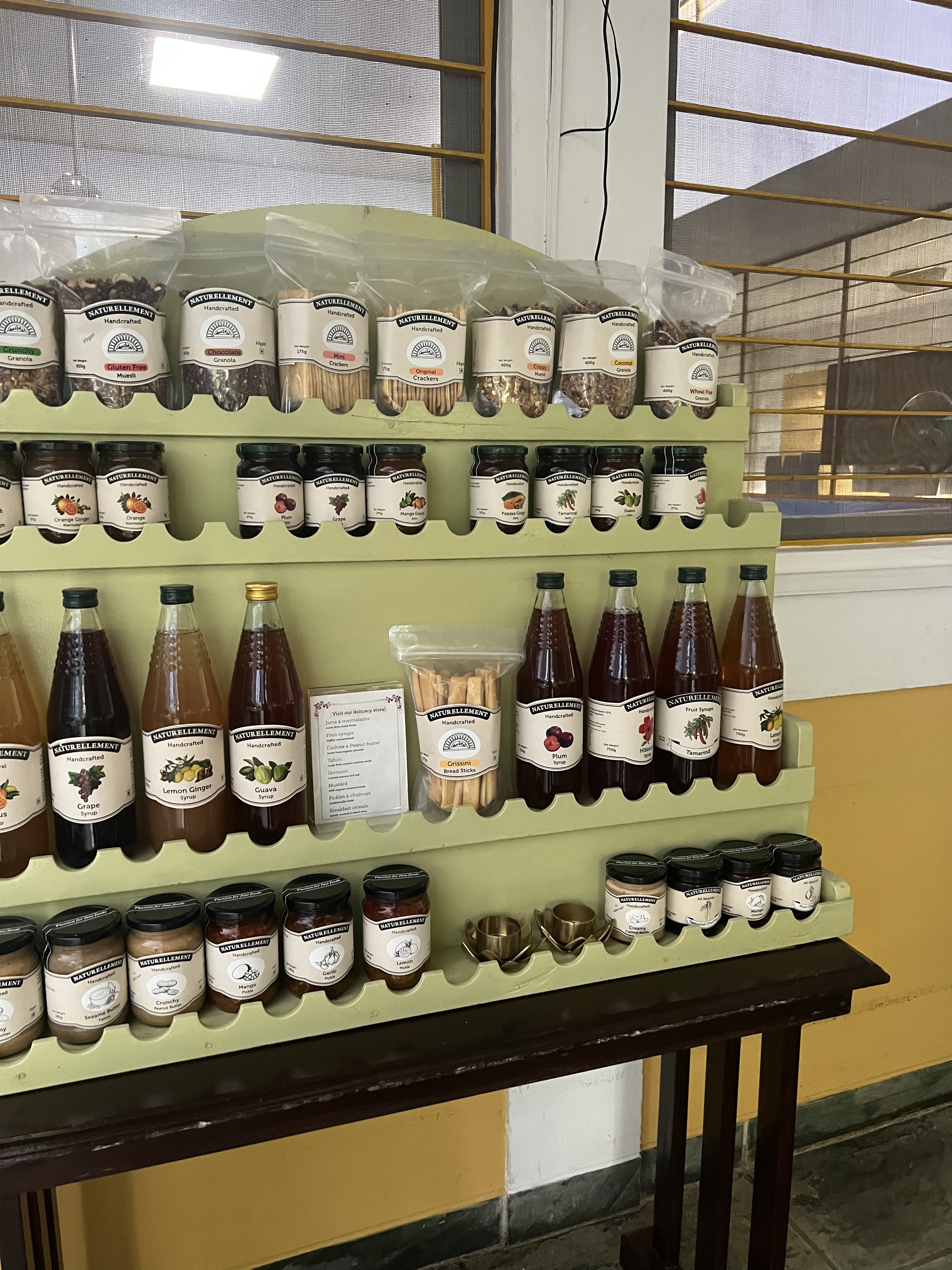
In a world where food and community are intertwined, Naturallement stands as a beacon of change. Through the harmonious blend of natural ingredients and the empowerment of village women, sustainability through connection and food shines in each of their products.

Founded by two driven Swedish women, their goals have been to create sustainable goodness in Auroville through nourishing the local communities from teaching them different cooking skills to empowering them in their everyday lives. The relationships built in this environment cannot be understated.

Through asbestos, pests, and implementing hygienic practices to the village women working in the kitchen, they were up and running to prepare food for the Aurovilliians. The women faced many obstacles in their pursuit to supply Auroville with the most important meal of the day.

Not unlike the rest of Auroville, Naturallement sustainable practices in its Green Café and also in every packaged product made in the kitchen. Organic farming is crucial in its goals of providing healthy foods for the people all while practicing sustainable methods that do not harm the environment. Auroville’s farms and orchards supply their kitchen directly with fresh organic products, from vegetables and fruits to milk and rice. 

In the beginning, there was guava, lots and lots of guava. Today, you can find their jars of peanut butter, and other nut butters, muesli and granola, syrups, pickles, condiments, of course their signature jams, and so much more in a handful of stores in the Auroville and Pondicherry area. 

Every time you savor the gnocchi or sip your chai at Naturallement, you’re not just indulging in culinary delights; you’re contributing to a movement. A movement that prioritizes natural ingredients, values the hard work of village women, and strives to make a positive impact on the local community. 

Naturellement invites you to join their journey, and let your taste buds contribute to a brighter, more empowered future for all!

The Alchemy of Nature: Philosophical and Technical Explorations at The Colors of Nature, Auroville

By Syed Zaman

Nestled within the center of Auroville—where the ethos of unity and environmental awareness converge—The Colors of Nature stands out as an innovative initiative seamlessly merging philosophy and technology. Established by Jesus Ciriza Larraona, a Spanish-born Aurovillian, this organization embodies the alchemical transformation of raw materials into a dynamic, sustainable, and harmonious workspace.

At its philosophical core, The Colors of Nature draws inspiration from the symbiotic relationship between humans and nature. The organization operates on the premise that textile should not impose on the environment but rather integrate with it—creating a dialogue between the hand-crafted and the natural—and this philosophical foundation shapes every aspect of their innovative approach to sustainable fashion.

Sustainable Threads: Weaving Collective Principles at The Colors of Nature

Within the landscape of ethical fashion—the universal inevitability of the fabric dyeing process echoes a shared human experience. The manner in which we navigate this transformative journey and the ethical values we champion throughout this profound passage serve as poignant reflections of our existential essence. At The Colors of Nature—the dyeing process transcends individual narratives—evolving into a collective exploration imbued with the core principles of integrity, collaboration, empathy, and a myriad of other ethical tenets. In this collaborative venture, each thread of fabric woven reflects not just a personal journey but a communal dedication to sustainable, harmonious, and ethical ‘Fashion’ and ‘fashion’ practices.

Authenticity in Sustainable Hues:

In the laborious yet rewarding sustainable coloring process at The Colors of Nature—integrity takes center stage as a commitment to authenticity and honoring individual narratives. The organization adopts a philosophy that encourages participants to engage in fabric dyeing with unwavering honesty and openness—incorporating both scientific principles and sustainable practices. This commitment extends to mindful choices made during this scientific and creative phase—encompassing considerations such as eco-friendly dyes, responsible water usage, and the celebration of diverse cultural influences.

Synergy in Sustainable Evolution:

At The Colors of Nature, the dyeing process transcends mere solitary work; it unfolds as a collaborative journey engaging individuals, artisans, and the wider community. The organization cultivates an environment where open communication and collective decision-making take precedence. In crafting collaborative dyeing plans, skilled craftsmen, sustainability experts, and community networks unite to ensure that the transformation of fabrics unfolds with a shared sense of responsibility. This holistic approach extends far beyond immediate circles—weaving a network of support that transcends individual boundaries—contributing collectively to sustainable and ethical fashion practices.

Compassion in Sustainable Coloration:

At The Colors of Nature, empathy forms the bedrock of fabric dyeing practices. The organization acknowledges the profound emotional, artistic, and scientific dimensions inherent in this transformative journey—prioritizing compassion and understanding. Artisans, volunteers, and community members undergo training to offer empathetic support, recognizing the unique needs and emotions intertwined with the dyeing process. The outcome is an environment where fabrics undergo meticulous transformation—integrating scientific principles. In this deeply innovative and creative journey within textile sustainability—individuals feel not only seen, heard, and understood—but are actively guided through a compassionate and thoughtful process.

Celebrating Heritage and Insight in Sustainable Fashion:

The journey of fabric transformation is not perceived as an endpoint but rather as a transition that provides a platform to commemorate the accumulated legacy and wisdom of a lifetime. At The Colors of Nature, individuals are encouraged to introspect on their experiences, share stories, and impart valuable lessons to the community. Legacy-building activities, such as immersive storytelling through group visits and interactive sessions—seamlessly intertwine with the fabric dyeing process—fostering a profound sense of continuity and interconnectedness. In Auroville, The Colors of Nature redefines the fabric transformation process by infusing it with values that transcend individual boundaries—embracing the collective human experience. Integrity, collaboration, empathy, and the celebration of legacy become foundational principles—reshaping the journey from raw materials to sustainable fabrics into a meaningful and shared odyssey. Through this, the organization invites us all to reflect not merely on the end product but also on the profound beauty inherent in the entire transformative journey and the influential role of conscious fashion.
Eco Femme: Pioneering a Sustainable Shift in Menstrual Health, Education, and Environmental Advocacy

By Syed Zaman

In the dynamic realm of sustainable living, Eco Femme stands out as a powerful force—seamlessly blending environmental mindfulness with the empowerment of women. To grasp the full significance of Eco Femme’s impact, let’s embark on an exploration into its core attributes. Here, the organization skillfully integrates eco-conscious menstrual products with a steadfast commitment to elevate both women and the planet.

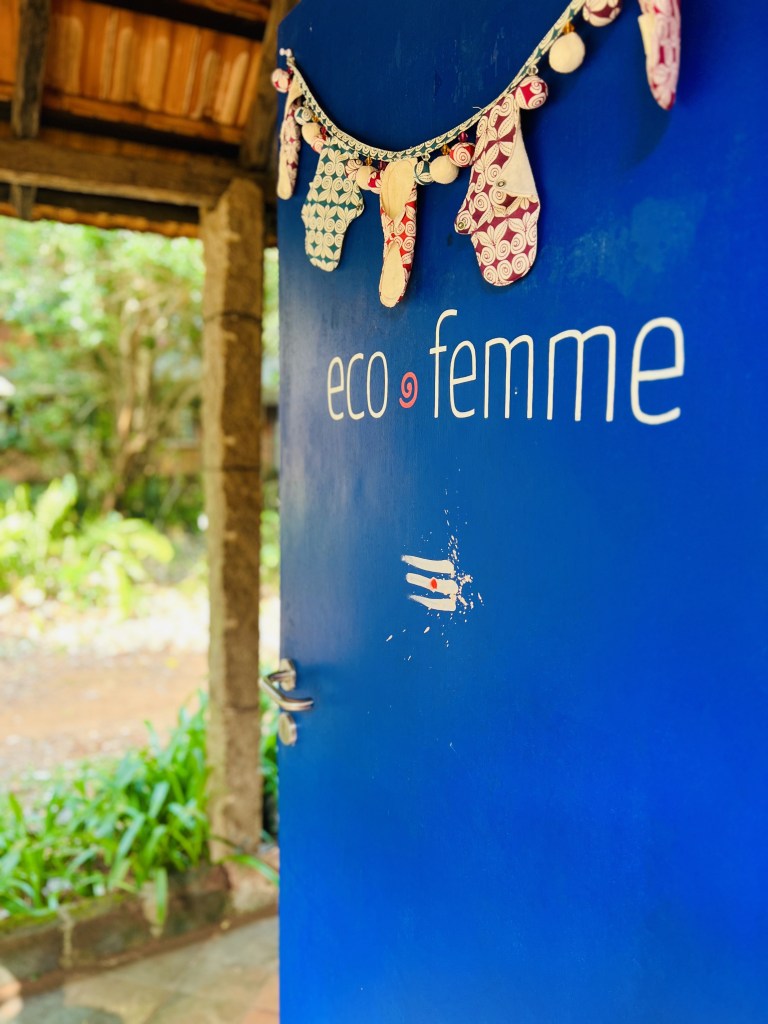
Eco Femme goes beyond the confines of a conventional brand; it’s a movement—a celebration of womanhood entwined with the rhythm of nature. The narrative begins with a sincere aspiration to address the environmental impact of disposable menstrual products and challenge the pervasive stigma surrounding menstruation. Visionaries Kathy Walkling and Jessamijn Miedema, the founders of Eco Femme, set out to create a world where every woman has access to healthful, sustainable, and culturally appropriate menstrual products.

Eco-Friendly Menstruation

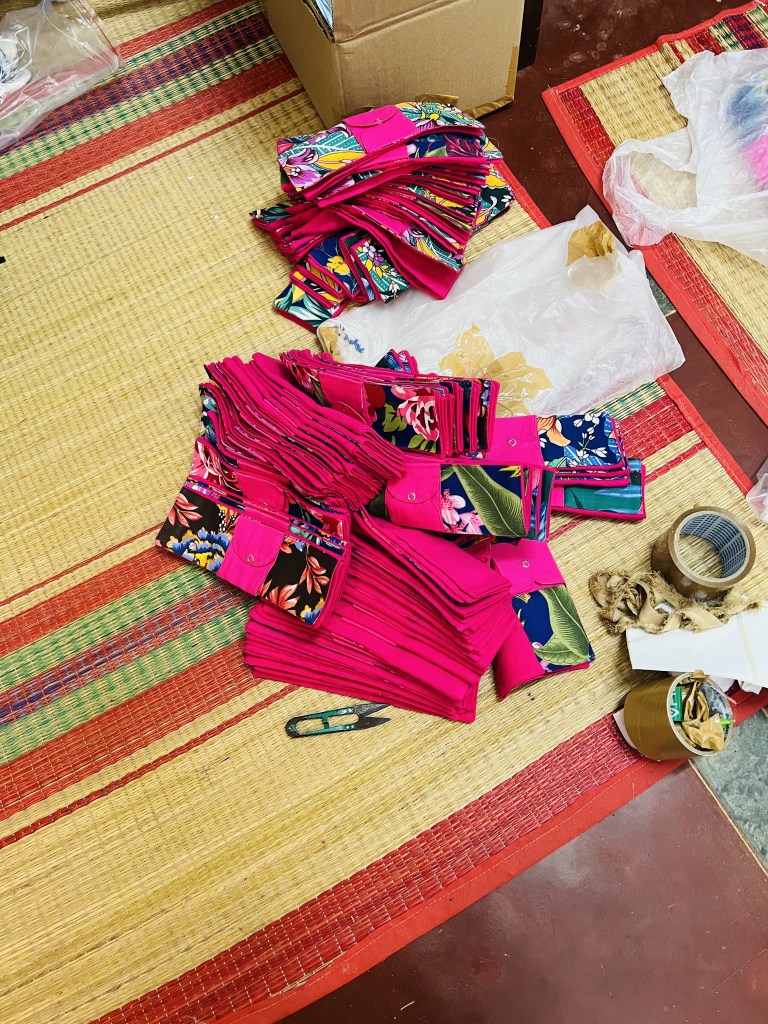
Deep within the ethos of Eco Femme pulses an unwavering commitment to alleviate the ecological impact of menstruation. The conventional trajectory of disposable menstrual products—leaving behind a disconcerting trail of waste in landfills and oceans—prompts a poignant environmental challenge. In response, Eco Femme unfurls its solution: a fervent promotion of reusable cloth pads. These pads—surpassing mere ecological relief—extend their compassion not solely to the Earth, but also to the women who adopt them. They become an emblem of sustainable choices and a gesture of care towards those navigating the intricate journey of womanhood. Crafted from organic cotton, these cloth pads stand as a testament to the brand’s dedication to sustainable and ethical production. They are washable, durable, and beautifully crafted—allowing women to embrace their periods with comfort and grace— significantly reducing their impact on the environment.

Empowering Women — One Pad at a Time

Eco Femme goes beyond the realm of eco-friendly products; it is a pioneer in fostering women’s empowerment. Operating on a social enterprise model—the brand prioritizes the economic well-being of the women involved in the production process. From skilled artisans crafting the pads to women distributing and educating others about menstrual health—Eco Femme becomes a catalyst for sustainable positive change.

Through initiatives like the “Pad for Pad” program—Eco Femme ensures that for every pad sold—a pad is donated to a girl in need. This not only addresses the issue of menstrual hygiene but serves as a powerful tool for education—while also breaking the silence around menstruation and empowering young girls to embrace their bodies confidently.

Cultivating a Menstrual Revolution

Eco Femme isn’t about selling products only; it’s about cultivating a menstrual revolution. By promoting open conversations about menstruation, breaking cultural taboos, and advocating for sustainable menstrual practices through regularized events series—Eco Femme is sowing seeds of change that extend far beyond the realm of its products. Eco Femme isn’t just a brand; it’s a movement that beautifully marries environmental responsibility with women’s empowerment.

Through educational workshops, awareness campaigns, and community engagement, Eco Femme nurtures a global community of women who are not only conscious consumers but also powerful advocates for a more sustainable and equitable world.

AVAG: Weaving Dreams of Empowerment and Resilience

By Kathryn Galloway

In the heart of Auroville, a beacon of participatory development shines bright, driven by a simple yet profound mantra: empower communities to shape their destinies. The Auroville Village Action Group (AVAG), since its modest inception in 1983, has blossomed into a powerhouse of collaborative efforts, breathing life into the dreams of marginalized groups and striving for a harmonious, secure, and resilient society.

At the core of AVAG’s mission is the belief in inclusive development. Their stakeholders form a diverse mix, including women, men, youth, school children, teachers, farmers, and both traditional and elected leaders. Yet, it is the most marginalized—the single women, the elderly, dalits, farmers, artisans, and small business owners—who occupy the center stage of AVAG’s unwavering commitment.

To begin our visit, Makizh Selvam, the office manager, welcomed us into the world of AVAL—a brand crafted by women for the benefit of women. AVAL, meaning ‘she’ or ‘her’ in Tamil, is a social enterprise born from the nurturing hands of AVAG that seeks to uplift the aspirations of marginalized women through skill development in tailoring and crocheting. Every handcrafted product emanates love and devotion, a tangible symbol of self-reliance and self-empowerment. AVAL stands as a testament to the convergence of rural women and urban designers, creating products that embody beauty both inside and out. In a span of 7-8 years, AVAL has become a sanctuary where conscious consumers find more than just products; they find a connection to a cause.

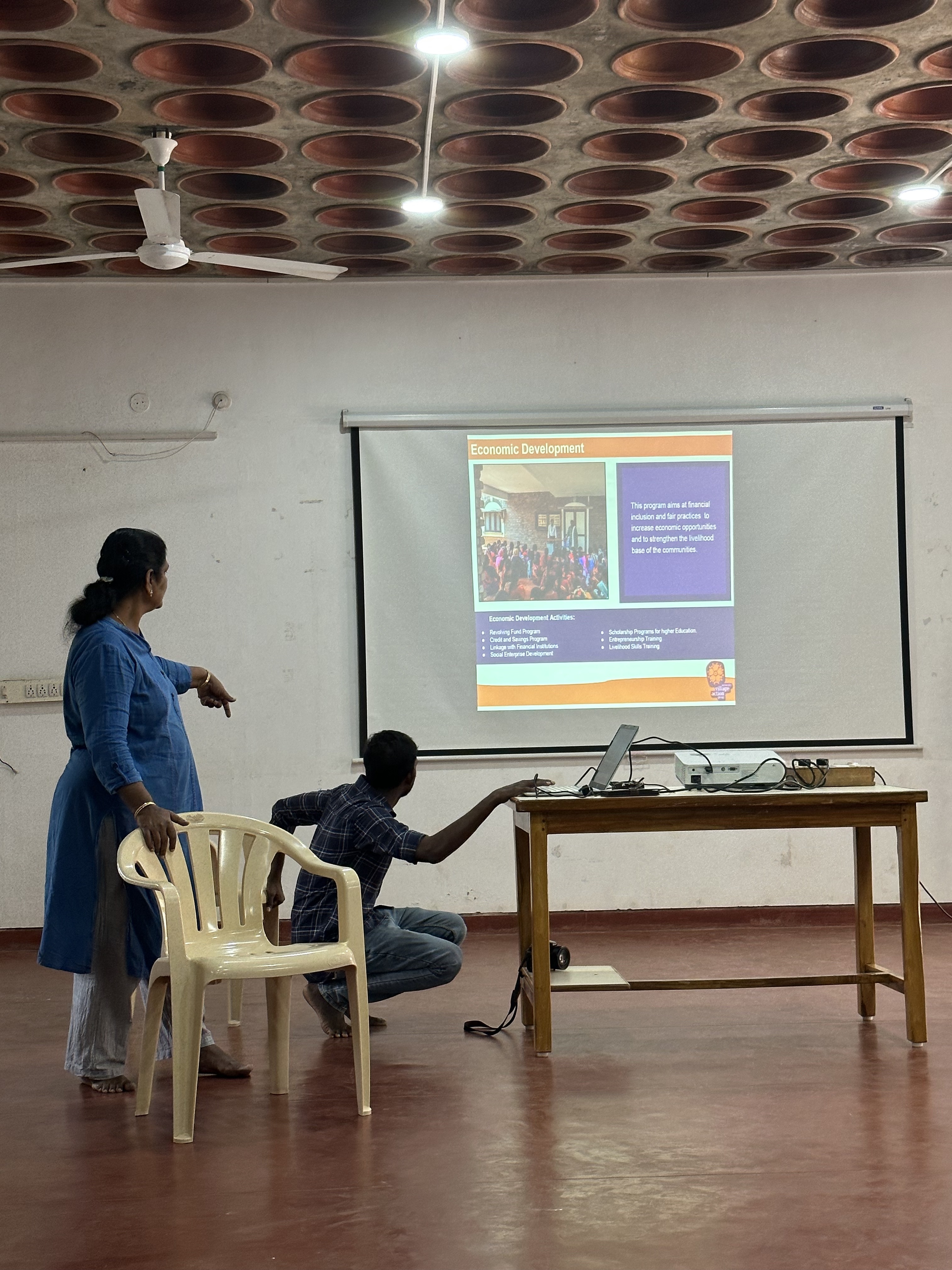
After we perused the racks of the AVAL shop, Anbu Sironmani, AVAG’s Director, shared more information on the organization’s key initiatives. Community development, capacity building, economic growth, and psychosocial support form the pillars of their holistic approach. From personality development to agriculture, AVAG’s initiatives encompass a spectrum as diverse as the communities they serve. Particularly noteworthy is their emphasis on participatory economic growth, ensuring that the development of marginalized groups is rooted in genuine needs and inclusive practices.

AVAG doesn’t just offer support; it nurtures resilience. The psychosocial support they provide is a lifeline, weaving a safety net of mental and emotional well-being for individuals facing stress and trauma. In AVAG’s world, empowerment is not just a concept; it’s a tangible reality carved out of genuine understanding and collaborative effort.

If Auroville is a tapestry, AVAG and AVAL stand as vibrant threads, weaving dreams of empowerment, resilience, and a community where every voice is not just heard but celebrated. They are crafting a narrative of inclusivity that resonates far beyond the borders of Auroville—a testament to the transformative power of community-led development.

Wasteless

Wasteless is an organization founded by Ribhu who was born and raised in Auroville. It is committed to education around waste and how to promote a circular system. They hope to inspire change by using creative techniques to change how people view waste. Instead of focusing on recycling, they try to encourage lowering waste production. They use a metaphor of a running tap soaking the floor while you constantly try to mop it up. The idea is not to just mop, but to shut off the water! Most global waste management strategies focus on what to do with the waste rather than creating less of it, so this is a new way to address a new problem. I think many people do not try to stop creating waste because it seems unachievable, and it probably is. However, we can reconsider how we do produce waste and what we do with it after. One of their big projects is Sea Change. Ribhu in his presentation to us explained how the Wasteless team came up with a program to be used in schools that teaches children about oceanic environmental topics. This makes it easier for teachers to incorporate these topics in their classrooms when the lesson plans have been made by people with specific education around oceanic waste. These programs are now being used in schools in India. It is very important that Indian students are aware of this issue as it disproportionately affects them and is not discussed enough in classrooms or at home.  He helped us understand both why we should consider our own waste production as well as what the organization was doing to make differences in this.

Bamboo Center

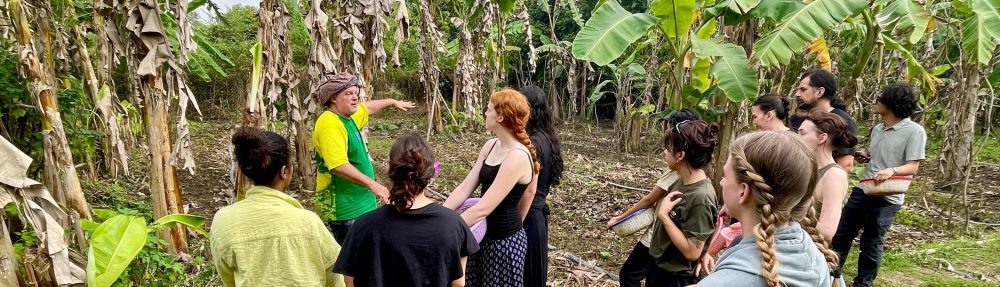
The Auroville Bamboo Center is a local hub for bamboo education. The project manager, Balu, is passionate about spreading the word about how bamboo can be used in different ways. The center hosts workshops and has bamboo art, products, and structures on display. The hope is that from this education, people will incorporate more bamboo products in their life. There are classes taught at local schools to inform the people of Auroville on the potential uses of bamboo and it’s environmental effects. If we are using more bamboo products in place of other materials, we support the production of bamboo forests. Bamboo forests are an important environmental tool to soak up carbon dioxide from the air, allowing nature to heal itself. Bamboo is a very unique plant and due to its durability can be used in diverse ways. Some ways the bamboo center is promoting bamboo products is through food, teas, fabrics, bio charcoal, buildings, furniture, and more. India is the 2nd highest consumer of bamboo right behind China, and this is important because these are countries that are heavily impacted by pollution. It is essential that India finds creative ways to combat climate change in the changing environment. Balu stresses the importance of local intelligence in the changing bamboo market. More and more interest is forming around bamboo due to its powerful healing properties, but it is important that new bamboo farms lean into the traditional farming methods to get the most benefit from the practice. For example, commercial bamboo farms popping up in Northern India, Eastern Europe and the United States have started using pesticides on the farms and harvesting the crops too early. If they took into consideration indigenous bamboo farming practices, they would know that bamboo grows in harmony with other crops such as vegetables that could serve as a permaculture experience making pesticides totally unnecessary. Bamboo trees can grow for more than 40 years with no replanting, the plant is able to reproduce and maintain itself, making the forest harvesting every 2 years counterproductive. Balu teaches us that bamboo should be planted in harmony with the earth. It has practical as well as spiritual value, and the Auroville Bamboo Center reflects this through the forest and the people passionate about it.

Sowing Sustainability: AuroOrchard’s Organic Oasis

By Kathryn Galloway

In the heart of Auroville lies a green haven with roots dating back to 1969—AuroOrchard, the second-largest farm spanning 44 acres. Nestled on one of the oldest plots in the community, this agricultural gem serves as the lifeblood, cultivating not just fruits and vegetables but embodying a mission to nourish the Auroville community.

Initiated with a clear directive from The Mother herself, AuroOrchard’s purpose transcends the mere provision of sustenance. It’s about quality and quantity—a commitment to ensure that the community thrives on the fruits of the land it calls home.

The farm boasts a diverse produce portfolio, ranging from fruits like papaya, lime, avocado, and jackfruit to a rich array of vegetables, medicinal herbs, teas, loofah sponges, and even grass for making brooms. AuroOrchard isn’t merely a farm; it’s a self-sustaining ecosystem, featuring cows that contribute not only to the dairy aisle but to the farm’s fertility through their dung and urine.

The farm’s organic metamorphosis started in 2012 as they began to embrace regenerative organic farming (or agro-ecology.) Beyond sustenance, the focus pivoted towards enhancing soil health and overall farm ecology. AuroOrchard’s transformation mirrors Auroville’s overall commitment to sustainable living.

A significant leap forward involves the systematic recording of production data, a crucial step towards a more efficient future. The farm aims to capture insights into production cost, seasonal crop productivity, and overall productivity metrics. In embracing this data-driven approach, AuroOrchard aims not just to cultivate crops but to cultivate a resilient, sustainable future. The farm doesn’t merely grow; it thrives, adapting and evolving as it continues to contribute to the vibrant agricultural scene of Auroville. AuroOrchard stands as a testament to the power of community, sustainability, and the perpetual cycle of growth.

Shradhanjali

by Riley Osborn

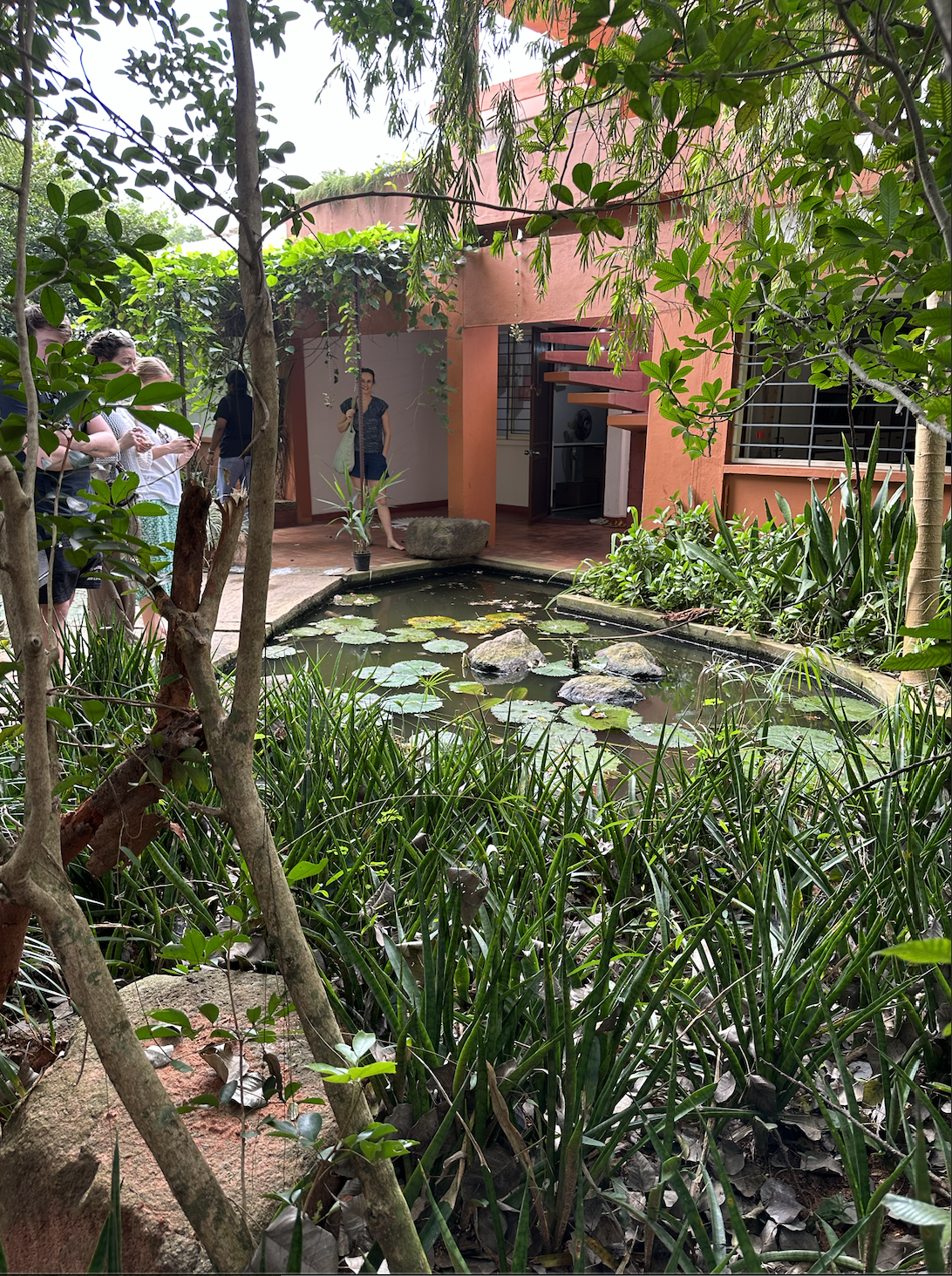
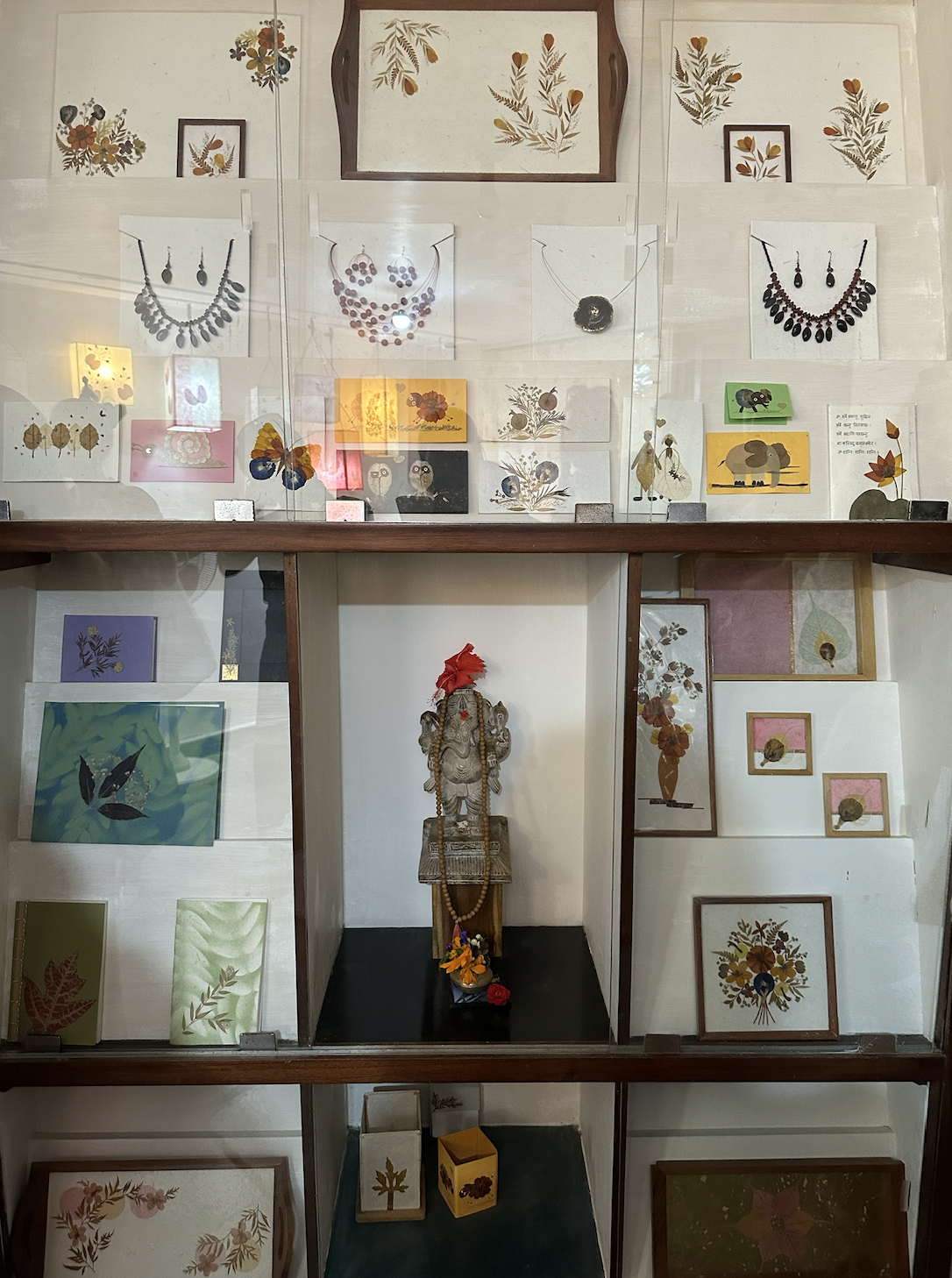
After a delicious lunch at Sudha’s kitchen, our group of 14 American students set off with towards the enchanting world of Shradhanjali. In the entryway, we had the pleasure of strolling through a picturesque garden with a serene pond. As we approached, we were warmly welcomed by Abha, founder of Shradhanjali. She begins by explaining that Shradhanjali is an early Aurovillian foundation specializing in handicrafts. Their unique creations involve pressed flowers and leaves sourced straight from their blooming garden and delicately arranged on homemade paper. The foundation creates beautiful works of art, but is also dedicated to empowering women from neighboring villages. They currently employ 19 individuals from 11 different villages in the bioregion.

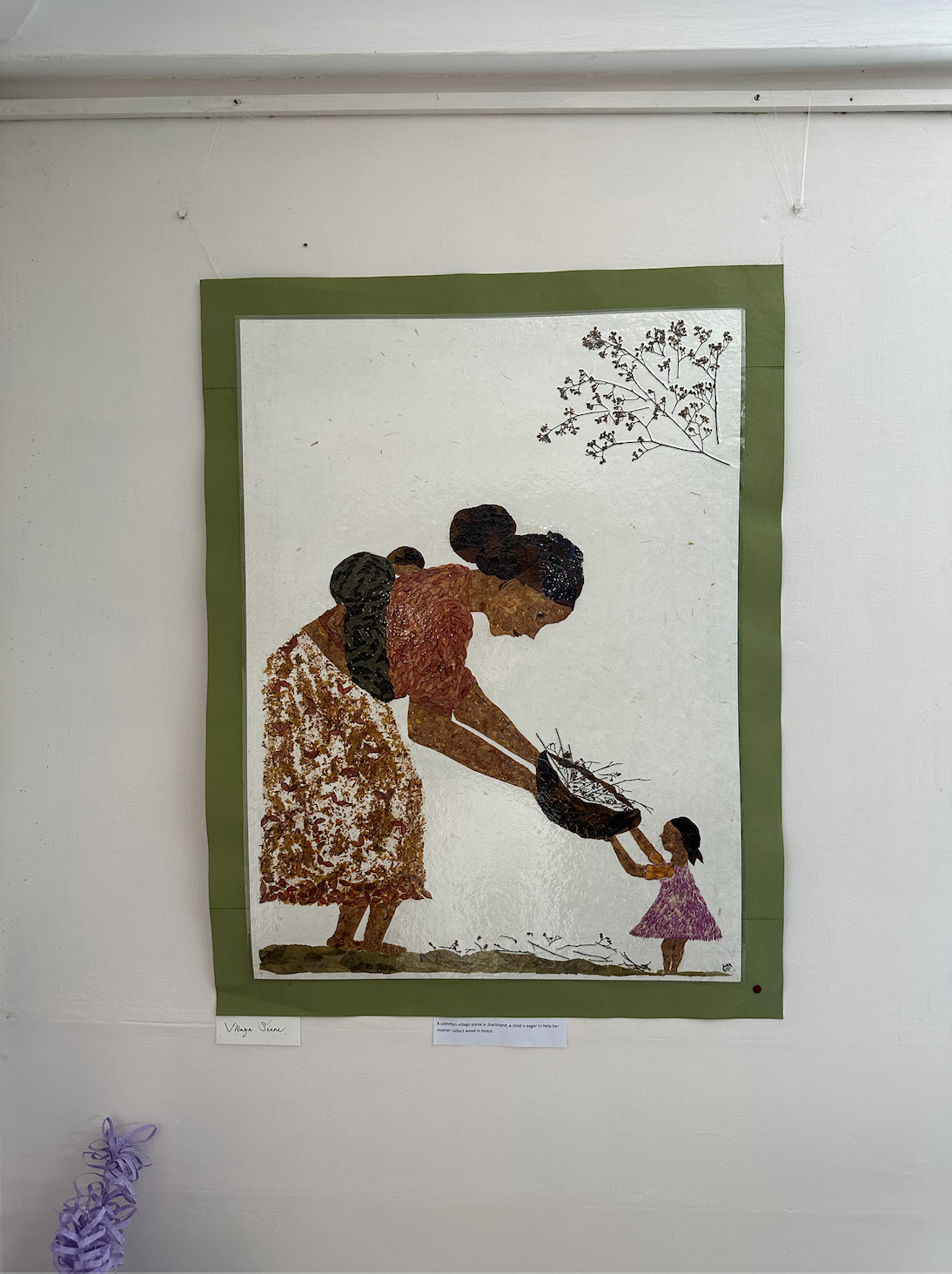
After her introduction, we were delighted to learn that we caught the last day of an art exhibition showcasing the artwork of one of Shradhanjali’s interns named Akay Jharia. Each piece was crafted in the distinctive Shradhanjali style of pressed flowers, and portrayed images inspired by her life. After hitting our heads on a few bell roosters hanging from the ceiling, we walked a few steps over into the heart of the operation. 

Our journey then led us to the beating heart of Shradhanjali, where Abha graciously guided us through the process of crafting. From the meticulous picking of flowers to the careful pressing and drying, we got to see it all. Finally, at the assembly stage, we witnessed the magic unfold. Different stations were filled with different activities, each dedicated to something. There were calendars, table mats, binding books, and many others. The synchronized efforts of the workers made the entire process flow seamlessly.

After this beautiful demonstration, Abha graciously allowed us to wander through the garden, where every flower and leaf is nurtured. Having left our shoes at the front entrance, we were fortunate enough to experience the grounds barefoot, forging a tangible connection with the earth.

In the realm of Shradhanjali, every step tells a story, and every creation is a testament to the skill, passion, and empowerment of the women behind the scenes. It’s not just about art; it’s about a community, a mission, and a celebration of nature’s beauty.

Kajimba

Kajimba is an NGO local to Auroville that has created a healthier alternative to soda. Kajimba drinks are fermented beverages that contain less sugar than soda and have a sweeter taste than kombucha. Kajimba delivers its drinks by scooters to all their partners and stores that sell their product.

Kajimba is hard to explain but the owner said that it is almost like an nonalcoholic beer that has local flavors. It takes less time to ferment than kombucha and is very expensive to produce due to how fresh all the ingredients are. They flavor the drink with homemade syrups that contain a total of 7-8 grams of sugar. Due to the freshness and natural origins of ingredients, Kajimba has a shelf life of only 2 weeks.

AUP students were lucky enough to see the inside of the operation and the kitchen in which they create all of their drinks. The kitchen is incredibly clean and we were able to see how fresh all the ingredients really are as they were sitting right on the kitchen counter.

Kajimba also has a very interesting recycling policy. They will go back to each restaurant and business that sells their product and take back their bottles to reuse them after thoroughly washing them. The owner and founder of Kajimba said that they are able to get back about 80% of the bottles they distribute to restaurants.

Kajimba likes to employ youths and currently has 12 to 14 teenagers who run all the marketing for the brand. The owner said that having young people run marketing and social media offers a more flexible way of working as well as their perspective on how to market the drink to their demographic.

Even though Kajimba is a very new NGO in Auroville it is very noticeable how well their drinks are doing. While visiting and eating at many different local restaurants, many students, including me, were able to get Kajimba drinks at most of those places. These restaurants included but were not limited to Café 73, The visitor center locations, Tanto, Laxmee Pizza, and Pizza paradise.

Kajimba is now launching a new product line, the iced tea, which will have a longer shelf life than their original drinks. This new product is very exciting for kajimba as it will contribute to their ongoing growth. They have not yet done anything for this new product line outside of concocting the drink itself. This is where Kajimba figured they could use AUP students’ help. A few things that the owner mentioned were:

-Finding a name for the new product line

-making marketing content for the iced tea

-creating any sort of social media content

-And creating content for their website.