PSDF

PSDF is a non-profit organization that focuses on family counseling but has a wide array of services that they offer to people in the rural Pondicherry area. PSDF has been in community development since 1999 and has worked mostly with children and women.

When the AUP group first got to PSDF’s building, we were greeted by two women who directed us into a room where the head of the organization, Dr. Mohan, gave us a presentation. Dr. Mohan founded PSDF, and he has done extensive work in social development and acquired a PhD. In social work along with two master’s degrees in history and political science as well as commerce. Dr. Mohan started his presentation by explaining the main goals of PSDF, then followed by explaining previous work done by AUP volunteers. The volunteers contributed in multiple different tasks including field work with women, website design, and social media management.

Dr. Mohan also talked to us about how PSDF has evolved from 1999 and its original goals to today and what they offer now. While PSDF started with family counseling they now have grown into much more. On top of family counseling, PSDF offers a wide array of services such as:

-A creche for mothers to drop off their children

-They offer free legal aid, couples counseling

-They give loans that they get through banks for women to start their own businesses

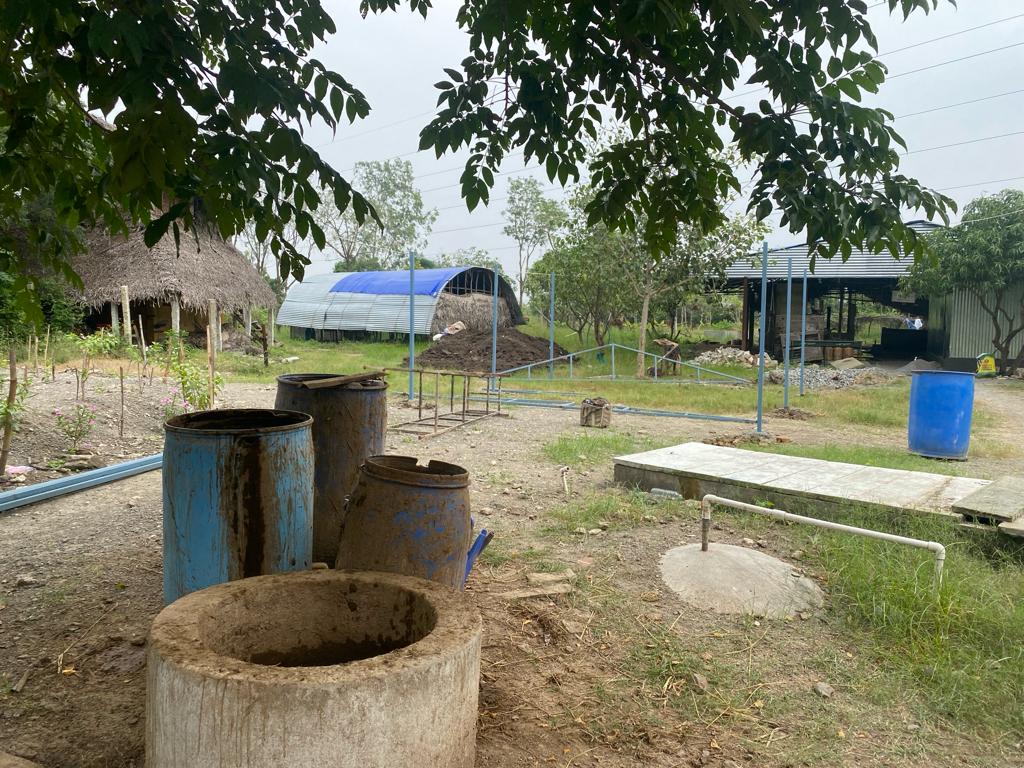
-And help families with water and sanitation.

Many people in India get loans through unreliable people who charge outrageous interest rates to those who cannot afford to get loans through banks. PSDF not only prevents women from taking these risky loans but offers them to education on how to start their own business and they get loans for the women through reliable banks.

PSDF prioritizes education. Whether it is with women and their businesses or educational development in the creche. They also have recently gone and work with people who live in slums to give them a better education.

Some of the needs and issues that PSDF were hoping AUP students could help with were:

-Help developing and updating the website

-Help with social media (managing the accounts during the internship but also taking the time to tech the workers how to continue posting)

-Spreading the word/ advertising all the different services that PSDF offers.
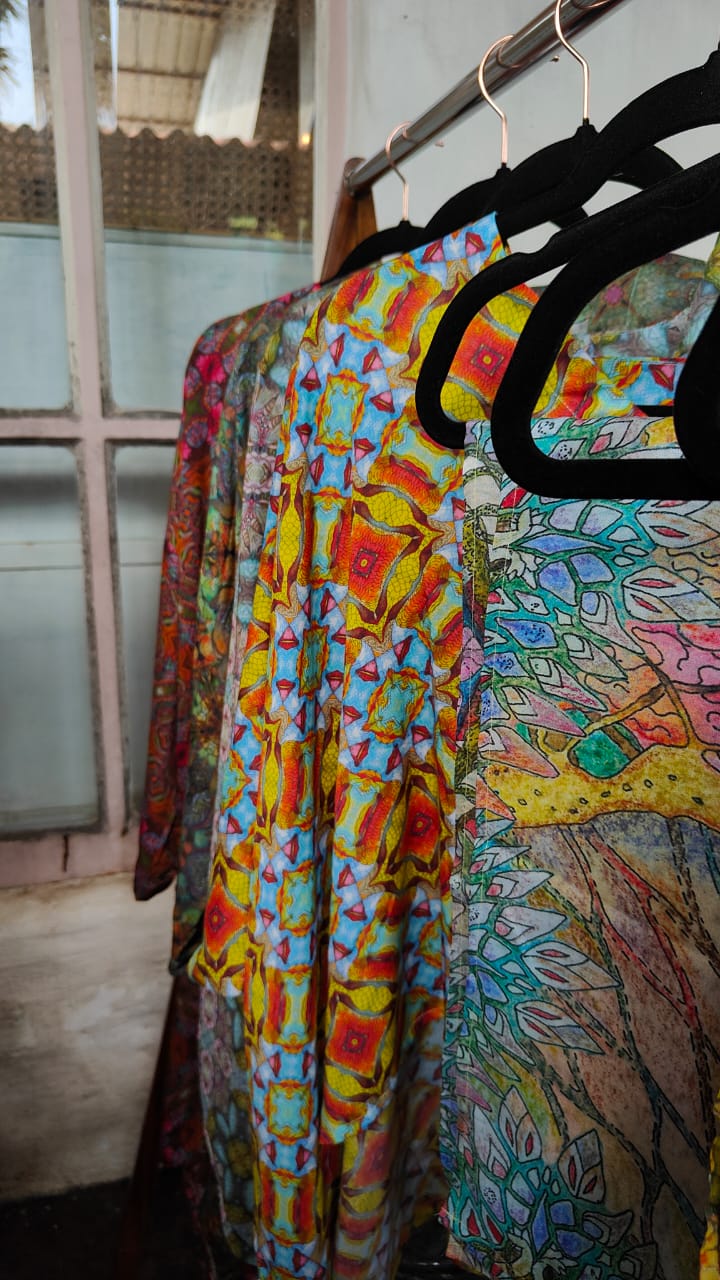
Mythsinart

by Riley Osborn

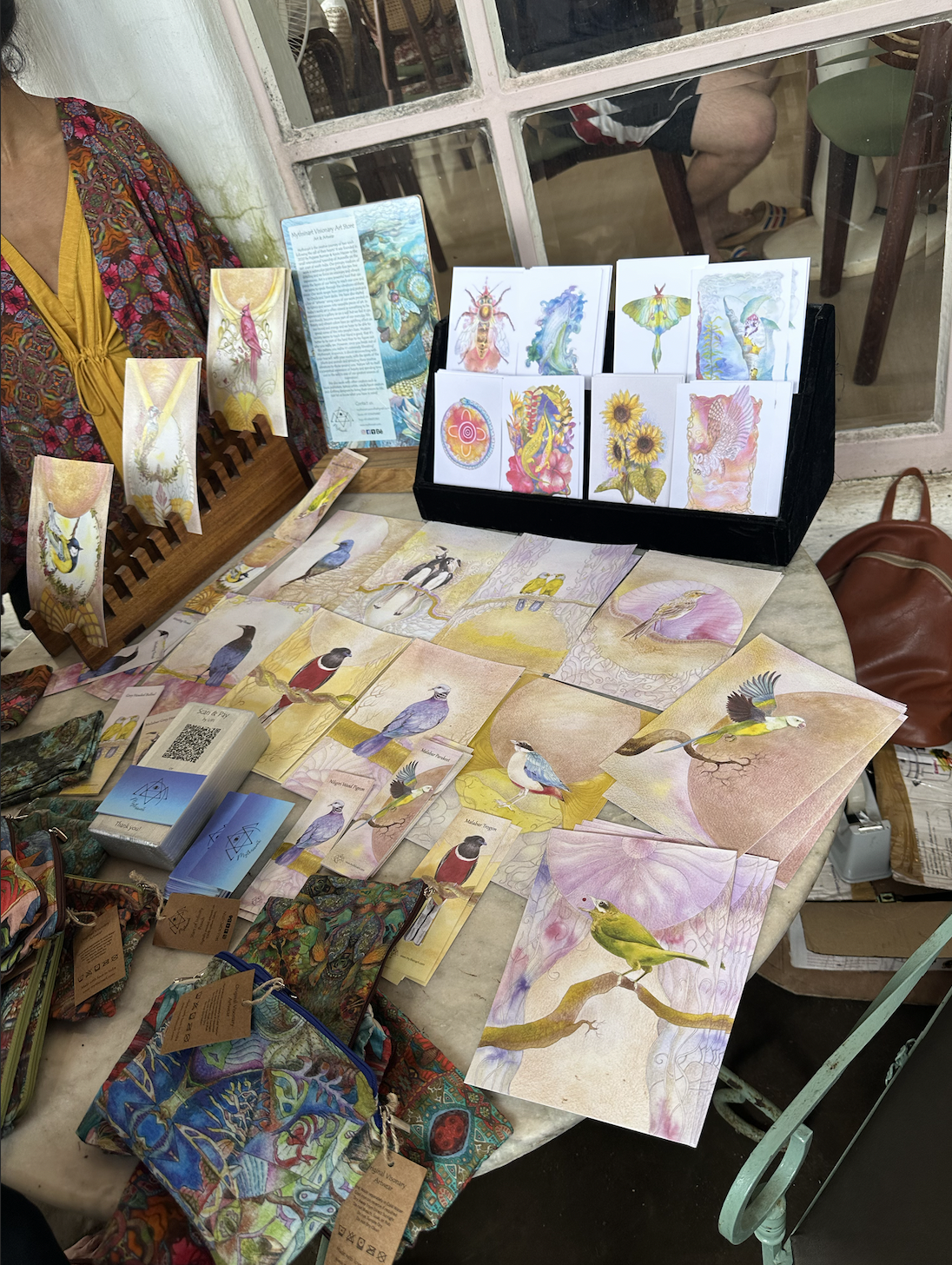
In the middle of a beautiful day of NGO visits, we found ourselves nestled in the cozy enclave beside Conscious Cafe. The air was abuzz with the vibrant energy of people peddling their homemade treasures at various stalls. At the last stall, we congregated around a captivating rack of exquisite clothing, all in vibrant colors. That’s when Puja, the visionary behind Mythsinsart, warmly welcomed us into her world.

Puja shared the enchanting tale of Mythsinsart’s birth—a brand conceived from the belief that art should not just be admired but worn. This idea she called “artwear.” Her approach involves transforming her original artwork into wearable masterpieces. The process begins with Puja creating the artwork, which is then scanned and printed onto organic cotton fabric. Notably, the chosen organic cotton is derived from beech trees, a sustainable alternative that consumes significantly less water than conventional cotton.

What sets Mythsinsart apart is its commitment to supporting the local community. Puja engages independent tailors from the nearby village, fostering economic empowerment and collaboration. While their current model focuses on small-batch production, Puja shared that they initially operated on a “made-to-order” basis, a conscious effort to minimize resource consumption.

Our conversation with Puja delved deeper into her creative process, offering a glimpse into the inspiration behind her mesmerizing watercolor art. Puja expressed her love for watercolors, appreciating the medium’s demand for concentration and intention. Her artistic muse is drawn from shamanic cultures. She mostly draws inspiration through her meditative experiences where visions of otherworldly realms come to life. The resulting artwork carries a psychedelic essence, a visual manifestation of Puja’s personal growth and exploration through meditation.

Every piece in Mythsinart is treated with love and intention. It was a beautiful experience to hear Puja’s story and learn a bit more about sustainable fashion practices!

Unveiling the Potential of a Superfood with Hemplanet

By Daniel Carter

In a world dominated by traditional food and cosmetic products, Hemplanet emerges as a trailblazer, championing the use of hemp seeds in their innovative range. Spearheaded by founders Sasi and Tom, and with Vignesh at the helm as the project coordinator, Hemplanet is on a mission to educate and inform consumers about the myriad health benefits of hemp.

Hemplanet’s focus lies in creating a diverse array of products, ranging from soap and lip balm to body butter, pasta, and granola bars – all to show the versatility of the hemp seed. With the ability to press seeds into oil, Hemplanet harnesses this potent ingredient for its rich fats, omega 3, and fiber content, promoting healthy digestion.

However, navigating the legal landscape of hemp in India is a delicate task. While hemp seeds are legal, marijuana remains prohibited. Hemplanet ensures compliance by using only hemp seeds in their products, steering clear of any legal ambiguities. The purest hemp breeds, they note, are found in South America.

With in-house Research and Development, Hemplanet continues to discover hemp’s incredible versatility, extending beyond the realm of food and cosmetics. It can also be used to make paper products, sustainable clothing, and more, contributing to a more sustainable future. Yet, in India, there is a notable lack of knowledge about the plant, and Hemplanet is on a mission to change that perception.

The three-person team at Hemplanet faces the challenge of dispelling myths surrounding hemp, emphasizing its legality, and promoting awareness about its health benefits. Hemp, they argue, is not just a superfood but a carbon-absorbing wonder with almost 24,000 uses.

Currently, their most popular consumers are sports enthusiasts and athletes who view hemp as a valuable supplement. Some individuals turn to hemp as a sleeping aid. In terms of their current product line, the best-selling granola bars are a testament to the market’s growing acceptance of hemp-based products.

Because of its illegal status in India, due to its invasive growth and risk of inter-species variability, Hemplanet imports hemp seeds rather than cultivating the plant locally. The team emphasizes the importance of distinguishing between marijuana and hemp, a crucial factor in advocating for the plant’s legal recognition.

As Hemplanet continues to make strides in the industry, they are currently focusing on dispelling myths, creating awareness through the use of social media., Hemplanet remains committed to its goal of unlocking the true potential of hemp and bringing its manifold benefits to the forefront of consumer consciousness.

Rediscovering Cultural Roots: A Journey into Solitude Farm’s Permaculture

By Daniel Carter

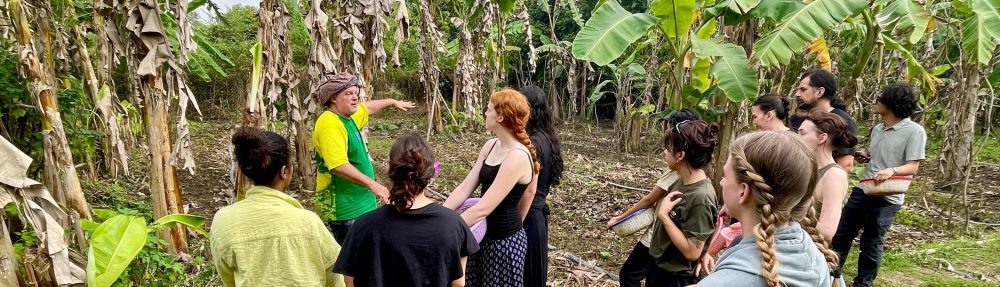
In a tranquil corner of Auroville, India, sits a small 5.5-acre haven on a mission of “Cultural Redemption.” Solitude Farm, an initiative quietly thriving since the 90s, is a testament to simplicity, inner reflection, and a profound connection with nature. Founded by Krishna McKenzie urges us to reevaluate our relationship with the source of our sustenance. “The most valuable thing we can learn is where our food comes from” he proclaims to the group of students from the American University of Paris visiting the farm community.

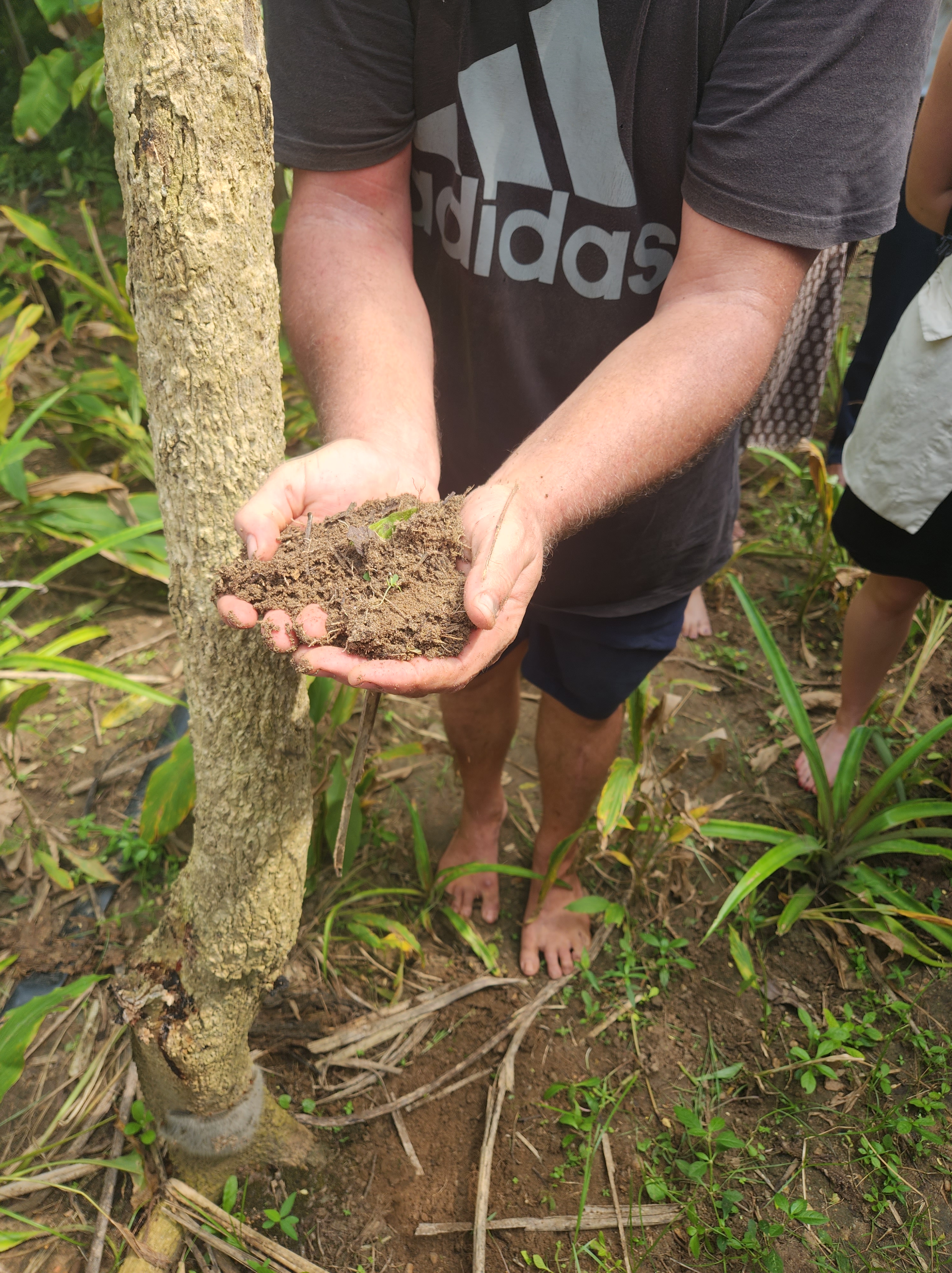
While walking barefoot (yes, barefoot!) through the farmland, Krishna expounds Solitude Farm’s philosophy, an appreciation for and relationship with the land. His belief is that our culture emanates from a people having a relationship with where their food comes from. This can be seen in strong cultural identities in the world that are strongly tied to the foods of their lands. For culture starts in the mind, which in turn, stems from the body, which gains nourishment from the food we consume, which at its root (pun intended) comes from the soil, which many cultures revered as divinity. Recognizing the intricate web of life and biodiversity it harbors, Krishna highlights the interconnectedness of soil, food, body, mind, and culture.

In a world preoccupied with competition and economic gain, Solitude Farm advocates for a return to the basics – understanding where our food comes from. In a society that has severed its ties with the roots of sustenance, the farm believes that culture is lost.

Their chosen method for this cultural renaissance is permaculture, a practice often referred to as “permanent farming.” Embracing the concept of “do nothing farming,” Solitude Farm believes in letting the land guide the way. The only currency here is time, and the land, when cared for, reciprocates abundantly, yielding a diverse range of plants like peppers, mangos, and bananas, each with unique and valuable health benefits.

An essential principle of Solitude Farm is the non-exclusivity of common foods. Here, the beggar and the king share the same nourishment, fostering a sense of equality and interconnectedness. This commitment extends to their environmental footprint – prioritizing local foods over global agricultural practices to combat climate change. As Krishna asserts, they are not merely planting a farm; they are cultivating a menu, a diverse and sustainable approach to living that echoes the renaissance of Auroville.

The primary technique employed by Solitude Farm is the return of organic matter to the soil – leaves, branches, and other natural remnants nourish the land, creating a sustainable ecosystem. The second technique emphasizes valuing the gifts of the land, encouraging the use of local resources. However, the farm acknowledges that this transformation is incomplete without the third technique – community.

Celebration, an integral part of permaculture at Solitude Farm, underscores the communal aspect of sustainable living. It’s a reminder that the journey towards cultural redemption cannot be solitary – it requires collective effort and shared experiences.

At Solitude Farm, contrary to its name, the world comes together, sharing a plate, a smile, and an idea for a better world. In the midst of global challenges, Solitude Farm stands as a beacon of hope, inviting us to reconsider our relationship with the land. It beckons us to rediscover our cultural roots by nurturing a profound connection with the land that sustains us.

Pitchandikulam Forest

By Justin Kauppi

Over fifty years ago, much of the nature we know and see in Auroville today didn’t exist. That was until the 1970s, when Joss Brooks began creating what would become the 73-acre forest known as Pitchandikulam Forest. Due to mass deforestation in the 19th century, much of Auroville was scarce of trees and other vegetation. Now, the forest is full of native species of vegetation and even many animal species who naturally found their way to Pitchandikulam. 

Along with the many animals and vegetation that the forest hosts, many classes and resources can also be found. Educational classes such as ecology tours for students to first aid classes for venomous snake bites are held at Pitchandikulam. These classes, which are facilitated by professionals, amplify important knowledge to the local communities. 

Pitchandikulam Forest is also home to more than 800 species of what Dr. Lourdes Epinal, the Environmental Education Manager who has been working at Pitchandikulam for 35 years, calls “local village healers.” These “healers,” which have been used by South Indians for a long time, are organic herbs that are growing in Pitchandikulam Forest and can help with stomach problems and other ailments.  For more than two decades, Pitchandikulam Forest has played a key role in the conservation of these herbal plants as well as the education of their importance to many who call South India home. 

One of Pitchandikulam’s Artists Touching up a Tablet

In order to maintain such a vast operation, Pitchandikulam employs more than 150 staff members. Of the staff, Pitchandikulam has six local artists who work hard creating art for the purposes of beauty and education. From creating sculptures of local animals, to painting tablets identifying the local plants, the artists work diligently doing what they love to maximize the wonder of the forest. As the artists create their works to educate, the 25 educators employed at Pitchandikulam Forest use a combination of art and nature to create an unforgettable learning environment for students of all ages. 

As Pitchandikulam moves into the new year, they have big plans to bring the wonders and importance of the forest to even more people. Plans such as integrated water treatment, master trainers for sustainability, and guest facilities for visitors are just a few of the short term goals that Pitchandikulam Forest has in mind. Ultimately, Dr. Epinal understands that the future of the forest and sustainability is in the hands of children. That is why Pitchandikulam will continue to educate younger generations on their home and the importance of nature and the air we breathe. 

Sri Aurobindo Handmade Paper

By Justin Kauppi

In 1959, the Sri Aurobindo Ashram Paper Factory opened in Pondicherry, India. Ever since, it has been creating beautifully textured paper that has been crafted into products such as notebooks and wedding invitations among many others. When many think of where paper comes from, they think of trees. Yet at the Sri Aurobindo Ashram Paper Factory, that’s just one of the many origins. As Gaurav, the Operations Manager of six years gathered us at the entrance of the raw material processing room, he explained that the paper at the factory comes from eucalyptus, bamboo, pineapple leaves, banana fiber, sugarcane, and more. However, one of the most used sources for paper at the factory is cotton. Due to its ability to create any color, as well as its durability due to its strong fibers, cotton reigns supreme within the wails of the factory. 

In order for the cotton to become paper, it first has to go through several steps. First, the raw cotton material is sourced from a local textile industry which Gaurav says would otherwise end up in a landfill. After being cut into long strips, and sifted through for the right sizes, the cotton is then beaten into a paste which Gaurav likens to a chutney-type substance. Several employees of the more than 100  hired workers, many of whom have years of experience, beat the rags until they are at the right stage to be sent to the next step. A stage which is indecipherable to the inexperienced onlooker. After being treated with local well water, and even coconut water, the paste is then delicately poured over a mold before being tightly pressed in a special vice before it is peeled and hung to dry. 

Handmade Deckle Edge Paper featured on http://www.sriaurobindopaper.com

Although much of the paper comes out white, there are many techniques used at the factory to create the most vibrant of patterns full of color. As Gaurav led us into one of the drying rooms, we were immediately surrounded by paper of vivid yellows, reds, and purples that swirled in together in ways that rival the works of Van Gogh and other Post-Impressionist painters. Gaurav explained that this type of technique of what is known as “marbling” originated from Japan but was adopted by the factory and has become one of the factory’s best-selling products. 

At the end of the tour, we were taken to the factory’s gift shop where we could see all of the finished products on display and available for sale. Items such as deckle edge invitations and origami tree ornaments make up just some of the unique and affordable gifts available at the shop. However, if you can’t visit the shop in person, you can buy online at http://www.sriaurobindopaper.com. 

Wellpaper

By: Ashley O’Hara

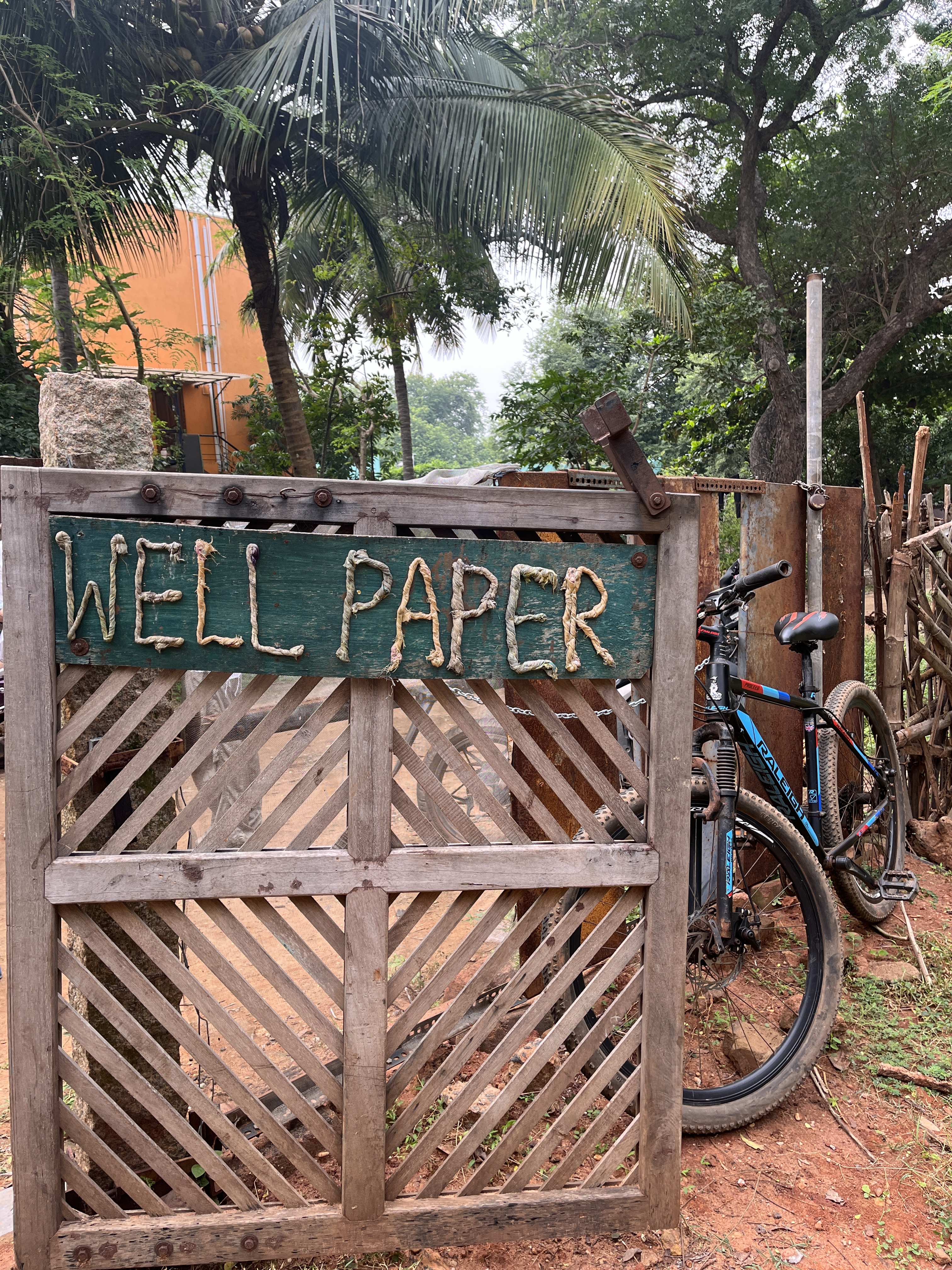
WELL stands for Women Empowerment through Local Livelihood. This is exactly Welllpaper’s goal, to empower women through their social enterprise. The organization creates products from waste, focusing on paper waste. They recycle paper into various products, most being hand-woven home decor. Wellpaper was started in 2005 following the tsunami, which was extremely damaging to Tamil Nadu. The organization promotes sustainable practices, female empowerment, and personal income stability.

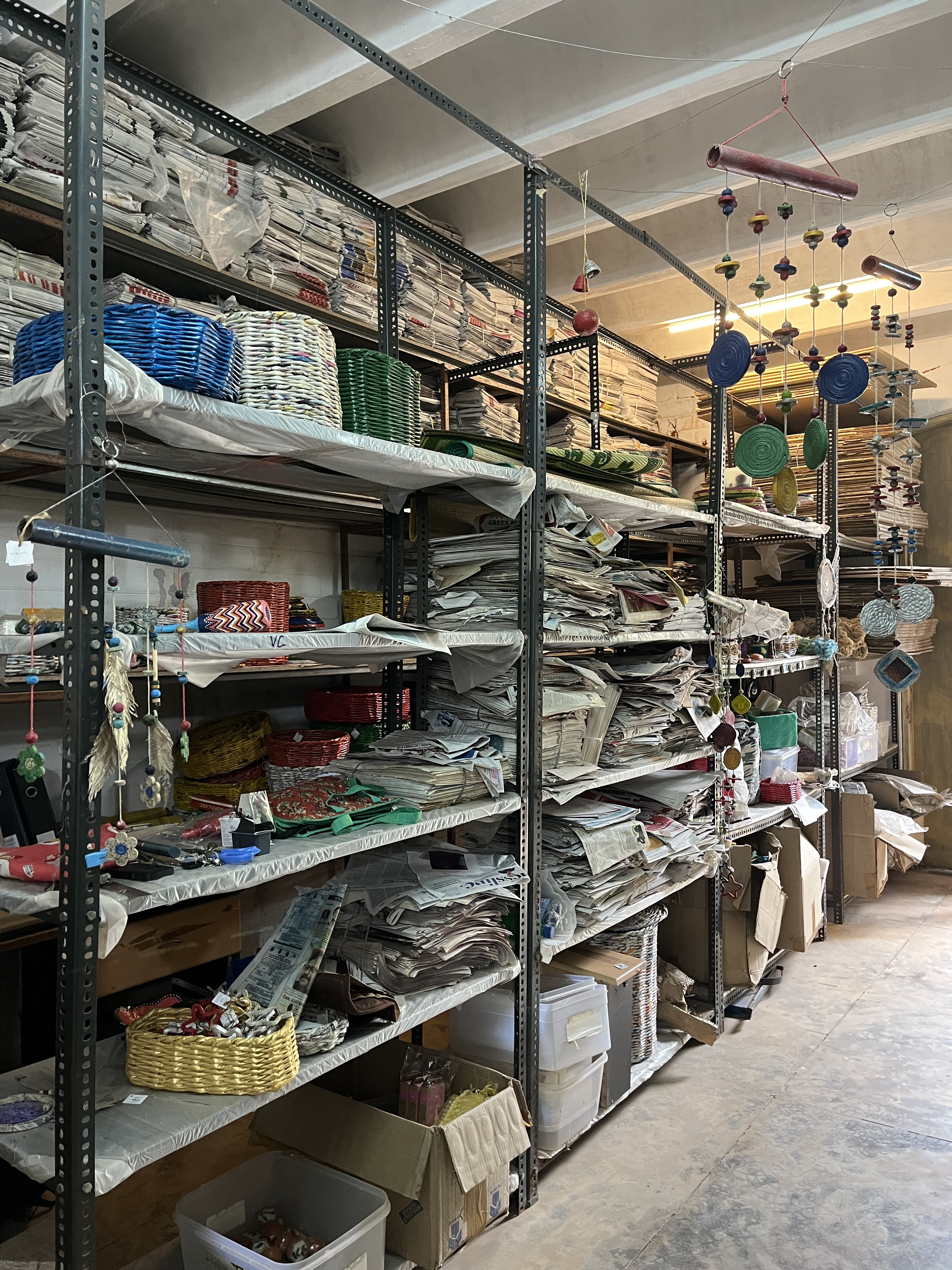
When we arrived at Wellpaper, we were brought into the studio/display room where all the handmade products are exhibited. There were many woven baskets and trays, as well as a large rotating jewelry display and a wall mural made of upcycled materials. The weaving method is a traditional cultural method. Wellpaper is unique in the sense that it uses rolled scrap paper coils for the weaving material. We were able to watch a live demonstration as a workshop was just ending. The women begin by taking a single piece of paper, finding a corner, and rolling it tightly. They seal it with a glue substance. To weave items, they begin by assembling a base. To facilitate this process, they often create the base around an existing box to achieve the desired shape. Once a base is made, they continue adding coils and weaving them together to add height and dimension to their creation. 

Not only does Wellpaper teach their employed women this weaving skill, but they also runs workshops to demonstrate their creative method to visitors. Similarly, they talk about the importance of limiting waste and upcycling.

Through teaching this process, Wellpaper has created an opportunity for local women to earn their own income. This is extremely important for their personal financial stability, the empowerment of women, and the overall income generation of local communities. Wellpaper offers a series of trainings to new women, allowing them to develop their skills. Through the encouragement of personal empowerment and strong team work support, Wellpaper has created a bright, beautiful community!

OK Upcycling Studio

By: Ashley O’Hara

Limiting consumption is a major part of sustainable living and limiting waste is absolutely necessary to protect the environment. However, removing waste completely, even in a place like Auroville, is extremely difficult. So the question becomes: what can we do with the existing waste? Well, one of the best things that we can do with waste that already exists is reuse it. After all, one man’s trash is another man’s treasure! 

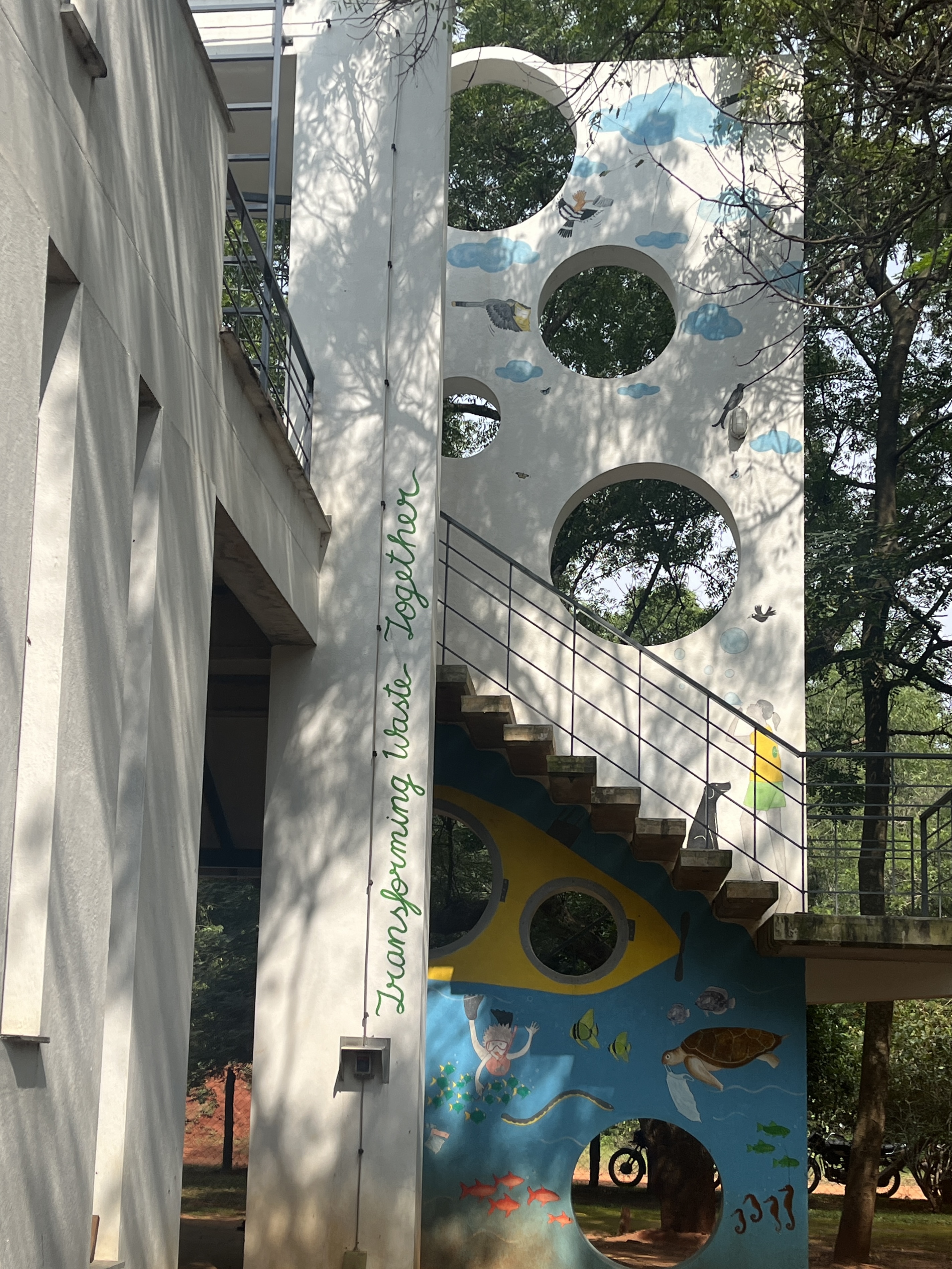
Housing both Wasteless and the Upcycling Studio is a fully sustainable building created by Ribhu Vohra, the co-founder of Wasteless. The Upcycling Studio is located downstairs on the ground floor. Upon arrival, we were greeted by displays on the front terrace that gave us a first glance at the immense creative passion inside the workshop. Here, we are introduced to the upcycling process. A huge part is obtaining and cleaning waste materials. The Upcycling Studio gets waste from the EcoService in Auroville, where garbage is separated. They collect many different types of waste for their projects, including glass bottles, old CDs/VHS tapes, plastic packages, fabric, and even toilets. Inside, the studio is a bright, creative space decorated with past projects. There are large workspace areas and a wall of tools, making this a productive studio area. 

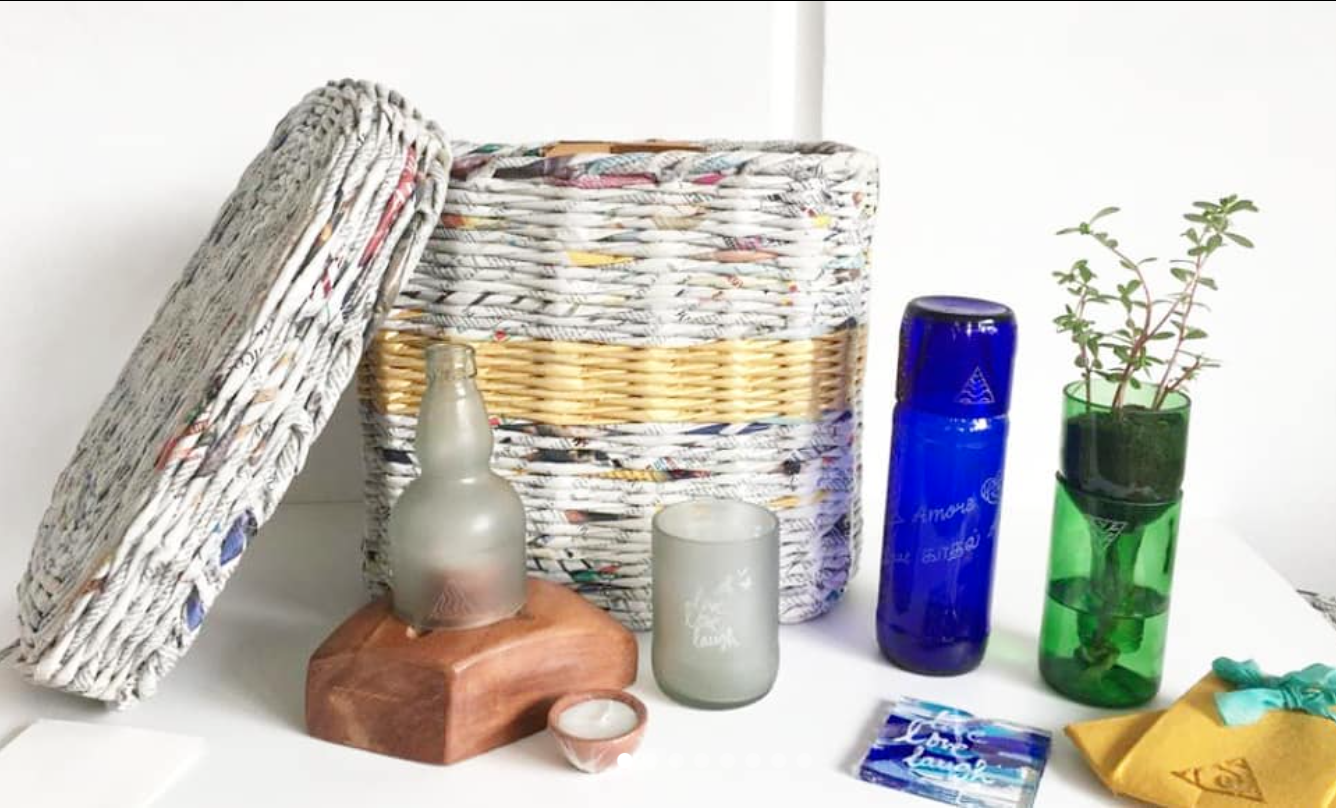
The Upcycling Studio has a powerful way of giving meaning to their recycled projects, truly giving a beautiful new purpose to what was once just waste. An example that really encapsulated the thought they put into their products is the Desk Harmonizing Kit that they showed us. They wanted to create something that was not only attractive but also extremely practical. The kit comes in a basket made of recycled paper which comes from Wellpaper (an organization we also went to visit!). Inside, the first object is a self-watering plant vase. This is made from a glass bottle which is cut in half with the top piece turned upside down inside the bottom part. This allows for a succulent plant to sit on top with its roots through the neck of the bottle, where they can reach the water at the bottom. It brings some living greenery to the desk. Next, the kit has a quantum water bottle. The top piece is removable as it doubles as both a lid and a cup. This is inspired by Aquadyn Auroville’s water purification system technology that uses quantum physics. Inside is a purifying silver coil. The outside is engraved with words of love written in the four languages of Auroville and those spoken at the Upcycling Studio. They chose this as it shows the gratitude for water and they believe, as researchers do as well, that water’s molecular structure is transformed when spoken positive words. A candle holder is the next object, made from the top of an old gin bottle. The base is made from trees that fell from natural causes in the Pitchandikulam forest. The candle sits on this wood base with the glass top covering it nicely. There is also a paperweight made from old glass tiles and broken glass pieces. The symbolism behind this kit is that it is balancing because it brings all the worldly elements together on the desk: earth (plant holder), water (water bottle), fire (candle holder), and air (paperweight). This shows how the studio is dedicated to making thoughtful, meaningful pieces. 

Desk Balancing Kit featured on Upcycling Studio’s Instagram

One of the team’s key initiatives is bringing upcycling workshops into schools. Instead of normal arts and crafts activities which create even more waste, the team encourages children to collect trash they see and make artistic projects with it. They aim to break the stigma that trash is dirty to encourage reuse practices. The team also uses this as an opportunity to educate about the importance of limiting waste. Upcycling is an amazing education tool as it can bring in creativity, mathematics, and problem-solving skills. 

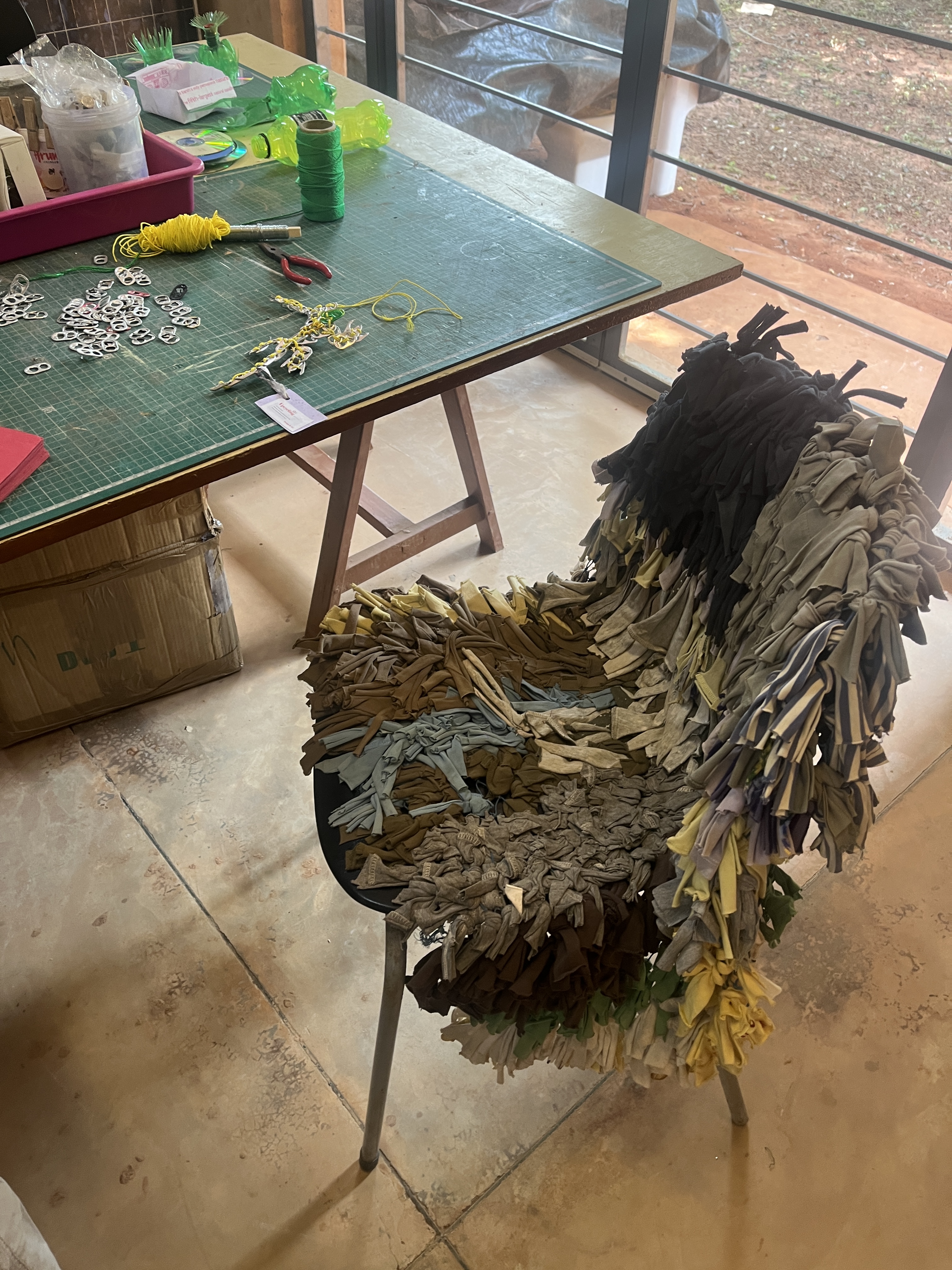
The team also seeks to educate the public through inspiring public displays. Sitting on chairs made from recycled materials and stuffed with plastic wrapper waste, we had the opportunity to look through various books on the Upcycling Studio’s past work. They have had many large public art displays in Auroville and abroad, including the Trashion show (featuring upcycled outfits) which they do in Auroville every few years. 

What I found quite beautiful about the Upcycling Studio is the way it added a hopeful lens to waste. It spreads the message that we should limit waste as much as possible, but we should see the remaining waste as a material that can be reinvented time and time again. Their work opened our minds to the wide array of possibilities that come when we destigmatize trash. The creative mindset that waste can actually be something shiny and new with just a few tweaks and a creative vision is truly inspiring. The possibilities are endless!

Sristi Village Foundation

By: Alexandra Shao

Found on their website their mission is to build a society where developmental disability ceases to be an exclusionary factor.

“For over seven years, Sristi has relentlessly worked to create an inclusive society where children and people with intellectual and developmental disabilities are respected, valued, and have the choices to lead a holistic and dignified life in mainstream society.”

-Sristi Foundation

The village accepts adults and youth who suffer from autism, cerebral palsy, and more. Through various approaches, the village has flourished and has come to realize its central goal. Utilizing education and training, then application in different life skills both economic and social, these developmentally disabled youths and adults have become economically successful and sometimes self-sufficient to the point of being able to leave Sristi or economically supporting some of their family outside of Sristi. This is an extremely important change for the participants, as in the cultural fabric of India getting a job as an adult is a mark of success and pride. This alone can help redefine the perception and stereotypes of disabilities.

AUP student group hearing the history and values of Sristi Village in their outdoor classroom space.

The farm stretches extensively with a central building that houses different offices and a classroom, then a well-equipped playground that sits outside it. Construction has been kickstarted to the back for a rabbit habitat, and those are not their only farm animals. Here they have 15 dairy cows and 125 chickens. There is a large water well that collects rainwater and helps irrigate the fields. Taking a trip down a dirt path you come to the dormitories. Here, adults with disabilities have their own kitchen, bedroom, and space to practice and realize their learned skills. Here meeting with the men staying here, you can see the confidence and joy that would be lacking in many other care homes where overcrowding or lack of staff may lead to medicating patients more when they act out. Instead here there seems to be more self-regulation and a plus to fuel negative feelings instead of being trapped or stuck with them.  

– Playground at Sristi Village
– Animaland Farm structures and layout at Sristi
Lego bag workshop at Sristi

The original concept has now expanded to encompass many different programs. From government-funded and supported programs, outreach and training in other villages, early intervention programs, food drives, and various environmental projects. You can even find on-site a workshop filled with Lego bricks where a designer, inspired by Sristi, created a design where the village produces bags made of Legos. They follow a precut format and then stitch it together. These are then sent to the designer who sells them in Spain. All the projects have been so successful that they are currently continuing their expansion with plans to open a new village strictly for women who suffer from disabilities. They also regularly accept volunteers to come stay on the farm and work, offering what support and skills they can while helping around the farm to pay for room and board. This is a place to put your support as they are changing largely held beliefs and stereotypes against the disabled population in India. To learn more, find more information on their website!

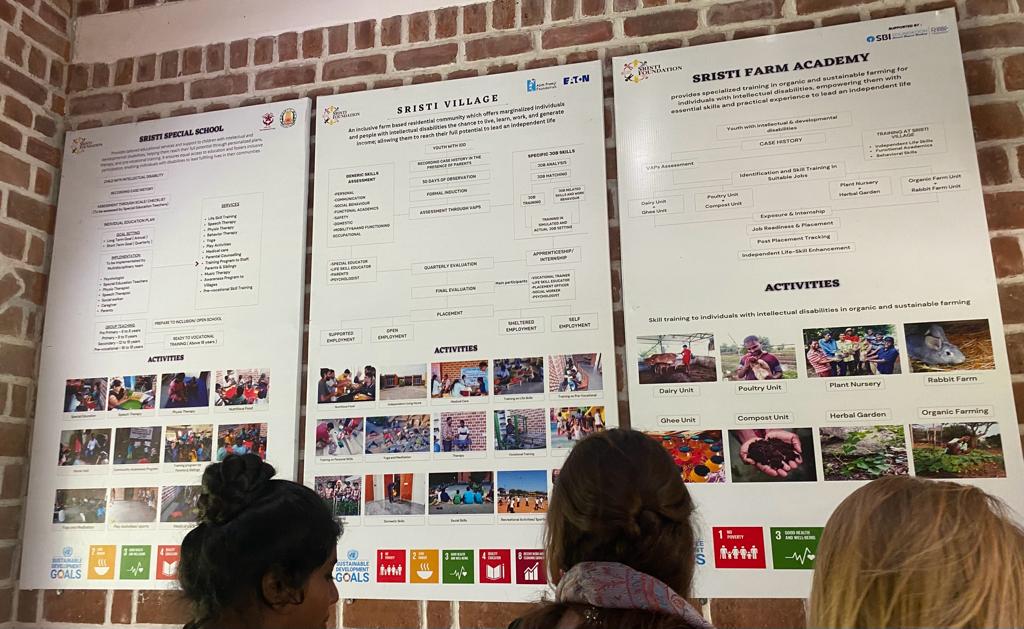
– Displays of some of the projects that Sristi has started.

Water Management

By Gabby Bashizi

Geologist Giulio has a very matter-of-fact way of speaking. He’s short. He’s Italian. And he cares deeply about water management. 

These are the things that our group learned about Giulio within 5 minutes of the beginning of our lecture. The first question he asked us was where we were all from. “You might all have a particular story with water,” he said, eyes alight. “I’ll try to incorporate these special relationships into my talk today.” 

What is water management? This is the question that drove our lecture, which was one suitable for both water-beginners and water experts. Here’s what we learned: 

Auroville sits on a ridge. That means that rainfall that comes down over the territory goes somewhere, it doesn’t stay sitting still on the surface. The place this water goes to is called an aquifer. An aquifer is an underground layer of water-bearing permeable rock or unconsolidated materials, like gravel, sand, or silt. These materials allow the water to stay underground for later access through wells, or other similar means. Auroville soil is part Cuddalore Sandstone, which is very porous. It also contains sections of Manaveli Clay and Kadaperi Kuppam Limestone. Each of these materials invites unique flows of water: the sandstone allows for flow directly into a lower layer, while the clay’s non-porous structure means that when water falls on it, it runs according to topography. That direction is away from Auroville and into the surrounding villages. Only 13% of rainfall even reaches the groundwater, meaning that over-extraction of these resources will not be replenished quickly. The aquifer that lies under the Vanur Sandstone has gone down significantly. Soon they will hit granite. Aquifers act as temporary storage for water sources, but they are not to be considered to be “water management”. That task requires far more intricate thinking.

Pond in Kuilapalayam

Giulio called back to an ancient Tamilian system of water management: a large system of interconnected lakes and ponds at varying topographic elevations that allowed for rainfall to be collected and distributed using gravity to other parts of the bioregion. This strategy, he concluded, is much more akin to a system of management, and we should look to these techniques in our search for more effective water design. 

The broader point to this Auroville-specific water story is that water access depends heavily on geographic location. Water management means accumulating a knowledge of geology, politics, and engineering to understand how to allocate equal access to water, regardless of unfortunate geographic positioning. 

Water management system at Colors of Nature

There are so many issues that accompany poor water management. Over-extraction leads to depleted groundwater reserves. This leads to two major issues, especially in Tamil Nadu. The first is subsidence, which is when the ground begins to sink due to a lack of solid material supporting it, and an excess of weight on top of it. The lack of material can be attributed to hollow ground with the absence of water supporting it. The second is salt-water intrusion, which occurs mainly in areas close to sea level and near the coast. When the groundwater storage is depleted, it leaves an empty space for the ocean to percolate through the ground and fill up the area. The drinking water becomes salinized and ruins the supply for everyone extracting from the same place. Giulio grimly added: “Nature will prevail, we are nothing on this planet. No matter what, nature will prevail.” This sentiment, though dark, is certainly true. We are powerless to stop water, we must work within the confines of its movement to get the best that we can from it. 

These problems go uncontrolled by legislation. When asked about the existing sources of legislation in Tamil Nadu, and in India as a whole, Giulio just shook his head. He lamented the absolute lack of water legislation on a state and national level. The current rule, he said, is “I own the land and whatever water is above, on, or below the land is mine”. This paints a grim picture of resource availability in the future. If we continue to abuse our power to extract water, there may very soon be none left. The phenomenon is not concentrated in India, either. On a global level, governments and their people are struggling to strike a balance between personal profit and longevity. This will persist until creative people with a passion for sustainability take up arms in the fight to protect water and ensure it for everyone. 

Giulio concluded his talk with this line: “When you think of water, think of life.”

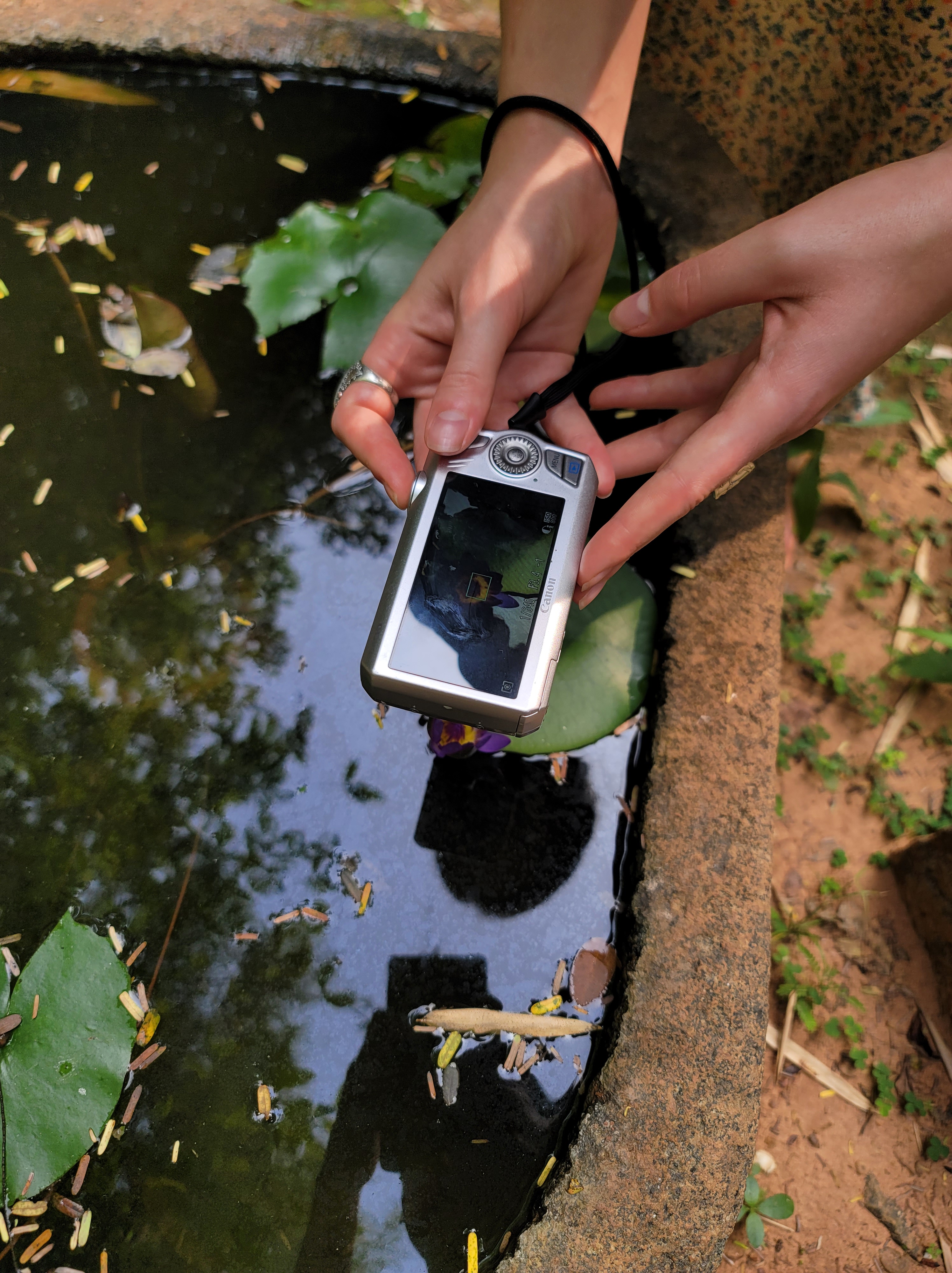
Small basin of water and lilypads in Pitchandikulam Forest

Nothing more accurate could have been said, and it truly left us all thinking about our water usage and the role that we should play in making sure abuses stop and sustainability prevails. Think about your water, think about your life.