Electric Mobility with Kinisi

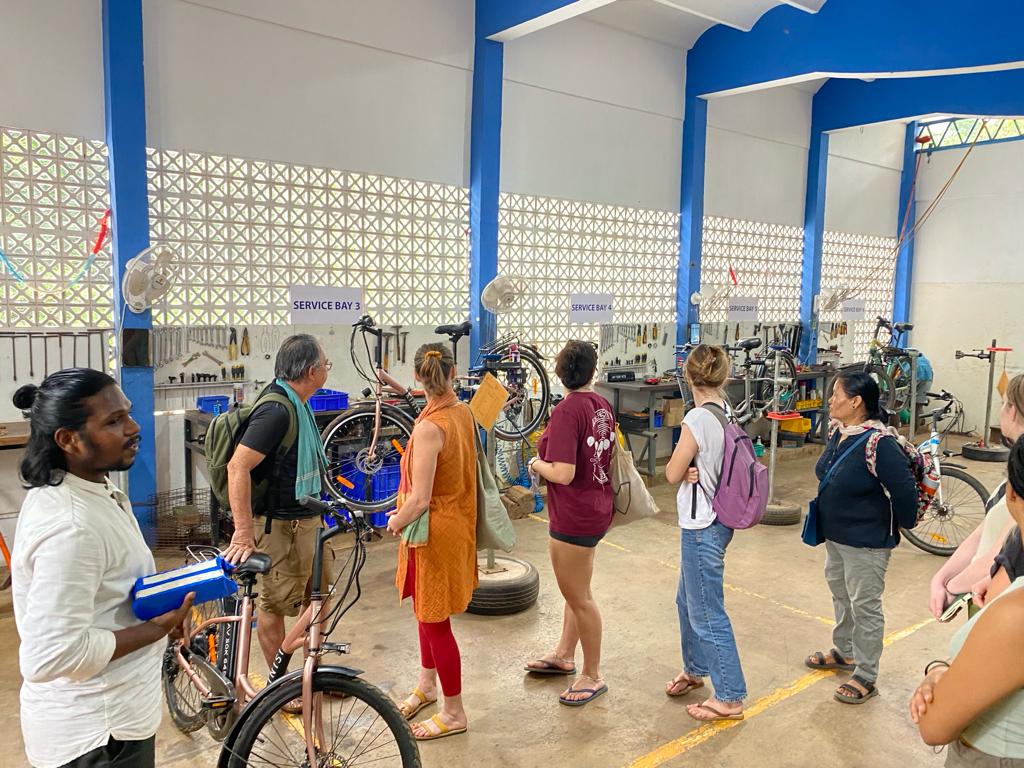
A lovely and quaint white, yellow, and blue building sits amidst the bustle of the Center for Science Research. Here you can find a garage, workshop, and co-working space belonging to Kinisi. This organization works around supplying Aurovillians, their guests, and tourists with electrical cycles in a move to shift the heavy reliance on diesel. Their newest path of expansion has been targeted towards the thousand workers that commute to and from Auroville  Not only reducing people’s carbon footprint, the initiative is helping save money as well. The average litter of diesel costs 100 rupees. In contrast with their subscription program for a monthly fee of 1,000 rupees including any repairs, maintenance, and modifications for ease of use, this saves commuters a hefty sum. (When they say, repairs and maintenance, they mean it! On my way around Auroville, my Kinisi bike chain popped off. I parked it, and after getting in contact with them, I went off to complete my errands. When I returned it was fixed and left right where I had left it!)

They estimate that within Auroville, they have a constant 350 subscriptions. All the technical work that goes into the program happens in the workshop out back where they house a Research and Development department, a maintenance department, and a storage space for old batteries. One of the biggest critiques of electronic travel is the problem with pollution and waste generated by batteries. Batteries have a complicated disposal process due to the components and acids in their makeup that can cause dangerous situations if not managed properly. However, Kinisi has put forward an initiative to repurpose these batteries for solar panel energy collection. In our short tour, our guide explained to us how their batteries are made of 20 to 30 cells. The moment a single cell has lived out its lifetime, the battery is unusable. Thus, they collect these in hopes of making use of the rest of the cells or finding a way to repurpose them or dispose of them properly after the fact.
            Located upstairs in a building behind their workshop, you’ll find their unique co-working space. With strong broadband Wi-Fi, coffee, meeting spaces, and places to take work calls, this new initiative has started to take off quickly. With the many different types of visitors that enter Auroville, the co-working space is an important tool. Especially because in my limited experience here, wi-fi and a quiet place to work are two things that are rarely found together. Thus, this dynamic and quickly improving organization is one to keep your eye on, whether for finding a place to work or finding a quick and easy way to zoom around the areas of Auroville. But move quick! The e-bikes are in high demand!

By: Alexandra Shao

Yatra Arts Foundation

By Gabby Bashizi

Yatra Arts Foundation is located on the outskirts of Auroville, near central Kuilapalayam. It was the first organization that we visited, so we all stepped off the bus fresh-faced and with some pep in our steps. The first thing we noticed was beautiful, intricate mandalas of sand outside the entrance of the building. The white sand glittered in the sun, giving hints of the hospitality and joy we were about to experience inside. As we approached the door, we each dipped our heads to two women by the entrance who blessed our foreheads with a tilaka – a yellow paste and a vibrant red powder between each of our eyebrows. We removed our shoes and climbed the stairs to get inside. 

White sand and flour mandala
Materials for tilaka

A smiling man in a denim hat greeted us excitedly. Yatra Srinivassan, the founder of Yatra Arts, has a contagious smile. Grinning widely, he welcomed us to his organization. He explained that Yatra Arts was inspired by his father’s passion for street theater. The old style of art and communication meets new modern-day issues in an effort to spread awareness of problems that the community faces. Drawing from the tradition of Indian epics, Srinivassan puts on plays for both children and adults in the surrounding villages to comedically retell familiar tales: alcoholism, sanitation problems, forest preservation. These themes, he explained, are ones that the children he works with highlighted as important to them. These themes are ones that they want to communicate with their peers and their parents. Yatra Arts’ job is to take the sensitive topics and make them palatable and entertaining; to promote solutions while also having fun. 

From this noble goal sprang Yatra Arts, and it has been steadily growing ever since. The plays are not Yatra Arts’ only task; on the contrary, they have a broader mission of preserving a love for creativity and an appreciation of tradition in children, regardless of the newfound emphasis on academics over arts. They provide after-school classes in painting, music, and dancing, as well as host courses on the weekends for interested community members, not just children. 

We got a glimpse into what these programs yield with the next element on the program: a song performed by Srinivassan’s own daughter, Priyadharshini. He beamed with pride as he explained that his daughter is a perfect example of how the arts and academics can converge: she just passed her doctor’s exams and is a magnificent dancer and musician. 

She emerged from the side of the room in a dramatic opening of a side door, and strode across to a giant wooden musical instrument called a veena. Its cumbersome size and weight were evident when she settled it across her lap. The sounding drums of the instrument were the size of her head, but she wielded it with shocking grace and delicacy. She played us a beautiful song, ripe with deep steel string sounds that echoed beautifully within the hollow wooden basin.

Photographer: Syed Zaman, Instagram @type_sz

She stood up to our loud applause, and disappeared again for a moment; the only sound that remained was her anklets jingling with every step. She reemerged with another young lady, Jayabharathi, and together they performed Bharatanatyam, one of the classical dances of Tamil Nadu. We sat, mesmerized, as they performed the choreography perfectly. 

After they finished dancing (and we finished applauding), Srinivassan explained that his dance program for young girls was in trouble. Most of them drop out after high school age, he lamented sadly. Their parents see it more fit for them to dedicate 100% of their time to academics in lieu of continuing to dance and express themselves artistically. His daughter is proof that this divide need not exist. Srinivassan believes wholeheartedly in the benefits of cultural preservation and understanding the traditions of our ancestors. He communicates this belief through his work. 

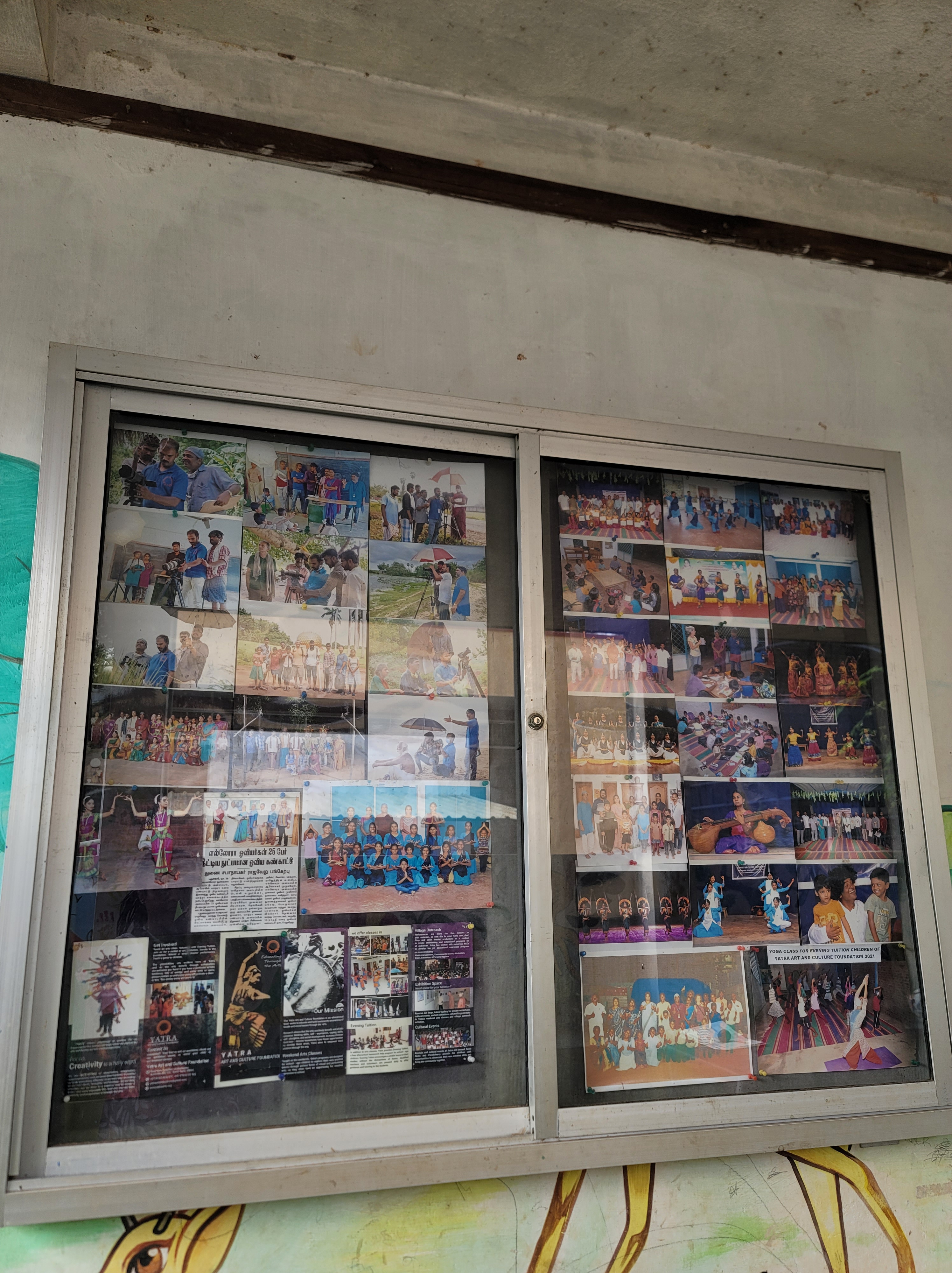
Board of activities at Yatra

The last stage of our visit consisted of watching a recent film made by the organization. The short movie starred local actors and was written and edited by Yatra participants and some of the team there. It was about the negative effects of alcoholism in the family, featuring some comedic scenes of a drunken father returning home to dinner, and some serious scenes of the sacrifices made by mother and daughter for the father, regardless of his nasty behavior. The movie ended with very dramatic music, and Srinivassan popped back up from his chair to explain that making movies is a really important part of this theatrical theme he has created for Yatra Arts. The kids come up with amazing ideas, he gushed, and we just help execute them. 

The visit was a wonderful insight into what passion and love goes into keeping the arts alive. If you’d like to learn more about Yatra and what they do, visit their YouTube or check out their website!