What I Didn’t Expect to Learn About Sustainability in Auroville

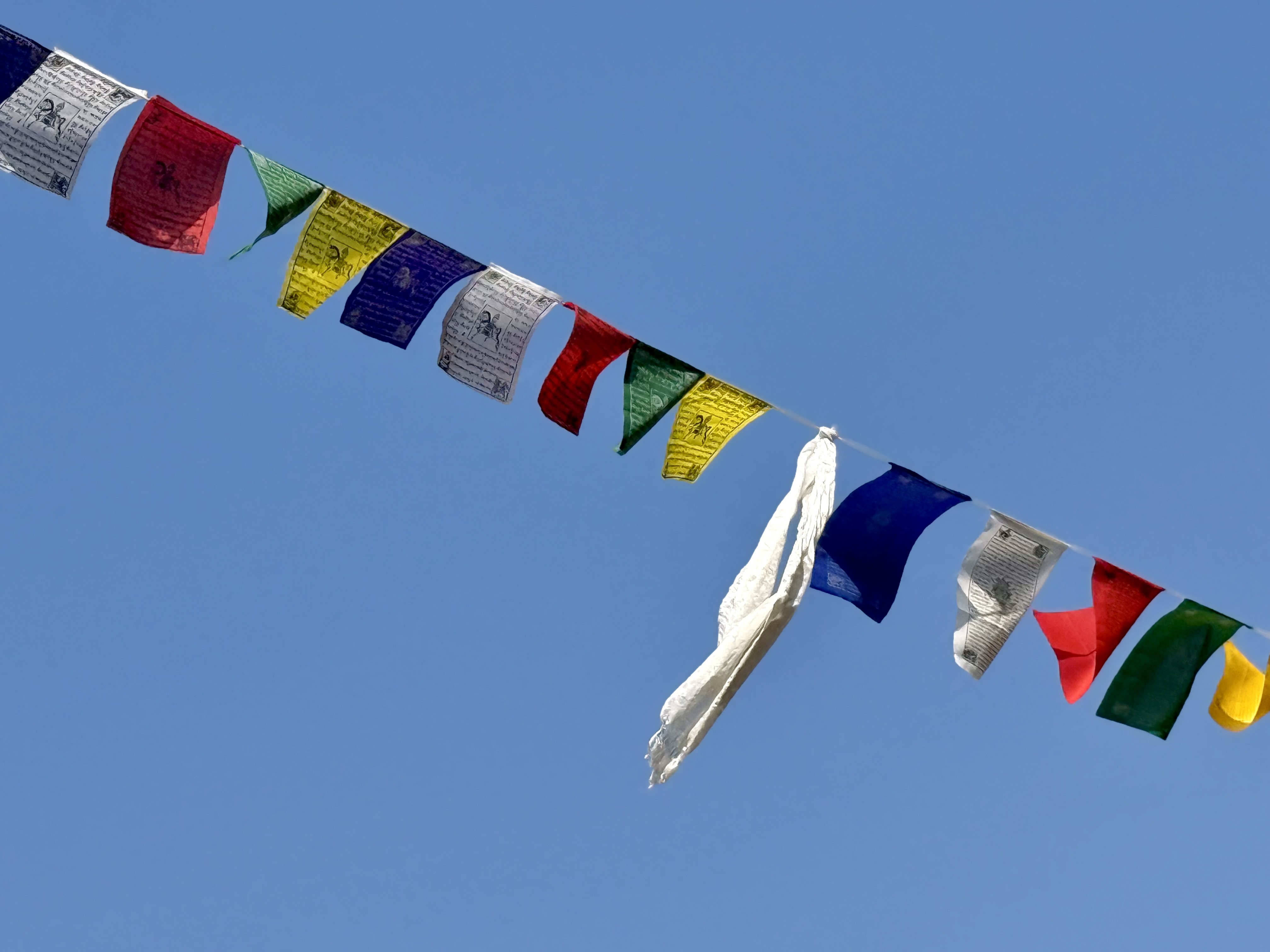
Tibetan Flags In the Sky

Sustainability usually arrives with instructions. What to buy, what to avoid, what to fix, what to improve. It often feels like a checklist, or worse, a moral test.

Auroville didn’t work like that.

Instead of telling you what sustainable living is supposed to look like, it lets you notice it on your own. Over time, certain patterns start to repeat themselves. Not in an obvious way, and not as lessons exactly, but as everyday realities that slowly reshape how you think about comfort, excess, and value.

These are a few of the things that stood out.

1. Luxury Isn’t Always Designer

    In most urban settings, luxury is tied to choice and control. Being able to customize everything, upgrade constantly, and replace what no longer feels perfect is often treated as a sign of success. In Auroville, luxury shows up in quieter ways.

    Here, luxury looks like space to breathe, time without urgency, and environments that don’t ask you to perform. Comfort isn’t created through polish or aesthetics, but through ease. There’s less pressure to consume in order to belong, and more acceptance of what already exists.

    It reframes luxury as something experiential rather than material. Less about what you own, more about how you move through your day.

    2. Simplicity Works When It’s Normal

    Clothing Rack at Colors of Nature Photo Shoot

    One of the reasons sustainability feels achievable in Auroville is because it isn’t framed as a special effort. People reuse towels, share resources, and eat what’s prepared without much discussion. These practices aren’t highlighted or praised; they’re simply part of daily life.

    When simplicity is treated as normal rather than virtuous, it stops feeling restrictive. There’s no pressure to “do it right.” You adjust naturally, because that’s how the environment functions.

    This normalization makes sustainability feel less like a personal burden and more like a shared rhythm.

    3. Slow Is a Feature, Not a Bug

    Life in Auroville moves at a noticeably slower pace. Walking, cycling, and simple vehicles shape how people move through space. Distances feel longer, but time feels less compressed.

    At first, this can feel inefficient. Over time, it becomes grounding. Slowness allows attention to expand. You notice light, sounds, and small changes in your surroundings. Conversations stretch without interruption.

    Instead of feeling behind, you begin to feel present. Slowness becomes a form of awareness rather than delay.

    4. Community Doesn’t Need Matching Behavior

    During events like the Light Mandala meditation, people gather without being asked to behave in a particular way. Some sit still for hours, others move in and out. Children wander quietly, adults adjust positions, visitors observe.

    What’s striking is that the lack of control doesn’t disrupt the space. It strengthens it. Shared presence matters more than uniform participation.

    This approach to community allows difference without tension. It shows that cohesion doesn’t require sameness, only mutual respect.

    5. Objects Are Allowed to Have a Past

    Collection of Cameras at YATRA

    Throughout Auroville, objects show signs of use. Clothing racks hold items that have already lived full lives. Tools and equipment are repaired, reused, and stored carefully rather than replaced.

    There’s no attempt to hide age or wear. Instead, longevity is valued. Objects aren’t treated as disposable, and their history is visible.

    This approach shifts how value is assigned. Something doesn’t lose worth because it’s old; it gains it because it continues to serve a purpose.

    6. You Don’t Need to Optimize Everything

    In many environments, life is optimized down to the smallest detail. Comfort is curated, preferences are prioritized, and inconvenience is avoided whenever possible. In Auroville, optimization isn’t the goal.

    Meals aren’t customized. Spaces aren’t adjusted for individual comfort. And yet, these environments feel surprisingly welcoming. Without constant tailoring, participation becomes easier. You stop evaluating and start engaging.

    Letting go of optimization removes pressure. What’s left is a sense of ease that doesn’t rely on perfection.

    7. Sustainability Isn’t the Point, Living Is

    What stands out most is how rarely sustainability is mentioned. No one is trying to convince you of anything. Practices like reuse, shared meals, and slow movement exist without explanation.

    Because of that, they endure.

    Sustainability here isn’t treated as an identity or an achievement. It’s a byproduct of how people relate to space, time, and one another. It works because it fits into everyday life rather than standing apart from it.

    The Takeaway No One Gave Me

    Auroville didn’t offer a formula or a lifestyle to adopt. It offered a different way of paying attention. To time. To comfort. To excess.

    Sustainability here isn’t aspirational. It’s practical. It doesn’t demand perfection, only awareness. And once you start noticing how much can be gained by needing less, it’s difficult not to carry that perspective with you.

    Pondicherry Wall Art

    Written by Laura Pretel

    Tasting Solitude Farm

    By Mary Andom

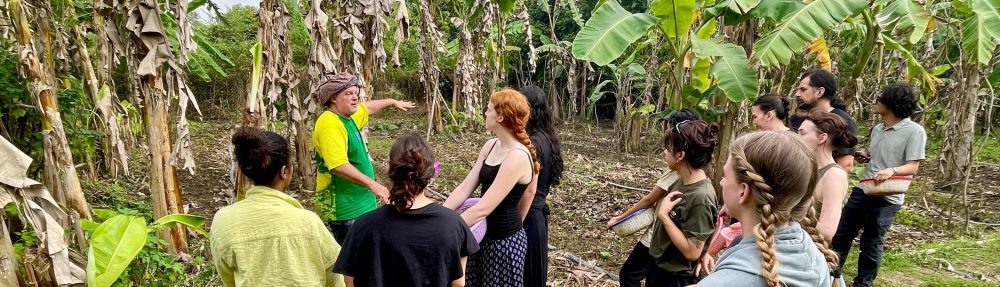
    Solitude Farm cafe is nestled in a garden oasis with brightly colored flags with printed prayers. The smell of frankincense incense, curried veggies and banana perfume the air. A British man named Krishna greets us and tell us to stand in a circle. He is wearing a saffron-colored head wrap, a green Brazilian t-shirt with khaki baggy shorts and no shoes. “Ok, take off your chappels,” he said. After all Krishna doesn’t wear shoes you can tell by the red dirt coating his nails. Krishna handed us dirt-caked baskets. “Today, you are going to harvest your lunch,” he said. Some AUP students looked pensive while others beamed with excitement. I was in the second camp. Krishna led the group of students into the forested garden. The shade of the trees allowed pockets of sunshine to beat down on us. The warm, squishy cool mud went in between our toes. Centipedes crawled and I avoided each one like a mini-landmine. Solitude Farm is an organic permaculture farm with six acres of a myriad of tropical fruits, vegetables, herbs and millet crops. The crops are indigenous and are harvested using ancient Tamil farming techniques without pesticides or chemical fertilizers. “Mary, give me your basket,” he said. A sunshine yellow lemon the size of his palm is in my basket. “These are like hand grenades,” he chuckled.

    He picked a leaf and crushes it in between his fingers. “This smells better than any Yves Saint Laurent perfume,” he said confidently. “And its all mother nature.” He passed the muddled leaves among the students, before it reached my hands the lemon herbaceous perfume wafted in to my nostrils. I couldn’t stop smelling my hands. “This is the butterfly pea flower, it is used in teas and it is a healing medicine for the hormones,” he said. He popped the flower in his mouth like a piece of candy. We each ate one. The flower tasted like a crunchy sweet pea. Krishna is very passionate about farming, for 33 years he has learned organic farming practices from around the world. Even though the tour lasted an hour time slowed down as we snaked around the tropical garden full of delicious treats. “I want to convince people by their palate, not their brains,” he said. “This herb is great for salads, it has a mushroom flavor and a delicate texture,” Krishna said passing it among the group.

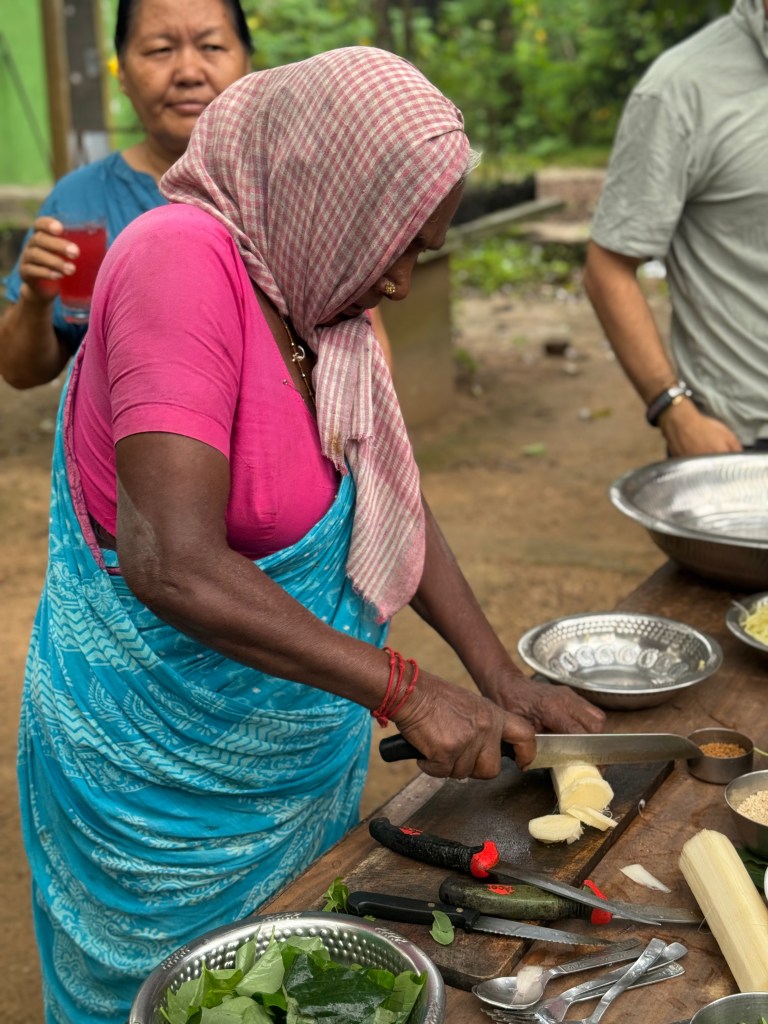
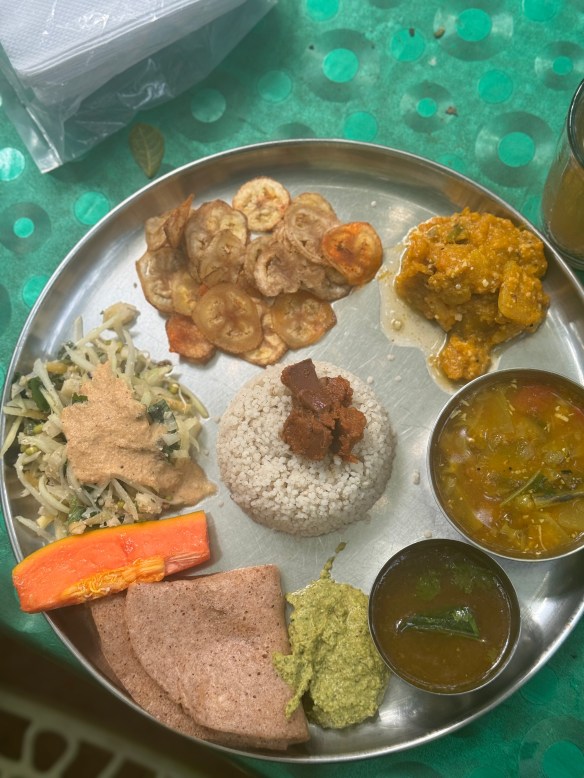
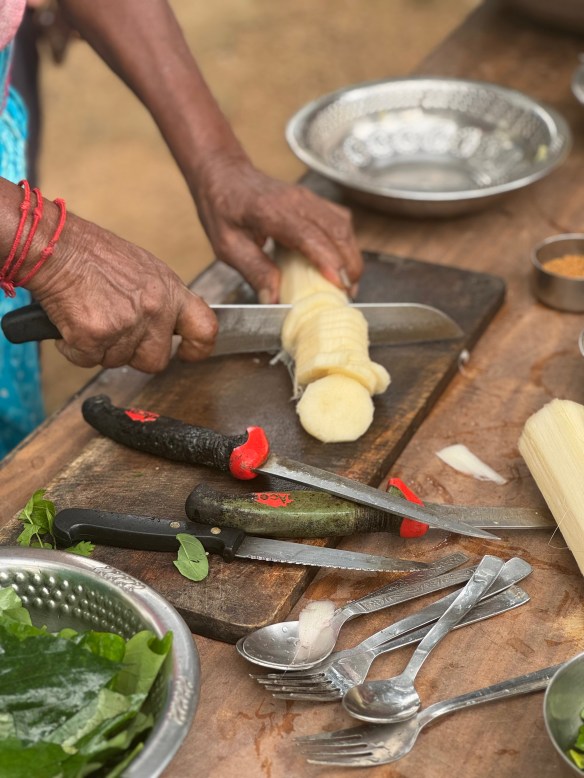
    We placed the leaves in our baskets. It is one of the reasons why I’ve visited the farm to table cafe on multiple occasions during my one month stay in Auroville. My tongue has convinced me that this type of food can be flavorful, simple and delicious. A group of Tamil ladies in brightly-hued saris chopped pumpkin on a cutting board placed on a straw mat. Another woman in her 60s with muscular forearms chopped a vegetable I have never seen or tasted in my life. It looked somewhat like sugarcane or bamboo. The white fibrous vegetable is chopped in coins and rinsed. As a team we gathered the wild spinach, lemons, flowers and placed them in a communal bowl to assemble a green papaya salad. It was amazing to taste the fruits of our table under the shade of a leafy green tree. Solitude Farm Café also serves meals made from fresh, locally grown produce, including vegan thalis, salads, smoothies, and seasonal dishes. This experience has left an impression on my heart and stomach. I’m in solitude.


    Learning about Tibet during our stay at the Pavillion of Tibetan Culture

    While staying at the Tibetan Pavillion I had the chance to read a couple of books from the library to learn about this nation and how politics has influenced it’s culture and day-to-day management. Tibet, or as it’s often called ‘the Roof of the World’ because of its Himalayan plateau, remains one of the most politically sensitive and internationally debated regions on the planet. As of this year, the situation now reflects decades of historical struggle, contested sovereignty, cultural resilience and human rights controversies.

    A Brief History

    Before the middle of the 20th century, Tibet operated as a theocratic polity centered around Lhasa with the Dalai Lama serving as both a spiritual and political leader at its apex. Tibetan society as a whole was structured around Buddhist institutions and distinctive local traditions and its interactions with the neighbouring powers like China and Mongolia had varied over centuries. Modern Chinese claims to sovereignty were very drastically strengthened under the People’s Republic of China (PRC) after its foundation in 1949. 

    In 1950-51, the People’s Liberation Army entered eastern Tibet. What came out of this was the Seventeen Point Agreement signed in 1951 between the PRC and representatives of the Tibetan government. The treaty promised to guarantee autonomy and respect for Tibetan culture under Chinese sovereignty. However, many Tibetans have argued that the agreement was out of coercion and not free consent from Tibet. Little by little, tensions over Chinese rule escalated and on March 10, 1959, a widespread uprising broke out in Lhasa. Chinese forces brutally suppressed the rebellion, leading to thousands of deaths. The 14th Dalai Lama fled into exile in India, where he established the Tibetan Government – in – Exile (in Dharamsala), a focal point for global advocacy of Tibetan autonomy and rights. Since then, March 10 has become Tibetan Uprising Day observed by Tibetans and supporters worldwide. 

    In 1965 China designated Tibet as the Tibet Autonomous Region (TAR), intending to institutionalise minority rights within the PRC framework. Although the autonomy is largely symbolic and that real authority lies firmly with Communist Party structures. Tighter controls, especially after periods of unrest, have contributed to the ongoing political and cultural tensions. 

    As of 2025

    Looking at reports by Human Rights Watch, there is documentation of systematic restrictions on daily life and expression in Tibetan areas. Chinese authorities have been arresting ordinary Tibetans for using cellphones, posting content that those same authorities have deemed ‘banned;, or celebrating Buddhist figures and cultural heritage online. Similar to that many Tibetan language websites have been shut down and those who advocated for their functioning have faced detention and harsh sentences. As I mentioned earlier, March remains a particularly sensitive month, authorities prepare heightened security for this period of historical commemorations. Deployments in Lhasa and at monasteries intensify that month to preempt gatherings or protests. 

    Religious expression is a cornerstone of Tibetan identity but numerous reports, including European Parliament resolutions, highlight violations of religious freedom, interference in the selection of spiritual leaders and the transnational repression of Tibetans abroad including those in Southeast Asian countries. Cultural advocates argue that measures such as the cancellation of Tibetan language instruction, replaced by Mandarin Chinese in schools and monitoring of religious institutions are part of broader forced assimilation policies. Local restrictions even extend to symbols traditionally important to 

    Throughout 2025. Tibet has remained a subject of international concern. EU authorities have expressed serious concern over deteriorating human rights that point to limits on freedom of speech, movement and religious practice. Countries at the UN Human Rights Council including more than two dozen democracies, have raised the situation in Tibet and called for stronger protections. During the various General Assembly debates on the topic (1950, 1959, 1961, 1965), several members spoke passionately, denouncing the Communist government’s aggression against Tibet as a violation of its independence. However, while two of the resolutions referred to the principle of self-determination, all three skirted the issue of Tibet’s status under international law, focusing instead on human rights violations. To this day, the United Nations’ unfinished consideration of the question of Tibet remains one of the global body’s most notable and longstanding acts of omission.

    China on the other hand, routinely pushes back, accusing foreign governments like the United States of ‘meddling’ and labeling Tibetan advocacy as separatist or anti-China activity. China maintains that Tibet is securely and peacefully governed within the PRC and rejects external criticism as interference in internal affairs.

    Tibetan Exiled Leadership

    Even as security tightens in the region, Tibetan activists and the Central Tibetan Administration work internationally to keep the issue visible. In August of 2025, activists protested outside the Chinese Embassy in New Delhi during a high-level visit by China’s foreign minister. In the diaspora, political life remains active. Preparations are underway for the 2025-2026 general elections of the Tibetan Government – in – Exile, signaling continued democratic engagement among Tibetans worldwide. 

    Economic and Infrastructural Developments

    The Chinese government often highlights economic transformation in Tibet, emphasising infrastructure achievements and development goals. In 2025, Tibet marked the 60th anniversary of TAR, with celebrations focused on modernisation, enhanced transportation networks and energy projects. One of the most ambitious and controversial developments is the Yarlung Zangbo (Brahmaputra) hydropower project which could potentially be the world’s largest hydroelectric series of dams when completed. Construction, including a mammoth dam at Medog/Fengdu began in July of 2025. Proponents argue these projects enhance power supply, economic growth and carbon reduction, critics of the project have highlighted the environmental degradation, displacement and threats to downstream water security for India and Bangladesh. 

    Despite systemic pressures, Tibetan culture, especially Buddhism, remains resilient. Pilgrimages, monastic scholarships, arts and diaspora celebrations reinforce identity. Communities that have gathered outside Tibet such as the one in Portland showcase traditional music, dance and food. Inside, religious festivals and ceremonies like the Sakya Monlam draw thousands of devotees, a reminder that sacred traditions endure even under surveillance. 

    Looking to the Future 

    The core dispute over Tibet remains one of human rights and cultural autonomy versus centralised state control. Many Tibetan activists, exiles and international observers see the situation as one of cultural survival. Meanwhile Beijing keeps stating stability, economic development and territorial integrity. 2025 marked the Dalai Lama’s 90th year. A milestone that has stimulated a global reflection and discussion on his role and succession. Recently the talk of succession has opened potential negotiations about reincarnation and underscores how spiritual leadership remains central to Tibetan identity and political symbolism. 

    China day by day increasingly asserts control over the recognition of future Tibetan Buddhist leaders, a policy that directly affects the future of the Dalai Lama’s institution – a point of continued dispute. Global attention to Tibet will likely continue rising. Calls for diplomatic pressure, sanctions and human rights monitoring features prominently in European and US policy discussions. At the same time geopolitical priorities, including China’s economic influence, temper how far governments are willing to challenge Beijing. 

    In conclusion, Tibet remains a disputed region with day to day life being impacted and the government being in exile. Staying at the Pavillion I had the opportunity to learn even more about Tibetan food, culture, music, ceremonies and Buddhism as a whole through my daily interactions with Kalsung.

    by Sofie Mihaylova