Sristi Village Foundation: Cultivating Community Through Sustainability

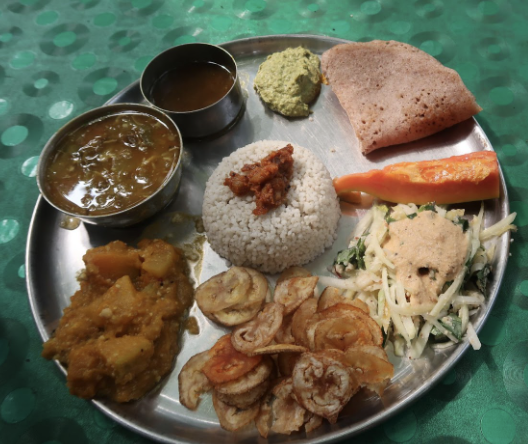
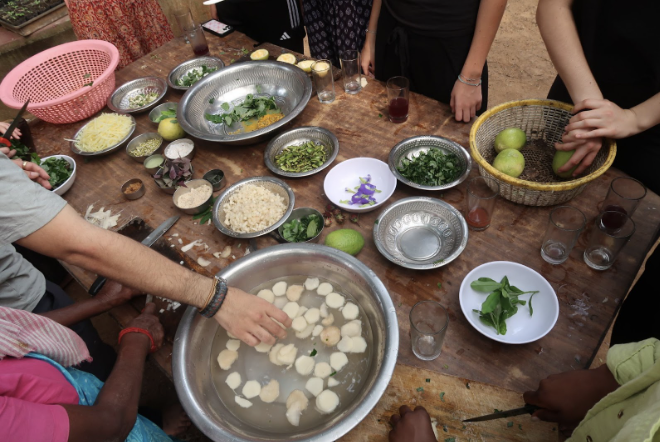
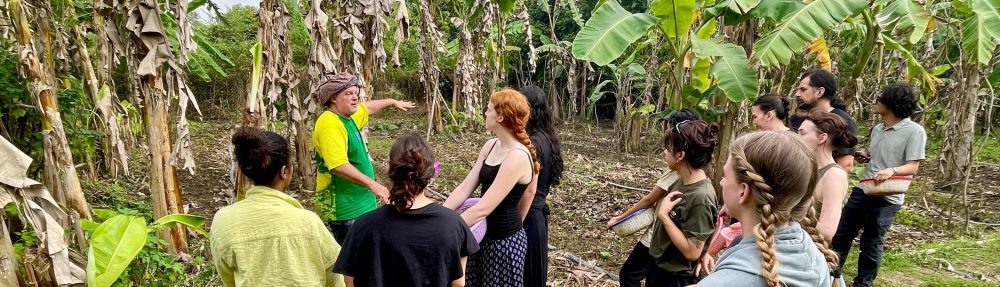
Sristi Village Foundation welcomed our class to their facilities with open arms as they allowed us to observe and learn from their alternative approach to autism and other developmental disabilities. In a country (like many others) where these differences are used as a means of societal othering or disregard, Sristi has created a space of inclusivity which fosters harmony and understanding. Here, the residents find their functional place in society and are provided with various forms of care, education, and community, assisting them in achieving self sustainability and autonomy. While Sristi Village residents are provided with practical self sustainable techniques (employment and daily routine) the entire facility also adheres to environmentally sustainable practices. For example, in visiting the facility we were informed of Sristi’s water collection method, collecting rainwater for various uses in the dry season, and their sustainable and harmonious agricultural practices. 

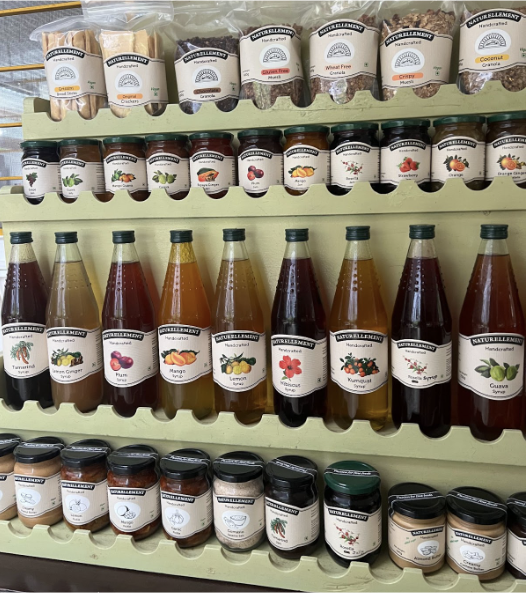
Equipped with competent housing facilities and extensive farming and agricultural space/products this home has proven to be both cutting edge and maintainable. There are many facets to the practical implications of their mission, the newest development being a cafe where only Sristi residents work and sell millet ice cream and hibiscus tea grown in their own backyard. The prospects of Sristi foundation are more than exciting as they are paving the way for inclusive societies everywhere showing those in doubt there is a place, purpose, and utter importance of every human being when given the chance to flourish. 

By Bess Bryan

Sadhana Forest: Cultivating Compassion, Sustainability, and Community

By Kendall West

The entrance to Sadhana Forest in Auroville

What is Sadhana? A Mission Rooted in Compassion and Action

Stepping into Sadhana Forest, I found myself immersed in a space where every detail, from upcycled tire sculptures to solar-powered utilities, reflected a commitment to creating a better world. Removing our shoes and entering the main hut, which is made completely from natural materials, we were immediately impressed by the possibilities of another way of living.

Nestled over 70 acres near Auroville, this remarkable initiative goes beyond reforestation—its mission is to foster ecological restoration, compassion, and selfless service as part of a global movement.

Sadhana Forest, founded in 2003 by Yorit and Aviram Rozin along with their 1 year-old daughter, began with one family and a dream: to restore the native Tropical Dry Evergreen Forest (TDEF) ecosystem while creating a community built on kindness and inclusion. Today, that dream has blossomed into a global network with projects in Haiti, Kenya, Namibia, and multiple locations across India, inspiring thousands to take action for the environment and humanity.

Natural regeneration of Sadhana Forest from satellite

Aviram began our visit with an introductory talk on the philosophy and works of Sadhana. He explained that Sadhana means the search for the truth on one’s spiritual path, and their path and great effort has been reforestation and spreading a culture of vegan compassion. One of the things that stood out most was the emphasis on inclusivity. Sadhana Forest welcomes everyone, regardless of background, with only minimal time commitments (10 days for Indian volunteers, 20 for foreigners). This openness creates a space where diverse perspectives come together, fostering collaboration rather than competition.

After starting with one family, today there 37 long term volunteers, including half a dozen growing families, as well as 60+ volunteers, who are currently giving between 1 and 10 months of their time. He explains that Sadhana has the capacity to host up to 195 people, making clear that they will never say no to anyone that may come. Answering a question from the audience of over 100 people, he explains that those that who come for short term contribute money for their food (3 meals a day), while long term folks are supported by the community, giving back through their time and labor.

Just like the forest, Sadhana is growing. Their future plans include integrating differently-abled individuals into the organization, as well as creating an orphanage for children with HIV, further illustrating their commitment to inclusivity and compassion. However, they’ve already expanded from their initial Auroville experiment to a total of 7 other centers – 1 in South Tamil Nadu, 1 in Kenya, 1 in Namibia, 1 in Haiti, & 3 in Northern India.

Sadhana Forest Haiti

After the introductory talk, Aviram takes us on a tour of the campus and an exploratory walk in the forest. It’s remarkable to me that walking barefoot through the forest, while avoiding painful stones and roots, one is reminded of the intentionality required in each step—an apt metaphor for the care and mindfulness that defines this community.

Water Conservation Strategies

Sadhana Forest is, as the name suggests, a forest, but for a forest to thrive, one essential ingredient is needed: water. When Sadhana Forest began, it was little more than a barren wasteland, plagued by water scarcity like much of Auroville. Water conservation became the cornerstone of their reforestation efforts, and their strategy revolves around the Triple S method— Slow, Spread, Sink.

Aviram explains that the team strives to catch every drop of rainwater as close as possible to where it falls. Interestingly, in water conservation, low-lying lakes are a sign of failure in water conservation. Such lakes indicate that water has flowed to the lowest point of the slope rather than staying on the land where it fell—vital for nourishing the soil and replenishing the underground aquifer. To counter this, Sadhana Forest employs a method called on-contouring, maintaining water at its topographical height instead of allowing it to run downhill. This ensures that rainwater not only sinks into the soil to nourish plants but also replenishes the groundwater aquifer.

The success of these water conservation efforts is evident throughout Sadhana Forest. Aviram highlights that retaining water on the land has allowed for the natural regeneration of vegetation. Interestingly, he observes that natural regeneration fosters greater biodiversity compared to human-planted species. He likens it to designing one’s own home—wildlife, as the true inhabitants of the forest, can create an ecosystem tailored to their needs, rather than adapting to a pre-designed system imposed by humans. Indigenous plants, spread by wildlife through seeds and droppings, establish a harmonious and self-sustaining ecosystem far superior to human-centric reforestation.

As we walked through the forest, Aviram pointed out various plants and explained their roles in water conservation. One striking example was vetiver, a grass with exceptionally deep roots that stabilize the soil and retain water. Similarly, the dodonaya plant thrives in arid conditions by capturing water from the air and storing it in its roots, helping to create moist, fertile soil. We also saw other water conservation techniques, including gabions (stone-filled metal cages), swales, and a man-made lake. The lake, while not ideal for the Triple S method, was a necessary adaptation due to the practices of a higher-elevation neighbor who doesn’t prioritize water conservation. Sadhana Forest has had to capture the water that runs off from this neighboring property to prevent it from being wasted.

Aviram pointing out a water conservation technique, a swale

During our visit, a curious tourist asked how Sadhana manages to address mosquitoes while maintaining their vegan and “do no harm” philosophy. Aviram explained that the key lies in controlling standing water, which disrupts mosquito breeding. Rather than killing mosquitoes, they simply ensure there’s no stagnant water for them to thrive. With a smile, he added that if any do appear, he prefers to swat them away gently rather than harm them.

Sadhana Forest’s water conservation strategies not only nurture a thriving ecosystem but also embody their broader values of harmony and sustainability. Their ability to transform a barren landscape into a flourishing forest is a testament to the power of intentionality and care for the Earth.

Fostering Sustainable Living

When we return from our forest walk, we are immersed in the heart of Sadhana’s community. Living at Sadhana Forest is a lesson in intentionality and simplicity. Every aspect of the community is designed to minimize environmental impact while fostering connection and joy.

The homes and dorms are constructed from renewable materials such as wood, granite, and tetrapacks (recycled milk cartons). Short-term volunteers sleep on rope beds, emphasizing the community’s low-impact ethos. Even everyday tasks like washing and cleaning reflect this intentionality—plates are cleaned using natural materials like coconut husks, ash, lemon water, and vinegar, ensuring all waste is biodegradable. Their handwashing stations are ingeniously simple, using cups with small holes that allow water to flow gently, paired with naturally derived soap. This clever design minimizes water waste while maintaining hygiene.

Sadhana Forest operates completely off the grid, a testament to its commitment to sustainable living. Aviram shared a nostalgic story about the community’s early days, when they used dynamo bikes to generate electricity before transitioning to solar panels and wind turbines. Although no longer in use, the bikes are preserved as a reminder of their humble beginnings. Today, all Sadhana sites around the world—whether in India, Kenya, or Haiti—are powered entirely by solar and wind energy, providing reliable electricity and hot water. While they occasionally face challenges during heavy monsoon seasons due to cloud cover, their resourcefulness ensures sustainability remains at the forefront.

The kitchen is also a hub of activity and efficiency, equipped with industrial-sized pots and pans and a large reverse osmosis water filter to maintain the highest standards of hygiene. That evening, we enjoyed a delicious vegan dinner made from locally sourced ingredients—a meal that reflected the community’s values of sustainability and compassion.

The Sadhana Forest community kitchen

After dinner, the team shared short videos detailing the mission and history of Sadhana Forest. The evening concluded with a powerful 45-minute documentary on veganism, which explored the devastating impacts of industrial agriculture on climate change, human health, and animal welfare. The statistics were staggering: 30 million deaths globally linked to lifestyle-related diseases, the overexploitation of 90% of the world’s fisheries, and the brutal realities of dairy and egg farming. The documentary was both eye-opening and transformative, reinforcing the message and values at the heart of Sadhana Forest.

Our delicious vegan dinner provided by Sadhana Forest

The Values of Sadhana

At the basis of Sadhana is its vegan ethos of compassion. Aviram explains that veganism is more than just a diet; it’s an extension of their mission to live in harmony with nature and ensure that resources are used equitably and efficiently.

The first form of compassion is of course towards the land, which they seek to help prosper through their forestry, and from which they take no more than what they need. All of the buildings on the property are made from from natural materials. The second form of compassion is towards animals. Aviram makes it clear that the love of animals is central to Sadhana, and that no animal deserves to be tied, raped, or exploited in any way. I really appreciated that Aviram stressed the fact that animals have a right to live, even if they don’t give you something. It was nice to step out of the typical anthropocentrism, and he reminded us that part of Sadhana’s mission is to create a world without speciesism; other beings and nature are not just there to serve humans. This was reflected in the forest’s Guashala, a cow sanctuary for abused and abandoned cows. There, the cows are treated with the utmost respect with wonderful veterinary care, fresh water & food, & love. We were lucky enough to attend a cow connection workshop, where we bonded with a beautiful bull named Vishnu.

Our Cow Connection Workshop

The third example of compassion is compassion towards children. This was actually one of the most interesting and potentially controversial aspects of their philosophy. At Sadhana, they believe in natural learning & they call it “Unschooling”. Instead of sending their children to formal schools, they prioritize time spent with family and community, allowing learning to emerge naturally through curiosity and exploration. For example, if a child sees an airplane and asks about it, their parents might explain that people are flying through the sky from one place to another. This simple explanation could spark a deeper curiosity, leading the child to explore concepts like aerodynamics, engineering, or math.

I find this mindset inspiring—it celebrates freedom and the innate curiosity of children. When balanced with some structure or formal learning, it could provide a wonderful foundation for creativity and critical thinking. However, taken to its extreme, this philosophy can have drawbacks. I’ve heard anecdotal cases where teens raised in such environments struggled with basic skills, such as writing their own name. Nonetheless, Sadhana’s approach challenges us to rethink education and reminds us of the power of curiosity-driven learning.

Finally, Sadhana Forest embraces collaboration over competition, intentionally fostering an environment where individuals work together rather than competing against one another. This philosophy extends into their economic system, where they practice a gift economy—a model rooted in kindness, generosity, and the joy of giving. At Sadhana, everything is offered freely, with no expectation of reciprocity. Meals, education, and workshops are available to anyone who comes, all provided as acts of care and compassion.This approach profoundly disrupts the typical capitalistic incentives of greed and transactional exchanges. Instead, the gift economy shifts focus to the intrinsic value of giving and creates a space where every action is imbued with thoughtfulness and care. It encourages people to give not because they must, but because they wish to contribute to something greater than themselves.

Aviram, the founder, explains that Sadhana Forest is a place designed to remind people that kindness still exists in the world. By offering this generosity unconditionally, Sadhana hopes to inspire a deeper connection between people and their values. This is also why veganism, a core tenet of Sadhana, is framed as an extension of kindness—toward animals, people, and the Earth. In this way, the gift economy not only sustains Sadhana Forest but also embodies its mission of compassion and community, creating a living example of a world driven by care rather than commerce.

Sadhana’s Projects: Global Reach, Local Impact

Beyond forestry, Sadhana Forest offers a variety of innovative and impactful activities that reflect its broader mission. One such initiative is Children’s Land, a 2.7-acre space launched in 2009 to empower children to engage creatively with sustainability. Here, children initiate or participate in activities as they choose, fostering independent thinking and a deep connection to the natural world. This program has been met with enthusiastic feedback from children, parents, and teachers, inspiring Sadhana to expand its reach. Another cherished initiative is the Tea Hut, which serves free, vegan tea every weekday, embodying Sadhana’s commitment to inclusivity and generosity. The community also nurtures personal and global transformation through its University of Compassion, offering workshops and programs that align with its values of kindness and sustainability.

While Sadhana Forest began in India, its philosophy has transcended borders. In Kenya, the organization collaborates with the Samburu tribe to plant indigenous, drought-resistant food forests, ensuring biodiversity, food security, and shade for local communities. In Namibia, long-term volunteers work closely with local populations, committing to year-long stays to fully integrate and address community-specific needs. These global projects not only restore degraded ecosystems but also empower local people to reclaim and protect government-designated “wastelands” from encroachment. By doing so, Sadhana Forest fosters a deep sense of ownership and connection to the land.

These initiatives are unified by a single vision: to heal the Earth and cultivate compassion through reforestation, water conservation, and community building. Supported by individual donations, grants, and partnerships with organizations like UNDP and the Government of India, Sadhana Forest’s work has garnered global recognition. Whether through planting trees or empowering the next generation, Sadhana Forest remains a testament to the transformative power of sustainability, kindness, and collaboration.

Reflections on Community and Connection

Sadhana Forest offers a powerful model for addressing global challenges like deforestation, water scarcity, and social inequality. By combining ecological restoration with a philosophy of compassion, they demonstrate that sustainability isn’t just about planting trees—it’s about redefining our relationship with the Earth and each other. Their initiatives, from Children’s Land to global reforestation projects, are a testament to the transformative potential of intentional, community-driven action.

Take, for example, Amman, a former corporate professional from Bali, who left the comforts of a cushy job to join Sadhana Forest. His motivations stemmed from a deep commitment to veganism, a love for animals, and a yearning for a sense of community that capitalism failed to fulfill. Now, he spends his days planting in the wet season, mulching in the dry season, and caring for the cows in Sadhana’s sanctuary. Amman’s story reflects the larger ethos of Sadhana Forest: finding purpose and joy in simplicity, compassion, and shared effort.

On a personal level, my time at Sadhana Forest inspired me to reevaluate my own habits and assumptions. The intentionality of their work—from water conservation to vegan living—reminded me that small, thoughtful actions can lead to profound change. Every initiative, whether it’s teaching children about sustainability, empowering local communities to reclaim their land, or fostering kindness through a gift economy, serves as an invitation to think differently about how we live and what we value. My visit to Sadhana Forest was more than just a tour; it was a call to action and reflection. In a world often dominated by division and exploitation, Sadhana Forest stands as a beacon of possibility: a place where kindness, sustainability, and community thrive together.

How can you support Sadhana Forest? By becoming a regular donor. Aviram emphasizes that their primary source of income is individual donations, and while the size of the donation matters less, its consistency is key to sustaining their work. With tax-exempt status in multiple countries, supporting Sadhana is both impactful and accessible. I invite you to explore their programming and become part of this inspiring movement at the link here. Together, we can help Sadhana Forest continue to grow, heal, and inspire.

Yatra Arts Foundation: Empowering Communities Through Arts and Culture

By Kendall West

Nestled in the heart of Kuilapalayam, the Yatra Arts Foundation stands as a beacon of creativity and empowerment, transforming the lives of youth in Tamil Nadu’s villages through the enriching power of education and the arts. Founded by a visionary from this very village, Yatra bridges the gap between Auroville and the surrounding communities, fostering opportunities, preserving cultural heritage, and driving social development. At its core, Yatra embodies the belief that art is a tool for empowerment. Through street theatre, traditional dance, music, and modern educational programs, the foundation equips children and young adults with the means to express themselves, address societal challenges, and build a brighter future.

The Yatra Team, with founder Yatra, second from left

Preserving Heritage by Telling Stories

A cornerstone of Yatra’s mission is the preservation of traditional arts, and during our visit, we had the privilege of witnessing these efforts firsthand. We were captivated by a mesmerizing Bharatanatyam performance, where young girls—many of whom have been learning since they were ten years old—used intricate hand gestures (mudras), facial expressions, and precise body movements to tell powerful stories. This ancient dance form, steeped in history and meaning, showcased emotions such as joy, anger, and surprise, preserving the art of storytelling through movement and tradition.

Before Auroville’s establishment, many villages in Tamil Nadu had little access to education or the arts. Yatra has become a vital bridge, connecting these communities with opportunities for growth and development. Children, in particular, have been the most impacted, as they embrace change and learning with enthusiasm. Through its performances, classes, and workshops, Yatra ensures that these opportunities reach every corner of the village.

We were also treated to evocative Parai drumming demonstrations, which brought this traditional form of Tamil percussion to life. The resonant beats of the Parai, traditionally used to mark life events or draw crowds to performances, were not just musical but deeply practical, reminding us of its historical and cultural significance. These performances served as powerful reminders of the region’s rich artistic heritage and the importance of passing these traditions to future generations.

Girls practicing the Bharatanatyam

Art as a Catalyst for Change

Beyond preserving heritage, Yatra uses art as a catalyst for social and environmental change. Before we left, we were shown a compelling short film on the importance of waste sorting and proper waste management techniques. The film highlighted how waste, when sorted correctly, can be transformed into compost, offering valuable resources for the community while reducing landfill waste and preventing illnesses. It was a vivid example of how art—specifically film—can be used to spread awareness, educate, and engage communities in meaningful discussions about critical issues. The film not only underscored Yatra’s commitment to environmental conservation but also demonstrated the potential of the arts to inspire action and create lasting impact.

Yatra’s street theatre performances and films address a wide range of societal challenges, including cleanliness, solid waste management, environmental conservation, and alcoholism. After each performance, the foundation hosts open mic sessions, encouraging villagers to share their thoughts, voice frustrations, and collectively discuss solutions. This interactive approach fosters dialogue and empowers communities to think critically and collaborate to overcome challenges.

Modern Education Meets Cultural Preservation

In addition to its focus on traditional arts, Yatra offers a variety of modern educational programs that prepare youth for the future. These include after-school tuition classes, yoga sessions, painting workshops, puppet shows, and theatre classes, all designed to integrate life lessons with hands-on, enjoyable activities. By blending fun with learning, these programs engage students while teaching valuable skills, from environmental conservation to social responsibility.

Students in an after-school tuition session

Yatra’s work aligns closely with the United Nations Sustainable Development Goals (SDGs), particularly SDG 4 (Quality Education) and SDG 15 (Life on Land). Through initiatives like the Yatra Social Docu Series on YouTube, they reach both local and global audiences with impactful stories about pressing social and environmental issues. Collaborations, such as those with the Lufthansa Health Alliance, further amplify their reach, demonstrating the potential for art to drive systemic change.

As the foundation looks to expand its efforts, it remains deeply committed to its mission of fostering joy and learning through the arts, creating a ripple effect that benefits not just individuals but entire communities.

The Yatra Arts Foundation is growing rapidly, with its impact extending to new villages and communities. Their YouTube channel, Yatra Talkies, recently received the Silver Play Button for reaching a significant milestone of over 150,000 subscribers. The channel continues to share impactful stories, amplifying their message and engaging audiences worldwide. To explore their inspiring content, check them out at the link below:

Yatra Talkies YouTube Channel

What sets Yatra apart is its ability to inspire through joy and creativity. Whether it’s a child mastering the rhythms of the Parai, a young girl expressing herself through Bharatanatyam, or a community coming together to discuss an impactful film, Yatra proves that art is more than just a medium of expression—it’s a tool for transformation.

The Yatra Arts Foundation is not just an organization; it’s a movement. A movement that preserves heritage, addresses societal challenges, and empowers individuals to dream, create, and thrive. In an ever-modernizing world, Yatra serves as a powerful reminder of the enduring value of culture, community, and curiosity, lighting the way toward a brighter future.

Visiting an Elementary School in Parangani with Pitchandikulam

By Ava Goldfarb

(Image from the first school we visited)

After spending the majority of my month in Auroville working with Pitchandikulam Forrest alongside a fellow AUP student, we got to go with the organization to visit two schools in villages outside of Auroville that incorporate practices from eco-manuals we got to help Pitchandikulam with. These eco manuals incorporate sustainable practices into daily lessons for elementary school children in Tamil Nadu.  

While working with the Pitchandikulam organization throughout our time in Auroville, we spent a lot of our time learning about ‘Blue-Green Corners’ and their benefits. Pitchandikulams mission is identifying local government schools in the bioregion that are interested in implementing sustainable practices, helping them become modern eco-sustainable schools through integral education. Through providing information and lesson plans these schools are able to sustain organic vegetable gardens and slowly impact the cleanliness, vegetation, and sustainability of their respective villages, helping to create Blue-Green corners. 

(Image of the second school we got to visit)

While speaking with a few of the children at the school, one younger student wanted to show us her “green refrigerator” project she created (part of an eco-mannual lesson plan). This was one large clay pot with a smaller pot inside of it surrounded by sand that they wet every 2 days to maintain cool internal temperatures. This form of refrigeration keeps its contents fresh for up to 14 days without the use of electricity. Incorporating this practice not only stores food in an eco-friendly way, but also helps limit the amount of food waste. This is one example of many ways the Pitchandikulam lesson plans teach and promote green learning and practices. The children also learn about composting and other ways to reduce their impact on the environment.

Visual example from online: (https://en.wikipedia.org/wiki/Pot-in-pot_refrigerator)

Through the use of their eco-manuals, the Pitchandikulam Forrest Organization aligns with SDG 4 (Quality Education) by promoting environmental literacy and SDG 15 (Life on Land) by raising awareness about biodiversity conservation.  

Actively engaging in reforestation and protection of existing forests, Pitchandikulam contributes to SDG 15 (Life on Land) by combating deforestation and restoring degraded ecosystems. These efforts also help mitigate climate change, aligning with SDG 13 (Climate Action).  

By demonstrating sustainable practices such as organic farming and rainwater harvesting, Pitchandikulam inspires students and communities to adopt eco-friendly lifestyles. This aligns with SDG 12 (Responsible Consumption and Production).

More about Pitchandikulam here: https://www.pitchandikulamforest.org/

Understanding the Challenges Faced by the LGBTQ+ Community in India: Insights from SCOHD

By Ava Goldfarb

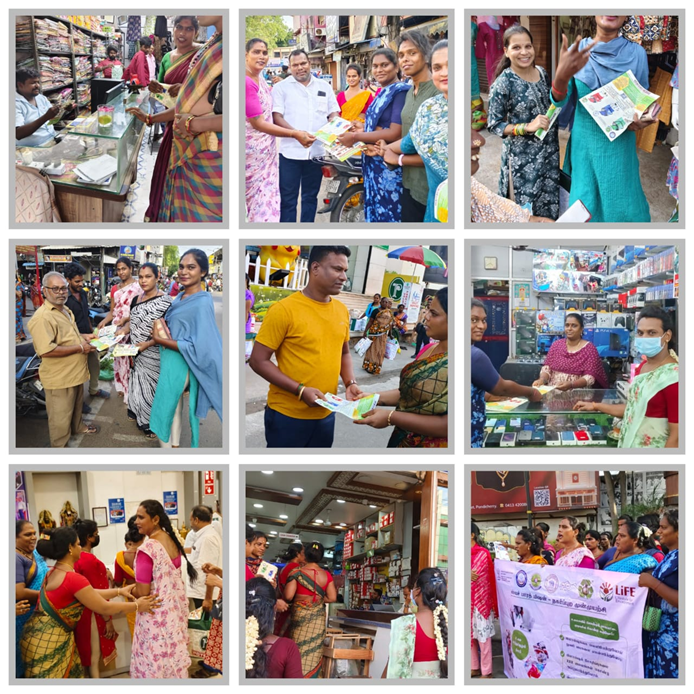
SCHOD, or Sahodaran Community Oriented Health Development Society, is an organization that strives to grow as a support system for the LGBTQ+ community in India. The foundation reflects the capability of collective action in expanding acceptance and understanding within the community. Founded in 1998 in Pondicherry, Tamil Nadu, this organization serves as a vital support system, providing health and educational resources to its members and the broader community. SCOHD works to address challenges faced by the LGBTQ+ and MSM communities, such as social injustice and discrimination, inaccessible healthcare, and legal obstacles. The organization provides a support in health counseling, HIV/AIDS education, mental health support, and legal aid. They contribute to the ongoing achievement of Sustainable Development Goals (SDG 3), and aim to ensure healthy lives and promote well-being for all at all ages.

(Image from SCOHD’s website)

More Than Just a Safe Space

Access to gender-affirming care for transgender individuals in India is unregulated and often very difficult to access. The cost of hormone medication and lack of specialized training among medical professionals often results in inadequate care, leading to misdiagnoses, incorrect dosages, and dangerous side effects. SCOHD plays a vital role in addressing these challenges. The organization has had a substantial impact on the LGBTQ+ community in Pondicherry by implementing effective HIV/AIDS prevention strategies. By providing comprehensive information on HIV/AIDS transmission, prevention, and treatment, along with readily available resources like free protection and lubricants, SCOHD has significantly contributed to reducing the spread of HIV/AIDS within the community.

Historical Impact

IPC 377, a controversial law criminalizing consensual same-sex relationships, had a devastating impact on the LGBTQ+ community in India, leading to widespread discrimination, persecution, and fear. However, in 2018, a landmark Supreme Court decision struck down IPC 377, marking a significant victory for LGBTQ+ rights. SCOHD played a crucial role in this victory, by advocating for the repeal of this discriminatory law and mobilizing public support for this important change.

SCODH’s Goals

SCOHD’s main goal is to build a more just and equitable society where the LGBTQ+ and MSM community can be more respected. By providing support, education, and advocacy, SCOHD helps encourage individuals to live freely in their identity and challenge the instilled stigma that has previously been associated with their sexual orientation and gender identity.

SCOHD has achieved transformative impact through the organization of community events, the provision of specialized healthcare training, and collaborative efforts with media outlets to grow a more inclusive and understanding societal discourse.

(AUP students visiting SCODH)

Societal Challenges

The challenges faced by the LGBTQ+ community in India are deeply rooted in societal structures. Transgender individuals often face family/community rejection, leading to homelessness and isolation. In Indian culture, families often all live together and provide support to one another throughout their lives. So, in a culture that places such a high value on family, rejection from this sense of identity and community has substantial impacts on marginalized individuals.

Limited job opportunities and discrimination further outcast the community. This systemic discrimination reinforces social hierarchies and limits opportunities for these individuals throughout India. The disturbingly high suicide rates within the LGBTQ+ community call attention to the urgent need for support and advocacy. SCOHD plays a crucial role in addressing these challenges by actively advocating for the rights of LGBTQ+ individuals and providing a safe space for them to find support and community. During our visit to SCOHD, we spoke with a staff member who shared heartbreaking stories of individuals facing rejection and discrimination. It was clear that SCOHD is a lifeline for many in the community, offering a sense of belonging and hope for a better future.

More on SCOHD’s website: https://sahodaransociety.wordpress.com/about/

Women’s Empowerment: Care and Capacity Building   

By: Bess Bryan

In visiting W.E.L.L Paper, our class was able to witness the depth of impact a small social enterprise focused on women’s empowerment brings to its community. Within their name, one understands the motivations of this organization. The acronym stands for Women’s Empowerment through Local Livelihood. Each word is embodied throughout their practices. As explained by their head of operations, Danny, women are involved in every step of product production. From concept design, to production and price setting, these women are encouraged to learn, get involved, teach, and share skills with each other. Danny explained that he had been a former employee in the corporate sector, inspiring him to create a version of business operations that is functional, sustainable, and respects the autonomy of the women involved and their local culture. He explained how it was crucial to extract the beneficial aspects of corporate life such as skill training and demonstrations for the women. He maintains the importance of allowing them to set their own prices and have creative freedom. 

W.E.L.L Paper’s approach to production also reduces waste and promotes ecological responsibility by using organic and recycled materials. This commitment to encouraging women’s autonomy and business sense, while also ensuring all products are completely upcycled and sustainable, addresses sustainability goals 10 and 12 (Reduced inequalities and Responsible consumption and production). Though the women individually produce and sell their varied goods (baskets, earrings, small sculptures etc.), I was also informed by staff member Vijaylakshmi that the women often gather together, creating a positive means of social interaction cultivated by women, for women. These entrepreneurs are offered a space to make their own money—regardless of the quantity—which as informed by Vijaylakshmi, they acquire equal—if not the majority—of the benefits through the ability to gather together, share stories, and find relation and confidence in one another. This responds to sustainability goal 5, achieving gender equality empowering all women and girls. She relayed that this is the true impact of W.E.L.L Paper. They improve the livelihoods of village women by fostering a space of care, empowerment, and community, creating networks of support and camaraderie amongst the women, all while equipping them with autonomy-building entrepreneurial skills. 

https://auroville.org/page/wellpaper

The Free Store & the PTDC: Radical Practices of Decommodification 

By Carolyn Franano

“We imagine city as a collective space which belongs to all those who live in it, who have the right to find there the conditions for their political, social, economic and ecological fulfillment at the same time assuming duties of solidarity. This concept of the city is blocked by capitalist dialectic based on difference in public and private good. From these two poles State and Market emerge as the only two subjects. We want to escape this dialectic, not to focus on eventually ‘third subject,’ but on a group of collective subjectivities and the commons that they produce”

 –Pulska Grupa Kommunal Urbanism Social Charter qtd. in Bollier Think Like a Commoner p. 57-58

Globalized Commodification 

The global majority is being strangled by commodification—when I say global, I am not generalizing or exaggerating. In the 1980s, the United States and Britain leveraged the debt of postcolonial states in order to restructure the economies of the global South through neoliberal policy, establishing a global capitalist system in a process known as economic globalization. One of the most troubling and dehumanizing aspects of capitalism is its commodification of basic human needs. Under capitalism, basic human needs are distributed under a false and mythic meritocratic system. Under this system, food, shelter, clean air and water, clothing, and healthcare are not human rights, but rather private goods that one must earn the right to through the accumulation of capital. They are goods to be bought and sold, commodities to be owned, objects of the market to be “earned” through labor. If you are unable to be economically productive enough to pay for these goods, it is your fault. You can’t buy food? Starve. You can’t afford a winter coat? Freeze. Be better. Work harder. You’re lazy. You’re stupid. You’re worthless. You’re worse than the rest of us who have these things and that’s why you don’t. This is the ethos of the capitalist system. This is the story it tells. In this system, humans are reduced to pawns in a market scheme that 99% of people have no power over, and the handle to the door which opens to change it disappears every time you reach. So what has Auroville done? They knocked down the damn door and made it an open window. 

Creating Points of Rupture

Capitalism thrives and maintains itself by propagating the idea that any alternative is impossible. Somehow, many have come to believe that a world in which no human is without their basic needs is impossible—and the idea that no one should ever be deprived of these needs has become radical. However, nothing is ever impossible until we believe it to be. This is why it is so vital to cultivate—even on the smallest community level—practices and ways of organizing social,  political, and economic life that create points of rupture in what is, making possible what could be. Auroville’s Free Store and Pour Tous Distribution Centre (PTDC), projects of anti-capitalist praxis, exemplify this crucial task. 

The Auroville Free Store

The Auroville Free Store was founded over 50 years ago by some of the original Aurovillians—it was one of Auroville’s first social enterprises. It is founded in the belief that basic needs should not—and need not—be entirely commodified. According to one of the Kamala Raman, it is an experiment in “how to sustain yourself in a more conscious way”. The Free Store is a local Auroville shop which provides clothing, toys, books, kitchen items, and other basic goods via a collective approach which aims to ensure that all Aurovillians’ needs are met while nothing is wasted. Aptly named, everything in the store is free. This is an act of decommodification in which goods that are typically bought and sold in the market become collectively owned by the community. The Free Store transforms private property into common property. It is important here to distinguish between public property—which is owned by the public, but organized and distributed by the government—and common property: which is owned, organized, and distributed by the people. Public property, through the public approach of organizing resources, is a top-down approach whereas common property, through the commons approach to organizing resources, is a bottom-up approach. The commons approach provides agency and autonomy to the community and utilizes vital local knowledge.

The Free Store aims to cultivate the joy of giving through what they call “a circle of joy” in which everything is shared and everyone helps to meet each other’s needs. This is a cooperative system of community sustenance. The store’s collective approach to minimizing community members’ inability to meet their wants and needs with their available resources is radical opposition to the globally dominant scarcity-based economics of capitalism. It provides a balancing of “wealth”, aligning beautifully with one of the tenets of Marxist theory from his 1875 Critique of the Gotha Programme: “From each according to his ability, to each according to his need”. The Free Store is founded in such a simple idea, but it plays an incredibly important role in the community. According to Kalsang Dolma, who played a key role in re-establishing the store in the 90s, over half of the Auroville community is dependent on the free store. Everything in the store is incredibly high quality, and it is clear that its smooth functioning comes from the intentional love and care its stewards put into it. In the words of Kalsang, 

“Every community should have a free store. If you learn how to use the Free Store, you start to live in content. It also opens a very different mindset. You become conscious. You have this awareness of, ‘okay, how much am I going to use? Do I need it? It gives you some clarity” 

–Kalsang Dolma

The Pour Tous Distribution Centre

The Pour Tous Distribution Centre (PTDC) was started 17 years ago by members of the community. It is a store that provides food, toiletries, medical supplies, ready-made meals, and other important items. What makes the PTDC unique? None of the items have prices; the store subsists off of monthly contributions. Each voluntary member of the PTDC member is given information on how much they consume from the store each month, and then they decide how much they want to contribute to the sustaining fund. Similarly to the Free Store, the PTDC’s the lack of prices makes consumption more conscious—people only take what they need. Around 72-75% of Aurville families are members. You may think this structure would create a free rider problem, but it does not. In addition, members do not ever try to claim excess contributions that they don’t “spend”—the excess goes to whoever needs it. This system functions smoothly because the PTDC is founded in an ethos of care and community. This transforms members’ relationship to consumption by promoting the practice of thinking in terms of the collective rather than the individual. Even the spatial organization of the store is collective—it is not organized in aisles—it has an open floor plan. In this way, the PTDC becomes a common space for community members to interact and form communal social bonds. 

By refusing to put a price tag on food, clothing, books, kitchen products, and other basic items, the Free Store and the Pour Tous Distribution Centre decommodify these material goods and transform them into a collectively driven means to ensuring the basic needs of all community members are met.

References

Bollier, David. Think Like a Commoner: A Short Introduction to the Life of the Commons. New Society Publishers, 2014.

Marx, Karl. “Critique of the Gotha Programme,” in Karl Marx and Frederick Engels, Collected Works, vol. 24. New York: International Pub., 75-99. 1989.

Sadhana Forest: Sustainable and Compassionate Living for People and the Planet

By Rafaela Marinello

The entryway into Sadhana Forest

For the people living and working at Sadhana Forest, sustainability is not just an ideal—it’s a way of life. From compostable toilets to solar-powered generators, it is woven into nearly every aspect of life in this unique sustainable living community just outside of Auroville.

Today, Sadhana Forest is one of the largest residential participatory projects in the world. However, like many other organizations in Auroville, it began as nothing more than a barren piece of land—the majority of the area’s indigenous Tropical Dry Evergreen Forest (TDEF) was severely damaged by erosion and deforestation. Yet from that desolate land grew Yorit and Aviram Rozin’s vision: to transform a 70-acre plot into a sprawling forest community and ecological project rooted in compassion—towards animals, people, and the planet.

A sign outside the main hut welcomes people in a multitude of languages

Central to Sadhana Forest’s commitment to compassion is its strict devotion to veganism. All of the meals prepared by and for the residents, volunteers, and guests are vegan, meaning that they do not contain any meat, fish, dairy, or other animal-derived foods, such as honey. Yet according to co-founder Aviram, veganism is “not just a diet—it’s an attitude.” At Sadhana Forest, this commitment to veganism extends beyond food to general care for animals, including through a Gaushala—a sanctuary for old or abandoned cows rooted in Hindu spiritual tradition. Rather than use cows for milk or meat, Aviram believes that “animals have the same rights to live [as humans], even if they have nothing to give.” This care for cows reflects Sadhana Forest’s vision of a world without speciesism, in which all beings—humans, plants, and animals—can live and co-exist with equal dignity and respect, regardless of their position within society or the food chain.

Another way in which Sadhana Forest practices compassion is through its implementation of a gift economy—an alternative economic model based on “a form of exchange, …where goods and services are given freely without monetary exchange or expectations of a return or reward” (Sadhana Forest). Sadhana Forest does not generate income and relies wholly on support from donations and volunteers. In addition, residents living in the forest do not pay rent, and visitors are invited to enjoy a free meal and movie screening in the forest every week. All of this goes back to Sadhana Forest’s mission as a space that is open and accessible to all, regardless of their class or social status. According to Aviram, people give naturally when they are treated with kindness—whether through their time, knowledge, or resources. Ultimately, unlike the dominant neoliberal economic model which tends to sow division and inequality, a gift economy has the potential to unite communities and counter inequality—as Niels Thygesen argues, a gift economy “is a social economy and by its ability to include, expand and generate, it builds and is built on community” (Thygesen 500).

Sadhana Forest is a perfect example of the symbiotic relationship between animals, people, and the planet. By protecting the environment, one is not only ensuring the continued survival of our planet, but also promoting greater peace and prosperity for future generations. In a world simultaneously plagued by conflict and climate change, it is more important than ever to recognize the interconnected nature of many of the issues we face, and to recognize climate change as a human, not just an environmental problem. Ultimately, as Sadhana Forest states on their website: “May there be more forests to grow people!”

Learn more about Sadhana Forest by visiting their website.

Works Cited:

Thygesen, Niels. “The Gift Economy and the Development of Sustainability.” Local Economy: The Journal of the Local Economy Policy Unit, vol. 34, no. 6, Sept. 2019, pp. 493–509, https://doi.org/10.1177/0269094219882261.

The Power of Awareness: Rethinking Waste and Plastics in India

by Carolin Melz

Waste management is a global concern, but in India, it takes on unique dimensions. While Auroville appears relatively clean, many rural areas and cities face significant waste challenges. Streets littered with garbage serve as a stark reminder of the issue, something I’ve witnessed firsthand. During a recent presentation by Ribhu Vohra, the founder of Wasteless in Tamil Nadu, we delved into the intricacies of waste management, plastic pollution, and innovative ways to inspire change—particularly among young people.

India has systems in place—green bins, waste collection rules, and allocated budgets—but implementation often falters. In rural areas near Auroville, for instance, workers signed attendance sheets for waste collection but rarely showed up. Superficial clean-ups before official visits often mask deeper, systemic problems.

In urban areas like Pondicherry, waste dumpsites pose health and environmental risks. Fires at these sites during the summer release toxic fumes, endangering local communities.

“Just two generations ago, before the dawn of disposable plastic, people could throw their waste on the ground and it would rot. Not so today, with plastic now clogging up drains and being ingested by livestock.” — Admin, WasteAid

Plastic pollution represents an escalating crisis. Ribhu explained that while recycling offers partial solutions, not all plastics can be easily recycled. For example, PVC and other plastics pose severe challenges, compounded by toxic additives that enhance their properties. These chemicals, often found in soft toys and food packaging, disrupt endocrine systems and harm health.

Microplastics—tiny fragments of plastic—are another pressing concern. Found in cosmetics, clothing, and even food, they’ve infiltrated ecosystems and human bodies. Shockingly, humans consume the equivalent of three credit cards’ worth of microplastics each month. Ribhu shared how fish mistake microplastics for food, illustrating the dangerous cycle that brings waste back to us. Therefore, he created an app that you can download with the ability to scan products and analyze whether or not they contain micro-plastic. Try it! 

Screenshot

Ribhu believes education is the key to solving the plastic problem. Through Wasteless, he has incorporated lessons about plastic pollution into school curriculums in Tamil Nadu, combining storytelling with impactful visuals, like a plate of three plastic pencils symbolizing our plastic consumption. Here the power of images plays also a crucial role in social impact. By focusing on positive, action-oriented messages, he inspires children to become agents of change.

Hands-on learning and creative activities make the issue relatable. For instance, children who connected everyday items like pens to larger waste issues became curious and eager to spread awareness. Storytelling, emotional connections, and interactive games—such as linking fish to microplastics—helped them understand these problems on a deeper level.

Hope, not fear, is the driving force for change. Wasteless uses “edutainment”—a blend of education and entertainment—to engage young minds. This approach, successful in addressing also other global challenges like HIV/AIDS, holds great promise for tackling waste and plastic pollution in India.

“Education is not the filling of a pail, but the lighting of a fire.” — William Butler Yeats

By inspiring curiosity and empowering youth, we can shift from passive awareness to active stewardship, transforming how we manage waste and plastics for a sustainable future. This makes us think how we ourselves have a potential to foster change through educating the younger generation.

To learn more about Wasteless and their projects follow the link: https://www.wastelessindia.org

Works Cited:

Admin. “Waste and the Sustainable Development Goals.” WasteAid, 12 July 2022, wasteaid.org/waste-and-the-sustainable-development-goals/. 

Strong, Robert. “‘Education Is Not the Filling of a Pail, but the Lighting of a Fire’: It’s an Inspiring Quote, but Did WB Yeats Say It?” The Irish Times, The Irish Times, 15 Oct. 2013, http://www.irishtimes.com/news/education/education-is-not-the-filling-of-a-pail-but-the-lighting-of-a-fire-it-s-an-inspiring-quote-but-did-wb-yeats-say-it-1.1560192. 

Decades of Growth at Revelation Forest is Only the Beginning

By Noelle Dillman

AUP students had a special guest teacher for our nature walk through Revelation Forest- Malia Elder, a passionate forester who also happens to be our professor’s daughter. With Malia’s guidance, we wandered underneath the shaded canopies, learned what makes this forest unique, and marveled at the abundance of life present all around us. 

The ecosystem in Auroville is known as Tropical Dry Evergreen Forest (TDEF), which is a rare type of forest indigenous to South East India. Auroville is home to the largest Tropical Dry Evergreen Forests in the world, and Revelation Forest spans an impressive 84 acres. What is remarkable about the land that is now teeming with life at every turn is that it was once a barren plateau.

The forest’s history is intimately tied to colonization and human intrusion is to blame for the degradation of the original land. Humans encroached upon the natural resources offered by the forest such as the Ebonum tree, a dark-wooded tree that was a source of timber, to the point of almost complete depletion. The consequences of over-extraction have been difficult to remedy. Nevertheless, the trees in the forest stand tall with a renewed vitality today thanks to decades of rehabilitation from dedicated foresters and Aurovillians, reflecting a strong commitment to sustainable development goal number 15, life on land.

According to Malia, Revelation Forest is currently really the “fetus” of a forest- it will take many years for the forest to reach maturity and Aurovillians are still actively working to revive the land. Revelation forester Arun Ambathy explains that bringing back a forest “requires consistent intergenerational land use management”, and that is precisely the undertaking of foresters at this particular site (Ambathy). He explains that TDEF is actually a transitory stage, and the ultimate goal of foresters at Revelation is to nurture the land to eventually reach a Tropical Wet Evergreen Forest, but the landscape will need to be consistently maintained over the course of at least 200 years (Ambathy). 

The work being done at Revelation forest calls upon us to consider two valuable points. First of all, the history of the forest reminds us of the consequences of anthropocentrism. As humans, we have a responsibility to protect the environment; we are not at liberty to exploit its resources and recklessly destroy it as we see fit. We must acknowledge that our home on earth is shared, and we have a duty to respect its other inhabitants. Secondly, Revelation serves as a reminder that when it comes to achieving the sustainable development goals, we are playing the long game. Preserving and restoring our environment will require consistent cultivation and a genuine commitment to building a sustainable future- from all of us.  

References-
Arun Ambathy (Auroville forester), interviewed by Carolyn Franano, January 3rd, 2024.