Auroville Dental Centre

This slideshow requires JavaScript.

By Samantha Gilliams

Oral health care in India is a national issue. With approximately 95% (800 million) of India’s   population lacking in oral care, French dentist, Dr. Jacques Verré, decided to ditch his job in Angers, France and move to Auroville, India to get to work. He opened up Auroville Dental Centre Education Research and Rural Action (ADCERRA) in 1982 and felt motivated to become “the dentist of Auroville.”

The clinic is a 15 minute drive from Auroville’s center, set amongst other local businesses and village residencies. A dirt road is taken to reach the clinic, where there is a small building fit with three treatment rooms. Each room is equipped with Japanese furniture designed in order for the practitioner and patient to be physically comfortable. The practitioner sits behind the head of the patient, while the patient lies relaxed on a horizontal flat bed.    

Auroville Dental Clinic has treated over 25,000 people within Auroville and the Bio-region (at their second clinic for villagers) with the help of 10 village women whom he trained. He taught them how to do dental checkups, teeth cleaning, and fill small cavities by hand. In order to work in the clinic as a villager, one must be a married woman who can read and write Tamil. I understood the reasoning for reading and writing as inherent in a clinical environment, however I was curious as to why only married women were hired?

Jacques described how in rural Indian society, men clinically treating women is taboo, nevertheless in their mouth. He explained that they (patients and practitioners) prefer this job to be done by “women because women are mothers… They have softer hands and a more relaxed attitude.” Indian women have the potential to successfully treat 76% of India’s population who need dental care with their dispatching of dental knowledge.

Not only is Jacques challenging the gender roles in Indian society by empowering women through dentistry, he is also (positively) disrupting the caste system. For example, when someone from a higher caste needs a dental service, a practitioner from a lower caste may be the one sticking their fingers in their mouths (and visa-versa). Thus, there is an unspoken trust and will to help and receive care from/by all castes.

But, even though Jacques and the 10 village women are actively working towards public oral health from their clinics, the awareness in the villages is “almost zero.” Jacques and his team hope to figure out a simpler way to teach the villagers and demystify the fear that a large majority of rural Indian have around professional health care.

Class and Culture in India

Contributing to the work of organizations in a foreign culture necessitates a sensitivity toward the social philosophies particular to that environment. During the first days in India our group has wrestled with the unique and often contradictory systems of thought which have slowly moulded the national culture. During our lectures from Deepti on the concept of ‘Integral Yoga’ and the unity at the heart of Auroville’s founding ideologies, I wondered how these perspectives could coexist with the systems of oppression which have also played a prominent role in Indian history.

Our introductory tour of local organizations began with a day in the city of Pondicherry which neighbors Auroville. Through these initial presentations we began to develop a sense of the social, religious and colonial histories which have come to shape the complex social structure within which organizations are operating.Perhaps the most prominent and difficult to understand from a Western perspective is the caste system.

A preliminary discussion on the caste system was facilitated by members of the organization PEDs, who described their project as an attempt to work within the lowest caste, or dalit, communities to raise awareness of the prejudices they face and their ability to improve their situation. The caste systems relies on the more familiar concepts of rebirth and karma which ensure that the actions taken throughout the course of a lifetime will be reflected in the caste of future lives. According to the leaders of PEDs, the fixed nature of caste designations fosters a general acceptance of inhuman treatment and strict segregation of the dalits. While caste-based segregation has been outlawed by the Indian government, deeply ingrained ideas of purity and pollution persevere in the villages. The so-called “untouchables” are given jobs, such as sewage management, rejected by higher castes and forbidden from physical and social interaction.   

The ordeal of the dalits was hard to conceptualize without an extensive discussion on the history and contemporary role of the caste system. Students struggled to envision a social hierarchy which prescribed a rank based not on wealth, religion or race but rather inherited at birth and fixed throughout this lifetime. It was equally difficult to understand how an organization could attempt to address the problems of an excluded population without condemning the system as a whole. As Tanya explained to us, even Ghandi worked toward a reform of human rights without rejecting the classifications that had lead to tension and stratification between different castes.

While two NGOs we visited dealt directly with the segregation of the lowest caste, the dalits or “untouchables”, the restrictive inter-caste dynamics affect many of the village based organizations we have visited throughout the week. Groups who address women’s empowerment, youth education, public health and even cultural preservation all indirectly work against caste discrimination. However, the enduring adherence to this social system often hinders work in environmental and health sectors by associating uncleanliness or pollution with specific populations. Acknowledging the power of this social structure and learning to work within it will be an essential challenge for most of the group as we begin our internships.

DSC00045.JPG

An Eco-friendly Menstrual Revolution

   Menstruation in India remains a taboo topic that drives women to be ashamed, patronized, and even temporarily banished during their time of the month. While for some it might be an issue to merely blush over and giggle about, for many Indian girls it could be disastrous for their education and thus career, as research shows that 1 in 5 girls in India drop out of school due to menstruation. The absence of an open discussion about the process and how it should be perceived, comprehended, and handled does not only stem from educational ignorance and toxic cultural myths, it also fosters them. By keeping the issue ‘under the rug’, girls are taught since puberty to feel burdened by their bodies. In an interview for the BBC, Anshu Gupta, founder of a non-governmental organization in northern India, insists that the root of the problem lies in how menstruation has always been treated as an isolated women’s issue. Gupta asserts that menstruation must be generalized and evaluated from a human health perspective.

     Here in Tamil Nadu, menstruation is equally challenging. Fortunately, efforts to better educate girls and provide them with the necessary hygienic products are in place. One Aurovillian non-governmental organization by the name of Eco Femme is a revolutionary force that combines a profound understanding of the issue concerning menstruation in India as well as the sustainable and eco-friendly mindset of Auroville. By creating reusable products, women in India could easily avoid committing to purchasing plastic ones regularly as well as struggling to dispose of sanitary waste. According to Celia, a research and marketing specialist at Eco Femme, a regular disposable pad takes up from 500 to 800 years to fully decompose. Furthermore, the risk of developing infections and irritations whilst using a plastic pad is highly amplified in comparison to the Eco Femme’s reusable cloth pads which are nearly entirely organic, and can be used for up to 5 or more years, if well-maintained.

day-pad-pad-pad-plu-and-night-pad.jpg

      The entirety of Eco Femme’s profit is used directly to fund educational programs for local school girls who are truly in need of unbiased and shame- free menstrual hygiene guidance and instruction, since they seldom acquire it from their community. With the help of Eco Femme’s health and education specialists, they learn all about the intricacies of puberty, their menstrual cycle, how to properly use or insert a variety of sanitary products, not exclusively the Eco Femme ones. At the end of the sessions, the girls are provided with free-of-charge Eco Femme pads which they are encouraged to use.

eco-femme-make-your-own-washable-cloth-pad.jpg

        One noticeably challenging limitation to this educational approach is its exclusiveness for girls. If the end goal is to eradicate the silence surrounding menstruation in India and instead create a healthy and open dialogue, then everyone should be included in the revolutionary transition, otherwise fundamental change will never occur, and an immense gap in the understanding of the issue will continue to exist and be hindering.

   Eco Femme’s products are locally made with the assistance of other local non-governmental organizations. The Auroville Action Group Organization (AVAG), an organization that provides women with opportunities for financial independence, completes the stitching and the sewing process of the pads. WASTEless, an organization that is concerned with India’s waste and environmental problems, provides educational material and research concerning the dangers of sanitary waste. The coordination and support amongst the different organizations reflect Auroville’s core sense of community and its emphasis on a cooperative and communal lifestyle.

Dhouha Djerbi.

To find out more about Eco Femme’s origin story and products, please visit: https://ecofemme.org/

To read the BBC story mentioned, please visit: http://www.bbc.com/news/world-asia-29727875

Conserving Pondicherry’s Heritage with PondyCAN

In the center of the lovely French Quarter of Pondicherry was the location of our next NGO visit, PondyCAN. The organization invited us all for tea, samosas, and a wonderful presentation on the Pondicherry Heritage Festival. The purpose of this yearly festival is to explore Pondicherry’s culture and it’s many forms of arts, crafts, architecture, dance, music, and more. But why exactly is this fun and festive event important for Pondicherians and their future? Well, we live in a time where the takeover of modernity leaves community members slowly forgetting the true value of their heritage. Western ideas and practices have spread around the world, introducing other cultures to the multifaceted iPhone, popular sports like wrestling, updated tools to get chores done faster, and the general digital transformation. Of course, there are many positive aspects of modernity and its contribution to society, for example, the implementation of technology features in villages that may not be familiar with it. This semester, I studied Information and Communication Technology for Development and weighed the pros and cons of this form of development. After some thorough research, I found that ICT4D actually benefits developing communities and works well in areas such as education, health, and governance. I, however, did see the aspect of modernity as a negative impact for reasons such as losing cultural identity, which is what PondyCAN aims to tackle.

pondy

(Pondicherry Heritage Festival 2015)

By focusing on heritage conservation and restoration, this festival is allowing the Pondicherry community embrace their culture and history. After the collapse of the Marie building, which is a Pondicherry Heritage building and is said to be nearly two centuries old, it was decided by the city and the government to not demolish the building, but instead, restore it. This restoration of heritage is a prime focus on the festival and this reconstruction reflects the idea of conserving and restoring Pondicherry’s heritage.

One of the festival’s goals is to get to local residents involved as much as possible to create a sense of community. In my Development Communications course, I explored the importance of community involvement when it comes to development and how, without this factor, it becomes difficult to practice development. I think this festival is a form of development as it brings empowerment to the Pondicherry community and allows them to proudly share their beautiful heritage so the aspect of community involvement with PondyCAN was very interesting and admirable.


Hibaq Dougsiyeh

Waste Matters

Waste Matters

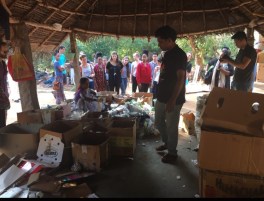
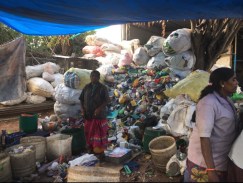
To be honest, waste management is an issue of which, I really had not given adequate thought to in the past. Our visits to Wasteless and the Pondicherry dump changed this for me, and ideally for several classmates as well. Not unique to other subjects, learning about waste management in a classroom compared to taking the rare opportunity to stand in the middle of the Pondicherry dump was surprisingly a humbling experience, and one that allowed us to quite literally put ourselves in the middle of viewing both the increasing amount of trash (56m high), and the increasing relevancy of the issue of the waste management into daily life; the vast majority of inhabitants in Auroville neglect to separate compostable waste from non-compostable waste, let alone are aware that certain daily habits are an issue. For example, the abundance of flies that are attracted to waste that is dumped outside the front steps of homes can transmit multiple types of diseases.

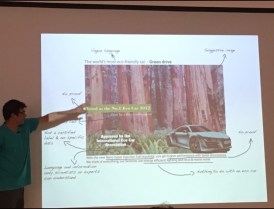
Our visit to Wasteless was thought-provoking and the presentation was relatable and engaging. Wasteless is an NGO based in Auroville that focuses on knowledge sharing of proper waste management and why it matters, particularly by educating youth. Wasteless has developed interactive games and activities for children, who have proven to be the more useful target market by subsequently influencing parents at home about simple, proper waste management tactics. One game Wasteless has developed is Garbology 101, a school curriculum comprised of 101 environmental, multi-intelligence activities focusing on empowerment which targets primary and middle school children. kNOw plastics is another example of a game in which children have the ability to learn about proper vehicles of managing waste; for example, one-time use plastic water bottles would be much more of a waste of compared to using reusable, stainless steel and glass water bottles. Children tend to be more receptive and able to pick up knowledge because of their younger age, and these games promote discussion amongst children and at home. We learned about the importance of conscious consumerism, the horizontal perspective of integrating positive change, and the effects of greenwashing. Greenwashing is one way in which the effects of particular marketing strategies can influence consumers. A company is guilty of greenwashing when, for example, it makes itself appear to be more eco-friendly and sustainable than it really is to boost profit and increase brand loyalty and retention. For example, take a look at the advertisement example below. Wasteless used this example to show us during the presentation. Also, the more modern push for increased transparency in supply chain logistics and accountability could help begin to remedy this because consumers would have access to see where the product comes from and be more consciously aware. Whether or not consumers choose to access this information is a separate, arguably ethical issue.

Externalities of consumerism run high, but it is important to be aware that problem-solving competence is an area of which we have the capacity to share with others. Waste management, put much more simply than the depth of the issue itself, can be analyzed in a linear process; from extraction, to production, to production, to transportation, to purchasing, usage, disposal and dumping, waste management is a complex and impactful subject of pertinent importance, regardless of geographic location. But the issue runs deeper; there seems to be a lack of shared knowledge that waste management is a detrimental issue to people, communities, and the environment, why proper waste management is integral to incorporate into daily life, and what role and minor adjustments people can make to contribute to mitigate the effects of insufficient waste management. One point which resonated highly with me was the point made that the trash we throw away, never really goes away. The garbage is contained within our planet, and can reappear in one form or another, and we need to adapt this cyclical form of thought. For example, the small piece of plastic that is nonchalantly disposed of into the ocean can be consumed by marine life, who is mistaking the plastic of jellyfish. Over time, this plastic moves up the food chain until it reaches us as consumers; we must be conscious that we then consume that microplastic. Long-term, mass consumer awareness and commitment to sustainability is necessary to ensure positive social change can withstand over time, but it must also come from legislation by way of voters. Although generally not an advocate for a top-down approach in terms of development aid projects, taking a top-down approach by way of legislation would be ethologically appropriate to implement sustainable waste management standards. As consumers, we must be conscious of our actions, but also willing to implement the changes we can. It’s quite simple to overlook small misgivings in a busy schedule, but awareness of an issue is the first step. As consumers, we have a social ethically derivative duty to understand what steps we can take to help. Turn the water tap off when not in use; ‘talk trash’ about the issue and ramifications of improper or nonexistent waste management in your communities; bring Garbology 101 to the virtual educational space. Crowd funding strategies and campaigns can prove effective. Acknowledging that this type of behavior of proper waste management cannot really be changed instantaneously, awareness can be implemented, which leads to discussion and positive social change with long-term, unified consumer commitment.

Caitlyn Fitzgerald

img_5695img_5693img_5691

img_5694

img_5696

Talking Trash

By Tara Jamali

What intrigues me about Auroville is its commitment to natural, waste-free living. While I have made attempts in the past to live a more sustainable lifestyle, I was not always sure I was doing it the right way or making a real difference. But Ribhu’s “trash talk” earlier this week opened my eyes to a completely new dimension in sustainability.

After graduating in European Hospitality Management in the Hague, Ribhu Vohra had worked in human resources at an oil company for a few years before he realized the longer he stayed there, the more he wanted to work for an organization he believed in and do something he felt good about. So he convinced his wife Natasha to move back to his native Auroville. Upon landing here, his sister asked him to join her in a litter cleanup activity which included a “trashion show” for youth. Their activities eventually merged into a large campaign. “It taught us the power of children and how they can bring positive change to our small village”, he says. “From there we decided we had to educate every young mind in the world.”

Observing firsthand how children were powerful change agents in sustainability, Ribhu decided to dedicate his life to educating them and seeing that they establish positive habits early in life. He tries to get them to inspire their parents and family members to take positive steps and change habits as well. The children Ribhu works with are usually 6 to 15 years old, and he tries to make learning fun by creating games and activities that engage them, while teaching them how they can be part of the solution and not the pollution.

“We have to bring sustainability to the way we deal with our consumption, in how we dump things away when we’re done consuming them,” Ribhu said during his “trash talk” at Auroville’s Unity Pavilion on Dec.19. It was more like a Ted Talk than a typical lecture or presentation. Many fellow students later commented on how Ribhu’s style of communicating and educating on the topic inspired them to make sustainability a more significant part of their lifestyle.

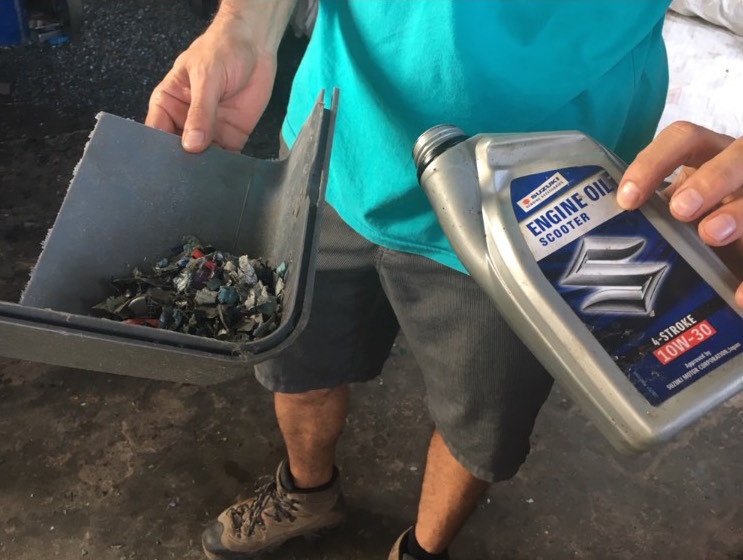
Ribhu dedicated a significant portion of his talk on plastic waste, explaining how plastic usually makes its way into the oceans, eventually suffocating marine life. In a research study on a community living near a local dump in Pondicherry, the amount of plastic in the inhabitant’s blood was found to be 15 times higher than in any other community in the world. Much plastic waste is dumped on roadsides, where cows usually roam around. In one case, 54 kilos of plastic was found in a cow’s stomach.

Reducing plastic consumption is not at all difficult. We can start using stainless steel beverage containers and glass bottles instead of plastic bottles. We can start using reusable bags instead of plastic bags, and be careful not to mix plastic waste with compostable waste.

When you make the conscious effort to be sincere, things happen. When you recognize everything is sacred, you automatically become ecological. Sustainability as a hallmark of spirituality is a way of life in Auroville, where the emphasis is on creating a conscious future. Ribhu’s desire to create a waste free and sustainable earth for his two young children led him to sacrifice lucrative career paths in order to dedicate his whole life to educating on sustainability. His passion is in “talking trash” to students like ourselves, who then find his passion for preserving resources contagious and start doing the same, especially after realizing how current waste patterns tremendously affect future generations. From now on, I proudly pledge to be a trash talker. Will you do the same?

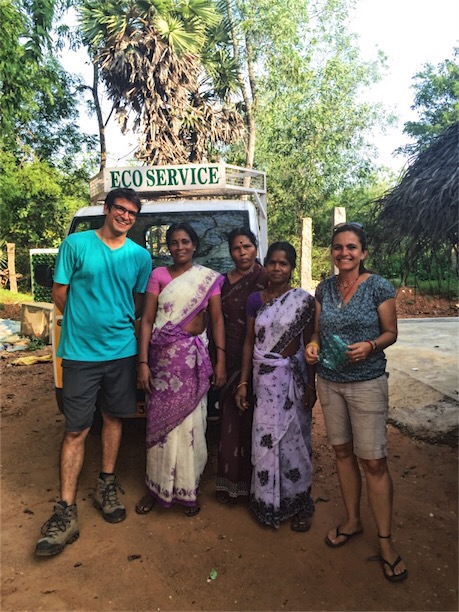
vsco-photo-115                                              Ribhu (far left) and colleagues at a local recycling plant


Is India doomed to become a specialized manufacturing country?

There is a very young population in need of education. In 2011, a census revealed that there were 264 million people between 15 and 34 years old (productive age) in India, whereas 67.6% belong to the rural sector and the rest to the urban.

However, since 2010 the level of education has plateaued, which implies a huge problem because individuals are entering directly into the work force. This creates a time bomb for India because it dooms it to become a specialized manufacturing country. The solution relies on educating this young generation.

Auroville Institute of Applied Technology (AIAT) is a private organization that seeks to contribute into poverty eradication through vocational education and self-empowerment of students. They primarily focus on attracting students from rural areas. These students tend to share similar backgrounds such as disadvantaged family (below the poverty line), academically weak, socially challenging background (caste system) and lack of motivation/enthusiasm.

The Institute has to deal with the families and government (needs to adapt to constant regulations) and institutions to demonstrate the importance of vocational training. AIAT trains their students through Project Oriented Learning in order to increase their abilities in problem solving, seeks to motivate them, invites them to engage with their culture and make them aware of the social issues such as health, environment and society.

The anticipated outcome? Qualified workers and responsible citizens. The results are indeed very positive; 80 percent of those who completed the program get a job and another percent choose further education.

However, it is not easy. AIAT is in need of strategies for extra fund raising in order to manage to train more students. Those below the poverty line live with less than a dollar per day (68.08 Rupees). The Institute fees are 20,000 rupees per year. If this is broken down, an individual below the poverty line lives with 24,849.2 rupees per year. It is evident that it is impossible for the students to enroll by their own means. AIAT is not willing to give up, however they are constantly at the end of a cliff because they do not receive any financial support from the government and they depend on donations. The institution has a capacity of 400 students, yet there are only 100 enrolled currently.

Marcos Lopez Manrique

Our Eventful Arrival in India

After an 8 hour flight from Paris, we landed in Mumbai and we were all rushing to make our next flight to Chennai. We arrived in Chennai at 4:30 am and all got onto two buses. Our first stop was to enjoy an authentic Indian breakfast. Though the taste was unfamiliar to most of us, we thoroughly enjoyed every bite. Certain students found the dish too spicy, while others were prepared to eat spicier dishes! We returned to the buses and traveled another couple of hours to a beach. There, we saw horses, sacred statues, and a beautiful ancient temple. Many of us climbed up some rocks for an even better view. There were men cutting fresh coconuts nearby with machetes, and each of us were eager to stick a straw in a coconut! Then, we walked up to a gorgeous relief sculpture which lead to a lighthouse, more ancient statues, and temples behind it. Where we are, in Tamil Nadu, is actually one of the most ancient regions in India. When we finally arrived in Auroville (the township we will be working within the next four weeks) we ate at Tanto’s, an Italian restaurant wherin we all enjoyed pizzas to share. At this point, it was only 3 pm, but everyone was exhausted and falling asleep. We eventually made it to the Mitra Guest house where we are staying. We were assigned roommates, received our room keys, and had free time until 5:30pm. While most students decided to nap, I decided to venture out with three other students to discover the area. We forgot that the roads were reversed à la UK style, and wandered straight into oncoming traffic–which was both scary and funny. We got to the Vistor’s Center (built out of sustainable brick materials) and were pleased to find delicious iced coffees and good wifi connection, for the Mitra’s wifi is not very strong. Finally, we all gathered for dinner next door at the Town Hall around 7pm. Needless to say, the day was filled with plenty of food and travel–and even I could not wait to get to bed by then.

We all called it an early night, and many of us woke up for a 7am yoga session with our instructor-to-be Natascha. It was amazing and much needed!


-Serene Obagi

Cultural Identity Formation

Identity is not a role and is often confused as one. As Kakar clearly states identity is not a garment that can be put on and taken off accordingly; a man’s identity is a vital part of his culture, it makes him recognize himself and be recognized by others. He goes on to argue the difference between those born into a particular culture, average age 20. They will never acquire a full understanding of other cultures. The possibility of fluidity and changing identities in adulthood are limited. Our identity is stabilized before we even have the choice to identify it as an essential part of our identity. As for Indian-ness, it is produced by similarities created by Hindu civilization that contribute to a cultural gene pools of India’s people. The ideology of family, view of social relations influenced by the caste system, image of human body and the bodily process based on medical process Ayurveda, and a cultural imagination shared with myths and legends are also major influences in the procedure of shaping one’s Indian identity.

India has curated several branches of beliefs that deeply internalized subjectivity of identity formation. The web of family life is the base of formation. Bollywood movies have shown Indian families to be large and noisy; with aunts, uncles, and grandparents and parents all living under one roof. Researchers have proven this to be unlikely. The ‘joint’ family feature that is so intertwined in the Indian culture has to do with ideals of fraternal loyalty, obedience and common social and ritual activities. Family occupies a much greater space among Indians unlike European and Americans where there is only parental influence subjecting their inner lives.

I relate with the Indian identity because I have many similarities among my own cultural background. Having influence of American culture where much emphasis is placed on the single partnership of the parents guiding the way for their child, as well as Spaniard influence where family is the major factor in the shaping the child’s life. Although there may be a disconnect in the child’s life where he may have to move away because he has reached adulthood and must study – there is never full detachment from the family. In the Spanish culture that child’s home will always be there, his family will always be there for support and vice versa. The child is to return home to his parents, and under that umbrella are his aunts’, uncles and grandparents patiently waiting with open arms to congratulate him on his highest achievements.

Christa Rodriguez

We need to challenge the system we live in

While I was in Pondicherry, India, doing NGO work for the Gypsy community, I noticed that as soon as girls had their periods they had to be sent back to the village. As far as I recall, there was a 16 year old with a baby in the village who had been to Samugam, Bruno Savio’s orphanage, created for the Gypsy Community. After hearing and witnessing this. What can be done about this? Why is it that even when one had created the proper infrastructures and help, some of the children would go back to the village? Tradition was among other factors. How can values and traditions be changed? Should they be changed for the sake of development?
These issues do not just concern India; as human beings, we need to change our habits as active members of the world community for a better future. How do you make people change their habits? How do you make them realize that they need to change them?
Since I came back from India, I see things differently, I had a violent epiphany about the problems linked to how we live in the West. What can we do to change how things are done? I can no longer stand on the side and look at the world crumbling because of us. I need to start acting; we all share responsibility! Since I came back, I have paid attention to how much waste I consume, I constantly think about all the NGOs we visited and try to apply the solutions these people came up with. I think about these discussions regarding the seen and the unseen. I always think about the hole in the O-zone layer and how because people cannot actually see it, they think there is no problem. Do we have to get to the point that we see everything in order to act? In thinking about the waste I consume and how I recycle. I have now created one trash for compost, one trash for plastic, cardboard, paper, glass, and one trash for garbage and other non- recyclables. Ever since I got back, I have furthered my knowledge and understanding of what steps can be taken in the right direction, by learning from people who try to live with Zero Waste and off the grid by challenging the system. We all need to challenge the system we live in; we all need to challenge ourselves.
The lack of sufficient infrastructure for recycling, disposable waste and compost creates a problem in cities, as does the lack of second hand, damaged or unpacked goods in retail stores. Cloth bags should also be used in lieu of plastic ones.
I am fully aware that taking the organic route might cost more in the long run, and that it isn’t the top priority for families and people who have trouble to make ends meet. Living sustainably needs to become more affordable because we are going on a slippery slope. My dream is that we get together as a community and act! Actually, when you think about it, are alternative ways to living better that expensive? The answer is NO! On the contrary, living sustainably is affordable and actually costs less; making your own toothpaste, shampoo, and laundry detergent are a few things you could do, for a fraction of the price you buy them at! Little by little, I would like to get to the point where I too only have a little jar of trash in a year. How can we communicate these things effectively to the global community?

-Chelsea Carter