Eating With Your Hands

By Sam McKeown

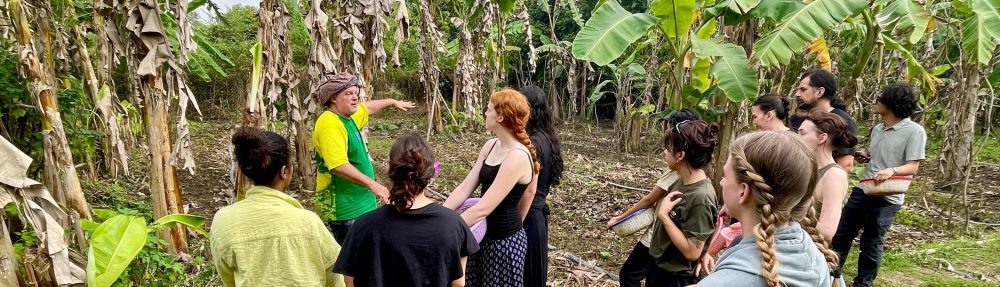
Upon an aluminum plate sits a fragrant mélange of bottle squash kootu, vegetable curry, and seasoned rice. My belly rumbles from the scents of mustard seed, onion, turmeric, and coriander powder that perfume the air. My colleagues and I sit patiently upon the wood floor awaiting the completion of the prayer. Under the supervision of Devi, head of the Life Education Center, we’ve prepared our meal with careful consideration for the three doshas—pita (fire), kapha (water), and vhata (air). In traditional South Indian cuisine, each meal is meant to combine ingredients that help balance the dosha within the body, thus attaining both physical and spiritual balance.

By participating in the preparation of our meal, we’ve not only exchanged laughs, techniques, and stories, but also a small piece of our personal culture. For some, cooking represents a reflection of the self, a means for us to share small, non-verbal pieces of information of our personal journeys. Where did you learn to salt the water before you boil it? Why do you cook the onions first? Why do you use sunflower oil versus olive oil? For others, cooking is a source of anxiety, an exploration of opposing elements that threaten at any moment to taint the flavor of your meal and thus your self-representation. In a broader sense, cooking is a codification of collective values that has been and is continually reinforced generation after generation. Regardless of what cooking means for you, it can unanimously be considered a form of communication. An equally important form of non-verbal communication, however, is eating.

Upon my aluminum plate sits a small, plastic spoon. I glace around the room and notice that our Tamil hosts aren’t eating with the spoons, but rather their hands. Despite having eaten with my hands several times during the course of my stay in Auroville, there’s always a brief moment of anxiety before I begin. Being American and having seen a few different parts of the world, South India has been the first time I’ve experienced the culturally normative practice of eating with your hands. But what drives the fear behind this interaction with food? Is it fear of being thought of as messy, as I inevitably get rice on my nose every time I eat with my hands? Is it that most Western cultures have effectively created an implicit fear to the sense of touch in eating through reinforcing the use of utensils? Or is it simply a fear of trying something new? Perhaps it is a combination of the three. I take a breath and dig my hand, specifically my right, into the rice that has been doused in curry and kootu, scoop, and eat. The texture is both foreign and familiar at the same time, a texture I expected but still can’t necessarily put into words. It’s not slimy; it’s not hard or rough; it’s possibly a little sticky and creamy.  I glance around the room again and realize that not a single person has reacted to the rice that has clung itself to my right nostril. What has seemed to me a personal victory of overcoming neophobia to others is the simple act of eating.

When interacting with cultures inherently different than our own, eating is a meta-lingual exchange that can reveal an underlying dialogue. By picking up the spoon, I’ve reinforced my own culture and therefore my otherness from my hosts. By eating with my hands, there is the removal of a small but noticeable barrier between my cultural subjectivity and acceptance. The flavors of the meal are strong but complementary, subtle hints of spice balanced with the tangy acidity of tamarind. Before I’ve  realized, my plate is completely empty, my belly is satisfied, and my doshas presumably balanced. A collective lull has settled over the group, one that seems to transcend conventional cultural boundaries—the ubiquitous satisfaction of a good meal.

Naturellement Café: A Love Experiment

By: Jon Daniel McKiever

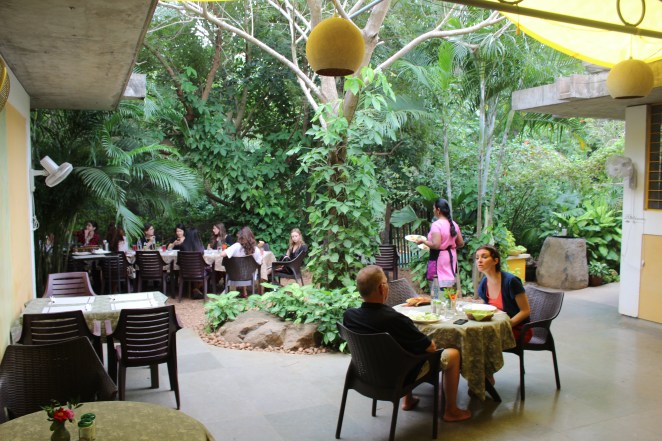
This past week has been filled with meeting incredible individuals who are impassioned by the desire to improve the lives of those around them. Martina Ljungquist is one of these people as she embarked on a journey 26 years ago to empower the local Tamil women by establishing the Naturellement Café.

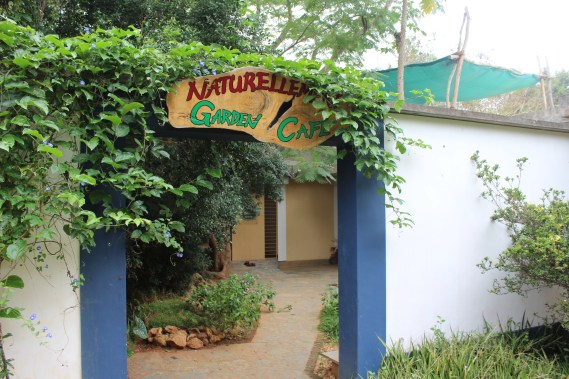
img_0277

From the Naturellement’s website, one can see the aims of the restaurant are to (1):

  1. Empower women from disadvantaged back grounds by providing them meaningful work.
  2. Engage in socially responsible and fair trade business practices.
  3. Support sustainable farming by using organic raw-material whenever possible.
  4. Provide natural handmade fine foods of the highest quality to our customers.

Martina’s quest has always been to “bring down into the matter, something higher. The question is, ‘how do you do that?’” This question inevitably led Martina to Auroville where she claims, “the startup of this company created itself and I’m always trying to catch up!” The rise of this social enterprise has allowed its workers to create a livelihood for themselves all while learning an array of skills from cooking to operational management for their restaurant.

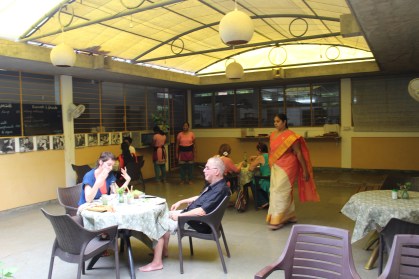
img_0274It’s evident Naturellement’s success is due to the combination of Martina’s love for her workers and the motivation her love spurs within the ladies to generate a solid work ethic amongst the restaurant staff.

Martina makes it very clear she’s never been well versed in typical “business” operations but she actually began her career as a Kindergarten teacher! She’s an educator at the end of the day; yet, she’s using the café to educate and empower the local women through the lens of business.

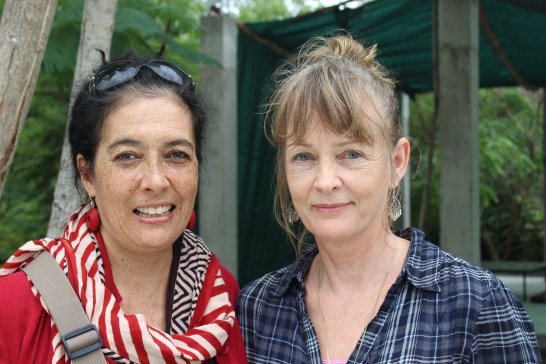
img_0271                                           (Left: Tanya Elder, Right: Martina Ljungquist)

Through her past jobs, Martina learned how not to be a boss. She’s learned this and has applied to it be an effective manager for the Naturellement café. Her model for success is never benchmarked by maximizing profits. Instead, Martina’s desire for the well-being of her ladies if the focal point of the café.

“When your aim is to have maximum profits, you start making short cuts.” – Martina.

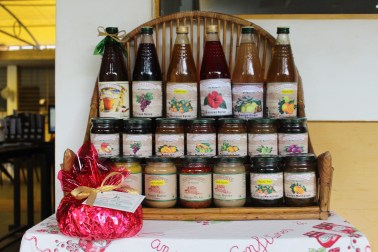
img_0279

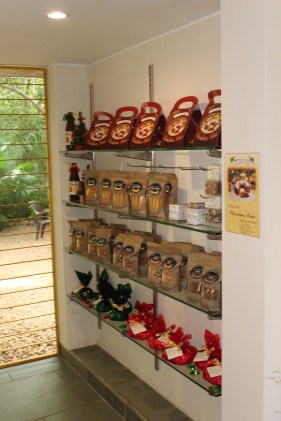
Products for sale at Naturellement Café

img_0284

A shot of the café’s store

Her dedication to maintaining a sustainable supply chain while setting higher standards of living for her workers has established a more ethical approach to business operations. The company’s revenues are making a positive impact for the 35 ladies that are employed here today.

When “profit maximization” is removed from the worker’s mindset, it cultivates a more personable environment where the ladies are free to unwind and be themselves while working.

Her love for these women is evident as she elaborates on the various ways she strives to provide for these women. Some of her stories are more light-hearted as she illustrates how they all took a break last week to turn on a movie in the office during a work break. Her other stories are more serious as she expresses the difficulties she faced when she’s learned some of her employees have been beaten by their husbands.

According to the Times of India, around 60% of men throughout India admit to wife-beating. (2). While it’s shocking to learn these cruel and archaic practices are still prevalent throughout India, one can only imagine the ethical dilemma it creates between Martina and her ladies.

Martina is in a unique work environment where her business model is centered around the well-being of her employees. Thus, it may seem necessary to intervene as a manger when your employee is physically assaulted because it harms the core of this restaurant’s business structure. However, Martina is a Swedish entrepreneur who may come across as a “westerner” or “foreigner” to her employees’ husbands. What do you do when your good intentions to protect your employees conflicts with cultural norms that you were never born into?

This is a complex issue which Martina has artfully navigated throughout the years with her fellow workers. She mentioned her initial reaction was to ask the ladies if she could speak to their husbands about this issue; however, she learned the women didn’t want this as it would only make the situation worse.

This experience must have taught her how to help where she can by being a listening ear and a support system for these incredible women. Her efforts yield results as we learned none of her current employees are beaten today! Progress here at Naturellement café could be perceived as being “shwiya ba shwiya” or “little by little,” yet the progress made within the lives of the Tamil women that work here is interminable.

img_0281

References:

  1. http://www.naturellement.in/
  2. Dhawan, Himanshi. “60% of Men Admit to Wife-beating: Poll – Times of India.” The Times of India. Bennett, Coleman & Co., 11 Nov. 2014. Web. 26 Dec. 2016.

“I am Full of Hope for the Future”

Sustainable fashion designer Uma Prajapati talks about bloody cotton, high-speed trains and why she never wanted to become a business woman.

DSC00121Uma Prajapati in her apartment in India. Image Credit: Mia Windisch-Graetz

January 7, 2016. 3:22 P.M. Auroville, South India.

“Hold on tight or you won’t survive,” I keep telling myself while sitting on the back of Uma Prajapati’s motorcycle. The rebellious driving style of the fashion designer and founder of Upasana clearly reflects her obstinate approach to her career path. We are on the way to her apartment, where I interview her over a cup of tea. Besides her impressive book collection, design furnishings and a kitchen everyone in their twenties can only dream about, it is her story that fascinates me.

MIA WINDISCH-GRAETZ Tell us about your career progression, where you studied, where you worked, who influenced you.

UMA PRAJAPATI After I finished my studies in economics in my hometown Bodh Gaya, I went to New Delhi. There I did my major in fashion design at the National Institute of Fashion Technology (NIFT) from which I graduated in 1994. Then, I worked two years for the European fashion market in Delhi. For a design project I came to Auroville in 1996. I remember I only had 2,000 rupees in my pocket, less than 30 euros. Actually, I was supposed to be there for two weeks but those weeks turned into years. And well, I ended up creating Upasana in 1997. Wow, it’s now been twenty years since I first got here.

MWG What does sustainable fashion mean to you?

It means to care. Once you start to care about people and the environment, the ways you make decisions will change. This twist in your mind comes naturally. The way you think changes. And your plans change. You really have to plan ahead to dodge around big conglomerates that only want to make profit.

Screen shot 2016-02-21 at 7.53.05 PM

MWG What inspired you to create Upasana? 

UP A couple of things. A little more than ten years ago, thousands of cotton farmers in India committed suicide because of the rising costs of farming brought about by Monsanto. It has driven them to crippling debt. They felt they had no other choice. That really hit me. And change happens when it hits you. It doesn’t come easy but when you get hit and cry helplessly, that is when you find the change.

Since then it became very clear to me that fashion has to be sustainable. I worked in fashion and with cotton at this time. I had to live with that. I felt responsible for what happened. Many people in India pretend to not know what’s really going on. There is a seed mafia and farming communities are not well educated. I knew that everyone would just continue the way they work. Why is the world so unfair? Fashion is the second largest industry in the world. And it’s a really bloody business. When we started to work with cotton farmers in South India, it changed my life. What I could do to help these people? I had the choice to either write nasty articles and blame others, or I could just go ahead and change the way I work and consume. And that’s what I did. At first, it was hard but I realized that positive conversation has a far greater effect than negative conversation for a positive cause. I thought, Okay, I will give you fashion but I will make it my own way. I also wanted to create a space where young professionals from all over the world can come and explore Auroville through textiles and design.

NYE
Upasana Spring/Summer 2015 Collection. Image Credit: Upasana

MWG You said ‘a couple of things.’ What else hit you?

UP There was an old lady. I encountered her in a village where I was running a project to empower local weavers in South India. When I was sitting there, next to our car, about to go home again, she suddenly came over to me. She nudged me and asked: ‘Would you support us too?’ I did not expect that and just asked her: ‘What do you want me to do?’ She just wanted to work and earn a few rupees a day. This woman was about sixty and still had a dream. The dream of only earning a few rupees a day.

MWG How is Upasana a sustainable fashion brand?

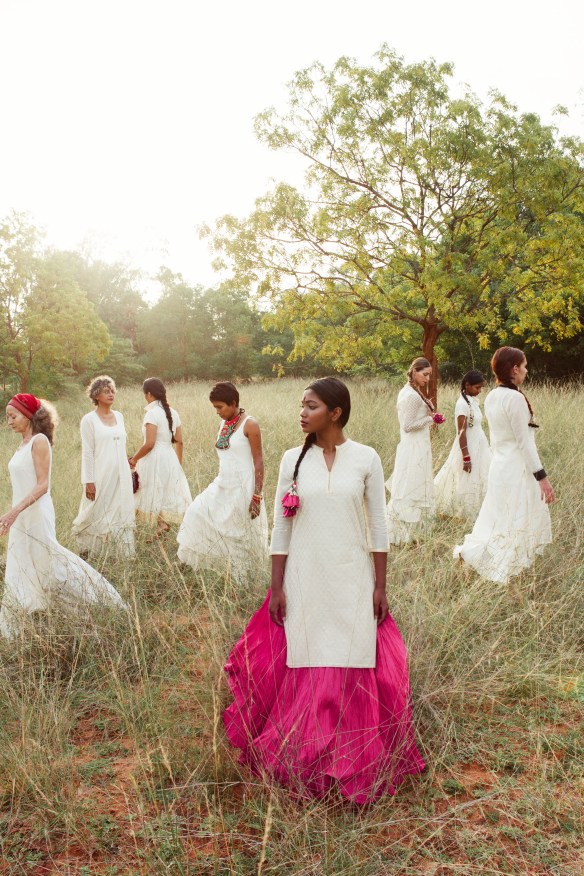
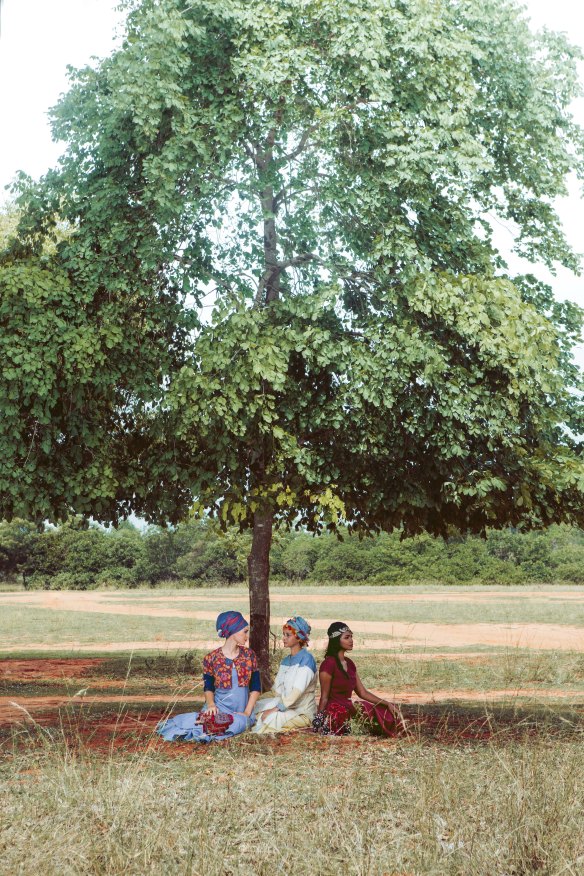
UP We only use cotton from local farmers. Going organic was the biggest change we have ever made. The clothes are made by our seamstresses and tailors at Upasana. And we only use high quality, naturally dyed fabrics that are made in India.

2
Image Credit: Upasana

MWG Sounds very costly… Between ourselves, does it pay off?

UP To be honest, it really broke us financially. We did not realize how badly it would hit our business. I did it all wrong. I jumped in blindly. If I had known how difficult it would all be, I would have done things differently. Instead of taking a leap of faith I might have taken baby steps in the right direction. Despite everything, I am very proud of that move.

MWG Why did you choose fashion as your medium for social change?

UP Because I didn’t know anything else. If I had known music I would have used music. If I were a writer I would’ve used writing…

MWG Every project you have started so far has been very successful. You launched a concept store in Pondicherry and sell your clothes throughout India. You give TED talks, CNN reported about you, and local designers as well as people from all over the world come to work with you. Was starting your own business always a dream of yours?

UP No. I never wanted to start my own business. I wanted to be an artist. Even as a child I was obsessed with painting and writing poetry. It was clear to me that I wanted to become a painter or a writer. I knew myself well enough to know that I wouldn’t be able to make money. Making money didn’t interest me at all. But then I came to Auroville and well, look at me now. I don’t know why, but something in me accepted that I am a business lady now. It took me a long time to digest that.

MWG What keeps you doing all of this?

UP I love the community. Many people appreciate us for what we do, for being consistent and for actually doing what we truly believe in. Bringing a sense of value in the fashion industry is what I am very proud of. I have a good night’s sleep, you know. And I am really grateful for all the support we get.
Priya look 2015 (55)
Image Credit: Upasana

MWG Did other girls you were growing up with have the same opportunities as you had?

UP Wow, that’s a very serious question. I can’t speak for other girls. I can just say that you have to jump at every opportunity life offers you. I just did it. When you keep on asking yourself questions like ‘Is it the right time? Can I? May I? Will I?’ and never risk anything, then you might risk that there might be no more chance. And the opportunity will be gone forever. Sometimes we just have to make decisions and act. I can think of so many girls in my class that had the exact same opportunities as I had but few put them into practice.

MWG Do you think people consciously ignore the work that goes into what they buy?

UP We are living in a high speed train. Everything is so fast. Now you are relaxing and listening to me, but as soon as the interview is over, you will go back into the train. The speed of life is accelerating and the demands to our flexibility are constantly rising. Sometimes we manage to communicate through three technical devices at the same time. Everyone is on Instagram, Facebook, Twitter, WhatsApp. And we are expected to respond within seconds. There is such an overload of information. The question is, How do we process all of that? Our attention is limited. Being quiet enough to make a conscious choice is very hard nowadays.

Screen shot 2016-02-21 at 7.55.04 PM

I personally need to mediate and do yoga for at least thirty minutes a day. It is challenging to make a conscious choice in times like these. When we hear that Africa suffers we say ‘Ah, that’s horrible!’ but a few seconds later, we forget about it because we get a Whatsapp message from a friend or see a funny post on Facebook. News touch our brain cells for just a few seconds and only a moment later, they do not exist any more. Because we have other problems. Because we do not feel responsible and don’t have time. I think that many people simply don’t know that the consumer has the power to make a conscious choice and change the world. So I would not blame anyone.

MWG Do you think that peopleʼs values regarding sustainability have changed in recent years?

UP Yes. Education is definitely changing people’s values more and more. Sustainability has never been such a big topic. It matters to us, our children and next generations. I am full of hope for the future! I am very, very hopeful.
Priya look 2015 (28)Image Credit: Upasana.

MWG Will they ever have the potential to compete with big fast fashion conglomerates such as H&M or Zara?

UP There will always be a market for both, as they address different target groups and meet different individual needs. I am sure that there will be more of a change but I can’t predict to what extent. There will certainly always be a place for people who want to promote an ethical lifestyle. Niche markets will always exist and find people who support them.

MWG In 2012 the second largest fast fashion retailer H&M launched its first conscious collection. Could sustainable fashion finally be going mainstream?

UP Not really. This idea sounds kind of utopian to me. We should see the world in many shades of grey. Nobody is perfect. And diversity is a beautiful thing. Let’s stay optimistic and say that although big companies will always exist, they may change their ways in order to become more successful in the coming years. People start to think differently, even if only at a slow pace.

MWG You are already working with many organizations and designers in India. Are there any other organizations or designers in your mind that you would like to work with? 

UP I am impressed how big the ethical fashion market in Europe is. I would like to work with the European sustainable design market.

MWG Which social development project are you most proud of? 

UP The little Tsunamika doll is still our most successful project. She is a darling. She is more than a living symbol. She is hope. She is love. It is impressive what a huge impact a small doll like her can have on people all over the world. In 2004, I wanted to help people who were affected by the devastation of the tsunami. So I employed women to make female dolls that are made of recycled waste that remained of the devastation. The doll cannot be bought or sold but only gifted. More than six million of them made it to eighty countries across the globe. And the Tsunamika story is told in schools ranging from Spain to Singapore.

Processed with VSCO with a6 preset

The Tsunamika dolls. Image Credit: Mia Windisch-Graetz

MWG  Where do you see Upasana in the next five years? 

UP Upasana has already inspired many students, organizations, designers, brands and people. We will just keep on designing for change. I want to do as many things as possible: Going international without going too crazy and breaking our neck, keep being financially sound and take baby steps to reach our goals. I see Upasana as a shining star.


Towards the end of the interview, the fashion designer suddenly jumped off the couch. Apparently, she was no longer in the mood to answer questions. “Let’s have more tea. We need a break.” After she persuaded me to try some vegan honey nut balls, (Prajapati’s lactose intolerance means one cannot find any diary products in the household), she offered me a ride back to my hostel for the night. Once I arrived, I posted a photo on Instagram and did some work for university while I kept my friends updated on Whatsapp. She was right. I was back. Back on that high-speed train.

By Mia Windisch-Graetz
 

The Impossible is Possible

By Mia Windisch-Graetz

Three dead bodies carried away by a bunch of six-legged murderers – in India one can have interesting encounters in the bathroom. I will never forget the moment when I discovered an ant colony that evidently split into three small groups in order to carry away three (still living) wasps. Attracted by the light in the sanitary facility, the wasps apparently got tired and while having a rest, they offered the perfect opportunity for an ambush attack by a hungry ant family.

Screen shot 2016-02-18 at 2.13.45 PM(Unfortunately, one can’t embed a video, so WATCH it HERE)

Without a doubt, an ant alone has no chance to defeat a wasp, but their teamwork as well as their extraordinary communication skills make them invincible.

Ants are considered as one of the best communicators among all beings worldwide: The lone ant follows the path marked earlier by her companions. Along the way, if it stumbles into a giant wasp that would feed many in their family, it releases a complex cocktail of chemicals to summon reinforcements which soon arrive. Not only do they know how to find the hunt, but they also bring the necessary tools and personnel to kill the wasp and bring the body back to their nest.

It sounds scary but is indeed clever: The ants’ efficiency at foraging has even inspired business and computer problem–solvers, who are looking for new techniques to come up with quality answers in the quickest time.

However, the wasp itself was never regarded as a problem. Instead, they transformed the ‘problem’ into a solution from the start. We should consider these brilliant little beings in the bathroom as role models. By transforming waste, ‘the problem’, into something useful through recycling, we kind of already did. Also, by creating communities, such as Auroville, that unifies people with similar aspirations in order to change the world and make it a more sustainable place, we kind of already did.

Furthermore, this encounter reminded me of our group: How they carry something big together, they move things together, solve problems together, think and act collectively, help and support each other.

Let’s do it the anty way and make the seemingly impossible possible. Let’s move things together that seem to be too big for an individual to carry. Let’s fight together against these waspish wasps, no matter if they are called Monsanto, pollution or waste.

UNESCO World Radio Day 2016

By Lory Martinez

Before coming to AUP, I worked as the news director of my college radio station. I spent my undergraduate years editing and producing radio stories and eventually interned in public radio. I had developed skills in radio production, which for many of my friends, was a useless dying medium. I was told countless times that people prefer visual media, and that maybe I should crossover to video since Youtube was taking over. While slightly true, I always felt like radio still had value.  

And when my friends back home started listening to Sarah Koeing’s “Serial,” I was excited to see  the resurgence in appreciation for audio production. But you see, appreciation for radio comes and goes with the changing times. Gone are the days where it is the first and only source of information in many households, at least in the United States.

However, in many developing countries, it is precisely this “dying medium” that reigns. And it is a medium with such versatility that it can be installed and broadcast just about anywhere.

Tamil Nadu is home to more community radio stations than any other state in India. And up until now there was no real protocol for radio to be used in times of disaster.

This year, the annual monsoon season caused unprecedented flooding in Chennai, Cuddalore and Pondicherry.

With the help of the government, a team of community radio organizers put together an emergency radio station to broadcast in FM to the Cuddalore district during and after the floods. They created an open helpline for people to send their information to the relief workers via the station.

I worked on a panel discussion on the success of this Emergency Radio Station for UNESCO World Radio Day 2016 featuring community members and government officials, who worked together to save lives during the floods. The theme this year is Radio in times of Emergency and Disaster, highlighting the use of radio as a lifesaving medium of communication during and after natural disasters all over the world.

You’ll find the track below. 

Listen Live all day February 13 on the World Radio Day 2016 site

And for those of you who can’t wait to listen to other amazing stories about radio to be broadcast around the world, check out the Soundcloud.

Special Thanks to the Auroville Radio Team and to the good folks over at the Cuddalore Station who helped make this happen.

A Visual Throw Back

By Mia Windisch-Graetz

It’s been a week now since our arrival in Paris and apart from that little sun burn on the nose and a bunch of insider jokes, especially one thing remains: memories. Memories from a life-changing experience in India we will be telling our children about one day. No matter if they are in our mind or on the SD card of our reflex camera: we will keep them forever.

The slideshow below features some pictures I took during this amazing journey. Tip: You can also listen to some Bollywood classics to get even more into the Indian mood while watching.

This slideshow requires JavaScript.

Same same but different but still same. Or would you rather call it different different but same but still different? Anyway, I hope you enjoyed the visual throw back to a world different but ‘same enough’ to call it our own.

Nandri et bisou

‘We just can’t’

Two toilet paper rolls, six dresses, twenty-seven cold showers, no laundry load (hand-wash only), and 1.5 Gigabytes of internet. – All in one month. If you had told me that I would be able to ‘survive‘ this way before I left Paris, I never would have believed you.

Right after our arrival at the Chennai airport we went to a restaurant where we did not only have our first ‘real Indian‘ dinner but were also confronted with a ‘real Indian toilet’ for the first time. As soon as you entered the bathroom, the hygiene standards were not the same as we are used to back in Europe because there was no toilet paper instead you could only find a dirty bucket. Some of us went, while others kept saying ‘I just can’t, and waited until they arrived at the hostel. On the bus, some of us were dying to go to the loo because our bladders were about to explode.

Toilet, bed, toilet, bed. – While everyone was out and about visiting NGOs, I was running back and forth from my room to the toilet. Suddenly, I realized that the toilet paper was all gone, which gave me no other choice but to use my hands and a bucket.  And guess what: it was not too bad.

                                                               ***

When we found out that the washing machine broke down at our hostel, I asked myself: am I going to wear the same dirty clothes all week? Consequently, we had no other option than to hand wash our towels, dresses and underwear.

                                                               ***

During our stay in Auroville, the most problematic issue was that internet was almost non existent. Thus, we had difficulties communicating with our families, friends abroad, students from our group and the NGOS we were working for.

                                                                ***

This month was not about sitting in a classroom and learning about sustainable development from the books. We were actually living, breathing and talking sustainably. The problems we were confronted with lead us to find more sustainable solutions.

A question we could all ask ourselves after this month: how much toilet paper, water and energy did we actually save here?

By asking several students and according to the data I gathered from doing some research I found out that our group saved 38 toilet paper rolls composed of 38,000 sheets of toilet paper, which is equivalent to about 2 miles. Moreover, a standard toilet uses about 3.5 gallons of water per flush, a low-flow toilet uses 1.6 gallons whereas for squatting toilets only 0.21 gallons are needed. With the average person flushing about 8 times a day, (not accounting for the people who had diarrhea) we saved approximately 13 502.16 litres of water in total or the equivalent of a swimming pool.

Considering that none of us used a blow dryer or a washing machine, and as we were mostly cycling around with our bikes, we saved a great amount of renewable energy as well.

What will happen when we get back to Paris? Will we ever able to continue the ‘Aurovillian lifestyle?’ – This month, we made it happen, so the answer isDSC_0186: Yes we can.

by Mia Windisch-Graetz

Gender Sensitization Orientation

I will preface this by saying that this is written in the style of a participant observation. Though it’s not the most invigorating writing style, the content has value. I believe in practicing respect and tolerance for all cultures while searching for understanding, meaning and a connection. Leave your thoughts at the end. I am very curious to hear other points of view.
Gender Sensitization Orientation (Participant Observation)
31 December 2015 2:19 PM- 4:50 PM
-Approximately 30 couples comprised of married men and women and unmarried boys and girls * (description given to me by the organizations employees)
-Event held by Adecom, local NGO that works in ‘women’s rights’ ‘gender equality’ and ‘gender sensitization’ predominantly amongst rural Dalit populations in the Tamil Nadu region
-The Dalit are the suppressed “untouchable” communities in India’s ‘former’ caste system that are still systematically discriminated against.
-The interaction took place in the Tamil language with interspersed comments in variant local languages. One of the male employees served as my translator.

Walking into a gathering of formally dressed young couples with the males wearing button down shirts, dress pants and sandals and the women wearing saris I get curious stares as I walk past them and into the office to meet with my boss. She is sitting at the table between two people I have not met before. I am introduced to a man who I am told is a teacher of gender sensitization, he stands and informs me he has been recognized by the president of India for his work, I politely smile and shake his hand. The woman on the other side I am told is an activist like Lalida, my boss, she simply smiles at me and shakes my hand across the table.
As I walk back outside the chairs are being put back in order and everyone is getting settled mostly male and female partners together intermingled. The man that I was introduced to before sits in front of the gathering and speaks to them in Tamil he asks a question and two males respond a couple minutes later a woman responds, a dialogue starts and everyone laughs. All seem to be avidly paying attention.
My translator tells me he is giving them an example of a 17 year old boy with a 13 year old girl who fell in love and had relations and now the girl is pregnant. He is asking the couples what their view is on the incident. I am told here in India majority is at 18 years of age. According to the marriage act in India a male should be 21 and a female at least 18. The couples are asking what the circumstances are surrounding the situation. According to the Marriage Act the male should be sent to a juvenile home. The “important man” asks the couples what should be done about the girl. He suggests she be sent to school. He tells them the boy will be sent to the juvenile home for 2-3 years and then he will be released and he will be fine. The female will be affected more. One male distractedly looks around.
In another case a school going girl child was pregnant, she was taking an exam, she leaves during the exam births her child, throws it out the window and returns to finish the exam.
He asks how the men will take better care of their wives. They respond we will take better care of them, we will help with the dishes. He asks the women what they expect from their husbands? The females choose not to respond. One of them says she will respond later.
…everyone claps, jokes are being told, people laugh.. occasionally someone glances my way both the males and the females seem curious about my presence.
He asks how the couples got married, one couple responds they fell in love and with the consent of their family they got married. Everyone claps…
He asks the males what are you doing in favor of your wives? The women respond. He asks if there are any males willing to come forward and respond. No one is willing…Lalida speaks..one husband responds “I am doing all the household chores.”
One of the girls states she observed her fathers behavior with her mother and she understood she should be very tolerating in her family. Everyone laughs. She continues stating she is wondering if her husband will be like she is, if he will be tolerating. Her future husband responds he will be tolerating and he will help her. She states when she is having a child she will not show discrimination in a boy or girl.
Another woman speaks up and states that when she is not feeling well her husband will do all the household activities and cook for her.
A man speaks up telling the crowd he is a follower of Ambedkar, my translator explains Ambedkar is an Indian philosopher, he says Ambedkar believes there should be no discrimination between a boy or a girl and we should not hurt our ladies. He states he is doing the same.
A female stands next to the “important man,” he explains she is a worker at Adecom and he asks her to explain how her family is going on, how she fairs in her family and how her husband is helping her? She explains that after coming to Adecom she learned that women have rights, her husband had been beating her but after learning he acts better. Everyone claps. Now he is helping her by cooking and washing the clothes. Everyone claps again. She tells everyone her mother-in-law had also hurt her many times. Women interact with her, ask questions, and make comments. There is some laughing. She says many problems arise from her mother-in-law. A male employee films her speech. Everyone claps. When she is done she sits.
Another female employee stands to speak. She tells about the behavior of her mother-in-law, telling them that she will support her own daughter but not her daughter-in-law. She says her husband is so cooperative with her he helps her in all ways. She addresses the couples and tells them that the husbands should help their wives. Most females clap. Some males clap.
Lalida speaks…a female responds…she is telling it is better when her husband is taking decisions he should tell his wife, ask her opinion… theres clapping
Lalida speaks
My translator tells me he also does not understand all the words he speaks Malayalam he is from Kerala in the south of India. He tells me I can look on a map to find it. He notes I also write down our interaction, I respond its part of what is going on.
The ‘important man’ speaks again, he is telling them our aim is the equality of women with men, for that we assemble here, for that we are speaking. He is telling them to join us in that goal. He is telling them if there is no equality ‘normal society’ will not join.
A male speaks, my translator tells me he is speaking in a fully colloquial language and he does not understand. He listens quietly for a while then tells me the man is telling them we should not go for abortion of girl child, in family the male should help the ladies in household chores, there should be no discrimination between boy or girl.
The ‘important man’ gives another example telling them that at the time of marriage it is customary for the girls mother and father to give her husband a car, it is registered in the husbands name. He is telling them the money is from the brides family and the car should be registered also in the girls name. He continues stating that normally when naming the child we give the initial of the fathers name so there also the mother does not have a role, he tells them that when naming the child they can put the father and the mothers name.
Some suggestions for girls/ladies..
Ladies should respect their husbands
They ask for someone to read the women’s suggestions formulated by the group earlier in the day in a workshop that they did.
A woman stands off to the side and reads off a piece of paper
-When a decision is taken in the family, women should be involved also
-Ladies should not kill the girl child at the time of birth or before birth. They should look after girl child properly
-By telling all this I am not against the husband, with the husband I will fight for the empowerment of women and I will work for that..
^My translator asks what I am studying?
-I respond political science and international affairs
^He asks what I will do with that?
-I respond I will work for an international NGO with human rights or maybe emergency humanitarian response.
^He states that if I am doing international human rights every country has its own rules and regulations.
-I tell him that why I am here in India, to observe and learn how and why people are different.
^He asks me where I am from?
-I tell him I am from the United States
^He tells me everything must better in the United States, that we can do everything just with our phones, as he holds up his own.
-I laugh and tell him it is not necessarily better just different and I agree with him that we can do almost anything with our phones
^He asks where I am studying?
^Where my parents are?
^How long my program is?
^Will I go back to the US when I am done?
-I respond that I am studying in France but my parents are back in the United States. My program will last a little over a year in a half and whether or not I go back to the US will depend on if I can get a job somewhere else or not.
^He silently contemplates this…
^He tells me he has family in the US in Florida and New York
Another male worker comes and sits by him and they speak to each other in Tamil.
^He then turns to me asks me what the official language of the US is?
-I tell him there is no official language, people can speak whatever language they want but English is the common language and most people speak English
^He asks me if I like India
-I tell him I do but it is very different from what I am use to
^He tells me that if I stay in India for a year I will get use to it
Feedback from the couples;
After coming here they also start to think about the empowerment of women and how they can favor their wives.
Clapping
There is a couple that has had a “law marriage,” Lalida is asking them directly to provide their feedback. They choose not to respond.
I ask what “law marriage’ means and my translator explains Law Marriage means the couple chose to marry by law without their parents opinion or approval. They took their own decision he says. He then tells me an Arranged Marriage means the parents chose and approved.
^He asks me if I know of arranged marriages
-I tell him I do but that it is not something that I practice
^He asks me if I am married?
-I respond I am not
^He asks when I will marry?
-I tell him I don’t know, maybe some day in the future but not any time soon and it is not something that I am actively searching for
^He asks me my age?
-I respond I am 27
He reads my notes and laughs
^He tells me that what he asks me is personal and I do not need to write it down
-I tell him its part of my assignment and is not for anyone to read

Lalida is telling the couples she is a follower of Ambedkar, she is motivating them.
I am conscious of how I am sitting and that the bottoms of my feet may be showing, I shift positions. My legs are starting to fall asleep.

My translator is looking over my shoulder reading what I am writing so I get a bit self-conscious and stop writing.

The conversation continues for a moment, the ‘important man’ speaks the couples come to the front individually and gifts are given to all the couples and a female employee thanks them for coming. Everyone stands and starts saying their goodbyes. They wish everyone a Happy New Year and a Happy Pongal (harvest festival in Tamil Nadu) They stand in groups and take pictures slowly they start to leave 2-3 per motorcycle.

After they are all gone the Adecom employees gather around in a circle, my translator joins them. They speak in Tamil with interspersed English words. They seem to be discussing how the day went, giving feedback or maybe what they’ve learned from the session. The ‘important male’ seems to be the lead speaker at one point one of the female employees seems to be talking to him and his phone rings while she is speaking, he answers his phone and she falls silent quietly waiting for him to finish his conversation. He finishes talking on the phone and addresses the male sitting next to the female who had been previously speaking. Another female speaks and the ‘important man’ interrupts her, she continues to speak and one female claps when she is done. Nandi, a female employee, begins to speak. I understand the words ‘gender sensitivity’ and ‘gender equality’ spoken several times along with the word “couples”. The ‘important man” speaks I understand “communication training” “the invitation” “in the reading” “background material” “reading material” “it’s a learning” “communication activity” Lalida’s husband responds and a discussion ensues, it sound like they’re arguing I hear the words “budget constraint” there is finger pointing and speakinf with hands a little aggressively. The ‘important man’ continues to speak with his hand but he smiles as he speaks. I notice he has a wedding ring. He gets up and everyone claps, he grabs bags with the gifts he was given earlier, speaks to Lalida’s husband and then he leaves. A female follows him out, she sits side saddle on the back of his bike. Lalida speaks, 2 other male employees speak (no rings), another male employee speaks, he has a wedding ring, he speaks firmly. Lalida’s husband’s phone rings and he answers. Lalida begins speaking “new place for learning,” a female speaks and Lalida seems to mouth a silent “thank you.” They seem to continue to give their observations the conversation seems to get more serious/intense. Nandi begins to speak very passionately and ends up excusing herself and leaves visibly upset. My translator says a few words and then Lalida begins to speak more quietly. Nandi returns and joins the circle..

***Thoughts:
I found the interaction to be incredibly interesting. It is clear to see the very delineated gender roles in the society I was observing. From the moment I walked into the gathering and the ‘self-important male’ dominated the introductions and later the conversation I began to question teaching gender equality and gender sensitization in an environment that is more self aware but still very much male dominated. I wondered if the use of a prominent male speaker was intentional and if the organization felt it was easier to get their message across through him because he would be better received and the couples would be more receptive to his words. I found correlations with previous classes and studies, where I learned that in societies with systematic and internalized suppression of women, the older women will perpetuate the cycle of oppression even when the younger males seems more open to equality within the roles. It is also clear that the discrimination against women is deeply rooted and unconscious to the level that unless they are being directly confronted with examples of what should be done, when and why the gender roles are not even questioned. I quickly realized through my translator’s questions that neither he nor any of the males there would know what to do with a female such as myself; opinionated, independent, stubborn and very strong willed, very rarely submissive and not at all interested in marriage or a male protector/caretaker. I question whether I would be that person if I had been born here or in a different environment. I also found interesting the societal relationship to marriage and the fact that through their own description a woman and a man are married while those who are unmarried are described as girls and boys. I caught myself thinking that they just needed time to be educated and to advance into a more evolved society where the concept of gender equality did not need to be preceded with concepts of what a male should do and what a female should do. As if a man doing the dishes suddenly makes everything equal. I began to think of them as children that needed to be taught better so they could do better. This brought about mixed emotions on my belief that different does not necessarily mean one view is better or one view is wrong. While I did not feel I actively passed judgment the difficulty of silencing ones own biases was very apparent. I thought back to my paper on cultural relativity in human rights and began to question the feasibility of applying concepts of universal human rights to societies that cannot even begin to understand the concepts embodied within the CEDAW (Convention on the Elimination of All Forms of Discrimination Against Women). In their brochure they refer to the ‘Dalit’ as the backward class, I cringed at the term but momentarily saw a parallel in the way their culture functions to suppress women. I reprimand myself for passing judgement. If a 16 year old girl with a child and a loving and caring husband that values her and treats her as his equal is happy and feels she has a purpose and is contributing to not only her family but her community, who am I to say that she must do otherwise? Should her perception of the world change to include mine simply because I perceive that there is something lacking? Should her world be morphed into something that is unrecognizable to her and potentially makes her miserable so that I can have the satisfaction of saying that women are equal to men and that we have succeeded in ensuring every child has a basic education and everyone’s human rights are being respected? I think on the fact that I must filter the information I am receiving through broken English and a translator who does not fully understand and who is influenced by his own biases, his view of me as an outsider that may or may not judge his culture and his obvious discomfort with me writing down everything he said. I reflect on the parts of the conversation that where not translated to me and am aware that my level of understanding through gestures, tone and expressions may have been simply perceived understanding from interjecting my own views and making assumptions from my own expectations. I believe there are things that translate across cultures… feelings… emotions… basic needs. I am not sure if I should look at the world as evolving and as some peoples more evolved than others or as if there is some end game to which we are all evolving. I feel as if that train of thought presupposes there is a “right way” to be, or a single idea of “right” towards which we should all strive which further complicates my feelings towards a universal human rights declaration. I question everything and feel that I find no answers but only more questions…

Lina Reyes

A Utopia of Networked NGOs: Is it Scalable?

As an intentional community located in Tamil Nadu on the Bay of Bengal, Auroville is a place to experiment and bring forth innovative ideas working towards all aspects of sustainable development. Aside from the beliefs and values held within the Auroville Charter, it is also a microscopic model of how communities can operate collaboratively to achieve many of the sustainable development goals as outlined by the United Nations. The priorities and values of Aurovillians is admirable and desirable in my view as someone from a Western upbringing striving to work in International Development, however is this microscopic laboratory a replicable model throughout India and other communities in the Global South?

After visiting about thirty non-profit organizations in and around Auroville over the span of seven days, we have been exposed to a broad array of inspirational projects that are working towards one or many of the sustainable development goals. They ranged from environmental and agricultural sustainability, to social development issues promoting education, equality and empowerment. In Auroville specifically, many of these organizations and the people involved work as an interdependent public to support their overall common goals of sustainability and development. For example, several organizations that utilize recycled or reusable materials and have a zero-waste policy such as Upcycle Studio, Eco Femme and WELL Paper are supporting the primary efforts of the organization WasteLess whose main objective is to raise awareness and education on harmful habits that threaten the environment. Auroville Village Action Group (AVAG) and WELL Paper are also both working to empower women through skills training and autonomous self help groups, or SHGs. AVAG assists in the selection process for the women who will be trained in creating eco-friendly products for WELL Paper. All of these are Auroville based NGOs, and there are many other instances of visible support and collaboration between the NGOs here.

It is clear that the organizations within Auroville support each other’s visions towards a common goal through various projects. However, even between Aurovillian NGOs and NGOs that we visited in Pondycherry, such interdependency and support is not so apparent. Therefore, can this model of networked NGOs who support and promote one another to succeed in their goals be applied in other areas of India and the Global South? Like anything in the field of development, it would need to be adapted for each particular culture and context. And it is likely that this is already the case in some communities, but perhaps not to the extent and concentration of Auroville…at least not to my knowledge.

While NGOs around India and globally likely do support one another within their realm of development, this high concentration of sustainability and development in almost every aspect of daily life and business that is visible in Auroville seems out of reach given the international complex systems of government, political views, social issues, and the corporate world…just to name a few. This paradox continues to follow me during my time here in Auroville, however I do remain optimistic as a future professional in the field that progress within NGOs and towards a healthy networked NGO model can be made as long as cultural context is first and foremost in assessing the development needs of any community.

-Cristina Castello

Auroville Invites Itself To a Great Challenge!

What does it mean to create a sustainable city? The citizens of Auroville attempt to answer this question with the creation of their innovative city in the South of India. This is a place where all the NGOs are invested in certain aspects of sustainability. From micro finance organizations, transgender politics to social entrenepreneurships, Auroville’s entire ecosystem is based on embracing sustainable lifestyles.

As newcomers, almost half of our team attempts to better understand the idealistic city by posing a lot of questions as student researchers. We are trying to understand if Auroville truly stands for what it aims to be. What will the future of Auroville look like? Is this type of city, free from independent organized governance, the only alternative way of establishing a democractic society?

So far, many of our questions remain unanswered.
However, it is hard to deny the power of knowledge and intelligence that are invested in this city. From creating a co-op grocery store, to creating a botanical garden in the land of red soil, and a library that includes a multitude of languages, Auroville puts great effort into achieving its goal. It is certain that Auroville Foundation aims to provide better life standards for those around the Auroville community.

For me, Auroville is a new born baby in a country with a colonial past. It is hard to assume that a place with social pressure would be attractive for entreprenual spirits and innovation. In fact, it is not only our group that has been trying to find answers to our questions about Auroville, nowadays Aurovillians are challenging themselves with the  same questions as well. “We are trying,” say the guest speakers from Outreach Media, who oversee the media in Auroville. We don’t know if we will succeed or fail, if the methods we are pursuing are going to help us to solve our difficulties or not.This is what almost every researcher who comes to Auroville asks. They are sceptical but we are trying. When we fail, we learn from our mistakes. Because this is an attempt to find better ways to live.”

Even with the best intentions, it is human nature to bring self serving qualities such as ego and greed. Not surprisingly, when a former worker from the surrounding village wanted to take what he has learned from the community and to open a pottery shop in his village, the situation created tension. In cases like this the community does not feel like a winner. It feels like one contributer less. It is the Foundation, what the Aurovillians rely on. Accordingly, individual attemps that are outside of the organization are not beneficial to community. And, since the Foundation has no juridicial power, Aurovillians try to prevent unwanted situations by using social pressure. Maybe I understand it all wrong. Maybe I am confused. But realizing the power of extraordinary know-how brought to the community by the villagers carries an importance. However, limited funds with great facilities that the Foundation provides for its villager workers, seems to be an another local employment challenge nowadays for Aurovillians to overcome.

Elif Ogunc