By Kendall West

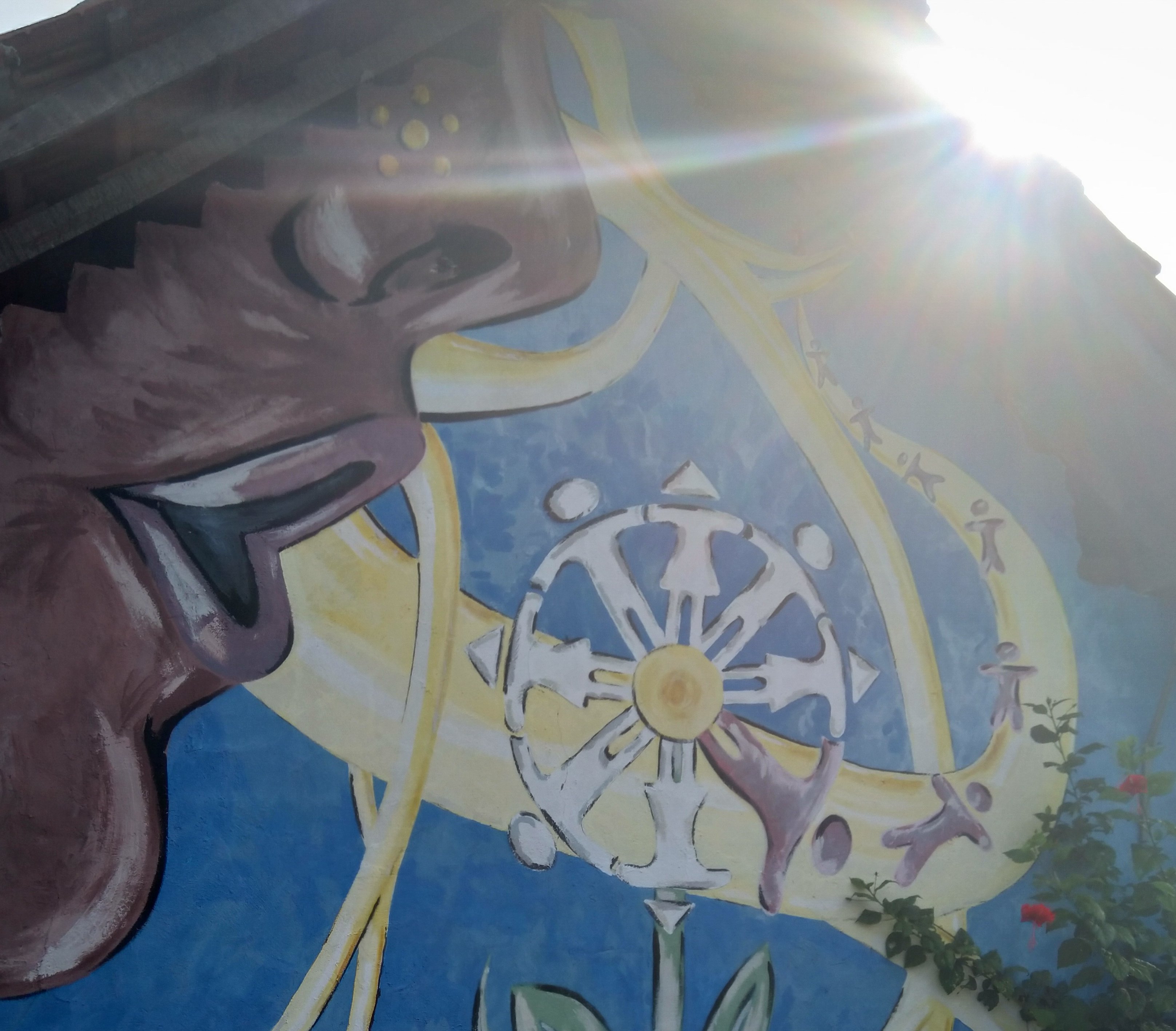
The entrance to Sadhana Forest in Auroville
What is Sadhana? A Mission Rooted in Compassion and Action
Stepping into Sadhana Forest, I found myself immersed in a space where every detail, from upcycled tire sculptures to solar-powered utilities, reflected a commitment to creating a better world. Removing our shoes and entering the main hut, which is made completely from natural materials, we were immediately impressed by the possibilities of another way of living.
Nestled over 70 acres near Auroville, this remarkable initiative goes beyond reforestation—its mission is to foster ecological restoration, compassion, and selfless service as part of a global movement.
Sadhana Forest, founded in 2003 by Yorit and Aviram Rozin along with their 1 year-old daughter, began with one family and a dream: to restore the native Tropical Dry Evergreen Forest (TDEF) ecosystem while creating a community built on kindness and inclusion. Today, that dream has blossomed into a global network with projects in Haiti, Kenya, Namibia, and multiple locations across India, inspiring thousands to take action for the environment and humanity.

Natural regeneration of Sadhana Forest from satellite
Aviram began our visit with an introductory talk on the philosophy and works of Sadhana. He explained that Sadhana means the search for the truth on one’s spiritual path, and their path and great effort has been reforestation and spreading a culture of vegan compassion. One of the things that stood out most was the emphasis on inclusivity. Sadhana Forest welcomes everyone, regardless of background, with only minimal time commitments (10 days for Indian volunteers, 20 for foreigners). This openness creates a space where diverse perspectives come together, fostering collaboration rather than competition.
After starting with one family, today there 37 long term volunteers, including half a dozen growing families, as well as 60+ volunteers, who are currently giving between 1 and 10 months of their time. He explains that Sadhana has the capacity to host up to 195 people, making clear that they will never say no to anyone that may come. Answering a question from the audience of over 100 people, he explains that those that who come for short term contribute money for their food (3 meals a day), while long term folks are supported by the community, giving back through their time and labor.
Just like the forest, Sadhana is growing. Their future plans include integrating differently-abled individuals into the organization, as well as creating an orphanage for children with HIV, further illustrating their commitment to inclusivity and compassion. However, they’ve already expanded from their initial Auroville experiment to a total of 7 other centers – 1 in South Tamil Nadu, 1 in Kenya, 1 in Namibia, 1 in Haiti, & 3 in Northern India.

Sadhana Forest Haiti
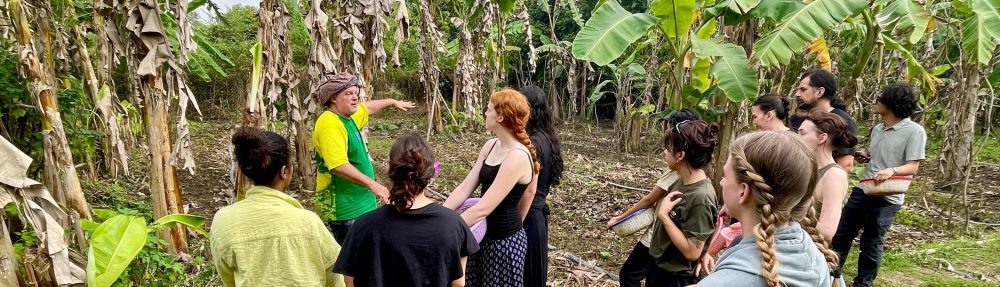
After the introductory talk, Aviram takes us on a tour of the campus and an exploratory walk in the forest. It’s remarkable to me that walking barefoot through the forest, while avoiding painful stones and roots, one is reminded of the intentionality required in each step—an apt metaphor for the care and mindfulness that defines this community.
Water Conservation Strategies
Sadhana Forest is, as the name suggests, a forest, but for a forest to thrive, one essential ingredient is needed: water. When Sadhana Forest began, it was little more than a barren wasteland, plagued by water scarcity like much of Auroville. Water conservation became the cornerstone of their reforestation efforts, and their strategy revolves around the Triple S method— Slow, Spread, Sink.
Aviram explains that the team strives to catch every drop of rainwater as close as possible to where it falls. Interestingly, in water conservation, low-lying lakes are a sign of failure in water conservation. Such lakes indicate that water has flowed to the lowest point of the slope rather than staying on the land where it fell—vital for nourishing the soil and replenishing the underground aquifer. To counter this, Sadhana Forest employs a method called on-contouring, maintaining water at its topographical height instead of allowing it to run downhill. This ensures that rainwater not only sinks into the soil to nourish plants but also replenishes the groundwater aquifer.
The success of these water conservation efforts is evident throughout Sadhana Forest. Aviram highlights that retaining water on the land has allowed for the natural regeneration of vegetation. Interestingly, he observes that natural regeneration fosters greater biodiversity compared to human-planted species. He likens it to designing one’s own home—wildlife, as the true inhabitants of the forest, can create an ecosystem tailored to their needs, rather than adapting to a pre-designed system imposed by humans. Indigenous plants, spread by wildlife through seeds and droppings, establish a harmonious and self-sustaining ecosystem far superior to human-centric reforestation.
As we walked through the forest, Aviram pointed out various plants and explained their roles in water conservation. One striking example was vetiver, a grass with exceptionally deep roots that stabilize the soil and retain water. Similarly, the dodonaya plant thrives in arid conditions by capturing water from the air and storing it in its roots, helping to create moist, fertile soil. We also saw other water conservation techniques, including gabions (stone-filled metal cages), swales, and a man-made lake. The lake, while not ideal for the Triple S method, was a necessary adaptation due to the practices of a higher-elevation neighbor who doesn’t prioritize water conservation. Sadhana Forest has had to capture the water that runs off from this neighboring property to prevent it from being wasted.
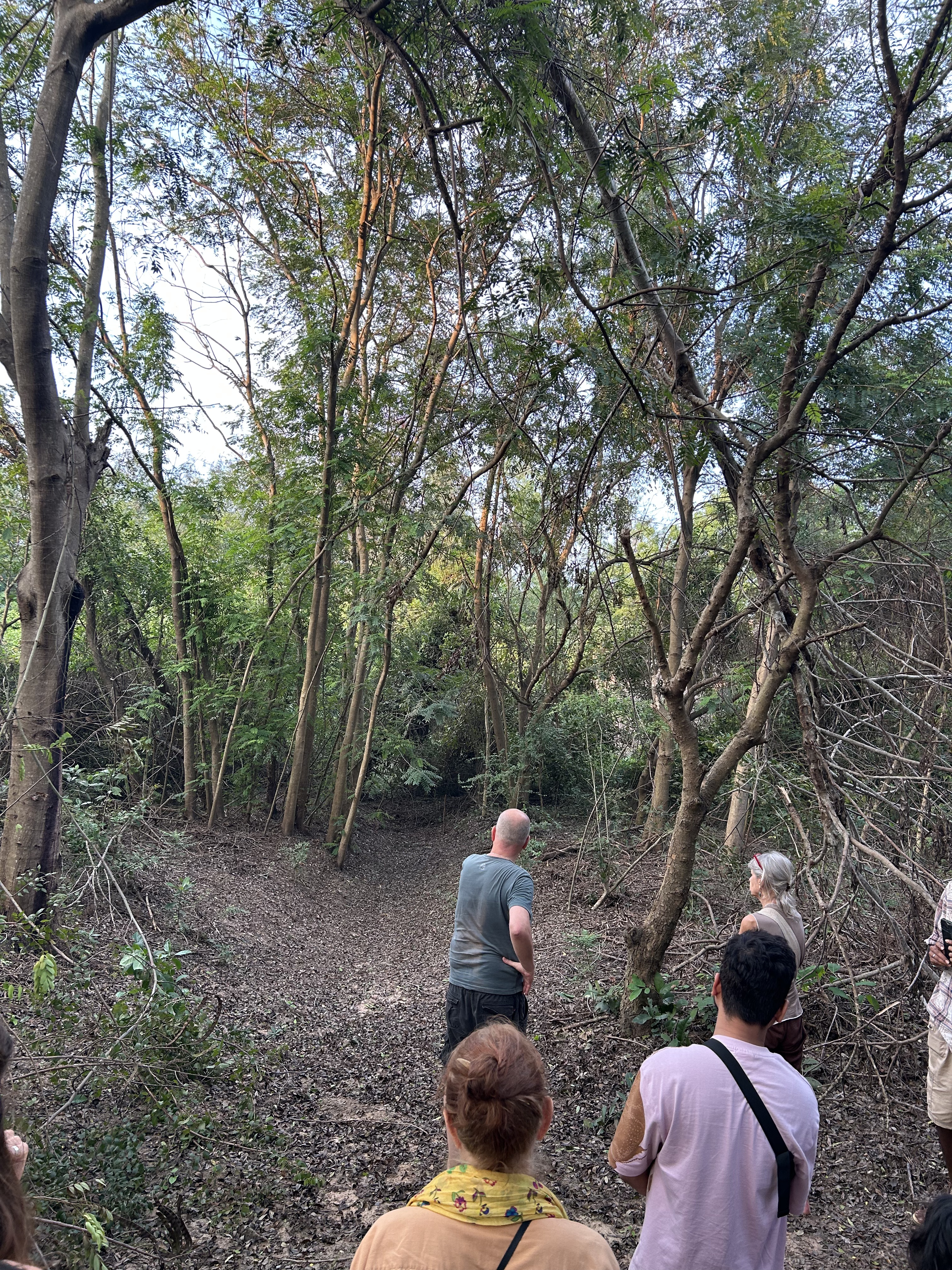
Aviram pointing out a water conservation technique, a swale
During our visit, a curious tourist asked how Sadhana manages to address mosquitoes while maintaining their vegan and “do no harm” philosophy. Aviram explained that the key lies in controlling standing water, which disrupts mosquito breeding. Rather than killing mosquitoes, they simply ensure there’s no stagnant water for them to thrive. With a smile, he added that if any do appear, he prefers to swat them away gently rather than harm them.
Sadhana Forest’s water conservation strategies not only nurture a thriving ecosystem but also embody their broader values of harmony and sustainability. Their ability to transform a barren landscape into a flourishing forest is a testament to the power of intentionality and care for the Earth.
Fostering Sustainable Living
When we return from our forest walk, we are immersed in the heart of Sadhana’s community. Living at Sadhana Forest is a lesson in intentionality and simplicity. Every aspect of the community is designed to minimize environmental impact while fostering connection and joy.
The homes and dorms are constructed from renewable materials such as wood, granite, and tetrapacks (recycled milk cartons). Short-term volunteers sleep on rope beds, emphasizing the community’s low-impact ethos. Even everyday tasks like washing and cleaning reflect this intentionality—plates are cleaned using natural materials like coconut husks, ash, lemon water, and vinegar, ensuring all waste is biodegradable. Their handwashing stations are ingeniously simple, using cups with small holes that allow water to flow gently, paired with naturally derived soap. This clever design minimizes water waste while maintaining hygiene.
Sadhana Forest operates completely off the grid, a testament to its commitment to sustainable living. Aviram shared a nostalgic story about the community’s early days, when they used dynamo bikes to generate electricity before transitioning to solar panels and wind turbines. Although no longer in use, the bikes are preserved as a reminder of their humble beginnings. Today, all Sadhana sites around the world—whether in India, Kenya, or Haiti—are powered entirely by solar and wind energy, providing reliable electricity and hot water. While they occasionally face challenges during heavy monsoon seasons due to cloud cover, their resourcefulness ensures sustainability remains at the forefront.
The kitchen is also a hub of activity and efficiency, equipped with industrial-sized pots and pans and a large reverse osmosis water filter to maintain the highest standards of hygiene. That evening, we enjoyed a delicious vegan dinner made from locally sourced ingredients—a meal that reflected the community’s values of sustainability and compassion.

The Sadhana Forest community kitchen
After dinner, the team shared short videos detailing the mission and history of Sadhana Forest. The evening concluded with a powerful 45-minute documentary on veganism, which explored the devastating impacts of industrial agriculture on climate change, human health, and animal welfare. The statistics were staggering: 30 million deaths globally linked to lifestyle-related diseases, the overexploitation of 90% of the world’s fisheries, and the brutal realities of dairy and egg farming. The documentary was both eye-opening and transformative, reinforcing the message and values at the heart of Sadhana Forest.

Our delicious vegan dinner provided by Sadhana Forest
The Values of Sadhana
At the basis of Sadhana is its vegan ethos of compassion. Aviram explains that veganism is more than just a diet; it’s an extension of their mission to live in harmony with nature and ensure that resources are used equitably and efficiently.
The first form of compassion is of course towards the land, which they seek to help prosper through their forestry, and from which they take no more than what they need. All of the buildings on the property are made from from natural materials. The second form of compassion is towards animals. Aviram makes it clear that the love of animals is central to Sadhana, and that no animal deserves to be tied, raped, or exploited in any way. I really appreciated that Aviram stressed the fact that animals have a right to live, even if they don’t give you something. It was nice to step out of the typical anthropocentrism, and he reminded us that part of Sadhana’s mission is to create a world without speciesism; other beings and nature are not just there to serve humans. This was reflected in the forest’s Guashala, a cow sanctuary for abused and abandoned cows. There, the cows are treated with the utmost respect with wonderful veterinary care, fresh water & food, & love. We were lucky enough to attend a cow connection workshop, where we bonded with a beautiful bull named Vishnu.
Our Cow Connection Workshop
The third example of compassion is compassion towards children. This was actually one of the most interesting and potentially controversial aspects of their philosophy. At Sadhana, they believe in natural learning & they call it “Unschooling”. Instead of sending their children to formal schools, they prioritize time spent with family and community, allowing learning to emerge naturally through curiosity and exploration. For example, if a child sees an airplane and asks about it, their parents might explain that people are flying through the sky from one place to another. This simple explanation could spark a deeper curiosity, leading the child to explore concepts like aerodynamics, engineering, or math.
I find this mindset inspiring—it celebrates freedom and the innate curiosity of children. When balanced with some structure or formal learning, it could provide a wonderful foundation for creativity and critical thinking. However, taken to its extreme, this philosophy can have drawbacks. I’ve heard anecdotal cases where teens raised in such environments struggled with basic skills, such as writing their own name. Nonetheless, Sadhana’s approach challenges us to rethink education and reminds us of the power of curiosity-driven learning.
Finally, Sadhana Forest embraces collaboration over competition, intentionally fostering an environment where individuals work together rather than competing against one another. This philosophy extends into their economic system, where they practice a gift economy—a model rooted in kindness, generosity, and the joy of giving. At Sadhana, everything is offered freely, with no expectation of reciprocity. Meals, education, and workshops are available to anyone who comes, all provided as acts of care and compassion.This approach profoundly disrupts the typical capitalistic incentives of greed and transactional exchanges. Instead, the gift economy shifts focus to the intrinsic value of giving and creates a space where every action is imbued with thoughtfulness and care. It encourages people to give not because they must, but because they wish to contribute to something greater than themselves.
Aviram, the founder, explains that Sadhana Forest is a place designed to remind people that kindness still exists in the world. By offering this generosity unconditionally, Sadhana hopes to inspire a deeper connection between people and their values. This is also why veganism, a core tenet of Sadhana, is framed as an extension of kindness—toward animals, people, and the Earth. In this way, the gift economy not only sustains Sadhana Forest but also embodies its mission of compassion and community, creating a living example of a world driven by care rather than commerce.
Sadhana’s Projects: Global Reach, Local Impact
Beyond forestry, Sadhana Forest offers a variety of innovative and impactful activities that reflect its broader mission. One such initiative is Children’s Land, a 2.7-acre space launched in 2009 to empower children to engage creatively with sustainability. Here, children initiate or participate in activities as they choose, fostering independent thinking and a deep connection to the natural world. This program has been met with enthusiastic feedback from children, parents, and teachers, inspiring Sadhana to expand its reach. Another cherished initiative is the Tea Hut, which serves free, vegan tea every weekday, embodying Sadhana’s commitment to inclusivity and generosity. The community also nurtures personal and global transformation through its University of Compassion, offering workshops and programs that align with its values of kindness and sustainability.
While Sadhana Forest began in India, its philosophy has transcended borders. In Kenya, the organization collaborates with the Samburu tribe to plant indigenous, drought-resistant food forests, ensuring biodiversity, food security, and shade for local communities. In Namibia, long-term volunteers work closely with local populations, committing to year-long stays to fully integrate and address community-specific needs. These global projects not only restore degraded ecosystems but also empower local people to reclaim and protect government-designated “wastelands” from encroachment. By doing so, Sadhana Forest fosters a deep sense of ownership and connection to the land.
These initiatives are unified by a single vision: to heal the Earth and cultivate compassion through reforestation, water conservation, and community building. Supported by individual donations, grants, and partnerships with organizations like UNDP and the Government of India, Sadhana Forest’s work has garnered global recognition. Whether through planting trees or empowering the next generation, Sadhana Forest remains a testament to the transformative power of sustainability, kindness, and collaboration.
Reflections on Community and Connection
Sadhana Forest offers a powerful model for addressing global challenges like deforestation, water scarcity, and social inequality. By combining ecological restoration with a philosophy of compassion, they demonstrate that sustainability isn’t just about planting trees—it’s about redefining our relationship with the Earth and each other. Their initiatives, from Children’s Land to global reforestation projects, are a testament to the transformative potential of intentional, community-driven action.
Take, for example, Amman, a former corporate professional from Bali, who left the comforts of a cushy job to join Sadhana Forest. His motivations stemmed from a deep commitment to veganism, a love for animals, and a yearning for a sense of community that capitalism failed to fulfill. Now, he spends his days planting in the wet season, mulching in the dry season, and caring for the cows in Sadhana’s sanctuary. Amman’s story reflects the larger ethos of Sadhana Forest: finding purpose and joy in simplicity, compassion, and shared effort.
On a personal level, my time at Sadhana Forest inspired me to reevaluate my own habits and assumptions. The intentionality of their work—from water conservation to vegan living—reminded me that small, thoughtful actions can lead to profound change. Every initiative, whether it’s teaching children about sustainability, empowering local communities to reclaim their land, or fostering kindness through a gift economy, serves as an invitation to think differently about how we live and what we value. My visit to Sadhana Forest was more than just a tour; it was a call to action and reflection. In a world often dominated by division and exploitation, Sadhana Forest stands as a beacon of possibility: a place where kindness, sustainability, and community thrive together.
How can you support Sadhana Forest? By becoming a regular donor. Aviram emphasizes that their primary source of income is individual donations, and while the size of the donation matters less, its consistency is key to sustaining their work. With tax-exempt status in multiple countries, supporting Sadhana is both impactful and accessible. I invite you to explore their programming and become part of this inspiring movement at the link here. Together, we can help Sadhana Forest continue to grow, heal, and inspire.







 Eternal Divers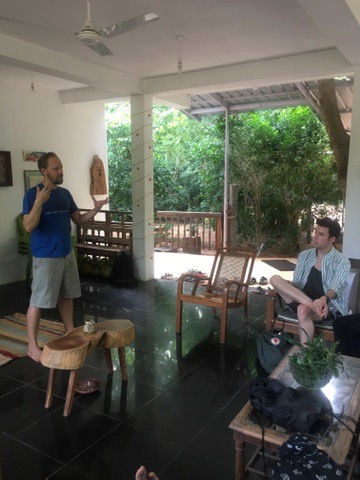





 AUP Sustainable Development Practicum in Auroville, India