AVAG: Weaving Dreams of Empowerment and Resilience

By Kathryn Galloway

In the heart of Auroville, a beacon of participatory development shines bright, driven by a simple yet profound mantra: empower communities to shape their destinies. The Auroville Village Action Group (AVAG), since its modest inception in 1983, has blossomed into a powerhouse of collaborative efforts, breathing life into the dreams of marginalized groups and striving for a harmonious, secure, and resilient society.

At the core of AVAG’s mission is the belief in inclusive development. Their stakeholders form a diverse mix, including women, men, youth, school children, teachers, farmers, and both traditional and elected leaders. Yet, it is the most marginalized—the single women, the elderly, dalits, farmers, artisans, and small business owners—who occupy the center stage of AVAG’s unwavering commitment.

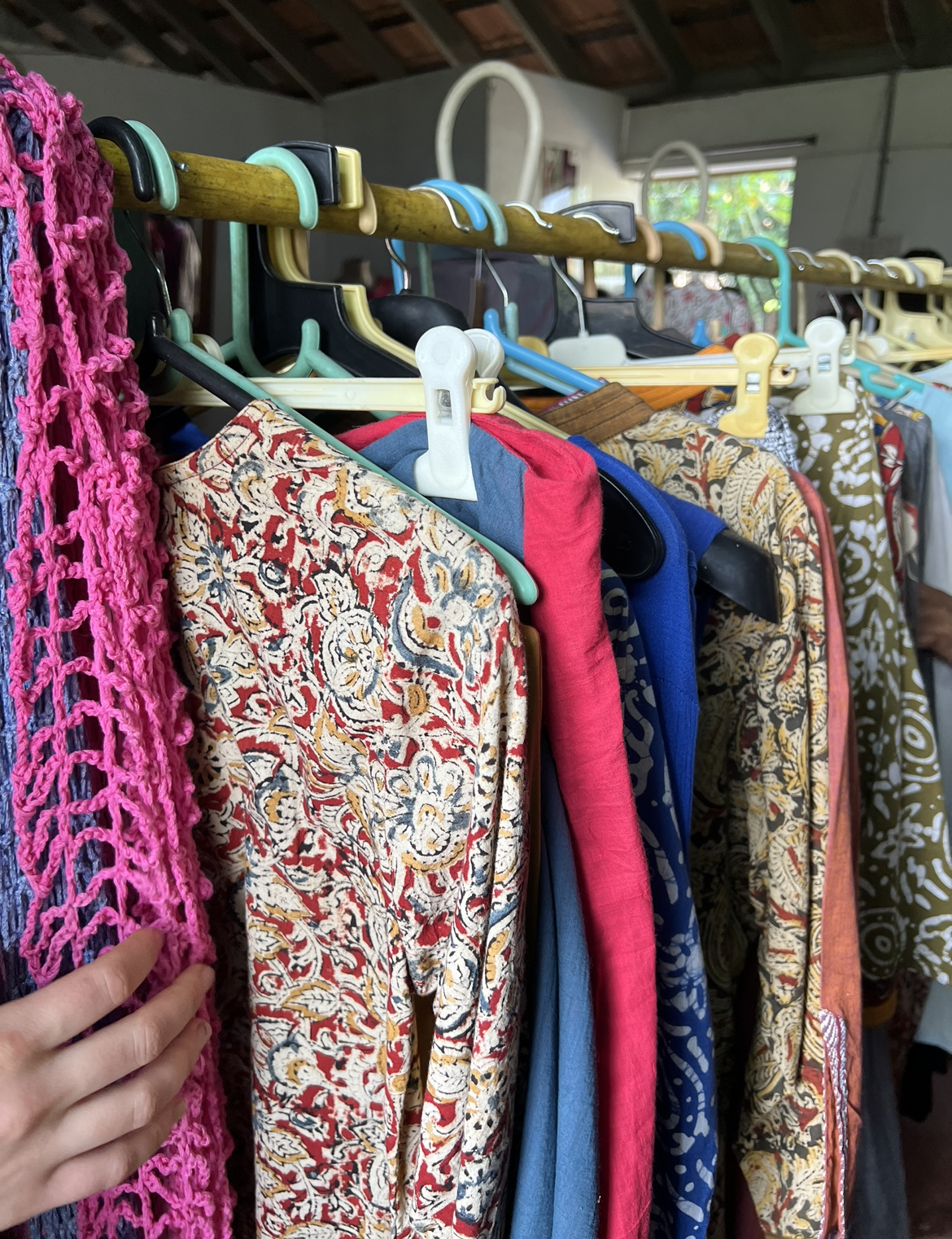
To begin our visit, Makizh Selvam, the office manager, welcomed us into the world of AVAL—a brand crafted by women for the benefit of women. AVAL, meaning ‘she’ or ‘her’ in Tamil, is a social enterprise born from the nurturing hands of AVAG that seeks to uplift the aspirations of marginalized women through skill development in tailoring and crocheting. Every handcrafted product emanates love and devotion, a tangible symbol of self-reliance and self-empowerment. AVAL stands as a testament to the convergence of rural women and urban designers, creating products that embody beauty both inside and out. In a span of 7-8 years, AVAL has become a sanctuary where conscious consumers find more than just products; they find a connection to a cause.

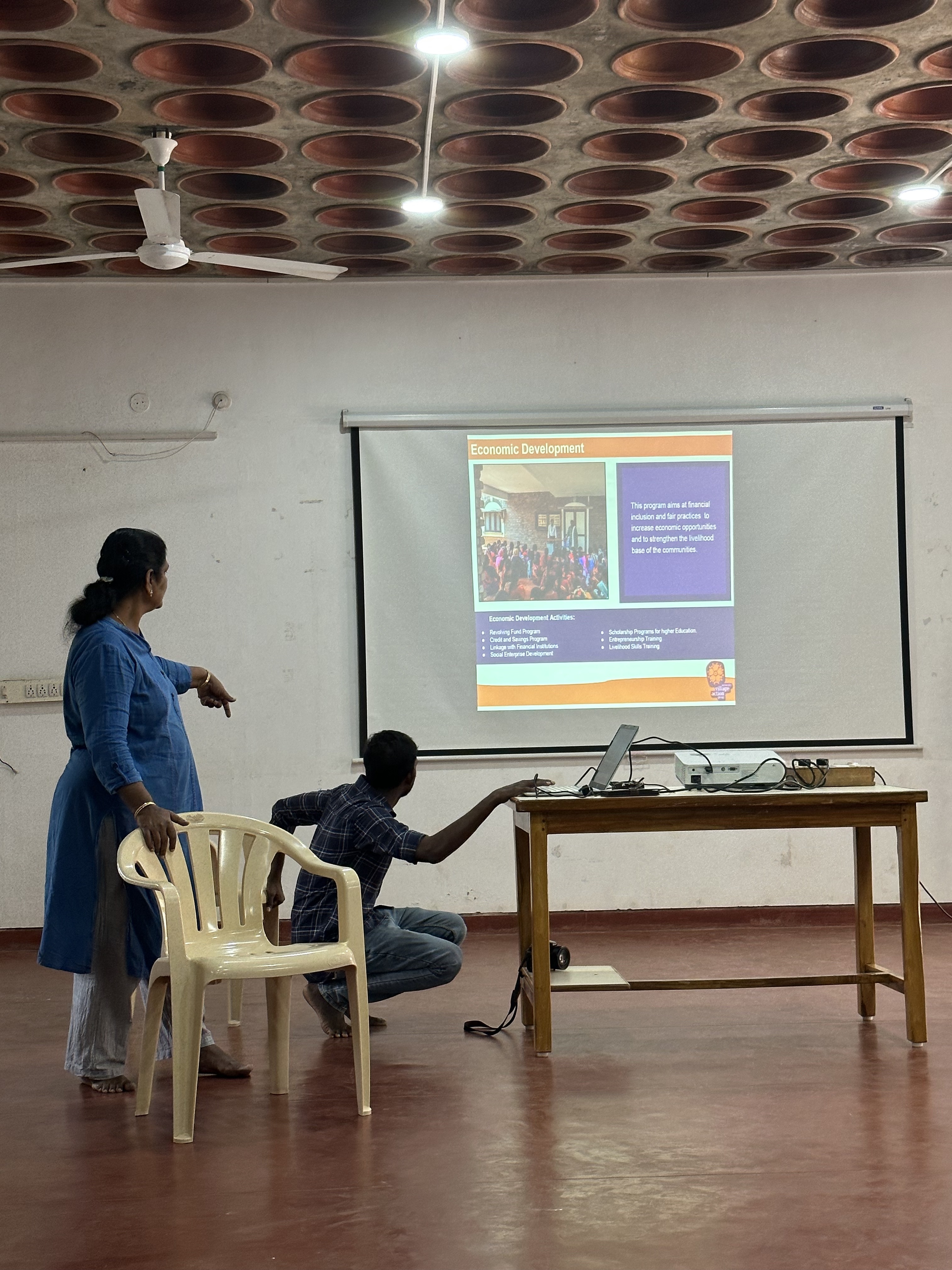
After we perused the racks of the AVAL shop, Anbu Sironmani, AVAG’s Director, shared more information on the organization’s key initiatives. Community development, capacity building, economic growth, and psychosocial support form the pillars of their holistic approach. From personality development to agriculture, AVAG’s initiatives encompass a spectrum as diverse as the communities they serve. Particularly noteworthy is their emphasis on participatory economic growth, ensuring that the development of marginalized groups is rooted in genuine needs and inclusive practices.

AVAG doesn’t just offer support; it nurtures resilience. The psychosocial support they provide is a lifeline, weaving a safety net of mental and emotional well-being for individuals facing stress and trauma. In AVAG’s world, empowerment is not just a concept; it’s a tangible reality carved out of genuine understanding and collaborative effort.

If Auroville is a tapestry, AVAG and AVAL stand as vibrant threads, weaving dreams of empowerment, resilience, and a community where every voice is not just heard but celebrated. They are crafting a narrative of inclusivity that resonates far beyond the borders of Auroville—a testament to the transformative power of community-led development.

Auroville Village Action Group: Bridging the Gap

by Angelina Bouchard

The Auroville Village Action Group is an organization that works with local villages to develop programs that benefit the members of rural communities, focusing especially on the marginalized. As the first organization visited during the practicum, we were all eager to learn about the impact of AVAG’s work. Upon arrival, we were greeted with a brief tour of a workshop, where a group of women crocheted, sewed, and trimmed fabrics. Next door, a small boutique displayed the finished goods. There, I noticed some products that are also available for purchase at the Visitor’s Center. Nearly everyone in our group walked out of the shop with a new shirt, bag, pouch, or pair of pants. Some even adopted a new animal, albeit a crocheted one.

We met Anbu, who currently runs the NGO. Founded in 1983, the Auroville Village Action Group is one of the oldest organizations in the area, and their mission continues even after the founder, Bhavana, passed away in 2011. In societies that place men in superior positions to women, inequality is so ingrained that it becomes normalized and internalized. As explained by Anbu, AVAG’s efforts to combat social injustice result in initiatives such as the Economic Development Program, which aims to reduce poverty by increasing financial opportunities within these communities. They provide women with profitable skills training and then employ them at AVAL, their own fashion brand. Working women gain confidence in being financially supportive members of their households, families, and communities. Strategies extend beyond economic security and delve into emotional and physical wellbeing as well. They offer psychosocial services, which have decreased the suicide rate among women by holding counseling sessions and collaborating with self-help groups. Additionally, the organization’s emphasis on community development encourages people of all genders, castes, and religions to find solutions to common problems and build a better bioregion for all to succeed.

AVAG is a central pillar that bridges the gap between Auroville and surrounding villages. They not only advocate for progress but actively create change.

OK Upcycling Studio

by Angelina Bouchard

When we throw something away, we are effectively denying ownership of it. Most of what we own is purchased, if not gifted, meaning that at some point in time we claimed responsibility over an object for reasons of necessity, convenience, or indulgence. Yet, it is so easy for us to take items that are still in good shape and toss them in the bin, never to be seen again. We could reduce waste and make the world a better place if we valued our possessions for the use we could get out of them rather than chasing the next new, shiny product. If that still doesn’t appeal to you, a lot of money can be saved in the process as well. It is no secret our society has a serious waste issue, but a lack of awareness and education on the topic prevents real change from taking place.

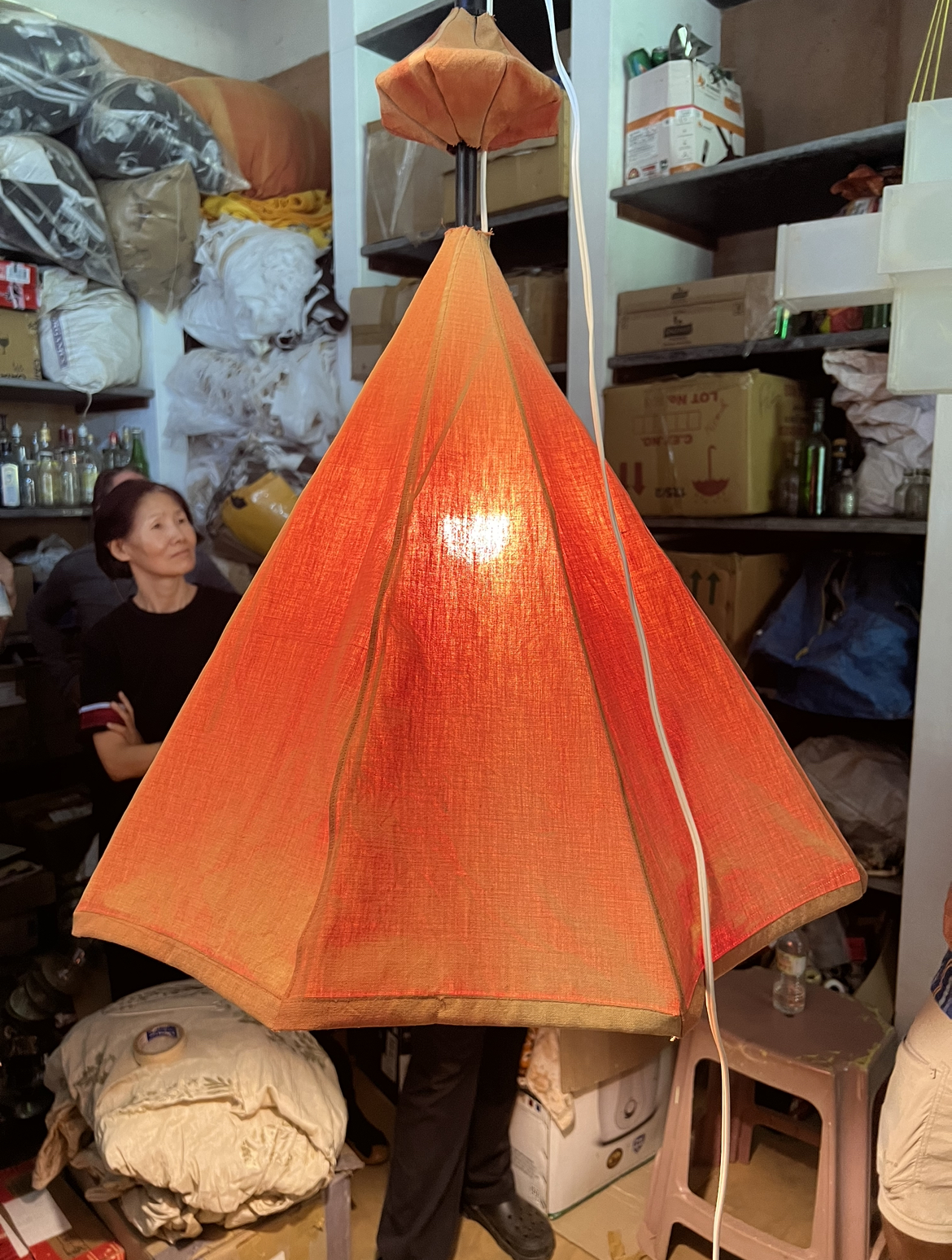
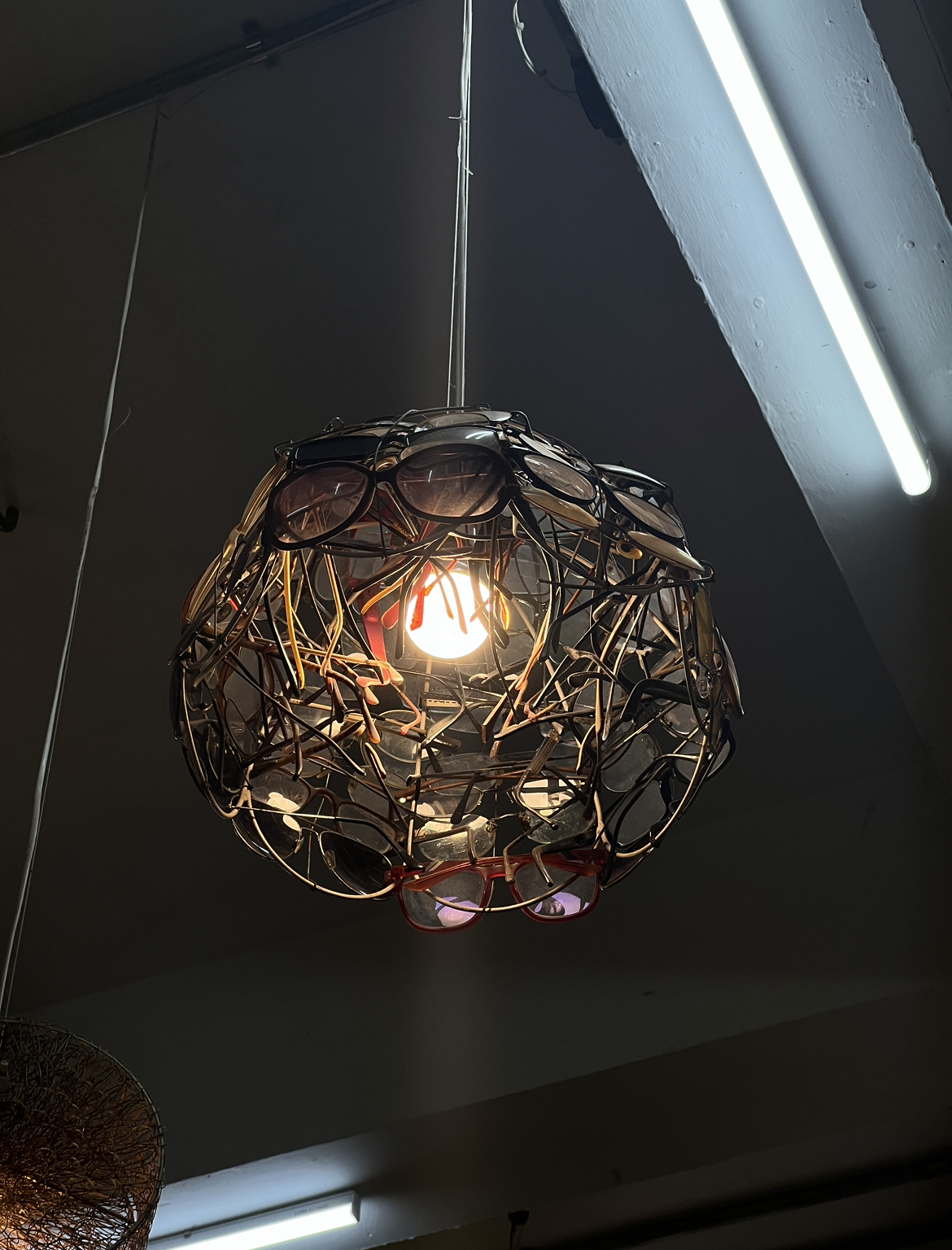
The OK Upcycling studio in Auroville is dedicated to tackling the waste problem at a local level. By reusing discarded materials, they create products and give them a new purpose. Upon entering the warehouse, AUP students were amazed to find artwork, handbags, furniture, and clothing all made from what we usually consider to be garbage. Ok-jeong, a South Korean artist who runs the studio, shared her passion with us during a tour of the studio. Perhaps the most striking aspect of our visit was learning about the team’s expertise in lighting fixtures. After a brief lesson on how lighting can affect our mood and behavior, designer Darren demonstrated his light beam diffuser made entirely out of DVD casings. My peers and I were enlightened, to say the least. His apprentice, Jasper, then showcased his own creations, which included an old orange umbrella repurposed as a lamp with a warm glow. Another ceiling lamp hanging in the studio was made out of sunglasses in the shape of an orb.

Seeing the beauty in trash is a skill that takes practice. The team has a sharp eye for style and practicality, along with an unmatched sense of creativity. They highlight imperfections and flip our perspective of what can be considered valuable.

Eco Femme: Changing the Relationship between Women and Their Periods!

By Sanna Rasmussen

Have you ever wondered what is the difference between an NGO, for-profit business, and social enterprise? NGO’s are non-profit organizations whose aim is to help a community in need. A for-profit business is a company whose goal is to make a profit and accrue capital. A social enterprise is somewhat a combination of the two. Located in Auroville, Eco Femme is a social enterprise that produces and sells re-usable sanitary napkins, also known as menstrual pads, while simultaneously supporting the community of women who are behind the production. More than that, Eco Femme has created development programs, connected to the global consumption of their products, which educate women about menstrual hygiene in rural villages around India.

Around the world, many women choose to use disposable menstruation hygiene methods, as it has been marketed as being the normal, if not only option available. However, with increasing focus placed on the environmental impact of single-use plastic, menstruation hygiene has a place within this dialogue. Disposable sanitary pads and tampons are made of plastic that cannot be recycled, therefore, after the six-eight hour viable life span, these plastic products sit in the landfill for over 800 years before beginning to break down. Clearly the women of the world have been shown a norm that does not benefit anyone besides big industry; the giants who produce all of these single use products. Although pollution is a global issue, India in particular is a country that is highly populated, where many women do not have access to menstrual hygiene. In 2000, in a quest to redesign how women in India engage and manage their periods, Eco Femme was created.

Eco Femme’s re-usable menstrual pads are fabricated from layers of organic cotton, which is sourced in Tamil Nadu, India. They produce four varieties of pads; heavy night, day plus, day regular, and panty liner. The nighttime pad is made with seven layers of cloth, the day plus with six, the day regular with five, and the liner with three. All pads include a finishing cloth layer that is coated with poly urethane and is anti-leak. The pads are made with wings that have a snap, so that they fascine around the underwear and do not move while being worn. Once the pad is soiled, or for means of transporting it, the pad can be discreetly folded and fastened with the snap from the wings to create a small square of fabric.

Eco_Femme_2_1024x1024

For the logistics of cleaning the cloth pads, Eco Femme harnessed the power of mother earth. Once the pad is soiled, the wearer is to soak it in cold water and then hang to dry under the sun, which acts as a natural disinfectant. That being said, the pads are also machine washable.

In every step of the supply chain, the cloth pads are produced by women from villages near Bangalore and Auroville, India. The empowerment of women is a pillar of Eco Femme’s mission, and has led them to function as a social enterprise, with two developmental programs; Pad for Pad, and Pad for Sisters. Pad for pad involves international customers of Eco Femme, where for every pad bought, a pad is sponsored for an economically disadvantaged girl in rural India. Up to date, over 10,000 girls have been sponsored. Pad for Sisters is a program that subsidizes pads between 50 and 80 Rupees. On average, Pad for Sisters subsidizes 1,500 pads a month.

According to Eco Femme’s co-founder, Kathy, re-usable cloth menstruation pads have acted as a trojan horse by opening the once taboo dialogue around what menstruation is, and how women can understand it. Eco Femme promotes the message that women and girls should feel empowered by their periods, and embody all that it means to go through the transformative change of the body. Through the work of their development programs, Eco Femme is a model of what a social enterprise can do to benefit a community, while still engaging in a competitive business market. Eco Femme re-usable pads can be purchased in Auroville, throughout India, and on their website directly.

Eco-Femme-P4P-for-website.jpg