Learning about Tibet during our stay at the Pavillion of Tibetan Culture

While staying at the Tibetan Pavillion I had the chance to read a couple of books from the library to learn about this nation and how politics has influenced it’s culture and day-to-day management. Tibet, or as it’s often called ‘the Roof of the World’ because of its Himalayan plateau, remains one of the most politically sensitive and internationally debated regions on the planet. As of this year, the situation now reflects decades of historical struggle, contested sovereignty, cultural resilience and human rights controversies.

A Brief History

Before the middle of the 20th century, Tibet operated as a theocratic polity centered around Lhasa with the Dalai Lama serving as both a spiritual and political leader at its apex. Tibetan society as a whole was structured around Buddhist institutions and distinctive local traditions and its interactions with the neighbouring powers like China and Mongolia had varied over centuries. Modern Chinese claims to sovereignty were very drastically strengthened under the People’s Republic of China (PRC) after its foundation in 1949. 

In 1950-51, the People’s Liberation Army entered eastern Tibet. What came out of this was the Seventeen Point Agreement signed in 1951 between the PRC and representatives of the Tibetan government. The treaty promised to guarantee autonomy and respect for Tibetan culture under Chinese sovereignty. However, many Tibetans have argued that the agreement was out of coercion and not free consent from Tibet. Little by little, tensions over Chinese rule escalated and on March 10, 1959, a widespread uprising broke out in Lhasa. Chinese forces brutally suppressed the rebellion, leading to thousands of deaths. The 14th Dalai Lama fled into exile in India, where he established the Tibetan Government – in – Exile (in Dharamsala), a focal point for global advocacy of Tibetan autonomy and rights. Since then, March 10 has become Tibetan Uprising Day observed by Tibetans and supporters worldwide. 

In 1965 China designated Tibet as the Tibet Autonomous Region (TAR), intending to institutionalise minority rights within the PRC framework. Although the autonomy is largely symbolic and that real authority lies firmly with Communist Party structures. Tighter controls, especially after periods of unrest, have contributed to the ongoing political and cultural tensions. 

As of 2025

Looking at reports by Human Rights Watch, there is documentation of systematic restrictions on daily life and expression in Tibetan areas. Chinese authorities have been arresting ordinary Tibetans for using cellphones, posting content that those same authorities have deemed ‘banned;, or celebrating Buddhist figures and cultural heritage online. Similar to that many Tibetan language websites have been shut down and those who advocated for their functioning have faced detention and harsh sentences. As I mentioned earlier, March remains a particularly sensitive month, authorities prepare heightened security for this period of historical commemorations. Deployments in Lhasa and at monasteries intensify that month to preempt gatherings or protests. 

Religious expression is a cornerstone of Tibetan identity but numerous reports, including European Parliament resolutions, highlight violations of religious freedom, interference in the selection of spiritual leaders and the transnational repression of Tibetans abroad including those in Southeast Asian countries. Cultural advocates argue that measures such as the cancellation of Tibetan language instruction, replaced by Mandarin Chinese in schools and monitoring of religious institutions are part of broader forced assimilation policies. Local restrictions even extend to symbols traditionally important to 

Throughout 2025. Tibet has remained a subject of international concern. EU authorities have expressed serious concern over deteriorating human rights that point to limits on freedom of speech, movement and religious practice. Countries at the UN Human Rights Council including more than two dozen democracies, have raised the situation in Tibet and called for stronger protections. During the various General Assembly debates on the topic (1950, 1959, 1961, 1965), several members spoke passionately, denouncing the Communist government’s aggression against Tibet as a violation of its independence. However, while two of the resolutions referred to the principle of self-determination, all three skirted the issue of Tibet’s status under international law, focusing instead on human rights violations. To this day, the United Nations’ unfinished consideration of the question of Tibet remains one of the global body’s most notable and longstanding acts of omission.

China on the other hand, routinely pushes back, accusing foreign governments like the United States of ‘meddling’ and labeling Tibetan advocacy as separatist or anti-China activity. China maintains that Tibet is securely and peacefully governed within the PRC and rejects external criticism as interference in internal affairs.

Tibetan Exiled Leadership

Even as security tightens in the region, Tibetan activists and the Central Tibetan Administration work internationally to keep the issue visible. In August of 2025, activists protested outside the Chinese Embassy in New Delhi during a high-level visit by China’s foreign minister. In the diaspora, political life remains active. Preparations are underway for the 2025-2026 general elections of the Tibetan Government – in – Exile, signaling continued democratic engagement among Tibetans worldwide. 

Economic and Infrastructural Developments

The Chinese government often highlights economic transformation in Tibet, emphasising infrastructure achievements and development goals. In 2025, Tibet marked the 60th anniversary of TAR, with celebrations focused on modernisation, enhanced transportation networks and energy projects. One of the most ambitious and controversial developments is the Yarlung Zangbo (Brahmaputra) hydropower project which could potentially be the world’s largest hydroelectric series of dams when completed. Construction, including a mammoth dam at Medog/Fengdu began in July of 2025. Proponents argue these projects enhance power supply, economic growth and carbon reduction, critics of the project have highlighted the environmental degradation, displacement and threats to downstream water security for India and Bangladesh. 

Despite systemic pressures, Tibetan culture, especially Buddhism, remains resilient. Pilgrimages, monastic scholarships, arts and diaspora celebrations reinforce identity. Communities that have gathered outside Tibet such as the one in Portland showcase traditional music, dance and food. Inside, religious festivals and ceremonies like the Sakya Monlam draw thousands of devotees, a reminder that sacred traditions endure even under surveillance. 

Looking to the Future 

The core dispute over Tibet remains one of human rights and cultural autonomy versus centralised state control. Many Tibetan activists, exiles and international observers see the situation as one of cultural survival. Meanwhile Beijing keeps stating stability, economic development and territorial integrity. 2025 marked the Dalai Lama’s 90th year. A milestone that has stimulated a global reflection and discussion on his role and succession. Recently the talk of succession has opened potential negotiations about reincarnation and underscores how spiritual leadership remains central to Tibetan identity and political symbolism. 

China day by day increasingly asserts control over the recognition of future Tibetan Buddhist leaders, a policy that directly affects the future of the Dalai Lama’s institution – a point of continued dispute. Global attention to Tibet will likely continue rising. Calls for diplomatic pressure, sanctions and human rights monitoring features prominently in European and US policy discussions. At the same time geopolitical priorities, including China’s economic influence, temper how far governments are willing to challenge Beijing. 

In conclusion, Tibet remains a disputed region with day to day life being impacted and the government being in exile. Staying at the Pavillion I had the opportunity to learn even more about Tibetan food, culture, music, ceremonies and Buddhism as a whole through my daily interactions with Kalsung.

by Sofie Mihaylova

AVAG: Weaving Dreams of Empowerment and Resilience

By Kathryn Galloway

In the heart of Auroville, a beacon of participatory development shines bright, driven by a simple yet profound mantra: empower communities to shape their destinies. The Auroville Village Action Group (AVAG), since its modest inception in 1983, has blossomed into a powerhouse of collaborative efforts, breathing life into the dreams of marginalized groups and striving for a harmonious, secure, and resilient society.

At the core of AVAG’s mission is the belief in inclusive development. Their stakeholders form a diverse mix, including women, men, youth, school children, teachers, farmers, and both traditional and elected leaders. Yet, it is the most marginalized—the single women, the elderly, dalits, farmers, artisans, and small business owners—who occupy the center stage of AVAG’s unwavering commitment.

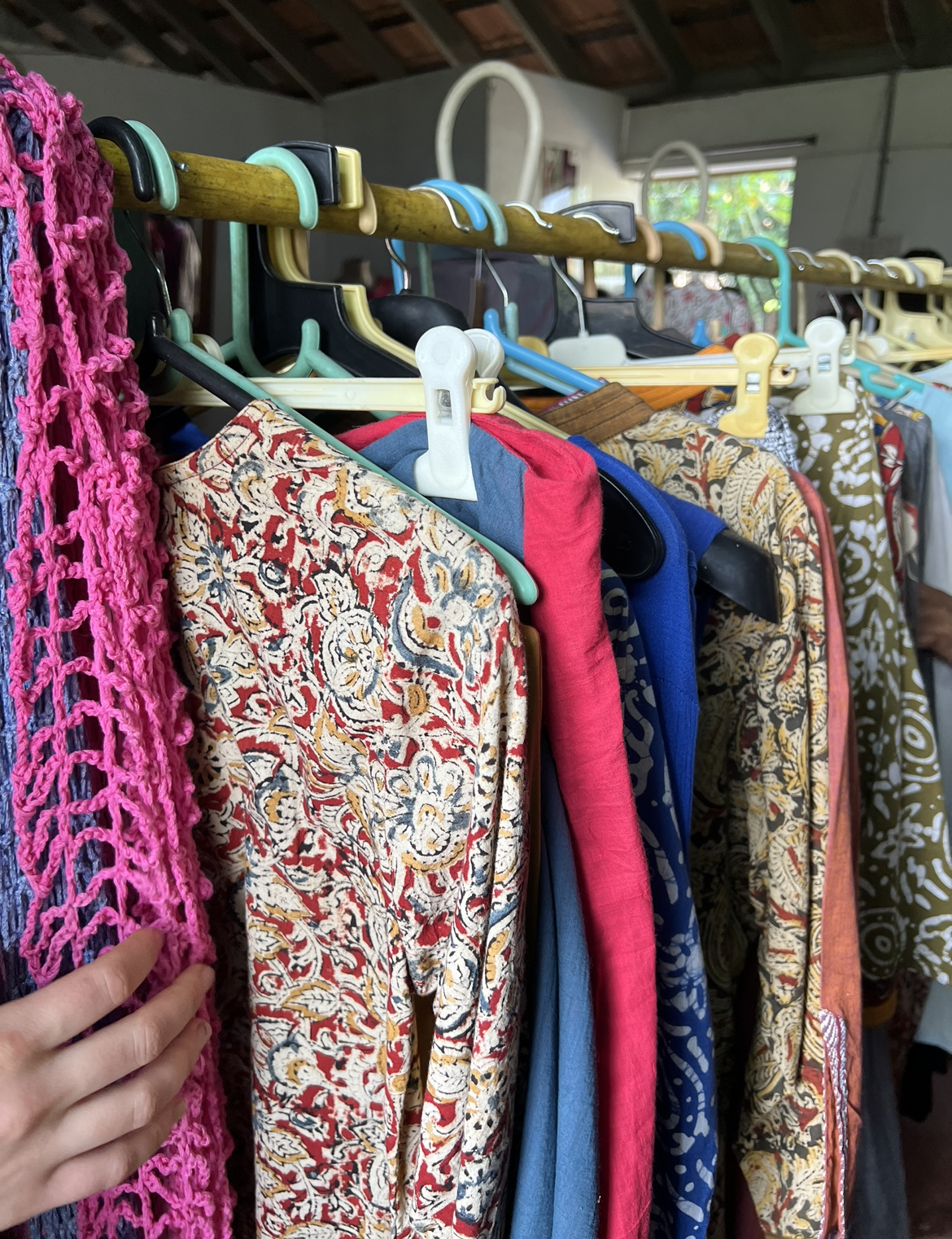
To begin our visit, Makizh Selvam, the office manager, welcomed us into the world of AVAL—a brand crafted by women for the benefit of women. AVAL, meaning ‘she’ or ‘her’ in Tamil, is a social enterprise born from the nurturing hands of AVAG that seeks to uplift the aspirations of marginalized women through skill development in tailoring and crocheting. Every handcrafted product emanates love and devotion, a tangible symbol of self-reliance and self-empowerment. AVAL stands as a testament to the convergence of rural women and urban designers, creating products that embody beauty both inside and out. In a span of 7-8 years, AVAL has become a sanctuary where conscious consumers find more than just products; they find a connection to a cause.

After we perused the racks of the AVAL shop, Anbu Sironmani, AVAG’s Director, shared more information on the organization’s key initiatives. Community development, capacity building, economic growth, and psychosocial support form the pillars of their holistic approach. From personality development to agriculture, AVAG’s initiatives encompass a spectrum as diverse as the communities they serve. Particularly noteworthy is their emphasis on participatory economic growth, ensuring that the development of marginalized groups is rooted in genuine needs and inclusive practices.

AVAG doesn’t just offer support; it nurtures resilience. The psychosocial support they provide is a lifeline, weaving a safety net of mental and emotional well-being for individuals facing stress and trauma. In AVAG’s world, empowerment is not just a concept; it’s a tangible reality carved out of genuine understanding and collaborative effort.

If Auroville is a tapestry, AVAG and AVAL stand as vibrant threads, weaving dreams of empowerment, resilience, and a community where every voice is not just heard but celebrated. They are crafting a narrative of inclusivity that resonates far beyond the borders of Auroville—a testament to the transformative power of community-led development.

Auroville Village Action Group: Bridging the Gap

by Angelina Bouchard

The Auroville Village Action Group is an organization that works with local villages to develop programs that benefit the members of rural communities, focusing especially on the marginalized. As the first organization visited during the practicum, we were all eager to learn about the impact of AVAG’s work. Upon arrival, we were greeted with a brief tour of a workshop, where a group of women crocheted, sewed, and trimmed fabrics. Next door, a small boutique displayed the finished goods. There, I noticed some products that are also available for purchase at the Visitor’s Center. Nearly everyone in our group walked out of the shop with a new shirt, bag, pouch, or pair of pants. Some even adopted a new animal, albeit a crocheted one.

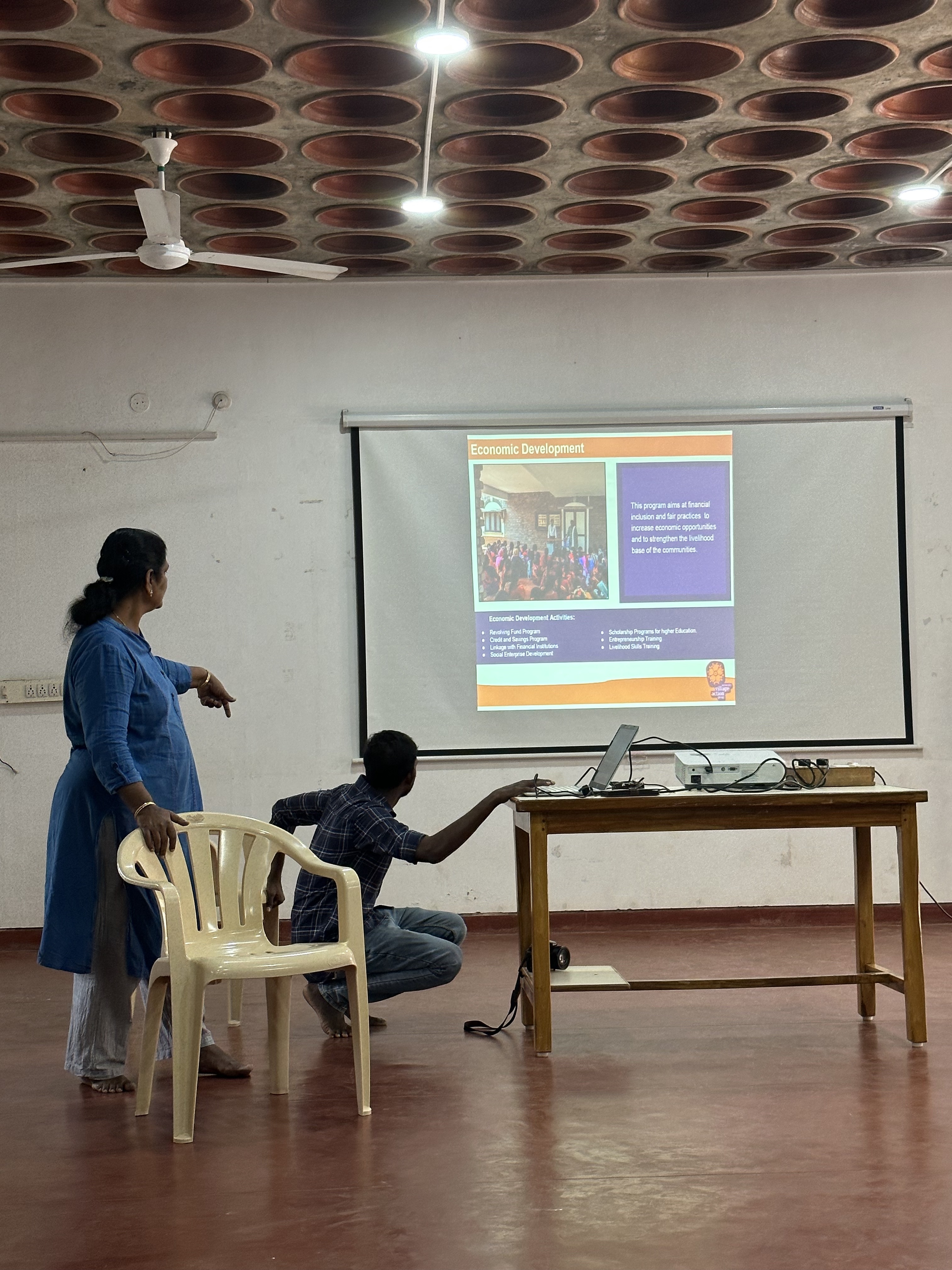
We met Anbu, who currently runs the NGO. Founded in 1983, the Auroville Village Action Group is one of the oldest organizations in the area, and their mission continues even after the founder, Bhavana, passed away in 2011. In societies that place men in superior positions to women, inequality is so ingrained that it becomes normalized and internalized. As explained by Anbu, AVAG’s efforts to combat social injustice result in initiatives such as the Economic Development Program, which aims to reduce poverty by increasing financial opportunities within these communities. They provide women with profitable skills training and then employ them at AVAL, their own fashion brand. Working women gain confidence in being financially supportive members of their households, families, and communities. Strategies extend beyond economic security and delve into emotional and physical wellbeing as well. They offer psychosocial services, which have decreased the suicide rate among women by holding counseling sessions and collaborating with self-help groups. Additionally, the organization’s emphasis on community development encourages people of all genders, castes, and religions to find solutions to common problems and build a better bioregion for all to succeed.

AVAG is a central pillar that bridges the gap between Auroville and surrounding villages. They not only advocate for progress but actively create change.

Eternal Divers Presentation


cropped-logo-eternal.jpg Eternal Divers

https://eternaldivers.com/

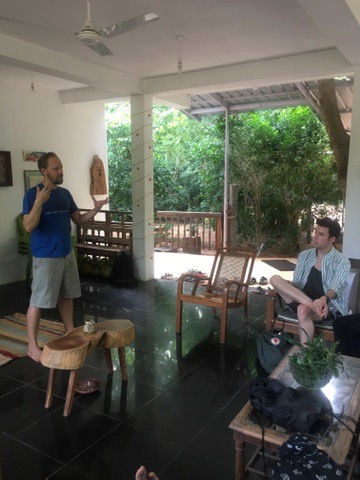
Eternal Divers is based just outside of the Auroville on the Bay of Bengal. The first thing we noticed as we approached the location is the beauty of the house, Eternity. Situated on the beach and surrounded by bush and sand, Eternity features a large, open patio that connects to the home and office of Jonas and Tracy of Eternal Drivers. Zeus, their grand Rottweiler greeted us with kisses and just a little bit of fur and slobber. The dog lovers amongst us were thrilled to meet him but we get situated quickly and open our hearts and ears to listen to “Joni” explain the mission of Eternal Divers and the issues that his team, Tracy and he are passionate about.

When Eternal divers first began, it was just another diving company and they wondered how to set themselves apart and make better use of their skills, talents and location. How to be a sustainable business and spread environmental concern and solutions is paramount for them. Yoni discussed something that caught his attention called “ghost nets” which are extremely concerning. A ghost net is a fishing net that has (most likely) become caught on something which makes it impossible for a fisherman to free it or has escaped the control of the fisherman and can’t be reeled back on to the boat. It is left behind, unattended and unchecked forever as it collects, catches and kills without consideration. In addition to the ghost nets, sewage, overfishing and erosion are all concerns for Joni and Tracy and their team. Joni told us that there is a visible line of sewage and ocean water and to help us understand just how detrimental ghost nets can be, he explained that ghost nets cause about 20, 000 US dollars loss per year. Nearby, a ghost net was discovered that had over 30 sharks caught in it and had been floating for what an estimated three years. Of course, nothing in a ghost net can be salvaged for food. It is just a true waste of resources.

Eternal Divers was enraged at the finding and asked us to consider what a tragedy this is when we reflect on the beauty and majesty of all the sea has to offer us. The pointless loss of life and the pollution caused by humans is unacceptable. Naturally, Eternal Divers found a way to expand the teaching and education of scuba and diving to the fisherman and villagers themselves to help them understand how precious their resources were and how carelessness could hurt their livelihood more than they had ever comprehend before.

We learned from them that what they are most proud of and would really like to continue, improve upon and increase the reach of is the education of the fisherman and villagers. Too many humans take the sea and all she has to offer for granted. What lies below the surface… or more importantly what is being harmed and killed off below the surface is unknown until we dive down and see for ourselves. All the incredible colorful life, both flora and fauna, are unseen, under-appreciated and unprotected. It is only through the education and the collaboration with locals that behavior change can occur. Seeing the deep for oneself may be the only way for many to understand what is at risk.

Within global communications, behavior change is the most challenging of all the goals. Behavior change, as in this instance, little to no money can be gained through the education of the locals. In fact, Eternal Divers may find that time and money are lost in their efforts; however, they feel that what India and the earth may gain is far more important if the sea and its life can be preserved through this tactic. The benefits of behavior change are often long-term rewards that seem less important in the moment. For example, a fisherman may be more concerned with how much money he can earn this week, as opposed to the concept that he may not be able to earn any money in a few years if the fish are either overfished or die off because of pollution.

Eternal Divers needs funding to help support the education of the locals, a strategic creative plan and social media revamping/attention, as well as social media viral campaign. I felt very strongly about joining their team and helping. The ocean and all the life in it and that it gives is incredibly important to me. Choosing my NGO was tough when I had to compare Eternal Divers to Marc’s Café, where I had so many ideas from the start, but I’ve loved hearing all about it from my classmate, Beatrice.


IMG_0856.jpg

Mason listens to the Eternal Divers presentation.

Sahodran and LGBTQ+ Rights in India

Ari Price

During the expansive world HIV and AIDS crisis in the 1980’s, Sahodran was established in South India. While it was one of many Non-Government Organizations created to educate society about HIV and AIDS, it was unique from other organizations. Sahodran, also known as the Sahodran Community Oriented Health Development (SCHOD) Society, specifically targeted the education, support and advocacy of men who have sex with men, as this population had a higher risk for acquiring HIV due to a lack of safe sex practices and support. As they only worked with men in the beginning, they decided on the name Sahodran, which means brother in the local language, Tamil. Presently, the SCHOD society has drop-in centers in both Chennai and Puducherry to aid in the education and peer support of all LGBTQ+ persons who face discrimination in the state of Tamil Nadu, India. Since 1988 Sahodran has continued to expand and provide interventions at the individual, community and national level. They currently work with a variety of professionals and volunteers including physicians, advocates, academics and researchers. According to staff, approximately 130 people were served in 2003 whereas about 1233 people were served last year. This shows the community demand for services continues to be necessary and to grow.

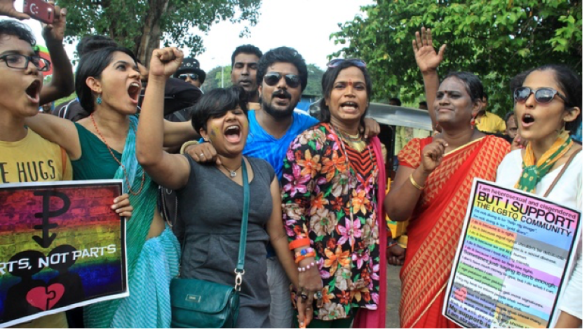
MEMBERS OF SAHODRAN AT THE LOCAL 2018 LGBT PRIDE MARCH

The work the Sahodran is taking on is not easy, but it is immeasurably beneficial not just for the LGBTQ+ community, but the society at large. In terms of the United Nations Sustainable Development Goals for , SCHOD aims first and foremost to promote the goal of good health and wellbeing, but it does this while also addressing the goals of gender equality and reduced inequalities for those in the LGBTQ+ community. Since their inception, they have continued to see progress for equality in the Indian society, at least in part due to their national advocacy efforts. Beyond the decreased rate of HIV and AIDS in the Tamil Nadu area, SCHOD has also seen the recent overturn of section 377 of the India Penal Code a law in 2018, which criminalized intercourse between men and the national recognition of a third gender, transgender, in 2014. While these policy changes are steps in the right direction, the staff at the Puducherry branch of Sahodran informed AUP students that there was still no policy to promote and protect LGBTQ+ peoples in cases of discrimination and definitely no marriage or family law in place for LGBTQ+ couples. As time moves forward they hope to see a society that understands, supports, and cares for all of its people, regardless of HIV status or LGBTQ+ Identity.

Eco Femme: Changing the Relationship between Women and Their Periods!

By Sanna Rasmussen

Have you ever wondered what is the difference between an NGO, for-profit business, and social enterprise? NGO’s are non-profit organizations whose aim is to help a community in need. A for-profit business is a company whose goal is to make a profit and accrue capital. A social enterprise is somewhat a combination of the two. Located in Auroville, Eco Femme is a social enterprise that produces and sells re-usable sanitary napkins, also known as menstrual pads, while simultaneously supporting the community of women who are behind the production. More than that, Eco Femme has created development programs, connected to the global consumption of their products, which educate women about menstrual hygiene in rural villages around India.

Around the world, many women choose to use disposable menstruation hygiene methods, as it has been marketed as being the normal, if not only option available. However, with increasing focus placed on the environmental impact of single-use plastic, menstruation hygiene has a place within this dialogue. Disposable sanitary pads and tampons are made of plastic that cannot be recycled, therefore, after the six-eight hour viable life span, these plastic products sit in the landfill for over 800 years before beginning to break down. Clearly the women of the world have been shown a norm that does not benefit anyone besides big industry; the giants who produce all of these single use products. Although pollution is a global issue, India in particular is a country that is highly populated, where many women do not have access to menstrual hygiene. In 2000, in a quest to redesign how women in India engage and manage their periods, Eco Femme was created.

Eco Femme’s re-usable menstrual pads are fabricated from layers of organic cotton, which is sourced in Tamil Nadu, India. They produce four varieties of pads; heavy night, day plus, day regular, and panty liner. The nighttime pad is made with seven layers of cloth, the day plus with six, the day regular with five, and the liner with three. All pads include a finishing cloth layer that is coated with poly urethane and is anti-leak. The pads are made with wings that have a snap, so that they fascine around the underwear and do not move while being worn. Once the pad is soiled, or for means of transporting it, the pad can be discreetly folded and fastened with the snap from the wings to create a small square of fabric.

Eco_Femme_2_1024x1024

For the logistics of cleaning the cloth pads, Eco Femme harnessed the power of mother earth. Once the pad is soiled, the wearer is to soak it in cold water and then hang to dry under the sun, which acts as a natural disinfectant. That being said, the pads are also machine washable.

In every step of the supply chain, the cloth pads are produced by women from villages near Bangalore and Auroville, India. The empowerment of women is a pillar of Eco Femme’s mission, and has led them to function as a social enterprise, with two developmental programs; Pad for Pad, and Pad for Sisters. Pad for pad involves international customers of Eco Femme, where for every pad bought, a pad is sponsored for an economically disadvantaged girl in rural India. Up to date, over 10,000 girls have been sponsored. Pad for Sisters is a program that subsidizes pads between 50 and 80 Rupees. On average, Pad for Sisters subsidizes 1,500 pads a month.

According to Eco Femme’s co-founder, Kathy, re-usable cloth menstruation pads have acted as a trojan horse by opening the once taboo dialogue around what menstruation is, and how women can understand it. Eco Femme promotes the message that women and girls should feel empowered by their periods, and embody all that it means to go through the transformative change of the body. Through the work of their development programs, Eco Femme is a model of what a social enterprise can do to benefit a community, while still engaging in a competitive business market. Eco Femme re-usable pads can be purchased in Auroville, throughout India, and on their website directly.

Eco-Femme-P4P-for-website.jpg

The first field note…

16.12.17 Rubini & the Samugam Foundation 

by Dorothea Mursch-Edlmayr

We’ve started our second day in India with our first yoga session on the roof of our Guesthouse Mitra at 7 in the morning, before we took the bus to Pondicherry. On this Saturday we had four NGO visits schedule. The ride to Pondicherry – such a loud, crowded, colorful and culturally different place and the overall heat – was overwhelming. We were confronted with the real Indian experience already. And then we stopped at our first NGO, the Samugam Foundation. I was so fascinated with the city trying to absorb everything I saw, that I didn’t mentally prepare myself for the Samugam Foundation. So I stepped out of the bus and was completely surprised by the children that were waiting for us. They grabbed our hands, talked to us, introduced themselves, hugged us and pointed at different things. It happened so quickly and suddenly every one of us got picked by a child, taken by the hand and accompanied to the house they live and get educated in.

PC160062.jpg

Rubini (r.) and one of her friends

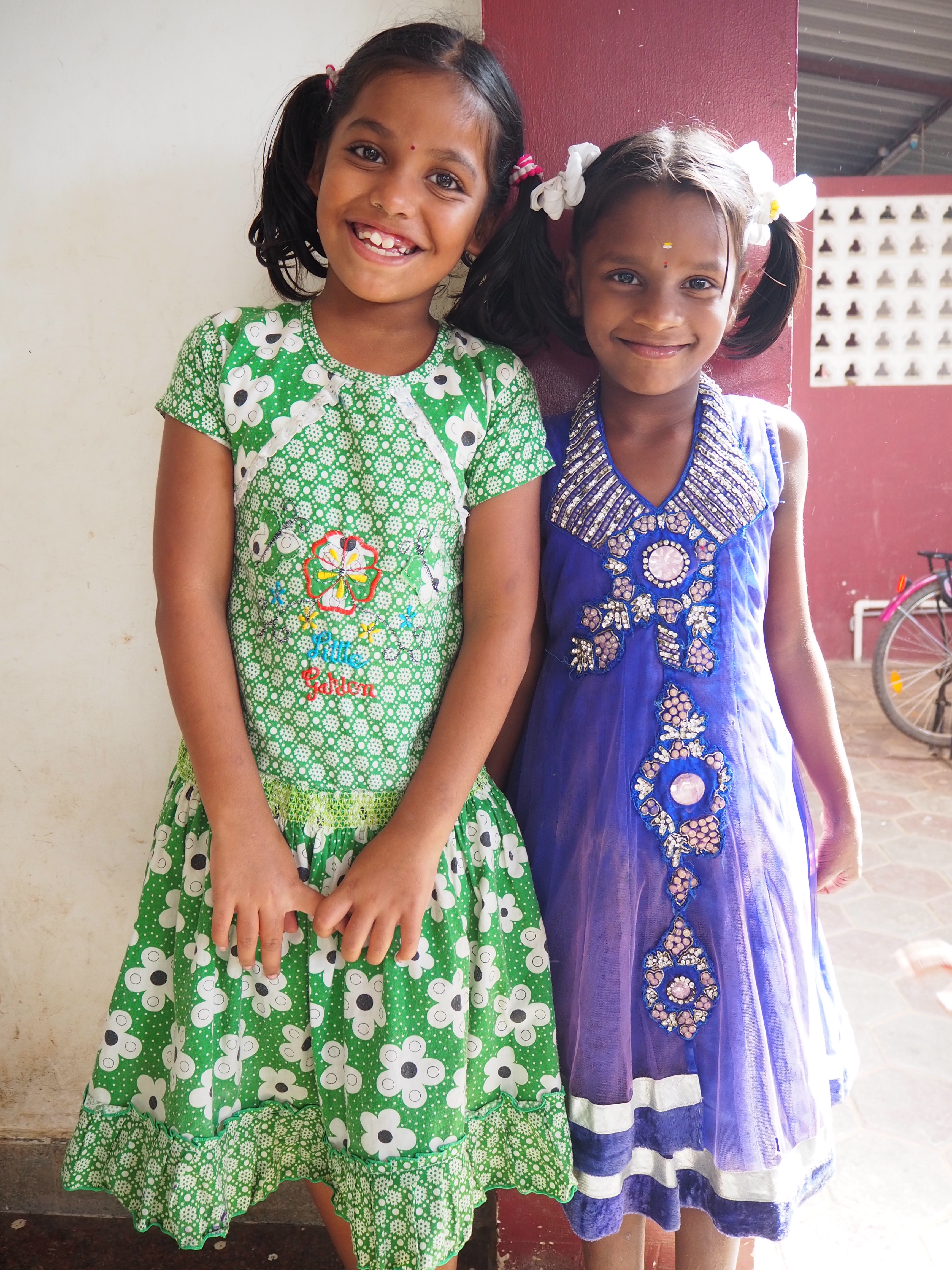
My girl was Rubini. She is 6 years old and wore a beautiful blue dress, my favorite color. She was smiling the whole time and was full of energy and excitement. She showed me the kitchen, the bedroom, the music room, she introduced me to her friends and taught me a clapping-singing game that they all love to play. She seemed happy and like a normal child. Although we didn’t speak the same language we communicated through gestures, pointing at things and facial expressions and hand signs. We spent 20 minutes together before she showed me my seat in the room we were about to hear a presentation from the founder of the Samugam Foundation.

This nonprofit organization gives shelter to the gypsy, street and poor children, providing them with a home, food, education, sanitarian care and overall protection with the mission of giving them a chance to become a part of the society. These children grow up in poverty and misery facing illness and death because of non-existing hygiene standards concerning food and body care, being unaware of their destiny because of a lack of education. This NGO tries to give the children a chance for a better life. I was sitting in this room, watching the videos about gipsy children eating dirty food from the dump, living so close to this polluted area being excluded from society with no possibility for a change. It was hard to take and almost overshadowed the fun playful 20 minutes with Rubini. She was one of them and I felt very helpless. My eyes were wandering around in the presentation room and suddenly I saw a quote by Ghandi on the wall that gave me hope in this moment of brutal reality; “only through education we can change the world”. Inequality and unfairness exist and there is no sense in being upset with the world how it is, we just need to keep this words in mind and help the people through education to change their destiny towards a better one. I went back to the bus with gratitude for my life and hope for Rubini and all the other beautiful children that welcomed us so friendly at our first NGO visit in India.

PC160071.JPG

Read more about the Samugam Foundation on their website: http://www.samugam.org

A Visual Insight Into a Sustainable Fashion Business

By Mia Windisch-Graetz

Check out some pictures I took during my time working for Uma Prajapati, ethical fashion designer and founder of Upasana based in Auroville, India.


“I am Full of Hope for the Future”

Sustainable fashion designer Uma Prajapati talks about bloody cotton, high-speed trains and why she never wanted to become a business woman.

DSC00121Uma Prajapati in her apartment in India. Image Credit: Mia Windisch-Graetz

January 7, 2016. 3:22 P.M. Auroville, South India.

“Hold on tight or you won’t survive,” I keep telling myself while sitting on the back of Uma Prajapati’s motorcycle. The rebellious driving style of the fashion designer and founder of Upasana clearly reflects her obstinate approach to her career path. We are on the way to her apartment, where I interview her over a cup of tea. Besides her impressive book collection, design furnishings and a kitchen everyone in their twenties can only dream about, it is her story that fascinates me.

MIA WINDISCH-GRAETZ Tell us about your career progression, where you studied, where you worked, who influenced you.

UMA PRAJAPATI After I finished my studies in economics in my hometown Bodh Gaya, I went to New Delhi. There I did my major in fashion design at the National Institute of Fashion Technology (NIFT) from which I graduated in 1994. Then, I worked two years for the European fashion market in Delhi. For a design project I came to Auroville in 1996. I remember I only had 2,000 rupees in my pocket, less than 30 euros. Actually, I was supposed to be there for two weeks but those weeks turned into years. And well, I ended up creating Upasana in 1997. Wow, it’s now been twenty years since I first got here.

MWG What does sustainable fashion mean to you?

It means to care. Once you start to care about people and the environment, the ways you make decisions will change. This twist in your mind comes naturally. The way you think changes. And your plans change. You really have to plan ahead to dodge around big conglomerates that only want to make profit.

Screen shot 2016-02-21 at 7.53.05 PM

MWG What inspired you to create Upasana? 

UP A couple of things. A little more than ten years ago, thousands of cotton farmers in India committed suicide because of the rising costs of farming brought about by Monsanto. It has driven them to crippling debt. They felt they had no other choice. That really hit me. And change happens when it hits you. It doesn’t come easy but when you get hit and cry helplessly, that is when you find the change.

Since then it became very clear to me that fashion has to be sustainable. I worked in fashion and with cotton at this time. I had to live with that. I felt responsible for what happened. Many people in India pretend to not know what’s really going on. There is a seed mafia and farming communities are not well educated. I knew that everyone would just continue the way they work. Why is the world so unfair? Fashion is the second largest industry in the world. And it’s a really bloody business. When we started to work with cotton farmers in South India, it changed my life. What I could do to help these people? I had the choice to either write nasty articles and blame others, or I could just go ahead and change the way I work and consume. And that’s what I did. At first, it was hard but I realized that positive conversation has a far greater effect than negative conversation for a positive cause. I thought, Okay, I will give you fashion but I will make it my own way. I also wanted to create a space where young professionals from all over the world can come and explore Auroville through textiles and design.

NYE
Upasana Spring/Summer 2015 Collection. Image Credit: Upasana

MWG You said ‘a couple of things.’ What else hit you?

UP There was an old lady. I encountered her in a village where I was running a project to empower local weavers in South India. When I was sitting there, next to our car, about to go home again, she suddenly came over to me. She nudged me and asked: ‘Would you support us too?’ I did not expect that and just asked her: ‘What do you want me to do?’ She just wanted to work and earn a few rupees a day. This woman was about sixty and still had a dream. The dream of only earning a few rupees a day.

MWG How is Upasana a sustainable fashion brand?

UP We only use cotton from local farmers. Going organic was the biggest change we have ever made. The clothes are made by our seamstresses and tailors at Upasana. And we only use high quality, naturally dyed fabrics that are made in India.

2
Image Credit: Upasana

MWG Sounds very costly… Between ourselves, does it pay off?

UP To be honest, it really broke us financially. We did not realize how badly it would hit our business. I did it all wrong. I jumped in blindly. If I had known how difficult it would all be, I would have done things differently. Instead of taking a leap of faith I might have taken baby steps in the right direction. Despite everything, I am very proud of that move.

MWG Why did you choose fashion as your medium for social change?

UP Because I didn’t know anything else. If I had known music I would have used music. If I were a writer I would’ve used writing…

MWG Every project you have started so far has been very successful. You launched a concept store in Pondicherry and sell your clothes throughout India. You give TED talks, CNN reported about you, and local designers as well as people from all over the world come to work with you. Was starting your own business always a dream of yours?

UP No. I never wanted to start my own business. I wanted to be an artist. Even as a child I was obsessed with painting and writing poetry. It was clear to me that I wanted to become a painter or a writer. I knew myself well enough to know that I wouldn’t be able to make money. Making money didn’t interest me at all. But then I came to Auroville and well, look at me now. I don’t know why, but something in me accepted that I am a business lady now. It took me a long time to digest that.

MWG What keeps you doing all of this?

UP I love the community. Many people appreciate us for what we do, for being consistent and for actually doing what we truly believe in. Bringing a sense of value in the fashion industry is what I am very proud of. I have a good night’s sleep, you know. And I am really grateful for all the support we get.

Priya look 2015 (55)
Image Credit: Upasana

MWG Did other girls you were growing up with have the same opportunities as you had?

UP Wow, that’s a very serious question. I can’t speak for other girls. I can just say that you have to jump at every opportunity life offers you. I just did it. When you keep on asking yourself questions like ‘Is it the right time? Can I? May I? Will I?’ and never risk anything, then you might risk that there might be no more chance. And the opportunity will be gone forever. Sometimes we just have to make decisions and act. I can think of so many girls in my class that had the exact same opportunities as I had but few put them into practice.

MWG Do you think people consciously ignore the work that goes into what they buy?

UP We are living in a high speed train. Everything is so fast. Now you are relaxing and listening to me, but as soon as the interview is over, you will go back into the train. The speed of life is accelerating and the demands to our flexibility are constantly rising. Sometimes we manage to communicate through three technical devices at the same time. Everyone is on Instagram, Facebook, Twitter, WhatsApp. And we are expected to respond within seconds. There is such an overload of information. The question is, How do we process all of that? Our attention is limited. Being quiet enough to make a conscious choice is very hard nowadays.

Screen shot 2016-02-21 at 7.55.04 PM

I personally need to mediate and do yoga for at least thirty minutes a day. It is challenging to make a conscious choice in times like these. When we hear that Africa suffers we say ‘Ah, that’s horrible!’ but a few seconds later, we forget about it because we get a Whatsapp message from a friend or see a funny post on Facebook. News touch our brain cells for just a few seconds and only a moment later, they do not exist any more. Because we have other problems. Because we do not feel responsible and don’t have time. I think that many people simply don’t know that the consumer has the power to make a conscious choice and change the world. So I would not blame anyone.

MWG Do you think that peopleʼs values regarding sustainability have changed in recent years?

UP Yes. Education is definitely changing people’s values more and more. Sustainability has never been such a big topic. It matters to us, our children and next generations. I am full of hope for the future! I am very, very hopeful.

Priya look 2015 (28)Image Credit: Upasana.

MWG Will they ever have the potential to compete with big fast fashion conglomerates such as H&M or Zara?

UP There will always be a market for both, as they address different target groups and meet different individual needs. I am sure that there will be more of a change but I can’t predict to what extent. There will certainly always be a place for people who want to promote an ethical lifestyle. Niche markets will always exist and find people who support them.

MWG In 2012 the second largest fast fashion retailer H&M launched its first conscious collection. Could sustainable fashion finally be going mainstream?

UP Not really. This idea sounds kind of utopian to me. We should see the world in many shades of grey. Nobody is perfect. And diversity is a beautiful thing. Let’s stay optimistic and say that although big companies will always exist, they may change their ways in order to become more successful in the coming years. People start to think differently, even if only at a slow pace.

MWG You are already working with many organizations and designers in India. Are there any other organizations or designers in your mind that you would like to work with? 

UP I am impressed how big the ethical fashion market in Europe is. I would like to work with the European sustainable design market.

MWG Which social development project are you most proud of? 

UP The little Tsunamika doll is still our most successful project. She is a darling. She is more than a living symbol. She is hope. She is love. It is impressive what a huge impact a small doll like her can have on people all over the world. In 2004, I wanted to help people who were affected by the devastation of the tsunami. So I employed women to make female dolls that are made of recycled waste that remained of the devastation. The doll cannot be bought or sold but only gifted. More than six million of them made it to eighty countries across the globe. And the Tsunamika story is told in schools ranging from Spain to Singapore.

Processed with VSCO with a6 preset

The Tsunamika dolls. Image Credit: Mia Windisch-Graetz

MWG  Where do you see Upasana in the next five years? 

UP Upasana has already inspired many students, organizations, designers, brands and people. We will just keep on designing for change. I want to do as many things as possible: Going international without going too crazy and breaking our neck, keep being financially sound and take baby steps to reach our goals. I see Upasana as a shining star.


Towards the end of the interview, the fashion designer suddenly jumped off the couch. Apparently, she was no longer in the mood to answer questions. “Let’s have more tea. We need a break.” After she persuaded me to try some vegan honey nut balls, (Prajapati’s lactose intolerance means one cannot find any diary products in the household), she offered me a ride back to my hostel for the night. Once I arrived, I posted a photo on Instagram and did some work for university while I kept my friends updated on Whatsapp. She was right. I was back. Back on that high-speed train.

By Mia Windisch-Graetz


A Short Reflection…

It has been a little over a month since we’ve returned from India and the trip now seems as if it were almost a dream. By now we’ve all settled into our familiar lives and transitioned back into our old routines and mindsets. Some of us are back at school, while others, like myself, have begun new careers. The things we encountered in India seem so very far away.

When I reflect back on my time in India to my friends and family I tend to approach it in a different way than I had just a few months ago. Back when I had first spoken of my plans to travel to India, my trip had been completely romanticized. Now, I speak about my time in India with a certain familiarity that I feel one can only have when they travel into the heart of India – away from all tourist destinations and luxury resorts. When I look back, what most comes to mind is the people I encountered and those who I was able to spend time with.

DSC_1155

Those who I came to spend time constantly reappear in my mind and with their faces I am reminded of the poverty I encountered and my mind once again boggles at the widespread problems they endure. It is still hard to wrap my head around the basic, fundamental issues that were lacking from most of the lives that I encountered. To go back to my thoughts from my previous post, I think what really needs to be done to help bring people out of poverty is a simple sounding solution – education. With education, individuals can grow up with skills, an understanding of their rights, and countless other advantages that will work to keep them, and the future generations they bring into this world, out of poverty.

From a Western perspective, providing education seems quite simple. However, when you go into a country with over 1,500 different dialects and languages, over one billion people, and a deep rooted caste system and set of cultural values, implementation of education is far from simple. How is it possible to provide a solid education when many don’t have the luxury of taking time out of their day to learn? Or how can we educate the poor when they don’t even have the means to get themselves to school? There are countless questions like these that I ask myself when trying to figure out a “universal” way to spread education.

– Claire Clark –