AVAG: Weaving Dreams of Empowerment and Resilience

By Kathryn Galloway

In the heart of Auroville, a beacon of participatory development shines bright, driven by a simple yet profound mantra: empower communities to shape their destinies. The Auroville Village Action Group (AVAG), since its modest inception in 1983, has blossomed into a powerhouse of collaborative efforts, breathing life into the dreams of marginalized groups and striving for a harmonious, secure, and resilient society.

At the core of AVAG’s mission is the belief in inclusive development. Their stakeholders form a diverse mix, including women, men, youth, school children, teachers, farmers, and both traditional and elected leaders. Yet, it is the most marginalized—the single women, the elderly, dalits, farmers, artisans, and small business owners—who occupy the center stage of AVAG’s unwavering commitment.

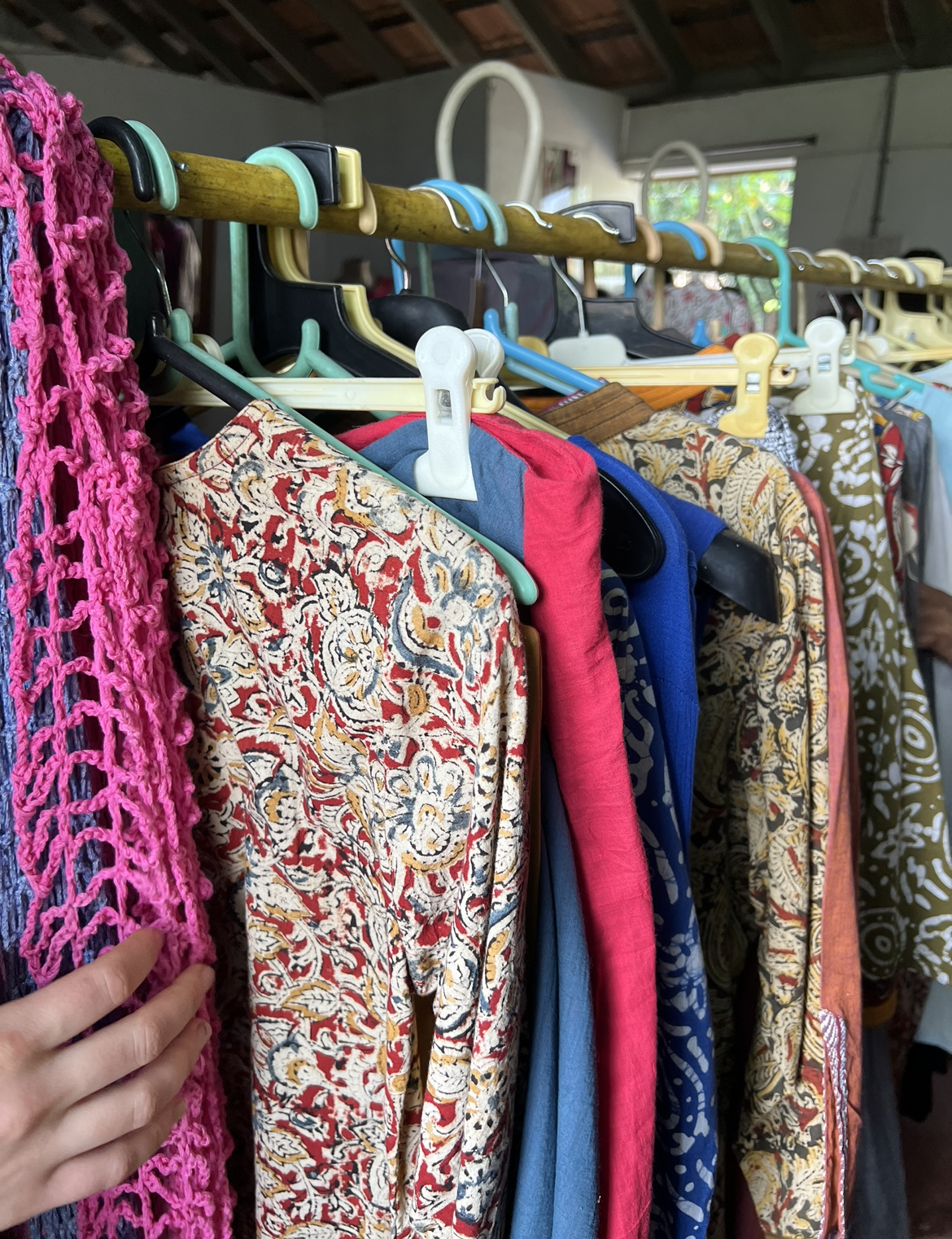
To begin our visit, Makizh Selvam, the office manager, welcomed us into the world of AVAL—a brand crafted by women for the benefit of women. AVAL, meaning ‘she’ or ‘her’ in Tamil, is a social enterprise born from the nurturing hands of AVAG that seeks to uplift the aspirations of marginalized women through skill development in tailoring and crocheting. Every handcrafted product emanates love and devotion, a tangible symbol of self-reliance and self-empowerment. AVAL stands as a testament to the convergence of rural women and urban designers, creating products that embody beauty both inside and out. In a span of 7-8 years, AVAL has become a sanctuary where conscious consumers find more than just products; they find a connection to a cause.

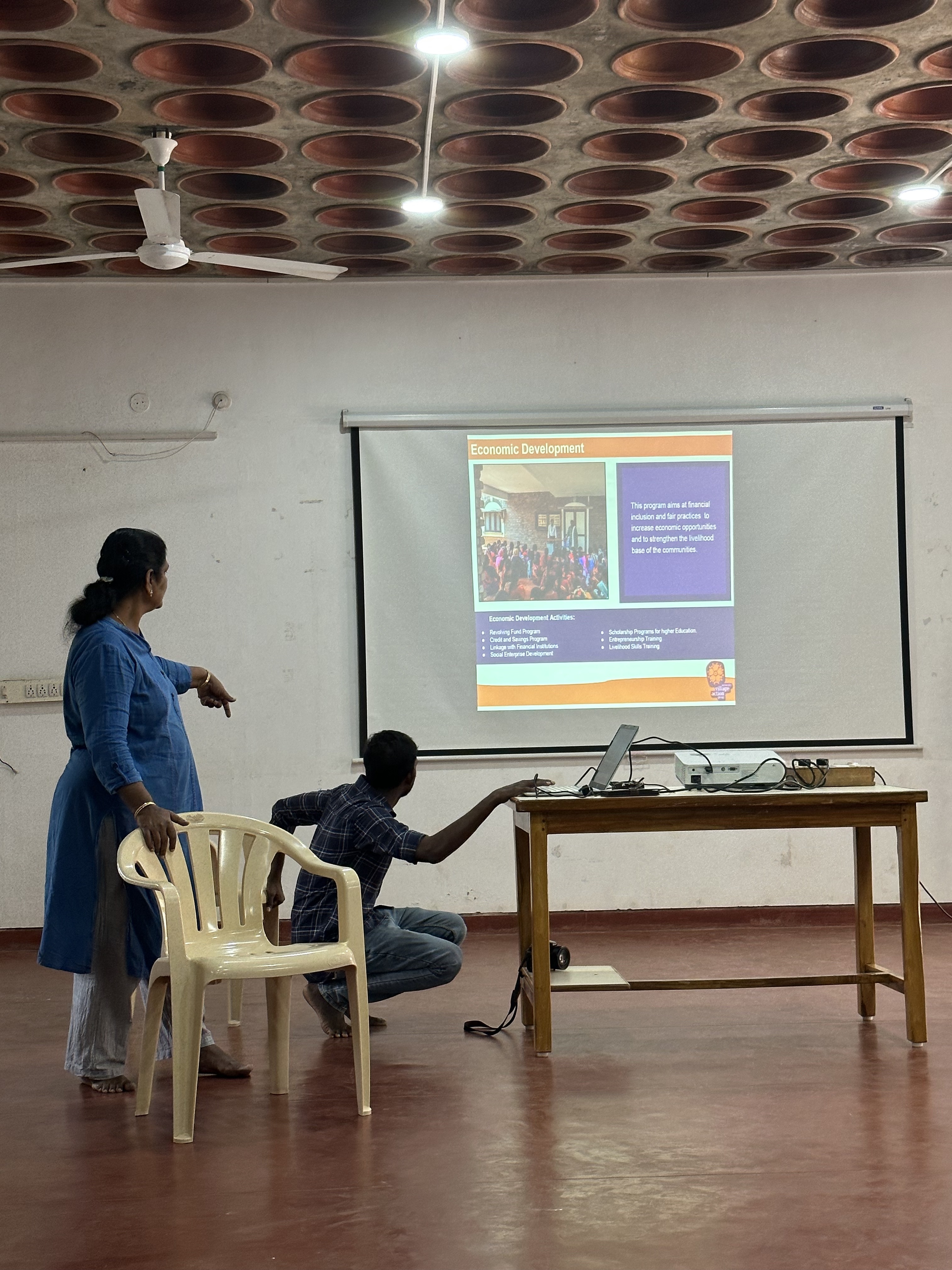
After we perused the racks of the AVAL shop, Anbu Sironmani, AVAG’s Director, shared more information on the organization’s key initiatives. Community development, capacity building, economic growth, and psychosocial support form the pillars of their holistic approach. From personality development to agriculture, AVAG’s initiatives encompass a spectrum as diverse as the communities they serve. Particularly noteworthy is their emphasis on participatory economic growth, ensuring that the development of marginalized groups is rooted in genuine needs and inclusive practices.

AVAG doesn’t just offer support; it nurtures resilience. The psychosocial support they provide is a lifeline, weaving a safety net of mental and emotional well-being for individuals facing stress and trauma. In AVAG’s world, empowerment is not just a concept; it’s a tangible reality carved out of genuine understanding and collaborative effort.

If Auroville is a tapestry, AVAG and AVAL stand as vibrant threads, weaving dreams of empowerment, resilience, and a community where every voice is not just heard but celebrated. They are crafting a narrative of inclusivity that resonates far beyond the borders of Auroville—a testament to the transformative power of community-led development.

Auroville Village Action Group: Bridging the Gap

by Angelina Bouchard

The Auroville Village Action Group is an organization that works with local villages to develop programs that benefit the members of rural communities, focusing especially on the marginalized. As the first organization visited during the practicum, we were all eager to learn about the impact of AVAG’s work. Upon arrival, we were greeted with a brief tour of a workshop, where a group of women crocheted, sewed, and trimmed fabrics. Next door, a small boutique displayed the finished goods. There, I noticed some products that are also available for purchase at the Visitor’s Center. Nearly everyone in our group walked out of the shop with a new shirt, bag, pouch, or pair of pants. Some even adopted a new animal, albeit a crocheted one.

We met Anbu, who currently runs the NGO. Founded in 1983, the Auroville Village Action Group is one of the oldest organizations in the area, and their mission continues even after the founder, Bhavana, passed away in 2011. In societies that place men in superior positions to women, inequality is so ingrained that it becomes normalized and internalized. As explained by Anbu, AVAG’s efforts to combat social injustice result in initiatives such as the Economic Development Program, which aims to reduce poverty by increasing financial opportunities within these communities. They provide women with profitable skills training and then employ them at AVAL, their own fashion brand. Working women gain confidence in being financially supportive members of their households, families, and communities. Strategies extend beyond economic security and delve into emotional and physical wellbeing as well. They offer psychosocial services, which have decreased the suicide rate among women by holding counseling sessions and collaborating with self-help groups. Additionally, the organization’s emphasis on community development encourages people of all genders, castes, and religions to find solutions to common problems and build a better bioregion for all to succeed.

AVAG is a central pillar that bridges the gap between Auroville and surrounding villages. They not only advocate for progress but actively create change.

A Short Reflection…

It has been a little over a month since we’ve returned from India and the trip now seems as if it were almost a dream. By now we’ve all settled into our familiar lives and transitioned back into our old routines and mindsets. Some of us are back at school, while others, like myself, have begun new careers. The things we encountered in India seem so very far away.

When I reflect back on my time in India to my friends and family I tend to approach it in a different way than I had just a few months ago. Back when I had first spoken of my plans to travel to India, my trip had been completely romanticized. Now, I speak about my time in India with a certain familiarity that I feel one can only have when they travel into the heart of India – away from all tourist destinations and luxury resorts. When I look back, what most comes to mind is the people I encountered and those who I was able to spend time with.

DSC_1155

Those who I came to spend time constantly reappear in my mind and with their faces I am reminded of the poverty I encountered and my mind once again boggles at the widespread problems they endure. It is still hard to wrap my head around the basic, fundamental issues that were lacking from most of the lives that I encountered. To go back to my thoughts from my previous post, I think what really needs to be done to help bring people out of poverty is a simple sounding solution – education. With education, individuals can grow up with skills, an understanding of their rights, and countless other advantages that will work to keep them, and the future generations they bring into this world, out of poverty.

From a Western perspective, providing education seems quite simple. However, when you go into a country with over 1,500 different dialects and languages, over one billion people, and a deep rooted caste system and set of cultural values, implementation of education is far from simple. How is it possible to provide a solid education when many don’t have the luxury of taking time out of their day to learn? Or how can we educate the poor when they don’t even have the means to get themselves to school? There are countless questions like these that I ask myself when trying to figure out a “universal” way to spread education.

– Claire Clark –