Sustainability usually arrives with instructions. What to buy, what to avoid, what to fix, what to improve. It often feels like a checklist, or worse, a moral test.
Auroville didn’t work like that.
Instead of telling you what sustainable living is supposed to look like, it lets you notice it on your own. Over time, certain patterns start to repeat themselves. Not in an obvious way, and not as lessons exactly, but as everyday realities that slowly reshape how you think about comfort, excess, and value.
These are a few of the things that stood out.
1. Luxury Isn’t Always Designer
In most urban settings, luxury is tied to choice and control. Being able to customize everything, upgrade constantly, and replace what no longer feels perfect is often treated as a sign of success. In Auroville, luxury shows up in quieter ways.
Here, luxury looks like space to breathe, time without urgency, and environments that don’t ask you to perform. Comfort isn’t created through polish or aesthetics, but through ease. There’s less pressure to consume in order to belong, and more acceptance of what already exists.
It reframes luxury as something experiential rather than material. Less about what you own, more about how you move through your day.
2. Simplicity Works When It’s Normal
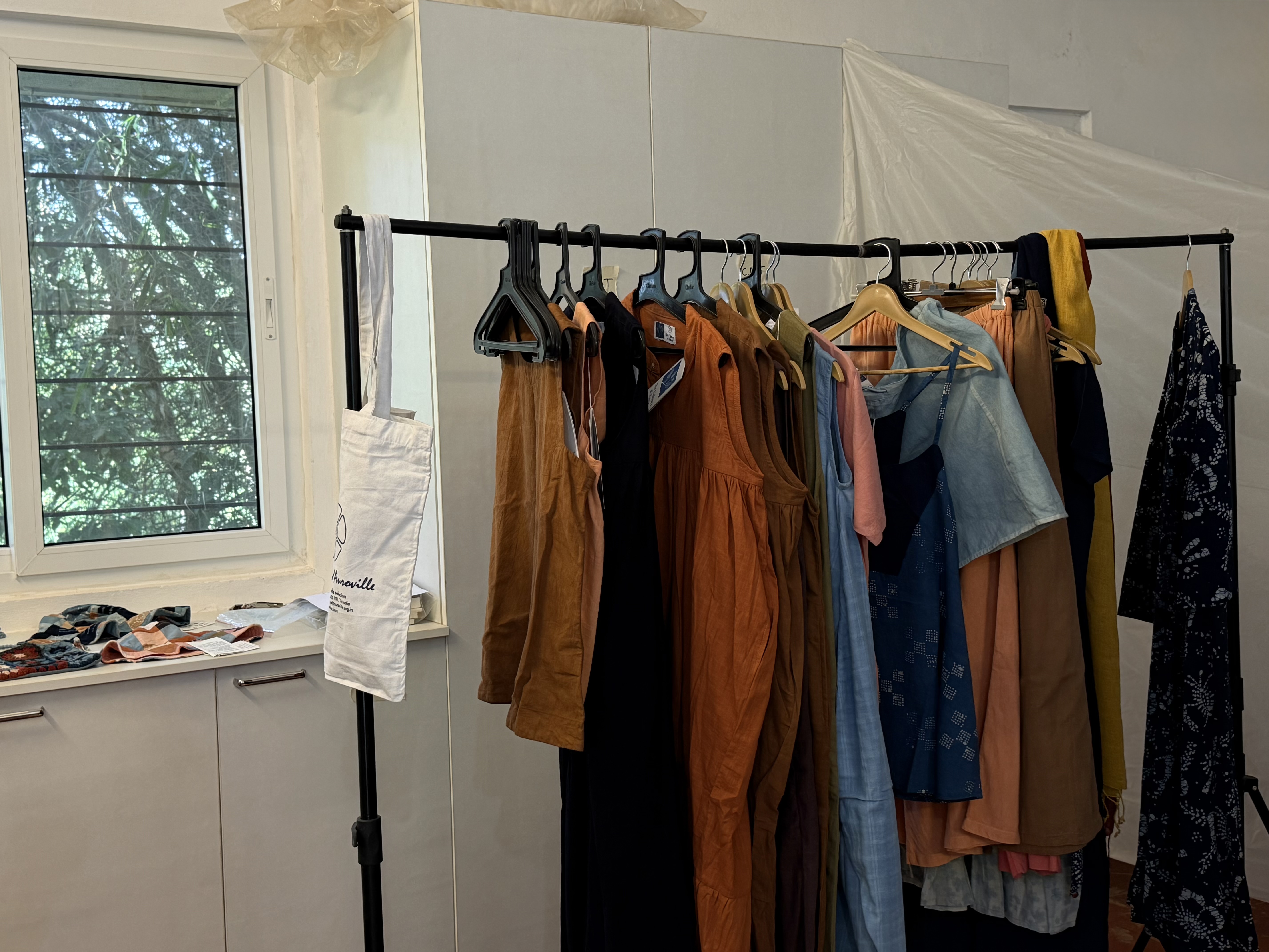
Clothing Rack at Colors of Nature Photo Shoot
One of the reasons sustainability feels achievable in Auroville is because it isn’t framed as a special effort. People reuse towels, share resources, and eat what’s prepared without much discussion. These practices aren’t highlighted or praised; they’re simply part of daily life.
When simplicity is treated as normal rather than virtuous, it stops feeling restrictive. There’s no pressure to “do it right.” You adjust naturally, because that’s how the environment functions.
This normalization makes sustainability feel less like a personal burden and more like a shared rhythm.
3. Slow Is a Feature, Not a Bug
Life in Auroville moves at a noticeably slower pace. Walking, cycling, and simple vehicles shape how people move through space. Distances feel longer, but time feels less compressed.
At first, this can feel inefficient. Over time, it becomes grounding. Slowness allows attention to expand. You notice light, sounds, and small changes in your surroundings. Conversations stretch without interruption.
Instead of feeling behind, you begin to feel present. Slowness becomes a form of awareness rather than delay.
4. Community Doesn’t Need Matching Behavior
During events like the Light Mandala meditation, people gather without being asked to behave in a particular way. Some sit still for hours, others move in and out. Children wander quietly, adults adjust positions, visitors observe.
What’s striking is that the lack of control doesn’t disrupt the space. It strengthens it. Shared presence matters more than uniform participation.
This approach to community allows difference without tension. It shows that cohesion doesn’t require sameness, only mutual respect.
5. Objects Are Allowed to Have a Past
Collection of Cameras at YATRA
Throughout Auroville, objects show signs of use. Clothing racks hold items that have already lived full lives. Tools and equipment are repaired, reused, and stored carefully rather than replaced.
There’s no attempt to hide age or wear. Instead, longevity is valued. Objects aren’t treated as disposable, and their history is visible.
This approach shifts how value is assigned. Something doesn’t lose worth because it’s old; it gains it because it continues to serve a purpose.
6. You Don’t Need to Optimize Everything
In many environments, life is optimized down to the smallest detail. Comfort is curated, preferences are prioritized, and inconvenience is avoided whenever possible. In Auroville, optimization isn’t the goal.
Meals aren’t customized. Spaces aren’t adjusted for individual comfort. And yet, these environments feel surprisingly welcoming. Without constant tailoring, participation becomes easier. You stop evaluating and start engaging.
Letting go of optimization removes pressure. What’s left is a sense of ease that doesn’t rely on perfection.
7. Sustainability Isn’t the Point, Living Is
What stands out most is how rarely sustainability is mentioned. No one is trying to convince you of anything. Practices like reuse, shared meals, and slow movement exist without explanation.
Because of that, they endure.
Sustainability here isn’t treated as an identity or an achievement. It’s a byproduct of how people relate to space, time, and one another. It works because it fits into everyday life rather than standing apart from it.
The Takeaway No One Gave Me
Auroville didn’t offer a formula or a lifestyle to adopt. It offered a different way of paying attention. To time. To comfort. To excess.
Sustainability here isn’t aspirational. It’s practical. It doesn’t demand perfection, only awareness. And once you start noticing how much can be gained by needing less, it’s difficult not to carry that perspective with you.
What is Sadhana? A Mission Rooted in Compassion and Action
Stepping into Sadhana Forest, I found myself immersed in a space where every detail, from upcycled tire sculptures to solar-powered utilities, reflected a commitment to creating a better world. Removing our shoes and entering the main hut, which is made completely from natural materials, we were immediately impressed by the possibilities of another way of living.
Nestled over 70 acres near Auroville, this remarkable initiative goes beyond reforestation—its mission is to foster ecological restoration, compassion, and selfless service as part of a global movement.
Sadhana Forest, founded in 2003 by Yorit and Aviram Rozin along with their 1 year-old daughter, began with one family and a dream: to restore the native Tropical Dry Evergreen Forest (TDEF) ecosystem while creating a community built on kindness and inclusion. Today, that dream has blossomed into a global network with projects in Haiti, Kenya, Namibia, and multiple locations across India, inspiring thousands to take action for the environment and humanity.
Natural regeneration of Sadhana Forest from satellite
Aviram began our visit with an introductory talk on the philosophy and works of Sadhana. He explained that Sadhana means the search for the truth on one’s spiritual path, and their path and great effort has been reforestation and spreading a culture of vegan compassion. One of the things that stood out most was the emphasis on inclusivity. Sadhana Forest welcomes everyone, regardless of background, with only minimal time commitments (10 days for Indian volunteers, 20 for foreigners). This openness creates a space where diverse perspectives come together, fostering collaboration rather than competition.
After starting with one family, today there 37 long term volunteers, including half a dozen growing families, as well as 60+ volunteers, who are currently giving between 1 and 10 months of their time. He explains that Sadhana has the capacity to host up to 195 people, making clear that they will never say no to anyone that may come. Answering a question from the audience of over 100 people, he explains that those that who come for short term contribute money for their food (3 meals a day), while long term folks are supported by the community, giving back through their time and labor.
Just like the forest, Sadhana is growing. Their future plans include integrating differently-abled individuals into the organization, as well as creating an orphanage for children with HIV, further illustrating their commitment to inclusivity and compassion. However, they’ve already expanded from their initial Auroville experiment to a total of 7 other centers – 1 in South Tamil Nadu, 1 in Kenya, 1 in Namibia, 1 in Haiti, & 3 in Northern India.
Sadhana Forest Haiti
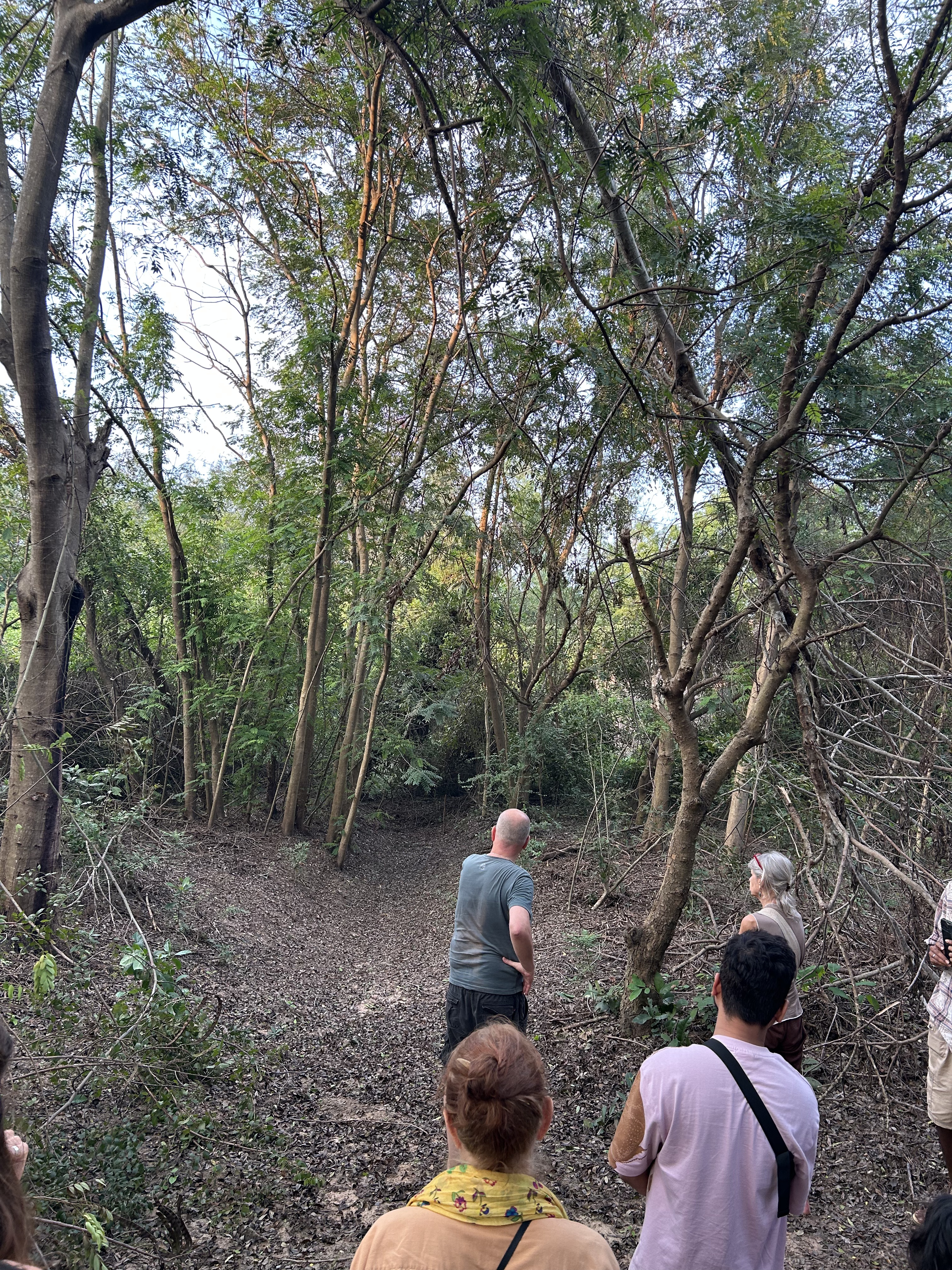
After the introductory talk, Aviram takes us on a tour of the campus and an exploratory walk in the forest. It’s remarkable to me that walking barefoot through the forest, while avoiding painful stones and roots, one is reminded of the intentionality required in each step—an apt metaphor for the care and mindfulness that defines this community.
Water Conservation Strategies
Sadhana Forest is, as the name suggests, a forest, but for a forest to thrive, one essential ingredient is needed: water. When Sadhana Forest began, it was little more than a barren wasteland, plagued by water scarcity like much of Auroville. Water conservation became the cornerstone of their reforestation efforts, and their strategy revolves around the Triple S method— Slow, Spread, Sink.
Aviram explains that the team strives to catch every drop of rainwater as close as possible to where it falls. Interestingly, in water conservation, low-lying lakes are a sign of failure in water conservation. Such lakes indicate that water has flowed to the lowest point of the slope rather than staying on the land where it fell—vital for nourishing the soil and replenishing the underground aquifer. To counter this, Sadhana Forest employs a method called on-contouring, maintaining water at its topographical height instead of allowing it to run downhill. This ensures that rainwater not only sinks into the soil to nourish plants but also replenishes the groundwater aquifer.
The success of these water conservation efforts is evident throughout Sadhana Forest. Aviram highlights that retaining water on the land has allowed for the natural regeneration of vegetation. Interestingly, he observes that natural regeneration fosters greater biodiversity compared to human-planted species. He likens it to designing one’s own home—wildlife, as the true inhabitants of the forest, can create an ecosystem tailored to their needs, rather than adapting to a pre-designed system imposed by humans. Indigenous plants, spread by wildlife through seeds and droppings, establish a harmonious and self-sustaining ecosystem far superior to human-centric reforestation.
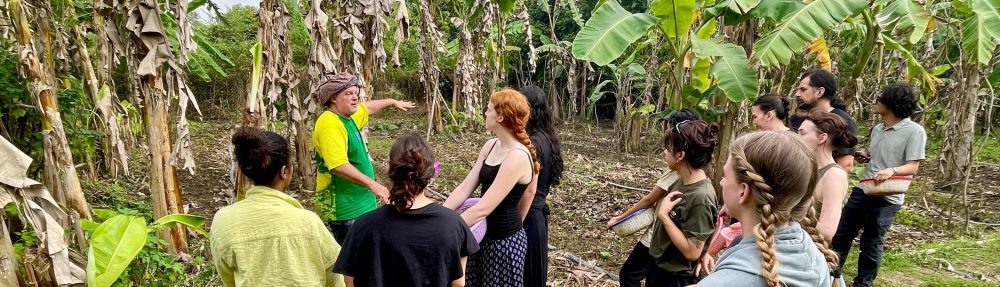
As we walked through the forest, Aviram pointed out various plants and explained their roles in water conservation. One striking example was vetiver, a grass with exceptionally deep roots that stabilize the soil and retain water. Similarly, the dodonaya plant thrives in arid conditions by capturing water from the air and storing it in its roots, helping to create moist, fertile soil. We also saw other water conservation techniques, including gabions (stone-filled metal cages), swales, and a man-made lake. The lake, while not ideal for the Triple S method, was a necessary adaptation due to the practices of a higher-elevation neighbor who doesn’t prioritize water conservation. Sadhana Forest has had to capture the water that runs off from this neighboring property to prevent it from being wasted.
Aviram pointing out a water conservation technique, a swale
During our visit, a curious tourist asked how Sadhana manages to address mosquitoes while maintaining their vegan and “do no harm” philosophy. Aviram explained that the key lies in controlling standing water, which disrupts mosquito breeding. Rather than killing mosquitoes, they simply ensure there’s no stagnant water for them to thrive. With a smile, he added that if any do appear, he prefers to swat them away gently rather than harm them.
Sadhana Forest’s water conservation strategies not only nurture a thriving ecosystem but also embody their broader values of harmony and sustainability. Their ability to transform a barren landscape into a flourishing forest is a testament to the power of intentionality and care for the Earth.
Fostering Sustainable Living
When we return from our forest walk, we are immersed in the heart of Sadhana’s community. Living at Sadhana Forest is a lesson in intentionality and simplicity. Every aspect of the community is designed to minimize environmental impact while fostering connection and joy.
The homes and dorms are constructed from renewable materials such as wood, granite, and tetrapacks (recycled milk cartons). Short-term volunteers sleep on rope beds, emphasizing the community’s low-impact ethos. Even everyday tasks like washing and cleaning reflect this intentionality—plates are cleaned using natural materials like coconut husks, ash, lemon water, and vinegar, ensuring all waste is biodegradable. Their handwashing stations are ingeniously simple, using cups with small holes that allow water to flow gently, paired with naturally derived soap. This clever design minimizes water waste while maintaining hygiene.
Sadhana Forest operates completely off the grid, a testament to its commitment to sustainable living. Aviram shared a nostalgic story about the community’s early days, when they used dynamo bikes to generate electricity before transitioning to solar panels and wind turbines. Although no longer in use, the bikes are preserved as a reminder of their humble beginnings. Today, all Sadhana sites around the world—whether in India, Kenya, or Haiti—are powered entirely by solar and wind energy, providing reliable electricity and hot water. While they occasionally face challenges during heavy monsoon seasons due to cloud cover, their resourcefulness ensures sustainability remains at the forefront.
The kitchen is also a hub of activity and efficiency, equipped with industrial-sized pots and pans and a large reverse osmosis water filter to maintain the highest standards of hygiene. That evening, we enjoyed a delicious vegan dinner made from locally sourced ingredients—a meal that reflected the community’s values of sustainability and compassion.
The Sadhana Forest community kitchen
After dinner, the team shared short videos detailing the mission and history of Sadhana Forest. The evening concluded with a powerful 45-minute documentary on veganism, which explored the devastating impacts of industrial agriculture on climate change, human health, and animal welfare. The statistics were staggering: 30 million deaths globally linked to lifestyle-related diseases, the overexploitation of 90% of the world’s fisheries, and the brutal realities of dairy and egg farming. The documentary was both eye-opening and transformative, reinforcing the message and values at the heart of Sadhana Forest.
Our delicious vegan dinner provided by Sadhana Forest
The Values of Sadhana
At the basis of Sadhana is its vegan ethos of compassion. Aviram explains that veganism is more than just a diet; it’s an extension of their mission to live in harmony with nature and ensure that resources are used equitably and efficiently.
The first form of compassion is of course towards the land, which they seek to help prosper through their forestry, and from which they take no more than what they need. All of the buildings on the property are made from from natural materials. The second form of compassion is towards animals. Aviram makes it clear that the love of animals is central to Sadhana, and that no animal deserves to be tied, raped, or exploited in any way. I really appreciated that Aviram stressed the fact that animals have a right to live, even if they don’t give you something. It was nice to step out of the typical anthropocentrism, and he reminded us that part of Sadhana’s mission is to create a world without speciesism; other beings and nature are not just there to serve humans. This was reflected in the forest’s Guashala, a cow sanctuary for abused and abandoned cows. There, the cows are treated with the utmost respect with wonderful veterinary care, fresh water & food, & love. We were lucky enough to attend a cow connection workshop, where we bonded with a beautiful bull named Vishnu.
Our Cow Connection Workshop
The third example of compassion is compassion towards children. This was actually one of the most interesting and potentially controversial aspects of their philosophy. At Sadhana, they believe in natural learning & they call it “Unschooling”. Instead of sending their children to formal schools, they prioritize time spent with family and community, allowing learning to emerge naturally through curiosity and exploration. For example, if a child sees an airplane and asks about it, their parents might explain that people are flying through the sky from one place to another. This simple explanation could spark a deeper curiosity, leading the child to explore concepts like aerodynamics, engineering, or math.
I find this mindset inspiring—it celebrates freedom and the innate curiosity of children. When balanced with some structure or formal learning, it could provide a wonderful foundation for creativity and critical thinking. However, taken to its extreme, this philosophy can have drawbacks. I’ve heard anecdotal cases where teens raised in such environments struggled with basic skills, such as writing their own name. Nonetheless, Sadhana’s approach challenges us to rethink education and reminds us of the power of curiosity-driven learning.
Finally, Sadhana Forest embraces collaboration over competition, intentionally fostering an environment where individuals work together rather than competing against one another. This philosophy extends into their economic system, where they practice a gift economy—a model rooted in kindness, generosity, and the joy of giving. At Sadhana, everything is offered freely, with no expectation of reciprocity. Meals, education, and workshops are available to anyone who comes, all provided as acts of care and compassion.This approach profoundly disrupts the typical capitalistic incentives of greed and transactional exchanges. Instead, the gift economy shifts focus to the intrinsic value of giving and creates a space where every action is imbued with thoughtfulness and care. It encourages people to give not because they must, but because they wish to contribute to something greater than themselves.
Aviram, the founder, explains that Sadhana Forest is a place designed to remind people that kindness still exists in the world. By offering this generosity unconditionally, Sadhana hopes to inspire a deeper connection between people and their values. This is also why veganism, a core tenet of Sadhana, is framed as an extension of kindness—toward animals, people, and the Earth. In this way, the gift economy not only sustains Sadhana Forest but also embodies its mission of compassion and community, creating a living example of a world driven by care rather than commerce.
Sadhana’s Projects: Global Reach, Local Impact
Beyond forestry, Sadhana Forest offers a variety of innovative and impactful activities that reflect its broader mission. One such initiative is Children’s Land, a 2.7-acre space launched in 2009 to empower children to engage creatively with sustainability. Here, children initiate or participate in activities as they choose, fostering independent thinking and a deep connection to the natural world. This program has been met with enthusiastic feedback from children, parents, and teachers, inspiring Sadhana to expand its reach. Another cherished initiative is the TeaHut, which serves free, vegan tea every weekday, embodying Sadhana’s commitment to inclusivity and generosity. The community also nurtures personal and global transformation through its University of Compassion, offering workshops and programs that align with its values of kindness and sustainability.
While Sadhana Forest began in India, its philosophy has transcended borders. In Kenya, the organization collaborates with the Samburu tribe to plant indigenous, drought-resistant food forests, ensuring biodiversity, food security, and shade for local communities. In Namibia, long-term volunteers work closely with local populations, committing to year-long stays to fully integrate and address community-specific needs. These global projects not only restore degraded ecosystems but also empower local people to reclaim and protect government-designated “wastelands” from encroachment. By doing so, Sadhana Forest fosters a deep sense of ownership and connection to the land.
These initiatives are unified by a single vision: to heal the Earth and cultivate compassion through reforestation, water conservation, and community building. Supported by individual donations, grants, and partnerships with organizations like UNDP and the Government of India, Sadhana Forest’s work has garnered global recognition. Whether through planting trees or empowering the next generation, Sadhana Forest remains a testament to the transformative power of sustainability, kindness, and collaboration.
Reflections on Community and Connection
Sadhana Forest offers a powerful model for addressing global challenges like deforestation, water scarcity, and social inequality. By combining ecological restoration with a philosophy of compassion, they demonstrate that sustainability isn’t just about planting trees—it’s about redefining our relationship with the Earth and each other. Their initiatives, from Children’s Land to global reforestation projects, are a testament to the transformative potential of intentional, community-driven action.
Take, for example, Amman, a former corporate professional from Bali, who left the comforts of a cushy job to join Sadhana Forest. His motivations stemmed from a deep commitment to veganism, a love for animals, and a yearning for a sense of community that capitalism failed to fulfill. Now, he spends his days planting in the wet season, mulching in the dry season, and caring for the cows in Sadhana’s sanctuary. Amman’s story reflects the larger ethos of Sadhana Forest: finding purpose and joy in simplicity, compassion, and shared effort.
On a personal level, my time at Sadhana Forest inspired me to reevaluate my own habits and assumptions. The intentionality of their work—from water conservation to vegan living—reminded me that small, thoughtful actions can lead to profound change. Every initiative, whether it’s teaching children about sustainability, empowering local communities to reclaim their land, or fostering kindness through a gift economy, serves as an invitation to think differently about how we live and what we value. My visit to Sadhana Forest was more than just a tour; it was a call to action and reflection. In a world often dominated by division and exploitation, Sadhana Forest stands as a beacon of possibility: a place where kindness, sustainability, and community thrive together.
How can you support Sadhana Forest? By becoming a regular donor. Aviram emphasizes that their primary source of income is individual donations, and while the size of the donation matters less, its consistency is key to sustaining their work. With tax-exempt status in multiple countries, supporting Sadhana is both impactful and accessible. I invite you to explore their programming and become part of this inspiring movement at the link here. Together, we can help Sadhana Forest continue to grow, heal, and inspire.
In the heart of Auroville lies a green haven with roots dating back to 1969—AuroOrchard, the second-largest farm spanning 44 acres. Nestled on one of the oldest plots in the community, this agricultural gem serves as the lifeblood, cultivating not just fruits and vegetables but embodying a mission to nourish the Auroville community.
Initiated with a clear directive from The Mother herself, AuroOrchard’s purpose transcends the mere provision of sustenance. It’s about quality and quantity—a commitment to ensure that the community thrives on the fruits of the land it calls home.
The farm boasts a diverse produce portfolio, ranging from fruits like papaya, lime, avocado, and jackfruit to a rich array of vegetables, medicinal herbs, teas, loofah sponges, and even grass for making brooms. AuroOrchard isn’t merely a farm; it’s a self-sustaining ecosystem, featuring cows that contribute not only to the dairy aisle but to the farm’s fertility through their dung and urine.
The farm’s organic metamorphosis started in 2012 as they began to embrace regenerative organic farming (or agro-ecology.) Beyond sustenance, the focus pivoted towards enhancing soil health and overall farm ecology. AuroOrchard’s transformation mirrors Auroville’s overall commitment to sustainable living.
A significant leap forward involves the systematic recording of production data, a crucial step towards a more efficient future. The farm aims to capture insights into production cost, seasonal crop productivity, and overall productivity metrics. In embracing this data-driven approach, AuroOrchard aims not just to cultivate crops but to cultivate a resilient, sustainable future. The farm doesn’t merely grow; it thrives, adapting and evolving as it continues to contribute to the vibrant agricultural scene of Auroville. AuroOrchard stands as a testament to the power of community, sustainability, and the perpetual cycle of growth.
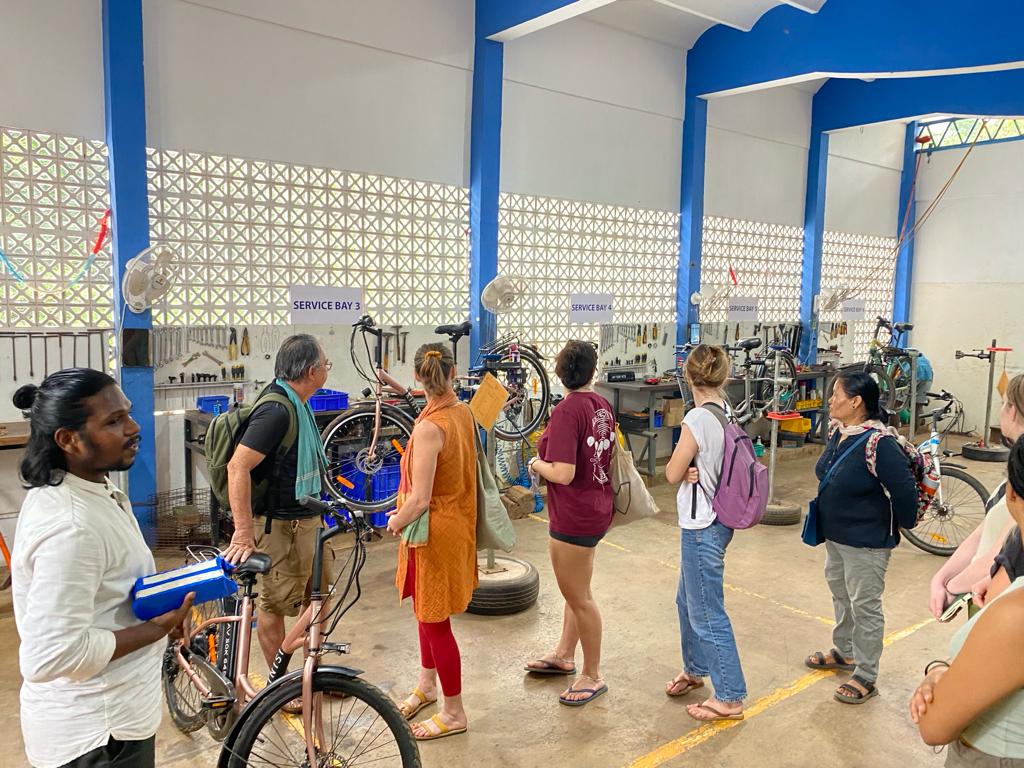
A lovely and quaint white, yellow, and blue building sits amidst the bustle of the Center for Science Research. Here you can find a garage, workshop, and co-working space belonging to Kinisi. This organization works around supplying Aurovillians, their guests, and tourists with electrical cycles in a move to shift the heavy reliance on diesel. Their newest path of expansion has been targeted towards the thousand workers that commute to and from Auroville Not only reducing people’s carbon footprint, the initiative is helping save money as well. The average litter of diesel costs 100 rupees. In contrast with their subscription program for a monthly fee of 1,000 rupees including any repairs, maintenance, and modifications for ease of use, this saves commuters a hefty sum. (When they say, repairs and maintenance, they mean it! On my way around Auroville, my Kinisi bike chain popped off. I parked it, and after getting in contact with them, I went off to complete my errands. When I returned it was fixed and left right where I had left it!)
They estimate that within Auroville, they have a constant 350 subscriptions. All the technical work that goes into the program happens in the workshop out back where they house a Research and Development department, a maintenance department, and a storage space for old batteries. One of the biggest critiques of electronic travel is the problem with pollution and waste generated by batteries. Batteries have a complicated disposal process due to the components and acids in their makeup that can cause dangerous situations if not managed properly. However, Kinisi has put forward an initiative to repurpose these batteries for solar panel energy collection. In our short tour, our guide explained to us how their batteries are made of 20 to 30 cells. The moment a single cell has lived out its lifetime, the battery is unusable. Thus, they collect these in hopes of making use of the rest of the cells or finding a way to repurpose them or dispose of them properly after the fact.
Located upstairs in a building behind their workshop, you’ll find their unique co-working space. With strong broadband Wi-Fi, coffee, meeting spaces, and places to take work calls, this new initiative has started to take off quickly. With the many different types of visitors that enter Auroville, the co-working space is an important tool. Especially because in my limited experience here, wi-fi and a quiet place to work are two things that are rarely found together. Thus, this dynamic and quickly improving organization is one to keep your eye on, whether for finding a place to work or finding a quick and easy way to zoom around the areas of Auroville. But move quick! The e-bikes are in high demand!
When we throw something away, we are effectively denying ownership of it. Most of what we own is purchased, if not gifted, meaning that at some point in time we claimed responsibility over an object for reasons of necessity, convenience, or indulgence. Yet, it is so easy for us to take items that are still in good shape and toss them in the bin, never to be seen again. We could reduce waste and make the world a better place if we valued our possessions for the use we could get out of them rather than chasing the next new, shiny product. If that still doesn’t appeal to you, a lot of money can be saved in the process as well. It is no secret our society has a serious waste issue, but a lack of awareness and education on the topic prevents real change from taking place.
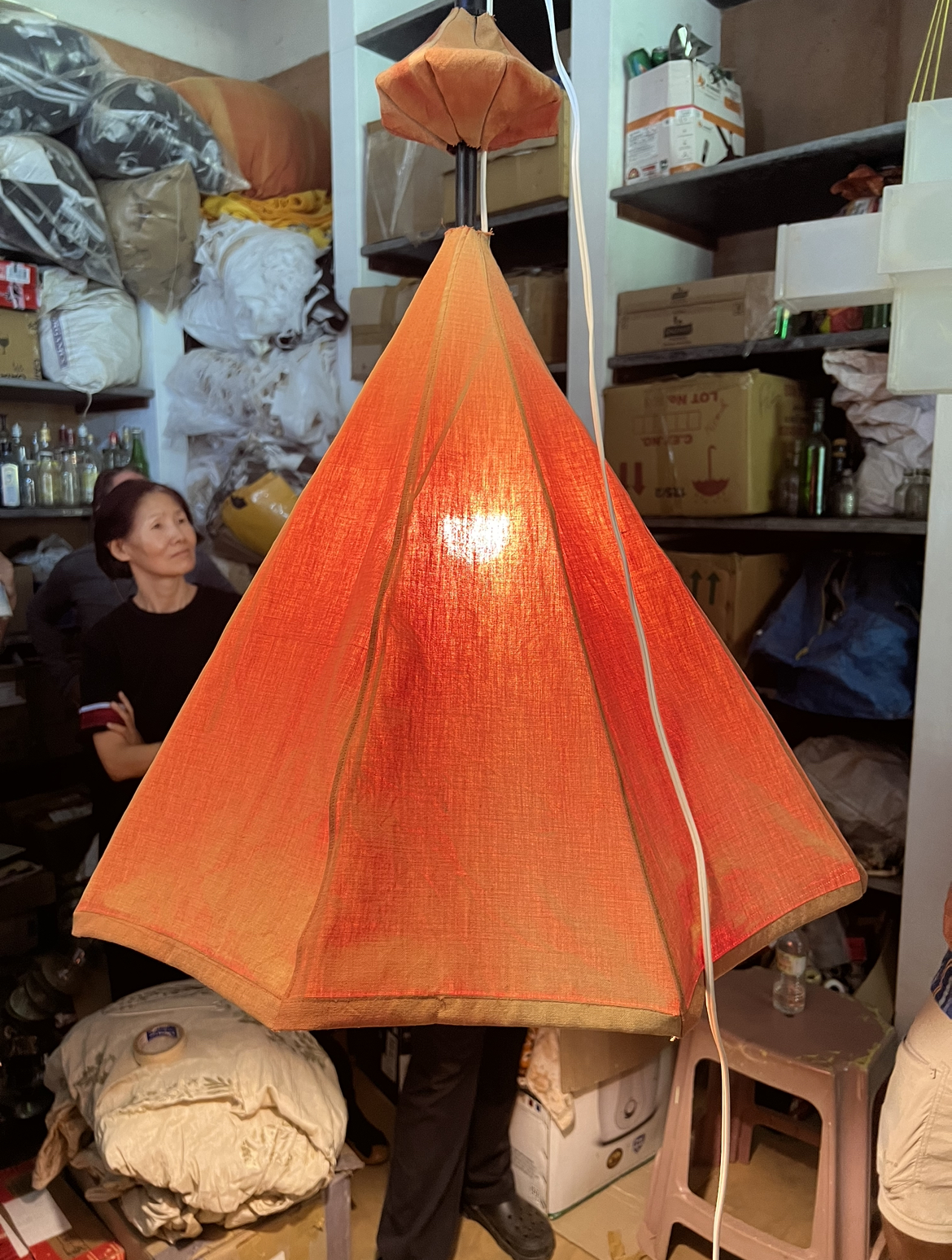
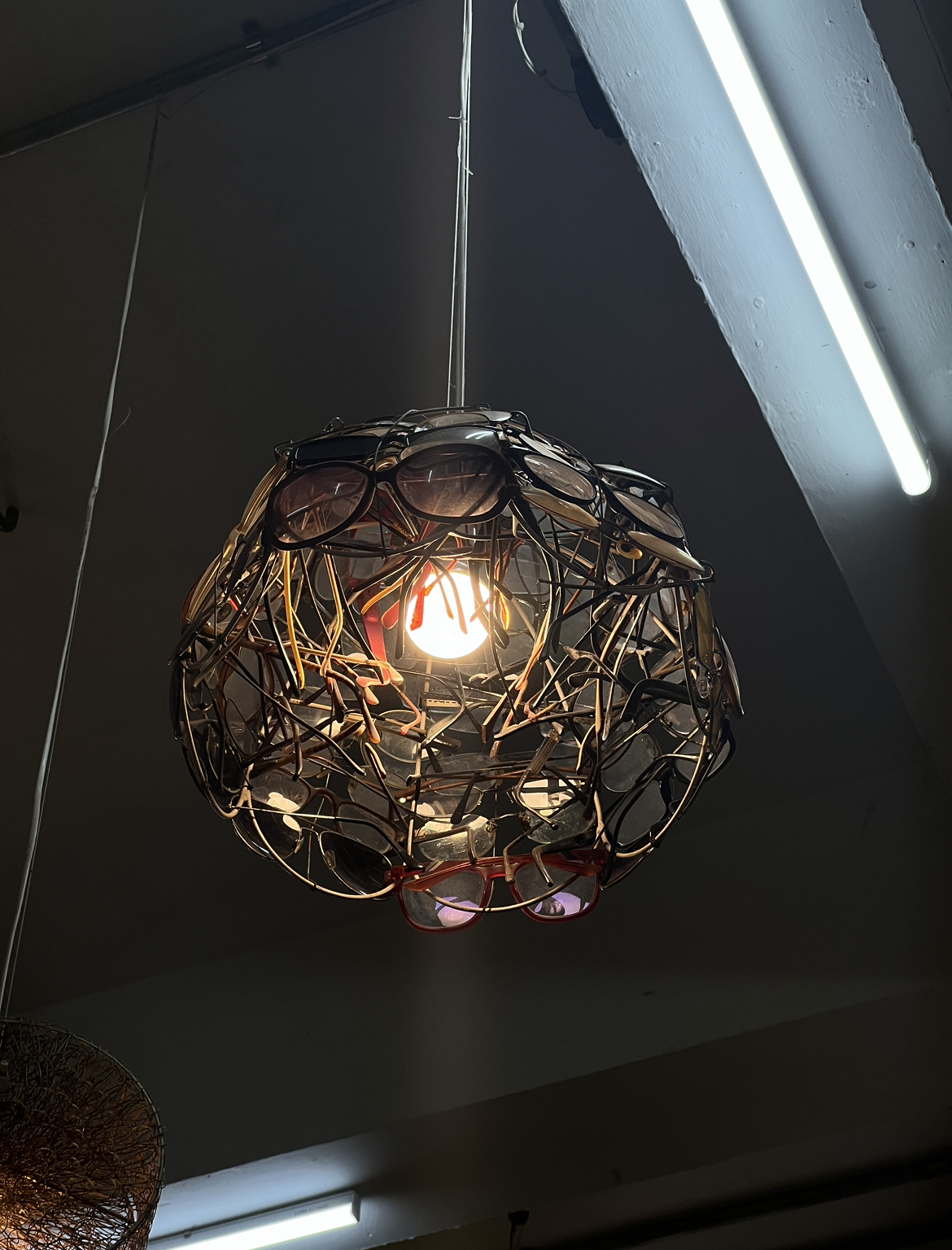
The OK Upcycling studio in Auroville is dedicated to tackling the waste problem at a local level. By reusing discarded materials, they create products and give them a new purpose. Upon entering the warehouse, AUP students were amazed to find artwork, handbags, furniture, and clothing all made from what we usually consider to be garbage. Ok-jeong, a South Korean artist who runs the studio, shared her passion with us during a tour of the studio. Perhaps the most striking aspect of our visit was learning about the team’s expertise in lighting fixtures. After a brief lesson on how lighting can affect our mood and behavior, designer Darren demonstrated his light beam diffuser made entirely out of DVD casings. My peers and I were enlightened, to say the least. His apprentice, Jasper, then showcased his own creations, which included an old orange umbrella repurposed as a lamp with a warm glow. Another ceiling lamp hanging in the studio was made out of sunglasses in the shape of an orb.
Seeing the beauty in trash is a skill that takes practice. The team has a sharp eye for style and practicality, along with an unmatched sense of creativity. They highlight imperfections and flip our perspective of what can be considered valuable.
Sistri Village began in 2013, as an orphanage for mentally and physically challenged children. The Founder Karthik, had difficulties in the beginning getting the children admitted in Indian public schools. The ones who did were often ignored by both teachers and students therefore remained idle for days on end. The teachers lacked the patience or training for special education to give these children and the other children were often afraid of them.
Karthik didn’t like that his children were idle, he said that it created bad energy and aggressive behavior within the child.
Indian culture has a great believe in re-encartnation, a disability is a re-birth of a person cursed by the gods and therefore the family shuns or abandons these children. Some of these children get locked up by their families to hid them from the society.
He sought out vocational training, certificate courses and when they grew in adulthood, he worked with local businesses to get job opportunities for them. He faced many challenges one been local businesses in need of labor, would make up lame excuses to avoid hiring Sistri Village members. He then overcame this barrier by initially placing his students in missionary based institutions and slowly as the community began to see a transformation, they slowly accepted to hire some of his students.
Image Credit: Stella Sagini
However, a majority of his students work and live at Sistri village. He began vegetable gardening as a form of Green Therapy for his members. He believes that nature heals and restores balance to mental retardation. Sistri Village members have continually shown improvement in their mental and physical state. Medical volunteers come over to offer free medical treatment and physiotherapy sessions for the members. Mental and Psychical challenges are very different from Celbral Parlsey, Autism, and Down Syndrome require accurate diagnosis to begin a succeful therapy treatment.
Image Credit: Stella Sagini
Sistri Village members earn a living from their work on the farm, by selling fruits and vegetables. They also rear a lot animals for sustenance use and for sale. Sistri members all have daily chores but work out of their own volition, work is never forced on any member. Keeping busy through work is also a form of therapy that creates a meaningful routine that members can look forward to. Sistri members are contributing to the society instead of a hand out thus significantly increasing self-esteem. The Capacity Building efforts of Sistri Village have enabled its members to make a productive contribution to the society.
Image Credit: Stella Sagini
In the past, they received donations from the government and organisations like Rotary International Club. They have managed to donate desk, chairs and help build part of the new administration block. However, for day to day running of the farm they rely on a mix of proceeds from farm sales and support from the Tamil Nadu government.
Image Credit: Stella Sagini
Living a meaningful life that’s the mission of Sistri village and the stigma of disability has slowly been lifted within the community. Families are now more accepting and engaging with mentally and physically challenged members of their community.
Eternal Divers is based just outside of the Auroville on the Bay of Bengal. The first thing we noticed as we approached the location is the beauty of the house, Eternity. Situated on the beach and surrounded by bush and sand, Eternity features a large, open patio that connects to the home and office of Jonas and Tracy of Eternal Drivers. Zeus, their grand Rottweiler greeted us with kisses and just a little bit of fur and slobber. The dog lovers amongst us were thrilled to meet him but we get situated quickly and open our hearts and ears to listen to “Joni” explain the mission of Eternal Divers and the issues that his team, Tracy and he are passionate about.
When Eternal divers first began, it was just another diving company and they wondered how to set themselves apart and make better use of their skills, talents and location. How to be a sustainable business and spread environmental concern and solutions is paramount for them. Yoni discussed something that caught his attention called “ghost nets” which are extremely concerning. A ghost net is a fishing net that has (most likely) become caught on something which makes it impossible for a fisherman to free it or has escaped the control of the fisherman and can’t be reeled back on to the boat. It is left behind, unattended and unchecked forever as it collects, catches and kills without consideration. In addition to the ghost nets, sewage, overfishing and erosion are all concerns for Joni and Tracy and their team. Joni told us that there is a visible line of sewage and ocean water and to help us understand just how detrimental ghost nets can be, he explained that ghost nets cause about 20, 000 US dollars loss per year. Nearby, a ghost net was discovered that had over 30 sharks caught in it and had been floating for what an estimated three years. Of course, nothing in a ghost net can be salvaged for food. It is just a true waste of resources.
Eternal Divers was enraged at the finding and asked us to consider what a tragedy this is when we reflect on the beauty and majesty of all the sea has to offer us. The pointless loss of life and the pollution caused by humans is unacceptable. Naturally, Eternal Divers found a way to expand the teaching and education of scuba and diving to the fisherman and villagers themselves to help them understand how precious their resources were and how carelessness could hurt their livelihood more than they had ever comprehend before.
We learned from them that what they are most proud of and would really like to continue, improve upon and increase the reach of is the education of the fisherman and villagers. Too many humans take the sea and all she has to offer for granted. What lies below the surface… or more importantly what is being harmed and killed off below the surface is unknown until we dive down and see for ourselves. All the incredible colorful life, both flora and fauna, are unseen, under-appreciated and unprotected. It is only through the education and the collaboration with locals that behavior change can occur. Seeing the deep for oneself may be the only way for many to understand what is at risk.
Within global communications, behavior change is the most challenging of all the goals. Behavior change, as in this instance, little to no money can be gained through the education of the locals. In fact, Eternal Divers may find that time and money are lost in their efforts; however, they feel that what India and the earth may gain is far more important if the sea and its life can be preserved through this tactic. The benefits of behavior change are often long-term rewards that seem less important in the moment. For example, a fisherman may be more concerned with how much money he can earn this week, as opposed to the concept that he may not be able to earn any money in a few years if the fish are either overfished or die off because of pollution.
Eternal Divers needs funding to help support the education of the locals, a strategic creative plan and social media revamping/attention, as well as social media viral campaign. I felt very strongly about joining their team and helping. The ocean and all the life in it and that it gives is incredibly important to me. Choosing my NGO was tough when I had to compare Eternal Divers to Marc’s Café, where I had so many ideas from the start, but I’ve loved hearing all about it from my classmate, Beatrice.
Have you ever wondered what is the difference between an NGO, for-profit business, and social enterprise? NGO’s are non-profit organizations whose aim is to help a community in need. A for-profit business is a company whose goal is to make a profit and accrue capital. A social enterprise is somewhat a combination of the two. Located in Auroville, Eco Femme is a social enterprise that produces and sells re-usable sanitary napkins, also known as menstrual pads, while simultaneously supporting the community of women who are behind the production. More than that, Eco Femme has created development programs, connected to the global consumption of their products, which educate women about menstrual hygiene in rural villages around India.
Around the world, many women choose to use disposable menstruation hygiene methods, as it has been marketed as being the normal, if not only option available. However, with increasing focus placed on the environmental impact of single-use plastic, menstruation hygiene has a place within this dialogue. Disposable sanitary pads and tampons are made of plastic that cannot be recycled, therefore, after the six-eight hour viable life span, these plastic products sit in the landfill for over 800 years before beginning to break down. Clearly the women of the world have been shown a norm that does not benefit anyone besides big industry; the giants who produce all of these single use products. Although pollution is a global issue, India in particular is a country that is highly populated, where many women do not have access to menstrual hygiene. In 2000, in a quest to redesign how women in India engage and manage their periods, Eco Femme was created.
Eco Femme’s re-usable menstrual pads are fabricated from layers of organic cotton, which is sourced in Tamil Nadu, India. They produce four varieties of pads; heavy night, day plus, day regular, and panty liner. The nighttime pad is made with seven layers of cloth, the day plus with six, the day regular with five, and the liner with three. All pads include a finishing cloth layer that is coated with poly urethane and is anti-leak. The pads are made with wings that have a snap, so that they fascine around the underwear and do not move while being worn. Once the pad is soiled, or for means of transporting it, the pad can be discreetly folded and fastened with the snap from the wings to create a small square of fabric.
For the logistics of cleaning the cloth pads, Eco Femme harnessed the power of mother earth. Once the pad is soiled, the wearer is to soak it in cold water and then hang to dry under the sun, which acts as a natural disinfectant. That being said, the pads are also machine washable.
In every step of the supply chain, the cloth pads are produced by women from villages near Bangalore and Auroville, India. The empowerment of women is a pillar of Eco Femme’s mission, and has led them to function as a social enterprise, with two developmental programs; Pad for Pad, and Pad for Sisters. Pad for pad involves international customers of Eco Femme, where for every pad bought, a pad is sponsored for an economically disadvantaged girl in rural India. Up to date, over 10,000 girls have been sponsored. Pad for Sisters is a program that subsidizes pads between 50 and 80 Rupees. On average, Pad for Sisters subsidizes 1,500 pads a month.
According to Eco Femme’s co-founder, Kathy, re-usable cloth menstruation pads have acted as a trojan horse by opening the once taboo dialogue around what menstruation is, and how women can understand it. Eco Femme promotes the message that women and girls should feel empowered by their periods, and embody all that it means to go through the transformative change of the body. Through the work of their development programs, Eco Femme is a model of what a social enterprise can do to benefit a community, while still engaging in a competitive business market. Eco Femme re-usable pads can be purchased in Auroville, throughout India, and on their website directly.
This past week has been filled with meeting incredible individuals who are impassioned by the desire to improve the lives of those around them. Martina Ljungquist is one of these people as she embarked on a journey 26 years ago to empower the local Tamil women by establishing the Naturellement Café.
From the Naturellement’s website, one can see the aims of the restaurant are to (1):
Empower women from disadvantaged back grounds by providing them meaningful work.
Engage in socially responsible and fair trade business practices.
Support sustainable farming by using organic raw-material whenever possible.
Provide natural handmade fine foods of the highest quality to our customers.
Martina’s quest has always been to “bring down into the matter, something higher. The question is, ‘how do you do that?’” This question inevitably led Martina to Auroville where she claims, “the startup of this company created itself and I’m always trying to catch up!” The rise of this social enterprise has allowed its workers to create a livelihood for themselves all while learning an array of skills from cooking to operational management for their restaurant.
It’s evident Naturellement’s success is due to the combination of Martina’s love for her workers and the motivation her love spurs within the ladies to generate a solid work ethic amongst the restaurant staff.
Martina makes it very clear she’s never been well versed in typical “business” operations but she actually began her career as a Kindergarten teacher! She’s an educator at the end of the day; yet, she’s using the café to educate and empower the local women through the lens of business.
(Left: Tanya Elder, Right: Martina Ljungquist)
Through her past jobs, Martina learned how not to be a boss. She’s learned this and has applied to it be an effective manager for the Naturellement café. Her model for success is never benchmarked by maximizing profits. Instead, Martina’s desire for the well-being of her ladies if the focal point of the café.
“When your aim is to have maximum profits, you start making short cuts.” – Martina.
Products for sale at Naturellement Café
A shot of the café’s store
Her dedication to maintaining a sustainable supply chain while setting higher standards of living for her workers has established a more ethical approach to business operations. The company’s revenues are making a positive impact for the 35 ladies that are employed here today.
When “profit maximization” is removed from the worker’s mindset, it cultivates a more personable environment where the ladies are free to unwind and be themselves while working.
Her love for these women is evident as she elaborates on the various ways she strives to provide for these women. Some of her stories are more light-hearted as she illustrates how they all took a break last week to turn on a movie in the office during a work break. Her other stories are more serious as she expresses the difficulties she faced when she’s learned some of her employees have been beaten by their husbands.
According to the Times of India, around 60% of men throughout India admit to wife-beating. (2). While it’s shocking to learn these cruel and archaic practices are still prevalent throughout India, one can only imagine the ethical dilemma it creates between Martina and her ladies.
Martina is in a unique work environment where her business model is centered around the well-being of her employees. Thus, it may seem necessary to intervene as a manger when your employee is physically assaulted because it harms the core of this restaurant’s business structure. However, Martina is a Swedish entrepreneur who may come across as a “westerner” or “foreigner” to her employees’ husbands. What do you do when your good intentions to protect your employees conflicts with cultural norms that you were never born into?
This is a complex issue which Martina has artfully navigated throughout the years with her fellow workers. She mentioned her initial reaction was to ask the ladies if she could speak to their husbands about this issue; however, she learned the women didn’t want this as it would only make the situation worse.
This experience must have taught her how to help where she can by being a listening ear and a support system for these incredible women. Her efforts yield results as we learned none of her current employees are beaten today! Progress here at Naturellement café could be perceived as being “shwiya ba shwiya” or “little by little,” yet the progress made within the lives of the Tamil women that work here is interminable.
Dhawan, Himanshi. “60% of Men Admit to Wife-beating: Poll – Times of India.” The Times of India. Bennett, Coleman & Co., 11 Nov. 2014. Web. 26 Dec. 2016.














 Eternal Divers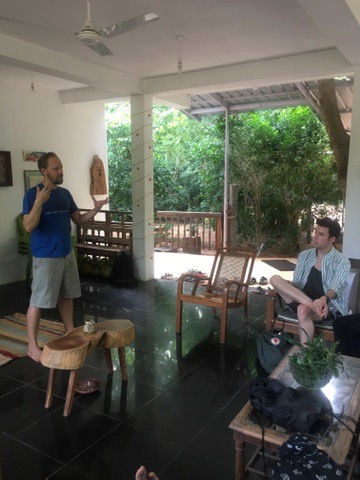


 It’s evident Naturellement’s success is due to the combination of Martina’s love for her workers and the motivation her love spurs within the ladies to generate a solid work ethic amongst the restaurant staff.
 (Left: Tanya Elder, Right: Martina Ljungquist)


 AUP Sustainable Development Practicum in Auroville, India