“I am Full of Hope for the Future”

Sustainable fashion designer Uma Prajapati talks about bloody cotton, high-speed trains and why she never wanted to become a business woman.

DSC00121Uma Prajapati in her apartment in India. Image Credit: Mia Windisch-Graetz

January 7, 2016. 3:22 P.M. Auroville, South India.

“Hold on tight or you won’t survive,” I keep telling myself while sitting on the back of Uma Prajapati’s motorcycle. The rebellious driving style of the fashion designer and founder of Upasana clearly reflects her obstinate approach to her career path. We are on the way to her apartment, where I interview her over a cup of tea. Besides her impressive book collection, design furnishings and a kitchen everyone in their twenties can only dream about, it is her story that fascinates me.

MIA WINDISCH-GRAETZ Tell us about your career progression, where you studied, where you worked, who influenced you.

UMA PRAJAPATI After I finished my studies in economics in my hometown Bodh Gaya, I went to New Delhi. There I did my major in fashion design at the National Institute of Fashion Technology (NIFT) from which I graduated in 1994. Then, I worked two years for the European fashion market in Delhi. For a design project I came to Auroville in 1996. I remember I only had 2,000 rupees in my pocket, less than 30 euros. Actually, I was supposed to be there for two weeks but those weeks turned into years. And well, I ended up creating Upasana in 1997. Wow, it’s now been twenty years since I first got here.

MWG What does sustainable fashion mean to you?

It means to care. Once you start to care about people and the environment, the ways you make decisions will change. This twist in your mind comes naturally. The way you think changes. And your plans change. You really have to plan ahead to dodge around big conglomerates that only want to make profit.

Screen shot 2016-02-21 at 7.53.05 PM

MWG What inspired you to create Upasana? 

UP A couple of things. A little more than ten years ago, thousands of cotton farmers in India committed suicide because of the rising costs of farming brought about by Monsanto. It has driven them to crippling debt. They felt they had no other choice. That really hit me. And change happens when it hits you. It doesn’t come easy but when you get hit and cry helplessly, that is when you find the change.

Since then it became very clear to me that fashion has to be sustainable. I worked in fashion and with cotton at this time. I had to live with that. I felt responsible for what happened. Many people in India pretend to not know what’s really going on. There is a seed mafia and farming communities are not well educated. I knew that everyone would just continue the way they work. Why is the world so unfair? Fashion is the second largest industry in the world. And it’s a really bloody business. When we started to work with cotton farmers in South India, it changed my life. What I could do to help these people? I had the choice to either write nasty articles and blame others, or I could just go ahead and change the way I work and consume. And that’s what I did. At first, it was hard but I realized that positive conversation has a far greater effect than negative conversation for a positive cause. I thought, Okay, I will give you fashion but I will make it my own way. I also wanted to create a space where young professionals from all over the world can come and explore Auroville through textiles and design.

NYE
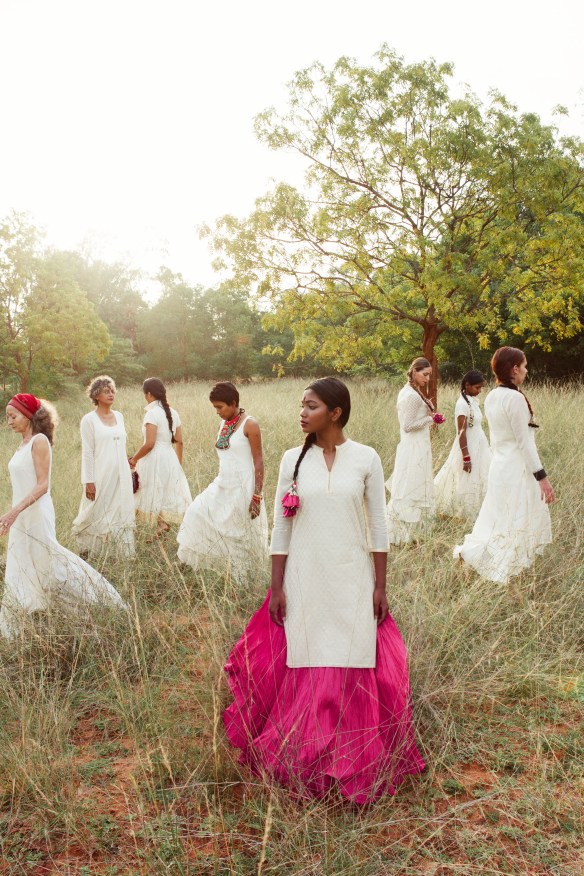
Upasana Spring/Summer 2015 Collection. Image Credit: Upasana

MWG You said ‘a couple of things.’ What else hit you?

UP There was an old lady. I encountered her in a village where I was running a project to empower local weavers in South India. When I was sitting there, next to our car, about to go home again, she suddenly came over to me. She nudged me and asked: ‘Would you support us too?’ I did not expect that and just asked her: ‘What do you want me to do?’ She just wanted to work and earn a few rupees a day. This woman was about sixty and still had a dream. The dream of only earning a few rupees a day.

MWG How is Upasana a sustainable fashion brand?

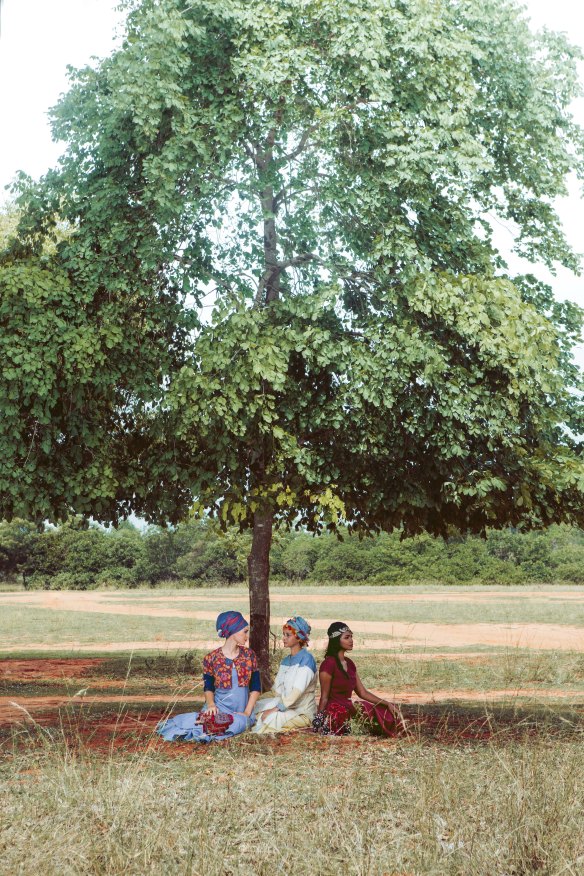
UP We only use cotton from local farmers. Going organic was the biggest change we have ever made. The clothes are made by our seamstresses and tailors at Upasana. And we only use high quality, naturally dyed fabrics that are made in India.

2
Image Credit: Upasana

MWG Sounds very costly… Between ourselves, does it pay off?

UP To be honest, it really broke us financially. We did not realize how badly it would hit our business. I did it all wrong. I jumped in blindly. If I had known how difficult it would all be, I would have done things differently. Instead of taking a leap of faith I might have taken baby steps in the right direction. Despite everything, I am very proud of that move.

MWG Why did you choose fashion as your medium for social change?

UP Because I didn’t know anything else. If I had known music I would have used music. If I were a writer I would’ve used writing…

MWG Every project you have started so far has been very successful. You launched a concept store in Pondicherry and sell your clothes throughout India. You give TED talks, CNN reported about you, and local designers as well as people from all over the world come to work with you. Was starting your own business always a dream of yours?

UP No. I never wanted to start my own business. I wanted to be an artist. Even as a child I was obsessed with painting and writing poetry. It was clear to me that I wanted to become a painter or a writer. I knew myself well enough to know that I wouldn’t be able to make money. Making money didn’t interest me at all. But then I came to Auroville and well, look at me now. I don’t know why, but something in me accepted that I am a business lady now. It took me a long time to digest that.

MWG What keeps you doing all of this?

UP I love the community. Many people appreciate us for what we do, for being consistent and for actually doing what we truly believe in. Bringing a sense of value in the fashion industry is what I am very proud of. I have a good night’s sleep, you know. And I am really grateful for all the support we get.
Priya look 2015 (55)
Image Credit: Upasana

MWG Did other girls you were growing up with have the same opportunities as you had?

UP Wow, that’s a very serious question. I can’t speak for other girls. I can just say that you have to jump at every opportunity life offers you. I just did it. When you keep on asking yourself questions like ‘Is it the right time? Can I? May I? Will I?’ and never risk anything, then you might risk that there might be no more chance. And the opportunity will be gone forever. Sometimes we just have to make decisions and act. I can think of so many girls in my class that had the exact same opportunities as I had but few put them into practice.

MWG Do you think people consciously ignore the work that goes into what they buy?

UP We are living in a high speed train. Everything is so fast. Now you are relaxing and listening to me, but as soon as the interview is over, you will go back into the train. The speed of life is accelerating and the demands to our flexibility are constantly rising. Sometimes we manage to communicate through three technical devices at the same time. Everyone is on Instagram, Facebook, Twitter, WhatsApp. And we are expected to respond within seconds. There is such an overload of information. The question is, How do we process all of that? Our attention is limited. Being quiet enough to make a conscious choice is very hard nowadays.

Screen shot 2016-02-21 at 7.55.04 PM

I personally need to mediate and do yoga for at least thirty minutes a day. It is challenging to make a conscious choice in times like these. When we hear that Africa suffers we say ‘Ah, that’s horrible!’ but a few seconds later, we forget about it because we get a Whatsapp message from a friend or see a funny post on Facebook. News touch our brain cells for just a few seconds and only a moment later, they do not exist any more. Because we have other problems. Because we do not feel responsible and don’t have time. I think that many people simply don’t know that the consumer has the power to make a conscious choice and change the world. So I would not blame anyone.

MWG Do you think that peopleʼs values regarding sustainability have changed in recent years?

UP Yes. Education is definitely changing people’s values more and more. Sustainability has never been such a big topic. It matters to us, our children and next generations. I am full of hope for the future! I am very, very hopeful.
Priya look 2015 (28)Image Credit: Upasana.

MWG Will they ever have the potential to compete with big fast fashion conglomerates such as H&M or Zara?

UP There will always be a market for both, as they address different target groups and meet different individual needs. I am sure that there will be more of a change but I can’t predict to what extent. There will certainly always be a place for people who want to promote an ethical lifestyle. Niche markets will always exist and find people who support them.

MWG In 2012 the second largest fast fashion retailer H&M launched its first conscious collection. Could sustainable fashion finally be going mainstream?

UP Not really. This idea sounds kind of utopian to me. We should see the world in many shades of grey. Nobody is perfect. And diversity is a beautiful thing. Let’s stay optimistic and say that although big companies will always exist, they may change their ways in order to become more successful in the coming years. People start to think differently, even if only at a slow pace.

MWG You are already working with many organizations and designers in India. Are there any other organizations or designers in your mind that you would like to work with? 

UP I am impressed how big the ethical fashion market in Europe is. I would like to work with the European sustainable design market.

MWG Which social development project are you most proud of? 

UP The little Tsunamika doll is still our most successful project. She is a darling. She is more than a living symbol. She is hope. She is love. It is impressive what a huge impact a small doll like her can have on people all over the world. In 2004, I wanted to help people who were affected by the devastation of the tsunami. So I employed women to make female dolls that are made of recycled waste that remained of the devastation. The doll cannot be bought or sold but only gifted. More than six million of them made it to eighty countries across the globe. And the Tsunamika story is told in schools ranging from Spain to Singapore.

Processed with VSCO with a6 preset

The Tsunamika dolls. Image Credit: Mia Windisch-Graetz

MWG  Where do you see Upasana in the next five years? 

UP Upasana has already inspired many students, organizations, designers, brands and people. We will just keep on designing for change. I want to do as many things as possible: Going international without going too crazy and breaking our neck, keep being financially sound and take baby steps to reach our goals. I see Upasana as a shining star.


Towards the end of the interview, the fashion designer suddenly jumped off the couch. Apparently, she was no longer in the mood to answer questions. “Let’s have more tea. We need a break.” After she persuaded me to try some vegan honey nut balls, (Prajapati’s lactose intolerance means one cannot find any diary products in the household), she offered me a ride back to my hostel for the night. Once I arrived, I posted a photo on Instagram and did some work for university while I kept my friends updated on Whatsapp. She was right. I was back. Back on that high-speed train.

By Mia Windisch-Graetz


UNESCO World Radio Day 2016

By Lory Martinez

Before coming to AUP, I worked as the news director of my college radio station. I spent my undergraduate years editing and producing radio stories and eventually interned in public radio. I had developed skills in radio production, which for many of my friends, was a useless dying medium. I was told countless times that people prefer visual media, and that maybe I should crossover to video since Youtube was taking over. While slightly true, I always felt like radio still had value.  

And when my friends back home started listening to Sarah Koeing’s “Serial,” I was excited to see  the resurgence in appreciation for audio production. But you see, appreciation for radio comes and goes with the changing times. Gone are the days where it is the first and only source of information in many households, at least in the United States.

However, in many developing countries, it is precisely this “dying medium” that reigns. And it is a medium with such versatility that it can be installed and broadcast just about anywhere.

Tamil Nadu is home to more community radio stations than any other state in India. And up until now there was no real protocol for radio to be used in times of disaster.

This year, the annual monsoon season caused unprecedented flooding in Chennai, Cuddalore and Pondicherry.

With the help of the government, a team of community radio organizers put together an emergency radio station to broadcast in FM to the Cuddalore district during and after the floods. They created an open helpline for people to send their information to the relief workers via the station.

I worked on a panel discussion on the success of this Emergency Radio Station for UNESCO World Radio Day 2016 featuring community members and government officials, who worked together to save lives during the floods. The theme this year is Radio in times of Emergency and Disaster, highlighting the use of radio as a lifesaving medium of communication during and after natural disasters all over the world.

You’ll find the track below. 

Listen Live all day February 13 on the World Radio Day 2016 site

And for those of you who can’t wait to listen to other amazing stories about radio to be broadcast around the world, check out the Soundcloud.

Special Thanks to the Auroville Radio Team and to the good folks over at the Cuddalore Station who helped make this happen.

‘We just can’t’

Two toilet paper rolls, six dresses, twenty-seven cold showers, no laundry load (hand-wash only), and 1.5 Gigabytes of internet. – All in one month. If you had told me that I would be able to ‘survive‘ this way before I left Paris, I never would have believed you.

Right after our arrival at the Chennai airport we went to a restaurant where we did not only have our first ‘real Indian‘ dinner but were also confronted with a ‘real Indian toilet’ for the first time. As soon as you entered the bathroom, the hygiene standards were not the same as we are used to back in Europe because there was no toilet paper instead you could only find a dirty bucket. Some of us went, while others kept saying ‘I just can’t, and waited until they arrived at the hostel. On the bus, some of us were dying to go to the loo because our bladders were about to explode.

Toilet, bed, toilet, bed. – While everyone was out and about visiting NGOs, I was running back and forth from my room to the toilet. Suddenly, I realized that the toilet paper was all gone, which gave me no other choice but to use my hands and a bucket.  And guess what: it was not too bad.

                                                               ***

When we found out that the washing machine broke down at our hostel, I asked myself: am I going to wear the same dirty clothes all week? Consequently, we had no other option than to hand wash our towels, dresses and underwear.

                                                               ***

During our stay in Auroville, the most problematic issue was that internet was almost non existent. Thus, we had difficulties communicating with our families, friends abroad, students from our group and the NGOS we were working for.

                                                                ***

This month was not about sitting in a classroom and learning about sustainable development from the books. We were actually living, breathing and talking sustainably. The problems we were confronted with lead us to find more sustainable solutions.

A question we could all ask ourselves after this month: how much toilet paper, water and energy did we actually save here?

By asking several students and according to the data I gathered from doing some research I found out that our group saved 38 toilet paper rolls composed of 38,000 sheets of toilet paper, which is equivalent to about 2 miles. Moreover, a standard toilet uses about 3.5 gallons of water per flush, a low-flow toilet uses 1.6 gallons whereas for squatting toilets only 0.21 gallons are needed. With the average person flushing about 8 times a day, (not accounting for the people who had diarrhea) we saved approximately 13 502.16 litres of water in total or the equivalent of a swimming pool.

Considering that none of us used a blow dryer or a washing machine, and as we were mostly cycling around with our bikes, we saved a great amount of renewable energy as well.

What will happen when we get back to Paris? Will we ever able to continue the ‘Aurovillian lifestyle?’ – This month, we made it happen, so the answer isDSC_0186: Yes we can.

by Mia Windisch-Graetz

A Utopia of Networked NGOs: Is it Scalable?

As an intentional community located in Tamil Nadu on the Bay of Bengal, Auroville is a place to experiment and bring forth innovative ideas working towards all aspects of sustainable development. Aside from the beliefs and values held within the Auroville Charter, it is also a microscopic model of how communities can operate collaboratively to achieve many of the sustainable development goals as outlined by the United Nations. The priorities and values of Aurovillians is admirable and desirable in my view as someone from a Western upbringing striving to work in International Development, however is this microscopic laboratory a replicable model throughout India and other communities in the Global South?

After visiting about thirty non-profit organizations in and around Auroville over the span of seven days, we have been exposed to a broad array of inspirational projects that are working towards one or many of the sustainable development goals. They ranged from environmental and agricultural sustainability, to social development issues promoting education, equality and empowerment. In Auroville specifically, many of these organizations and the people involved work as an interdependent public to support their overall common goals of sustainability and development. For example, several organizations that utilize recycled or reusable materials and have a zero-waste policy such as Upcycle Studio, Eco Femme and WELL Paper are supporting the primary efforts of the organization WasteLess whose main objective is to raise awareness and education on harmful habits that threaten the environment. Auroville Village Action Group (AVAG) and WELL Paper are also both working to empower women through skills training and autonomous self help groups, or SHGs. AVAG assists in the selection process for the women who will be trained in creating eco-friendly products for WELL Paper. All of these are Auroville based NGOs, and there are many other instances of visible support and collaboration between the NGOs here.

It is clear that the organizations within Auroville support each other’s visions towards a common goal through various projects. However, even between Aurovillian NGOs and NGOs that we visited in Pondycherry, such interdependency and support is not so apparent. Therefore, can this model of networked NGOs who support and promote one another to succeed in their goals be applied in other areas of India and the Global South? Like anything in the field of development, it would need to be adapted for each particular culture and context. And it is likely that this is already the case in some communities, but perhaps not to the extent and concentration of Auroville…at least not to my knowledge.

While NGOs around India and globally likely do support one another within their realm of development, this high concentration of sustainability and development in almost every aspect of daily life and business that is visible in Auroville seems out of reach given the international complex systems of government, political views, social issues, and the corporate world…just to name a few. This paradox continues to follow me during my time here in Auroville, however I do remain optimistic as a future professional in the field that progress within NGOs and towards a healthy networked NGO model can be made as long as cultural context is first and foremost in assessing the development needs of any community.

-Cristina Castello

Auroville Invites Itself To a Great Challenge!

What does it mean to create a sustainable city? The citizens of Auroville attempt to answer this question with the creation of their innovative city in the South of India. This is a place where all the NGOs are invested in certain aspects of sustainability. From micro finance organizations, transgender politics to social entrenepreneurships, Auroville’s entire ecosystem is based on embracing sustainable lifestyles.

As newcomers, almost half of our team attempts to better understand the idealistic city by posing a lot of questions as student researchers. We are trying to understand if Auroville truly stands for what it aims to be. What will the future of Auroville look like? Is this type of city, free from independent organized governance, the only alternative way of establishing a democractic society?

So far, many of our questions remain unanswered.
However, it is hard to deny the power of knowledge and intelligence that are invested in this city. From creating a co-op grocery store, to creating a botanical garden in the land of red soil, and a library that includes a multitude of languages, Auroville puts great effort into achieving its goal. It is certain that Auroville Foundation aims to provide better life standards for those around the Auroville community.

For me, Auroville is a new born baby in a country with a colonial past. It is hard to assume that a place with social pressure would be attractive for entreprenual spirits and innovation. In fact, it is not only our group that has been trying to find answers to our questions about Auroville, nowadays Aurovillians are challenging themselves with the  same questions as well. “We are trying,” say the guest speakers from Outreach Media, who oversee the media in Auroville. We don’t know if we will succeed or fail, if the methods we are pursuing are going to help us to solve our difficulties or not.This is what almost every researcher who comes to Auroville asks. They are sceptical but we are trying. When we fail, we learn from our mistakes. Because this is an attempt to find better ways to live.”

Even with the best intentions, it is human nature to bring self serving qualities such as ego and greed. Not surprisingly, when a former worker from the surrounding village wanted to take what he has learned from the community and to open a pottery shop in his village, the situation created tension. In cases like this the community does not feel like a winner. It feels like one contributer less. It is the Foundation, what the Aurovillians rely on. Accordingly, individual attemps that are outside of the organization are not beneficial to community. And, since the Foundation has no juridicial power, Aurovillians try to prevent unwanted situations by using social pressure. Maybe I understand it all wrong. Maybe I am confused. But realizing the power of extraordinary know-how brought to the community by the villagers carries an importance. However, limited funds with great facilities that the Foundation provides for its villager workers, seems to be an another local employment challenge nowadays for Aurovillians to overcome.

Elif Ogunc

Waste less by slowing down

At every turn, the exchanges we make amongst ourselves and our objects seem to increase at an unstoppable speed. A short visit to WasteLess and it was immediately evident we are living in a space of accelerated consumption. From mobile phones to t-shirts, when is a product considered old? The trend suggests that a product’s life is becoming shorter with each generation. When in a time our grandparents considered a t-shirt old at 15 years, today’s generation considers it old at six months.

Our desire to replace or upgrade our phones and t-shirts presents a behavior that invites more conscientious awareness, but perhaps accelerated consumption requires a more investigative look; maybe our smart phones and t-shirts are just the tip of the iceberg? Are there other “fast” consuming habits that may not yet be immediately noticeable? With 1.25 billion people living in India, perhaps this country is an incubator for accelerated consumption? Consider the basic need to wash one’s hair – most reading this might purchase a bottle of shampoo that lasts one or two months. In India, the same bottle may be too expensive or the purchaser may need to share the entire bottle among their community depending on the cultural expectations within a particular village. As a result, major brand marketers have responded to this need and created the single-use packet — affordable and readily accessible in the market square the day it is needed. Unfortunately, this approach is not limited to shampoo, but single-use packets are also produced to meet other daily needs such as laundry, body and dish soaps among other daily needed products.

IMG_4362 (3)

But what makes up the composition of these single-use packets? We must peel back the layers in order to take a closer look and see the unseen. Unfortunately, it’s not as simple as a piece of plastic readily available for recycling. According to Ribhu Vohra at WasteLess, the design is composed of a multi-layer foil or laminated packaging film which includes not only aluminum but is also composed of very difficult to process plastics such as Termo and Termoset plastics. And because the metal component causes additional challenges, the single-use packets are not currently being recycled!

And it begs the question, where do all these packets go once the product inside has been used? If they are not being burned in a landfill, they often end up on the side of the road or worse, clogging drains possibly leading to increased cases of malaria and dengue fever.

It is becoming more evident, there is a seriously large problem contained in such a little package. Individuals wish to address their immediate needs, and corporations wish to increase their bottom line. The sale of these packets accelerates revenue while also accelerating the amount of waste in landfills, accelerating disease and pushing aluminum into water systems that may accelerate yet to be identified health problems. Furthermore, by meeting the immediate needs of individuals, brands are enabling the acceleration of thought to happen so swiftly that people no longer think through their purchase activity. By way of convenience, many brands have simplified our thought processes expediting our rate of plastic consumption.

Where do we go from here? The question at hand requires major shifts in not only how we think about the products we consume but also the space in which the life cycle of those products occupy. This is not a problem isolated to India. This is a global challenge — a challenge for us all to slow down, reflect and act consciously about our product consumption habits.

Alexa Newlin


Chocolate Can Help Save the Planet

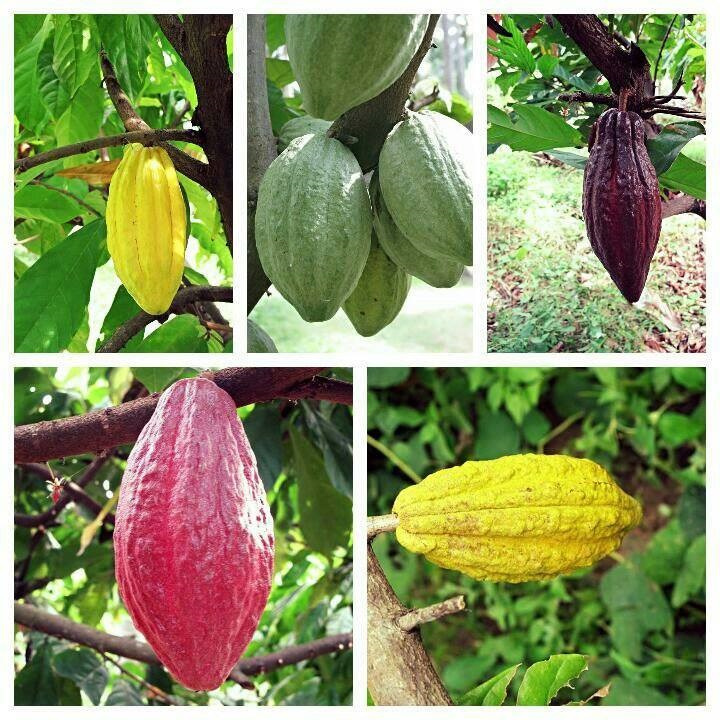
save worldWhile the above phrase is meant to be a joke, it actually is quite true. The cacao tree can aid in the healing of not only Earth but humans well.

Sustainable cacao tree growing is not only environmentally friendly, but assists in providing natural balance for forest vegetation. Also, it can grow simultaneously next to 50+ types of other trees (including the coconut tree which is very important to India considering it is one of the top exporters of coconut in the world) which naturally pollinate the cacao tree and therefore requires minimal, if no, use of chemical fertilizers.

cacao podsI know I stated that chocolate can heal humans and that might be a little farfetched. However, there are certain properties of the cacao bean that are beneficial to humans and can aid in improving our health. Consuming dark chocolate, in small quantities of course, can improve heart health, lower blood pressure, and packs some serious powerful antioxidants.

There is already a huge chocolate industry, so why are environmental and health benefits still being discussed? While that is correct, the industry is not all sunshine and rainbows. There is a darker side to the cacao industry which is not sustainable to human beings.

Luckily, the dark side of chocolate does not seem to be present in India, at least as much as in other parts of the world. India is not necessarily known for its cacao industry although many big chocolate companies, such as Cadbury, Mars, Hershey’s, actually do get their beans from India. However, the farmers in India sell all their beans to these big companies; meaning both the good AND the bad beans are going into the chocolate that you more than likely buy. These big guys aren’t too keen on superior quality.

That is starting to change. There is a movement in the chocolate making industry now to follow what is known as the bean-to-bar process. I must admit that I had no idea what this was until I was introduced to a wonderful social enterprise here in Auroville called Mason & Co Craftsmen of Chocolate.  This process of directly making the chocolate bars you consume straight from the bean itself (and not from pre-made bulk chocolate that is melted down and molded into bars) not only allows for better flavor and purity, but also allows the farmer to harvest a better quality product and be able to receive fair prices for his beans.

mason cacao roastingmason chocolate barMason Bars 3It was not apparent to me at first, but now, after studying this company, I can see how almost anything can be under the umbrella of sustainable development. How working directly with farmers to improve their crops to obtain a fair trade value provides the income needed for the farmer to support his farm and his family. How with improved crops it in turn improves the quality of the cacao beans used to make chocolate. How even deciding to plant cacao trees in the first place helps the Earth’s natural soil components while also aiding the vegetation surrounding it and naturally keeping away pests so that there is no need for artificial pesticides.

Next time you buy some chocolate, research the company before you do and see whether they are on the right track to help heal the planet while of course at the same time providing you with a delicious treat.

I think I’m going to go take a chocolate break now…


*All images courtesy of Mason & Co.

Holistic Approach

Organisationen

A lot of the lectures I have attended here in Auroville frequently mentions the importance of thinking holistically. Essentially it would mean not trying to implement sanctions against a problems as soon as you see it arise but rather research to get to the root level or to see what is actually causing the problems in the first place. Many initiatives in Auroville attempts to think more about all of the aspects the intitiative or project might have an effect on. I think of it like the cyclical events that governs all  events in nature beyond man’s control. To me it makes sense to incorporate this thinking into all ventures we engage in as it would be more viable long-term as I see our current systems of long-term thinking failing all the time, they do not solve the problems they say they will, i.e development goals etc.

Today many areas of development are still too concentrated on to the short-term way of thinking of economics which limits it’s scope to taking into consideration the  long-term perspective. The lectures continually brought up the long-term economic benefits of ones actions as less money would be spent trying to fixe the new problems that aroses from not analyzing in deepth  the root problems.

I am thinking specifically about the Pondicherry Harbor which is supposed to stand for development, but actually caused a lot of environmental damage because it disturbed the natural distribution of sand along the coastline. This sand is what constantly recreates the shoreline, or the beach. The beach is needed to stop the ocean from eroding land mass higher up from   the beach. This also apparently led to more salt water leaking in to underwater aquifers which is used by people in general and in agriculture. This also meant the soil became less fertile due to increased salt levels. The solutions at first were to build sea-walls which solved the problem along one part of the beach but then added to erosion further up the beach thus adding to the problem.

A lot of money was spent trying to mitigate all of these side effects instead of actually seeing the root cause of the problem, which was the harbor itself. Problem however is that even if the root problems is identified it is still not being taken care of because the harbor is needed for “development”. However the cost to solve this problem far exceeds what it would cost to adress the root problem. As a consequence of one act carried out in the name of development thousands of people are loosing their livelihood that was dependant on the beach. To this must be added the innumerable effects it will have  on the agriculture side. My point is that it would be far more economically viable to scrap the ideas of constructing harbors in favor of finding a better solution that does not damage the natural occuring processes that we inevitably depend on.

//Joel Hellström

Linnaeus University

My challenge with saying thank you

The first word that I learned here in Tamil Nadu happened to be “nandri” and since then, I received various reactions from locals when I pronounced this word, which gave me the urge to look deeper into its use. A local Tamil from the village Kuilapalayam taught me how to say “thank you” in his mother tongue. I enjoyed using it until my first evening in Pondicherry, outside of Auroville. As the only tourist in a tiny, modest restaurant where I was having dinner with two local friends, it caught my eye that I was the only one who kept saying “nandri” to the waiter. Later on, as the waiter was posing a plate of dosa on our table, my friend softly tilted his head from left to right. I immediately recognized that gesture: the famous Indian head shake. During the following week, I observed locals doing the Indian head shake in different contexts and realized that it carries more than one meaning. The Indian head shake simply suggests that the person acknowledges the action or word of the other, but it can imply different responses. If someone pours you a drink, doing the Indian head shake would tell the person to stop, as “that is enough” in a certain way. If someone asks permission to go to the bathroom, on the other hand, the same gesture would mean “yes, go ahead”. The same gesture can also mean “thank you” in a given situation like between a customer and a waiter.

Hoping to seem less touristy, I started using the gesture instead of saying “nandri”, but this did not last for a long time either. On my second week here, while I was out having a drink with an Indian friend, he saw me doing the gesture and started laughing at me. I shared my confusion about the ways of thanking people but his only explanation was: “You do not have to thank the waiter; it is his job to do so. You thank God.” His thought first made me question if Indians cared about being polite with each other, but when I gave more thought to it, I remembered quite a contrasting experience that I had in France. Four years ago in Paris, I took the bus and bought a ticket from the driver. As I had to move towards the back of the bus in a hurry to let other people at the station get in too, I forgot to thank the driver. Suddenly, in a very brutal and severe tone, the driver grabbed my arm, looked me in the eyes and said: “On dit merci?” (We say thank you?). Without even thinking about it for a microsecond, I apologized and thanked him. As I was moving forward, all I could hear was my heartbeat: I felt ashamed of what I did not do. Yet, I wondered if the French driver’s behavior was justified.

Being polite requires love and compassion for the other, rather than being civilized. Thanking someone should come from the heart and not the rules of society. Most importantly, being thankful to someone cannot be fully translated by the simple pronunciation of a word. Whereas the Western culture suggests using the “thank you” word like the air that we breathe in, as if it was given, as if it was free, I wonder if the word is not losing its sense. We came from a University in Europe to spend a whole month in the South of India to study communication and sustainable development. While we observe situations with an ethnographic eye, I wonder if every idea that we perceive as “developed” should be reflected on the Eastern culture. Is the Western way always the best way?

Here the use of “thank you” as a cultural, communicational and linguistic aspect is to be seen as an example, in order to expand the same view on how we imagine sustainable development. While studying development, one should always remember to keep a certain balance in his thoughts: the “West”, recognized as the carrier of Reason, technology, and civilization, should also learn from the “East”. Sustainability is about both giving and receiving, investment and impact. Whether it is moral or material investment, social or economic impact, sustainable development is the achievement of a great balance. The idea of Development with a capital D should therefore stand at the midpoint of the “West” and the “East”, in order for both to potentially benefit from it.

-A student from Istanbul.

Decision Day

Today, most of us woke up with a mixture or nerves and excitement.  No longer would we spend the day completely together visiting different organizations-this early morning, we were going to pick which organization we would spend the rest of our time in India working with.

We sat down on the floor of our meeting room- where in the middle of the room Professor Talcott, in addition to the other organizers Sacha and Tanya, had fanned out pieces of paper each containing one of the NGOs we had visited.  There was over twenty-five in all.  We then had to go around putting our names on our top two organizations.

What is interesting about our group is that we are all coming in with different levels of experience and educational backgrounds.  Therefore, as we sat in the room ready to pick one of the amazing organizations to work with, there was some apprehension that went along with the excitement because of the responsibility we were about to partake in, especially among some of us who haven’t had this type of experience before.

At the end of our meeting, most of us were able to pick our first or second choice and it was time for our initial meeting with our NGO to go over their needs and come up with a specific project that we would be able to complete within our alloted time.  I think that this meeting revved most of us up to hurry to get to work and simply do the best we can.

For me personally, one of the most important things to keep in mind is that we are working within a Self-Help Group (SHG) framework.  The key is to listen first, act second in ways that our NGOs can later carry on themselves.  What we are doing is giving our skills to incredibly motivated, passionate and hard-working people who have so many odds against them, but are still able to make a powerful impact.  We are helping them with their vision-not forcefully imposing our own.

A few days back when we were visiting Mohanam Cultural Center, the owner Balu informed us before we entered the building that the door-frames were made low purposefully so that in bowing our heads in order to enter, we would humble our spirits.  I believe that this is one of the most important aspects while we’re with our NGO-to work humbly.

Mimi