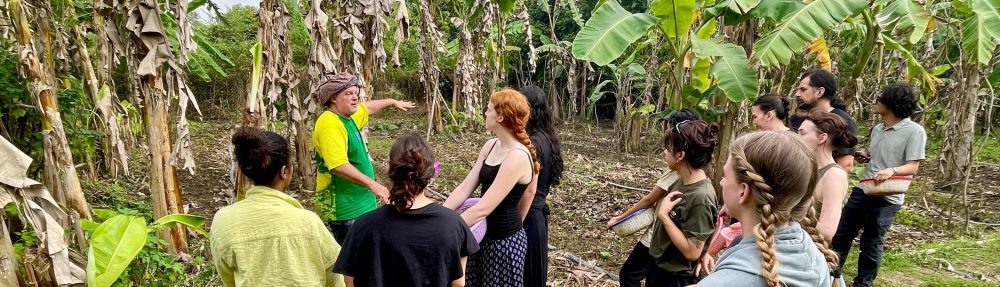
The Auroville Village Action Reach is a long-running program to help develop regional villages within the Auroville spirit of unity and consciousness. It began with four or five villages doing charity work in 1983, but has since grown and developed into its current role as a development organization. The difference is that instead of working for the people, they are now working with the people. In addition, they’ve chosen to focus specifically on women’s empowerment in villages within the 20km radius around Auroville. Through their participatory and ethological approach, they have been making positive changes in women’s lives in the Tamil Nadu region.
A key component of their program is providing access to credit and savings. Government and donors like to fund building projects which result in a tangible, finished product, but there is almost always difficulty in maintaining them afterwards. For example, sanitation and open defecation are affecting the health of Indians. The government will easily find the funds to build toilets at the public school, but they won’t plan for maintenance costs. The teachers don’t want to clean them, and if they make the students do it, the parents will complain. What actually happens is that the teachers lock all the toilet stalls except one for the teachers. It is in examples such as this that AVAG steps in to bridge the gap with the support of the community. They work with the community and involve them in all stages. For example, they will ask the community to contribute to funding whether it’s matching funding, a percentage, or just a contribution of labor, depending on the project. If they need to do administrative applications for government funding, they will teach the women how to do it themselves so they can do it again in the future.
However, development and empowerment isn’t sustainable if it’s only focused on economic empowerment. Especially after having several women in the villages commit suicide, AVAG was motivated to promote well-rounded development by offering emotional, mental, spiritual, and physical health services for their women. Their work is sustainable because they recognize the challenges and needs of the women they work with. For example, they help women question and think critically about taboos in a safe environment. One myth in India is that when a woman is menstruating, they can’t feed the dog or else it will go blind. Instead of telling the woman that it’s wrong, they ask the group, “Is there anyone who has fed their dog while they were menstruating?” Then one woman who doesn’t have any males in her household will share her story that she has been feeding the dog for ten years, and nothing has ever happened. Through sharing experiences in an open and safe environment, the women begin educating themselves and learning how to speak up.
But AVAG’s work is not yet done. After bringing the women into a safe zone and speaking about empowerment, they still have to return to their daily lives in their villages. AVAG’s goal is to prepare them for re-entering that environment by giving them the ability to engage in participative discussion.
These self-help groups are a powerful tool of change in the region surrounding Auroville. Also among AVAG’s initiatives are community building projects such as festivals and sports events, exchange programs, livelihood training, financial support for girls, and educational and leadership training.
Connie Moreland


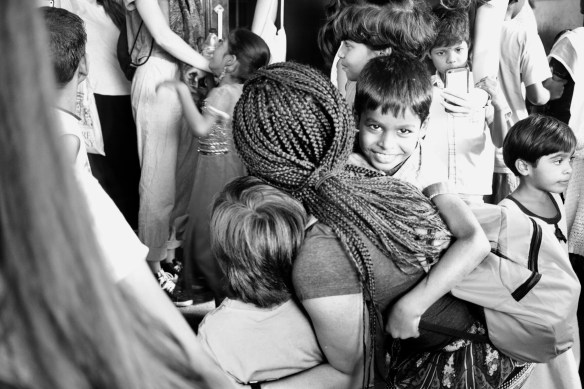


 I have always noticed that people tend to regard the term “Gypsy” as a derogatory one, no matter where in the world and even here in India. The situation is tragic for the gypsy living in Tamil Nadu, especially those suffering from poverty, unemployment, and lack of education and health care. Thus, we are facing a global crisis. On December 17th, AUP students visited the Samugam Foundation and met with Mr. Bruno Savio–the present director of Samugam. The Samugam Foundation is working for the deprived gypsy community along with street children in Pondicherry’s radius. It seeks to provide shelter for approximately 100 disadvantaged children (who are often deemed the “gypsy children”), by providing proper education and extra-curricular activities (such as music, drawing and handicraft works). The latter are assisted and carried on by qualified staff within the organization.







 AUP Sustainable Development Practicum in Auroville, India