Learning about Tibet during our stay at the Pavillion of Tibetan Culture

While staying at the Tibetan Pavillion I had the chance to read a couple of books from the library to learn about this nation and how politics has influenced it’s culture and day-to-day management. Tibet, or as it’s often called ‘the Roof of the World’ because of its Himalayan plateau, remains one of the most politically sensitive and internationally debated regions on the planet. As of this year, the situation now reflects decades of historical struggle, contested sovereignty, cultural resilience and human rights controversies.

A Brief History

Before the middle of the 20th century, Tibet operated as a theocratic polity centered around Lhasa with the Dalai Lama serving as both a spiritual and political leader at its apex. Tibetan society as a whole was structured around Buddhist institutions and distinctive local traditions and its interactions with the neighbouring powers like China and Mongolia had varied over centuries. Modern Chinese claims to sovereignty were very drastically strengthened under the People’s Republic of China (PRC) after its foundation in 1949. 

In 1950-51, the People’s Liberation Army entered eastern Tibet. What came out of this was the Seventeen Point Agreement signed in 1951 between the PRC and representatives of the Tibetan government. The treaty promised to guarantee autonomy and respect for Tibetan culture under Chinese sovereignty. However, many Tibetans have argued that the agreement was out of coercion and not free consent from Tibet. Little by little, tensions over Chinese rule escalated and on March 10, 1959, a widespread uprising broke out in Lhasa. Chinese forces brutally suppressed the rebellion, leading to thousands of deaths. The 14th Dalai Lama fled into exile in India, where he established the Tibetan Government – in – Exile (in Dharamsala), a focal point for global advocacy of Tibetan autonomy and rights. Since then, March 10 has become Tibetan Uprising Day observed by Tibetans and supporters worldwide. 

In 1965 China designated Tibet as the Tibet Autonomous Region (TAR), intending to institutionalise minority rights within the PRC framework. Although the autonomy is largely symbolic and that real authority lies firmly with Communist Party structures. Tighter controls, especially after periods of unrest, have contributed to the ongoing political and cultural tensions. 

As of 2025

Looking at reports by Human Rights Watch, there is documentation of systematic restrictions on daily life and expression in Tibetan areas. Chinese authorities have been arresting ordinary Tibetans for using cellphones, posting content that those same authorities have deemed ‘banned;, or celebrating Buddhist figures and cultural heritage online. Similar to that many Tibetan language websites have been shut down and those who advocated for their functioning have faced detention and harsh sentences. As I mentioned earlier, March remains a particularly sensitive month, authorities prepare heightened security for this period of historical commemorations. Deployments in Lhasa and at monasteries intensify that month to preempt gatherings or protests. 

Religious expression is a cornerstone of Tibetan identity but numerous reports, including European Parliament resolutions, highlight violations of religious freedom, interference in the selection of spiritual leaders and the transnational repression of Tibetans abroad including those in Southeast Asian countries. Cultural advocates argue that measures such as the cancellation of Tibetan language instruction, replaced by Mandarin Chinese in schools and monitoring of religious institutions are part of broader forced assimilation policies. Local restrictions even extend to symbols traditionally important to 

Throughout 2025. Tibet has remained a subject of international concern. EU authorities have expressed serious concern over deteriorating human rights that point to limits on freedom of speech, movement and religious practice. Countries at the UN Human Rights Council including more than two dozen democracies, have raised the situation in Tibet and called for stronger protections. During the various General Assembly debates on the topic (1950, 1959, 1961, 1965), several members spoke passionately, denouncing the Communist government’s aggression against Tibet as a violation of its independence. However, while two of the resolutions referred to the principle of self-determination, all three skirted the issue of Tibet’s status under international law, focusing instead on human rights violations. To this day, the United Nations’ unfinished consideration of the question of Tibet remains one of the global body’s most notable and longstanding acts of omission.

China on the other hand, routinely pushes back, accusing foreign governments like the United States of ‘meddling’ and labeling Tibetan advocacy as separatist or anti-China activity. China maintains that Tibet is securely and peacefully governed within the PRC and rejects external criticism as interference in internal affairs.

Tibetan Exiled Leadership

Even as security tightens in the region, Tibetan activists and the Central Tibetan Administration work internationally to keep the issue visible. In August of 2025, activists protested outside the Chinese Embassy in New Delhi during a high-level visit by China’s foreign minister. In the diaspora, political life remains active. Preparations are underway for the 2025-2026 general elections of the Tibetan Government – in – Exile, signaling continued democratic engagement among Tibetans worldwide. 

Economic and Infrastructural Developments

The Chinese government often highlights economic transformation in Tibet, emphasising infrastructure achievements and development goals. In 2025, Tibet marked the 60th anniversary of TAR, with celebrations focused on modernisation, enhanced transportation networks and energy projects. One of the most ambitious and controversial developments is the Yarlung Zangbo (Brahmaputra) hydropower project which could potentially be the world’s largest hydroelectric series of dams when completed. Construction, including a mammoth dam at Medog/Fengdu began in July of 2025. Proponents argue these projects enhance power supply, economic growth and carbon reduction, critics of the project have highlighted the environmental degradation, displacement and threats to downstream water security for India and Bangladesh. 

Despite systemic pressures, Tibetan culture, especially Buddhism, remains resilient. Pilgrimages, monastic scholarships, arts and diaspora celebrations reinforce identity. Communities that have gathered outside Tibet such as the one in Portland showcase traditional music, dance and food. Inside, religious festivals and ceremonies like the Sakya Monlam draw thousands of devotees, a reminder that sacred traditions endure even under surveillance. 

Looking to the Future 

The core dispute over Tibet remains one of human rights and cultural autonomy versus centralised state control. Many Tibetan activists, exiles and international observers see the situation as one of cultural survival. Meanwhile Beijing keeps stating stability, economic development and territorial integrity. 2025 marked the Dalai Lama’s 90th year. A milestone that has stimulated a global reflection and discussion on his role and succession. Recently the talk of succession has opened potential negotiations about reincarnation and underscores how spiritual leadership remains central to Tibetan identity and political symbolism. 

China day by day increasingly asserts control over the recognition of future Tibetan Buddhist leaders, a policy that directly affects the future of the Dalai Lama’s institution – a point of continued dispute. Global attention to Tibet will likely continue rising. Calls for diplomatic pressure, sanctions and human rights monitoring features prominently in European and US policy discussions. At the same time geopolitical priorities, including China’s economic influence, temper how far governments are willing to challenge Beijing. 

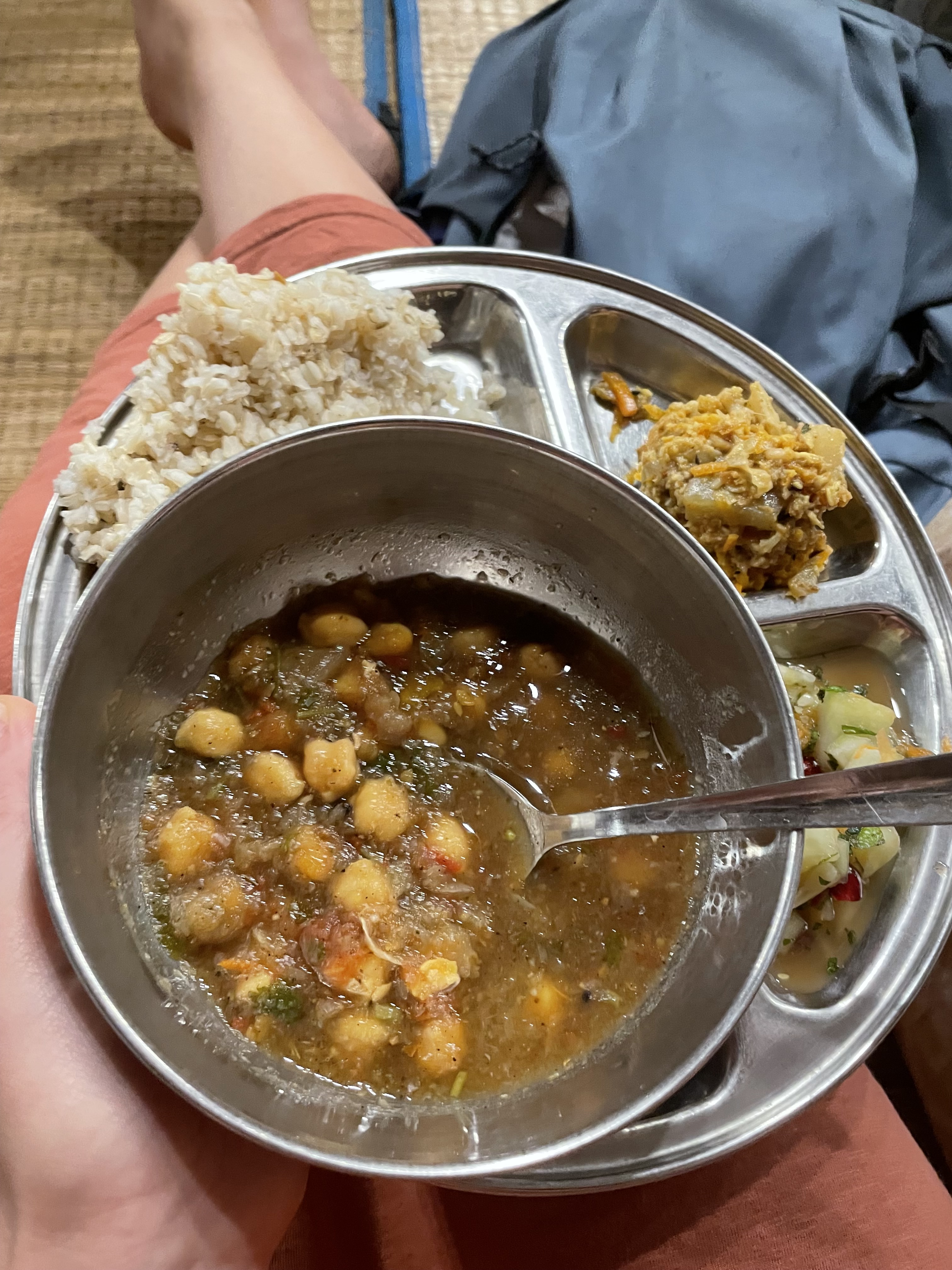
In conclusion, Tibet remains a disputed region with day to day life being impacted and the government being in exile. Staying at the Pavillion I had the opportunity to learn even more about Tibetan food, culture, music, ceremonies and Buddhism as a whole through my daily interactions with Kalsung.

by Sofie Mihaylova

Sristi Village Foundation: Cultivating Community Through Sustainability

Sristi Village Foundation welcomed our class to their facilities with open arms as they allowed us to observe and learn from their alternative approach to autism and other developmental disabilities. In a country (like many others) where these differences are used as a means of societal othering or disregard, Sristi has created a space of inclusivity which fosters harmony and understanding. Here, the residents find their functional place in society and are provided with various forms of care, education, and community, assisting them in achieving self sustainability and autonomy. While Sristi Village residents are provided with practical self sustainable techniques (employment and daily routine) the entire facility also adheres to environmentally sustainable practices. For example, in visiting the facility we were informed of Sristi’s water collection method, collecting rainwater for various uses in the dry season, and their sustainable and harmonious agricultural practices. 

Equipped with competent housing facilities and extensive farming and agricultural space/products this home has proven to be both cutting edge and maintainable. There are many facets to the practical implications of their mission, the newest development being a cafe where only Sristi residents work and sell millet ice cream and hibiscus tea grown in their own backyard. The prospects of Sristi foundation are more than exciting as they are paving the way for inclusive societies everywhere showing those in doubt there is a place, purpose, and utter importance of every human being when given the chance to flourish. 

By Bess Bryan

Visiting an Elementary School in Parangani with Pitchandikulam

By Ava Goldfarb

(Image from the first school we visited)

After spending the majority of my month in Auroville working with Pitchandikulam Forrest alongside a fellow AUP student, we got to go with the organization to visit two schools in villages outside of Auroville that incorporate practices from eco-manuals we got to help Pitchandikulam with. These eco manuals incorporate sustainable practices into daily lessons for elementary school children in Tamil Nadu.  

While working with the Pitchandikulam organization throughout our time in Auroville, we spent a lot of our time learning about ‘Blue-Green Corners’ and their benefits. Pitchandikulams mission is identifying local government schools in the bioregion that are interested in implementing sustainable practices, helping them become modern eco-sustainable schools through integral education. Through providing information and lesson plans these schools are able to sustain organic vegetable gardens and slowly impact the cleanliness, vegetation, and sustainability of their respective villages, helping to create Blue-Green corners. 

(Image of the second school we got to visit)

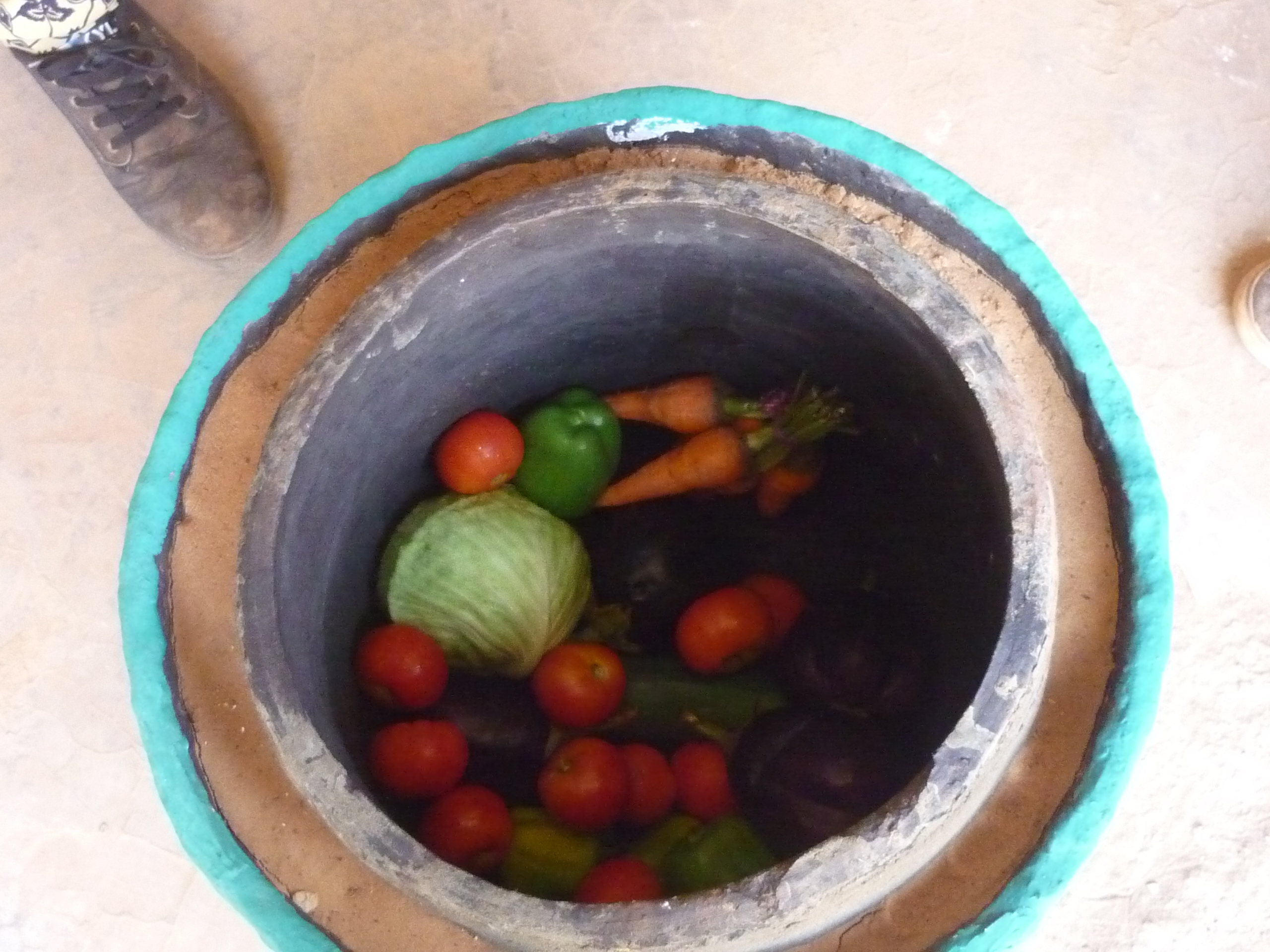
While speaking with a few of the children at the school, one younger student wanted to show us her “green refrigerator” project she created (part of an eco-mannual lesson plan). This was one large clay pot with a smaller pot inside of it surrounded by sand that they wet every 2 days to maintain cool internal temperatures. This form of refrigeration keeps its contents fresh for up to 14 days without the use of electricity. Incorporating this practice not only stores food in an eco-friendly way, but also helps limit the amount of food waste. This is one example of many ways the Pitchandikulam lesson plans teach and promote green learning and practices. The children also learn about composting and other ways to reduce their impact on the environment.

Visual example from online: (https://en.wikipedia.org/wiki/Pot-in-pot_refrigerator)

Through the use of their eco-manuals, the Pitchandikulam Forrest Organization aligns with SDG 4 (Quality Education) by promoting environmental literacy and SDG 15 (Life on Land) by raising awareness about biodiversity conservation.  

Actively engaging in reforestation and protection of existing forests, Pitchandikulam contributes to SDG 15 (Life on Land) by combating deforestation and restoring degraded ecosystems. These efforts also help mitigate climate change, aligning with SDG 13 (Climate Action).  

By demonstrating sustainable practices such as organic farming and rainwater harvesting, Pitchandikulam inspires students and communities to adopt eco-friendly lifestyles. This aligns with SDG 12 (Responsible Consumption and Production).

More about Pitchandikulam here: https://www.pitchandikulamforest.org/

Understanding the Challenges Faced by the LGBTQ+ Community in India: Insights from SCOHD

By Ava Goldfarb

SCHOD, or Sahodaran Community Oriented Health Development Society, is an organization that strives to grow as a support system for the LGBTQ+ community in India. The foundation reflects the capability of collective action in expanding acceptance and understanding within the community. Founded in 1998 in Pondicherry, Tamil Nadu, this organization serves as a vital support system, providing health and educational resources to its members and the broader community. SCOHD works to address challenges faced by the LGBTQ+ and MSM communities, such as social injustice and discrimination, inaccessible healthcare, and legal obstacles. The organization provides a support in health counseling, HIV/AIDS education, mental health support, and legal aid. They contribute to the ongoing achievement of Sustainable Development Goals (SDG 3), and aim to ensure healthy lives and promote well-being for all at all ages.

(Image from SCOHD’s website)

More Than Just a Safe Space

Access to gender-affirming care for transgender individuals in India is unregulated and often very difficult to access. The cost of hormone medication and lack of specialized training among medical professionals often results in inadequate care, leading to misdiagnoses, incorrect dosages, and dangerous side effects. SCOHD plays a vital role in addressing these challenges. The organization has had a substantial impact on the LGBTQ+ community in Pondicherry by implementing effective HIV/AIDS prevention strategies. By providing comprehensive information on HIV/AIDS transmission, prevention, and treatment, along with readily available resources like free protection and lubricants, SCOHD has significantly contributed to reducing the spread of HIV/AIDS within the community.

Historical Impact

IPC 377, a controversial law criminalizing consensual same-sex relationships, had a devastating impact on the LGBTQ+ community in India, leading to widespread discrimination, persecution, and fear. However, in 2018, a landmark Supreme Court decision struck down IPC 377, marking a significant victory for LGBTQ+ rights. SCOHD played a crucial role in this victory, by advocating for the repeal of this discriminatory law and mobilizing public support for this important change.

SCODH’s Goals

SCOHD’s main goal is to build a more just and equitable society where the LGBTQ+ and MSM community can be more respected. By providing support, education, and advocacy, SCOHD helps encourage individuals to live freely in their identity and challenge the instilled stigma that has previously been associated with their sexual orientation and gender identity.

SCOHD has achieved transformative impact through the organization of community events, the provision of specialized healthcare training, and collaborative efforts with media outlets to grow a more inclusive and understanding societal discourse.

(AUP students visiting SCODH)

Societal Challenges

The challenges faced by the LGBTQ+ community in India are deeply rooted in societal structures. Transgender individuals often face family/community rejection, leading to homelessness and isolation. In Indian culture, families often all live together and provide support to one another throughout their lives. So, in a culture that places such a high value on family, rejection from this sense of identity and community has substantial impacts on marginalized individuals.

Limited job opportunities and discrimination further outcast the community. This systemic discrimination reinforces social hierarchies and limits opportunities for these individuals throughout India. The disturbingly high suicide rates within the LGBTQ+ community call attention to the urgent need for support and advocacy. SCOHD plays a crucial role in addressing these challenges by actively advocating for the rights of LGBTQ+ individuals and providing a safe space for them to find support and community. During our visit to SCOHD, we spoke with a staff member who shared heartbreaking stories of individuals facing rejection and discrimination. It was clear that SCOHD is a lifeline for many in the community, offering a sense of belonging and hope for a better future.

More on SCOHD’s website: https://sahodaransociety.wordpress.com/about/

Women’s Empowerment: Care and Capacity Building   

By: Bess Bryan

In visiting W.E.L.L Paper, our class was able to witness the depth of impact a small social enterprise focused on women’s empowerment brings to its community. Within their name, one understands the motivations of this organization. The acronym stands for Women’s Empowerment through Local Livelihood. Each word is embodied throughout their practices. As explained by their head of operations, Danny, women are involved in every step of product production. From concept design, to production and price setting, these women are encouraged to learn, get involved, teach, and share skills with each other. Danny explained that he had been a former employee in the corporate sector, inspiring him to create a version of business operations that is functional, sustainable, and respects the autonomy of the women involved and their local culture. He explained how it was crucial to extract the beneficial aspects of corporate life such as skill training and demonstrations for the women. He maintains the importance of allowing them to set their own prices and have creative freedom. 

W.E.L.L Paper’s approach to production also reduces waste and promotes ecological responsibility by using organic and recycled materials. This commitment to encouraging women’s autonomy and business sense, while also ensuring all products are completely upcycled and sustainable, addresses sustainability goals 10 and 12 (Reduced inequalities and Responsible consumption and production). Though the women individually produce and sell their varied goods (baskets, earrings, small sculptures etc.), I was also informed by staff member Vijaylakshmi that the women often gather together, creating a positive means of social interaction cultivated by women, for women. These entrepreneurs are offered a space to make their own money—regardless of the quantity—which as informed by Vijaylakshmi, they acquire equal—if not the majority—of the benefits through the ability to gather together, share stories, and find relation and confidence in one another. This responds to sustainability goal 5, achieving gender equality empowering all women and girls. She relayed that this is the true impact of W.E.L.L Paper. They improve the livelihoods of village women by fostering a space of care, empowerment, and community, creating networks of support and camaraderie amongst the women, all while equipping them with autonomy-building entrepreneurial skills. 

https://auroville.org/page/wellpaper

The Free Store & the PTDC: Radical Practices of Decommodification 

By Carolyn Franano

“We imagine city as a collective space which belongs to all those who live in it, who have the right to find there the conditions for their political, social, economic and ecological fulfillment at the same time assuming duties of solidarity. This concept of the city is blocked by capitalist dialectic based on difference in public and private good. From these two poles State and Market emerge as the only two subjects. We want to escape this dialectic, not to focus on eventually ‘third subject,’ but on a group of collective subjectivities and the commons that they produce”

 –Pulska Grupa Kommunal Urbanism Social Charter qtd. in Bollier Think Like a Commoner p. 57-58

Globalized Commodification 

The global majority is being strangled by commodification—when I say global, I am not generalizing or exaggerating. In the 1980s, the United States and Britain leveraged the debt of postcolonial states in order to restructure the economies of the global South through neoliberal policy, establishing a global capitalist system in a process known as economic globalization. One of the most troubling and dehumanizing aspects of capitalism is its commodification of basic human needs. Under capitalism, basic human needs are distributed under a false and mythic meritocratic system. Under this system, food, shelter, clean air and water, clothing, and healthcare are not human rights, but rather private goods that one must earn the right to through the accumulation of capital. They are goods to be bought and sold, commodities to be owned, objects of the market to be “earned” through labor. If you are unable to be economically productive enough to pay for these goods, it is your fault. You can’t buy food? Starve. You can’t afford a winter coat? Freeze. Be better. Work harder. You’re lazy. You’re stupid. You’re worthless. You’re worse than the rest of us who have these things and that’s why you don’t. This is the ethos of the capitalist system. This is the story it tells. In this system, humans are reduced to pawns in a market scheme that 99% of people have no power over, and the handle to the door which opens to change it disappears every time you reach. So what has Auroville done? They knocked down the damn door and made it an open window. 

Creating Points of Rupture

Capitalism thrives and maintains itself by propagating the idea that any alternative is impossible. Somehow, many have come to believe that a world in which no human is without their basic needs is impossible—and the idea that no one should ever be deprived of these needs has become radical. However, nothing is ever impossible until we believe it to be. This is why it is so vital to cultivate—even on the smallest community level—practices and ways of organizing social,  political, and economic life that create points of rupture in what is, making possible what could be. Auroville’s Free Store and Pour Tous Distribution Centre (PTDC), projects of anti-capitalist praxis, exemplify this crucial task. 

The Auroville Free Store

The Auroville Free Store was founded over 50 years ago by some of the original Aurovillians—it was one of Auroville’s first social enterprises. It is founded in the belief that basic needs should not—and need not—be entirely commodified. According to one of the Kamala Raman, it is an experiment in “how to sustain yourself in a more conscious way”. The Free Store is a local Auroville shop which provides clothing, toys, books, kitchen items, and other basic goods via a collective approach which aims to ensure that all Aurovillians’ needs are met while nothing is wasted. Aptly named, everything in the store is free. This is an act of decommodification in which goods that are typically bought and sold in the market become collectively owned by the community. The Free Store transforms private property into common property. It is important here to distinguish between public property—which is owned by the public, but organized and distributed by the government—and common property: which is owned, organized, and distributed by the people. Public property, through the public approach of organizing resources, is a top-down approach whereas common property, through the commons approach to organizing resources, is a bottom-up approach. The commons approach provides agency and autonomy to the community and utilizes vital local knowledge.

The Free Store aims to cultivate the joy of giving through what they call “a circle of joy” in which everything is shared and everyone helps to meet each other’s needs. This is a cooperative system of community sustenance. The store’s collective approach to minimizing community members’ inability to meet their wants and needs with their available resources is radical opposition to the globally dominant scarcity-based economics of capitalism. It provides a balancing of “wealth”, aligning beautifully with one of the tenets of Marxist theory from his 1875 Critique of the Gotha Programme: “From each according to his ability, to each according to his need”. The Free Store is founded in such a simple idea, but it plays an incredibly important role in the community. According to Kalsang Dolma, who played a key role in re-establishing the store in the 90s, over half of the Auroville community is dependent on the free store. Everything in the store is incredibly high quality, and it is clear that its smooth functioning comes from the intentional love and care its stewards put into it. In the words of Kalsang, 

“Every community should have a free store. If you learn how to use the Free Store, you start to live in content. It also opens a very different mindset. You become conscious. You have this awareness of, ‘okay, how much am I going to use? Do I need it? It gives you some clarity” 

–Kalsang Dolma

The Pour Tous Distribution Centre

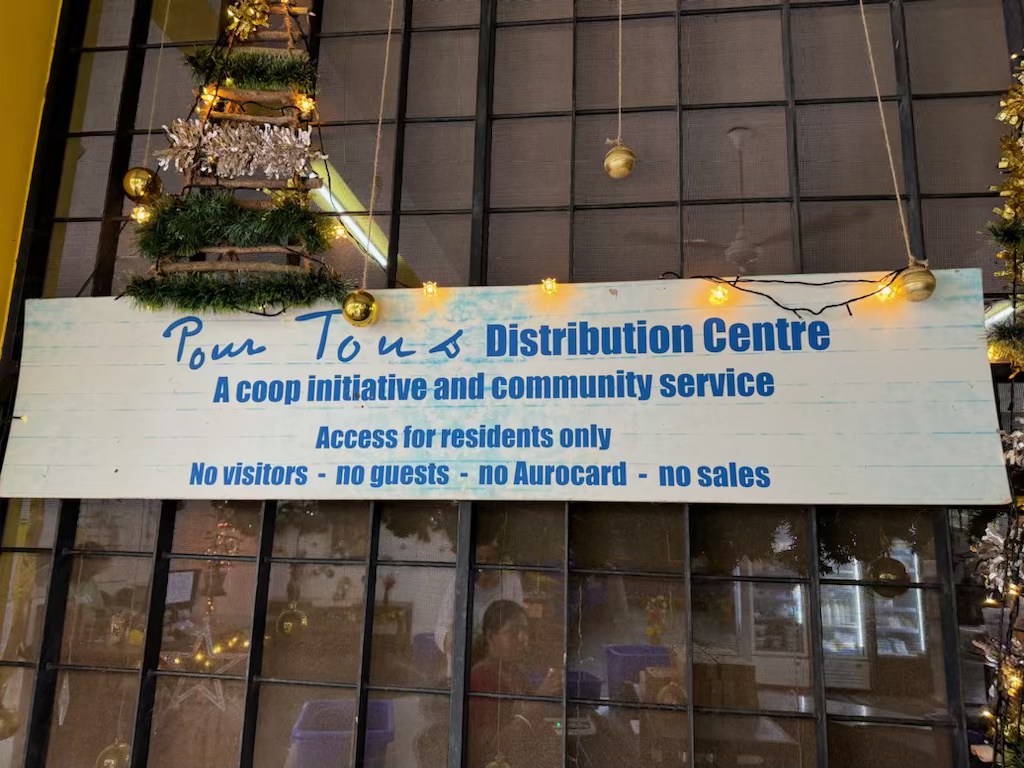
The Pour Tous Distribution Centre (PTDC) was started 17 years ago by members of the community. It is a store that provides food, toiletries, medical supplies, ready-made meals, and other important items. What makes the PTDC unique? None of the items have prices; the store subsists off of monthly contributions. Each voluntary member of the PTDC member is given information on how much they consume from the store each month, and then they decide how much they want to contribute to the sustaining fund. Similarly to the Free Store, the PTDC’s the lack of prices makes consumption more conscious—people only take what they need. Around 72-75% of Aurville families are members. You may think this structure would create a free rider problem, but it does not. In addition, members do not ever try to claim excess contributions that they don’t “spend”—the excess goes to whoever needs it. This system functions smoothly because the PTDC is founded in an ethos of care and community. This transforms members’ relationship to consumption by promoting the practice of thinking in terms of the collective rather than the individual. Even the spatial organization of the store is collective—it is not organized in aisles—it has an open floor plan. In this way, the PTDC becomes a common space for community members to interact and form communal social bonds. 

By refusing to put a price tag on food, clothing, books, kitchen products, and other basic items, the Free Store and the Pour Tous Distribution Centre decommodify these material goods and transform them into a collectively driven means to ensuring the basic needs of all community members are met.

References

Bollier, David. Think Like a Commoner: A Short Introduction to the Life of the Commons. New Society Publishers, 2014.

Marx, Karl. “Critique of the Gotha Programme,” in Karl Marx and Frederick Engels, Collected Works, vol. 24. New York: International Pub., 75-99. 1989.

Sadhana Forest: Sustainable and Compassionate Living for People and the Planet

By Rafaela Marinello

The entryway into Sadhana Forest

For the people living and working at Sadhana Forest, sustainability is not just an ideal—it’s a way of life. From compostable toilets to solar-powered generators, it is woven into nearly every aspect of life in this unique sustainable living community just outside of Auroville.

Today, Sadhana Forest is one of the largest residential participatory projects in the world. However, like many other organizations in Auroville, it began as nothing more than a barren piece of land—the majority of the area’s indigenous Tropical Dry Evergreen Forest (TDEF) was severely damaged by erosion and deforestation. Yet from that desolate land grew Yorit and Aviram Rozin’s vision: to transform a 70-acre plot into a sprawling forest community and ecological project rooted in compassion—towards animals, people, and the planet.

A sign outside the main hut welcomes people in a multitude of languages

Central to Sadhana Forest’s commitment to compassion is its strict devotion to veganism. All of the meals prepared by and for the residents, volunteers, and guests are vegan, meaning that they do not contain any meat, fish, dairy, or other animal-derived foods, such as honey. Yet according to co-founder Aviram, veganism is “not just a diet—it’s an attitude.” At Sadhana Forest, this commitment to veganism extends beyond food to general care for animals, including through a Gaushala—a sanctuary for old or abandoned cows rooted in Hindu spiritual tradition. Rather than use cows for milk or meat, Aviram believes that “animals have the same rights to live [as humans], even if they have nothing to give.” This care for cows reflects Sadhana Forest’s vision of a world without speciesism, in which all beings—humans, plants, and animals—can live and co-exist with equal dignity and respect, regardless of their position within society or the food chain.

Another way in which Sadhana Forest practices compassion is through its implementation of a gift economy—an alternative economic model based on “a form of exchange, …where goods and services are given freely without monetary exchange or expectations of a return or reward” (Sadhana Forest). Sadhana Forest does not generate income and relies wholly on support from donations and volunteers. In addition, residents living in the forest do not pay rent, and visitors are invited to enjoy a free meal and movie screening in the forest every week. All of this goes back to Sadhana Forest’s mission as a space that is open and accessible to all, regardless of their class or social status. According to Aviram, people give naturally when they are treated with kindness—whether through their time, knowledge, or resources. Ultimately, unlike the dominant neoliberal economic model which tends to sow division and inequality, a gift economy has the potential to unite communities and counter inequality—as Niels Thygesen argues, a gift economy “is a social economy and by its ability to include, expand and generate, it builds and is built on community” (Thygesen 500).

Sadhana Forest is a perfect example of the symbiotic relationship between animals, people, and the planet. By protecting the environment, one is not only ensuring the continued survival of our planet, but also promoting greater peace and prosperity for future generations. In a world simultaneously plagued by conflict and climate change, it is more important than ever to recognize the interconnected nature of many of the issues we face, and to recognize climate change as a human, not just an environmental problem. Ultimately, as Sadhana Forest states on their website: “May there be more forests to grow people!”

Learn more about Sadhana Forest by visiting their website.

Works Cited:

Thygesen, Niels. “The Gift Economy and the Development of Sustainability.” Local Economy: The Journal of the Local Economy Policy Unit, vol. 34, no. 6, Sept. 2019, pp. 493–509, https://doi.org/10.1177/0269094219882261.

The Power of Awareness: Rethinking Waste and Plastics in India

by Carolin Melz

Waste management is a global concern, but in India, it takes on unique dimensions. While Auroville appears relatively clean, many rural areas and cities face significant waste challenges. Streets littered with garbage serve as a stark reminder of the issue, something I’ve witnessed firsthand. During a recent presentation by Ribhu Vohra, the founder of Wasteless in Tamil Nadu, we delved into the intricacies of waste management, plastic pollution, and innovative ways to inspire change—particularly among young people.

India has systems in place—green bins, waste collection rules, and allocated budgets—but implementation often falters. In rural areas near Auroville, for instance, workers signed attendance sheets for waste collection but rarely showed up. Superficial clean-ups before official visits often mask deeper, systemic problems.

In urban areas like Pondicherry, waste dumpsites pose health and environmental risks. Fires at these sites during the summer release toxic fumes, endangering local communities.

“Just two generations ago, before the dawn of disposable plastic, people could throw their waste on the ground and it would rot. Not so today, with plastic now clogging up drains and being ingested by livestock.” — Admin, WasteAid

Plastic pollution represents an escalating crisis. Ribhu explained that while recycling offers partial solutions, not all plastics can be easily recycled. For example, PVC and other plastics pose severe challenges, compounded by toxic additives that enhance their properties. These chemicals, often found in soft toys and food packaging, disrupt endocrine systems and harm health.

Microplastics—tiny fragments of plastic—are another pressing concern. Found in cosmetics, clothing, and even food, they’ve infiltrated ecosystems and human bodies. Shockingly, humans consume the equivalent of three credit cards’ worth of microplastics each month. Ribhu shared how fish mistake microplastics for food, illustrating the dangerous cycle that brings waste back to us. Therefore, he created an app that you can download with the ability to scan products and analyze whether or not they contain micro-plastic. Try it! 

Screenshot

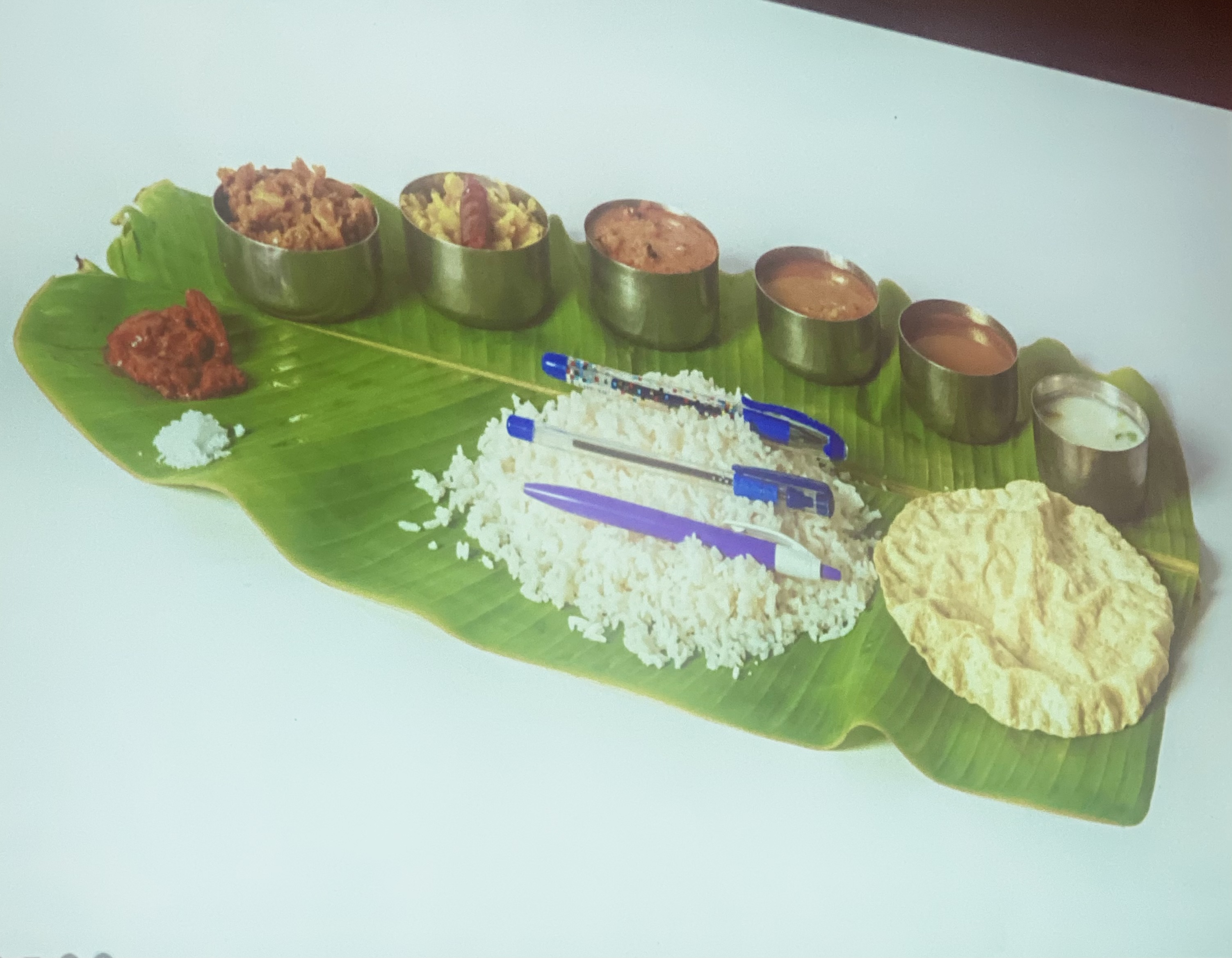
Ribhu believes education is the key to solving the plastic problem. Through Wasteless, he has incorporated lessons about plastic pollution into school curriculums in Tamil Nadu, combining storytelling with impactful visuals, like a plate of three plastic pencils symbolizing our plastic consumption. Here the power of images plays also a crucial role in social impact. By focusing on positive, action-oriented messages, he inspires children to become agents of change.

Hands-on learning and creative activities make the issue relatable. For instance, children who connected everyday items like pens to larger waste issues became curious and eager to spread awareness. Storytelling, emotional connections, and interactive games—such as linking fish to microplastics—helped them understand these problems on a deeper level.

Hope, not fear, is the driving force for change. Wasteless uses “edutainment”—a blend of education and entertainment—to engage young minds. This approach, successful in addressing also other global challenges like HIV/AIDS, holds great promise for tackling waste and plastic pollution in India.

“Education is not the filling of a pail, but the lighting of a fire.” — William Butler Yeats

By inspiring curiosity and empowering youth, we can shift from passive awareness to active stewardship, transforming how we manage waste and plastics for a sustainable future. This makes us think how we ourselves have a potential to foster change through educating the younger generation.

To learn more about Wasteless and their projects follow the link: https://www.wastelessindia.org

Works Cited:

Admin. “Waste and the Sustainable Development Goals.” WasteAid, 12 July 2022, wasteaid.org/waste-and-the-sustainable-development-goals/. 

Strong, Robert. “‘Education Is Not the Filling of a Pail, but the Lighting of a Fire’: It’s an Inspiring Quote, but Did WB Yeats Say It?” The Irish Times, The Irish Times, 15 Oct. 2013, http://www.irishtimes.com/news/education/education-is-not-the-filling-of-a-pail-but-the-lighting-of-a-fire-it-s-an-inspiring-quote-but-did-wb-yeats-say-it-1.1560192. 

Decades of Growth at Revelation Forest is Only the Beginning

By Noelle Dillman

AUP students had a special guest teacher for our nature walk through Revelation Forest- Malia Elder, a passionate forester who also happens to be our professor’s daughter. With Malia’s guidance, we wandered underneath the shaded canopies, learned what makes this forest unique, and marveled at the abundance of life present all around us. 

The ecosystem in Auroville is known as Tropical Dry Evergreen Forest (TDEF), which is a rare type of forest indigenous to South East India. Auroville is home to the largest Tropical Dry Evergreen Forests in the world, and Revelation Forest spans an impressive 84 acres. What is remarkable about the land that is now teeming with life at every turn is that it was once a barren plateau.

The forest’s history is intimately tied to colonization and human intrusion is to blame for the degradation of the original land. Humans encroached upon the natural resources offered by the forest such as the Ebonum tree, a dark-wooded tree that was a source of timber, to the point of almost complete depletion. The consequences of over-extraction have been difficult to remedy. Nevertheless, the trees in the forest stand tall with a renewed vitality today thanks to decades of rehabilitation from dedicated foresters and Aurovillians, reflecting a strong commitment to sustainable development goal number 15, life on land.

According to Malia, Revelation Forest is currently really the “fetus” of a forest- it will take many years for the forest to reach maturity and Aurovillians are still actively working to revive the land. Revelation forester Arun Ambathy explains that bringing back a forest “requires consistent intergenerational land use management”, and that is precisely the undertaking of foresters at this particular site (Ambathy). He explains that TDEF is actually a transitory stage, and the ultimate goal of foresters at Revelation is to nurture the land to eventually reach a Tropical Wet Evergreen Forest, but the landscape will need to be consistently maintained over the course of at least 200 years (Ambathy). 

The work being done at Revelation forest calls upon us to consider two valuable points. First of all, the history of the forest reminds us of the consequences of anthropocentrism. As humans, we have a responsibility to protect the environment; we are not at liberty to exploit its resources and recklessly destroy it as we see fit. We must acknowledge that our home on earth is shared, and we have a duty to respect its other inhabitants. Secondly, Revelation serves as a reminder that when it comes to achieving the sustainable development goals, we are playing the long game. Preserving and restoring our environment will require consistent cultivation and a genuine commitment to building a sustainable future- from all of us.  

References-
Arun Ambathy (Auroville forester), interviewed by Carolyn Franano, January 3rd, 2024.

Solitude Farm & Café: Preserving Nutritional Heritage One ‘Thali’ At a Time

By Naydeline Mejia

Started in 1996 by a group of Aurovilians, one of them being British-born Krishna McKenzie, Solitude Farm & Café is a natural farm in Auroville revitalizing the nutritional heritage of the Tamil Nadu region through revolutionary, anti-colonial agricultural practices.

Solitude’s natural farming modus operandi is inspired by the philosophy of Japanese farmer and philosopher Masanobu Fukuoka. Fukuoka is often celebrated for his contributions to permaculture and natural farming. Unlike organic farming, natural farming—also known as “do-nothing” farming—imitates the ways of nature. Zero fertilizers are added to the soil or given to plants. Instead, natural farming relies on microorganisms and earthworms to naturally decompose organic matter and nourish the soil. And just like in nature, there is no plowing, tilling or weeding done to the farm (Chandel and Jangilwad). 

“When we look at the [industrialized] agricultural practices we have today, we plow the land, we compress the soil, we put chemicals on it—we kill this soil,” says McKenzie. “And as we kill this soil, we destroy ourselves as cultures. We lose our wellbeing. We develop lifestyle diseases. We create climate change.”

Compared to organic farming, natural farming has a lower carbon footprint. It is also extremely inexpensive, relying on the resources provided by the earth (Chandel and Jangilwad). 

Our harvest of butterfly pea flowers and other crops native to Tamil Nadu.

Another benefit of natural farming: It celebrates native foods by relying on a region’s natural biodiversity. 

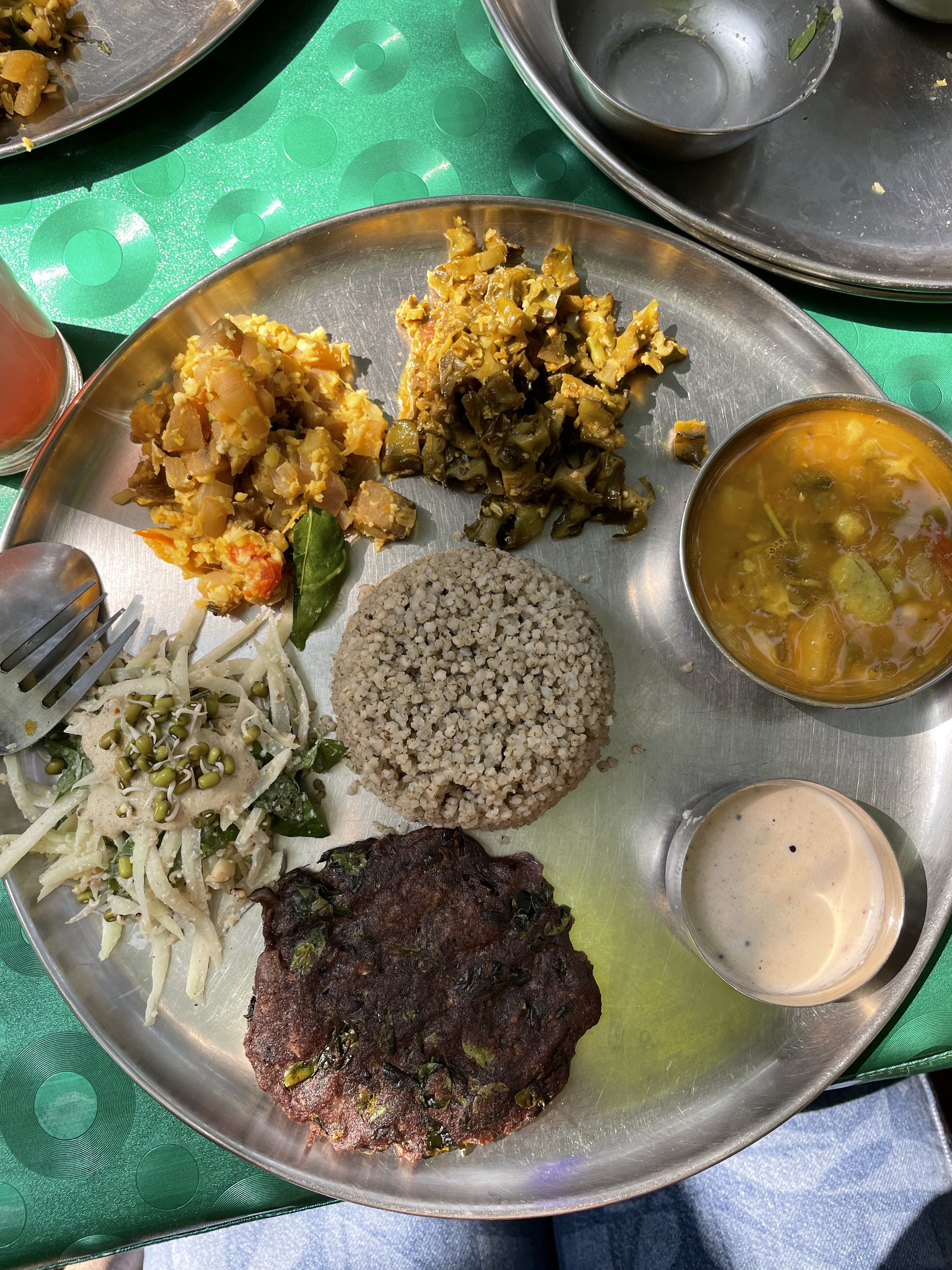
In 2008, with a need for financial durability and inspired by Fukuoka’s vision (McKenzie had the pleasure of meeting his hero in 2002, who championed natural farming on the barren land that were the farm grounds), McKenzie and his team turned to local foods, which grow easily and naturally, for their natural farm. The farm hosts a huge variety of weeds, edible flowers, fruits and grains native to Tamil Nadu like: papaya, guava, breadfruit, mangoes, okra, balloon vine, turkey berry, butterfly pea, hibiscus, millet, and red rice. These crops are then prepared and served at Solitude’s farm-to-plate café, often in their thali or daily plate from that morning’s harvest. 

When speaking about the café, McKenzie refers to it as a blessing for the organization. “It’s been the catalyst for us to understand [the importance of eating local foods],” he says. These crops are often undervalued as a result of the mass commercialization of goods, he continues, causing nutritional homogeneity, and thus the loss of cultural identity and food diversity. 

Preparing a salad from our harvest of native weeds and fruits alongside McKenzie from Solitude Farm.

In addition to preserving nutritional heritage through serving locally-grown meals, Solitude is also on a mission to educate future generations of natural farmers through their weekly farm tours, permaculture workshops and volunteer opportunities. The intensive three-day permaculture workshop introduces participants to permaculture field design and gives them the tools to start their own food forest or nursery. The month-long volunteer programs, meanwhile, allow volunteers to get more intimately involved with the organization—often assisting with educational programs, running farm tours, cooking in the café, and the making of ayurvedic powders. 

Revisiting Fukuoka’s philosophy, farming was more than just growing food, it was a spiritual way of living (Kaundal et al.). At Solitude, they’re not only preserving cultural heritage and a bounty of crops that would otherwise be forgotten, but honoring the gifts of Mother Nature.

Final salad featuring lemon zest and a peanut-dressing.
That day’s ‘thali’ or daily harvest plate.

Learn more about Solitude and their initiatives here: https://solitude.farm/