We’ve been all the way to the moon and back

So often, we do not know where our food, our clothes, or anything else that we buy comes from. We live in a world of consumerism where people are pushed to buy more and more. One of the Dailai Lama quotes perfectly describes the world we currently live in.

“We have bigger houses but smaller families;
more conveniences, but less time;
We have more degrees, but less sense;
more knowledge, but less judgement;
more experts, but more problems;
more medicines, but less healthiness;
We’ve been all the way to the moon and back,
but we have trouble crossing the street to meet
the new neighbour.
We built more computers to hold more
information to produce more copies than ever,
but have less communication;
We have become long on quantity,
but short on quality.
These are times of fast foods
but slow digestion;
Tall man but short character;
Steep profits but shallow relationships.
It’s a time when there is much in the window,
but nothing in the room.”

H.H The XIVth Dalai Lama

            What can we learn from this experience? What can we bring back from Auroville? How can we live better in a city of concrete, apartment buildings, pollution, cars and never-ending consumption?
There are practical ways to start. How can we eat better? How can we buy better? We need to get into the space of ‘unconscious right’ that Ribou spoke about at Wasteless. Let’s make our carbon footprints as small as possible. Let’s support the green markets. Let’s use cloth bags instead of plastic; let’s reduce the amount of plastic we use. Let’s buy in thrift shops and exchange clothing online. Let’s use our clothes washers and especially our driers less often. Let’s use washable pads or diva cups. Let’s buy cosmetics and creams made from natural products and that have not been tested on animals. Let’s read the labels and let’s do the research: let’s ask ourselves a million questions about how we live and what we consume. Our future depends on it.

-Chelsea Carter

Let’s make sure this New Year changes

Let’s make sure this New Year changes for the better and that troubles such as war, terrorism, domestic violence, famine, disease, pollution, corruption, hurricanes, droughts, floods, deteriorating economy, and religious intolerance decrease or come to an end.
“We will open the book. Its pages are blank. We are going to put words on them ourselves. The book is called opportunity and its first chapter is New Year’s Day.”- Edith Lovejoy Pierce.

Chelsea Carter

An Afternoon at Auroville’s Fisherman’s Beach

Participant Observer Report

FullSizeRender

On December 20th my friend Claire Clark and I decided to go to the beach to get some sun and relax in the water. After all, it had been a pretty cold year in Paris. Our experience was fascinating and ever since that day I have been thinking to go back and do my participant observer report on that place. And so, today Sunday January 17th, I find myself at Auroville’s fisherman’s public beach about to begin my observation report.

January 17, 2016 1:40PM – 4:30PM

It is a hot and sunny Sunday afternoon. As soon as I park my moped, I find myself walking through the same beach entrance. I can see a big family coming out of their car heading to the beach just a few steps behind me. The coconut water man I saw only a month ago, is still sitting in the same place probably smoking the same type of cigar telling me exact same thing: Coconut water to refresh! The last time I was there I told him I would get one on my way out, and didn’t. I guess in a way I felt a little guilty so this time I happily accepted the refreshment for only 40 rupees. He smiled back at me with only a few teeth in his mouth. It was in that moment I decided to leave some change for him. He loudly said: Nandri, which means thank you in Tamil.

As I’m walking through the beach with my coconut in my right hand and my sandals on my left hand, I find the beach much less crowded than the last time I was there. I couldn’t help but wonder if Pongal Festival had anything to do with it. I carefully take out my big elephant blue blanket to lay and start observing the interactions in the beach. In less than 5 minutes, I have three teenager boys coming close to me to ask me the most important question of all: Can we take a selfie?

Once again, these teenagers made me feel like a celebrity; but celebrity for what exactly? Two of them ask if they can sit next to me in my blanket and I nod with my head to give them the OK. I now find myself around two boys eagerly wanted to take a picture with me. They start yelling to his friend to take a few, not just one selfie.

After a 5-minute photo-shoot they asked for my name. I replied: My name is Daniela. What about yours? I saw the window of opportunity to ask these boys why a picture with me was so fascinating. It was the second time I found myself to be quite the attraction at the beach and was wondering why. The boys start laughing amongst themselves, until one of them finally tells me that it is to show their friends. Very politely, I smiled and said I would like to lie down. They respectfully left. Here is where my observation truly began:

These three boys were wearing their swimsuits and the smiles in their faces. They must have been around 14 to 16 years old. I couldn’t help but to observe them having probably one of their best afternoons. They enjoyed themselves with just their company and nature, riding the waves and floating in the ocean like time wasn’t passing by. It reminded me of my childhood… and I immediately felt blessed for having a childhood where no technology interrupted my time with nature or distracted me from truly being a kid.

Looking to my left I can see a family approaching towards me. One male, two adult women and four kids; two boys and two little girls. The women were wearing long and colorful saris; one really caught my attention because it was turquoise and blue, two of my favorite colors. The other sari was a beautiful dark pink with yellow embroidery. The adult male asked me if I could take a picture with their children, I quickly replied: absolutely. The little kids are timid and don’t know how to approach me, so I grab the little girl’s right hand and asked her to sit next to me. The three others follow her younger sister. A lot of laughing takes place and more people start getting closer to us to witness who this “celebrity ” is. I must confess these thoughts also came to my mind. As we are sitting smiling to the camera, three older men start getting closer to us and take their phones out to start taking pictures of us. I will not deny that the whole spotlight made me a little uncomfortable after all this attention.

As the family waves goodbye to me, the three teenage boys come back running to my spot to ask me if I’m being disturbed by anyone. I was happily surprised by their concern and replied to them: No, nothing to worry! Nandri.

As they walked away, one adult male I had previously seen while parking my moped started walking towards me. I was a little hesitant I would have to once again take pictures with strangers, however I was happily surprised by our conversation.

– “Hey” he said…

“I hope you don’t take this whole attention in a bad way, all they really want is a picture with a white person. You know, skin color matters here, and you are white and nice. We want to welcome you to our country”.

(I must confess my heart dropped for a second when I heard how skin color is still such an important issue nowadays)

It is not a problem at all, I replied with a smile.

If you would like to get into the water, my family and I would be happy to watch over your things, he said.

Oh thank you Sir, I replied. Not necessary. I’m planning on staying for just a bit longer to observe people’s interaction with their family and friends.

Do you like the beach? He asked.

I do. Thank you sir for offering help to watch over my stuff. Very nice of you. Enjoy your time with your family, I replied.

Not a problem dear, we will be here if you need us, he replied and headed back to his family.

I laid for another hour or so; most of the time pretending to be asleep with my sunglasses on, that way photo-shoots requests would not happen. I was fascinated by the fact that all the teenager boys at that beach didn’t have any cigarettes, alcohol or cellphones with them. They were simply enjoying life. Laughing, running, swimming and playing with each other.

As I started collecting my bags, one couple came to me asking for one last picture. I accepted with a smile. I couldn’t help but wonder what the older man had mentioned to me about skin color and kindness just one hour ago. As a walked out of the beach, I had a lot of thoughts in my mind… I saw the friendly coconut waterman once again smoking his cigar and thought, what a better way to end my day with another refreshing coconut. This time, the coconut was a treat from the toothless old man.

*Thoughts:

Although the fisherman’s beach is probably not the most beautiful and private beach in Auroville, I strategically chose it for one reason. In this beach there are no tourists. There are no kayaks, no floaties, no paddle boards and no water bicycles. In this beach you get to see the real India. Men are the lords of the beach. They are barely any women present, and the few women that are there, are covered from head to toe and always accompanied by their families.

It is because of this reason I found the interaction to be incredibly interesting with the people I met today. Today I became the beach’s attraction because of my skin color and because of my gender. Today, I was a celebrity for about 2 hours and I absolutely hated it. Don’t get me wrong, it felt incredible to be able to get smiles and even some laughs from the people I met today, but not because of how I look. At the beginning we might find it cute and adorable, but the main issue still remains there… Why should skin color and gender be so important that you go from being nobody to suddenly becoming a big sensation for not apparent reason? At the end we are all the same: Male, Female, Black, White, Indian, or Hispanic.

The words the older man shared with me today will stay with me forever. Always reminding myself to be kind to others but most importantly, to prove him wrong. Skin color does not matter, at least not to me. If it doesn’t matter to me, why should it matter to them? Definitely something to reflect on…

– Daniela Moreno
Sari’s and Sandals: A “need” for Development

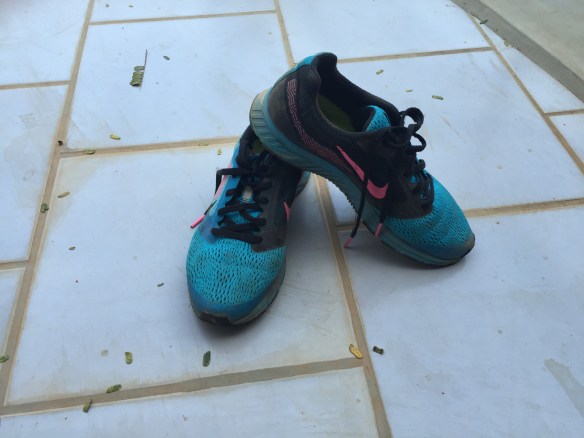
Sunday January 3rd, 2016 was an unforgettable day, like most days throughout this experience, but on this particular Sunday we weren’t students, we had the opportunity to be true tourist. This was our second excursion outside of Auroville and it was not a trip to be missed, plus for lunch we were given the most amazingly flavourful egg salad sandwich which felt like a reward after the climb. This time around we found ourselves at Gingee Fort, collectively the unspoken goal was to make it to the top of the mountain to capture a bunch of photos which could later be used as Facebook profiles, Instagram post, and a host of other social media contributions. Commencing our climb it was immediately apparent to the group the climb would not be as easy as previously discussed. There was minimal shade and the angle of the rocks and steps were positioned at incredibly steep angle that it appeared unnatural for a climb, but as I looked ahead of me in the direction of the group already attempting the climb, I blurted out “if they can make he climb in sari’s and sandals we can do it in sneakers and sweats”, and I was right. The entire group successfully made the climb. Making the climb down the mountain made me more aware that our group was the only group equipped with sneakers or climbing shoes. Everyone else wore sandals and some were even barefoot. This was truly amazing. This awareness triggered a connection to our greater presence here in India, that of development. Taking a glimpse down at my colourful blue and pink Nike’s, you could assume that I was well prepared for the climb. Nike’s are advertised to make you run faster, go further, climb higher, and transform you into a athletic master, but my masterful shoes failed me, I tripped during my descent. The rubber sole that served the purpose of gripping to the surface did not work and I landed on my bum. The Nike’s were not as masterful, as portrayed and widely accepted to be, but the sandals the ladies in front of us wore did not fail them. IMG_4336.JPG

For me this scenario forces us to evaluate the measurements of development. Are we using the Nike Standard, that advertises it’s shiny more equipped and superior characteristics, or by that of the proven capable sandals that are not so shiny but capable and equipped to make the climb. As we near the end of the trip I believe our presence here is to critically critique the phenomena that emerged in the 1960’s as sustainable development. How does development take into account culture, religion, and society? Is our presence problematic or are we successful in our goals? And how do we decide what success is? There are many questions and at times very few answers. Within in this current moment I am not sure how to receive the idea of development. My current state is evaluating those who are initiating the  development and those who are being “developed”, who’s need is it to develop? IMG_4325.JPG

Azalea Capers

While we complain…

People are picking through the trash for something to eat, their houses are periodically flooded, their children run around naked instead of being able to go to school, hygiene and health are unattainable, and yet they still smile. The true question here is not what we middle- class Westerners can teach these people, but what can we learn from them? While we complain about our meal not coming fast enough at a restaurant, a woman is unable to feed her children that night. The waiter should come ask us; would you like a side order of trash? While we complain about having a cold, there is a man outside lying on the hard ground with a fever. While we complain about not having access to a washing machine, a gypsy family will be wearing the same dirty clothes they have been wearing all year.While we complain about cold showers,the gypsy people have nothing but a hose spewing untreated water. While we complain about our hostel,there are people nearby living in a hut with 2 rooms for 10 people. While we complain about the Internet service, children around us are taught only how to beg in the street for a piece of bread. Will we ever complain again so much, now that we have seen the life of true want first-hand? Will I want to buy the next pretty, cheap dress, now that I know that farmers and factory workers are dying to produce it? We have not been greateful enough for what we have–instead we have been complaining for what we don’t. We cannot globally go backwards to a simpler life where we consume only what we need, but we can retrain our technology to help more people. We need to make it a technology goal to stop damaging the earth with all our trash.

Even if it’s a drop in the bucket, Auroville is trying to find solutions. The people of Auroville are creating NGOs for sustainable Fashion by working with farmers who cultivate organic cotton. Auroville is creating washable pads because plastic takes 800 years to disintegrate. Auroville is creating bags and art out of plastic. Auroville is creating alternative medicine and dental health care and alternative educations.
The people of Auroville are trying to create other ways of eating,consuming and living. Global awareness is the next step.


Chelsea Carter

Interview!

Drawing the Kolam is an old South Indian tradition, which hides “thousands of secrets” as expressed by Anandou. The Kolam is the symbolic drawing that women traditionally do in front of their homes every morning before sunrise. The preparations and practice will welcome the Gods into the home and bless the family. The happiness linked to the creation of the Kolam is evident as I, after my meeting with Mr Anandou, have been out in the villages multiple mornings to meet with and talk to the women. “I feel so happy”; “It is the women’s blessing from the Gods to take care of their families and bless the course of the day by creating a beautiful Kolam.” It touched me when the “Flowerlady” expressed her duties as a woman as being a blessing. In that light, I think she is right; It is a blessing to be able to take care of your family and make sure that they are happy and have the support they need.

Anandou made me feel like I knew everything about the Kolam, and yet there is an endless amount of knowledge to gain about the topic. Hopefully this interview can give you some insight into one of the local practices. By sharing and learning about the traditional practices we are all part in Balu’s dream of building a bridge between the villages and the people in and out of Auroville. A dream that I think is of great importance – we must learn about our history to be able to develop into a sustainable future.

IP Interview Anandou

Elin Pettersson

Where am I ?

On a sticky, humid, and hot Saturday afternoon the group sits in a circle blankly staring at one another, some contemplating NGO choices and others contemplating life choices. The suffocating silence is broken by Professor Talcott addressing us with a question, “What brought you to India over the middle of your winter break sweaty, hot, and tired?” A literal answer to his question would be to study sustainable development, but then you are confronted with defining sustainable development, and automatically his question is no longer a simple announcement but a reflective exercise over the past 11 days into sustainability, development, and Auroville; a vessel for these two concepts to blossom. For many Aurovillans Auroville has been a canvas, a space to create, experiment, fail, succeed, and repeat. With each visit to the different units you find it’s not a community of discovery but for discovery, an attempt at an alternative lifestyle.IMG_4041.JPG

On our first official day in Auroville we were introduced to Deepti, an Aurovillan citizen who has been a living part of the experience for 40 years, she provided insight into the vision of Auroville and presented us with this idea that everything done in Auroville or even outside of Auroville has to be done with consciousness and there will always be this ‘pressure of consciousness.’ This idea remained with me over the next two days and I became a bit obsessed, obsessed with how conscientious individuals have come together to intentionally create a community, obsessed with the consistent reflection and projection that must be utilized to ensure its existence, and obsessed with trying to figure where exactly had I landed. I then was plauged with the idea that the acknowledgement of consciousness is a painful state, you must steadily account for or monitor your actions because you understand that you yourself contribute to the ills of the earth. But the more Aurovillans we met the less I felt there were traces of a sadness but instead awareness. Aware that my actions affect others, aware that we must coexist, and aware that a conscious mind is an enlightened mind not saddened one, but within this enlightened state there is a greater responsibility.  IMG_3864.JPG

I cannot say my obsession has subsided just simply halted while I try to process the immense amount of information presented to us. My desire is to continue to understand how enlightened conscious minds can aid in a sustainable future. What Auroville has presented to us within the past 11 days is that sustainability and development are complex issues that emerged within the confines of conditioned social structures and how  we continue to develop will be determined by how we consciously address these broader issues that prevent many from beginning to imagine an alternative way of life.

Azalea Capers

Auroville Invites Itself To a Great Challenge!

What does it mean to create a sustainable city? The citizens of Auroville attempt to answer this question with the creation of their innovative city in the South of India. This is a place where all the NGOs are invested in certain aspects of sustainability. From micro finance organizations, transgender politics to social entrenepreneurships, Auroville’s entire ecosystem is based on embracing sustainable lifestyles.

As newcomers, almost half of our team attempts to better understand the idealistic city by posing a lot of questions as student researchers. We are trying to understand if Auroville truly stands for what it aims to be. What will the future of Auroville look like? Is this type of city, free from independent organized governance, the only alternative way of establishing a democractic society?

So far, many of our questions remain unanswered.
However, it is hard to deny the power of knowledge and intelligence that are invested in this city. From creating a co-op grocery store, to creating a botanical garden in the land of red soil, and a library that includes a multitude of languages, Auroville puts great effort into achieving its goal. It is certain that Auroville Foundation aims to provide better life standards for those around the Auroville community.

For me, Auroville is a new born baby in a country with a colonial past. It is hard to assume that a place with social pressure would be attractive for entreprenual spirits and innovation. In fact, it is not only our group that has been trying to find answers to our questions about Auroville, nowadays Aurovillians are challenging themselves with the  same questions as well. “We are trying,” say the guest speakers from Outreach Media, who oversee the media in Auroville. We don’t know if we will succeed or fail, if the methods we are pursuing are going to help us to solve our difficulties or not.This is what almost every researcher who comes to Auroville asks. They are sceptical but we are trying. When we fail, we learn from our mistakes. Because this is an attempt to find better ways to live.”

Even with the best intentions, it is human nature to bring self serving qualities such as ego and greed. Not surprisingly, when a former worker from the surrounding village wanted to take what he has learned from the community and to open a pottery shop in his village, the situation created tension. In cases like this the community does not feel like a winner. It feels like one contributer less. It is the Foundation, what the Aurovillians rely on. Accordingly, individual attemps that are outside of the organization are not beneficial to community. And, since the Foundation has no juridicial power, Aurovillians try to prevent unwanted situations by using social pressure. Maybe I understand it all wrong. Maybe I am confused. But realizing the power of extraordinary know-how brought to the community by the villagers carries an importance. However, limited funds with great facilities that the Foundation provides for its villager workers, seems to be an another local employment challenge nowadays for Aurovillians to overcome.

Elif Ogunc

Waste less by slowing down

At every turn, the exchanges we make amongst ourselves and our objects seem to increase at an unstoppable speed. A short visit to WasteLess and it was immediately evident we are living in a space of accelerated consumption. From mobile phones to t-shirts, when is a product considered old? The trend suggests that a product’s life is becoming shorter with each generation. When in a time our grandparents considered a t-shirt old at 15 years, today’s generation considers it old at six months.

Our desire to replace or upgrade our phones and t-shirts presents a behavior that invites more conscientious awareness, but perhaps accelerated consumption requires a more investigative look; maybe our smart phones and t-shirts are just the tip of the iceberg? Are there other “fast” consuming habits that may not yet be immediately noticeable? With 1.25 billion people living in India, perhaps this country is an incubator for accelerated consumption? Consider the basic need to wash one’s hair – most reading this might purchase a bottle of shampoo that lasts one or two months. In India, the same bottle may be too expensive or the purchaser may need to share the entire bottle among their community depending on the cultural expectations within a particular village. As a result, major brand marketers have responded to this need and created the single-use packet — affordable and readily accessible in the market square the day it is needed. Unfortunately, this approach is not limited to shampoo, but single-use packets are also produced to meet other daily needs such as laundry, body and dish soaps among other daily needed products.

IMG_4362 (3)

But what makes up the composition of these single-use packets? We must peel back the layers in order to take a closer look and see the unseen. Unfortunately, it’s not as simple as a piece of plastic readily available for recycling. According to Ribhu Vohra at WasteLess, the design is composed of a multi-layer foil or laminated packaging film which includes not only aluminum but is also composed of very difficult to process plastics such as Termo and Termoset plastics. And because the metal component causes additional challenges, the single-use packets are not currently being recycled!

And it begs the question, where do all these packets go once the product inside has been used? If they are not being burned in a landfill, they often end up on the side of the road or worse, clogging drains possibly leading to increased cases of malaria and dengue fever.

It is becoming more evident, there is a seriously large problem contained in such a little package. Individuals wish to address their immediate needs, and corporations wish to increase their bottom line. The sale of these packets accelerates revenue while also accelerating the amount of waste in landfills, accelerating disease and pushing aluminum into water systems that may accelerate yet to be identified health problems. Furthermore, by meeting the immediate needs of individuals, brands are enabling the acceleration of thought to happen so swiftly that people no longer think through their purchase activity. By way of convenience, many brands have simplified our thought processes expediting our rate of plastic consumption.

Where do we go from here? The question at hand requires major shifts in not only how we think about the products we consume but also the space in which the life cycle of those products occupy. This is not a problem isolated to India. This is a global challenge — a challenge for us all to slow down, reflect and act consciously about our product consumption habits.

Alexa Newlin