A Commercial Project by Unilever: Discrimination of Skin Color in India

As internet users, we are all exposed to a number of YouTube advertisements every time we are connected, unless we blocked them. During my time in India, I witnessed a few interesting online videomercials that were designed to be geographically-targeted. In India, it does not require watching more than one or two ad campaigns to understand that the media exclusively employs light skinned actors. However, a commercial for a so-called anti-pollution cream especially got my attention. Knowing that pollution is a tremendous issue in India and often seeing women in Pondicherry, putting a scarf around their head to protect their faces in traffic, I was intrigued from the start. In the video, a young light-skinned female plays a typical Indian woman washing her face with the product after realizing that a scarf does not protect her skin “against dullness caused by pollution particles”. The face wash promises to “extract all pollutants from the inside” and yield a “glow and fairness on the outside”, owing to its activated carbon “that has purifying power”. I was completely confused as soon as I heard the advertisement and saw what was written on the packaging: “Pond’s pure white face wash.” However, what really shocked me was at the end, when I saw Unilever’s logo.

1

Pond’s is a brand of beauty and health care products owned by Unilever, world’s third-largest consumer goods company. When I visited Pond’s website, their brand philosophy expressed how each product brought out the best in women’s skin that was linked to its fairness. Valuing fair skin can carry two definitions: fairness either implies beauty and physical attractiveness, or suggests being light in color, meaning a skin of light complexion. Here the direct association made between beauty and light skin is patently clear, furthermore, the idea of a whiter skin connected with “purity”. This “purifying power” is what Pond’s promises to provide to their customers. The “purity” again seems to hold a dual denotation here: it does not only indicate being hygienically-clean, but it also qualifies being of unmixed ancestry or origin. Pond’s does not solely rely on rhetorical techniques to persuade women in buying their products but carefully exploits and accentuates discrimination of skin color, on the pretext of offering a solution to avoid pollution effects.

In a country like India, where both race and caste underlie extreme inequalities and prejudices that are based on birth, Unilever commercializes these deeply-entrenched social stigmas to peddle skin-whitening products for profit. After further research into their advertisement campaigns, I encountered no shortage of more disturbing content. The Anglo-Dutch corporation offers a prescription for those who have dark skin: buying Pond’s products makes you whiter, more desirable, and even helps you find love.

The Advertising Standards Council in India published certain guidelines in May 2014, concerning skin lightening and fairness improvement products. Communicating discrimination of skin color through advertisement, using post-production visual effects to enlighten the skin of the model or associating the darkness or the lightness of the skin color with a socio-economic strata were articulated as a major concern for the sector. As a matter of fact, Pond’s advertisement campaigns seem to have gotten less negligent of these issues through the years, if not completely ethical, nor sensitive about the matter.

Click to see difference between a recent campaign (2014) and an old campaign (2008).

The more I discovered different advertisement campaigns, the more my ears got used to hearing the slogan: “Pond’s – White Beauty”. If Unilever wants to invest in creating a positive social impact in the countries where they sell their products, they should have undertaken the responsibility by changing their brand’s message before they dedicated a whole section of “Sustainable Living” on their website.

1

-Cansu

A Story to Be Told Part 2

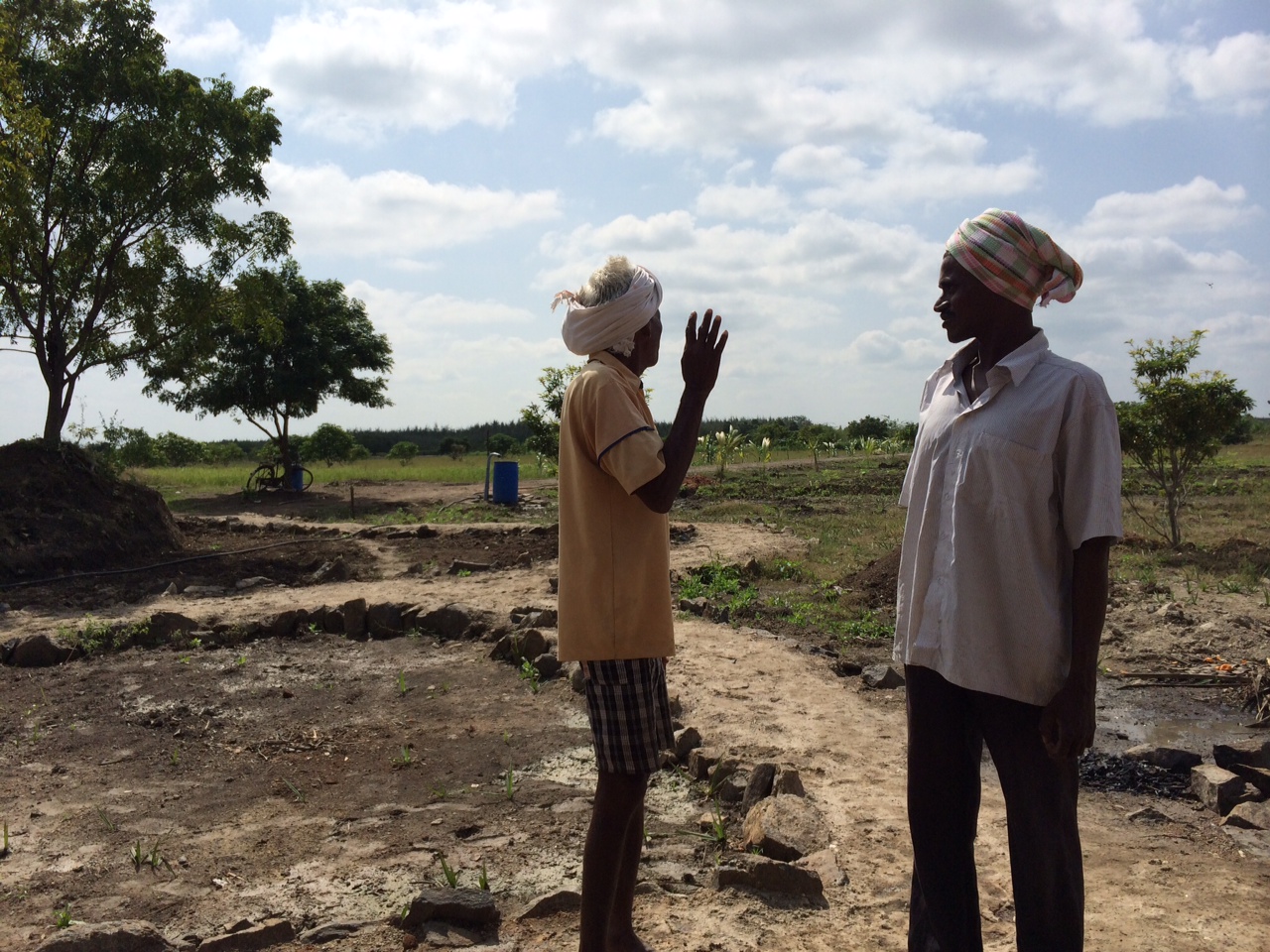
.Two members of Sirsti Village at the field, Sirsti village land in Tamil Nadu, 30 km west of Pondicherry .

Two members of Sirsti Village at the field, Sirsti village land in Tamil Nadu, 30 km west of Pondicherry .

The first visit to Sirsti Village was not only a big opportunity to discuss the communication needs of the foundation and the needs that we can help with. It was important to link the concept of the project as a village that aims to create a society to intellectual disable people in India especially in the area of Pondicherry, where people with intellectual disability become producers, and sustainability as a self-sustainable, inclusive and

eco-friendly village. 
 
At Sirsti Village, we were able to examine closely the friendly environment of work where children and adults with intellectual disability can learn the scientific basis of the organic agriculture, work together, plan for the future of the foundation, produce and have fun with their colleagues who were marginalized for social reasons without disability. 
We decided to produce a short video to present Sirsti Village especially after the purchase of 9 acres of land that since May 2014 became the center of the village gradually by building a basic eco-friendly hut. Our initial scenario concentrated on the essential information narrated by Karthikeyan the director and the founder of the foundation. 
We were lucky to meet everyone in the foundation, the children of Sirsti village school, the members of the village at the land and the volunteers. We were able to talk and discuss the stories of everyone. Sirsti Village was a treasure  of stories, a land where everyone has a difficulty and challenge that he/she overcame already by joining the foundation. 
The video must include a story, not because we have amazing stories that could present the foundation properly. But due to the nessecity of sharing story from India, a story that does not happen everyday. 
We spent three days of filming and sharing details of everyday life with the members of the village. Three days were enough to explain the concept of the village, the progress and the future, but were not sufficient to document every member’s experience in the village. 
 
At the end we came up with a short video that shares the story of Sindhl, a member of Sirsti village who lost his ability of speaking after being prisoned for three years in an elderly house and lives now at Sirsti village as a productive member. We were not able to share everyone’s story, but we tried to include everyone’s smile and effort in the video. And the stories of Sirsti Village members will stay with us until our new colleagues who will come next year and get the chance to explore and share it with the world! 
L.A


Equally Susceptible

Another question about sustainability may be, what about when it merely appears to be sustainable? Terms like ‘green washing’ are well known by many, and when one thinks of Auroville, it may seem to be a less likely place to find green washing. I’d say that the quality of being ‘less likely’ is true. Yet of course, just as all other places, Auroville is a place with people, minds, intentions, all of the possibilities that can arise from such a combination, and some say, green washing as well. Within Auroville, one can observe some inspiring approaches to the production of goods, shelter, resource consumption, business and lifestyle. While so many of the NGO’s and projects in Auroville exemplify among the most noteworthy approaches to these concerns, many conversations with a variety of individuals during my last month have offered some contrasting thoughts as well.

An older man, Tamil Nadu native and Aurovillian, expressed to me that he felt strong concerns about what he called green washing among some projects in Auroville working with local and indigenous communities and producing products to be sold to the national and international market. To summarize his thoughts; there were projects, led usually by European Aurovillians with decision-making power, that demonstrated particularly pleasant relationships with the locals they employed while there were visitors present to learn about the given project. And that such pleasant relationships might be less impressive if observed while there were no visitors present. In addition, this man expressed that the products themselves claimed so loudly to be made by local and or indigenous communities or groups of women that were being empowered and benefiting significantly from the training and selling of products when in reality, there was visible disparity regarding how much the project leader received and how much the local people received; ultimately using the story, value and international attraction towards indigenous, local or women-based projects to sell a product attached to an idea that was deceiving. In effect, green washing. And even worse, capitalizing on the story of the lived experiences and situations on others in order to sell a product.

This man, over time, had observed the contexts that he spoke about with me. With or without the story of this man, the same issues are easily observable on an international scale as well. Organic coffees, all kinds of foods, apparel and products claim to be fair trade, ethical and standing in solidarity with those communities growing the coffee, sewing the clothes or making the products. In reality of course, the consumer knows either consciously or somewhere in their peripheral awareness, that they don’t know the actual history or social-political context from which a given product comes from. Product designers, advertisers and marketing experts would have no power without the willingness of the consumer to trust what the label says, to believe the story being told.

If we consider not the possibility but rather the plausibility of sustainability in practice, it becomes clear that no theory offers success. Instead, only people and their individual desire, will, solidarity and action can lead to success, sustainably. What does ‘success’ mean in this context? The intentional practice of sustainability, regardless of how imperfect the way there may be. And what could such a large term like ‘sustainability’ refer to? Perhaps, an approach and practice that assures all involved are cared for with equality and able to care, speak and provide for themselves as well.

Thinking twice, especially when offered stories pleasant to our ears and minds, may encourage ourselves and others to see the difference between what seems to be and what might be. And most importantly, that we, even the most determined to bring change to the world, are equally susceptible to the very qualities and decisions we profess to change in the world, one day.

The one who stayed in India – AUP

A Nearly Lost Art : Mughal Stone Work at the Taj Mahal

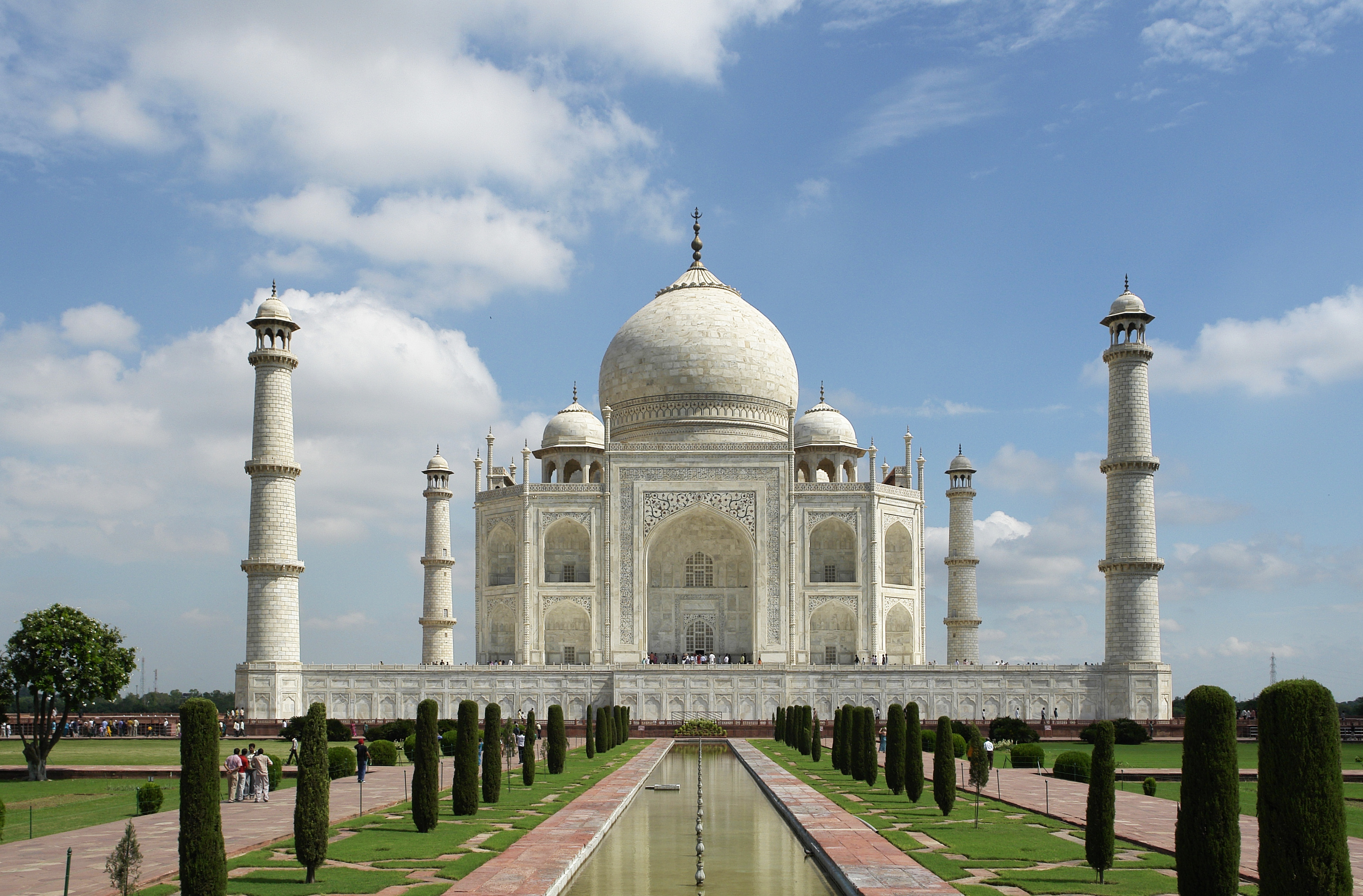
On the final day of this practicum, a few students took the opportunity to explore Agra and its cultural heritage. The Taj Mahal is located there and is a shining example of Mughal hardstone carving, an art that is nearly lost today.

Day time Taj Mahal, southern view.

After visiting this great monument and seeing the grand-scale of this work, we visited a small workshop of artisans who are continuing this extremely manual, fragile, and amazing art form. Each inlaid piece is ground by hand!

These complex carvings into the marble of the Taj Mahal were made for each semi-precious stone that would be inlaid into it so that each design would be flush against the marble. The effect is stunning.

Photo Credit - http://www.taj-mahal.net/augEng/textMM/materialsengN.htm

Intricate inlays of flowers set into the marble of the Taj Mahal’s interior.

Photo Credit - http://www.taj-mahal.net/augEng/textMM/materialsengN.htm

A close up of one of the inlaid patterns.

This was an amazing last day to spend in India as part of this practicum. To be able to visit this UNESCO World Heritage site, then meet some of the artisans who are trying to preserve this Mughal art which made it.

By Felicity Foster

Thoughts on economic-, environmental- and cultural sustainability

Us westerners backpack through India and South East Asia wearing all the same uniform; alibaba pants, a loose tanktop and a mulitude of various bracelets decorating our wrists. We buy these attributes along Khao San Road in Bangkok, Kuta beach, Bali or just about anywhere in Goa, India. These are clothes and bracelets that locals would never wear but that are solely there for tourists to buy. Clothes, jewelry and souvenirs in this part of the world are many times ridiculously cheap by American, German or Swedish standards and we buy them in large quantities, tempted by the price and out of desire rather than need. After we return back home from our travels, we unpack our backpacks and soon realize that those alibaba pants were cool on the Phi Phi Islands but that they will never see daylight again when taken back to our regular setting of Paris or Stockholm. The colorful alibaba pants are tucked away to the darker areas of our closets and added to the ever growing pile of things that we don’t actually need.

From a sustainainable point of view, this behaviour of ours is problematic. As most familiar with theoretical writings on sustainable development, the concept is usually referred to as resting on four pillars comprising; environmental-, economic-, social- and cultural sustainable development. When all pillars are taken into consideration, development is the ability to meet the needs of the present generation without compromising the ability for future generations to meet their own needs. When buying pants, shirts and accessories that often are of low quality and that will be fashionable only for a very limited amount of time, it is troublesome from an environmental perspective. The dying of cotton pollutes rivers and plastic is essentially extracted from fossil fuels, just to give a few examples of how every material thing that we own has an impact on mother earth.

When looked at from the angle of cultural sustainablility, additional problems are to be found. Much of what we purchase are items that are specifically designed for tourists, often with the asemblance of local culture to convince us we are consuming local and culturally indigenous products. Our choice of purchases thereby do not support and contribute to the continuing existence of local culture but rather encourage further production of products oriented merely for foreigners. At the risk of exaggerating I would like to at least issue a warning that our consumption pattern in these countries are to some degree threatening the development and diffusion of local culture expressed through for example arts, clothing and jewelry.

Indeed, travellers like myself and others are, in many aspects, contributing to much needed economical development in third world countries through our consumption. Through expanded tourism, previously poor and deprived areas have been able to create a better life for themselves and their families. The flow of money has increased and economically contributed to development which is, no doubt about it, much welcomed. Economical development is by all means a beautiful thing when it contributes to the eradication of poverty and brings about brighter futures for people. But, it has a tendency to be over shadowed by other equally important aspects of sustainable development such as cultural and environmental degradation.

A somewhat sustainable depression

A somewhat sustainable depression A few days ago now, a few of us students visited Sadhana Forest. Sadhana Forest engages in tons of awesome sustainable projects but first and foremost concentrate on reforestation and water conservation. When we first arrived, we had a thorough demonstration on how to use their fully compostable toilets and I think I speak for more than myself when saying that putting our newly acquired knowledge into practice was somewhat nervously carried out. We were taken on a guided tour on the grounds and ended up in their main hut where a documentary was shown and we were served a great vegan dinner before getting on the bus taking us home.

Overall, it was a very inspirational and great visit showing that some people are indeed willing to go to great lengths to live sustainably. One the one hand, I would say that we could all use a little bit more of Sadhana Forest inspired thinking in our lives in order to live sustainably. The work that they do is nothing less than admirable. On the other hand though, I couldn’t help but feeling a little exhausted and bewildered, do we all have to turn into vegans and stop using toilet paper in order to have the slightest chance of not destroying the planet we inhabit within the next fifty years or so? How can an average person like myself, who likes travelling to distant places and hot showers, be a part of a movement towards sustainable living? The thought of giving up taken for granted comforts like flying, an occasional soda and butter on my bread scares me.

I consider myself a person who take steps towards lessening my ecological footprint but after my visit to Sadhana Forest, I realize that there is so much more that I can do. I used to give myself credit for choosing vegetarian and organic food, for not having a car and for recycling meticulously. Partly because of the visit to Sadhana Forest I have come to better understand that small behavior changes like the ones I have adopted matter little in terms of enabling a bright and green future for generations to come. And honestly, realizing that makes me feel paralyzed more than anything else. I’m sorry to say, but that hardcore vegan-, almost no electricity-, hut life lived in Sadhana Forest is not for me. Yet, I sincerely want to be a part of the movement towards a sustainable future. Is there a middle road or is it perhaps time for me and others to step up our game and start making some radical changes in our lives, Sadhana Forest style?

Among the Roots

What is sustainability? As we visited over two dozen NGOs and projects in Auroville, our class was fortunate enough to witness a diverse collection of groups, individuals and their endeavours to reach a sustainable system of supporting their projects, enterprises and businesses.

When we keep in mind that the concept of sustainability is most promising when it is applied not only to environmental and business development, but also to the people involved and their well being and ability to provide for themselves, the approaches we take in attempt to reach sustainable systems become more challenging, more intricate and more demanding of slow and careful consideration.

There were many NGO’s and projects that were inspiring and tempting to work with, my first plan was to work in the Pitchandilkulan forest, with the social enterprise and business Amirtha Herbal. This was still my plan even after being exposed to so many other inspiring options, and it’s proven to be a wonderful decision. Amirtha Herbal is a woman’s social enterprise before it is a business, and it’s three highest priorities are working towards the empowerment of local woman, creating opportunities for financial independence, and working to integrate traditional indigenous healing knowledge into local healthcare practices. The prioritisation of the local woman’s welfare has been impressive in that it demonstrates an action-based, and not simply theory or label-based commitment to those whose wisdom, knowledge, time and work make Amirtha Herbals possible in the first place. I have seen a truly sustainable motion towards supporting and evolving their project.

Amirtha Herbal, in addition to being a sustainable social enterprise, business and support of indigenous woman, is also a part of the beautiful Pitchandikulam Forest restoration site which includes a bio-resource center, an ethno-medicinal collection of 300 plants, and community outreach activities and workshops that are offered to all and others particularly for the local indigenous communities. Approaching all business endeavours primarily as human-concerned, love-based social enterprises, as Amirtha has, would be a benefit to all involved and to those watching at a distance; that is an experienced and observed sense of sustainability, or at least a strive towards it. The success of Amirtha Herbal has recently been mentioned on the cover page of the Auroville Today Newspaper in the article Heeding the Call: Sustainability for South India and Beyond.

Sustainability, just as it is exemplified in nature, begins in the roots, and is woven through each element of the whole. Perhaps it is time to see that people are among the roots of everything that we, as people, create. And not only in theory but in practice, both when eyes are watching and when they are not.

The one who stayed in India – AUP

Roots

I am a seasoned traveler and have tried to adapt to the culture that I am immersed in. Living in Auroville, you get used to the mosquitos, the sound of spiritual music at 6am, the cows in the road, and the spice in the food. You get used to your life in that place. But can you truly immerse yourself in a different culture?

I believe you can’t go to India without it changing you, without some poi ritual reflection on how you are living your life and how you can improve. There is some sort of magic in this place that allows you the meditation to truly examine who you are inside.

Auroville, prides itself on being a sustainable change from normal towns and cities, a new approach to how to live and involving all of their citizens into this change for what they believe to be a better future. Everyone here, are all citizens of the world, citizens of their home bit of also Auroville, meaning that maybe a heart can belong in several places at once. I have a good portion of my life trying to forget where I came from and attempting to adopt a new place for my heart to belong.

When we first arrived we were informed of snakes, scorpions, and other poisonous creatures to look out for. “Snakes are no big deal,” is what they try to assure us. Auroville, is a place where you get closer to nature, you live amongst all living things. But growing up in a city, snakes are to be feared and killed. In the city, you are not trying to become one with nature, you are trying to overpower nature. Just when I thought I had accepted this new natural lifestyle, a snake slithered out of a yoga mat one morning. In a blink that mat was dropped to the ground and two of us went flying out of the room screaming. This is not how you act when you are one with nature.

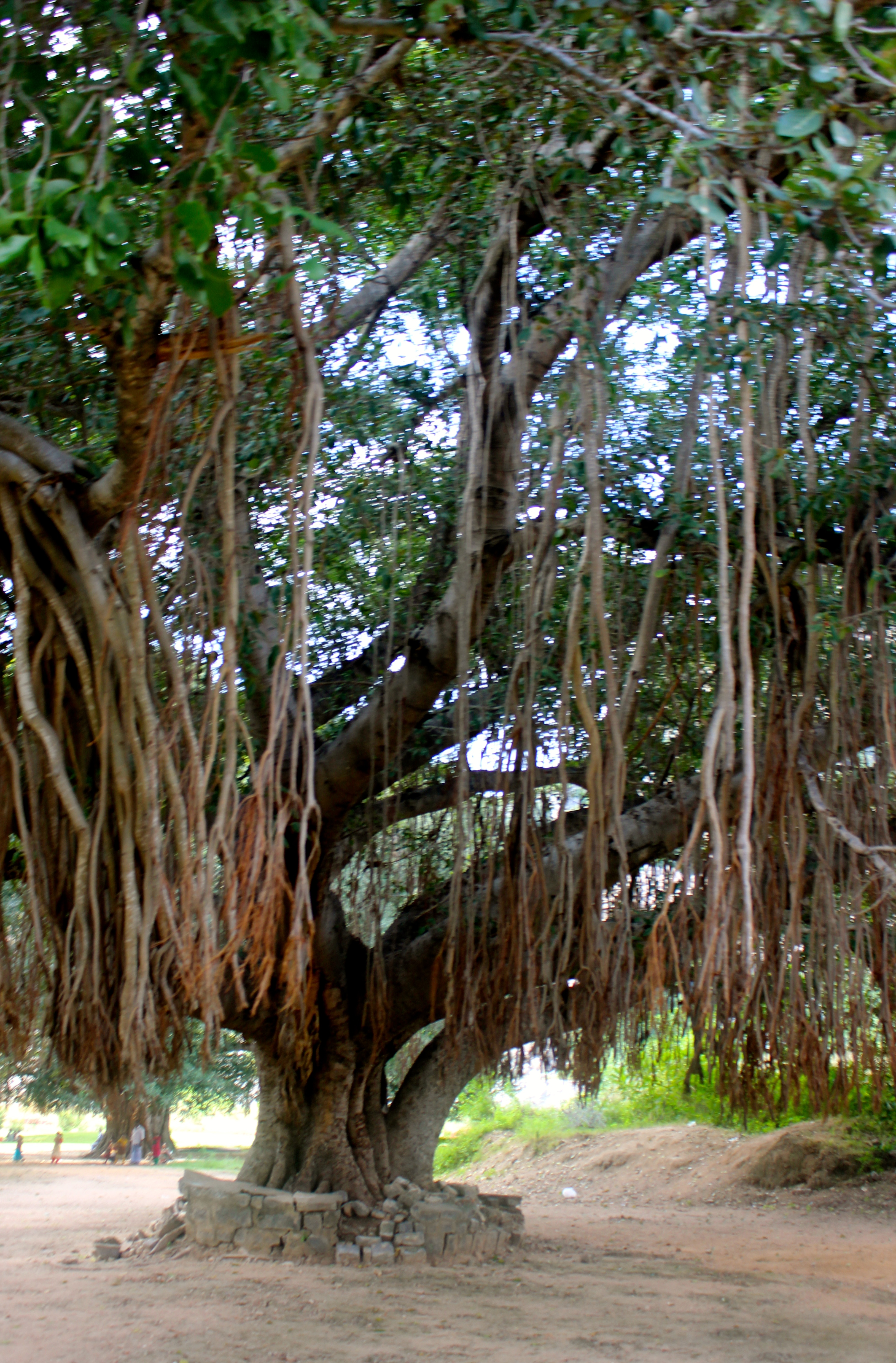
In a split second, I was sent back to my roots. But maybe that’s what Auroville was supposed to teach me. Just like a tree, your roots keep you planted when the wind blows and they strengthen you to grow taller. Without roots, would I be able to stand at all? So maybe, Auroville has the right idea, one’s heart can belong to many places but keeping your roots is a essential for a strong foundation.

Namaste,

IMG_6958

Kara Ferguson

American University of Paris

Presenting Change

January 10th was a deadline, but also a monument of our trip. We presented the projects we had created for the varied organizations of Auroville and Pondicherry, explaining the process of working with them and adapting ourselves to their missions and needs. It called for reflection on what the experience had meant to us, if we thought we’d contributed to lifting them up into the light of the public eye. Everyone seemed a tad nervous, and excited, as we trickled into the auditorium.

What was clear with each slide was that everyone’s experience was unique. There were dozens of frustrations and disappointments that had had to overcome. Our reactions to these had gone from hopelessness to inspiration. The way we maneuvered around them was our own.

Every organization had specific assumptions of what it needed, and some that had clearer planning and understanding of the public perception guided us students very easily in what seemed to be the most effective campaign or publicity for them. Others had sat back, presented themselves and let us evaluate how we could best create an image to represent them in all their virtue with freedom. The best would have been a perfect match. “We need you to do this!” says the NGO. “Perfect, that’s what exactly I wanted to do!”

But no, everyone had negotiated. They’d sat down with their developmental clients, their limited knowledge and resources, and figured out how best to proceed with the situation at hand. Like most change-builders in action, they had to confront a problem that was holding the world back and find a solution.

As students trying to contribute, we were handling all of these negotiations with our projects and NGOs at the same time that we were negotiating with ourselves, asking, “Can I do this? Is this the best way to help?” Exploring our interest in mediums and sympathy with fellow activists. It was a personal development that we faced in these challenges, as much as sustainable development.

At the end of it, no matter what, everybody’s enlightened, just a little bit more. Everyone has a slightly clearer picture of another side of the world. We’ve made friends, we’ve faced fears. We’ve laughed off the little quirks of new countries and built campaigns to serve a higher purpose. How do you fit that in a PowerPoint?

There can only be so many…

Today was the last day of visits. That means that tomorrow we have to decide what NGO we’re going to work with. Which in turn means complete confusion. So instead of making specific decisions right now I’ve decided to reflect upon something that I’ve come to think about during all of these visits.

India is a country that has a lot of Self-help groups for empowerment; they especially focus on women’s empowerment. These groups are usually provided with education opportunities, vocational training and micro loans. This means that women, through these initiatives, will be able to sustain themselves by becoming entrepreneurs and run their own businesses that they started with the micro loan, producing something that they learnt during period of vocational training or from the educational opportunities they were given.

Basically, I’ve had two reflections concerning these self-help groups, or SHGs as they’re called. First of all, even though I definitely like the idea of women becoming entrepreneurs and being empowered through small-scale business development, I question why women’s empowerment is linked to women starting businesses. After these days visiting NGOs I feel like there is an alternative missing in regards to empowerment. I mean, is the option for a woman who wants to be empowered really only to start her own business?

The issue and focus on entrepreneurship can be viewed in different ways. One of the ways is linked to my second reflection/observation on SHGs, which is the skills and the kind of business that the women are starting up. Every SHG that we have visited that offer vocational training offers it within different kinds of arts and crafts; making dolls, doormats, sewing, making soaps and oils and so on. So I ask myself, how sustainable is it to teach all these women the same things and make them business owners? There can only be so many businesses that make doormats, which would mean that after a while the women will start to compete with each other. The women will almost have their own market, and with that segregation they will probably rarely, if not never, participate in the mainstream market and in the same platforms as men.

Which brings me to my second concern, the actual skills. Not only from the idea of letting the women create sustainable businesses, but also from a pure feminist perspective, why are the women only taught those specific skills? Where are the self-help groups that teach women about electricity, IT, mechanics, construction and so on? Like I said before, it feels like the women are being maneuvered into their own market. The fact that they are not being given the chance to enter the male-dominated arena of work makes the empowerment of women through self-help groups seem like a façade. They are empowered to some extent, for example because are able to develop their own livelihood. But will they ever fully reach the male dominated sectors? If not it could be seen as though they’re still less than men, below and beneath, not worth as much.

The conclusion I draw is that if I were to start my own self-help group, I would give the women other practical skills to help them reach another market if they wanted to, and not for the women to be forced to be handicraft entrepreneurs. I do realize that we have only seen an extremely small portion of the SHG’s available in India, my thoughts on this matter is therefore solely based on what we have experienced here and not SHG’s in India in general. So based on what we have seen, it frustrates me that a man can be respected for having any job but a woman is “only” empowered when she’s an entrepreneur within a market based on arts and crafts.

Malin Persson, Linnaeus University (From 2014-12-29)