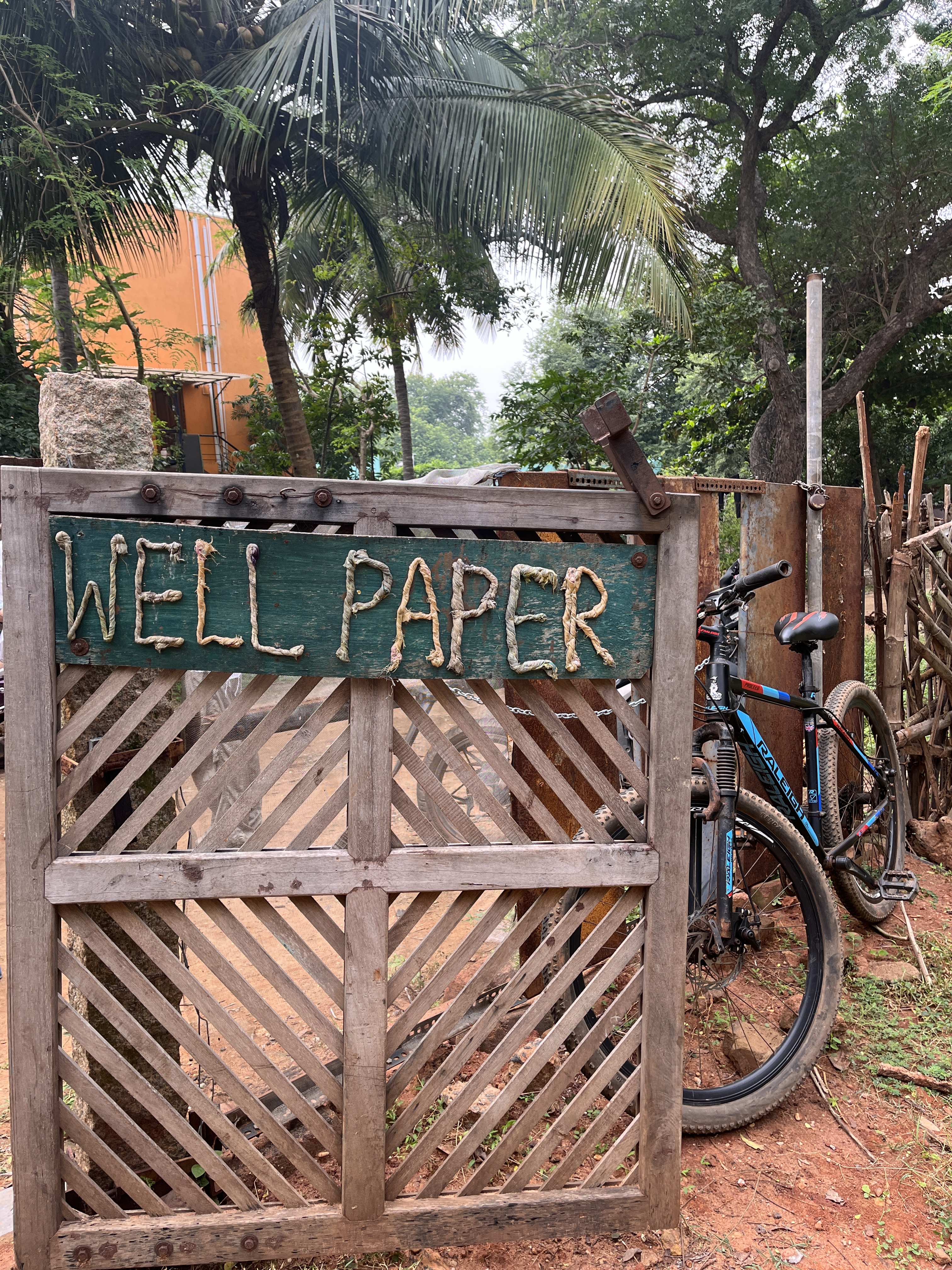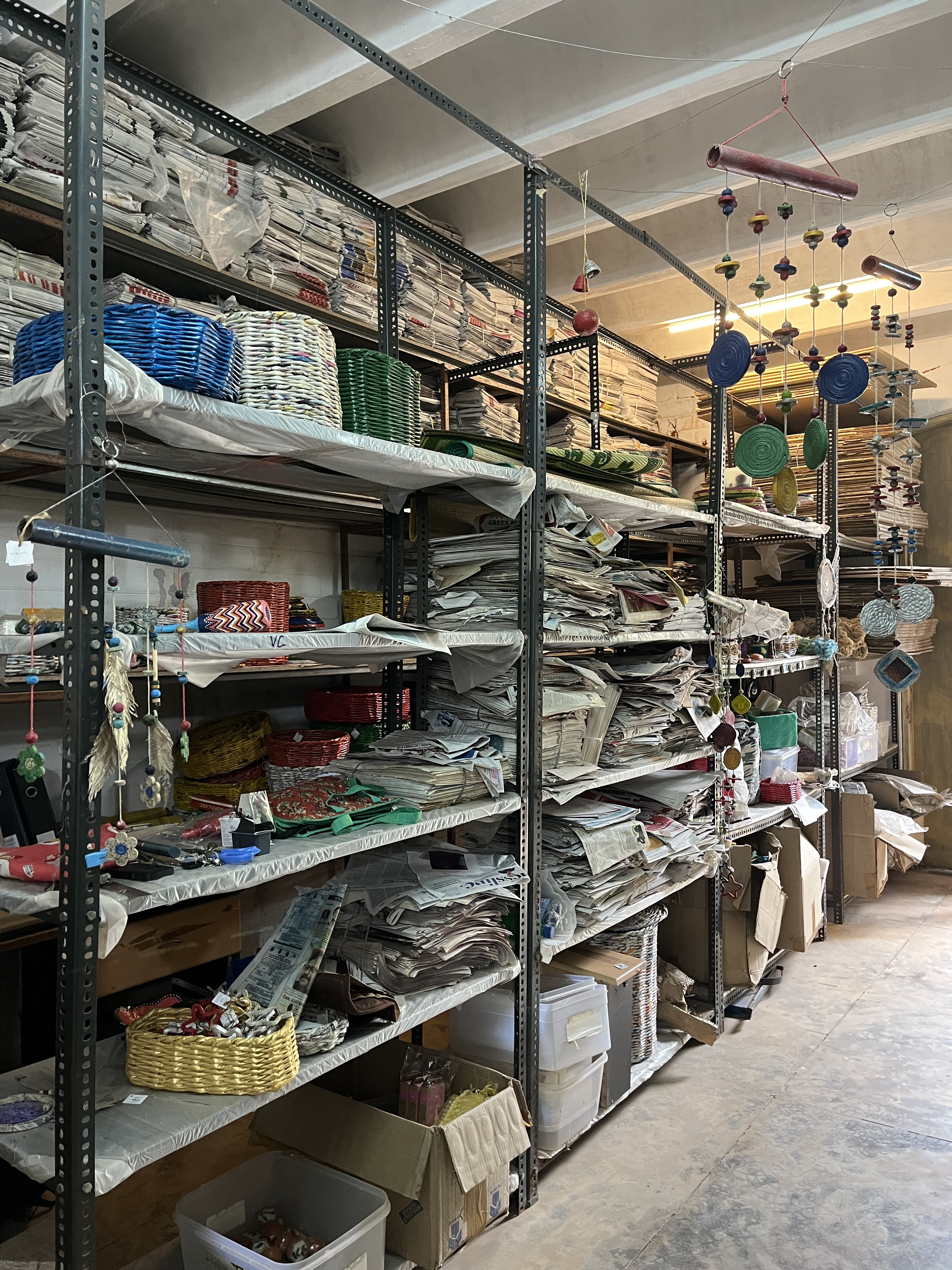
WELL stands for Women Empowerment through Local Livelihood. This is exactly Welllpaper’s goal, to empower women through their social enterprise. The organization creates products from waste, focusing on paper waste. They recycle paper into various products, most being hand-woven home decor. Wellpaper was started in 2005 following the tsunami, which was extremely damaging to Tamil Nadu. The organization promotes sustainable practices, female empowerment, and personal income stability.
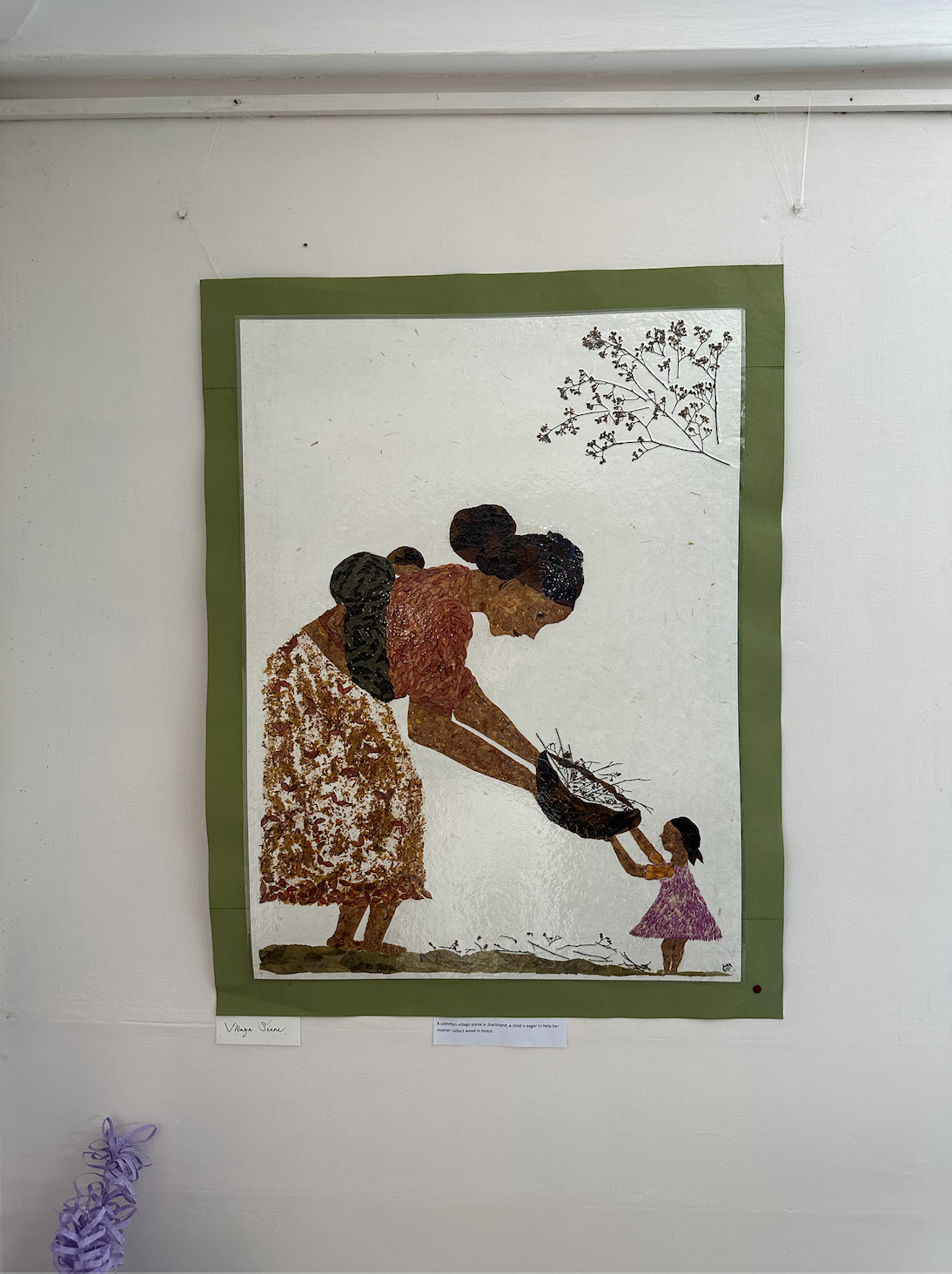
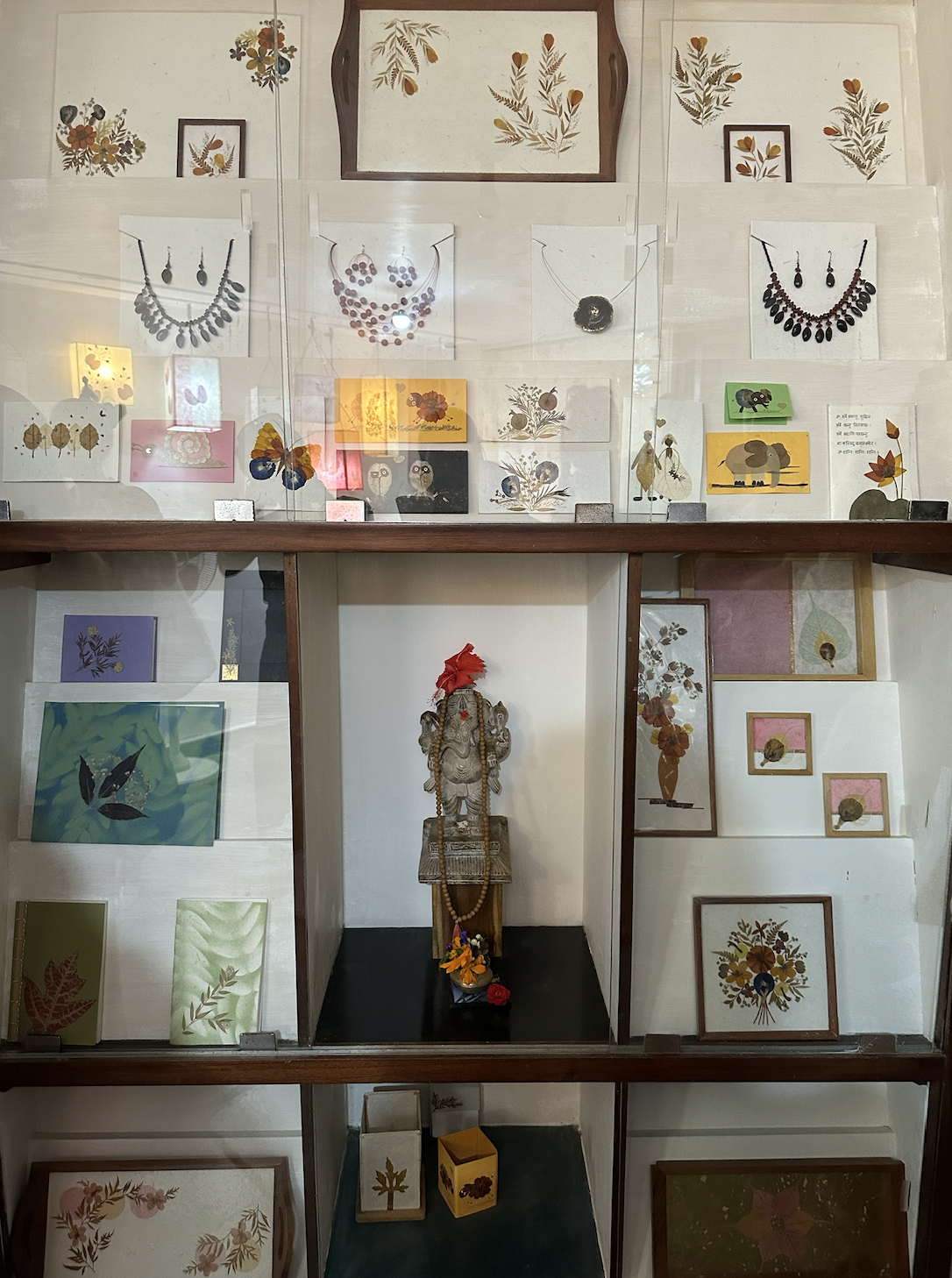
When we arrived at Wellpaper, we were brought into the studio/display room where all the handmade products are exhibited. There were many woven baskets and trays, as well as a large rotating jewelry display and a wall mural made of upcycled materials. The weaving method is a traditional cultural method. Wellpaper is unique in the sense that it uses rolled scrap paper coils for the weaving material. We were able to watch a live demonstration as a workshop was just ending. The women begin by taking a single piece of paper, finding a corner, and rolling it tightly. They seal it with a glue substance. To weave items, they begin by assembling a base. To facilitate this process, they often create the base around an existing box to achieve the desired shape. Once a base is made, they continue adding coils and weaving them together to add height and dimension to their creation.
Not only does Wellpaper teach their employed women this weaving skill, but they also runs workshops to demonstrate their creative method to visitors. Similarly, they talk about the importance of limiting waste and upcycling.
Through teaching this process, Wellpaper has created an opportunity for local women to earn their own income. This is extremely important for their personal financial stability, the empowerment of women, and the overall income generation of local communities. Wellpaper offers a series of trainings to new women, allowing them to develop their skills. Through the encouragement of personal empowerment and strong team work support, Wellpaper has created a bright, beautiful community!
Limiting consumption is a major part of sustainable living and limiting waste is absolutely necessary to protect the environment. However, removing waste completely, even in a place like Auroville, is extremely difficult. So the question becomes: what can we do with the existing waste? Well, one of the best things that we can do with waste that already exists is reuse it. After all, one man’s trash is another man’s treasure!
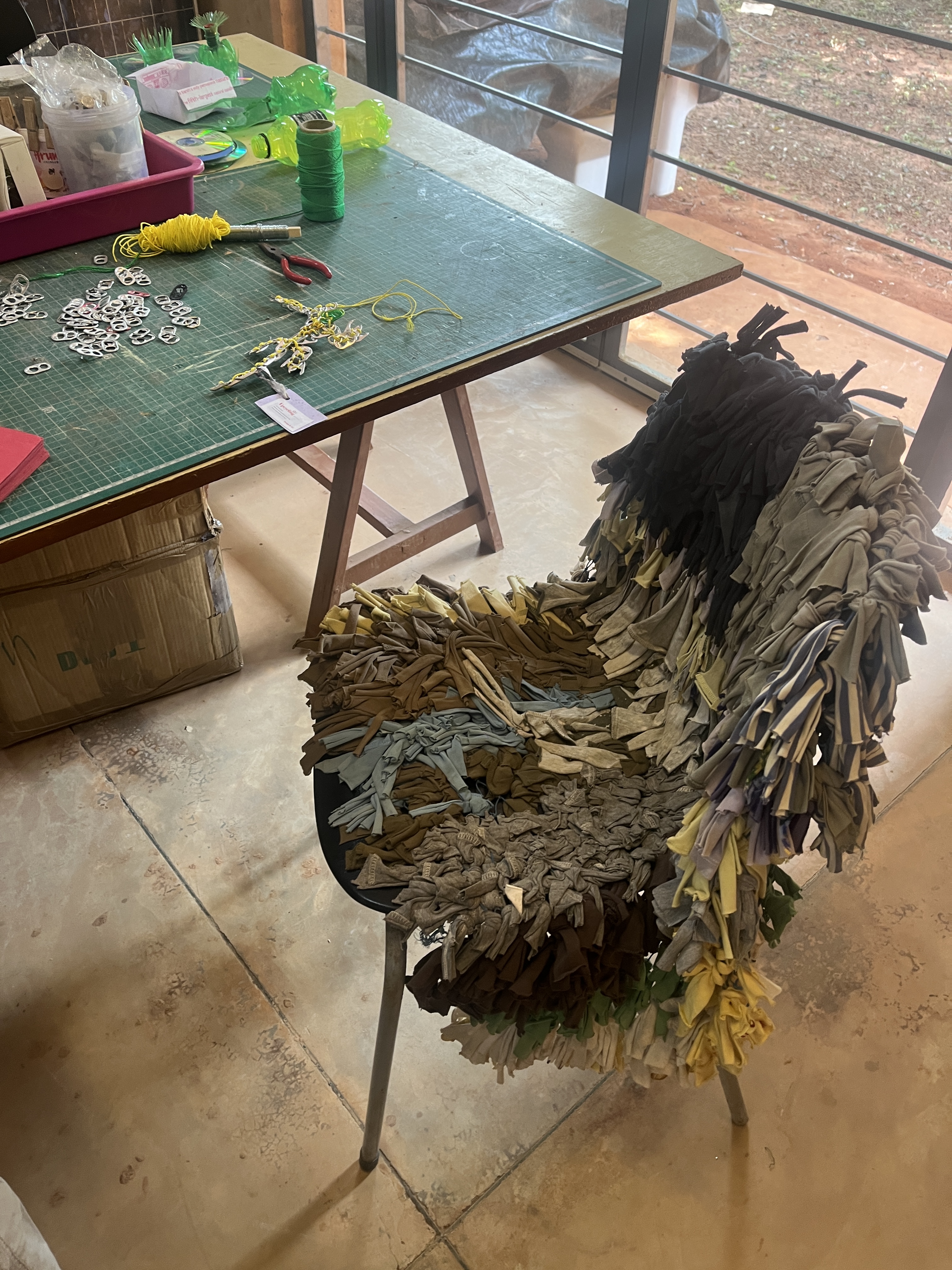
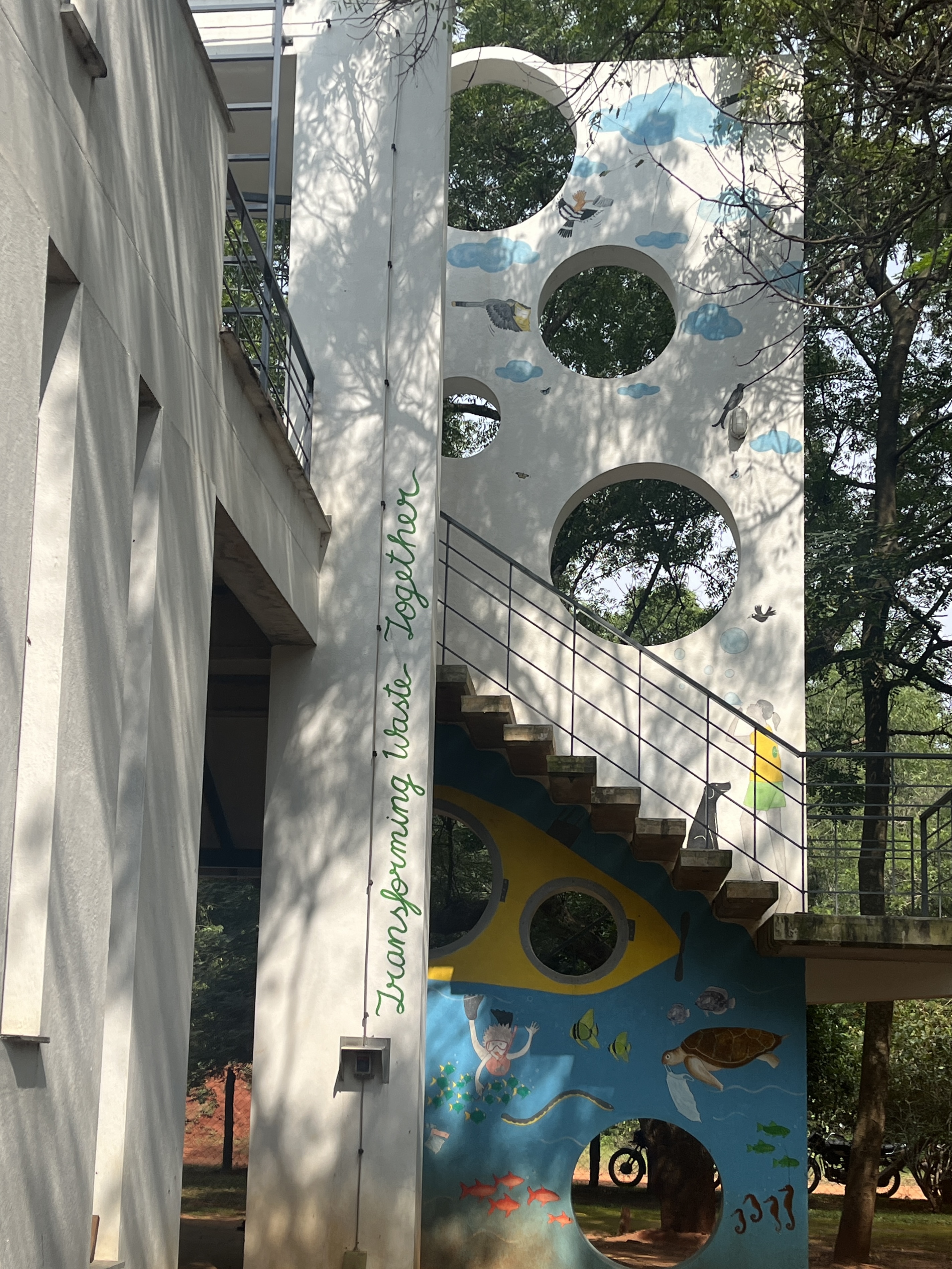
Housing both Wasteless and the Upcycling Studio is a fully sustainable building created by Ribhu Vohra, the co-founder of Wasteless. The Upcycling Studio is located downstairs on the ground floor. Upon arrival, we were greeted by displays on the front terrace that gave us a first glance at the immense creative passion inside the workshop. Here, we are introduced to the upcycling process. A huge part is obtaining and cleaning waste materials. The Upcycling Studio gets waste from the EcoService in Auroville, where garbage is separated. They collect many different types of waste for their projects, including glass bottles, old CDs/VHS tapes, plastic packages, fabric, and even toilets. Inside, the studio is a bright, creative space decorated with past projects. There are large workspace areas and a wall of tools, making this a productive studio area.
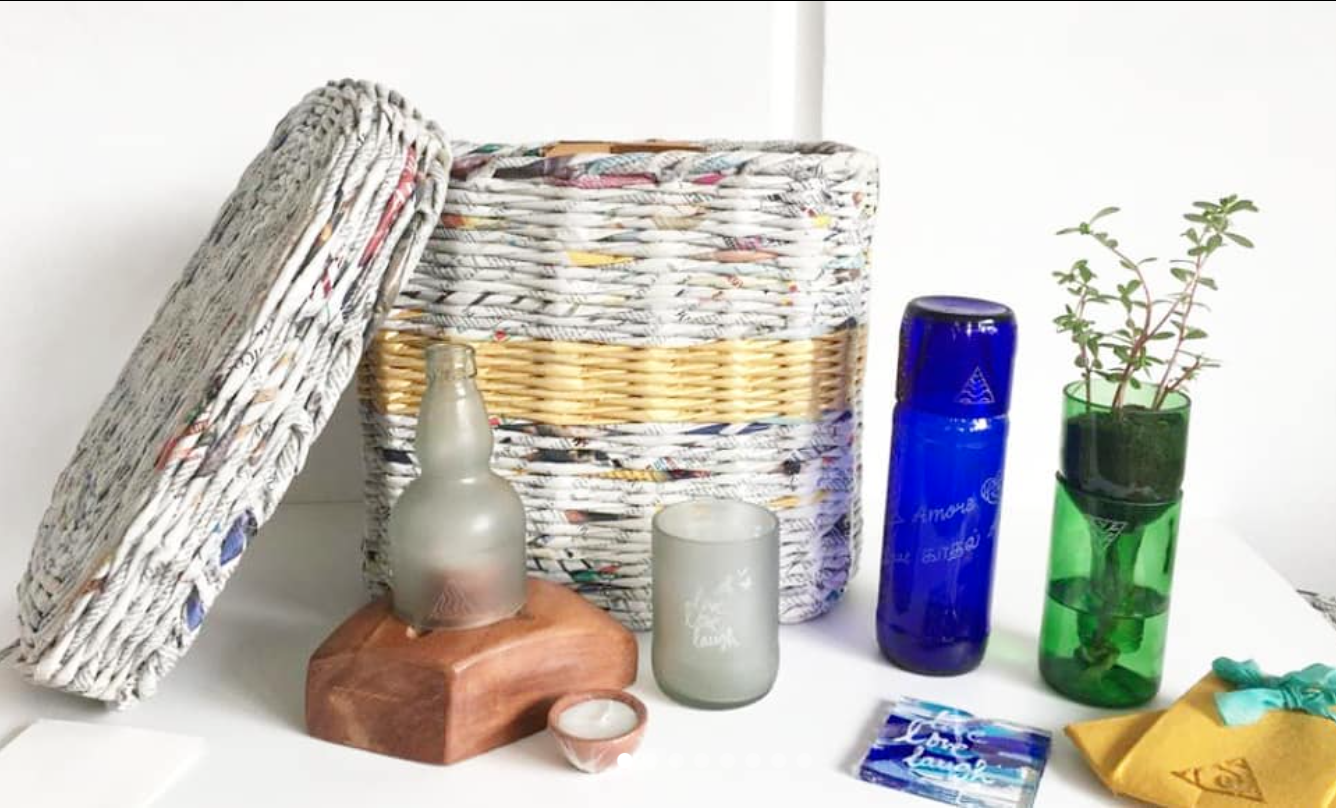
The Upcycling Studio has a powerful way of giving meaning to their recycled projects, truly giving a beautiful new purpose to what was once just waste. An example that really encapsulated the thought they put into their products is the Desk Harmonizing Kit that they showed us. They wanted to create something that was not only attractive but also extremely practical. The kit comes in a basket made of recycled paper which comes from Wellpaper (an organization we also went to visit!). Inside, the first object is a self-watering plant vase. This is made from a glass bottle which is cut in half with the top piece turned upside down inside the bottom part. This allows for a succulent plant to sit on top with its roots through the neck of the bottle, where they can reach the water at the bottom. It brings some living greenery to the desk. Next, the kit has a quantum water bottle. The top piece is removable as it doubles as both a lid and a cup. This is inspired by Aquadyn Auroville’s water purification system technology that uses quantum physics. Inside is a purifying silver coil. The outside is engraved with words of love written in the four languages of Auroville and those spoken at the Upcycling Studio. They chose this as it shows the gratitude for water and they believe, as researchers do as well, that water’s molecular structure is transformed when spoken positive words. A candle holder is the next object, made from the top of an old gin bottle. The base is made from trees that fell from natural causes in the Pitchandikulam forest. The candle sits on this wood base with the glass top covering it nicely. There is also a paperweight made from old glass tiles and broken glass pieces. The symbolism behind this kit is that it is balancing because it brings all the worldly elements together on the desk: earth (plant holder), water (water bottle), fire (candle holder), and air (paperweight). This shows how the studio is dedicated to making thoughtful, meaningful pieces.
Desk Balancing Kit featured on Upcycling Studio’s Instagram
One of the team’s key initiatives is bringing upcycling workshops into schools. Instead of normal arts and crafts activities which create even more waste, the team encourages children to collect trash they see and make artistic projects with it. They aim to break the stigma that trash is dirty to encourage reuse practices. The team also uses this as an opportunity to educate about the importance of limiting waste. Upcycling is an amazing education tool as it can bring in creativity, mathematics, and problem-solving skills.
The team also seeks to educate the public through inspiring public displays. Sitting on chairs made from recycled materials and stuffed with plastic wrapper waste, we had the opportunity to look through various books on the Upcycling Studio’s past work. They have had many large public art displays in Auroville and abroad, including the Trashion show (featuring upcycled outfits) which they do in Auroville every few years.
What I found quite beautiful about the Upcycling Studio is the way it added a hopeful lens to waste. It spreads the message that we should limit waste as much as possible, but we should see the remaining waste as a material that can be reinvented time and time again. Their work opened our minds to the wide array of possibilities that come when we destigmatize trash. The creative mindset that waste can actually be something shiny and new with just a few tweaks and a creative vision is truly inspiring. The possibilities are endless!
Found on their website their mission is to build a society where developmental disability ceases to be an exclusionary factor.
“For over seven years, Sristi has relentlessly worked to create an inclusive society where children and people with intellectual and developmental disabilities are respected, valued, and have the choices to lead a holistic and dignified life in mainstream society.”
-Sristi Foundation
The village accepts adults and youth who suffer from autism, cerebral palsy, and more. Through various approaches, the village has flourished and has come to realize its central goal. Utilizing education and training, then application in different life skills both economic and social, these developmentally disabled youths and adults have become economically successful and sometimes self-sufficient to the point of being able to leave Sristi or economically supporting some of their family outside of Sristi. This is an extremely important change for the participants, as in the cultural fabric of India getting a job as an adult is a mark of success and pride. This alone can help redefine the perception and stereotypes of disabilities.
– AUP student group hearing the history and values of Sristi Village in their outdoor classroom space.
The farm stretches extensively with a central building that houses different offices and a classroom, then a well-equipped playground that sits outside it. Construction has been kickstarted to the back for a rabbit habitat, and those are not their only farm animals. Here they have 15 dairy cows and 125 chickens. There is a large water well that collects rainwater and helps irrigate the fields. Taking a trip down a dirt path you come to the dormitories. Here, adults with disabilities have their own kitchen, bedroom, and space to practice and realize their learned skills. Here meeting with the men staying here, you can see the confidence and joy that would be lacking in many other care homes where overcrowding or lack of staff may lead to medicating patients more when they act out. Instead here there seems to be more self-regulation and a plus to fuel negative feelings instead of being trapped or stuck with them.
– Playground at Sristi Village– Animaland Farm structures and layout at Sristi– Lego bag workshop at Sristi
The original concept has now expanded to encompass many different programs. From government-funded and supported programs, outreach and training in other villages, early intervention programs, food drives, and various environmental projects. You can even find on-site a workshop filled with Lego bricks where a designer, inspired by Sristi, created a design where the village produces bags made of Legos. They follow a precut format and then stitch it together. These are then sent to the designer who sells them in Spain. All the projects have been so successful that they are currently continuing their expansion with plans to open a new village strictly for women who suffer from disabilities. They also regularly accept volunteers to come stay on the farm and work, offering what support and skills they can while helping around the farm to pay for room and board. This is a place to put your support as they are changing largely held beliefs and stereotypes against the disabled population in India. To learn more, find more information on their website!
– Displays of some of the projects that Sristi has started.
Geologist Giulio has a very matter-of-fact way of speaking. He’s short. He’s Italian. And he cares deeply about water management.
These are the things that our group learned about Giulio within 5 minutes of the beginning of our lecture. The first question he asked us was where we were all from. “You might all have a particular story with water,” he said, eyes alight. “I’ll try to incorporate these special relationships into my talk today.”
What is water management? This is the question that drove our lecture, which was one suitable for both water-beginners and water experts. Here’s what we learned:
Auroville sits on a ridge. That means that rainfall that comes down over the territory goes somewhere, it doesn’t stay sitting still on the surface. The place this water goes to is called an aquifer. An aquifer is an underground layer of water-bearing permeable rock or unconsolidated materials, like gravel, sand, or silt. These materials allow the water to stay underground for later access through wells, or other similar means. Auroville soil is part Cuddalore Sandstone, which is very porous. It also contains sections of Manaveli Clay and Kadaperi Kuppam Limestone. Each of these materials invites unique flows of water: the sandstone allows for flow directly into a lower layer, while the clay’s non-porous structure means that when water falls on it, it runs according to topography. That direction is away from Auroville and into the surrounding villages. Only 13% of rainfall even reaches the groundwater, meaning that over-extraction of these resources will not be replenished quickly. The aquifer that lies under the Vanur Sandstone has gone down significantly. Soon they will hit granite. Aquifers act as temporary storage for water sources, but they are not to be considered to be “water management”. That task requires far more intricate thinking.
Pond in Kuilapalayam
Giulio called back to an ancient Tamilian system of water management: a large system of interconnected lakes and ponds at varying topographic elevations that allowed for rainfall to be collected and distributed using gravity to other parts of the bioregion. This strategy, he concluded, is much more akin to a system of management, and we should look to these techniques in our search for more effective water design.
The broader point to this Auroville-specific water story is that water access depends heavily on geographic location. Water management means accumulating a knowledge of geology, politics, and engineering to understand how to allocate equal access to water, regardless of unfortunate geographic positioning.
Water management system at Colors of Nature
There are so many issues that accompany poor water management. Over-extraction leads to depleted groundwater reserves. This leads to two major issues, especially in Tamil Nadu. The first is subsidence, which is when the ground begins to sink due to a lack of solid material supporting it, and an excess of weight on top of it. The lack of material can be attributed to hollow ground with the absence of water supporting it. The second is salt-water intrusion, which occurs mainly in areas close to sea level and near the coast. When the groundwater storage is depleted, it leaves an empty space for the ocean to percolate through the ground and fill up the area. The drinking water becomes salinized and ruins the supply for everyone extracting from the same place. Giulio grimly added: “Nature will prevail, we are nothing on this planet. No matter what, nature will prevail.” This sentiment, though dark, is certainly true. We are powerless to stop water, we must work within the confines of its movement to get the best that we can from it.
These problems go uncontrolled by legislation. When asked about the existing sources of legislation in Tamil Nadu, and in India as a whole, Giulio just shook his head. He lamented the absolute lack of water legislation on a state and national level. The current rule, he said, is “I own the land and whatever water is above, on, or below the land is mine”. This paints a grim picture of resource availability in the future. If we continue to abuse our power to extract water, there may very soon be none left. The phenomenon is not concentrated in India, either. On a global level, governments and their people are struggling to strike a balance between personal profit and longevity. This will persist until creative people with a passion for sustainability take up arms in the fight to protect water and ensure it for everyone.
Giulio concluded his talk with this line: “When you think of water, think of life.”
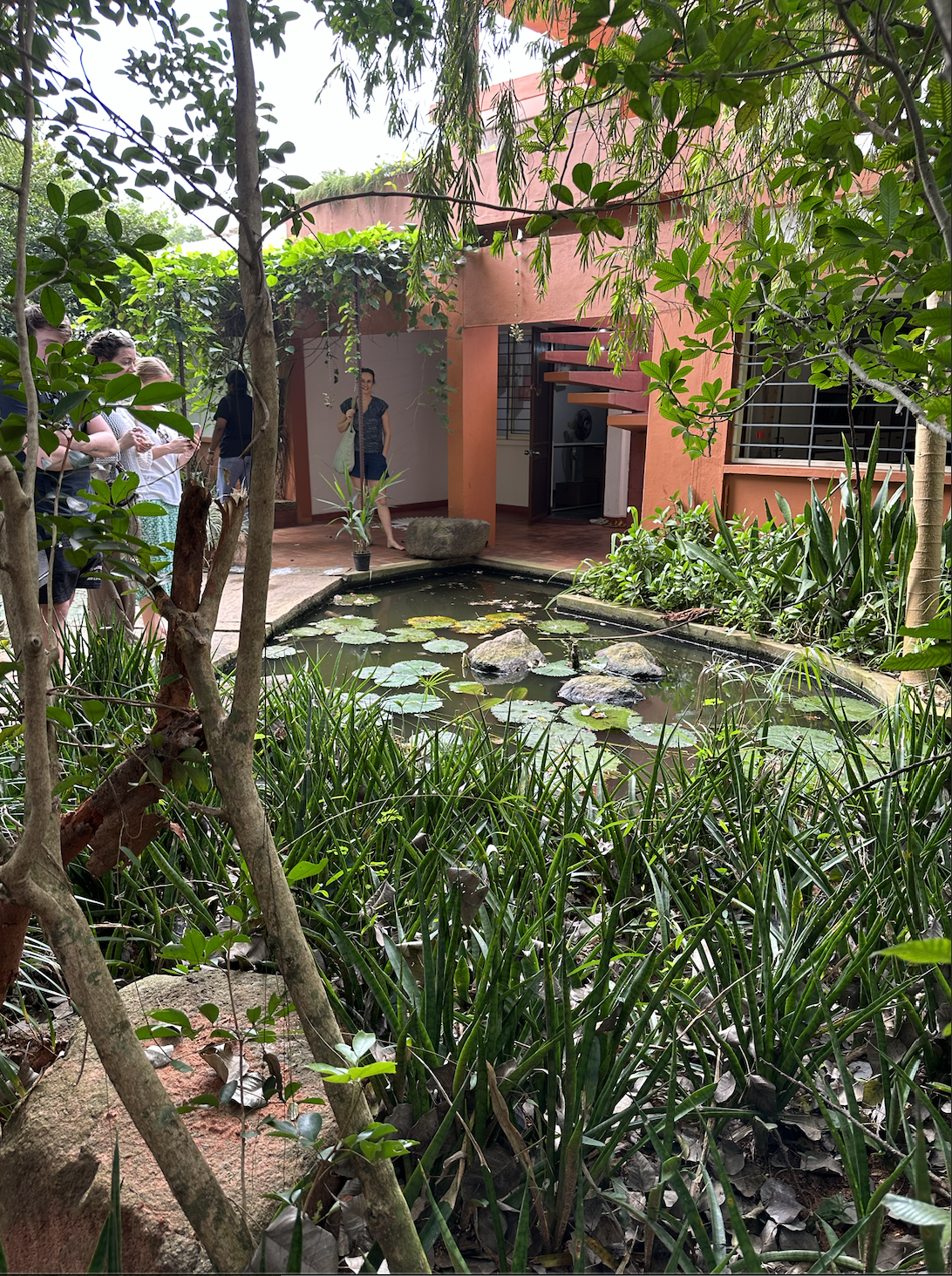
Small basin of water and lilypads in Pitchandikulam Forest
Nothing more accurate could have been said, and it truly left us all thinking about our water usage and the role that we should play in making sure abuses stop and sustainability prevails. Think about your water, think about your life.
Yatra Arts Foundation is located on the outskirts of Auroville, near central Kuilapalayam. It was the first organization that we visited, so we all stepped off the bus fresh-faced and with some pep in our steps. The first thing we noticed was beautiful, intricate mandalas of sand outside the entrance of the building. The white sand glittered in the sun, giving hints of the hospitality and joy we were about to experience inside. As we approached the door, we each dipped our heads to two women by the entrance who blessed our foreheads with a tilaka – a yellow paste and a vibrant red powder between each of our eyebrows. We removed our shoes and climbed the stairs to get inside.
White sand and flour mandala Materials for tilaka
A smiling man in a denim hat greeted us excitedly. Yatra Srinivassan, the founder of Yatra Arts, has a contagious smile. Grinning widely, he welcomed us to his organization. He explained that Yatra Arts was inspired by his father’s passion for street theater. The old style of art and communication meets new modern-day issues in an effort to spread awareness of problems that the community faces. Drawing from the tradition of Indian epics, Srinivassan puts on plays for both children and adults in the surrounding villages to comedically retell familiar tales: alcoholism, sanitation problems, forest preservation. These themes, he explained, are ones that the children he works with highlighted as important to them. These themes are ones that they want to communicate with their peers and their parents. Yatra Arts’ job is to take the sensitive topics and make them palatable and entertaining; to promote solutions while also having fun.
From this noble goal sprang Yatra Arts, and it has been steadily growing ever since. The plays are not Yatra Arts’ only task; on the contrary, they have a broader mission of preserving a love for creativity and an appreciation of tradition in children, regardless of the newfound emphasis on academics over arts. They provide after-school classes in painting, music, and dancing, as well as host courses on the weekends for interested community members, not just children.
We got a glimpse into what these programs yield with the next element on the program: a song performed by Srinivassan’s own daughter, Priyadharshini. He beamed with pride as he explained that his daughter is a perfect example of how the arts and academics can converge: she just passed her doctor’s exams and is a magnificent dancer and musician.
She emerged from the side of the room in a dramatic opening of a side door, and strode across to a giant wooden musical instrument called a veena. Its cumbersome size and weight were evident when she settled it across her lap. The sounding drums of the instrument were the size of her head, but she wielded it with shocking grace and delicacy. She played us a beautiful song, ripe with deep steel string sounds that echoed beautifully within the hollow wooden basin.
Photographer: Syed Zaman, Instagram @type_sz
She stood up to our loud applause, and disappeared again for a moment; the only sound that remained was her anklets jingling with every step. She reemerged with another young lady, Jayabharathi, and together they performed Bharatanatyam, one of the classical dances of Tamil Nadu. We sat, mesmerized, as they performed the choreography perfectly.
After they finished dancing (and we finished applauding), Srinivassan explained that his dance program for young girls was in trouble. Most of them drop out after high school age, he lamented sadly. Their parents see it more fit for them to dedicate 100% of their time to academics in lieu of continuing to dance and express themselves artistically. His daughter is proof that this divide need not exist. Srinivassan believes wholeheartedly in the benefits of cultural preservation and understanding the traditions of our ancestors. He communicates this belief through his work.
Board of activities at Yatra
The last stage of our visit consisted of watching a recent film made by the organization. The short movie starred local actors and was written and edited by Yatra participants and some of the team there. It was about the negative effects of alcoholism in the family, featuring some comedic scenes of a drunken father returning home to dinner, and some serious scenes of the sacrifices made by mother and daughter for the father, regardless of his nasty behavior. The movie ended with very dramatic music, and Srinivassan popped back up from his chair to explain that making movies is a really important part of this theatrical theme he has created for Yatra Arts. The kids come up with amazing ideas, he gushed, and we just help execute them.
The visit was a wonderful insight into what passion and love goes into keeping the arts alive. If you’d like to learn more about Yatra and what they do, visit their YouTube or check out their website!
On December 19th our group went to Pondicherry to visit several NGO’s, one of them being Sahodaran. Sahodaran is a male sexual health project however, the organization also touches on all members of the LGBTQ+ community. Here we were greeted and spoken to by Sheethal, a transgender woman who has been a part of Sahodaran for several years. She talked to us about what it is like being a transgender woman here in Pondicherry and the hardships that those in her position face. She emphasized one of the hardest and most impactful parts of being transgender, that being the family shame and exile. This is why, not only in India, but it is also so hard for those who may feel they may want to join this community, to do so. This results in large suicide rates as well as misinformation being spread throughout communities on the topic. Sahodaran tries to prevent this with several different services that inform about STDs, and even give shelter to those who may have been kicked out of their homes. Transgender rights are a focus of Sahodaran because unlike sexual orientation, it is impossible to hide. Due to this, members of the transgender communities have a harder time participating in society and are more likely to be discriminated against, commonly (in Pondicherry) with violence.
On December 22nd our group headed to the soda company Kajimba. Its location was right in Auroville, and as we entered the company grounds, we saw some familiar faces, some of the kids our age who we had met days prior at the visitor’s center. This is because unlike many of the other NGO’s within Auroville and Pondicherry this company was started and is run by youth! From their social media specialist to the company’s creator, Nahar, it was impressive to see so many late teens and young adults in charge in a business. Kajimba was created in 2020 however it has only been selling since 2021. Nahar spoke to us about the important elements that must go into his sodas brand such as shelf life. He explained that within stores and restaurants, products must have a shelf life of at least several months, and he struggled with his recipe as his sodas soon turned to a vinegar like substance after a few weeks. But after lots of trial and error, Nahar found his perfect recipe, and Kajimba (which is just a form of ginger beer) has six flavors. Nahar also spoke with us about the business side of Kajimba, specifically the financial side. His form of business is somewhat simple, as Kajimba makes more money in sales, that money goes directly back into the company’s growth. Due to this, his income as well as his workers will remain stagnant until they choose (if they do) to stop growing. However, with dreams of reaching all the way to Chennai, this does not seem to be happening anytime soon! On top of this, the brand is only beginning. While visitng the Kajimba grounds we were able to test several oat milks that were in the making and hear about Nahars plans to release the product when he feels he has found his perfect mix. Kajimba is a great representation of what Auroville has to offer specifically to its youth, with real work experience right within the town, it is an exceptional opportunity to see how a business operates.
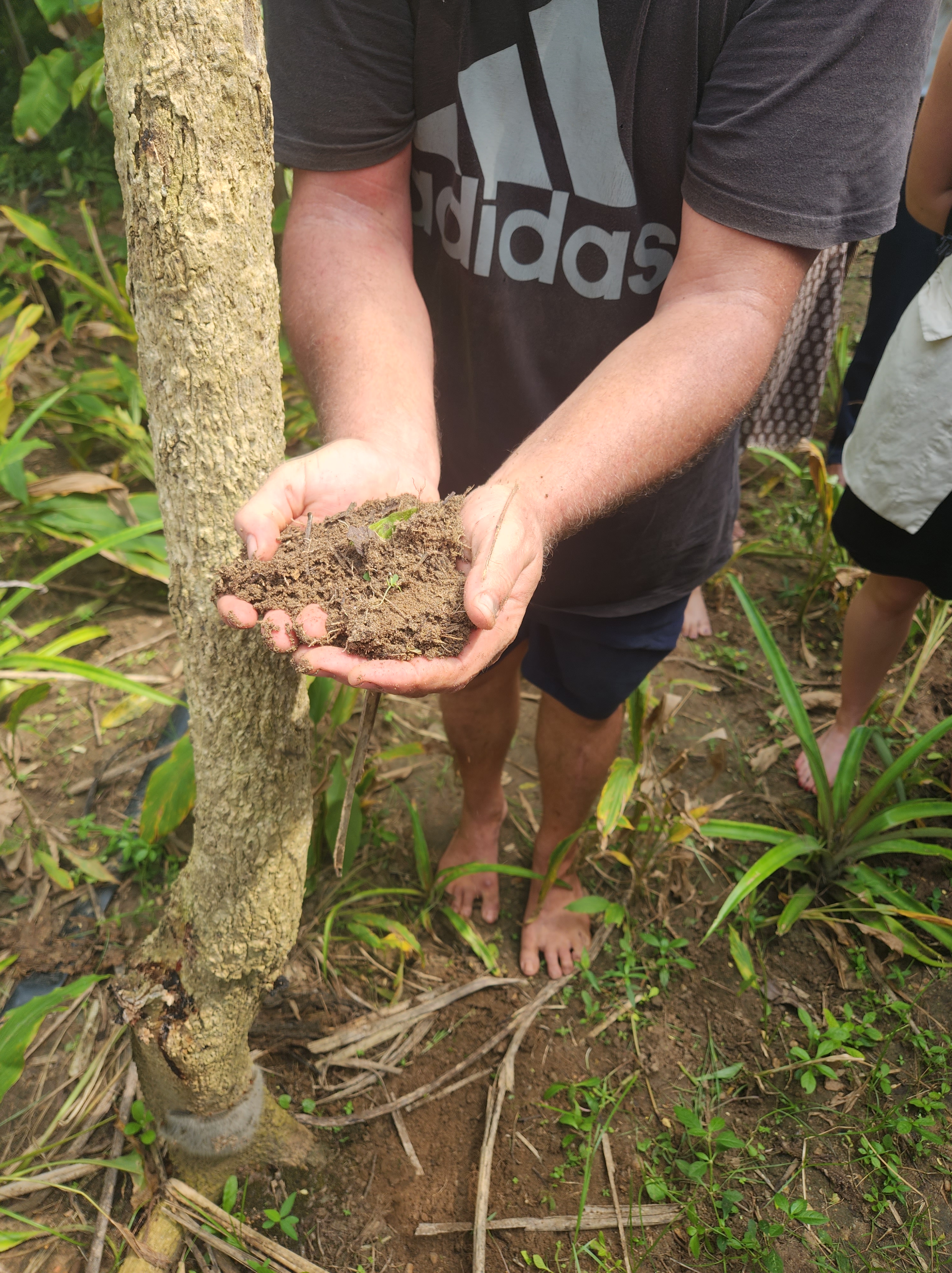
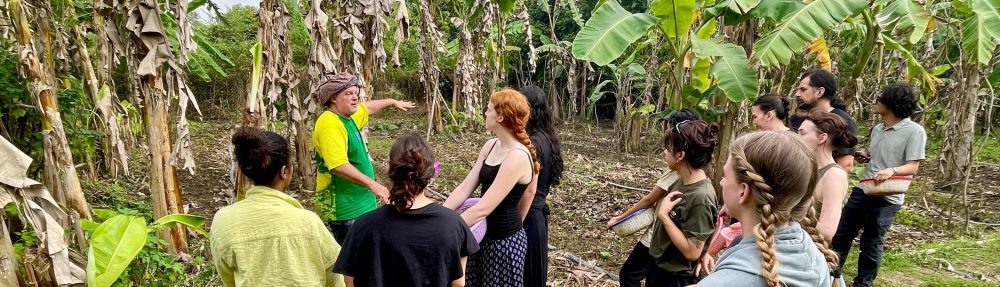
Where once stood a vacant lot of barren earth is now a lush garden. Garden may be a strong term for the operation at Solitude Farms however, one can not disagree when the produce it bears is of such high quality. The entropy of solitude farm is entirely intentional, allowing nature to rebound back to its lush vibrant interconnected self while also benefiting from the bountiful fruit it bears. Like the nutrients in the soil which were brought in by composting and anti-desertification efforts the progenitor of Solitude Farms is also a transplant, and much like the plants and vegetables in the farm, Krishna, not his birth name, has become completely enmeshed in the homeostasis of the environment. A wealth of information, Krishna, who is originally front the United Kingdom, is seldom seen without his signature turban shading his bare head from the sun. As he walks through his fields navigating a seemingly invisible path to the untrained eye he can pluck any bean, leaf, or branch up and talk at length about its health benefits, and how to cultivate and cook it. His loud boisterous voice commands attention just as much as the sparkle in his eye or the warm demeanor he radiates when talking passionately about his farm. Almost the entirety of the food that is served at Solitude Farms is grown on premises. The only thing not grown on site are the grains which require much more space for cultivation. On the menu, written in chalk, as it is ever-changing are today’s options. There is always the “thali of the day” and the “farmers’ salad” which change daily based on their harvest each morning. Next to each of the ingredients are listed their health benefits and properties. Some vegetables are described as good to fight inflammation, while others are cited as good immune boosters, and still, others are advertised as mood boosters or good for autism and ADHD. While rice is a staple in Indian cuisine it is rarely seen at Solitude Farms. The “thali of the day” usually favors local grains that are richer in nutrients over rice, which also usually consumes more water in its cultivation. The cafe itself is a place of community, with large family-style tables that encourage people to mingle and enjoy their meals together. Locals and adventurers alike bump elbows and share meals trading stories over a hyperlocal lunch. Solitude Farms also holds community events, often featuring Krishna’s band. The Krishna sings in both English and Tamil, and the band features western instruments like the electric guitar as well as local percussion instruments. If you’re lucky enough you’re even able to hear the band practicing while enjoying your freshly picked lunch.
Serving their first batch of crop-to-cup coffee in 2008 Marks coffee of Auroville has become a local landmark and winner of the 2022 aromatic brew & beanery award. Founded by Marc Tormo who arrived in Auroville in 1997, they now produce 12 tons of roasted coffee a year. Their holistic approach empowers the people it touches at all levels from farmers to drinkers without compromising the environment. Specially chosen beans from across India ensure a delicious brew every time, and sourcing directly from farmers helps to bolster producers’ income while maintaining ecological integrity and nurturing the communities that produce their coffee. In establishing a link directly from the producers to the consumers, and doing all roasting in-house Marc’s Coffee is able to ensure fair wages for the growers and hand-pick only the finest beans. All coffee purchased by Marcs Coffee is bought at premium prices. In line with the ethics of Auroville, all the coffee purchased is produced in a sustainable fashion. This is due to India’s coffee plants being entirely shade-grown instead of clearing forests for production, trees are actually encouraged for the shade they produce, allowing coffee groves to easily coincide with the native permaculture. One of the best examples of Marc’s selections is the Halli Barry estate, an estate run entirely by women. The business is a family affair, consisting of Marc, the owner, his wife, in charge of logistics, and their son, Eden, in charge of quality control for other places that use their product. Beyond the beans, the cafe also gives back to the village of Auroville. The cafe is a place of community and a regular hang-out for locals and travelers alike. The interior is built and furbished entirely with repurposed wood, and all of their accouterments are sourced from local artisans, nurturing the community that supports them. Another example of their dedication to community building is their sourcing of products for their delicious homemade baked goods, such as their eggs. They pay half of their year’s order in advance to allow farmers to produce the quantity they need without taking out loans which are usually at astronomical interest rates. The cafe is also staffed predominantly by members of surrounding villages. This brings income back to local communities that otherwise have few other options and shares the knowledge of food service and hospitality cultivated by Mark through his years in the F&B industry in Spain. In a new chapter of their project coffee is working towards educational opportunities and training of high-level baristas, something not widely available in India. In Marks’ philosophy, coffee brings people together, and is a source of community, it uplifts people in both its cultivation and consumption. In his own words “who would have thought all this could fit in a humble cup of coffee”
Is there a simpler therapy than sinking our fingers into rich soil and uprooting what prevents us from growing into our best selves? I arose early on Thursday morning, surrounded by air still heavy with mist, to weed the ground of what prevents its lasting success. Anticipating a rain that wouldn’t grace our skin until Christmas Sunday, the first gift to be opened by many, my bike cut through the fog from the Tibetan Pavilion to a garden rooted in the spirit of peace and giving. With morning gusts of wind gliding past my sunscreen-soaked cheeks, I was reminded of summers spent with my nose buried in tomatoes, slapping watermelons and pinching peaches, white sneakers meeting the caress of wet grass and suddenly when the gravel rocked my front wheels and I struggled to keep steady I hit the brakes.
Buddha Garden is the oasis that Octavia Butler dreamed of. A garden, curated with the intention of growing food with the awareness and love of community. Buddha Garden is the promise of life everlasting. Their produce is grown with the purpose of connecting and nourishing every part of our physical and spiritual being. How many gardens are conceived with the dream of food produced with the aim to nurture our loved ones and the earth that we receive it from?
Buddha Garden pledges sustainability by possessing everything it needs to grow food on its ten acres of land. They use three out of the ten beds in the garden to carry out smart water research that hopes to avoid overwatering and subsequent waste of water on crops. Paces away from abundant plant beds stand a chicken coop where surely eggs are harvested for the morning egg white omelet -a personal favorite- but the compost composed of the chicken waste is then repurposed into fertilizer for the very herbs that add the finishing touch to any meal.
For Buddha Garden, sustainability is about teaching and ensuring the value of farming so that the next generation is not only able to sustain themselves but that they become active participants in the maintenance of their ecosystem. It falls perfectly in line with UN SDG goals of zero hunger and responsible production and consumption. Sustainable gardening’s more than just an ethical practice, the prohibited use of chemical fertilizers and pesticides ensures the safety of local wildlife and the longevity of the ecosystem overall. The maintenance of healthy soil and vibrant plant life also prevents flooding in an area rocked by the monsoon season. This model of gardening is something to aspire to. As the world around us changes for the worst due to our own negligence, it is inspiring to appreciate a pocket of lush, green, hope where we emphasize being present in a system that values our added contribution rather than senseless extraction.
Sustainable gardening can also strengthen communities. By sharing produce with neighbors and participating in community gardens, you can build relationships and create a sense of community around healthy and sustainable food production, as we did.
Early this morning, my fingertips rooted themselves in the holes left by the weeds, and I laughed. I laughed as someone with exhaustion sitting heavy on my shoulders and wrapping its arms around my forehead, but also as someone who had finally laid on the couch after a long day away from home and put that child to rest. The soil beneath my nail bed had never known comfort like this and even when they were later scrubbed into oblivion, swirling down a drain alongside the element that breathes life into them and 70% of which flows through me, it was not a goodbye but a see you in the next field.
There is an unspoken romance… a poem – yet to be written-about giving a piece of yourself to a planet that has already given so much to you. I think that Buddha Garden captures that love story in a way I struggle to depict with words. What is love if not pouring the best of ourselves into something so that it may be returned to us ten-fold?
If there is anything to be taken away from this experience, it’s that to be in community with each other, we must first be in community with the ground that sustains us. To give to her is to give back to us, and her perseverance ensures our longevity.