Pondicherry

By Donatella Jackson

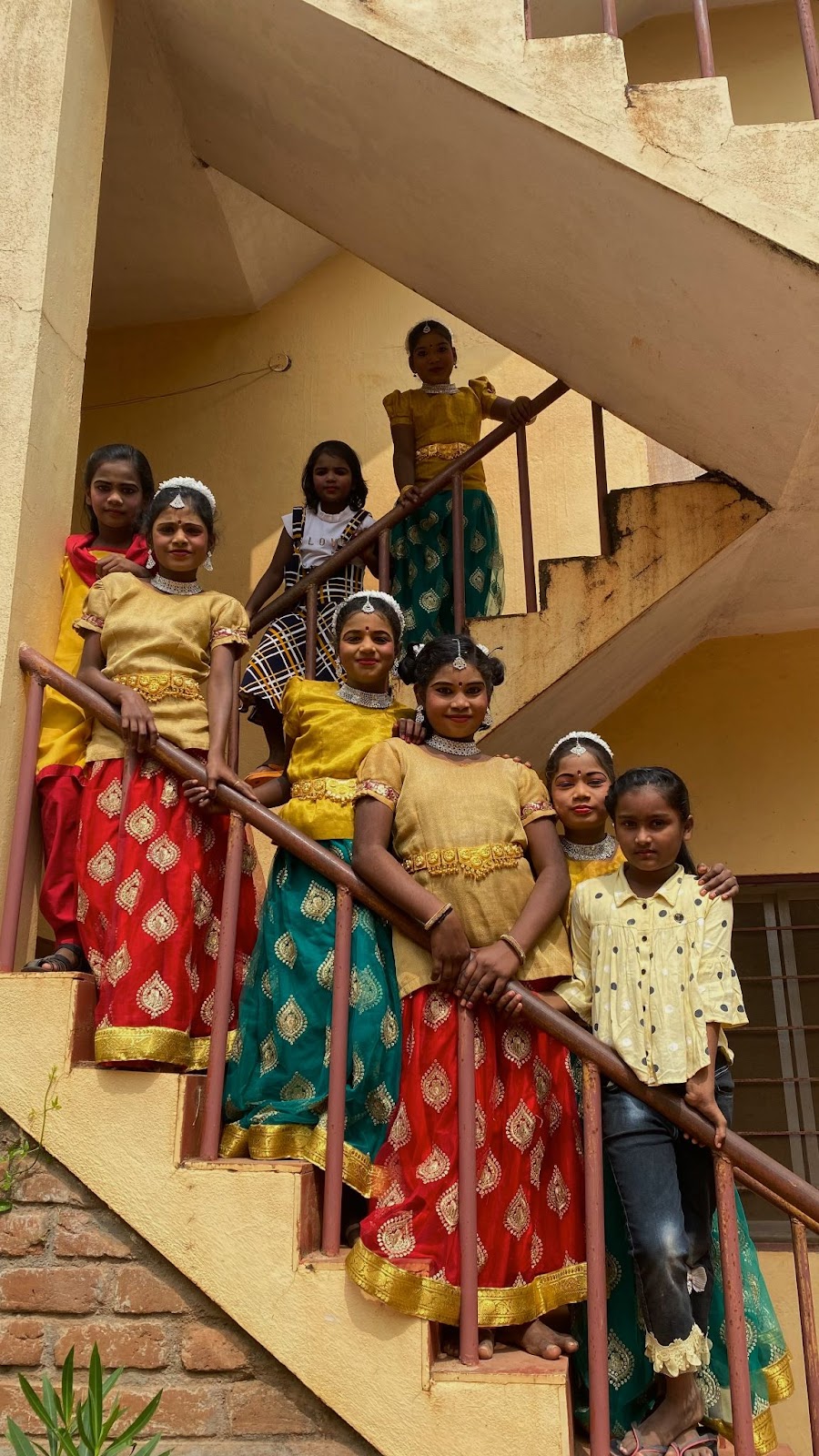
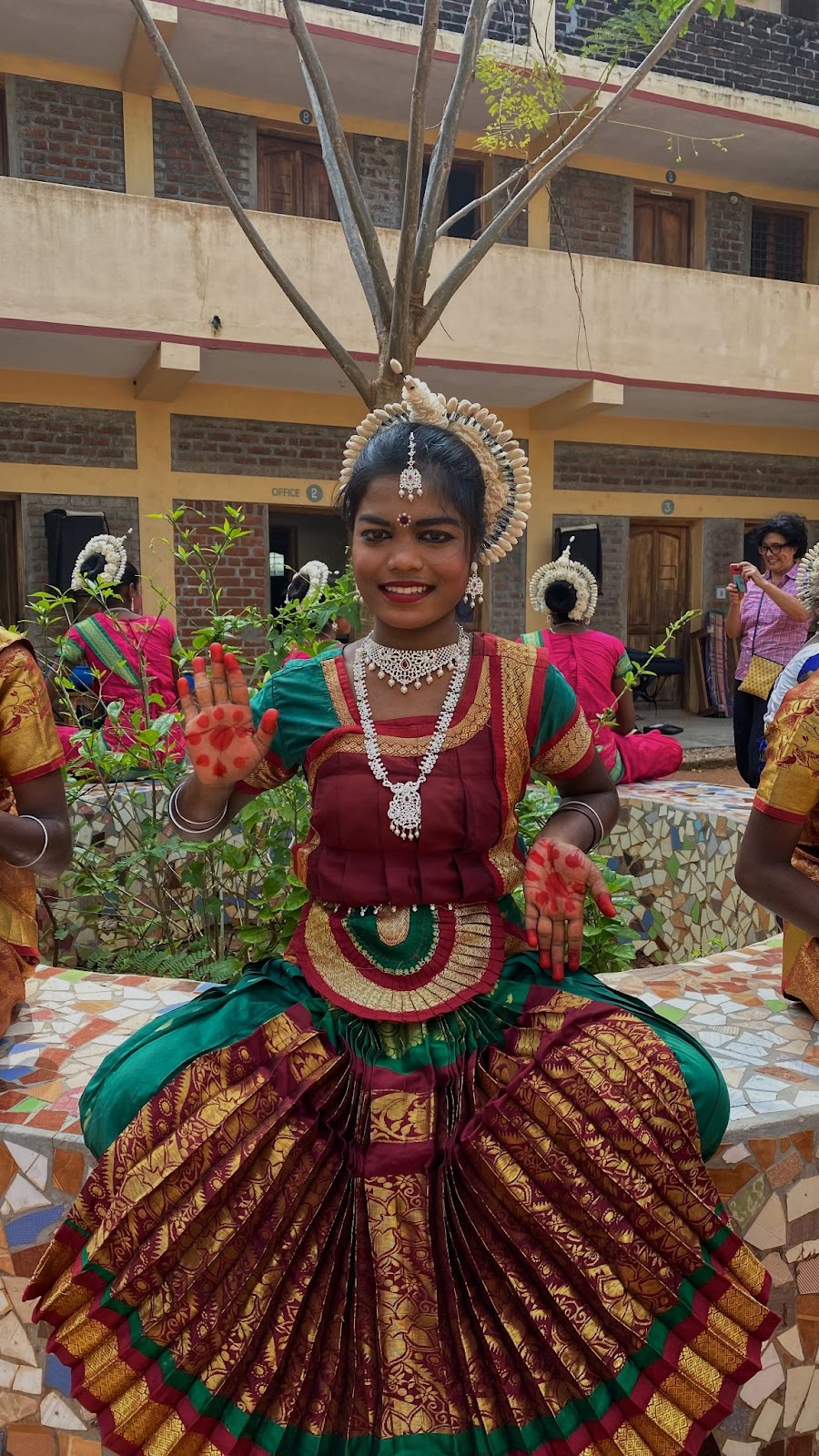
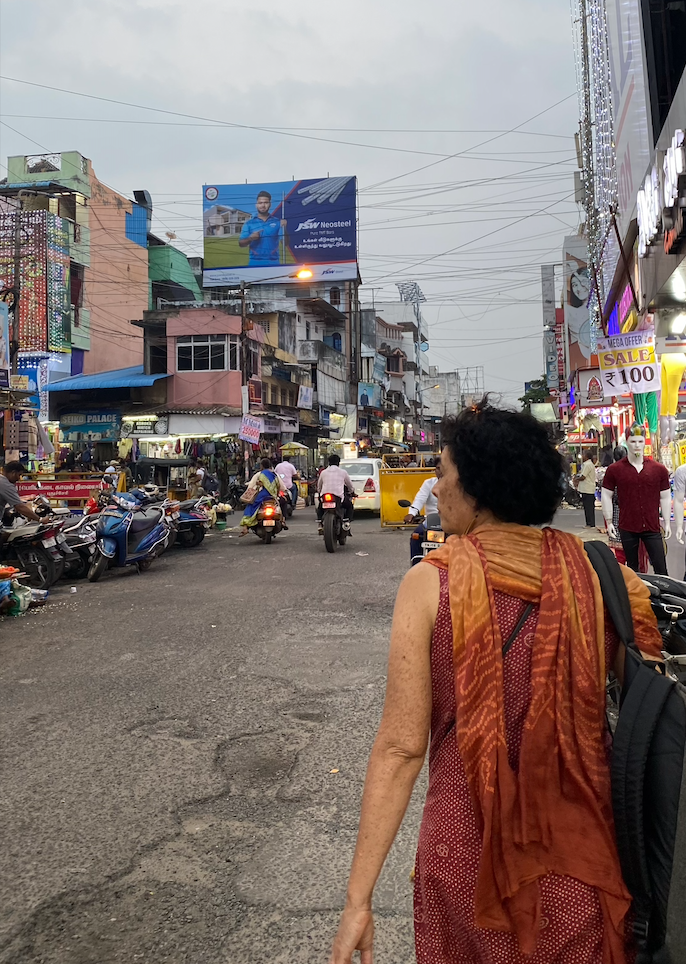
Pondicherry is a city beaming with life, as vibrant as its architecture. Houses dressed in bright blues, bubblegum pinks, and lemon yellows provide a stark contrast to the dull grays and beiges of Paris, France. Pondy, a city of 877,00 people is located in the southeast coast of India, 3 hours from Chennai and 30 minutes from the city of dawn, Auroville. First occupied by the Portuguese in 1523 and then later by the French and the French East India Company, Pondy got its name from the French interpretation of “Puducherry”, pondi meaning new and chery meaning settlement. Replete with history and culture, Pondy’s main language is Tamil, one of the living classical languages with over 74 million speakers worldwide and with writings that can be traced back to as early as 3 BCE. 

Despite its eclectic beauty and rich history, the city is marred by the pungent smell of slow-melting plastic waste left In untreated standing water. Waste management in Pondy is poor and as the Yatra Foundation demonstrated it is not solely an issue of lack of access to proper facilities, but it is also a lack of education and a distancing from historical cultural practices after colonization. 6% of India’s total population lacks access to safe water and 15% continues to practice open defecation. Additionally, there are more cell phones per household than there are toilets. In a society, where wastewater, sewage, fertilizer, pesticides, and industrial waste are some of the most common sources of water pollution, it also contributes to waterborne illnesses and death. 

Since our arrival in Pondy, I’ve been fascinated with waste management and the apparent neglect of safe water practices. What I had thought was an over-exaggeration made by the Yatra foundation video was almost an underrepresentation of the sad reality of day-to-day life. After later visiting the Mohanam cultural center, I was almost surprised to learn that water was considered sanctimonious in Indian culture. Holding not only spiritual significance, but an intrinsic connection to Indian society and culture as notions of purity and pollution determine much of the caste-based social hierarchy, as well as who has access to clean water and who doesn’t. 

Water, since the Vedic period, has been recognized as a spiritual symbol and a reflection of self through its connection to our physical and cosmic being. What then do polluted water sources say about how we view ourselves? 

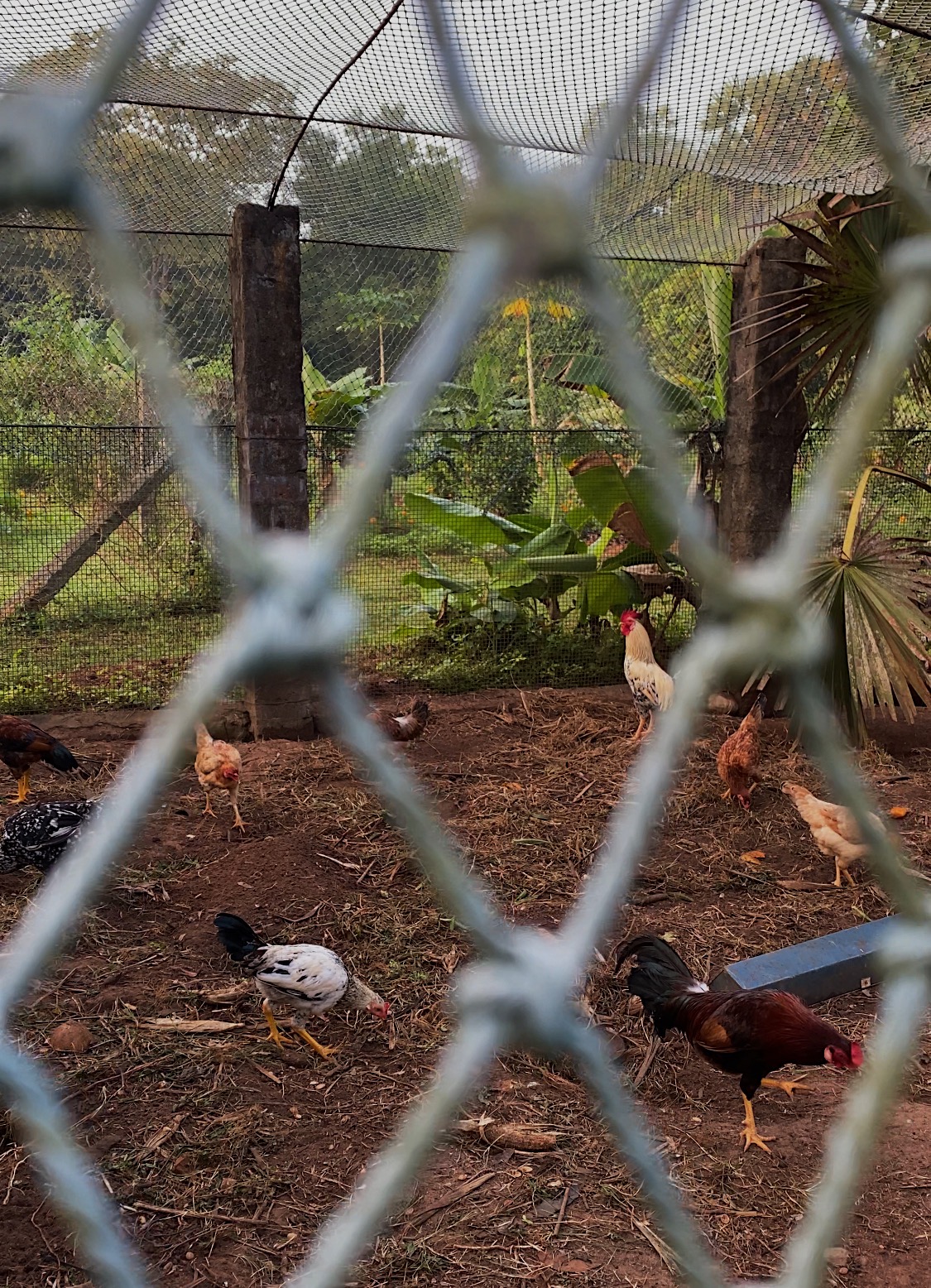
In visiting Sahodoran, I carefully stepped over mounds of plastic mixed with animal waste, observed chickens and their chicks scavenge for food amongst the rubbish, and stared in awe at plates of food that sat idly alongside standing water. In the context of this, I was taken with the concepts of liberation, access, representation, and what it means not just to be seen but to be acknowledged and then in time, hopefully, understood. We engaged in these conversations about transgender life in Pondy and the reality of the community turning a blind eye to your truth for years… seeing you but refusing to understand. I sat with that in the context of our current physical environment, surrounded by mounds of rubbish, behind a mote of polluted water, sitting inside a building that could be repossessed at any moment on the basis of intolerance and I questioned permanence and longevity as it corresponds to our identity and our surroundings. 

I wondered then if it was even possible to conceptualize liberation and accessibility if the foundation that we use to construct our plans is unstable, inequitable, inaccessible, and ultimately dangerous to our health. What would it take for something to move beyond being seen and stand in acknowledgment? 

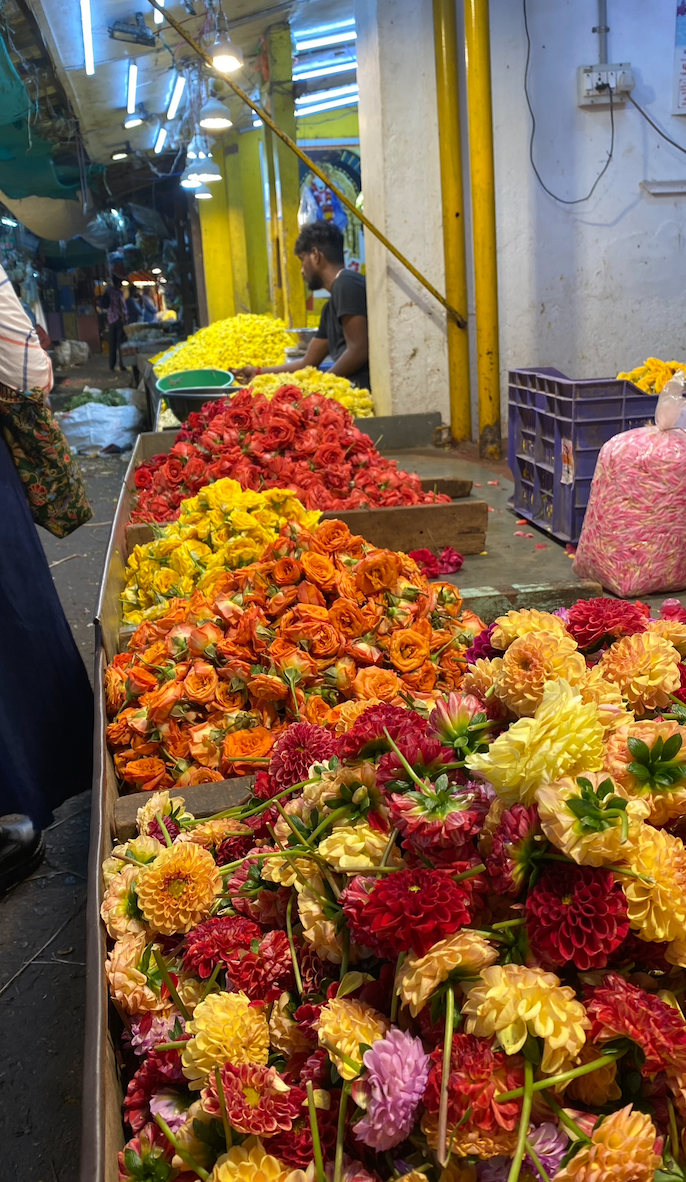
There is so much beauty to behold here. So much life to fill your cup with and enough warmth to ensure that It overflows. There is enough art at every corner with the attention to detail of mathematicians, depicting the story of a culture that has lasted through the ages…

 If that same attention to detail and warmth could only be applied to environmental education and reunification of the spirituality of water with a love for community and ourselves, it would not only ensure Pondy’s permanence and longevity but that of the people which make its colors so vibrant in the first place.

Chidambaram Temple

By: Popoai Tanuvasa-Lole

India has a number of massive & vibrant temples. As part of our Sustainable Development practicum, we visited Chidambaram Temple. According to our tour guide, Chidambaram Nataraja Temple is a Hindu temple dedicated to Nataraja, a form of Shiva. There are ancient roots behind this temple located in Chidambaram, Tamil Nadu, India. Further research revealed that the city’s name means “stage of consciousness”. 

Temples in south India were not just places of worship; they played a vital role in community life, discussing social, religious, and political issues of importance. These structures also served as training grounds for performing arts such as dance, music, and drama. In addition, temples were attached to educational institutions, where students learned about religion and spiritual life.

Experiencing Chidambaram

When you enter Chidambaram Temple, you are asked to remove your shoes and put your camera and phone away. That was the first indication to me that I was entering a sacred space. Nothing could have prepared me for the temple’s beautiful towers, artwork, and bodies of water. It was truly something that made you aware of how ancient and significant the location was.

There were many cows in the area, which is a sacred animal in Indian culture, as well as traditionally dressed priests. What I learned here is that priests are one of India’s highest castes, and tenants of the temple have been maintaining the space for centuries.I felt truly honored to be permitted into the space and to witness such an important part of Indian history.

Upasana: A Pioneer in Conscious Clothing

By: Popoai Tanuvasa-Lole

Auroville is home to a host of non-governmental associations. They span from art, sustainability, education, empowerment, and grassroots community work. Each specializes in assisting their specific cause. Upasana is one organization in Auroville that has done incredible work and has been recognized by the U.N. and UNESCO.

Upasana is not only a design studio, but a place where creativity, fashion, design, and social responsibility are woven together. Their rich stories and textiles culminate to create their conscious clothing brand. Founded in 1997, the studio runs many development projects around India. Such as their outreach program “Small Steps”, the Varanasi Weavers Project, and the Tsunamika doll project.

The Tsunamika Doll

One of Upasana’s most notable projects is the Tsunamika Doll. Tsunamika was created by Upasana as a symbol of hope for Tsunami victims, and now more than five million dolls have been made and distributed to over 80 countries. The project is entirely supported by the community. . People take the dolls and contribute according to their ability. The Tsunamika project has received an ‘Award of Excellence’ from the Government of India, as well as special recognition from UNESCO and inclusion in the United Nations Decade of Ocean Science for Sustainable Development.

Experiencing Upasana

I was most impressed by Upsana’s approach to carrying out its various projects and crafting their products, and I appreciated how they honor each step and person involved in their process. Passion appears to run through the veins of the organization, and I learned so much in my brief tour of the campus. One of which is how influential India is in the fashion industry. India accounts for 4% of the global textile and apparel trade. India is also a global leader in the production of several textile products, including silk, cotton, and Multimode Fibre.

Another eye-opening fact I learned while at Upasana is how the organization is attempting to alleviate India’s farmer suicide problem through the creation of their products. Currently, 30 people in the farming sector commit suicide every day, typically as a result of the overwhelming debt that farmers must incur as a result of not producing enough products to sell and survive.

Learning this made me think about the clothes I own, the places I shop for clothes both online and in person, and how much work went into making the clothes and then getting them to me. It may have cost people their lives. And that conversation will live with me for the rest of my life, and it’s a message that needs to be spread as the topic of sustainable fashion becomes more popular.

Waste-Less

by McCall Roy

How do you convey environmental education to the next generation in a way that is relatable, interesting, and impactful; through fun of course! Wasteless is an NGO based in Auroville dedicated to providing just that. 

We visited Ribhu, the co-founder of Wasteless, who explained how this non-profit organization is challenging environmental education standards by teaching kids about the problems that come with plastic, and micro-plastic pollution in a fun and interactive way. Working closely with students and teachers they have developed a curriculum called Sea change that is interactive and relatable.

Ribhu explained that as a society we place so much emphasis on cleaning up the mess we create but none on how to stop the problem. To convey the importance of integrating plastic education into elementary curriculum, He uses an analogy of a flowing water spigot; We tend to focus on cleaning the ever-flowing water without thinking about closing the tap! The Wasteless team is focused on just that. Through working closely with the students, and actively getting feedback to make the learning materials more exciting and understandable, Wasteless has produced textbooks, learning boards, and games, all with the help of the students. 

Supported by the National Geographic Society and the Thamul Government, Wasteless has engineered the first curriculum in the world that consists of games and fun activities to spread environmental education across the globe. Thus Far, Wasteless has trained and equipped over 300 teachers in India with a plastic curriculum. 

In addition to spreading plastic education in schools across India, Wasteless has organized beach cleanups, trash-sorting events, and a plastic fashion show where all of the clothing was created using discarded waste. 

Dedicated to spreading knowledge about plastic pollution, Wasteless is equipping future generations with the tools to make informed decisions in the realm of plastic consumption. By staying away from toxic materials and learning how to properly discard waste, Wasteless is disintegrating pollution as a cultural norm, teaching environmental sustainability, and ultimately “closing the tap” so that future generations can halt the flowing spigot. 

Thamuri:

By McCall Roy

Situated in a few neighboring villages just outside of Auroville, Thamuri is an after-school program dedicated to providing the youth in surrounding communities a space for homework help, wellness, and personal development. 

Thamuri operates out of two centers offering kids the chance to explore the field areas of STEM, sports, typing classes, and wellness activities. Many schools in South India lack the proper tools to teach STEM, making Thamuri an important resource for interested students. Through normalizing STEM and providing quality instruments like 3-D printers and computers. Thamuri also offers a space where kids are free to play sports and games outside, helping kids keep healthy and stress-free throughout the school week. 

The non-profit is run by 2 ex-Thamuri members, consisting of 9 facilitators as well as 5 other members working in the background. As of our visit, they have 130 children enrolled in the organization between the two centers. Whoever is interested can join the program and all youth are welcome. 

As well as being a necessary help for students, Thamuri is also helping the environment by keeping an eco-friendly orientation. The building we visited was equipped with rainwater collection technology within the design of the structure. They operate mostly off of solar energy and also have an eco-toilet on campus. 

A successful non-profit that came about because working mothers banded together to advocate for an after-school program has become a space for learning, creativity, empowerment, and wellness. Thamuri has created a new standard for after-school programs, and through doing so has helped youth all over the surrounding area succeed in school and life. 

Green Silk Road Caroline Friedman

Gijs, a man from the Netherlands who lives in Auroville now, came to speak to us about reducing carbon footprints and travel methods. On a flight from Paris to Chennai, your carbon footprint would be 1.13 metric tons. If you travel by land, that would be cut down by ten times. Gijs came up with the Green Silk Road because he wanted to be able to visit his mom in the Netherlands but wanted to avoid flying there and back because he was concerned about reducing his carbon footprint. The Green Silk Road aligns with sustainability goal #13 takes urgent action to combat climate change and its impacts. The Green Silk Road is a trip done every year on land from Auroville to Europe. He is hoping this will become a way for Aurovillians to travel from Auroville to Europe in the summers because many people leave to work or escape the heat. Getting to Europe will be a five-week trip there and five weeks back. Throughout the journey, they stop in villages for a couple of days and exchange and teach skills. Until planes become more environmentally friendly, this seems like the most environmentally friendly way of travel. 

ADECOM Network Caroline Friedman

On December 19th, we made our first trip to Pondicherry, where we visited ADECOM Network. ADECOM Network is an organization helping oppressed women claim economic, social, and political rights. They align with UN Sustainability Goal #5 to achieve gender equality and empower all women and girls. They mainly help women who are a part of the Dalit class experiencing domestic violence or gender-based violence at home. The ADECOM network offers so many services to women apart of oppressed groups in Tamil Nadu. 

ADECOM helps women gain skills they can use to earn income through skills training and development. They offer free classes in tailoring and tech to help women get jobs. Another way they help women is by giving a woman who wants to be a leader in her community a sewing machine and having her become a community leader and help other women with their sewing. They also train boys and men throughout the villages through masculinity trainings. During this masculinity training, they break down gender roles and encourage household equality. 

Many women have trouble leaving a marriage when there is abuse involved because they have nowhere to go once they are married. ADECOM provides women in urgent situations a temporary shelter so they can get away from violence. They also offer free legal support so the women can know their rights.

ADECOM Network hopes to open a location in France to raise funds and gather volunteers to return to India. 

YATRA Arts Media

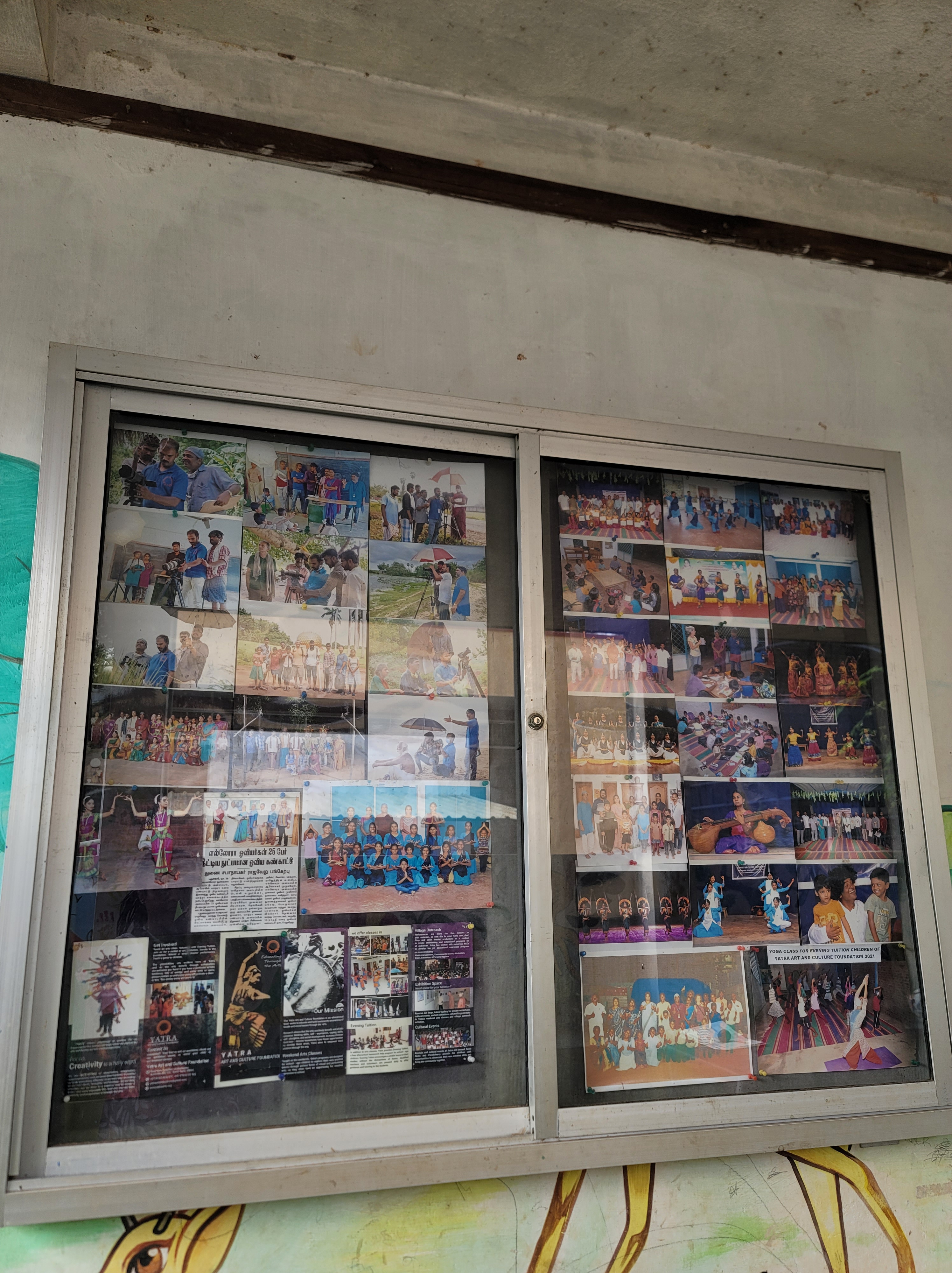
YATRA Arts Media was founded in 2002 by Yatra Srinivassan. Yatra utilizes short films and theater as an educational tool on societal problems that range anywhere from littering to alcoholism. Dhanamma, a short film that tells the story of a girl who is forced to work to maintain her family instead of going to school because of her father’s alcoholism. Meanwhile Mattram highlights the importance of hygiene and why trash should be properly sorted.  

YATRA takes an interesting approach to casting. In short films, the actors are usually already associated with the organization. The theatre groups are different because there is a strong push to use the local people. The traveling theatre groups gather their audience by word of mouth and announcements on megaphones. Ultimately, the goal is to gather as much audience participation as possible.  

After film screenings or theater performances, Yatra begins by opening up a discussion about the topic. Yatra explains that often, local viewers are hesitant to open the discussion but are open to talk once the discussion gets going.  

YATRA also offers tuition (an after-school program within this context). Students can choose from a wide variety of artistic activities; dance, paint, music and acting. Art exhibitions are held at the facility in order to exhibit the art created by the students.   

They help keep traditional song and dance alive while still providing children a safe space to attend after school. 

Upasana’s External Projects: Tsunamika and Smallsteps

by Mary Noorlander

Upasana is a conscious clothing brand motivated by service, wellness, and community. This means Upasana’s mission does not start and end with ethical fashion; the brand has a network of external projects. These include Smallsteps and the Tsunamika project. 

Launched on Earth Day 2007, the Smallsteps project aims to cut down on plastic waste. The average person uses 500 plastic bags a year – just one Smallsteps bag can eliminate this waste entirely. 

Smallsteps is a promotion of conscious consumption, and every step in the creation process gives back. Smallsteps bags are crafted by women in rural areas, affording them reliable employment opportunities. When you buy one Smallsteps bag, you are becoming a part of a much larger movement. 

Tsunamika is another program of Upasana’s, one which promotes ecology, education, and women’s empowerment. The Tsunamika Project began in 2005 following a disastrous tsunami in southern India, and carries on today.

This venture into upcycled artwear put to use leftover scraps of Upasana fabric in order to make small cloth dolls. Tsunamika dolls are created by women in local fishing villages affected by the Tsunami. Even today, years following the disaster, women rely on Tsunamika to earn their living. Tsunamika is always gifted, never bought, and stands as a ‘symbol of hope.’ 

Upasana is a brand dedicated to conscious clothing, and endeavors to promote community beyond their immediate mission.

Eco Femme by Mary Noorlander

Photo by Natracare

Every woman has a clear memory of the first time she got her period. For me, I was just shy of twelve, and was too embarrassed to tell anyone until the following morning. This is an all too- familiar emotion amongst young girls, which often carries on into adulthood: shame. Whether we are speaking about a twelve year-old me crafting a DIY toilet paper pad in my aunt’s bathroom, or a girl in Tamil Nadu, India isolated from her family for that introduction into menstruation, young girls are too often told they have ‘become a woman,’ without any tangible information about what that means for their bodies. This lack of access to knowledge about our own bodies is the root of all that unproductive, frightening shame. 

Eco Femme is combating this centuries-old pattern; since 2010, this woman-led social enterprise has been providing education to young girls and older women, reducing waste, and implementing community support. 

Eco Femme is empowering young girls through education. Based in the Tamil Nadu district of India, the organization is engaging in a particularly loaded conversion. Though dialogue around menstruation in India has very recently—after a long tradition of social taboo—opened, the majority of young women (71%) remain unaware about menstruation until they get their first period. Even then, girls are in the dark about the biological information about menstruation, or the range of products available to them. 

This lack of awareness is a serious issue, and the dearth of access to menstrual products, or even ways to dispose of those products, have even more detrimental effects on the lives of young women. Every year, 23 million girls drop out of school due to a lack of: menstrual hygiene management facilities, availability of sanitary pads, and education around menstruation. The effects of menstrual taboo run deep, and can derail the futures of these young women.

Through its Pad for Pad programme, Eco Femme is pushing back against the silence surrounding menstruation. This initiative is designed for girls under the age of eighteen, and offers an introductory overview about the fundamentals of menstruation: its phases, how to track one’s cycle, and how to prepare for menstruation if it has yet to be experienced. 

A key point in Pad for Pad’s curriculum is the inclusion of all menstrual products available to young menstruators. Instructors cover all options in detail: how to wash and use products, as well as how they are produced. Once these girls have been given the knowledge to allow for informed choice, those who are interested in cloth pads are given a free product from Eco Femme.