AVAG: Weaving Dreams of Empowerment and Resilience

By Kathryn Galloway

In the heart of Auroville, a beacon of participatory development shines bright, driven by a simple yet profound mantra: empower communities to shape their destinies. The Auroville Village Action Group (AVAG), since its modest inception in 1983, has blossomed into a powerhouse of collaborative efforts, breathing life into the dreams of marginalized groups and striving for a harmonious, secure, and resilient society.

At the core of AVAG’s mission is the belief in inclusive development. Their stakeholders form a diverse mix, including women, men, youth, school children, teachers, farmers, and both traditional and elected leaders. Yet, it is the most marginalized—the single women, the elderly, dalits, farmers, artisans, and small business owners—who occupy the center stage of AVAG’s unwavering commitment.

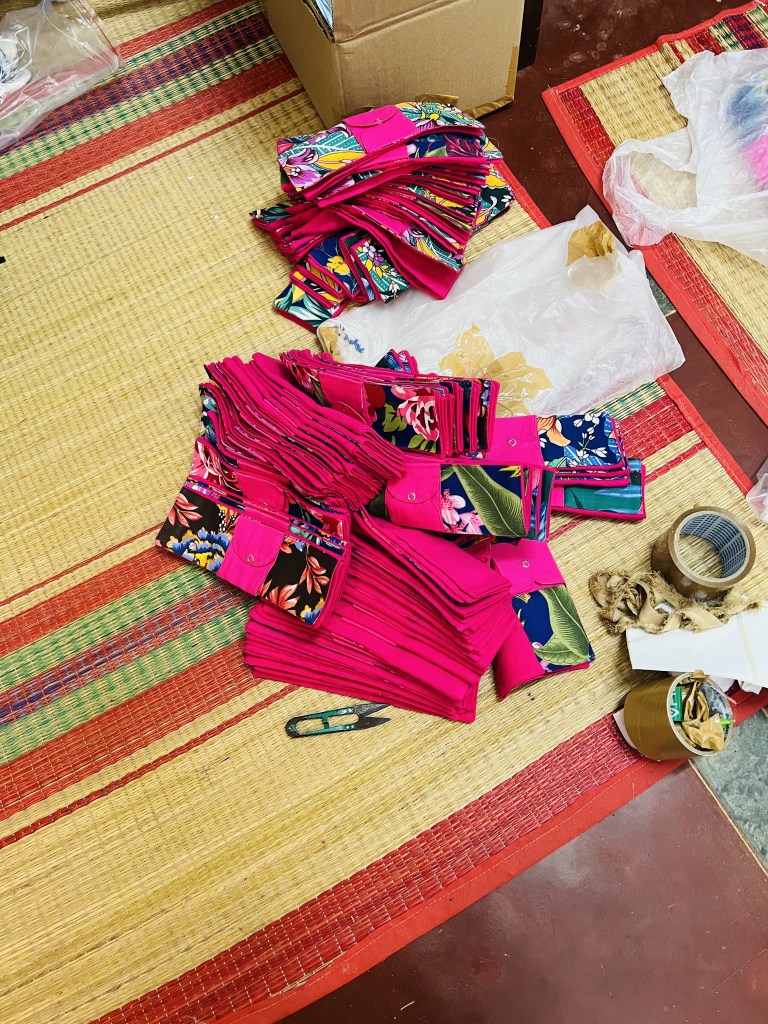
To begin our visit, Makizh Selvam, the office manager, welcomed us into the world of AVAL—a brand crafted by women for the benefit of women. AVAL, meaning ‘she’ or ‘her’ in Tamil, is a social enterprise born from the nurturing hands of AVAG that seeks to uplift the aspirations of marginalized women through skill development in tailoring and crocheting. Every handcrafted product emanates love and devotion, a tangible symbol of self-reliance and self-empowerment. AVAL stands as a testament to the convergence of rural women and urban designers, creating products that embody beauty both inside and out. In a span of 7-8 years, AVAL has become a sanctuary where conscious consumers find more than just products; they find a connection to a cause.

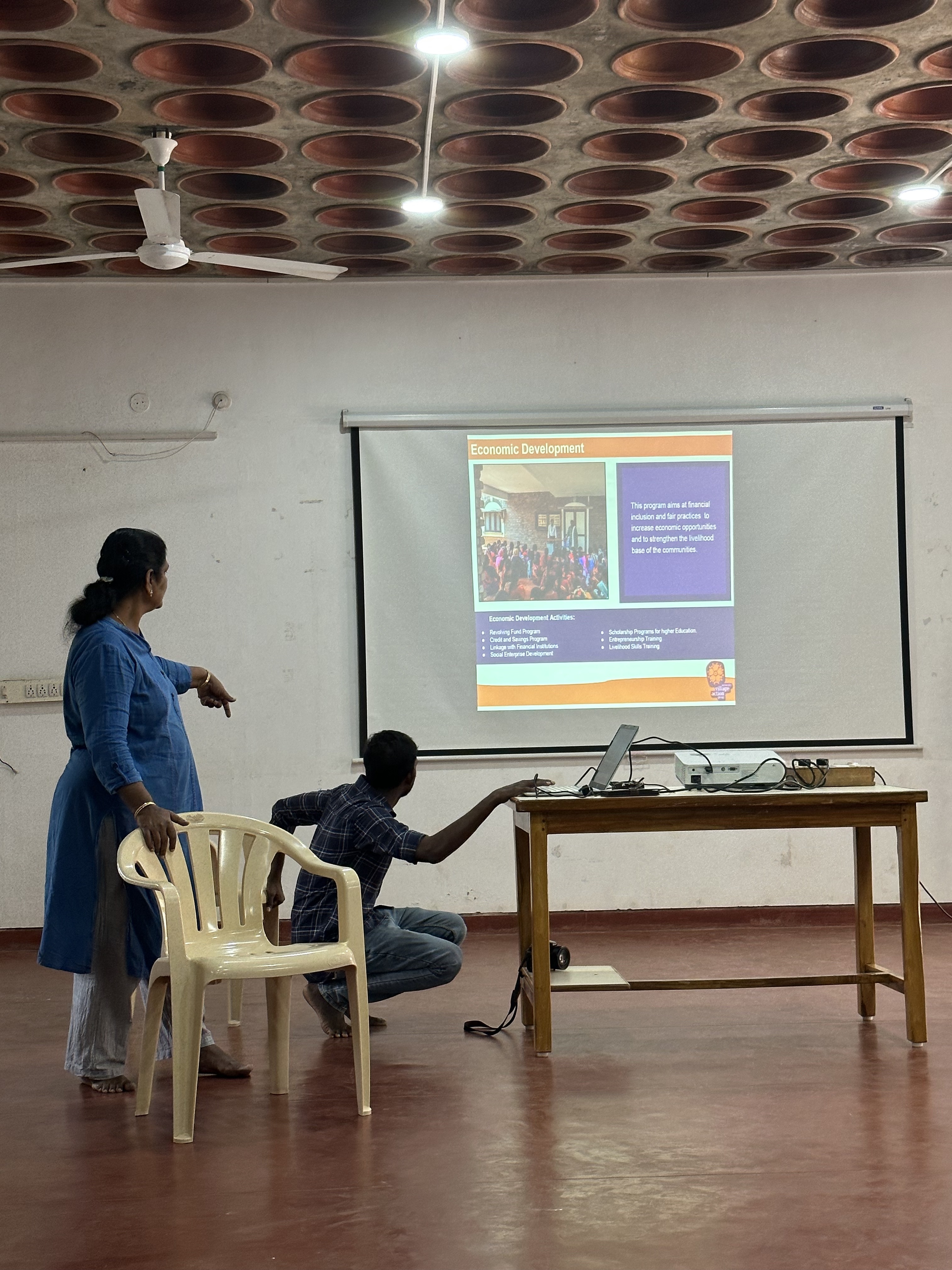
After we perused the racks of the AVAL shop, Anbu Sironmani, AVAG’s Director, shared more information on the organization’s key initiatives. Community development, capacity building, economic growth, and psychosocial support form the pillars of their holistic approach. From personality development to agriculture, AVAG’s initiatives encompass a spectrum as diverse as the communities they serve. Particularly noteworthy is their emphasis on participatory economic growth, ensuring that the development of marginalized groups is rooted in genuine needs and inclusive practices.

AVAG doesn’t just offer support; it nurtures resilience. The psychosocial support they provide is a lifeline, weaving a safety net of mental and emotional well-being for individuals facing stress and trauma. In AVAG’s world, empowerment is not just a concept; it’s a tangible reality carved out of genuine understanding and collaborative effort.

If Auroville is a tapestry, AVAG and AVAL stand as vibrant threads, weaving dreams of empowerment, resilience, and a community where every voice is not just heard but celebrated. They are crafting a narrative of inclusivity that resonates far beyond the borders of Auroville—a testament to the transformative power of community-led development.

Wasteless

Wasteless is an organization founded by Ribhu who was born and raised in Auroville. It is committed to education around waste and how to promote a circular system. They hope to inspire change by using creative techniques to change how people view waste. Instead of focusing on recycling, they try to encourage lowering waste production. They use a metaphor of a running tap soaking the floor while you constantly try to mop it up. The idea is not to just mop, but to shut off the water! Most global waste management strategies focus on what to do with the waste rather than creating less of it, so this is a new way to address a new problem. I think many people do not try to stop creating waste because it seems unachievable, and it probably is. However, we can reconsider how we do produce waste and what we do with it after. One of their big projects is Sea Change. Ribhu in his presentation to us explained how the Wasteless team came up with a program to be used in schools that teaches children about oceanic environmental topics. This makes it easier for teachers to incorporate these topics in their classrooms when the lesson plans have been made by people with specific education around oceanic waste. These programs are now being used in schools in India. It is very important that Indian students are aware of this issue as it disproportionately affects them and is not discussed enough in classrooms or at home.  He helped us understand both why we should consider our own waste production as well as what the organization was doing to make differences in this.

Bamboo Center

The Auroville Bamboo Center is a local hub for bamboo education. The project manager, Balu, is passionate about spreading the word about how bamboo can be used in different ways. The center hosts workshops and has bamboo art, products, and structures on display. The hope is that from this education, people will incorporate more bamboo products in their life. There are classes taught at local schools to inform the people of Auroville on the potential uses of bamboo and it’s environmental effects. If we are using more bamboo products in place of other materials, we support the production of bamboo forests. Bamboo forests are an important environmental tool to soak up carbon dioxide from the air, allowing nature to heal itself. Bamboo is a very unique plant and due to its durability can be used in diverse ways. Some ways the bamboo center is promoting bamboo products is through food, teas, fabrics, bio charcoal, buildings, furniture, and more. India is the 2nd highest consumer of bamboo right behind China, and this is important because these are countries that are heavily impacted by pollution. It is essential that India finds creative ways to combat climate change in the changing environment. Balu stresses the importance of local intelligence in the changing bamboo market. More and more interest is forming around bamboo due to its powerful healing properties, but it is important that new bamboo farms lean into the traditional farming methods to get the most benefit from the practice. For example, commercial bamboo farms popping up in Northern India, Eastern Europe and the United States have started using pesticides on the farms and harvesting the crops too early. If they took into consideration indigenous bamboo farming practices, they would know that bamboo grows in harmony with other crops such as vegetables that could serve as a permaculture experience making pesticides totally unnecessary. Bamboo trees can grow for more than 40 years with no replanting, the plant is able to reproduce and maintain itself, making the forest harvesting every 2 years counterproductive. Balu teaches us that bamboo should be planted in harmony with the earth. It has practical as well as spiritual value, and the Auroville Bamboo Center reflects this through the forest and the people passionate about it.

Sowing Sustainability: AuroOrchard’s Organic Oasis

By Kathryn Galloway

In the heart of Auroville lies a green haven with roots dating back to 1969—AuroOrchard, the second-largest farm spanning 44 acres. Nestled on one of the oldest plots in the community, this agricultural gem serves as the lifeblood, cultivating not just fruits and vegetables but embodying a mission to nourish the Auroville community.

Initiated with a clear directive from The Mother herself, AuroOrchard’s purpose transcends the mere provision of sustenance. It’s about quality and quantity—a commitment to ensure that the community thrives on the fruits of the land it calls home.

The farm boasts a diverse produce portfolio, ranging from fruits like papaya, lime, avocado, and jackfruit to a rich array of vegetables, medicinal herbs, teas, loofah sponges, and even grass for making brooms. AuroOrchard isn’t merely a farm; it’s a self-sustaining ecosystem, featuring cows that contribute not only to the dairy aisle but to the farm’s fertility through their dung and urine.

The farm’s organic metamorphosis started in 2012 as they began to embrace regenerative organic farming (or agro-ecology.) Beyond sustenance, the focus pivoted towards enhancing soil health and overall farm ecology. AuroOrchard’s transformation mirrors Auroville’s overall commitment to sustainable living.

A significant leap forward involves the systematic recording of production data, a crucial step towards a more efficient future. The farm aims to capture insights into production cost, seasonal crop productivity, and overall productivity metrics. In embracing this data-driven approach, AuroOrchard aims not just to cultivate crops but to cultivate a resilient, sustainable future. The farm doesn’t merely grow; it thrives, adapting and evolving as it continues to contribute to the vibrant agricultural scene of Auroville. AuroOrchard stands as a testament to the power of community, sustainability, and the perpetual cycle of growth.

Shradhanjali

by Riley Osborn

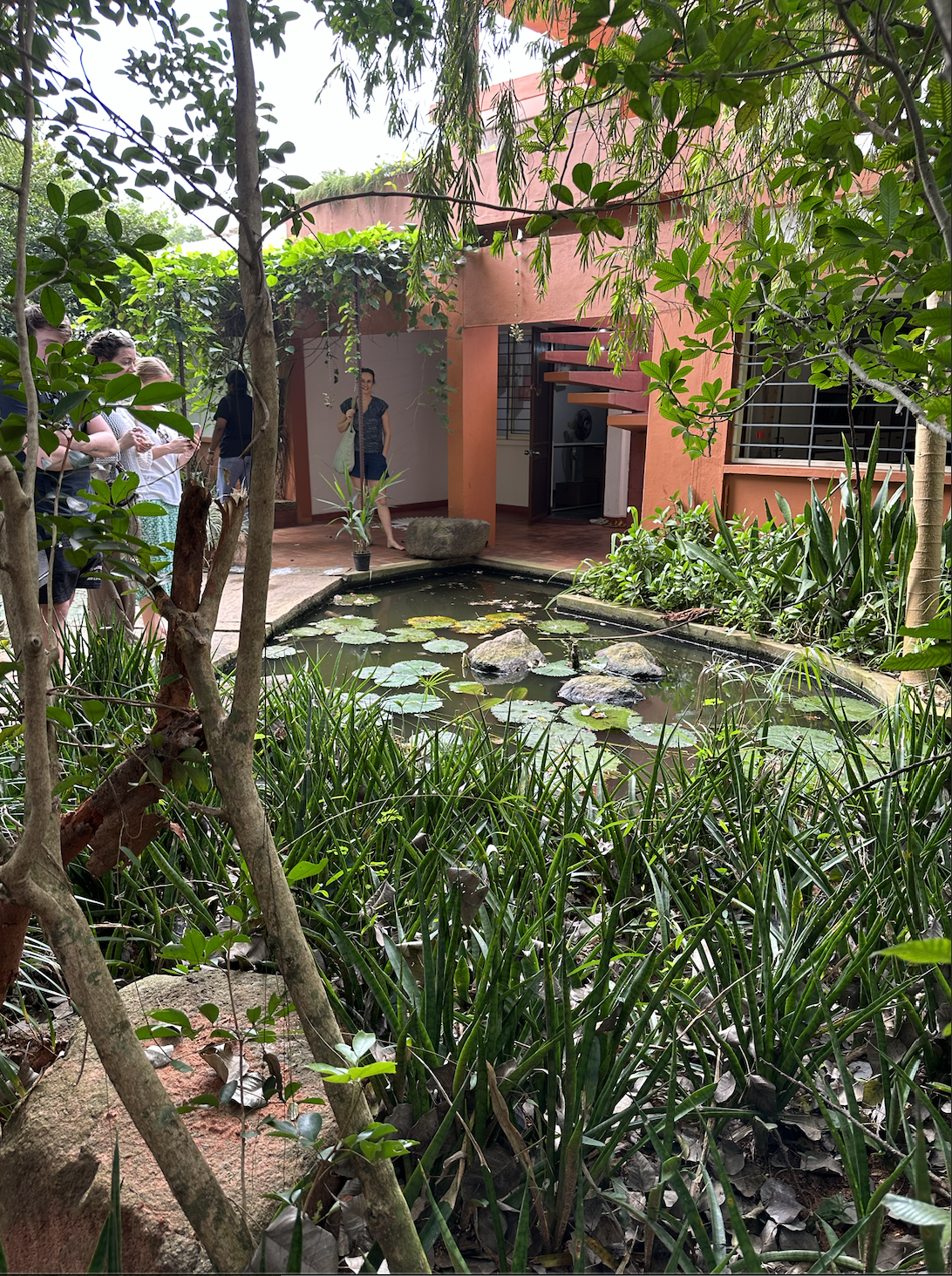
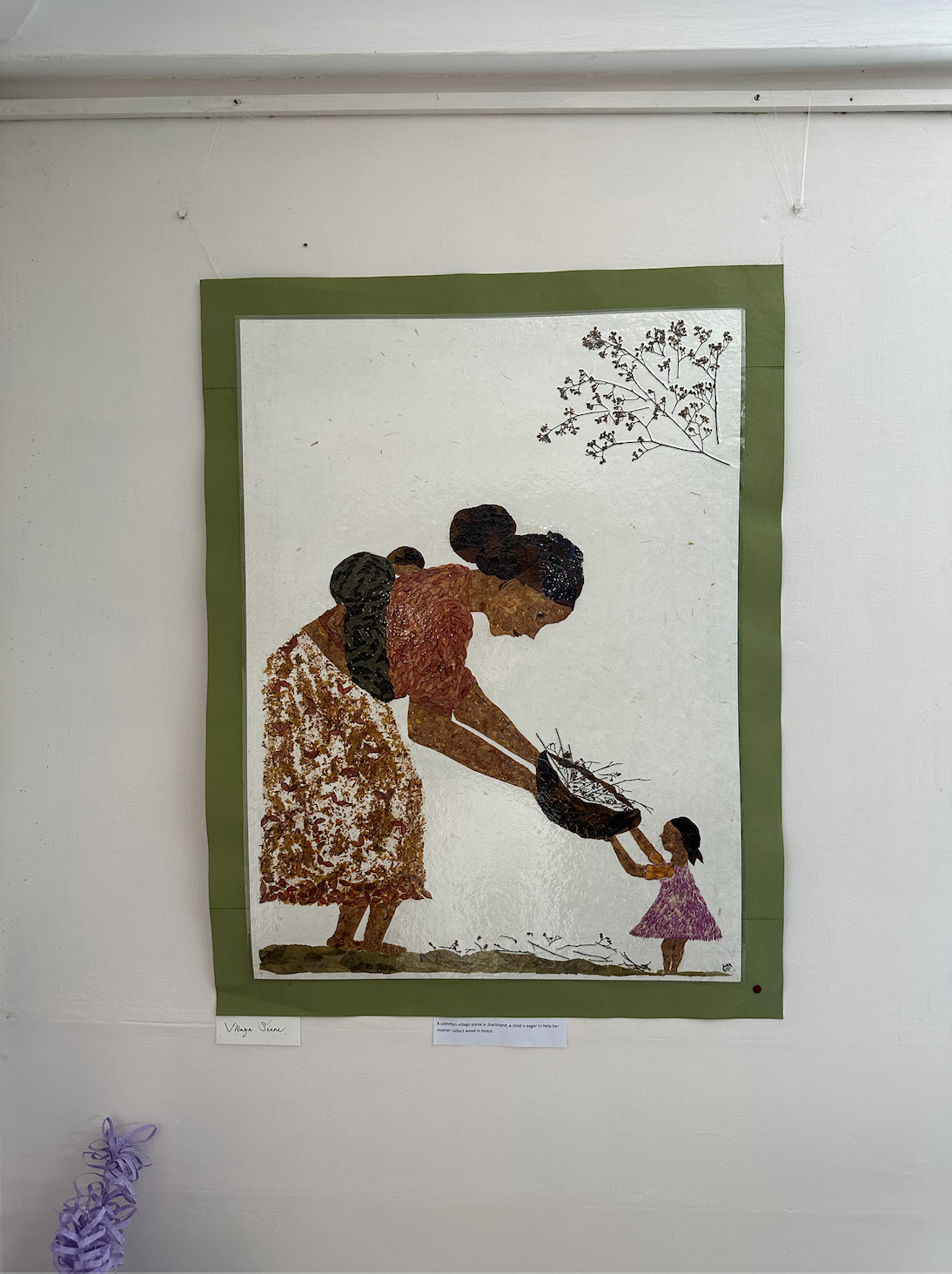
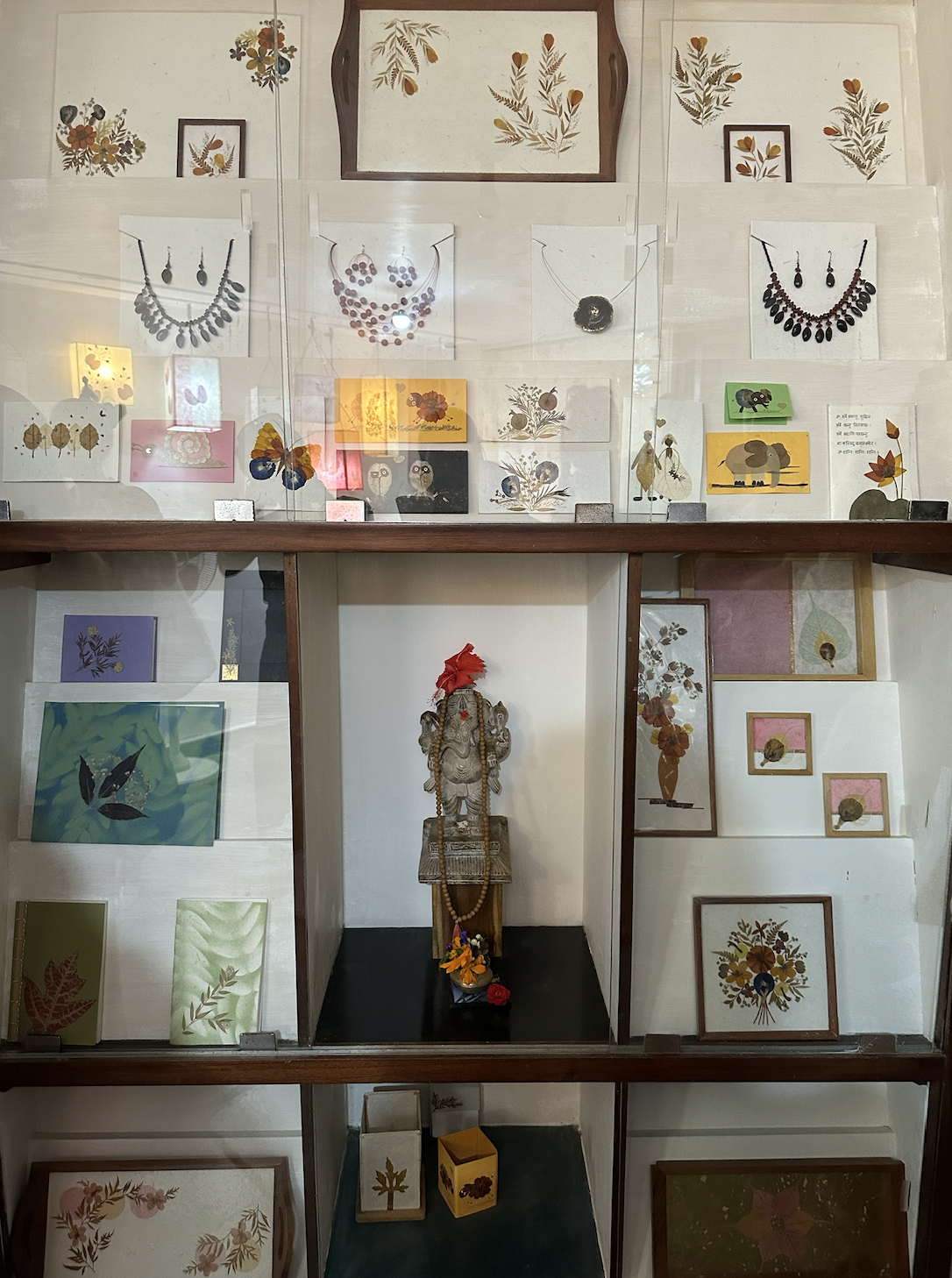
After a delicious lunch at Sudha’s kitchen, our group of 14 American students set off with towards the enchanting world of Shradhanjali. In the entryway, we had the pleasure of strolling through a picturesque garden with a serene pond. As we approached, we were warmly welcomed by Abha, founder of Shradhanjali. She begins by explaining that Shradhanjali is an early Aurovillian foundation specializing in handicrafts. Their unique creations involve pressed flowers and leaves sourced straight from their blooming garden and delicately arranged on homemade paper. The foundation creates beautiful works of art, but is also dedicated to empowering women from neighboring villages. They currently employ 19 individuals from 11 different villages in the bioregion.

After her introduction, we were delighted to learn that we caught the last day of an art exhibition showcasing the artwork of one of Shradhanjali’s interns named Akay Jharia. Each piece was crafted in the distinctive Shradhanjali style of pressed flowers, and portrayed images inspired by her life. After hitting our heads on a few bell roosters hanging from the ceiling, we walked a few steps over into the heart of the operation. 

Our journey then led us to the beating heart of Shradhanjali, where Abha graciously guided us through the process of crafting. From the meticulous picking of flowers to the careful pressing and drying, we got to see it all. Finally, at the assembly stage, we witnessed the magic unfold. Different stations were filled with different activities, each dedicated to something. There were calendars, table mats, binding books, and many others. The synchronized efforts of the workers made the entire process flow seamlessly.

After this beautiful demonstration, Abha graciously allowed us to wander through the garden, where every flower and leaf is nurtured. Having left our shoes at the front entrance, we were fortunate enough to experience the grounds barefoot, forging a tangible connection with the earth.

In the realm of Shradhanjali, every step tells a story, and every creation is a testament to the skill, passion, and empowerment of the women behind the scenes. It’s not just about art; it’s about a community, a mission, and a celebration of nature’s beauty.

Kajimba

Kajimba is an NGO local to Auroville that has created a healthier alternative to soda. Kajimba drinks are fermented beverages that contain less sugar than soda and have a sweeter taste than kombucha. Kajimba delivers its drinks by scooters to all their partners and stores that sell their product.

Kajimba is hard to explain but the owner said that it is almost like an nonalcoholic beer that has local flavors. It takes less time to ferment than kombucha and is very expensive to produce due to how fresh all the ingredients are. They flavor the drink with homemade syrups that contain a total of 7-8 grams of sugar. Due to the freshness and natural origins of ingredients, Kajimba has a shelf life of only 2 weeks.

AUP students were lucky enough to see the inside of the operation and the kitchen in which they create all of their drinks. The kitchen is incredibly clean and we were able to see how fresh all the ingredients really are as they were sitting right on the kitchen counter.

Kajimba also has a very interesting recycling policy. They will go back to each restaurant and business that sells their product and take back their bottles to reuse them after thoroughly washing them. The owner and founder of Kajimba said that they are able to get back about 80% of the bottles they distribute to restaurants.

Kajimba likes to employ youths and currently has 12 to 14 teenagers who run all the marketing for the brand. The owner said that having young people run marketing and social media offers a more flexible way of working as well as their perspective on how to market the drink to their demographic.

Even though Kajimba is a very new NGO in Auroville it is very noticeable how well their drinks are doing. While visiting and eating at many different local restaurants, many students, including me, were able to get Kajimba drinks at most of those places. These restaurants included but were not limited to Café 73, The visitor center locations, Tanto, Laxmee Pizza, and Pizza paradise.

Kajimba is now launching a new product line, the iced tea, which will have a longer shelf life than their original drinks. This new product is very exciting for kajimba as it will contribute to their ongoing growth. They have not yet done anything for this new product line outside of concocting the drink itself. This is where Kajimba figured they could use AUP students’ help. A few things that the owner mentioned were:

-Finding a name for the new product line

-making marketing content for the iced tea

-creating any sort of social media content

-And creating content for their website.

PSDF

PSDF is a non-profit organization that focuses on family counseling but has a wide array of services that they offer to people in the rural Pondicherry area. PSDF has been in community development since 1999 and has worked mostly with children and women.

When the AUP group first got to PSDF’s building, we were greeted by two women who directed us into a room where the head of the organization, Dr. Mohan, gave us a presentation. Dr. Mohan founded PSDF, and he has done extensive work in social development and acquired a PhD. In social work along with two master’s degrees in history and political science as well as commerce. Dr. Mohan started his presentation by explaining the main goals of PSDF, then followed by explaining previous work done by AUP volunteers. The volunteers contributed in multiple different tasks including field work with women, website design, and social media management.

Dr. Mohan also talked to us about how PSDF has evolved from 1999 and its original goals to today and what they offer now. While PSDF started with family counseling they now have grown into much more. On top of family counseling, PSDF offers a wide array of services such as:

-A creche for mothers to drop off their children

-They offer free legal aid, couples counseling

-They give loans that they get through banks for women to start their own businesses

-And help families with water and sanitation.

Many people in India get loans through unreliable people who charge outrageous interest rates to those who cannot afford to get loans through banks. PSDF not only prevents women from taking these risky loans but offers them to education on how to start their own business and they get loans for the women through reliable banks.

PSDF prioritizes education. Whether it is with women and their businesses or educational development in the creche. They also have recently gone and work with people who live in slums to give them a better education.

Some of the needs and issues that PSDF were hoping AUP students could help with were:

-Help developing and updating the website

-Help with social media (managing the accounts during the internship but also taking the time to tech the workers how to continue posting)

-Spreading the word/ advertising all the different services that PSDF offers.

Mythsinart

by Riley Osborn

In the middle of a beautiful day of NGO visits, we found ourselves nestled in the cozy enclave beside Conscious Cafe. The air was abuzz with the vibrant energy of people peddling their homemade treasures at various stalls. At the last stall, we congregated around a captivating rack of exquisite clothing, all in vibrant colors. That’s when Puja, the visionary behind Mythsinsart, warmly welcomed us into her world.

Puja shared the enchanting tale of Mythsinsart’s birth—a brand conceived from the belief that art should not just be admired but worn. This idea she called “artwear.” Her approach involves transforming her original artwork into wearable masterpieces. The process begins with Puja creating the artwork, which is then scanned and printed onto organic cotton fabric. Notably, the chosen organic cotton is derived from beech trees, a sustainable alternative that consumes significantly less water than conventional cotton.

What sets Mythsinsart apart is its commitment to supporting the local community. Puja engages independent tailors from the nearby village, fostering economic empowerment and collaboration. While their current model focuses on small-batch production, Puja shared that they initially operated on a “made-to-order” basis, a conscious effort to minimize resource consumption.

Our conversation with Puja delved deeper into her creative process, offering a glimpse into the inspiration behind her mesmerizing watercolor art. Puja expressed her love for watercolors, appreciating the medium’s demand for concentration and intention. Her artistic muse is drawn from shamanic cultures. She mostly draws inspiration through her meditative experiences where visions of otherworldly realms come to life. The resulting artwork carries a psychedelic essence, a visual manifestation of Puja’s personal growth and exploration through meditation.

Every piece in Mythsinart is treated with love and intention. It was a beautiful experience to hear Puja’s story and learn a bit more about sustainable fashion practices!

Unveiling the Potential of a Superfood with Hemplanet

By Daniel Carter

In a world dominated by traditional food and cosmetic products, Hemplanet emerges as a trailblazer, championing the use of hemp seeds in their innovative range. Spearheaded by founders Sasi and Tom, and with Vignesh at the helm as the project coordinator, Hemplanet is on a mission to educate and inform consumers about the myriad health benefits of hemp.

Hemplanet’s focus lies in creating a diverse array of products, ranging from soap and lip balm to body butter, pasta, and granola bars – all to show the versatility of the hemp seed. With the ability to press seeds into oil, Hemplanet harnesses this potent ingredient for its rich fats, omega 3, and fiber content, promoting healthy digestion.

However, navigating the legal landscape of hemp in India is a delicate task. While hemp seeds are legal, marijuana remains prohibited. Hemplanet ensures compliance by using only hemp seeds in their products, steering clear of any legal ambiguities. The purest hemp breeds, they note, are found in South America.

With in-house Research and Development, Hemplanet continues to discover hemp’s incredible versatility, extending beyond the realm of food and cosmetics. It can also be used to make paper products, sustainable clothing, and more, contributing to a more sustainable future. Yet, in India, there is a notable lack of knowledge about the plant, and Hemplanet is on a mission to change that perception.

The three-person team at Hemplanet faces the challenge of dispelling myths surrounding hemp, emphasizing its legality, and promoting awareness about its health benefits. Hemp, they argue, is not just a superfood but a carbon-absorbing wonder with almost 24,000 uses.

Currently, their most popular consumers are sports enthusiasts and athletes who view hemp as a valuable supplement. Some individuals turn to hemp as a sleeping aid. In terms of their current product line, the best-selling granola bars are a testament to the market’s growing acceptance of hemp-based products.

Because of its illegal status in India, due to its invasive growth and risk of inter-species variability, Hemplanet imports hemp seeds rather than cultivating the plant locally. The team emphasizes the importance of distinguishing between marijuana and hemp, a crucial factor in advocating for the plant’s legal recognition.

As Hemplanet continues to make strides in the industry, they are currently focusing on dispelling myths, creating awareness through the use of social media., Hemplanet remains committed to its goal of unlocking the true potential of hemp and bringing its manifold benefits to the forefront of consumer consciousness.

Rediscovering Cultural Roots: A Journey into Solitude Farm’s Permaculture

By Daniel Carter

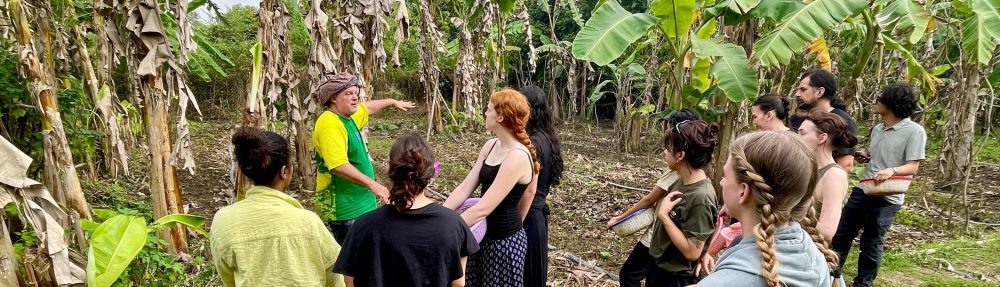
In a tranquil corner of Auroville, India, sits a small 5.5-acre haven on a mission of “Cultural Redemption.” Solitude Farm, an initiative quietly thriving since the 90s, is a testament to simplicity, inner reflection, and a profound connection with nature. Founded by Krishna McKenzie urges us to reevaluate our relationship with the source of our sustenance. “The most valuable thing we can learn is where our food comes from” he proclaims to the group of students from the American University of Paris visiting the farm community.

While walking barefoot (yes, barefoot!) through the farmland, Krishna expounds Solitude Farm’s philosophy, an appreciation for and relationship with the land. His belief is that our culture emanates from a people having a relationship with where their food comes from. This can be seen in strong cultural identities in the world that are strongly tied to the foods of their lands. For culture starts in the mind, which in turn, stems from the body, which gains nourishment from the food we consume, which at its root (pun intended) comes from the soil, which many cultures revered as divinity. Recognizing the intricate web of life and biodiversity it harbors, Krishna highlights the interconnectedness of soil, food, body, mind, and culture.

In a world preoccupied with competition and economic gain, Solitude Farm advocates for a return to the basics – understanding where our food comes from. In a society that has severed its ties with the roots of sustenance, the farm believes that culture is lost.

Their chosen method for this cultural renaissance is permaculture, a practice often referred to as “permanent farming.” Embracing the concept of “do nothing farming,” Solitude Farm believes in letting the land guide the way. The only currency here is time, and the land, when cared for, reciprocates abundantly, yielding a diverse range of plants like peppers, mangos, and bananas, each with unique and valuable health benefits.

An essential principle of Solitude Farm is the non-exclusivity of common foods. Here, the beggar and the king share the same nourishment, fostering a sense of equality and interconnectedness. This commitment extends to their environmental footprint – prioritizing local foods over global agricultural practices to combat climate change. As Krishna asserts, they are not merely planting a farm; they are cultivating a menu, a diverse and sustainable approach to living that echoes the renaissance of Auroville.

The primary technique employed by Solitude Farm is the return of organic matter to the soil – leaves, branches, and other natural remnants nourish the land, creating a sustainable ecosystem. The second technique emphasizes valuing the gifts of the land, encouraging the use of local resources. However, the farm acknowledges that this transformation is incomplete without the third technique – community.

Celebration, an integral part of permaculture at Solitude Farm, underscores the communal aspect of sustainable living. It’s a reminder that the journey towards cultural redemption cannot be solitary – it requires collective effort and shared experiences.

At Solitude Farm, contrary to its name, the world comes together, sharing a plate, a smile, and an idea for a better world. In the midst of global challenges, Solitude Farm stands as a beacon of hope, inviting us to reconsider our relationship with the land. It beckons us to rediscover our cultural roots by nurturing a profound connection with the land that sustains us.