By Naydeline Mejia
Started in 1996 by a group of Aurovilians, one of them being British-born Krishna McKenzie, Solitude Farm & Café is a natural farm in Auroville revitalizing the nutritional heritage of the Tamil Nadu region through revolutionary, anti-colonial agricultural practices.
Solitude’s natural farming modus operandi is inspired by the philosophy of Japanese farmer and philosopher Masanobu Fukuoka. Fukuoka is often celebrated for his contributions to permaculture and natural farming. Unlike organic farming, natural farming—also known as “do-nothing” farming—imitates the ways of nature. Zero fertilizers are added to the soil or given to plants. Instead, natural farming relies on microorganisms and earthworms to naturally decompose organic matter and nourish the soil. And just like in nature, there is no plowing, tilling or weeding done to the farm (Chandel and Jangilwad).
“When we look at the [industrialized] agricultural practices we have today, we plow the land, we compress the soil, we put chemicals on it—we kill this soil,” says McKenzie. “And as we kill this soil, we destroy ourselves as cultures. We lose our wellbeing. We develop lifestyle diseases. We create climate change.”
Compared to organic farming, natural farming has a lower carbon footprint. It is also extremely inexpensive, relying on the resources provided by the earth (Chandel and Jangilwad).

Another benefit of natural farming: It celebrates native foods by relying on a region’s natural biodiversity.
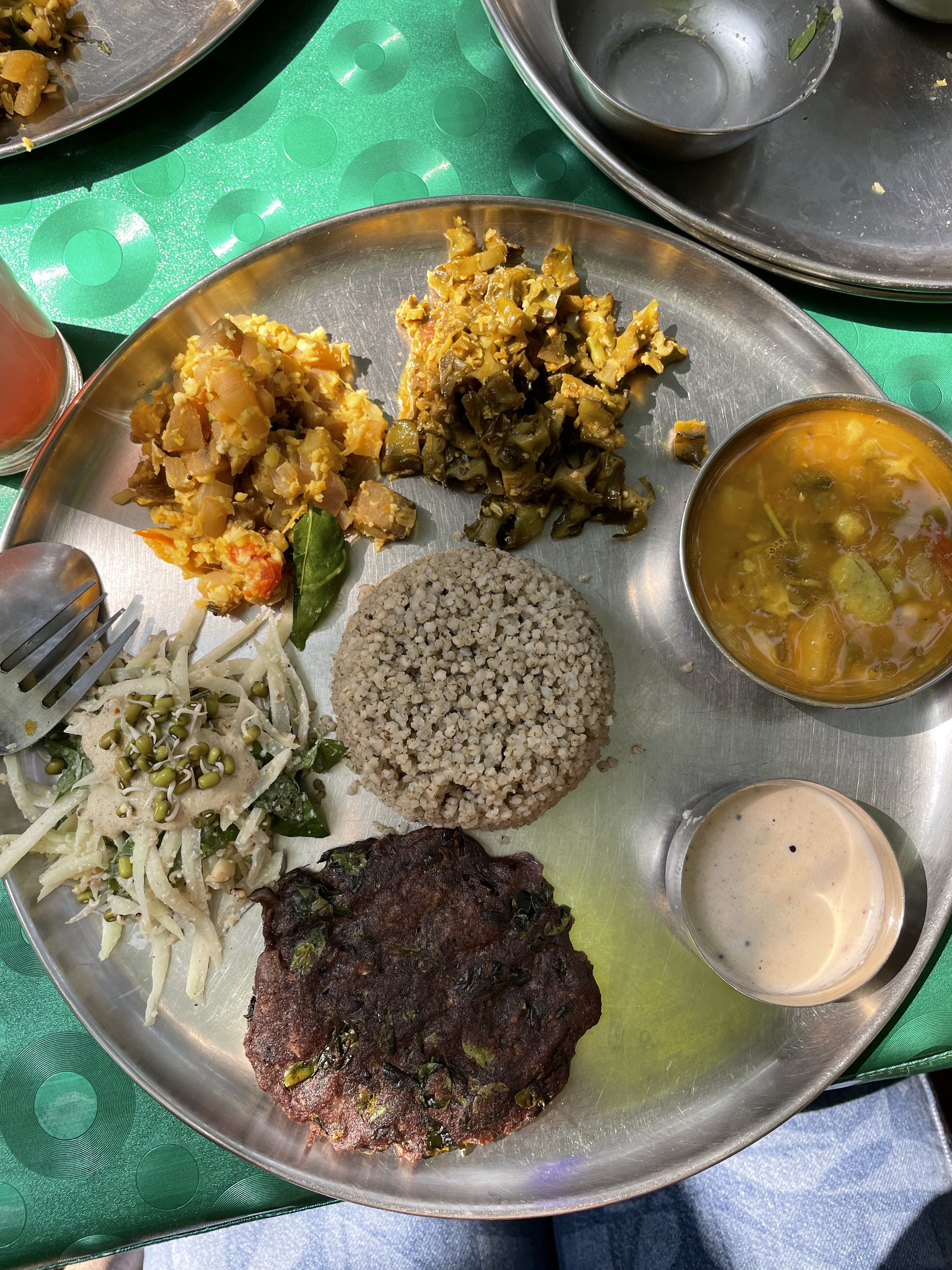
In 2008, with a need for financial durability and inspired by Fukuoka’s vision (McKenzie had the pleasure of meeting his hero in 2002, who championed natural farming on the barren land that were the farm grounds), McKenzie and his team turned to local foods, which grow easily and naturally, for their natural farm. The farm hosts a huge variety of weeds, edible flowers, fruits and grains native to Tamil Nadu like: papaya, guava, breadfruit, mangoes, okra, balloon vine, turkey berry, butterfly pea, hibiscus, millet, and red rice. These crops are then prepared and served at Solitude’s farm-to-plate café, often in their thali or daily plate from that morning’s harvest.
When speaking about the café, McKenzie refers to it as a blessing for the organization. “It’s been the catalyst for us to understand [the importance of eating local foods],” he says. These crops are often undervalued as a result of the mass commercialization of goods, he continues, causing nutritional homogeneity, and thus the loss of cultural identity and food diversity.
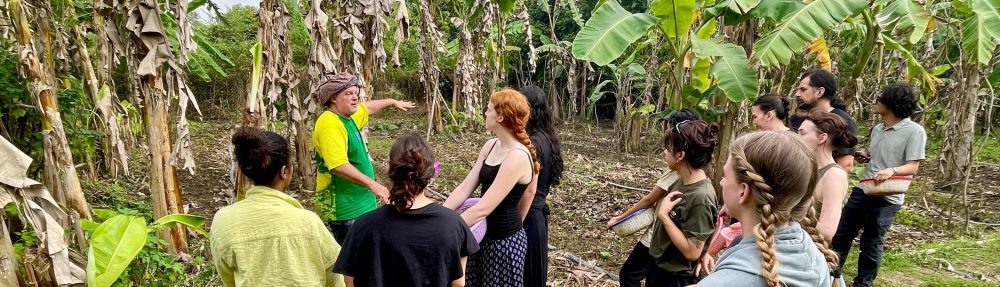
In addition to preserving nutritional heritage through serving locally-grown meals, Solitude is also on a mission to educate future generations of natural farmers through their weekly farm tours, permaculture workshops and volunteer opportunities. The intensive three-day permaculture workshop introduces participants to permaculture field design and gives them the tools to start their own food forest or nursery. The month-long volunteer programs, meanwhile, allow volunteers to get more intimately involved with the organization—often assisting with educational programs, running farm tours, cooking in the café, and the making of ayurvedic powders.
Revisiting Fukuoka’s philosophy, farming was more than just growing food, it was a spiritual way of living (Kaundal et al.). At Solitude, they’re not only preserving cultural heritage and a bounty of crops that would otherwise be forgotten, but honoring the gifts of Mother Nature.

Learn more about Solitude and their initiatives here: https://solitude.farm/
 AUP Sustainable Development Practicum in Auroville, India