During one of my interviews in Auroville, we were speaking passionately about environmental responsibility. About protecting water systems. About sourcing fabrics consciously. About extracting natural dyes from plants without harming the earth.
As we talked, cigarette smoke drifted between us.
At one point, the cigarette was pressed into the soil underfoot, the same soil from which plants are grown, and the same ground that supports the sourcing of materials and the creation of natural color.
The image stayed with me.
Not because it felt hypocritical. But because it felt human.
How often do we devote ourselves wholeheartedly to one aspect of sustainability while quietly neglecting another? How often do we protect the planet in one area while unintentionally harming it in another? The contradiction did not cancel out the passion I was witnessing. If anything, it made it more complex.
The cigarette became a sort of symbol to me. It reminded me that sustainability is rarely complete. We separate our ethics into different parts. We pour energy into the causes that move us most deeply, while other habits remain untouched, unquestioned, or postponed for later.
The 17 Sustainable Development Goals are interconnected for a reason. Environmental protection cannot be fully separated from human health. Care for the earth cannot be entirely divorced from care for the body. Sustainability is not only about materials, production methods, or business models. It is also about daily choices, consistency, and alignment.
That moment challenged me more than it judged anyone else. It made me ask myself where I practice selective sustainability. Where do my values and my habits fail to meet? Where do I protect one thing while ignoring another?
Maybe real sustainability is not about being morally perfect. Maybe it is about being aware. It is about noticing the small contradictions in our lives and slowly working to reduce them. It is about trying to bring things together instead of trying to be perfect.
We all practice sustainability in parts. The real work is learning how to bring those parts together into one whole.
Sustainability usually arrives with instructions. What to buy, what to avoid, what to fix, what to improve. It often feels like a checklist, or worse, a moral test.
Auroville didn’t work like that.
Instead of telling you what sustainable living is supposed to look like, it lets you notice it on your own. Over time, certain patterns start to repeat themselves. Not in an obvious way, and not as lessons exactly, but as everyday realities that slowly reshape how you think about comfort, excess, and value.
These are a few of the things that stood out.
1. Luxury Isn’t Always Designer
In most urban settings, luxury is tied to choice and control. Being able to customize everything, upgrade constantly, and replace what no longer feels perfect is often treated as a sign of success. In Auroville, luxury shows up in quieter ways.
Here, luxury looks like space to breathe, time without urgency, and environments that don’t ask you to perform. Comfort isn’t created through polish or aesthetics, but through ease. There’s less pressure to consume in order to belong, and more acceptance of what already exists.
It reframes luxury as something experiential rather than material. Less about what you own, more about how you move through your day.
2. Simplicity Works When It’s Normal
Clothing Rack at Colors of Nature Photo Shoot
One of the reasons sustainability feels achievable in Auroville is because it isn’t framed as a special effort. People reuse towels, share resources, and eat what’s prepared without much discussion. These practices aren’t highlighted or praised; they’re simply part of daily life.
When simplicity is treated as normal rather than virtuous, it stops feeling restrictive. There’s no pressure to “do it right.” You adjust naturally, because that’s how the environment functions.
This normalization makes sustainability feel less like a personal burden and more like a shared rhythm.
3. Slow Is a Feature, Not a Bug
Life in Auroville moves at a noticeably slower pace. Walking, cycling, and simple vehicles shape how people move through space. Distances feel longer, but time feels less compressed.
At first, this can feel inefficient. Over time, it becomes grounding. Slowness allows attention to expand. You notice light, sounds, and small changes in your surroundings. Conversations stretch without interruption.
Instead of feeling behind, you begin to feel present. Slowness becomes a form of awareness rather than delay.
4. Community Doesn’t Need Matching Behavior
During events like the Light Mandala meditation, people gather without being asked to behave in a particular way. Some sit still for hours, others move in and out. Children wander quietly, adults adjust positions, visitors observe.
What’s striking is that the lack of control doesn’t disrupt the space. It strengthens it. Shared presence matters more than uniform participation.
This approach to community allows difference without tension. It shows that cohesion doesn’t require sameness, only mutual respect.
5. Objects Are Allowed to Have a Past
Collection of Cameras at YATRA
Throughout Auroville, objects show signs of use. Clothing racks hold items that have already lived full lives. Tools and equipment are repaired, reused, and stored carefully rather than replaced.
There’s no attempt to hide age or wear. Instead, longevity is valued. Objects aren’t treated as disposable, and their history is visible.
This approach shifts how value is assigned. Something doesn’t lose worth because it’s old; it gains it because it continues to serve a purpose.
6. You Don’t Need to Optimize Everything
In many environments, life is optimized down to the smallest detail. Comfort is curated, preferences are prioritized, and inconvenience is avoided whenever possible. In Auroville, optimization isn’t the goal.
Meals aren’t customized. Spaces aren’t adjusted for individual comfort. And yet, these environments feel surprisingly welcoming. Without constant tailoring, participation becomes easier. You stop evaluating and start engaging.
Letting go of optimization removes pressure. What’s left is a sense of ease that doesn’t rely on perfection.
7. Sustainability Isn’t the Point, Living Is
What stands out most is how rarely sustainability is mentioned. No one is trying to convince you of anything. Practices like reuse, shared meals, and slow movement exist without explanation.
Because of that, they endure.
Sustainability here isn’t treated as an identity or an achievement. It’s a byproduct of how people relate to space, time, and one another. It works because it fits into everyday life rather than standing apart from it.
The Takeaway No One Gave Me
Auroville didn’t offer a formula or a lifestyle to adopt. It offered a different way of paying attention. To time. To comfort. To excess.
Sustainability here isn’t aspirational. It’s practical. It doesn’t demand perfection, only awareness. And once you start noticing how much can be gained by needing less, it’s difficult not to carry that perspective with you.
What is Sadhana? A Mission Rooted in Compassion and Action
Stepping into Sadhana Forest, I found myself immersed in a space where every detail, from upcycled tire sculptures to solar-powered utilities, reflected a commitment to creating a better world. Removing our shoes and entering the main hut, which is made completely from natural materials, we were immediately impressed by the possibilities of another way of living.
Nestled over 70 acres near Auroville, this remarkable initiative goes beyond reforestation—its mission is to foster ecological restoration, compassion, and selfless service as part of a global movement.
Sadhana Forest, founded in 2003 by Yorit and Aviram Rozin along with their 1 year-old daughter, began with one family and a dream: to restore the native Tropical Dry Evergreen Forest (TDEF) ecosystem while creating a community built on kindness and inclusion. Today, that dream has blossomed into a global network with projects in Haiti, Kenya, Namibia, and multiple locations across India, inspiring thousands to take action for the environment and humanity.
Natural regeneration of Sadhana Forest from satellite
Aviram began our visit with an introductory talk on the philosophy and works of Sadhana. He explained that Sadhana means the search for the truth on one’s spiritual path, and their path and great effort has been reforestation and spreading a culture of vegan compassion. One of the things that stood out most was the emphasis on inclusivity. Sadhana Forest welcomes everyone, regardless of background, with only minimal time commitments (10 days for Indian volunteers, 20 for foreigners). This openness creates a space where diverse perspectives come together, fostering collaboration rather than competition.
After starting with one family, today there 37 long term volunteers, including half a dozen growing families, as well as 60+ volunteers, who are currently giving between 1 and 10 months of their time. He explains that Sadhana has the capacity to host up to 195 people, making clear that they will never say no to anyone that may come. Answering a question from the audience of over 100 people, he explains that those that who come for short term contribute money for their food (3 meals a day), while long term folks are supported by the community, giving back through their time and labor.
Just like the forest, Sadhana is growing. Their future plans include integrating differently-abled individuals into the organization, as well as creating an orphanage for children with HIV, further illustrating their commitment to inclusivity and compassion. However, they’ve already expanded from their initial Auroville experiment to a total of 7 other centers – 1 in South Tamil Nadu, 1 in Kenya, 1 in Namibia, 1 in Haiti, & 3 in Northern India.
Sadhana Forest Haiti
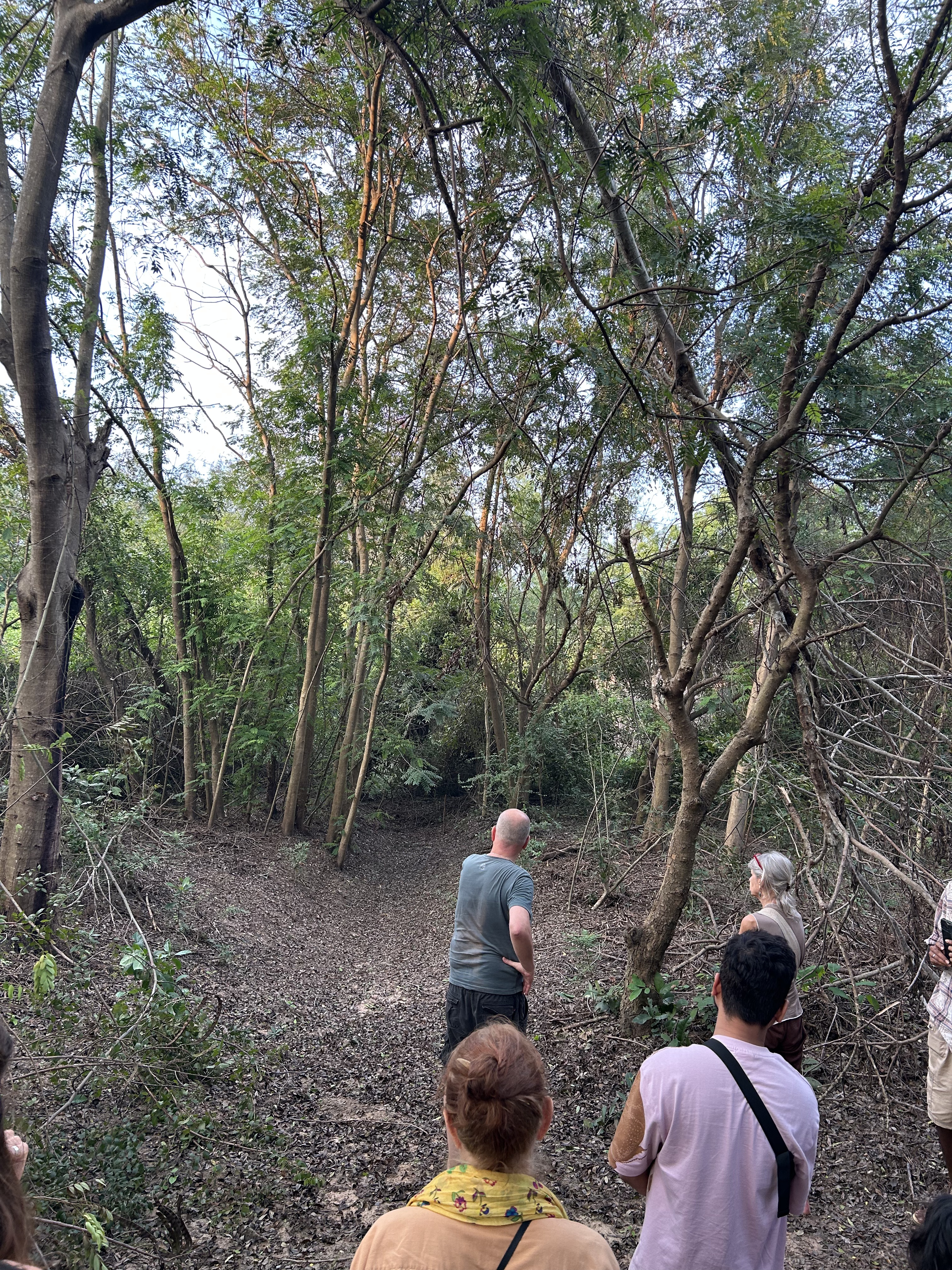
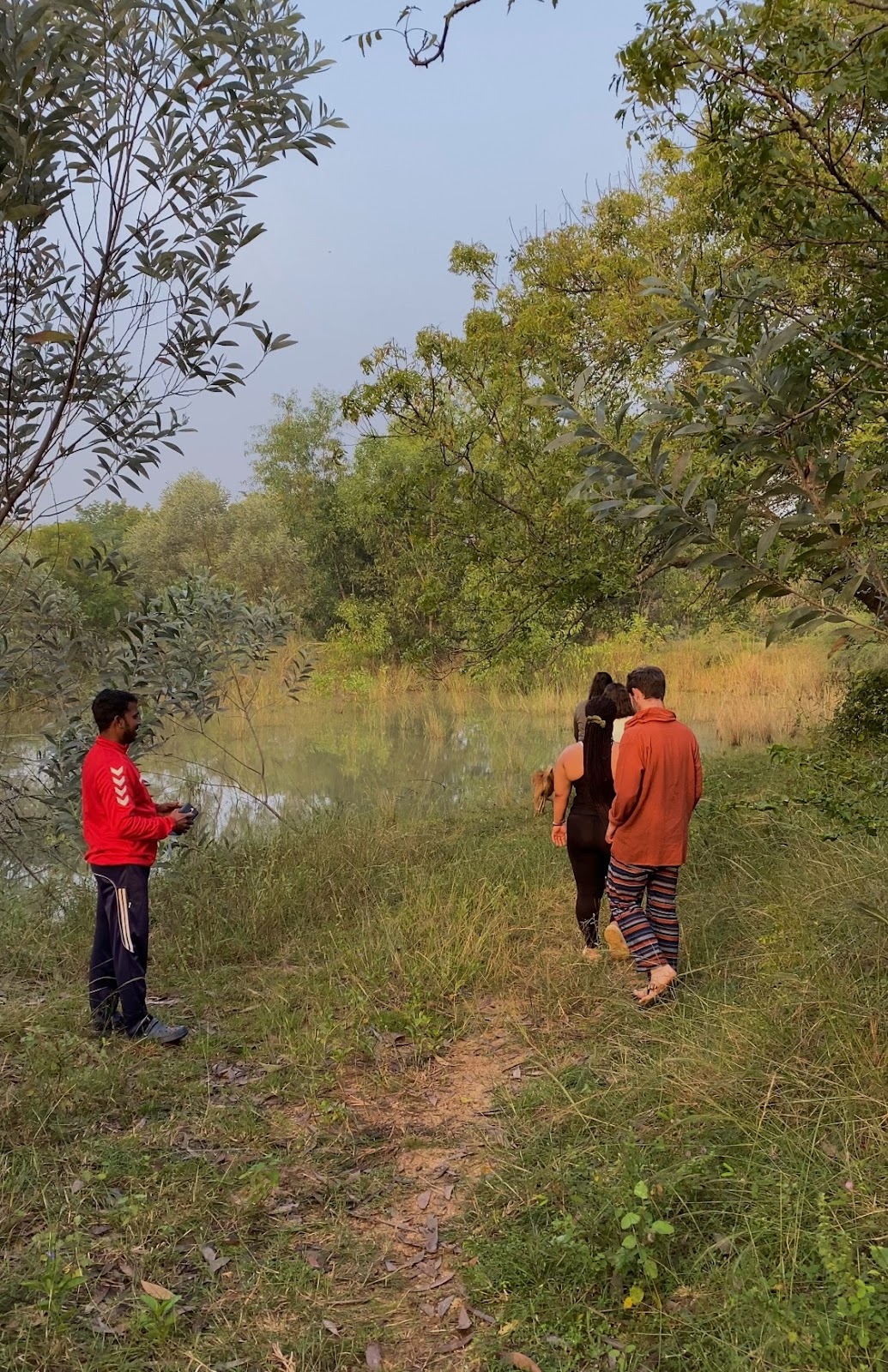
After the introductory talk, Aviram takes us on a tour of the campus and an exploratory walk in the forest. It’s remarkable to me that walking barefoot through the forest, while avoiding painful stones and roots, one is reminded of the intentionality required in each step—an apt metaphor for the care and mindfulness that defines this community.
Water Conservation Strategies
Sadhana Forest is, as the name suggests, a forest, but for a forest to thrive, one essential ingredient is needed: water. When Sadhana Forest began, it was little more than a barren wasteland, plagued by water scarcity like much of Auroville. Water conservation became the cornerstone of their reforestation efforts, and their strategy revolves around the Triple S method— Slow, Spread, Sink.
Aviram explains that the team strives to catch every drop of rainwater as close as possible to where it falls. Interestingly, in water conservation, low-lying lakes are a sign of failure in water conservation. Such lakes indicate that water has flowed to the lowest point of the slope rather than staying on the land where it fell—vital for nourishing the soil and replenishing the underground aquifer. To counter this, Sadhana Forest employs a method called on-contouring, maintaining water at its topographical height instead of allowing it to run downhill. This ensures that rainwater not only sinks into the soil to nourish plants but also replenishes the groundwater aquifer.
The success of these water conservation efforts is evident throughout Sadhana Forest. Aviram highlights that retaining water on the land has allowed for the natural regeneration of vegetation. Interestingly, he observes that natural regeneration fosters greater biodiversity compared to human-planted species. He likens it to designing one’s own home—wildlife, as the true inhabitants of the forest, can create an ecosystem tailored to their needs, rather than adapting to a pre-designed system imposed by humans. Indigenous plants, spread by wildlife through seeds and droppings, establish a harmonious and self-sustaining ecosystem far superior to human-centric reforestation.
As we walked through the forest, Aviram pointed out various plants and explained their roles in water conservation. One striking example was vetiver, a grass with exceptionally deep roots that stabilize the soil and retain water. Similarly, the dodonaya plant thrives in arid conditions by capturing water from the air and storing it in its roots, helping to create moist, fertile soil. We also saw other water conservation techniques, including gabions (stone-filled metal cages), swales, and a man-made lake. The lake, while not ideal for the Triple S method, was a necessary adaptation due to the practices of a higher-elevation neighbor who doesn’t prioritize water conservation. Sadhana Forest has had to capture the water that runs off from this neighboring property to prevent it from being wasted.
Aviram pointing out a water conservation technique, a swale
During our visit, a curious tourist asked how Sadhana manages to address mosquitoes while maintaining their vegan and “do no harm” philosophy. Aviram explained that the key lies in controlling standing water, which disrupts mosquito breeding. Rather than killing mosquitoes, they simply ensure there’s no stagnant water for them to thrive. With a smile, he added that if any do appear, he prefers to swat them away gently rather than harm them.
Sadhana Forest’s water conservation strategies not only nurture a thriving ecosystem but also embody their broader values of harmony and sustainability. Their ability to transform a barren landscape into a flourishing forest is a testament to the power of intentionality and care for the Earth.
Fostering Sustainable Living
When we return from our forest walk, we are immersed in the heart of Sadhana’s community. Living at Sadhana Forest is a lesson in intentionality and simplicity. Every aspect of the community is designed to minimize environmental impact while fostering connection and joy.
The homes and dorms are constructed from renewable materials such as wood, granite, and tetrapacks (recycled milk cartons). Short-term volunteers sleep on rope beds, emphasizing the community’s low-impact ethos. Even everyday tasks like washing and cleaning reflect this intentionality—plates are cleaned using natural materials like coconut husks, ash, lemon water, and vinegar, ensuring all waste is biodegradable. Their handwashing stations are ingeniously simple, using cups with small holes that allow water to flow gently, paired with naturally derived soap. This clever design minimizes water waste while maintaining hygiene.
Sadhana Forest operates completely off the grid, a testament to its commitment to sustainable living. Aviram shared a nostalgic story about the community’s early days, when they used dynamo bikes to generate electricity before transitioning to solar panels and wind turbines. Although no longer in use, the bikes are preserved as a reminder of their humble beginnings. Today, all Sadhana sites around the world—whether in India, Kenya, or Haiti—are powered entirely by solar and wind energy, providing reliable electricity and hot water. While they occasionally face challenges during heavy monsoon seasons due to cloud cover, their resourcefulness ensures sustainability remains at the forefront.
The kitchen is also a hub of activity and efficiency, equipped with industrial-sized pots and pans and a large reverse osmosis water filter to maintain the highest standards of hygiene. That evening, we enjoyed a delicious vegan dinner made from locally sourced ingredients—a meal that reflected the community’s values of sustainability and compassion.
The Sadhana Forest community kitchen
After dinner, the team shared short videos detailing the mission and history of Sadhana Forest. The evening concluded with a powerful 45-minute documentary on veganism, which explored the devastating impacts of industrial agriculture on climate change, human health, and animal welfare. The statistics were staggering: 30 million deaths globally linked to lifestyle-related diseases, the overexploitation of 90% of the world’s fisheries, and the brutal realities of dairy and egg farming. The documentary was both eye-opening and transformative, reinforcing the message and values at the heart of Sadhana Forest.
Our delicious vegan dinner provided by Sadhana Forest
The Values of Sadhana
At the basis of Sadhana is its vegan ethos of compassion. Aviram explains that veganism is more than just a diet; it’s an extension of their mission to live in harmony with nature and ensure that resources are used equitably and efficiently.
The first form of compassion is of course towards the land, which they seek to help prosper through their forestry, and from which they take no more than what they need. All of the buildings on the property are made from from natural materials. The second form of compassion is towards animals. Aviram makes it clear that the love of animals is central to Sadhana, and that no animal deserves to be tied, raped, or exploited in any way. I really appreciated that Aviram stressed the fact that animals have a right to live, even if they don’t give you something. It was nice to step out of the typical anthropocentrism, and he reminded us that part of Sadhana’s mission is to create a world without speciesism; other beings and nature are not just there to serve humans. This was reflected in the forest’s Guashala, a cow sanctuary for abused and abandoned cows. There, the cows are treated with the utmost respect with wonderful veterinary care, fresh water & food, & love. We were lucky enough to attend a cow connection workshop, where we bonded with a beautiful bull named Vishnu.
Our Cow Connection Workshop
The third example of compassion is compassion towards children. This was actually one of the most interesting and potentially controversial aspects of their philosophy. At Sadhana, they believe in natural learning & they call it “Unschooling”. Instead of sending their children to formal schools, they prioritize time spent with family and community, allowing learning to emerge naturally through curiosity and exploration. For example, if a child sees an airplane and asks about it, their parents might explain that people are flying through the sky from one place to another. This simple explanation could spark a deeper curiosity, leading the child to explore concepts like aerodynamics, engineering, or math.
I find this mindset inspiring—it celebrates freedom and the innate curiosity of children. When balanced with some structure or formal learning, it could provide a wonderful foundation for creativity and critical thinking. However, taken to its extreme, this philosophy can have drawbacks. I’ve heard anecdotal cases where teens raised in such environments struggled with basic skills, such as writing their own name. Nonetheless, Sadhana’s approach challenges us to rethink education and reminds us of the power of curiosity-driven learning.
Finally, Sadhana Forest embraces collaboration over competition, intentionally fostering an environment where individuals work together rather than competing against one another. This philosophy extends into their economic system, where they practice a gift economy—a model rooted in kindness, generosity, and the joy of giving. At Sadhana, everything is offered freely, with no expectation of reciprocity. Meals, education, and workshops are available to anyone who comes, all provided as acts of care and compassion.This approach profoundly disrupts the typical capitalistic incentives of greed and transactional exchanges. Instead, the gift economy shifts focus to the intrinsic value of giving and creates a space where every action is imbued with thoughtfulness and care. It encourages people to give not because they must, but because they wish to contribute to something greater than themselves.
Aviram, the founder, explains that Sadhana Forest is a place designed to remind people that kindness still exists in the world. By offering this generosity unconditionally, Sadhana hopes to inspire a deeper connection between people and their values. This is also why veganism, a core tenet of Sadhana, is framed as an extension of kindness—toward animals, people, and the Earth. In this way, the gift economy not only sustains Sadhana Forest but also embodies its mission of compassion and community, creating a living example of a world driven by care rather than commerce.
Sadhana’s Projects: Global Reach, Local Impact
Beyond forestry, Sadhana Forest offers a variety of innovative and impactful activities that reflect its broader mission. One such initiative is Children’s Land, a 2.7-acre space launched in 2009 to empower children to engage creatively with sustainability. Here, children initiate or participate in activities as they choose, fostering independent thinking and a deep connection to the natural world. This program has been met with enthusiastic feedback from children, parents, and teachers, inspiring Sadhana to expand its reach. Another cherished initiative is the TeaHut, which serves free, vegan tea every weekday, embodying Sadhana’s commitment to inclusivity and generosity. The community also nurtures personal and global transformation through its University of Compassion, offering workshops and programs that align with its values of kindness and sustainability.
While Sadhana Forest began in India, its philosophy has transcended borders. In Kenya, the organization collaborates with the Samburu tribe to plant indigenous, drought-resistant food forests, ensuring biodiversity, food security, and shade for local communities. In Namibia, long-term volunteers work closely with local populations, committing to year-long stays to fully integrate and address community-specific needs. These global projects not only restore degraded ecosystems but also empower local people to reclaim and protect government-designated “wastelands” from encroachment. By doing so, Sadhana Forest fosters a deep sense of ownership and connection to the land.
These initiatives are unified by a single vision: to heal the Earth and cultivate compassion through reforestation, water conservation, and community building. Supported by individual donations, grants, and partnerships with organizations like UNDP and the Government of India, Sadhana Forest’s work has garnered global recognition. Whether through planting trees or empowering the next generation, Sadhana Forest remains a testament to the transformative power of sustainability, kindness, and collaboration.
Reflections on Community and Connection
Sadhana Forest offers a powerful model for addressing global challenges like deforestation, water scarcity, and social inequality. By combining ecological restoration with a philosophy of compassion, they demonstrate that sustainability isn’t just about planting trees—it’s about redefining our relationship with the Earth and each other. Their initiatives, from Children’s Land to global reforestation projects, are a testament to the transformative potential of intentional, community-driven action.
Take, for example, Amman, a former corporate professional from Bali, who left the comforts of a cushy job to join Sadhana Forest. His motivations stemmed from a deep commitment to veganism, a love for animals, and a yearning for a sense of community that capitalism failed to fulfill. Now, he spends his days planting in the wet season, mulching in the dry season, and caring for the cows in Sadhana’s sanctuary. Amman’s story reflects the larger ethos of Sadhana Forest: finding purpose and joy in simplicity, compassion, and shared effort.
On a personal level, my time at Sadhana Forest inspired me to reevaluate my own habits and assumptions. The intentionality of their work—from water conservation to vegan living—reminded me that small, thoughtful actions can lead to profound change. Every initiative, whether it’s teaching children about sustainability, empowering local communities to reclaim their land, or fostering kindness through a gift economy, serves as an invitation to think differently about how we live and what we value. My visit to Sadhana Forest was more than just a tour; it was a call to action and reflection. In a world often dominated by division and exploitation, Sadhana Forest stands as a beacon of possibility: a place where kindness, sustainability, and community thrive together.
How can you support Sadhana Forest? By becoming a regular donor. Aviram emphasizes that their primary source of income is individual donations, and while the size of the donation matters less, its consistency is key to sustaining their work. With tax-exempt status in multiple countries, supporting Sadhana is both impactful and accessible. I invite you to explore their programming and become part of this inspiring movement at the link here. Together, we can help Sadhana Forest continue to grow, heal, and inspire.
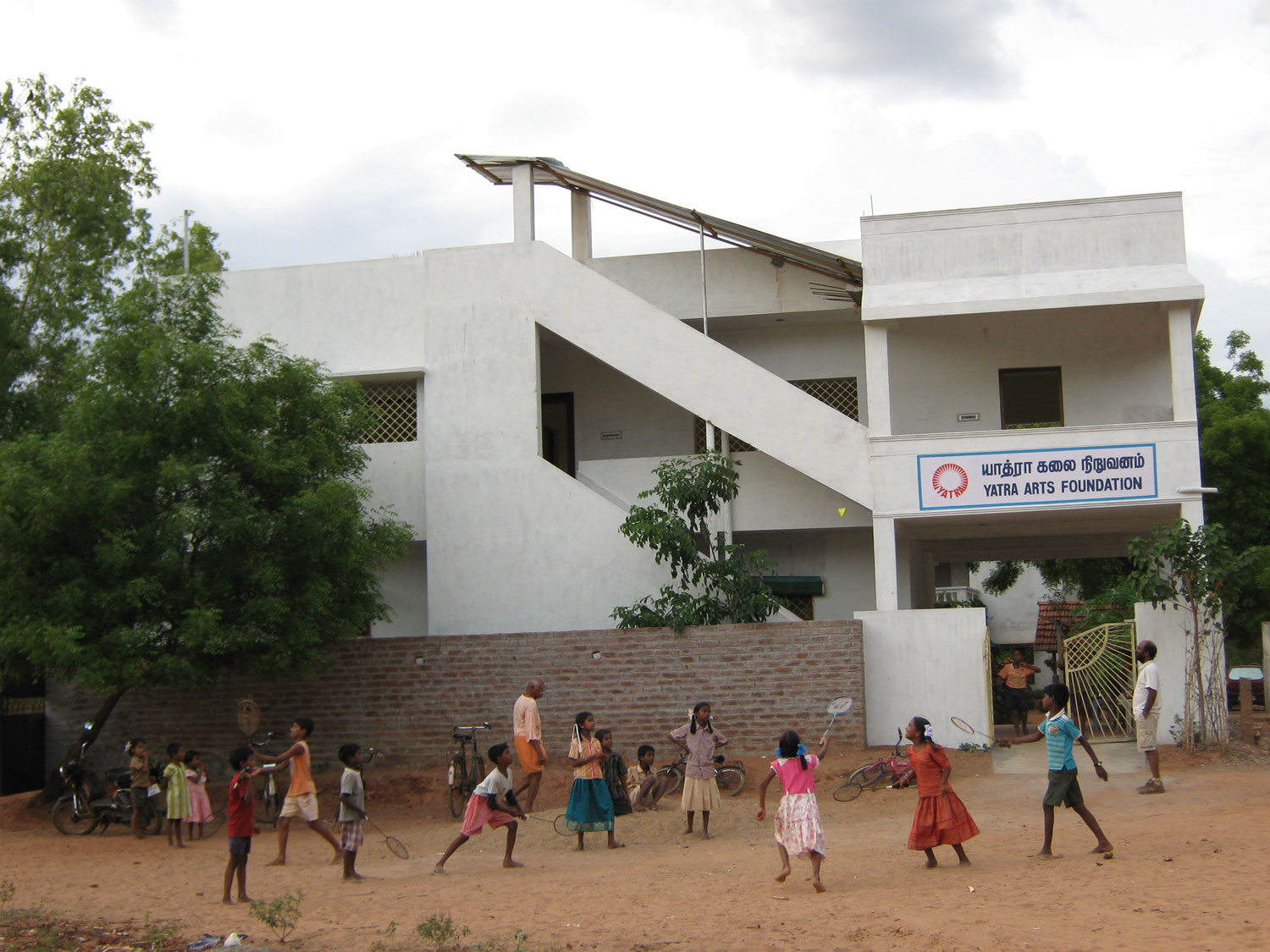
Nestled in the heart of Kuilapalayam, the Yatra Arts Foundation stands as a beacon of creativity and empowerment, transforming the lives of youth in Tamil Nadu’s villages through the enriching power of education and the arts. Founded by a visionary from this very village, Yatra bridges the gap between Auroville and the surrounding communities, fostering opportunities, preserving cultural heritage, and driving social development. At its core, Yatra embodies the belief that art is a tool for empowerment. Through street theatre, traditional dance, music, and modern educational programs, the foundation equips children and young adults with the means to express themselves, address societal challenges, and build a brighter future.
The Yatra Team, with founder Yatra, second from left
Preserving Heritage by Telling Stories
A cornerstone of Yatra’s mission is the preservation of traditional arts, and during our visit, we had the privilege of witnessing these efforts firsthand. We were captivated by a mesmerizing Bharatanatyam performance, where young girls—many of whom have been learning since they were ten years old—used intricate hand gestures (mudras), facial expressions, and precise body movements to tell powerful stories. This ancient dance form, steeped in history and meaning, showcased emotions such as joy, anger, and surprise, preserving the art of storytelling through movement and tradition.
Before Auroville’s establishment, many villages in Tamil Nadu had little access to education or the arts. Yatra has become a vital bridge, connecting these communities with opportunities for growth and development. Children, in particular, have been the most impacted, as they embrace change and learning with enthusiasm. Through its performances, classes, and workshops, Yatra ensures that these opportunities reach every corner of the village.
We were also treated to evocative Parai drumming demonstrations, which brought this traditional form of Tamil percussion to life. The resonant beats of the Parai, traditionally used to mark life events or draw crowds to performances, were not just musical but deeply practical, reminding us of its historical and cultural significance. These performances served as powerful reminders of the region’s rich artistic heritage and the importance of passing these traditions to future generations.
Girls practicing the Bharatanatyam
Art as a Catalyst for Change
Beyond preserving heritage, Yatra uses art as a catalyst for social and environmental change. Before we left, we were shown a compelling short film on the importance of waste sorting and proper waste management techniques. The film highlighted how waste, when sorted correctly, can be transformed into compost, offering valuable resources for the community while reducing landfill waste and preventing illnesses. It was a vivid example of how art—specifically film—can be used to spread awareness, educate, and engage communities in meaningful discussions about critical issues. The film not only underscored Yatra’s commitment to environmental conservation but also demonstrated the potential of the arts to inspire action and create lasting impact.
Yatra’s street theatre performances and films address a wide range of societal challenges, including cleanliness, solid waste management, environmental conservation, and alcoholism. After each performance, the foundation hosts open mic sessions, encouraging villagers to share their thoughts, voice frustrations, and collectively discuss solutions. This interactive approach fosters dialogue and empowers communities to think critically and collaborate to overcome challenges.
Modern Education Meets Cultural Preservation
In addition to its focus on traditional arts, Yatra offers a variety of modern educational programs that prepare youth for the future. These include after-school tuition classes, yoga sessions, painting workshops, puppet shows, and theatre classes, all designed to integrate life lessons with hands-on, enjoyable activities. By blending fun with learning, these programs engage students while teaching valuable skills, from environmental conservation to social responsibility.
Students in an after-school tuition session
Yatra’s work aligns closely with the United Nations Sustainable Development Goals (SDGs), particularly SDG 4 (Quality Education) and SDG 15 (Life on Land). Through initiatives like the Yatra Social Docu Series on YouTube, they reach both local and global audiences with impactful stories about pressing social and environmental issues. Collaborations, such as those with the Lufthansa Health Alliance, further amplify their reach, demonstrating the potential for art to drive systemic change.
As the foundation looks to expand its efforts, it remains deeply committed to its mission of fostering joy and learning through the arts, creating a ripple effect that benefits not just individuals but entire communities.
The Yatra Arts Foundation is growing rapidly, with its impact extending to new villages and communities. Their YouTube channel, Yatra Talkies, recently received the Silver Play Button for reaching a significant milestone of over 150,000 subscribers. The channel continues to share impactful stories, amplifying their message and engaging audiences worldwide. To explore their inspiring content, check them out at the link below:
What sets Yatra apart is its ability to inspire through joy and creativity. Whether it’s a child mastering the rhythms of the Parai, a young girl expressing herself through Bharatanatyam, or a community coming together to discuss an impactful film, Yatra proves that art is more than just a medium of expression—it’s a tool for transformation.
The Yatra Arts Foundation is not just an organization; it’s a movement. A movement that preserves heritage, addresses societal challenges, and empowers individuals to dream, create, and thrive. In an ever-modernizing world, Yatra serves as a powerful reminder of the enduring value of culture, community, and curiosity, lighting the way toward a brighter future.
Started in 1996 by a group of Aurovilians, one of them being British-born Krishna McKenzie, Solitude Farm & Café is a natural farm in Auroville revitalizing the nutritional heritage of the Tamil Nadu region through revolutionary, anti-colonial agricultural practices.
Solitude’s natural farming modus operandi is inspired by the philosophy of Japanese farmer and philosopher Masanobu Fukuoka. Fukuoka is often celebrated for his contributions to permaculture and natural farming. Unlike organic farming, natural farming—also known as “do-nothing” farming—imitates the ways of nature. Zero fertilizers are added to the soil or given to plants. Instead, natural farming relies on microorganisms and earthworms to naturally decompose organic matter and nourish the soil. And just like in nature, there is no plowing, tilling or weeding done to the farm (Chandel and Jangilwad).
“When we look at the [industrialized] agricultural practices we have today, we plow the land, we compress the soil, we put chemicals on it—we kill this soil,” says McKenzie. “And as we kill this soil, we destroy ourselves as cultures. We lose our wellbeing. We develop lifestyle diseases. We create climate change.”
Compared to organic farming, natural farming has a lower carbon footprint. It is also extremely inexpensive, relying on the resources provided by the earth (Chandel and Jangilwad).
Our harvest of butterfly pea flowers and other crops native to Tamil Nadu.
Another benefit of natural farming: It celebrates native foods by relying on a region’s natural biodiversity.
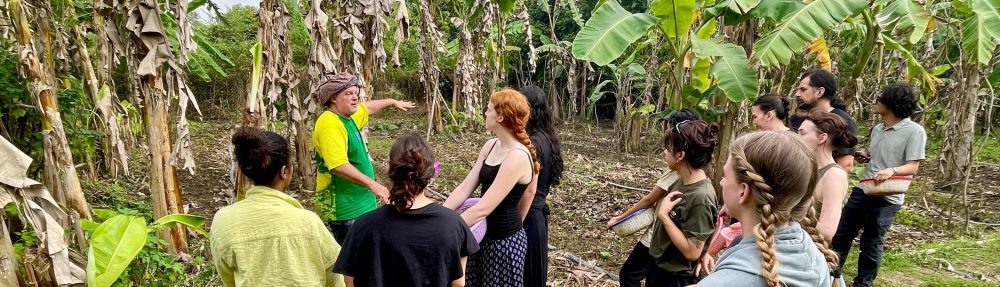
In 2008, with a need for financial durability and inspired by Fukuoka’s vision (McKenzie had the pleasure of meeting his hero in 2002, who championed natural farming on the barren land that were the farm grounds), McKenzie and his team turned to local foods, which grow easily and naturally, for their natural farm. The farm hosts a huge variety of weeds, edible flowers, fruits and grains native to Tamil Nadu like: papaya, guava, breadfruit, mangoes, okra, balloon vine, turkey berry, butterfly pea, hibiscus, millet, and red rice. These crops are then prepared and served at Solitude’s farm-to-plate café, often in their thali or daily plate from that morning’s harvest.
When speaking about the café, McKenzie refers to it as a blessing for the organization. “It’s been the catalyst for us to understand [the importance of eating local foods],” he says. These crops are often undervalued as a result of the mass commercialization of goods, he continues, causing nutritional homogeneity, and thus the loss of cultural identity and food diversity.
Preparing a salad from our harvest of native weeds and fruits alongside McKenzie from Solitude Farm.
In addition to preserving nutritional heritage through serving locally-grown meals, Solitude is also on a mission to educate future generations of natural farmers through their weekly farm tours, permaculture workshops and volunteer opportunities. The intensive three-day permaculture workshop introduces participants to permaculture field design and gives them the tools to start their own food forest or nursery. The month-long volunteer programs, meanwhile, allow volunteers to get more intimately involved with the organization—often assisting with educational programs, running farm tours, cooking in the café, and the making of ayurvedic powders.
Revisiting Fukuoka’s philosophy, farming was more than just growing food, it was a spiritual way of living (Kaundal et al.). At Solitude, they’re not only preserving cultural heritage and a bounty of crops that would otherwise be forgotten, but honoring the gifts of Mother Nature.
Final salad featuring lemon zest and a peanut-dressing.That day’s ‘thali’ or daily harvest plate.
Located at the edge of Auroville sits an epicenter for conscious fashion. The Colours of Nature, founded by Spanish-born Aurovilian Jesús Ciriza Larraona in 1993, is reviving indigenous dyeing practices one garment at a time. The environmentally-friendly clothing brand is a true changemaker in natural dyeing production, providing sustainable solutions to a largely unsustainable textile industry. (For your information, the fashion industry is the second largest consumer of water resources and is responsible for up to 8-percent of global carbon emissions, per Geneva Environment Network.) Marigold, pomegranate, upcycled jackfruit tree sawdust, acacia, and madder are just a few plants the organization works with to deliver their high-quality, vibrantly-hued garments. Nevertheless, no technique is as striking as their 100-percent natural indigo dyeing process.
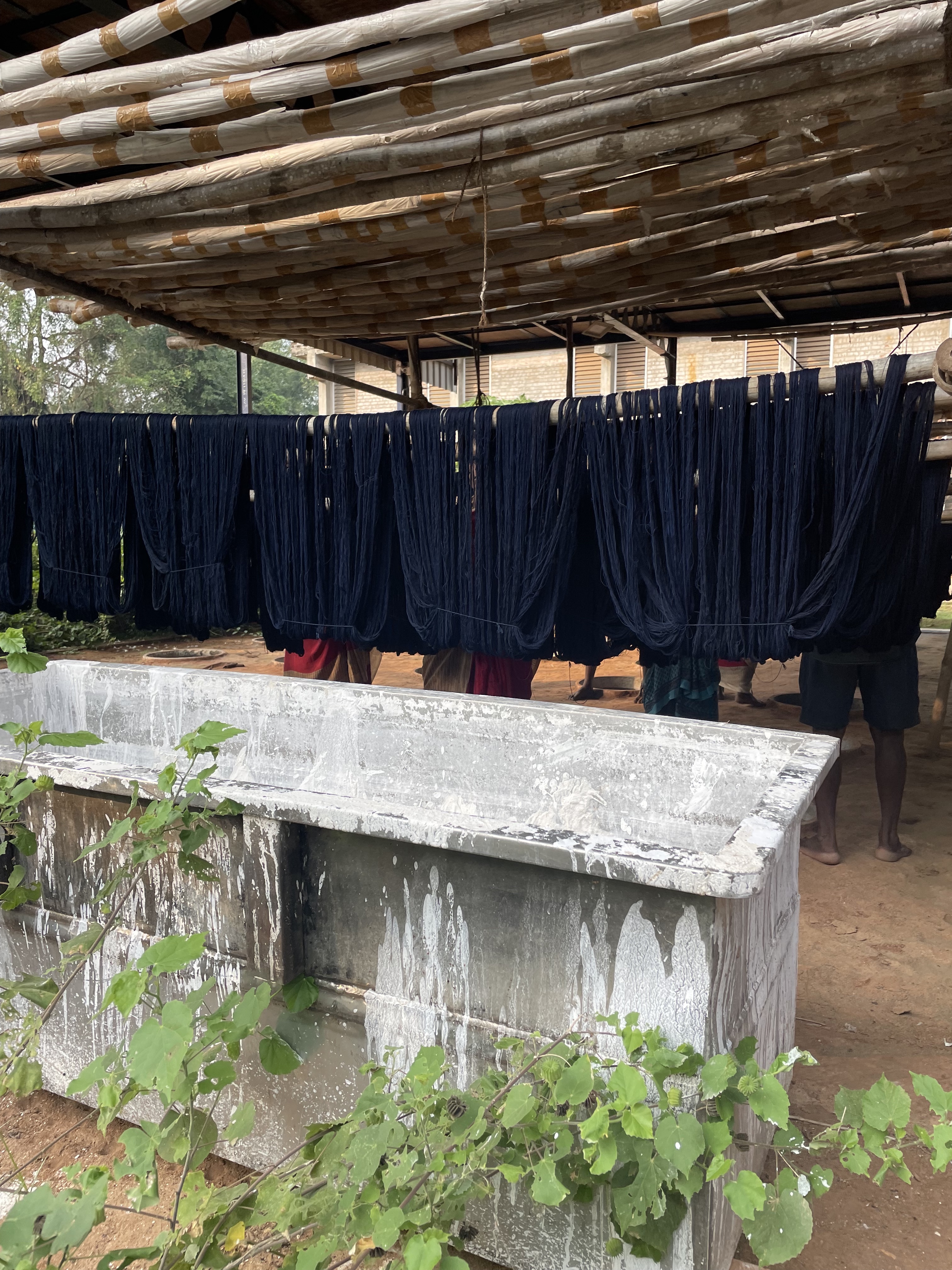
Indigo dyed threads hanging to dry at The Colours of Nature.
Atop a powdery, smooth hazel-colored floor composed of cow dung sits an array of 62 vats, each with a capacity of 1,000 liters, where the fully natural indigo fermentation process takes place. Traditionally, indigo for dyeing requires a fermentation process—either through “staled” urine or by introducing naturally-occurring microbial communities. At The Colours of Nature they utilize bacteria to initiate and maintain the fermenting process. Looking into the full vats, one notices tiny, metallic blue bubbles, which signifies the final stages of the fermentation process. If left for too long, the liquid will overferment—changing hues from a neon blue to army green (Kabish et al.). After fermenting in the vat and being properly mixed with warm water, an employee who has been with the brand for over 29 years smells the final indigo solution to ensure the pH is correct before the dyeing process can begin. Smelling the indigo, one is taken on an olfactory trip to a farm pasture, bringing the mind and body back to the cow manure under one’s feet. The experience mirrors the closed-loop system The Colours of Nature is aiming to achieve—and they’re nearly there.
Employees mixing the indigo dye inside the fermentation vats.
Earlier this year the organization set new benchmarks in sustainable water management with the installation of an upgraded wastewater treatment system. The canonical tank filters are able to manage gray water from dye operations—extracting solid pigments from liquids—and sanitation to significantly reduce overall water usage and prevent environmental pollution. The goal is to reduce dependency on external freshwater sources by using recycled water that meets the brand’s needs. The entire project is expected to decrease the organization’s freshwater consumption by 30 to 40 percent, and reduce overall costs. Speaking about how the water filtration system works, one notices a sparkle in Jesús’s eyes. The Colours of Nature was born out of wanting to improve clean water management in the textile industry, says Petra, one of the brand’s employees, making this initiative a giant victory for them.
The Colours of Nature’s new wastewater filtration system separates solid pigments from liquids.
Not only is the organization one step closer to a closed-loop system within their brand, but they’re also helping to reverse the misuse and overconsumption of fresh water within fashion itself—setting an industry standard that’s worth taking notice of.
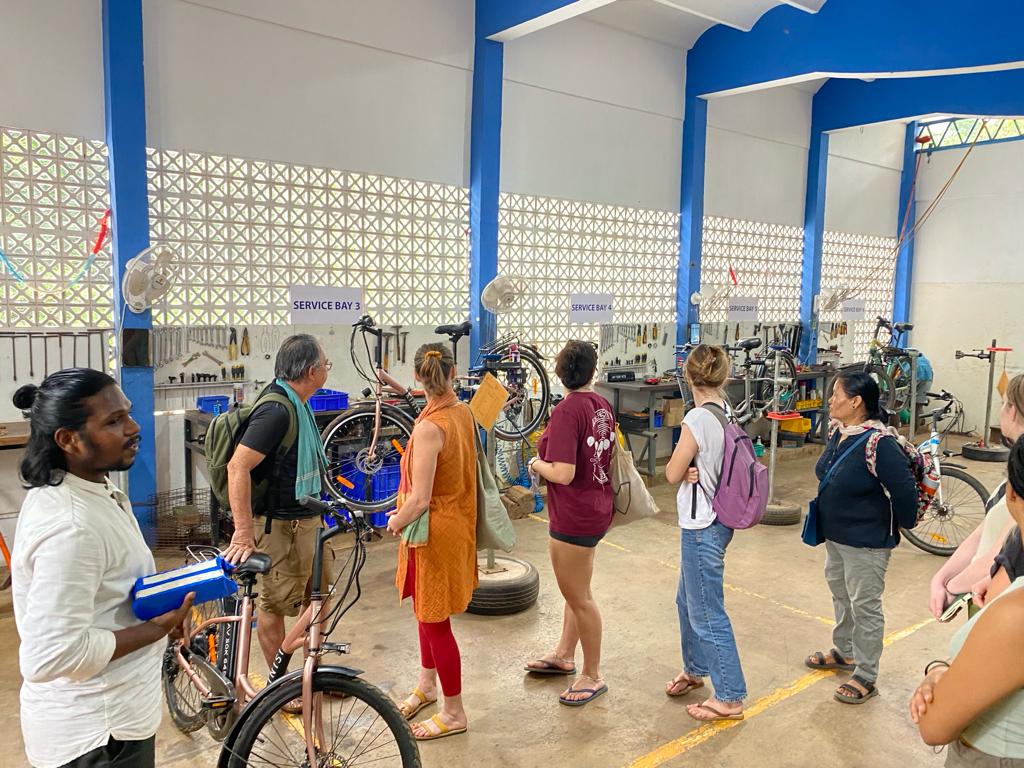
A lovely and quaint white, yellow, and blue building sits amidst the bustle of the Center for Science Research. Here you can find a garage, workshop, and co-working space belonging to Kinisi. This organization works around supplying Aurovillians, their guests, and tourists with electrical cycles in a move to shift the heavy reliance on diesel. Their newest path of expansion has been targeted towards the thousand workers that commute to and from Auroville Not only reducing people’s carbon footprint, the initiative is helping save money as well. The average litter of diesel costs 100 rupees. In contrast with their subscription program for a monthly fee of 1,000 rupees including any repairs, maintenance, and modifications for ease of use, this saves commuters a hefty sum. (When they say, repairs and maintenance, they mean it! On my way around Auroville, my Kinisi bike chain popped off. I parked it, and after getting in contact with them, I went off to complete my errands. When I returned it was fixed and left right where I had left it!)
They estimate that within Auroville, they have a constant 350 subscriptions. All the technical work that goes into the program happens in the workshop out back where they house a Research and Development department, a maintenance department, and a storage space for old batteries. One of the biggest critiques of electronic travel is the problem with pollution and waste generated by batteries. Batteries have a complicated disposal process due to the components and acids in their makeup that can cause dangerous situations if not managed properly. However, Kinisi has put forward an initiative to repurpose these batteries for solar panel energy collection. In our short tour, our guide explained to us how their batteries are made of 20 to 30 cells. The moment a single cell has lived out its lifetime, the battery is unusable. Thus, they collect these in hopes of making use of the rest of the cells or finding a way to repurpose them or dispose of them properly after the fact.
Located upstairs in a building behind their workshop, you’ll find their unique co-working space. With strong broadband Wi-Fi, coffee, meeting spaces, and places to take work calls, this new initiative has started to take off quickly. With the many different types of visitors that enter Auroville, the co-working space is an important tool. Especially because in my limited experience here, wi-fi and a quiet place to work are two things that are rarely found together. Thus, this dynamic and quickly improving organization is one to keep your eye on, whether for finding a place to work or finding a quick and easy way to zoom around the areas of Auroville. But move quick! The e-bikes are in high demand!
Where once stood a vacant lot of barren earth is now a lush garden. Garden may be a strong term for the operation at Solitude Farms however, one can not disagree when the produce it bears is of such high quality. The entropy of solitude farm is entirely intentional, allowing nature to rebound back to its lush vibrant interconnected self while also benefiting from the bountiful fruit it bears. Like the nutrients in the soil which were brought in by composting and anti-desertification efforts the progenitor of Solitude Farms is also a transplant, and much like the plants and vegetables in the farm, Krishna, not his birth name, has become completely enmeshed in the homeostasis of the environment. A wealth of information, Krishna, who is originally front the United Kingdom, is seldom seen without his signature turban shading his bare head from the sun. As he walks through his fields navigating a seemingly invisible path to the untrained eye he can pluck any bean, leaf, or branch up and talk at length about its health benefits, and how to cultivate and cook it. His loud boisterous voice commands attention just as much as the sparkle in his eye or the warm demeanor he radiates when talking passionately about his farm. Almost the entirety of the food that is served at Solitude Farms is grown on premises. The only thing not grown on site are the grains which require much more space for cultivation. On the menu, written in chalk, as it is ever-changing are today’s options. There is always the “thali of the day” and the “farmers’ salad” which change daily based on their harvest each morning. Next to each of the ingredients are listed their health benefits and properties. Some vegetables are described as good to fight inflammation, while others are cited as good immune boosters, and still, others are advertised as mood boosters or good for autism and ADHD. While rice is a staple in Indian cuisine it is rarely seen at Solitude Farms. The “thali of the day” usually favors local grains that are richer in nutrients over rice, which also usually consumes more water in its cultivation. The cafe itself is a place of community, with large family-style tables that encourage people to mingle and enjoy their meals together. Locals and adventurers alike bump elbows and share meals trading stories over a hyperlocal lunch. Solitude Farms also holds community events, often featuring Krishna’s band. The Krishna sings in both English and Tamil, and the band features western instruments like the electric guitar as well as local percussion instruments. If you’re lucky enough you’re even able to hear the band practicing while enjoying your freshly picked lunch.
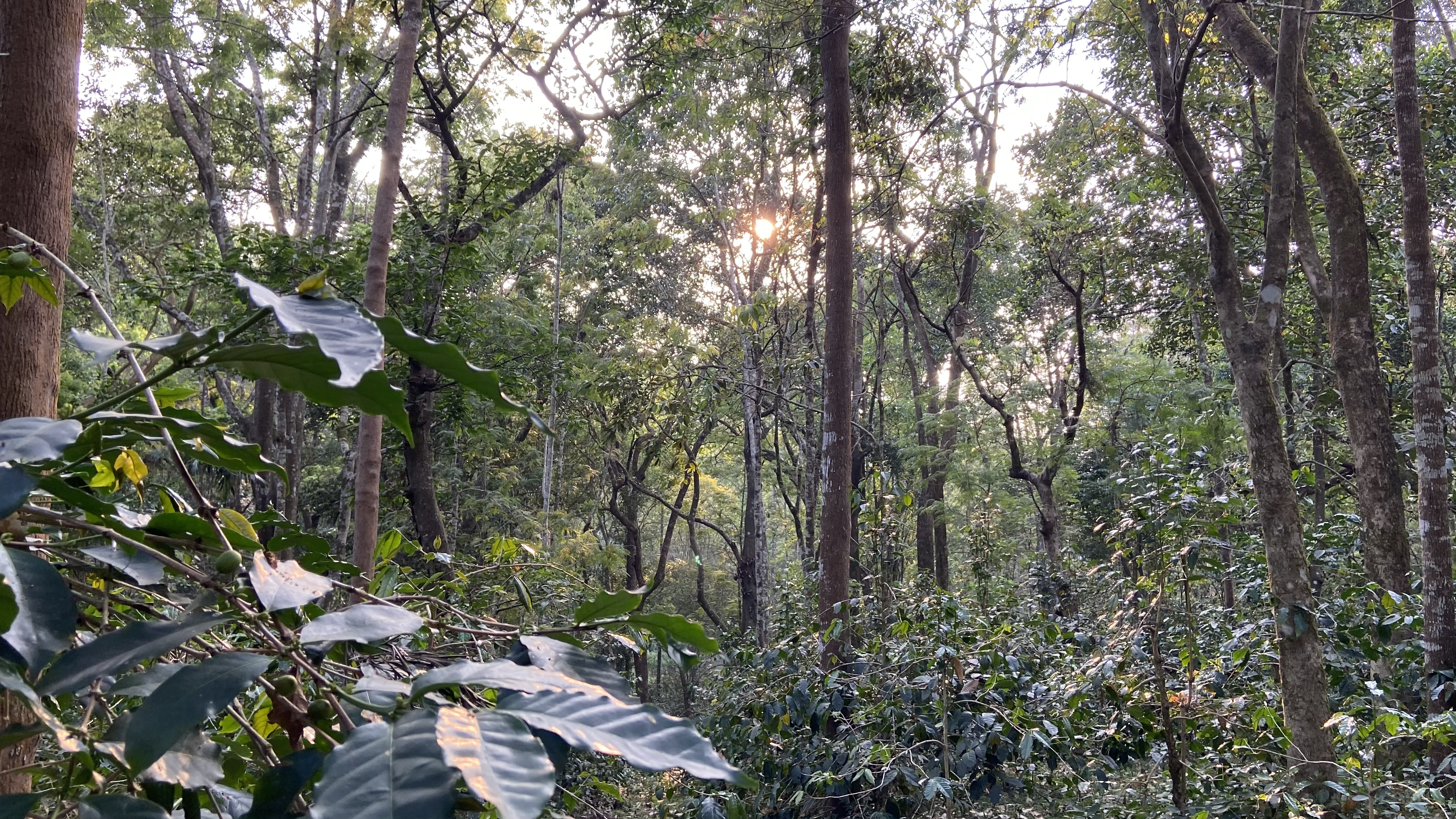
Serving their first batch of crop-to-cup coffee in 2008 Marks coffee of Auroville has become a local landmark and winner of the 2022 aromatic brew & beanery award. Founded by Marc Tormo who arrived in Auroville in 1997, they now produce 12 tons of roasted coffee a year. Their holistic approach empowers the people it touches at all levels from farmers to drinkers without compromising the environment. Specially chosen beans from across India ensure a delicious brew every time, and sourcing directly from farmers helps to bolster producers’ income while maintaining ecological integrity and nurturing the communities that produce their coffee. In establishing a link directly from the producers to the consumers, and doing all roasting in-house Marc’s Coffee is able to ensure fair wages for the growers and hand-pick only the finest beans. All coffee purchased by Marcs Coffee is bought at premium prices. In line with the ethics of Auroville, all the coffee purchased is produced in a sustainable fashion. This is due to India’s coffee plants being entirely shade-grown instead of clearing forests for production, trees are actually encouraged for the shade they produce, allowing coffee groves to easily coincide with the native permaculture. One of the best examples of Marc’s selections is the Halli Barry estate, an estate run entirely by women. The business is a family affair, consisting of Marc, the owner, his wife, in charge of logistics, and their son, Eden, in charge of quality control for other places that use their product. Beyond the beans, the cafe also gives back to the village of Auroville. The cafe is a place of community and a regular hang-out for locals and travelers alike. The interior is built and furbished entirely with repurposed wood, and all of their accouterments are sourced from local artisans, nurturing the community that supports them. Another example of their dedication to community building is their sourcing of products for their delicious homemade baked goods, such as their eggs. They pay half of their year’s order in advance to allow farmers to produce the quantity they need without taking out loans which are usually at astronomical interest rates. The cafe is also staffed predominantly by members of surrounding villages. This brings income back to local communities that otherwise have few other options and shares the knowledge of food service and hospitality cultivated by Mark through his years in the F&B industry in Spain. In a new chapter of their project coffee is working towards educational opportunities and training of high-level baristas, something not widely available in India. In Marks’ philosophy, coffee brings people together, and is a source of community, it uplifts people in both its cultivation and consumption. In his own words “who would have thought all this could fit in a humble cup of coffee”
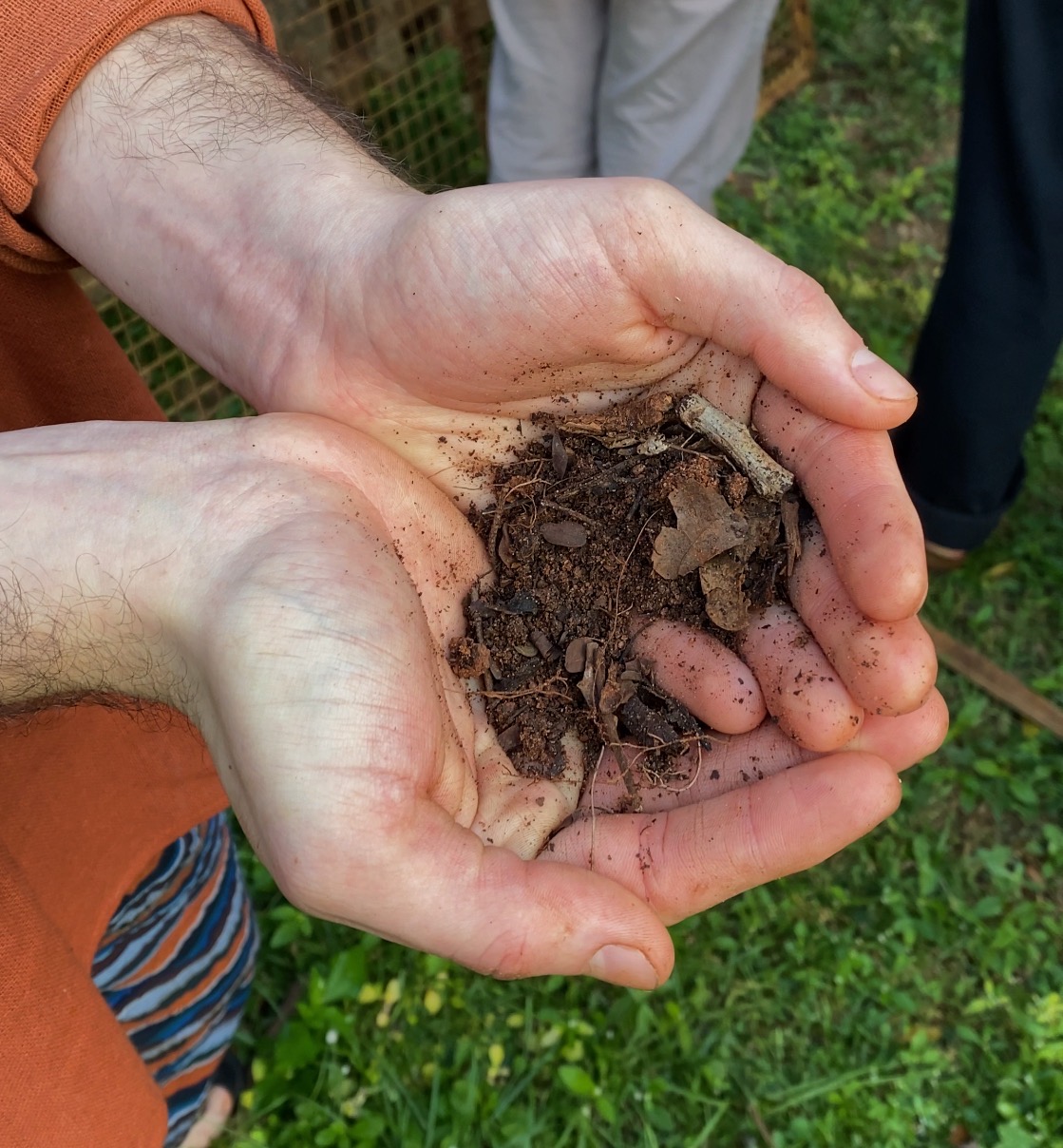
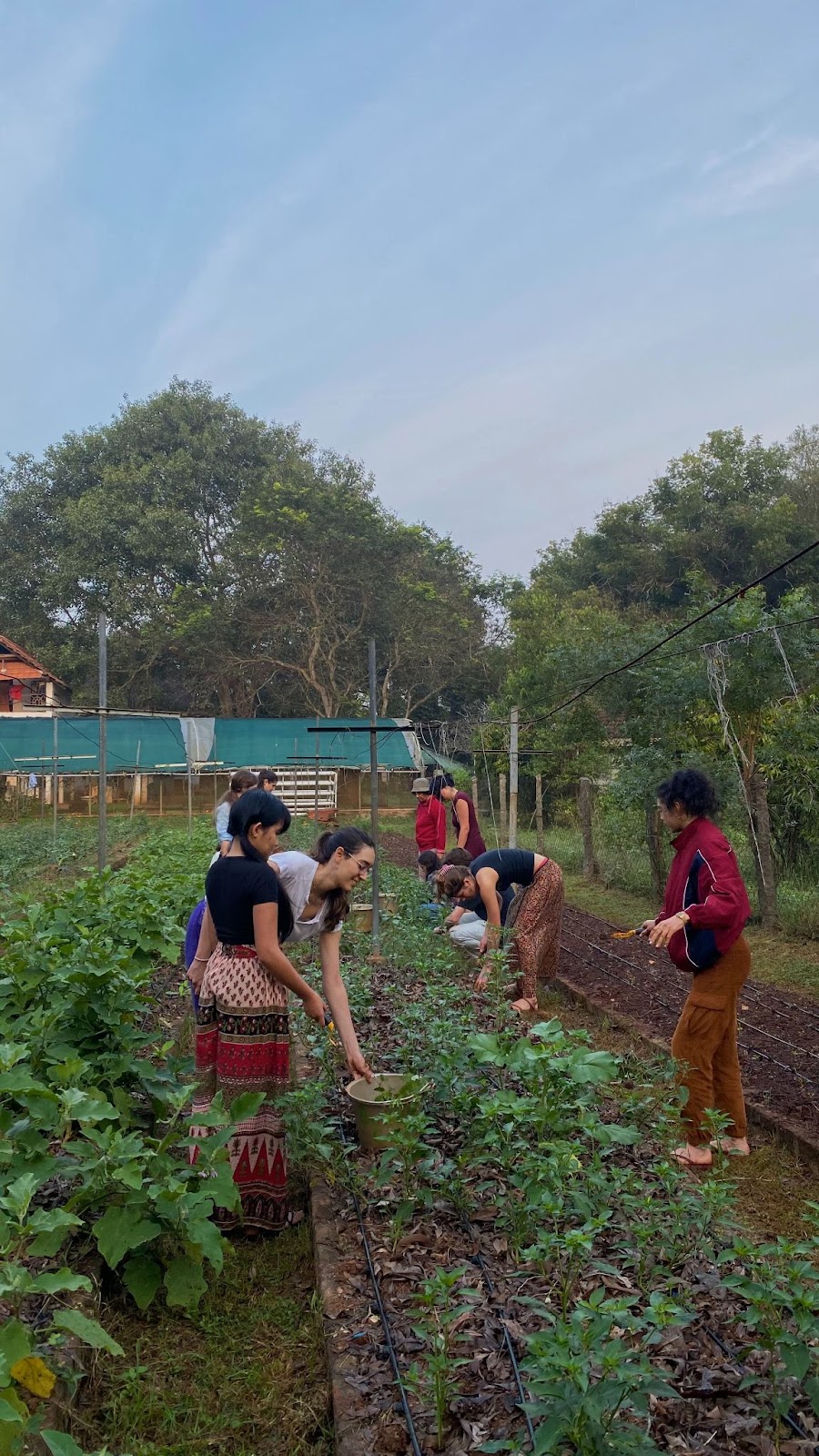
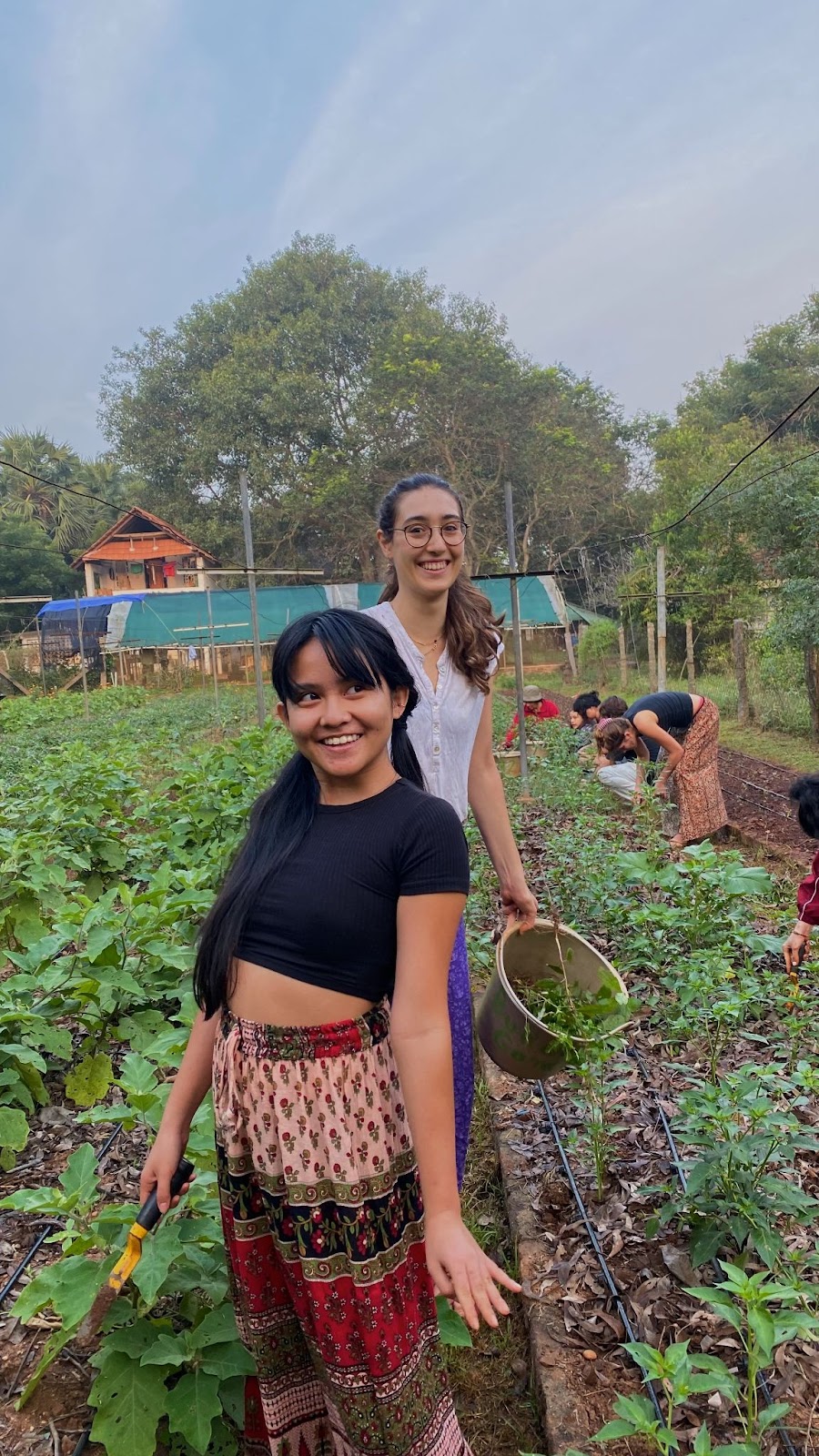
Is there a simpler therapy than sinking our fingers into rich soil and uprooting what prevents us from growing into our best selves? I arose early on Thursday morning, surrounded by air still heavy with mist, to weed the ground of what prevents its lasting success. Anticipating a rain that wouldn’t grace our skin until Christmas Sunday, the first gift to be opened by many, my bike cut through the fog from the Tibetan Pavilion to a garden rooted in the spirit of peace and giving. With morning gusts of wind gliding past my sunscreen-soaked cheeks, I was reminded of summers spent with my nose buried in tomatoes, slapping watermelons and pinching peaches, white sneakers meeting the caress of wet grass and suddenly when the gravel rocked my front wheels and I struggled to keep steady I hit the brakes.
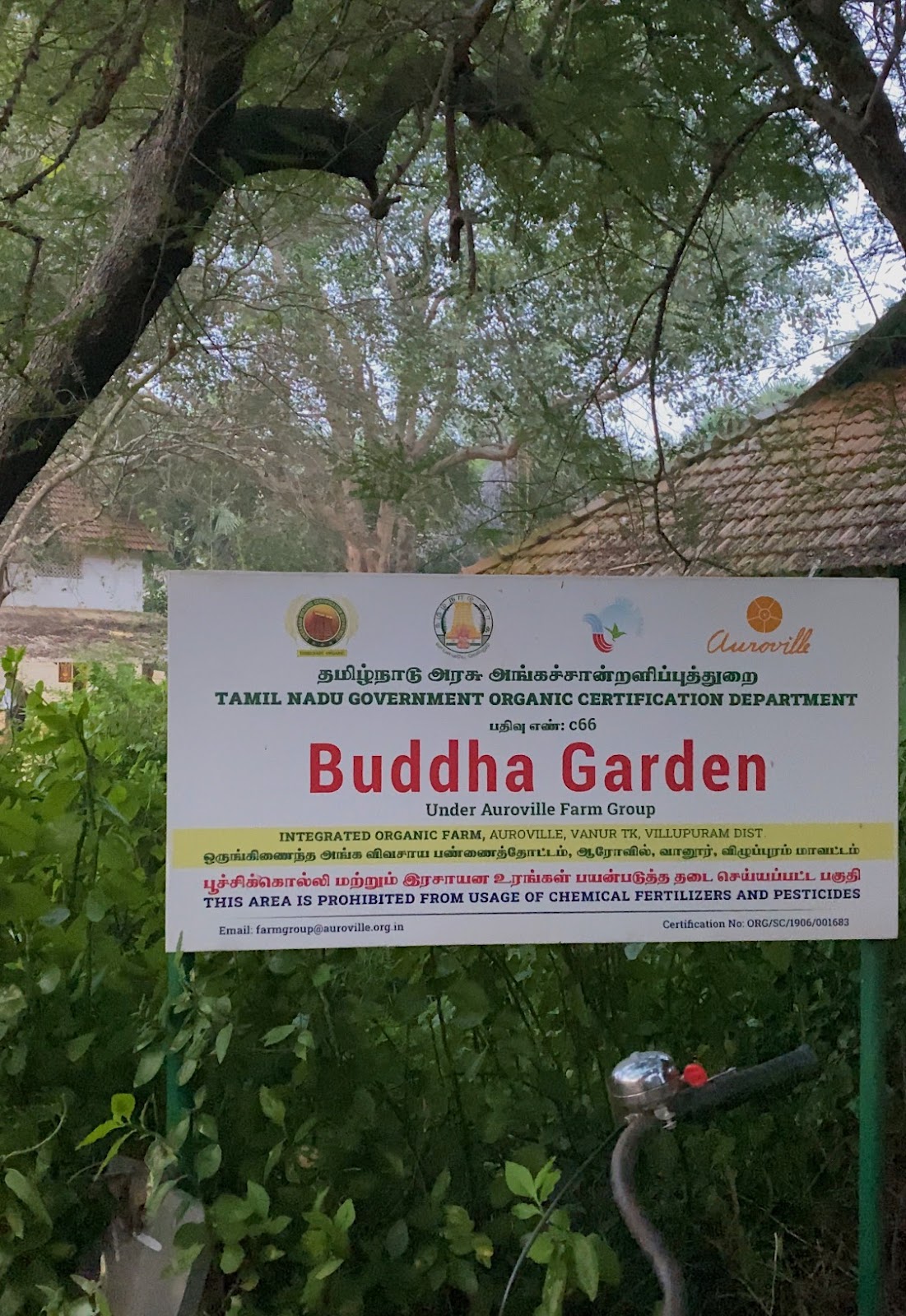
Buddha Garden is the oasis that Octavia Butler dreamed of. A garden, curated with the intention of growing food with the awareness and love of community. Buddha Garden is the promise of life everlasting. Their produce is grown with the purpose of connecting and nourishing every part of our physical and spiritual being. How many gardens are conceived with the dream of food produced with the aim to nurture our loved ones and the earth that we receive it from?
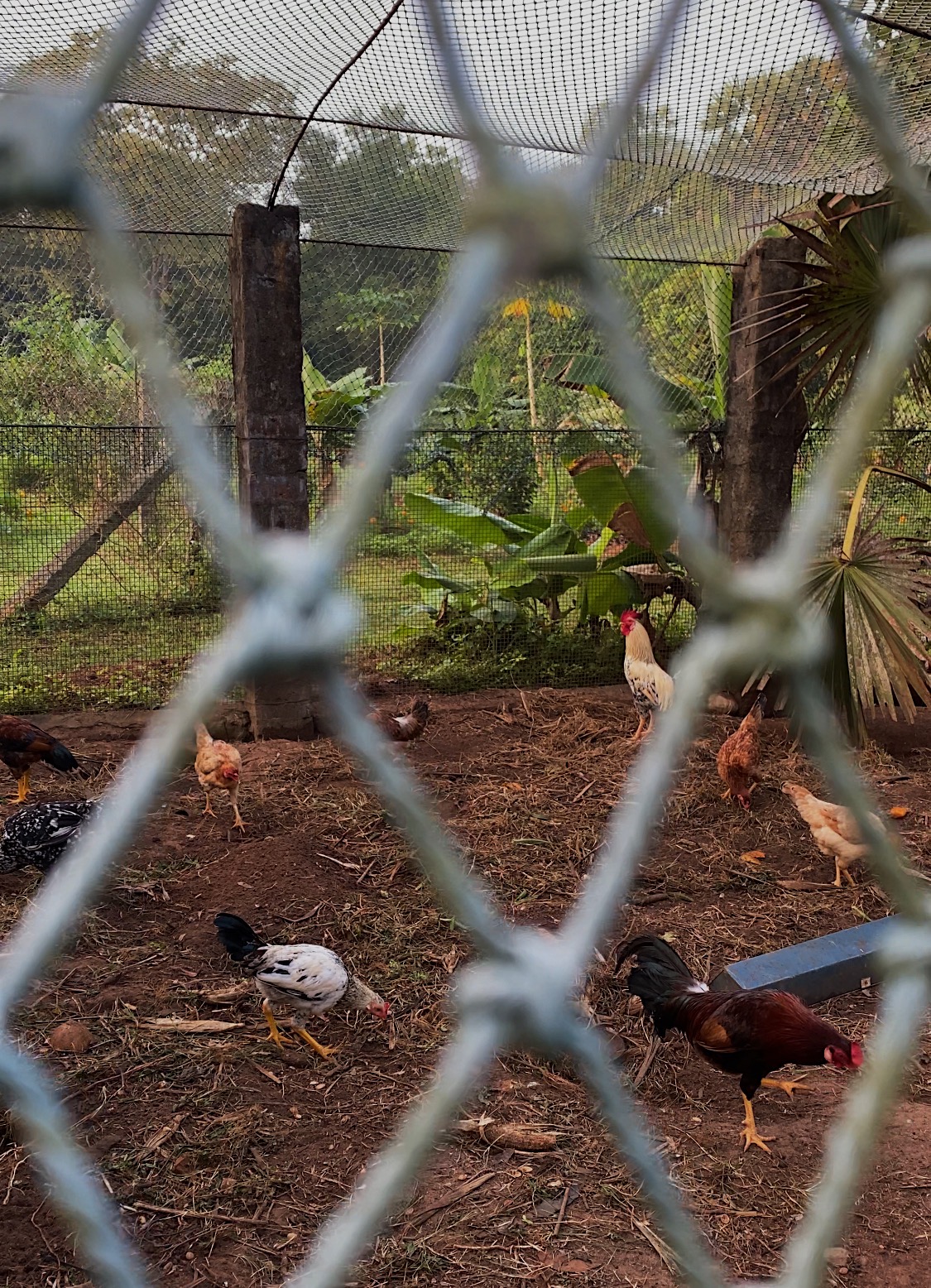
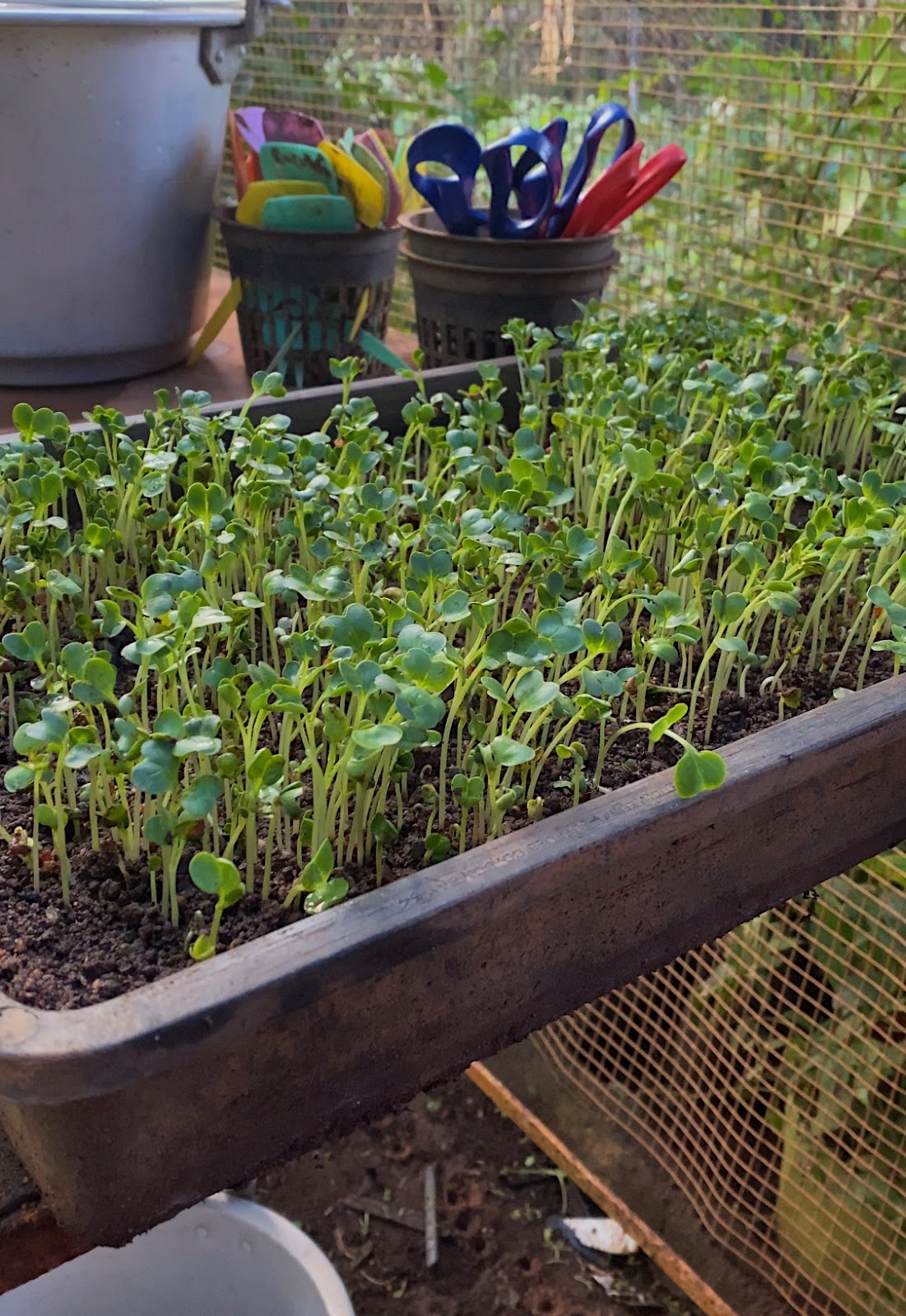
Buddha Garden pledges sustainability by possessing everything it needs to grow food on its ten acres of land. They use three out of the ten beds in the garden to carry out smart water research that hopes to avoid overwatering and subsequent waste of water on crops. Paces away from abundant plant beds stand a chicken coop where surely eggs are harvested for the morning egg white omelet -a personal favorite- but the compost composed of the chicken waste is then repurposed into fertilizer for the very herbs that add the finishing touch to any meal.
For Buddha Garden, sustainability is about teaching and ensuring the value of farming so that the next generation is not only able to sustain themselves but that they become active participants in the maintenance of their ecosystem. It falls perfectly in line with UN SDG goals of zero hunger and responsible production and consumption. Sustainable gardening’s more than just an ethical practice, the prohibited use of chemical fertilizers and pesticides ensures the safety of local wildlife and the longevity of the ecosystem overall. The maintenance of healthy soil and vibrant plant life also prevents flooding in an area rocked by the monsoon season. This model of gardening is something to aspire to. As the world around us changes for the worst due to our own negligence, it is inspiring to appreciate a pocket of lush, green, hope where we emphasize being present in a system that values our added contribution rather than senseless extraction.
Sustainable gardening can also strengthen communities. By sharing produce with neighbors and participating in community gardens, you can build relationships and create a sense of community around healthy and sustainable food production, as we did.
Early this morning, my fingertips rooted themselves in the holes left by the weeds, and I laughed. I laughed as someone with exhaustion sitting heavy on my shoulders and wrapping its arms around my forehead, but also as someone who had finally laid on the couch after a long day away from home and put that child to rest. The soil beneath my nail bed had never known comfort like this and even when they were later scrubbed into oblivion, swirling down a drain alongside the element that breathes life into them and 70% of which flows through me, it was not a goodbye but a see you in the next field.
There is an unspoken romance… a poem – yet to be written-about giving a piece of yourself to a planet that has already given so much to you. I think that Buddha Garden captures that love story in a way I struggle to depict with words. What is love if not pouring the best of ourselves into something so that it may be returned to us ten-fold?
If there is anything to be taken away from this experience, it’s that to be in community with each other, we must first be in community with the ground that sustains us. To give to her is to give back to us, and her perseverance ensures our longevity.



















 AUP Sustainable Development Practicum in Auroville, India