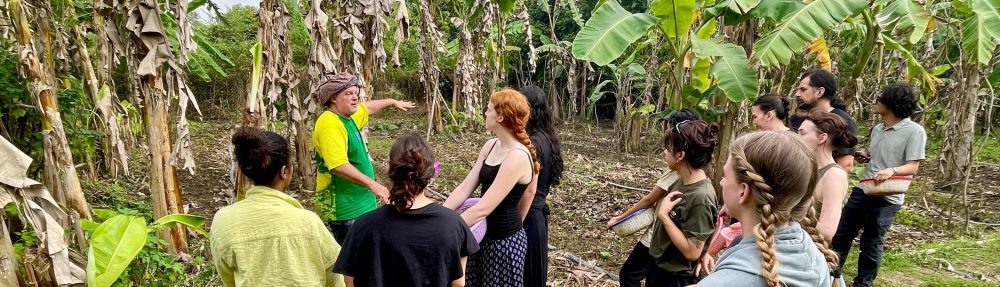
The Auroville Bamboo Center is a local hub for bamboo education. The project manager, Balu, is passionate about spreading the word about how bamboo can be used in different ways. The center hosts workshops and has bamboo art, products, and structures on display. The hope is that from this education, people will incorporate more bamboo products in their life. There are classes taught at local schools to inform the people of Auroville on the potential uses of bamboo and it’s environmental effects. If we are using more bamboo products in place of other materials, we support the production of bamboo forests. Bamboo forests are an important environmental tool to soak up carbon dioxide from the air, allowing nature to heal itself. Bamboo is a very unique plant and due to its durability can be used in diverse ways. Some ways the bamboo center is promoting bamboo products is through food, teas, fabrics, bio charcoal, buildings, furniture, and more. India is the 2nd highest consumer of bamboo right behind China, and this is important because these are countries that are heavily impacted by pollution. It is essential that India finds creative ways to combat climate change in the changing environment. Balu stresses the importance of local intelligence in the changing bamboo market. More and more interest is forming around bamboo due to its powerful healing properties, but it is important that new bamboo farms lean into the traditional farming methods to get the most benefit from the practice. For example, commercial bamboo farms popping up in Northern India, Eastern Europe and the United States have started using pesticides on the farms and harvesting the crops too early. If they took into consideration indigenous bamboo farming practices, they would know that bamboo grows in harmony with other crops such as vegetables that could serve as a permaculture experience making pesticides totally unnecessary. Bamboo trees can grow for more than 40 years with no replanting, the plant is able to reproduce and maintain itself, making the forest harvesting every 2 years counterproductive. Balu teaches us that bamboo should be planted in harmony with the earth. It has practical as well as spiritual value, and the Auroville Bamboo Center reflects this through the forest and the people passionate about it.
Bamboo Center
Reply
 AUP Sustainable Development Practicum in Auroville, India