Chocolate Can Help Save the Planet

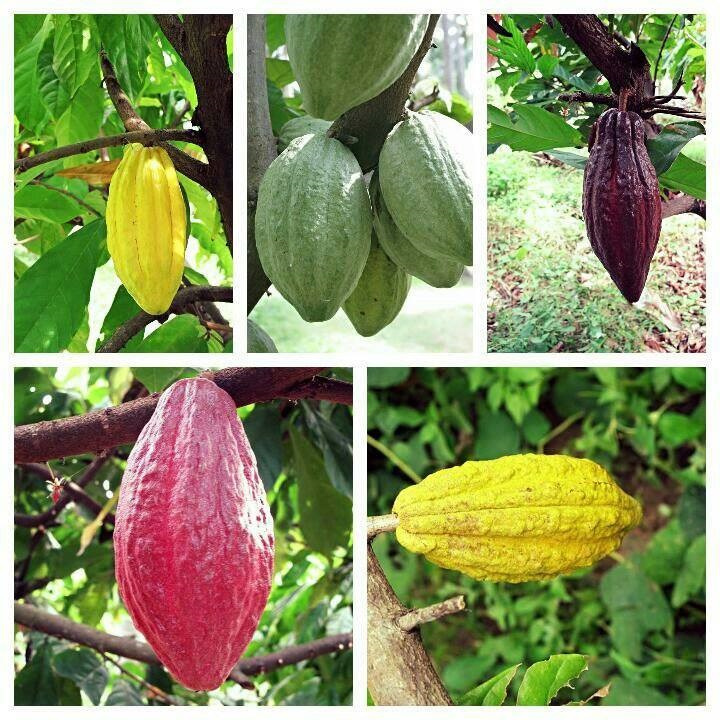
save worldWhile the above phrase is meant to be a joke, it actually is quite true. The cacao tree can aid in the healing of not only Earth but humans well.

Sustainable cacao tree growing is not only environmentally friendly, but assists in providing natural balance for forest vegetation. Also, it can grow simultaneously next to 50+ types of other trees (including the coconut tree which is very important to India considering it is one of the top exporters of coconut in the world) which naturally pollinate the cacao tree and therefore requires minimal, if no, use of chemical fertilizers.

cacao podsI know I stated that chocolate can heal humans and that might be a little farfetched. However, there are certain properties of the cacao bean that are beneficial to humans and can aid in improving our health. Consuming dark chocolate, in small quantities of course, can improve heart health, lower blood pressure, and packs some serious powerful antioxidants.

There is already a huge chocolate industry, so why are environmental and health benefits still being discussed? While that is correct, the industry is not all sunshine and rainbows. There is a darker side to the cacao industry which is not sustainable to human beings.

Luckily, the dark side of chocolate does not seem to be present in India, at least as much as in other parts of the world. India is not necessarily known for its cacao industry although many big chocolate companies, such as Cadbury, Mars, Hershey’s, actually do get their beans from India. However, the farmers in India sell all their beans to these big companies; meaning both the good AND the bad beans are going into the chocolate that you more than likely buy. These big guys aren’t too keen on superior quality.

That is starting to change. There is a movement in the chocolate making industry now to follow what is known as the bean-to-bar process. I must admit that I had no idea what this was until I was introduced to a wonderful social enterprise here in Auroville called Mason & Co Craftsmen of Chocolate.  This process of directly making the chocolate bars you consume straight from the bean itself (and not from pre-made bulk chocolate that is melted down and molded into bars) not only allows for better flavor and purity, but also allows the farmer to harvest a better quality product and be able to receive fair prices for his beans.

mason cacao roastingmason chocolate barMason Bars 3It was not apparent to me at first, but now, after studying this company, I can see how almost anything can be under the umbrella of sustainable development. How working directly with farmers to improve their crops to obtain a fair trade value provides the income needed for the farmer to support his farm and his family. How with improved crops it in turn improves the quality of the cacao beans used to make chocolate. How even deciding to plant cacao trees in the first place helps the Earth’s natural soil components while also aiding the vegetation surrounding it and naturally keeping away pests so that there is no need for artificial pesticides.

Next time you buy some chocolate, research the company before you do and see whether they are on the right track to help heal the planet while of course at the same time providing you with a delicious treat.

I think I’m going to go take a chocolate break now…


*All images courtesy of Mason & Co.

Clothes Aren’t Going To Change The World: Uma Prajapati Is

IMG_7899

Uma Prajapati, the founder of Upasana, embodies this quotation to the fullest. Based in Auroville, India, Upasana is the overarching company comprised of multiple different brands of sustainability from organic clothing, tsunami relief, waste management, social responsibility, empowerment and growth. Since working with the brand to increase consumer literacy about organic cotton, I’ve been completely inspired.

Uma Prajapati. Image courtesy of aurovilleradio.org.

Uma Prajapati. Image courtesy of aurovilleradio.org.

I spent some time talking with Uma today and what she had to tell me absolutely overwhelmed me. I wasn’t overwhelmed in the sense that I felt panic or loss of control, but in a sense that I was utterly affected by her story.

Uma came to Auroville in 1996 and after a year founded Upasana. Her aim was to bring India’s textiles to Auroville, so after sourcing from around 16 different states, the company began to develop traditional textile and fashions. It wasn’t until the devastating tsunami hit India in 2004 that Upasana started to transform. This devastating natural disaster killed nearly 230,000 people and affected the lives of 1.7 million in 14 different countries. The company was working to help pick up the pieces through various social projects. Uma ended up working with organic cotton farmers and became profoundly changed with what she learned.

“When I began to work with cotton farmers, I began to know our big brother, Monsanto. I had no idea. I didn’t know there was a seed mafia. I didn’t know that there was a chemical mafia. I didn’t know farmers were committing suicides due to the way the whole economy is structured. They feel so vulnerable. The whole thing hit me so hard,” she said.

Because of this, in 2010 Upasana declared that it was consciously taking the step into becoming organic to support the farming community. She told me that it just blew her mind when she found out that 25% of the world’s insecticides and pesticides get used in one single crop of cotton. She continued to reveal that fashion is corrupt at the very base level, that it can’t even support the people working to produce the crops necessary to create clothing.

Uma questioned her role in all of the mess. “And in that process I chose to align my action and my thought process to the future and the light of the future, not so much thinking about who has to change right now. It’s me who will change and it’s my organization who will change and I will align myself to the future. This is where the sustainable fashion as an option came to me, that if I had to continue doing fashion, it will be only this or I’m done.”

It was this point in the conversation that really made me sit back and examine the world and the people who comprise it. What are we doing to our planet, to our people? If all fashion companies and all of the segments that make it up changed to operate in an ethical and sustainable way the total global carbon footprint could be drastically reduced and countless lives could be saved. If more leaders of companies had Uma’s mindset, the world would be in a much better state.

The future of Upasana lies in international expansion. “It’s time to tell the story to the larger community.” Uma had purposely avoided that route because she wanted to serve her own country and domestic market within India, first. She continued, “now, I’m ready to take this story of a small brand venturing into a fashion and trying to bridge from the farmers to the wearer to the whole line of organic.”

I asked her where she thinks the future of sustainable fashion is headed and without any hesitation asserted “sustainable fashion, it’s the only way!” If we want to we can choose to continue to do what we are doing and destroy the planet, but eventually we have to think about the future. The future lies in sustainability and a conscious lifestyle. It’s not just the fashion industry; many things need to change.

Uma’s passion and dedication to making a difference is exactly the inspiration that the world needs to achieve the larger goal. In a world filled with people and companies whose only concern is to make money over everything else, Uma is so refreshing. But, in addition to her commitment to make this world a better a place, her positivity and optimism for the future makes me hopeful that change can actually happen. I hope my contribution to the effort has even a minor impact upon perceptions of sustainability as a whole. I hope people make the change.

By Alexa Pizzi

Investigating the Impact of Microfinance and Social Enterprises in Auroville

As a student whose primary interests lie in economic and social policy in the developing world, it isn’t too surprising that microfinance has captured my interest, just as it captured the interest of the development community worldwide. Yet, an increasing body of research finds little evidence that microfinance actually helps to lift its recipients out of poverty. Aneel Karnani’s article “Microfinance Misses Its Mark” provides a helpful example to help explain where scholars see microfinance falling short:

“Consider these two alternative scenarios: (1) A microfinancier lends $200 to each of 500 women so that each can buy a sewing machine and set up her own sewing microenterprise, or (2) a traditional financier lends $100,000 to one savvy entrepreneur and helps her set up a garment manufacturing business that employs 500 people. In the first case, the women must make enough money to pay off their usually high-interest loans while competing with each other in exactly the same market niche. Meanwhile the garment manufacturing business can exploit economies of scale and use modern manufacturing processes and organizational techniques to enrich not only its owners, but also its workers.”

Thus, this type of critique leads scholars to see microfinance as a tool that elevates the standard of living of those in poverty, without necessarily drawing them out of poverty, by giving them access to credit that they would not be able to obtain otherwise, due to their lack of collateral and the small loan amounts. Yet, the very small scale of these micro-funded activities is not conducive to actual poverty alleviation; instead, creation of stable jobs is necessary.

Therefore, I was particularly interested in seeing microfinance in action in Auroville, and have been presented with multiple opportunities to do so over the past 10 days. In our visits to different microfinance and social enterprise organizations in and around Auroville, I was fascinated to see this critique being embraced in innovative ways.

WellPaper doesn’t simply form groups of women to receive loans, it provides a structured training in the making of high quality products from recycled materials. Instead of sending the women out to create their own individual crafting enterprises, WellPaper acts as a collective buyer for the women, who can work individually or in teams to fill the orders that WellPaper receives. This provides reasonably steady employment for the women, though there are busy and slow order periods, and allows WellPaper to sell and market its products all over India and abroad.

The Auroville Village Action Group (AVAG) has touched the lives of over 4000 women through microloans and women’s groups and, while continuing to expand their microcredit programs, is investing more and more efforts in opening business lines that provide stable jobs that build on the skills that their loan recipients have acquired. They now have lines selling environmentally friendly feminine protection, clothing and jewelry all over India. Thus enterprise development is building upon initial microfinance and education efforts.

Naturellement goes even farther than providing stable jobs; indeed, its founder argues that this is not enough, and that educating her employees on personal finance and providing a community in which the women can discuss issues such as domestic violence is also necessary.

The People’s Social Development Foundation (PSDF) does focus on self-employment micro-enterprises, and the effects of this do indeed seem to tend more towards “softening the blow” of poverty rather than alleviating it. However, this is not to say that this is not useful. PSDF’s microfinance efforts have made great gains in freeing families from crippling debt to local moneylenders and empowering women in non-economic ways, through providing counseling and social forums to discuss domestic violence and women’s political and communal leadership.

PSDF conducts awareness programs and group counseling in the 47 villages that it works in, as well as providing microloans.

PSDF conducts awareness programs and group counseling in the 47 villages that it works in, as well as providing microloans.

Thus, while it is important to take critiques of microfinance into account, criticizing microfinance’s ability to alleviate poverty does not mean that microfinance is a completely ineffective tool. Opening large enterprises that provide stable jobs is not always feasible in the short-term, especially in rural areas that are not attractive to investors due to a lack of skilled workers.
Indeed, both AVAG and PSDF note that, while the microfinance approach may not pull its recipients out of poverty, when coupled with education initiatives, it provides a basis for further quality of life improvement in future generations and a stronger foundation for present and future skills acquisition, thus creating a more attractive environment for larger, traditional investors in the future. These organizations see less children being taken out of school to work and less interest and trust in financing from moneylenders.

Auroville has thus demonstrated to me how both microfinance and enterprise building can be used as a package to empower and alleviate the poverty of developing communities. There is rarely a true “silver bullet” in development; rather, development practitioners need to draw from a toolkit of multiple tools, depending on the specific situation at hand. While the Auroville context, from my observations, provides further evidence that microfinance is not necessarily the best tool for rapid poverty alleviation, and the power of enterprise building and job creation to do so instead, it also demonstrates the power of microfinance coupled with social and economic education to lay a foundation for skills acquisition and women’s non-economic empowerment, which may ultimately create a more conducive environment for larger scale job creation in the future.

Stay tuned as I begin my work with the People’s Social Development Foundation for these next two weeks and explore this topic and the power and shortfalls of microfinance in more detail!

– Anna Wiersma, American University of Paris – MPPA (Master of Public Policy and International Affairs)

Sources for further information on the “Microfinance Critique”:

Banerjee, A. V., & Duflo, E. (2006, October). The Economic Lives of the Poor. .

Karnani, A. (2007, Summer). Microfinance Misses Its Mark. Standord Social Innovation Review. Retrieved December 29, 2013, from http://www.ssireview.org/articles/entry/microfinance_misses_its_mark/

Panagariya, A. (2010, December 17). Does Microfinance Reduce Poverty? An Analysis of India’s Crisis. Brookings. Retrieved from http://www.brookings.edu/research/opinions/2010/12/17-india-panagariya#

Our Last Day in India

By Madeline Boughton

January 14, 2012…
After a night of celebration with dinner, drinks, gift-giving to our mentors, and swimming in the restaurant pool, we all slept soundly that night.

Saturday arrived, our last day in India. Bright and early we made our way to the dining hall in the Tibetan Pavillion. Our hostess Kalsang (and company) prepared our breakfast of bread and jams, fresh fruit, oatmeal, and tea & coffee. Around the breakfast tables the consensus was people going shopping in Pondicherry for last minute gifts and souvenirs or to the beach for some last minute sun, sand and surf. (A few people had to go into their NGO’s to drop things off and say proper goodbyes.)

Everyone was happy with their last day spent around the beach, Kulu Payam, Pondicherry, and Auroville. The evening wore on and people ventured out for some food before we had to load up the “bus” at 9:30pm. Some went to a restaurant called Paris, some went to Tanto’s and others went to the ever faithful, Visitor’s Center. Many of us spent our last rupee on those meals. We were sure to leave a nice tip for those poor waiters at the Visitor’s Center 🙂

The pavilions had rush and adrenaline in the air. A few of us decided to create a donation bag for the Social Awareness for Liberation Trust (SALT) Children’s Home. This home is essentially an orphanage and was severely affected by the cyclone. People came by and put toiletries in the bags, a few clothing items and flip flops, first aid products, and headlamps and flashlights. It wasn’t much or very fancy, but we were positive that it would be of greater use to them than it would be to us in Paris, especially since the home was still without electricity.

True to form at the Tibetan Pavilion, we also lost power (again) when everyone needed it, while packing! Thankfully we still had some candles. People continued to pack and pray that their suitcases would not be overweight.  As we brought our suitcases down to the front of the building, everyone was saying goodbyes to Sacha, Luke and Kalsang. There were also a couple of us that were left behind (of their own volition). Kalsang said she will never forget the night of the cyclone and the night after where we shared a soup for dinner because we had virtually no food and only a stone-aged method of cooking.

We all huddled up into a big circle with our arms around one another’s shoulders and began to sway. Some started getting a little emotional. I thought to myself, “Finally!” I had been waiting the whole trip for us to bond like this and sing Kumbaya! I began singing it. We didn’t make it through the whole song but it was sort of like a gigantic, 25 person group hug and we ended on that note.

As the bus drove away we waved goodbye. Some of us waved goodbye forever, some for many years, and some will return next year. Each person took away something different from this adventure. But we can all agree that it was a “Once in a lifetime experience.” Image

The Other Side of Sustainability

By Shannon Warren

This morning Auroville was abuzz with the whirring of chainsaws slicing into fallen trees, the frantic beeping of the suddenly plentiful rickshaws, and the general chaos of people trying to make sense of the destruction around them.  It has been three days since cyclone Thane hit Auroville and the devastation is still astounding.  The heat and humidity bring into sharp relief the lack of drinking water and electricity as people venture out in the glaring sun to procure necessities and try to clear debris from the roads.  Some of our group has experienced natural disasters and many of us haven’t (I am included in the latter group).  Certainly none of us expected anything like this when we came to India for a practicum in communications and sustainable development.  I suppose the thing about learning, about self-improvement, is that you must be confronted with the unexpected and unknown to progress.

The night of the storm, while I curled up afraid but safe in my sheets and behind sturdy brick walls, I listened to the howling winds, shattering glass, and falling trees as peoples’ homes and livelihoods were destroyed in a matter of hours.  The next morning I woke up in disbelief.  Just one day earlier we were carefree, hiking up to a temple on top of a hill and swimming in a beautiful freshwater lake.  That morning we were not only in an unfamiliar landscape and culture, but had just been through the worst cyclone that had ever hit Auroville, according to local sources.

Although the situation could have escalated to the point of hysteria very quickly, we chose instead to play cards by flashlight and sit together singing familiar songs, letting our apprehension out through laughter rather than tears.  Some of us ventured out on the roads, clad in our raincoats and ponchos, to see how the villages had been affected and to search for food and water.  After climbing through the fallen giants blocking the roads and seeing that being in a mud hut during a cyclone as opposed to a sturdy brick building made a world of difference, we knew that we had our work cut out for us the next couple days.

The next day, New Year’s Eve, we donned our work clothes, picked up machetes, and started chopping and clearing up the trees and debris around our pavilions.  Suddenly it seemed as if we were no longer a group of semi-strangers brought together by wanderlust and a course requirement, we were all kindred spirits, working together to realize a common goal.

While traipsing through the grass behind my classmates with my arms full of branches and my heart full of determination, it became clear to me that there are two sides to sustainability: the physical side that involves composting toilets and cold showers as well as the emotional support that comes from being a member of a community which takes care of all of its members as well as the physical space that it inhabits.

So, while it may not have been the lesson we set out to learn, we have all discovered the emotional side of sustainability over the past few days.  Although the people who live here may not have many of the comforts we enjoy back home, they do have one thing that many of us don’t: the sense of security and assurance that comes from living in a community where people are connected and take care of one another.   I think I’d take that over an iPad any day of the week.