Exploring Mamallapuram: A Historic Coastal Site in Tamil Nadu

By Alexandra Henzl

Mamallapuram, also known as Mahabalipuram, is a beacon of history, art, and architecture situated on the southeastern coast of India in Tamil Nadu. This UNESCO World Heritage Site is celebrated for its collection of rock-cut monuments, temples, and bas-reliefs that date back to the 7th and 8th centuries CE. The town owes its origins to the Pallava king Narasimhavarman I, fondly called Mamalla, meaning “great wrestler,” under whose reign Mamallapuram flourished as a major seaport and cultural hub. During the Pallava dynasty, Mamallapuram was a vital seaport, facilitating trade and cultural exchange with regions as far as Southeast Asia. This maritime significance not only enriched its cultural landscape but also provided the resources and inspiration for its magnificent architectural feats. The town became a canvas for the Pallavas’ creativity, showcasing their mastery in rock-cut and structural architecture, which laid the foundation for later Dravidian temple styles. In 1984, the town was designated a UNESCO World Heritage Site, cementing its place in global history.

The Shore Temple: An Architectural Marvel by the Sea

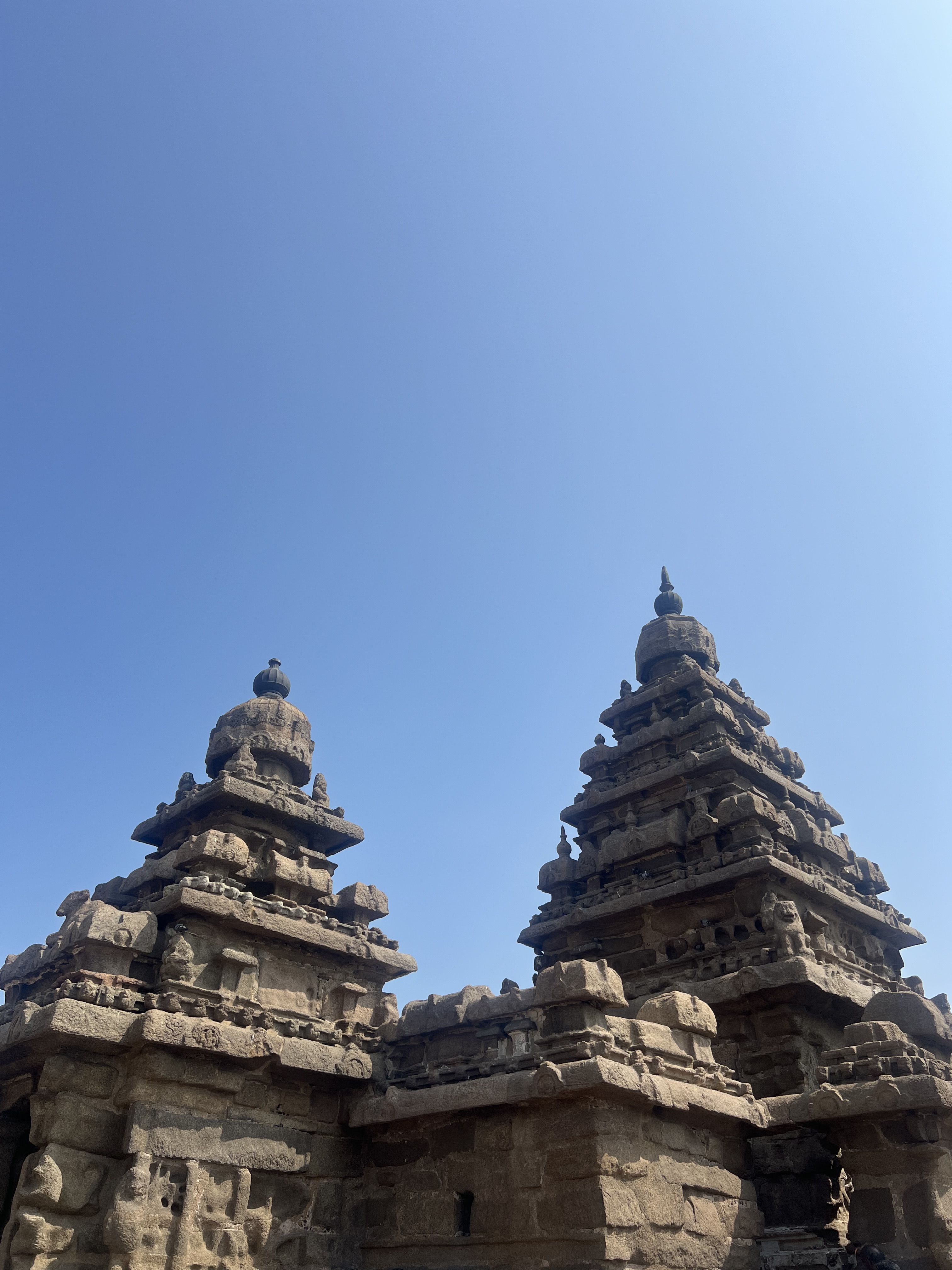
One of Mamallapuram’s most iconic landmarks is the Shore Temple, standing gracefully against the backdrop of the Bay of Bengal. Constructed in the 8th century during the reign of Narasimhavarman II, this structural temple is among the oldest in South India. Unlike the monolithic rock-cut architecture seen elsewhere in Mamallapuram, the Shore Temple was built using dressed stone blocks. It is dedicated to Lord Shiva, with intricate carvings depicting mythological scenes and deities. The temple’s strategic location by the sea made it a beacon for sailors in ancient times, adding to its historical significance.

The Five Rathas: A Testimony to Architectural Experimentation
Another remarkable feature of Mamallapuram is the Five Rathas, a collection of monolithic rock-cut temples that resemble chariots (rathas). Each structure is carved from a single granite block and is named after characters from the Mahabharata; the Pandava brothers and their wife, Draupadi. These temples served as prototypes for subsequent South Indian temple designs, showcasing a diversity of architectural styles. The Dharmaraja Ratha, the largest of the five, stands out for its elaborate carvings, while the Draupadi Ratha, the smallest, charms with its simplicity. Although these structures were never used for worship, they remain a testament to the Pallava dynasty’s architectural ingenuity.

Arjuna’s Penance and the Descent of the Ganges: Bas-Relief Masterpieces

The twin bas-reliefs of Arjuna’s Penance and the Descent of the Ganges are among the largest and most intricate in the world. These carvings, measuring 27 meters long and 9 meters high, depict mythological and natural scenes with incredible detail. Arjuna’s Penance portrays the Mahabharata hero performing austerities to obtain a boon from Lord Shiva, while the Descent of the Ganges illustrates the celestial river’s descent to Earth, aided by King Bhagiratha. The reliefs are teeming with life; from celestial beings and sages to animals and a comical cat performing penance; making them a vivid snapshot of Pallava artistry.

Krishna’s Butter Ball: Nature Meets Mythology

A short distance away lies Krishna’s Butter Ball, a massive granite boulder precariously balanced on a sloped rock. This geological wonder, which appears to defy gravity, has intrigued visitors for centuries. Local legend associates it with Lord Krishna’s fondness for butter, adding a whimsical touch to its natural grandeur. Scientists and historians alike marvel at its stability, attributing it to the unique properties of the rock and its underlying surface.

Beyond its architectural splendors, Mamallapuram’s historical role as a thriving seaport during the Pallava dynasty cannot be overlooked. Its strategic location facilitated trade and cultural interactions, leaving a lasting impact on the art, religion, and architecture of Southeast Asia. Artifacts and inscriptions found here hint at extensive maritime connections, underscoring Mamallapuram’s importance in ancient global networks. Mamallapuram’s preservation is not just a nod to the past but a commitment to the future. Its conservation aligns with the UN’s Sustainable Development Goals, particularly in fostering sustainable cities and communities (Goal 11), protecting coastal ecosystems (Goal 14), and encouraging partnerships for heritage conservation (Goal 17). Efforts to maintain its monuments ensure that future generations can continue to draw inspiration from this historical and artistic legacy. Exploring Mamallapuram is like stepping into a living museum where every stone has a story to tell. From the Shore Temple’s grandeur to the intricate carvings of Arjuna’s Penance and the playful allure of Krishna’s Butter Ball, this town encapsulates the artistic and cultural brilliance of ancient India. Mamallapuram is more than a destination; it is a gateway to understanding the ingenuity and vision of our ancestors. A visit here is not merely an exploration of history but a journey into the heart of human creativity.

Tackling Waste Management Challenges in India: The Story of Wasteless, a Presentation by Ribhu

By: Sachi Hauser

India faces significant challenges in waste management, especially in rural areas. While urban centers have made strides with compactor trucks and green community waste bins, rural areas often lack any form of systematic waste collection. The issue stems from a combination of inadequately used funding, poor implementation, and political inefficiencies. Politicians sometimes trade jobs as garbage workers for votes, but many of these workers are unmotivated and fail to show up. As a result, most rural communities are left to manage their waste independently.

The Waste Problem

Waste in India is generally separated into three categories: dry, compostable, and toxic. Despite this classification, waste is often dumped openly, creating environmental and health hazards. Toxic waste, including medical waste, is particularly concerning as it poses significant risks to communities. Compounding this issue, the lack of public awareness and education leads to poor waste segregation and disposal practices.

The Founding of Wasteless

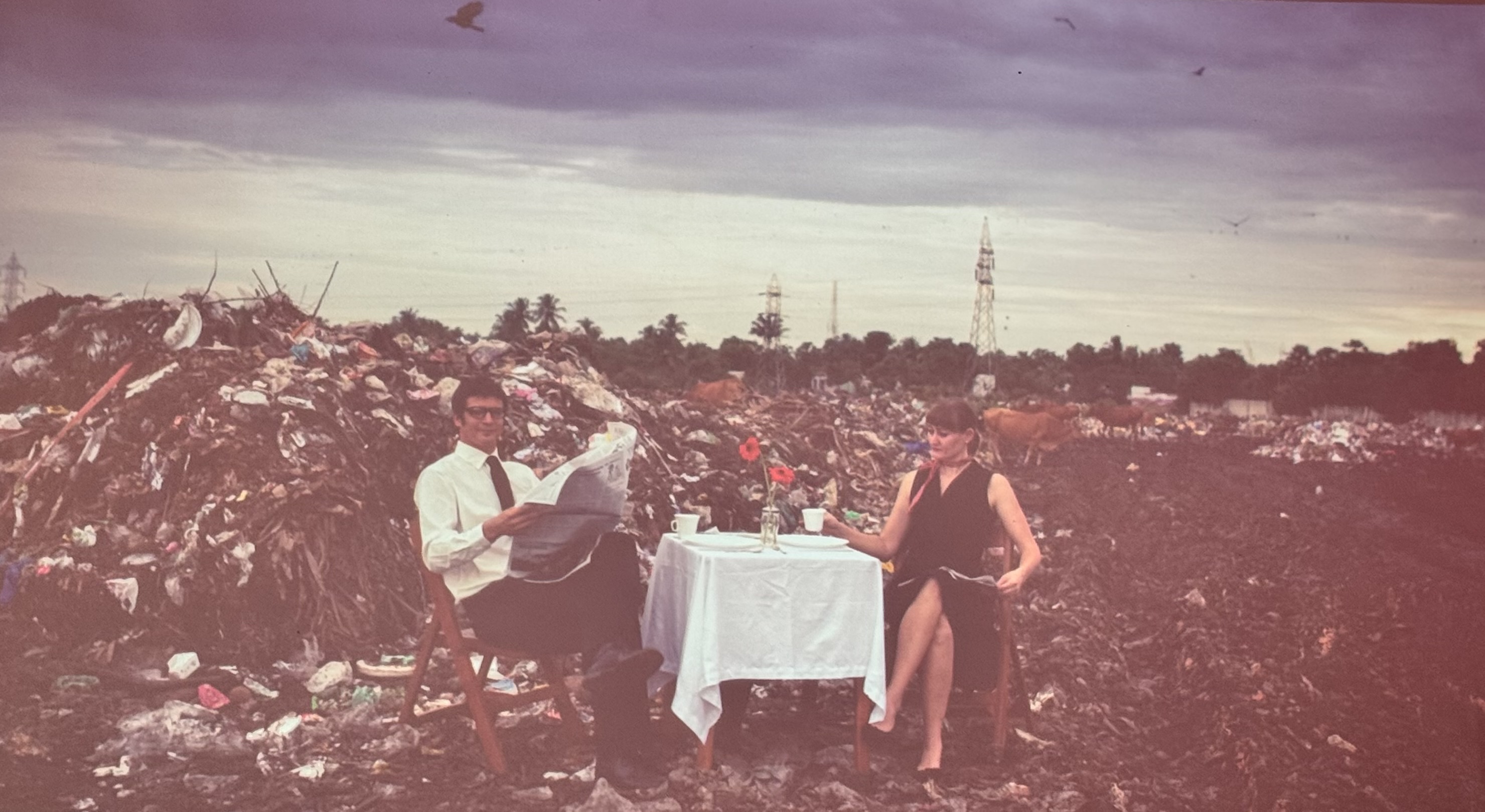
Wasteless, an organization dedicated to waste education and reduction, was born out of necessity. One summer, Auroville residents suffered from suffocating smoke caused by widespread fires, spurring action. The organization began with innovative outreach efforts, including a “trashion show” where teenagers modeled fashion made from trash, as well as using shock photography to highlight the scale of the problem. While these efforts caught attention, Wasteless found that engaging children was the most effective way to inspire change.

Shock Photography: Featuring Founder of Wasteless, Ribhu, and his Wife, Natasha, at one of India’s Waste Dump Sites

Background on Wasteless

Founded in Auroville, Tamil Nadu, Wasteless is a non-profit organization committed to transforming waste management practices through education. The team is comprised of environmental scientists, educators, and community leaders who believe in the power of education to drive change. Wasteless aims to instill lifelong habits by focusing on children to inspire the next generation to take responsibility for their environment.

The organization works closely with schools, governments, and communities to design engaging programs that simplify complex issues like waste segregation, recycling, and the impact of plastics. Their mission aligns with several United Nations Sustainable Development Goals (SDGs), including:

  • Goal 12: Responsible Consumption and Production — Promoting sustainable practices and reducing waste generation through education.
  • Goal 13: Climate Action — Raising awareness about the environmental impact of improper waste management and advocating for climate-friendly solutions.
  • Goal 14: Life Below Water — Addressing plastic pollution in oceans and its effects on marine ecosystems.
  • Goal 17: Partnerships for the Goals — Collaborating with global organizations to strengthen efforts toward sustainable development.

Educating Through Innovation

Wasteless focuses on bridging science and education to create awareness without instilling fear. They collaborate with schools and develop creative tools, such as a memory game that teaches children about toxic chemicals, and using mnemonics like the song “3,6,7 numbers beware toxic chemicals hiding in there.” Through focus groups, they learned that children often lack an understanding of plastics, viewing them as uniform materials. By teaching them to identify plastics using the seven resin codes, Wasteless empowers students to make informed decisions.

Key insights include:

  • Plastic Types and Risks: Certain plastics, like polystyrene (resin code 6), contain styrene, a known carcinogen. Plastics with code 7, including polycarbonate, often contain hormone-disrupting additives like BPA, BPS, or BPF.
  • Recycling Challenges: Recycling requires sorting plastics by resin type and color. Mixing colors necessitates the addition of dark pigments, complicating the process.
  • Misleading Symbols: The recycling symbol can be deceptive, leading to confusion about what is recyclable.
Plastic Code Identification and Classification Chart

Addressing Plastic Pollution

Plastic pollution extends beyond landfills to oceans. A National Geographic-funded project revealed how plastics break down into microplastics that are often mistaken by fish for food due to algae films that mimic the appearance and smell of plankton. Experiments demonstrated how microplastics enter the food chain, with humans consuming an estimated four credit cards’ worth (28 grams) of microplastics each month through food and water. Alarmingly, microplastics have been detected in almost all breast milk, amniotic fluid, and prostates during medical examinations.

Wasteless raises awareness through interactive activities like a tag game where participants distinguish between food and microplastics. These hands-on experiences spark curiosity and foster understanding without relying on fear tactics.

QR Code to “Beat The Micro-Bead” App that Identifies Microplastics in Your Household Products

A Global Perspective

India’s waste problem reflects a broader global crisis. Plastic production continues to outpace solutions for its management. Movements like the “Break Free from Plastic” campaign and international agreements like the UN’s Sustainable Development Goal 17, in addition to Wasteless, emphasize the need for collective action. However, significant work remains to curb plastic production and address its environmental impact.

The Path Forward

Wasteless demonstrates that education and community engagement can drive meaningful change. The organization creates a ripple effect of awareness by focusing on children, fostering curiosity, and providing actionable knowledge. India’s waste management challenges require scalable solutions, political will, and widespread education to ensure a cleaner, healthier future for all.

A Day at Gingee Fort: Walking Through History

By: Antonio Galarza


Our day began early, as the golden hues of dawn painted the skies. Boarding a bus for an hour-long ride, we headed to Gingee Fort, a historic marvel in Tamil Nadu, often referred to as the “Troy of the East.” With its commanding hilltop location and storied past, the fort promised not just a trek but an immersion into centuries of South Indian history.

Upon arrival, we purchased our tickets and prepared for the climb. The fort, perched across three hills — Rajagiri, Krishnagiri, and Chandrayandurg — is a testament to the ingenuity of its builders, combining natural rock formations with strategic fortifications. According to the Archaeological Survey of India (ASI), Gingee Fort’s origins date back to the Chola dynasty, but it reached its zenith under the Vijayanagara Empire, known for its architectural and military innovations (ASI, “Gingee Fort: A Historical Overview”). Later, it became a key stronghold for the Marathas and even the Mughals, underlining its strategic importance in South Indian history.


The path upward was alive with activity. Monkeys darted around, eyeing visitors with curiosity and, perhaps, the hope of a quick snack. The climb, while not overly challenging, demanded focus and stamina as we ascended the rugged terrain. Along the way, we passed ancient temples that seemed to be frozen in time. These structures offered a glimpse into the spiritual life of the fort’s inhabitants. Historian Burton Stein, in his work “Vijayanagara,” highlights how such temples were integral not only as places of worship but also as community centers that anchored life within the fort’s walls.


Reaching the summit, the fort’s grandeur unfolded before us. The Kalyana Mahal, with its striking pyramid-like structure, stood as a focal point. Once a royal wedding hall, it spoke of a time when the fort buzzed with regal activity. From the vantage point atop Rajagiri Hill, the sweeping views of the surrounding landscape were breathtaking, a stark reminder of the fort’s strategic importance. The granaries, reservoirs, and watchtowers highlighted the meticulous planning that went into making Gingee a near-impenetrable fortress. As documented by George Michell in “The Architecture of South India,” these structures showcase the advanced engineering skills of the Vijayanagara architects.


After spending some time soaking in the history and panoramic views, we began our descent. The journey down offered a different perspective, allowing us to reflect on the architectural brilliance and the human effort that shaped this remarkable site. By the time we reached the base, our legs were tired but our spirits were high, enriched by the experience of walking through history.

This visit to Gingee Fort was more than just a trek; it was a journey through time. The fort’s history and its enduring structures remind us of the resilience and ingenuity of those who came before us. For me, the day’s experience not only deepened my appreciation for India’s architectural heritage but also sparked reflections on the interconnectedness of history, culture, and nature.

Exploring Solitude Farm

By Carolin Melz

Have you ever paused to consider where your food comes from? What about the food you eat at lunch – where was it grown, and does it contain any chemicals? How was it transported and stored? These are questions that Krishna McKenzie, the steward of Solitude Farm in Auroville, India, invites us to reflect on. In today’s industrialized world, food is often transported over vast distances and preserved to last longer than ever before. This has led to a loss of connection with the food we consume and the natural systems that sustain it.

At the heart of Solitude Farm’s philosophy is the belief that healthy plants begin with healthy soil. Industrial agriculture often depletes soil biodiversity, leaving it lifeless. At Solitude, however, organic matter is returned to the earth, creating a vibrant ecosystem of microorganisms, insects, earthworms, and fungi. Walking through the farm, you’ll notice dead plants left to decompose naturally, enriching the soil and fostering resilience. This approach nurtures fertility and enables over 100 plant species to thrive in harmony.

Guided by permaculture, Solitude Farm prioritizes sustainability and biodiversity. The focus is not on maximizing profits but on celebrating the nutritional, medicinal, cultural, and social significance of crops. Even plants often dismissed as weeds are cherished as superfoods.  

McKenzie champions the cultivation of regional plants, which are naturally suited to the environment. These plants require less water, fewer resources, and eliminate the need for long-distance transport, making them accessible to all and promoting equality. By honoring local flora, the farm embodies resilience, sustainability, and the intrinsic value of nature.

1. Community Café: A space where meals highlight the social, nutritional, and ecological value of food.  

2. Farm-to-Table Practices: On-site cultivation eliminates transportation and storage, preserving the produce’s full nutritional benefits while reducing the farm’s carbon footprint.  

3. Community Celebrations: Festivals infused with music, art, and traditional foods foster creativity and strengthen social bonds.

Solitude Farm also highlights the medicinal properties of plants. The soursop tree, moringa, and green papaya are just a few examples of nature’s treasures, offering remedies for conditions such as cancer and gastrointestinal issues. McKenzie’s outreach programs encourage schools and colleges to embrace moringa as a daily staple, raising awareness of its antioxidant properties and cognitive benefits.

As McKenzie reminds us, the wisdom of Masanobu Fukuoka rings true:  

“Food and medicine are not two different things: they are the front and back of one body. Chemically grown vegetables may be eaten for food, but they cannot be used as medicine.”

This philosophy underpins the farm’s practices, bridging the gap between nourishment and healing.

The broader implications of our food choices are undeniable. The food system contributes between 25–34% of global greenhouse gas emissions, alongside other detrimental environmental impacts, including biodiversity loss and soil acidification. Shockingly, approximately 30% of produced food is lost or wasted globally. This encompasses postharvest losses, processing and distribution inefficiencies, and wastage at the consumer level (Sadiq 1). These figures highlight the urgency of adopting sustainable practices, like those championed at Solitude Farm, to mitigate environmental degradation and reduce waste.

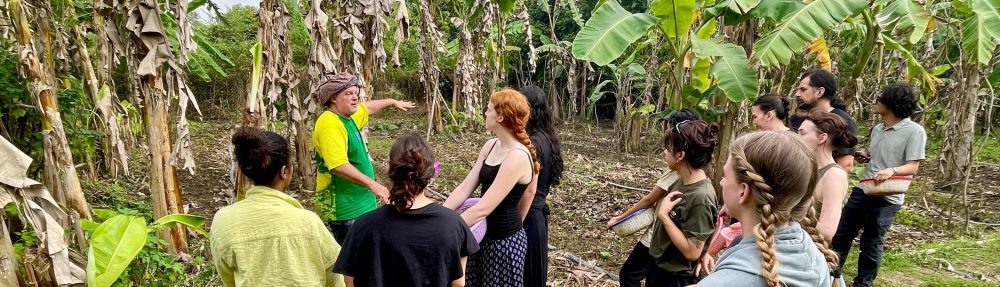
Visitors to Solitude Farm experience firsthand the joys of farm-to-table living. With baskets in hand, we harvested cucumbers, spinach, berries, and leaves, which we transformed into a colorful, nutrient-rich salad with turmeric, lemon zest, coconut, and a nut-based dressing. The shared preparation of the meal fostered group bonding and cherishing for the process :).

McKenzie’s nature demonstrations further inspire wonder, such as showing how hibiscus leaves change color when mixed with lemon juice, revealing the beauty and chemistry of nature.

The message of Solitude Farm is clear: our food choices profoundly affect our health, community, and the planet. Industrial agriculture fuels climate change, degrades soil, and strains society. By embracing locally grown, biodiverse food, we nurture ourselves and contribute to a healthier, more sustainable world.  

This invites reflection: What are we truly eating? Is our food medicine or merely a processed substitute? How can we integrate superfoods and healthier options into our daily lives to align with nature and promote the well-being of both humanity and the planet?

Works Cited:

“The Journey.” Krishna McKenzie, krishnamckenzie.com/. Accessed 6 Jan. 2025. 

Sadiq, Muhammad Bilal, et al. “Editorial: Nutrition and Sustainable Development Goal 12: Responsible Consumption.” Frontiers in Nutrition, U.S. National Library of Medicine, 22 Mar. 2024, pmc.ncbi.nlm.nih.gov/articles/PMC10996280/. 

Integral Medicine – an Analysis of Auroville’s Health Institute Santé

By Lucie Reed

Auroville is grounded in a philosophical search for wholeness, expressed integrally in all aspects of what constitutes being. This vision manifests through its education facilities, outreach organizations, shared resources, and its integral health institute – Santé. Rooted in a deep commitment to equity and mindfulness, Santé stands as a unique experiment in harmonizing care for the planet, all living beings, and the nucleus of humanity. Mirroring Sri Aurobindo and the Mother’s philosophy of integral education, Santé sustains and vitalizes Aurovillian society through a deep appreciation of functional medicine. This multi-dimensional approach to medicine nurtures the mind, body, and spirit. Their services in the clinic range from acupuncture, allopathic medicine, integrative psychotherapy, and ozone therapy. They have emergent stations for injury and illness, which nurses and doctors stabilise, treat, and prescribe various therapies and remedies to their patients. 

An image of functional medicine found on their website.

Integral healthcare does not view illness as a mere ailment to be quickly treated but as an opportunity to restore balance within the whole system. This perspective closely mirrors practices found in functional and holistic medicine, which aim to address the root causes of illness rather than merely treating symptoms. Their diverse approaches to care are not siloed but integrated into a cohesive and collaborative framework that responds to the needs of each individual. This is particularly revolutionary in a global healthcare context dominated by the rigidity of specialisation and the fragmentation of care. 

In capitalist systems, healthcare often functions as a commodity instead of a universal right. Therefore, access to quality care is frequently undermined by socioeconomic status, insurance coverage and premiums, and profit-driven motives. Hospitals and clinics in these structures tend to prioritize efficiency over patient care, subsequently reducing patients to numbers in a system of transaction and not relation. Santé offers a stark contrast. Care is provided as a relationship grounded in equity, mindfulness, and collective well-being instead of a product to be consumed and discarded. The Charter of Auroville’s emphasis on sharing resources and creating a commons of kindness ensures that healthcare at Santé is accessible to everyone, regardless of finances. This model reflects a societal commitment to Sustainable Development Goal (SDG) 3: Good Health and Well-being, which envisions universal access to quality healthcare for all. Furthermore, Santé fosters an environment where care extends beyond clinical interactions. Patients are seen as partners in their own healing, empowered through education and community support. This contrasts sharply with capitalist healthcare systems that often leave patients disempowered and alienated from their own health journeys. 

An image of the interior of Santé, in the main forum.


Santé’s work and structure align closely with many SDGs, most prominently SDG 3 (Good Health and Well-being), SDG 4 (Quality Education), and SDG 12 (Responsible Consumption and Production). Through offering accessible and holistic healthcare, Santé reinforces the well-being aspect of medicine that most of the world mitigates for cash. Their bridge of traditional and modern practice helps to blossom good health which transcends boundaries which other cultures and societies are unable to. They additionally help to foster education through a life-long learning of self-care and health. Their emphasis on the mind, body, and soul help to remind their clients to take care of all aspects of their being – knowledge which they can share, making their community more sustainable in all practices. Finally, Santé has their own sustainability efforts as they function off of renewable energy, minimize their waste production, and promote preventative care. By adopting practices that reduce environmental impact while promoting human well-being, Santé challenges the unsustainable practices of mainstream healthcare systems that often disregard ecological concerns. 

Santé serves as a beacon of hope, offering a model for how healthcare can transcend the limitations of capitalist frameworks. It demonstrates that medicine, when practiced integrally, can become a force for healing not only individuals but also communities and the entire planet. If healthcare systems worldwide could incorporate even a miniscule fraction of Santé’s integrative philosophy, the world might see a global paradigm shift toward a more compassionate, equitable, and sustainable future. Santé is not merely a clinic—it is a vision of what healthcare can and should be: a practice that cherishes the wholeness of life.

Learn more about Santé on their website: https://sante.auroville.org.in/

Cooperation, Community, and Solidarity at AVAG

By Carolyn Franano

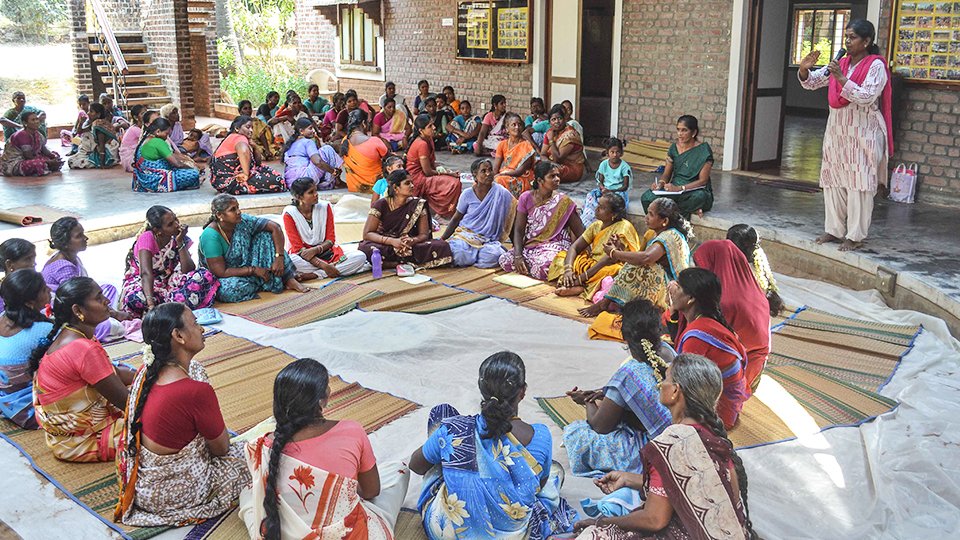
Started in 1983, Auroville Village Action Group (AVAG) is one of the oldest village outreach groups in Auroville. AVAG is a non-profit organization dedicated to improving the livelihoods of, and solidarity between, the members of the villages surrounding Auroville. AVAG serves the Vanur block of the Villupuram district. The communities living in the 75 settlements in this area face a myriad of interconnected issues including poverty, illiteracy, alcoholism, and discrimination based on caste, class, religion, and gender. AVAG works with all ages and sexes and is committed to taking on these challenges using a participatory, holistic, empowering, and inclusive development approach. They have four main areas of intervention: community development, economic development, capacity building, and psychosocial services. 

Economic and Community Development

AVAG’s community development program is centered around unity and well-being. Its goal is to foster community, solidarity, and ownership in the villages they serve, particularly for the women. AVAG works with over 8000 women, acting as a mentor for the approximately 225 women’s groups in the bioregion. Their community development work includes health initiatives, inclusive sports initiatives, caste exchange programs, linking villages to government welfare schemes, micro-development projects, women’s festivals, insurance programs, and more. It is very linked to their economic development program, which aims to improve the livelihood of villagers by increasing economic opportunities through financial inclusion and the promotion of fair practices. For example, AVAG runs an adjunct enterprise called AVAL, a brand selling handmade clothing, bags, and crochet items made by village women for the benefit of village women. The economic development program is mostly implemented through local women’s and men’s groups and involves social entrepreneurship development, livelihood skills training, higher education scholarship programs, credit and savings programs, linking villages with financial institutions, entrepreneurship training, and the revolving fund. AVAG’s revolving fund supplies loans to women in the villages at an 18% interest rate, helping them escape the cycle of debt created by tough to access government loans and the often turned to loan sharks, who provide loans at a 60% interest rate. The revolving fund helps women raise funds for building homes, paying for girl’s education through the AVVAI program, and funding small business enterprises—it is a vital piece of AVAG’s work. 

Capacity Building and Psychosocial Services

The economic and community development programs are supported by the capacity building and psychosocial services AVAG provides. AVAG’s capacity building program promotes social harmony and nurtures self-empowerment and social changes via integral education. They offer many different programs to accomplish this in areas such as personality development, creativity, legal rights, sports, social issues, agriculture, health, emergency response, and environment. Anbu, the project director at AVAG, says:

“Capacity building is an inevitable part of participatory development which provides an ability to work across sectors, mobilization of additional resources, transfer of skills and knowledge and creation of sustainable delivery capacity. It assists the local communities for collective action and gives greater sense of ownership” (villageaction.in). 

In addition to empowering the capacity of the members of the villages in the bioregion, AVAG also cares for their mental health. According to Anbu, before adding the provision of psychosocial services to AVAG’s areas of intervention, suicide rates were high among members the bioregion’s women’s groups. In response, AVAG trained its staff in somatic therapy services and implemented a mental health program which brought down suicide rates in the women’s groups to 0-1%. According to AVAG, their four areas of intervention—community development, economic development, capacity building, and psychosocial services—aim to help the Vanur block achieve the UN Sustainable Development Goals as well as India’s development goals. AVAG’s work align with all these goals, but have made particularly impressive progress towards #1: no poverty, #4: good education, #5: gender equality, #8: decent work and economic growth, and #10: reduced inequalities. 

Participatory Development

AVAG is a pillar of the bioregion. What is absolutely incredible, is that AVAG is able to accomplish all of this work with a team of only 20 people. When asked how this is possible, Anbu replied that while AVAG’s core team is very small, their participatory development approach rooted in solidarity, cooperation, and collaboration means their team actually expands to the entire community they serve. In development communications, the participatory development model stresses the importance of involving the local communities being served in the decision-making about how to improve their livelihoods via development schemes. Rather than a top-down strategy, participatory development employs an inclusive and empowering bottom-up approach. AVAG’s team always asks the communities they are serving what they feel they need before implementing new projects. The local communities are involved in every step of the development process from brainstorming, to budgeting, to project implementation. AVAG is truly a model for how to serve local communities in an empowering and impactful way; their model of solidarity, community, and cooperation is something we can all learn from. 


Learn more on AVAG’s website: https://www.villageaction.in


Auroville Botanical Garden: A Sanctuary of Restoration, Learning, and Passion 

In the heart of Tamil Nadu lies the Auroville Botanical Garden, a vibrant haven of biodiversity and ecological restoration. Once a barren, deforested plateau, the garden now flourishes as a sanctuary for native plants, an educational hub, and a testament to sustainable living. 

Over 115 years ago, this region was a forested landscape, but deforestation started when the British harvested wood for wartime needs, leaving the land scarred and degraded. This exploitation of natural resources reflects what I learned in Environmental Ethics class about how theorists describe as the Plantationocene, a term that highlights the ecological and social consequences of colonial practices, including deforestation and monocropping for profit. These actions left behind a landscape scarred by erosion, with soil washed away into the sea. 

“I still remember how striking it was to see those canyons in the early days,” said one of the garden’s founders. “It was a visual reminder of how much damage had been done to the land.” 

In August 2000, the Auroville community took on the challenge of rehabilitating the land through erosion control, bunding, and reforestation. What started as an effort to plant trees evolved into a larger mission: educating people about nature, conserving biodiversity, and fostering sustainability. Today, the 50-acre garden stands as a beacon of hope and regeneration, addressing SDGs like Goal 13 (Climate Action), Goal 15 (Life on Land), and Goal 4 (Quality Education). 

Our Queen Kalsang

A Garden Built on Passion 

The garden’s beauty lies not just in its greenery but in the stories of the people who shaped it. One memorable example is the Cactus Garden, created by a German horticulturist who loved cacti.

“He called himself a cactus head,” our guide shared with a laugh. “He planted two cacti when he started, and now, this is one of the largest cactus collections in India. His passion drew others to contribute their own ideas.” 

This spirit of personal initiative is woven throughout the garden. The vibrant Butterfly Garden, the serene Japanese Garden with its ornamental trees and ponds, and the tranquil labyrinth all reflect someone’s dedication and creativity. These projects emphasize the connection between SDG 15 (protecting terrestrial ecosystems) and community engagement. 

The Japanese Garden, in particular, is a peaceful escape. It’s carefully designed to echo traditional Japanese landscaping, with elements adapted to Indian flora. Handmade tiles and ornamental plants add a unique charm to this space, blending global inspiration with local sustainability. 

Educational Initiatives 

What makes this place truly special is its focus on connecting people with nature. It’s not just about planting trees; it’s about planting seeds of awareness and care in people’s minds. 

Children from local schools visit to explore the maze, marvel at butterflies, and learn about the forest.

“The first thing they do is drop their backpacks and run through the garden,” said one educator. “For many of them, it’s their first real experience with nature. They learn while having fun—that’s the key.” 

Teachers are also trained through workshops to incorporate nature-based learning into their classrooms. Beyond this, the garden collaborates with global organizations like the Botanical Garden Conservation International (BGCI) to protect endangered species such as Tripe Pottery. Through seed collection, planting, and education, the garden not only preserves plants but also the knowledge and stories tied to them. 

Sustainability in Action 

The garden actively challenges the legacies of the Plantationocene by prioritizing native plants and ecological balance over exploitative practices. Sustainability isn’t just a buzzword here—it’s a way of life. Native species dominate the landscape because they thrive naturally, requiring minimal care and reducing the need for human intervention. By focusing on plants that belong to the region, the garden ensures an ecosystem that is self-sustaining and resilient, offering a model for ecological harmony and responsible stewardship. 

“We don’t see anything as waste,” the guide explained, pointing to the shredder. “Branches go in here and come out as mulch, which feeds the soil and the plants.” 
 

The garden transforms abandoned limestone mining pits into lush landscapes with forests, rock gardens, and walking paths. These restored areas showcase how degraded lands can be revitalized into thriving ecosystems. The resilience of the forest itself is a testament to nature’s strength when nurtured appropriately. Even after cyclones caused significant damage, native trees adapted and thrived. This resilience reflects the importance of restoring ecosystems with species suited to their local environments—a principle central to SDG 15. 

Discovering the Garden  

Every section of the garden offers a unique experience, blending beauty with purpose. 

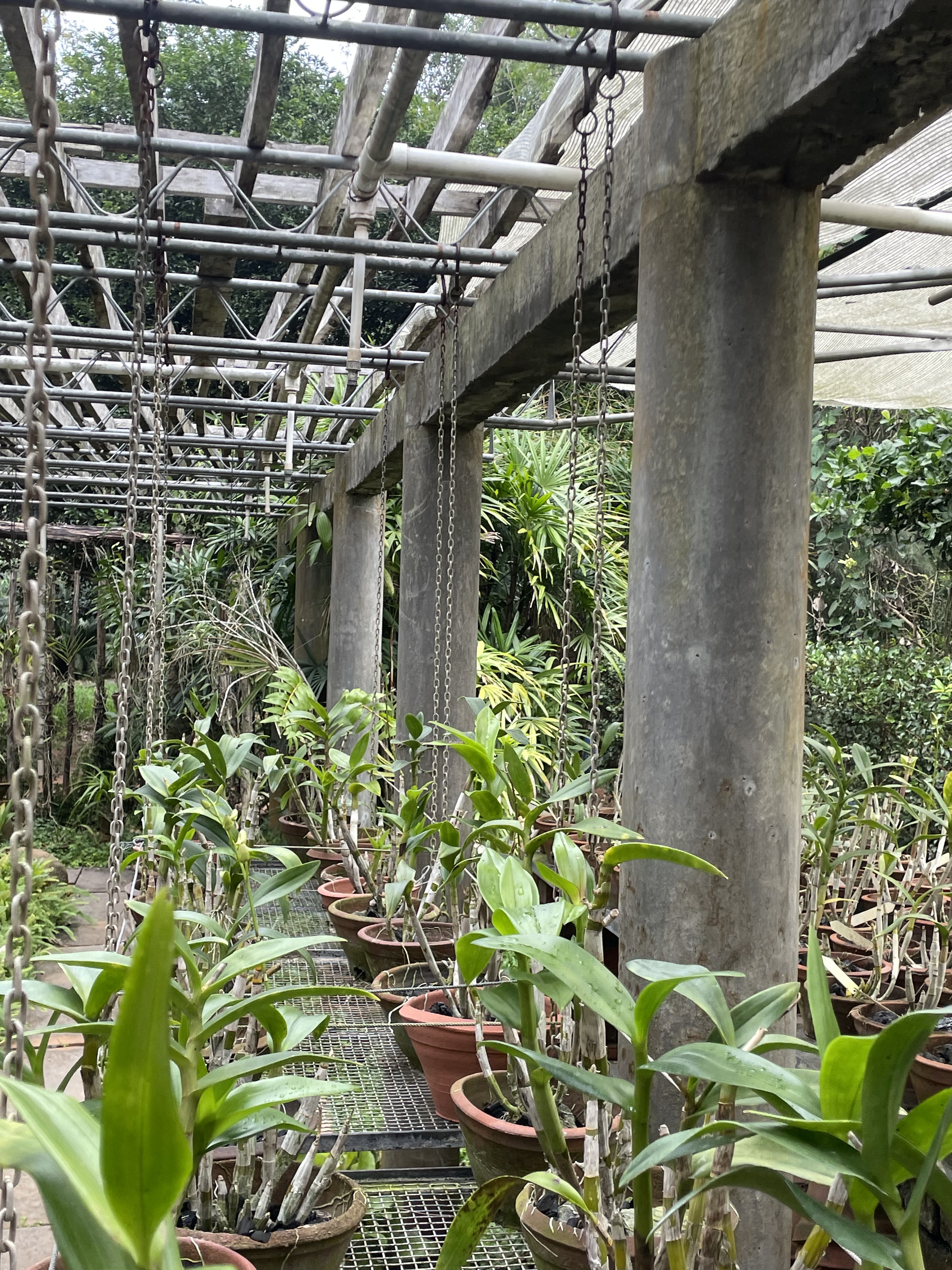
  • The Orchid House: Native and exotic orchids flourish in this delicate ecosystem, supported by misting systems and charcoal beds that replicate their natural habitat. 
  • The Cactus Garden: Home to one of India’s largest cactus collections, this space includes a whimsical artificial cactus that reflects the humor of its founder. 
  • The Butterfly Garden: Planted with host and nectar plants, this area creates a vibrant sanctuary for butterflies. 
  • The Japanese Garden: A serene space with ornamental ponds and carefully selected trees, blending traditional Japanese design with Indian flora. 
  • The Maze and Labyrinth: The maze offers a playful way to explore, while the labyrinth provides a spiritual journey inward and outward. 
  • The Color Garden: Plants here are cultivated for their natural dyes, used in food, cosmetics, and textiles. 

One of my favorite spots was the Color Garden. The rich oranges and reds of seeds and bark have been used for everything from hair dye to cheddar cheese. It’s fascinating to see how plants connect us to both tradition and innovation. 

An Invitation to Explore 

The Auroville Botanical Garden is more than a collection of plants—it’s a living testament to restoration, creativity, and community spirit. Wandering through the fragrant Plumeria Garden, marveling at the vibrant Butterfly Garden, or simply enjoying the serenity of the Japanese Garden, visitors are immersed in nature’s beauty. 

“I hope you come back for the forest walk,” the guide said as we concluded the tour. “It’s even older than the Botanical Garden and shows how forests truly take care of themselves when left in the hands of nature.” 

As I walked through the garden, the sound of the shredder turning branches into mulch reminded me of the effort behind every element here. It’s not just about creating beauty; it’s about building sustainability, one step at a time. 

So, the next time you’re in Tamil Nadu, take an hour-long walk through the Auroville Botanical Garden. It’s not just a visit—it’s an experience that will inspire a newfound appreciation for the natural world and our role in protecting it. 

the entrance

For those interested in learning more, the garden maintains an active presence on YouTube (www.youtube.com/@aurovillebotanicalgarden7796) and Instagram (https://www.instagram.com/aurovillebotanicalgardens?utm_source=ig_web_button_share_sheet&igsh=ZDNlZDc0MzIxNw==), sharing updates about its conservation projects and initiatives. Visitors are encouraged to explore this unique haven, where every corner tells a story of resilience, creativity, and the enduring bond between humans and the natural world. 

Visit their website, social platforms, or better yet, take a trip to experience the magic firsthand. 

Pitchandikulam Forest: Preserving Nature and Culture through Entertainment-Education

By Rafaela Marinello

Walking through Pitchandikulam Forest, it is hard to believe that this lush, verdant forest was once a dry, desolate piece of land, with only a few palm trees dotting an otherwise empty landscape. Yet through over 50 years of reforestation work, the Pitchandikulum Forest team were able to revive the local land, transforming it into a sprawling 75-acre forest with over 800 species of plants and a rich wildlife.

Founded in the 1970s, Pitchandikulam Forest is an environmental organization based in Auroville whose mission is to restore, protect, and preserve the bioregion’s indigenous Tropical Dry Evergreen Forest (TDEF)—one of the rarest and most diverse wild ecosystems in India. Pitchandikulam does this through a variety of mediums, including educational programs, community outreach, research, and art. By blending education and entertainment, they implement a practice called entertainment-education—an approach to development which communication for social change scholar Thomas Tufte defines as “the use of entertainment as a communicative practice crafted to strategically communicate about development issues” (Tufte 162). As Tufte argues, entertainment-education “is not just about conveying information but about involving people in changing society” (Tufte 172). Through fun, educational activities such as plant species treasure hunts and other interactive games, Pitchandikulam brings joy into restoration ecology and invites people of all ages to participate in reforestation. Ultimately, the purpose of these activities is to refamiliarize local communities with nature, which in turn helps to foster a deeper sense of place and shared identity.

By reviving the local flora and fauna, Pitchandikulam also helps to restore local culture and practices which, like the plants, suffered from the damaging effects of colonialism. One of Pitchandikulam’s main initiatives is protecting and promoting indigenous medicinal plants which play a central role within traditional Tamil culture. The preservation of local medicinal plants is directly tied to the restoration of the traditional practices and knowledge passed down over centuries. By educating the next generation in the cultivation and use of traditional forms of medicine, Pitchandikulam ensures that these practices continue to survive and are not forgotten. According to Pitchandikulam, these initiatives are part of an overall effort to “restore the material indigenous forest and the intangible traditional knowledge that supports and nourishes the local ecosystem.”

As the world increasingly suffers from deforestation and natural disasters as a result of climate change, it is more important than ever to find ways to revive local ecosystems and protect them from future destruction—not only because they are critical to sustaining life on our planet, but also because they play a crucial role in the preservation of local cultures and identities. Pitchandikulam’s unique combination of entertainment-education and reforestation serves as a valuable model for how organizations can tackle the tangible, as well as intangible, aspects of reforestation and ensure the continued survival of local lands and cultures for generations to come.

Learn more about Pitchandikulam by visiting their website.

Works Cited:

Tufte, Thomas. “Entertainment-Education in Development Communication: Between Marketing Behaviors and Empowering People.” Media and Glocal Change: Rethinking Communication for Development, edited by Oscar Hemer and Thomas Tufte, CLASCO, 2005, pp. 159–74.