Amirtha Herbals: Prelude to a New Dream of Wellbeing

“Les humains rêvent en permanence. Avant notre naissance, les humains nous précédant ont créé un grand rêve extérieur que l’on appelle le rêve de la société ou le rêve de la planète.” — Don Miguel Ruiz
IMG_9269.jpeg

When visiting Amirtha Herbals and learning about the organization, I cannot help but to recall author of Toltec spirituality and shamanism, Don Miguel Ruiz’s Rêve de la Planète in which he explains that the collective dream results from billions of individual dreams that together form the dream of the family, the dream of the community, the dream of the city, the dream of the country, and finally, the dream of all humanity.

This, though, is an illusion, or maya, as known in Indian Hindu culture. The belief goes: the world as we know it is an illusion of reality. Everything around you that you call life was made up by people no smarter than you. You can change it. You can put a dent in the universe. That being said, should we continue to accept a ‘dream’ that is harming ourselves, other species and the planet?

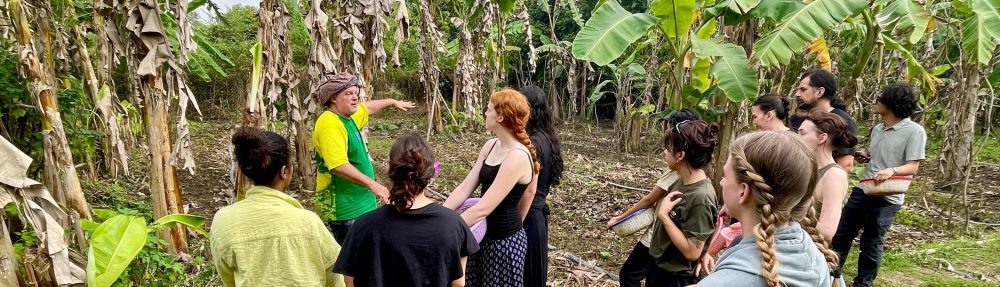
After touring Pitchandkulam Forest, it is my understanding that Amirtha is overcoming the maya that has become a universal nightmare and detriment to existence, and here’s why.

A Capitalist Cauchemar.

Let’s talk neoliberalism. This Western dream became a global nightmare when renegades Ronald Reagan and Margaret Thatcher introduced policies like outsourcing abroad, privatization and deregulation—an economy redesigned to benefit big business and capitalist gurus. The problem is, it was successful: neoliberal-capital became the main cultural identity and exotic products and spiritual customs became commodities for profit. Jeremy Carrette in his work Selling Spirituality: The Silent Takeover of Religion describes the shift towards free-market capitalism:

“Neoliberal ideology seeps into the very fabric of how we think, indeed into the very possibilities of our thinking to such an extent that people now live as if the corporate capitalist structures of our world are the truth of our existence. Capital determines thought, like Newspeak in Orwell’s Nineteen Eighty-Four, and the very act of thinking otherwise becomes ever more difficult.” 

But doesn’t free-market capitalism mean freedom of trade? More consumer purchasing power? And economic growth? Does it not mean Western opportunity for underprivileged 3rd world countries? Does it not mean development and cultivation of rudimentary economies and ‘savage’ cultures? More wealth opportunity? Does it not?

Here’s the other side of the coin.

The ugly reality looks like global exploitation and subjugation of peoples and cultures all over the world for their resources—whether its diamonds in Sierra Leone, bananas in Honduras, or crude oil in Nigeria. It looks like the Dow chemical spill in Bhopal where no compensation was offered to the thousands of local people dead and injured. It looks like 300,000 and counting suicides of Indian farmers after Monsanto pressured them into loans for genetically modified seeds that didn’t reproduce, promising them dreams of Western success.  

“Living is easy with eyes closed, misunderstanding all you see.”

John Lennon famously sang these words and now, some four decades later, the message could not be more urgent.

We can’t afford to live with eyes closed anymore. In an age where there is more trash in the sea than fish; in a an age, where in cities like Dehli, there is more gray smog than blue sky, it’s the time for an awakening.

Awakening, or samvegana in Indian Hindu culture, is when an individual undergoes a paradigm shift in his awareness and thinking. Samvegana is what happened to Buddha when he left the luxury and comfort of his palace to discover the sickness and suffering in the streets of Kapilavastu. Similarly, samvegana is what happened to Jesus when he confronted temptation in the desert for 40 days and 40 nights.

How Amirtha reenvisions sustainability in holistic wellness, beauty and community.

IMG_9256

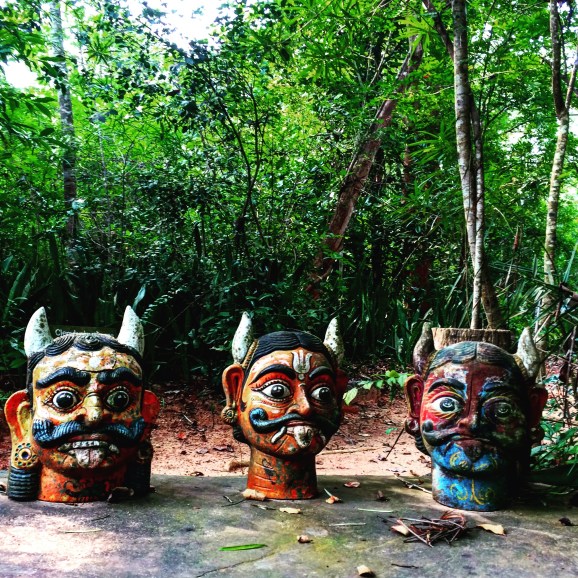
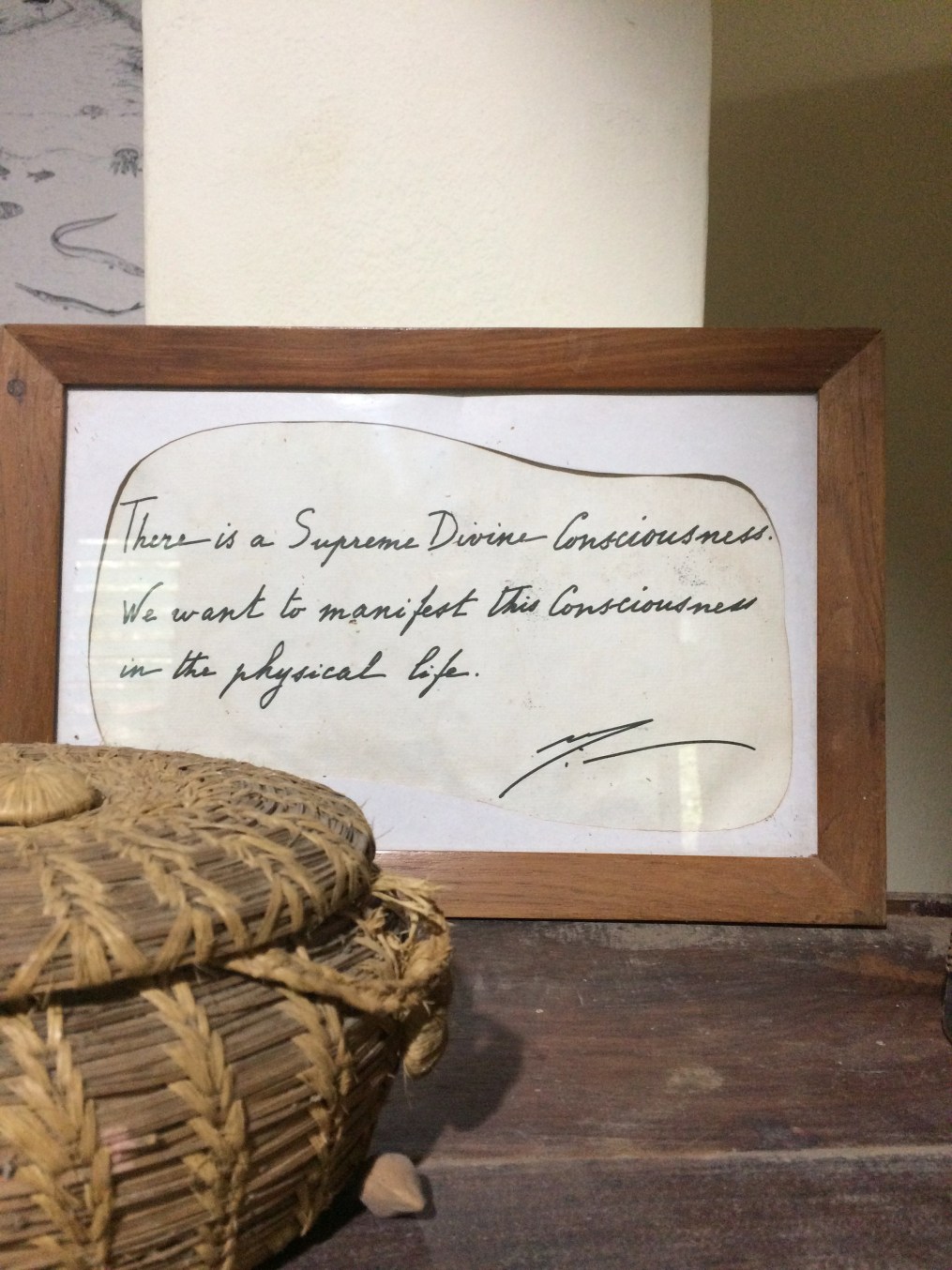
In India, the people practice a ritual called puja, worship of the Divine through idols performed to keep us in harmony with cosmic forces, our true nature. Not disregarding the idols, what matters here is the manner of executing the ritual, the way in which the people say: I love you, my God. Auroville was created to realize the ideal of the Karma Yoga of work. Through servitude, we achieve yoga’s goal of yuj, unison with the divine. Through work, we love and fulfill our dharma.

On that notion, Noam Chomsky in Requiem for the American Dream says, “The way things change is because lots of people are working all the timein their communities, workplace, or wherever they happen to be, building up the basis for popular movements, which are going to make changes.” And Amirtha Herbals is doing just that.

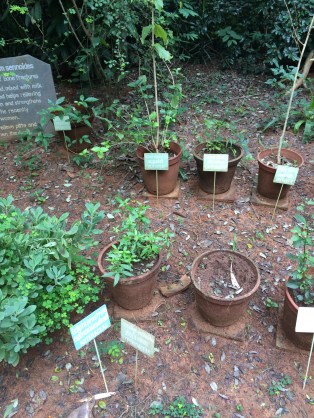
The NGO promotes the sharing and cultivation of traditional, local “elder knowledge” in reliance on nature for sustainment. By building up the Pitchandikulam Forest with local vegetation, they created an “agroforrest” that supports their culture and practice in a sustainable and holistic way where food is medicine, no chemicals are used and composting is eco-friendly degradation and fertilizer.

The NGO’s team asks questions like can you eat your toothpaste? Can you ingest the shampoo you use on your hair, or the make-up you put on your face? The skin is the largest organ of the body the body and with contemporary products we are constantly absorbing dangerous chemicals and washing them away into the water system.

Not only is Amirtha addressing sustainability through wellness, but also beauty. The organization works to shift the paradigm around the idealization of western white beauty in Indian culture, and the dangerous effects of skin bleaching. In their Dark Is Beautiful campaign, they educate on the evolution of skin color, explain the beauty of the soul, heart and person, and work to change the mentality of dark skin.

But it doesn’t stop there. They are planting the seeds that give back to future generations. The NGO employs rural women as a sustainable social enterprise; children plant and make their own food;  jobs are provided for locals; and traditional Tamil healers distribute herbal medicines not only to people but also cattle.
IMG_9257.jpeg

In a land that was once barren 50 years before, the Pitchandikulam forest serves an exemplary model of sustainable development of and organizations like Amirtha’s Herbals working in unison with the rich biodiversity of nature, not against it. After all, when it comes to designing solutions to the problems of the future, authors Terry Irwin, Gideon Kossoff & Cameron Tonkinwise, in the article “Transition Design Provocation” argue that sustainable development should look to “design solutions that protect and restore both social and natural ecosystems.”


A prelude to a new dream: collectivism.

Just as Krishna is working to share his dream on sustainable farming and food, just as Upasana is redesigning the harsh reality of the fashion industry, Amirtha Herbals is tackling the wicked problem of harmful products for wellbeing in beauty.

Through community, solidarity, and advocacy, the people possess powerful agency to make change and restructure the future. After all, that is how society has accomplished many great changes before—from freedom of speech to women’s rights—people worked tirelessly in their communities and outside the commonly accepted infrastructure created by an in-egalitarian system. Chomsky claims the power ultimately rests in the hands of the governed, in which he advocates, “What matters is the countless small deeds of unknown people who lay the basis for the significant events that enter history. They’re the ones who have done things in the past. They’re the ones who will do things in the future.”

So, my friends, imagine. John Lennon has asked us to do it before. I’m asking you to do it now. Be a dreamer. Imagine how you, we, can work towards a sustainable world.

 “Imagine all the people sharing all the world/You may say I’m a dreamer/But I’m not the only one/I hope someday you’ll join us/And the world will live as one.”
IMG_9255.jpeg

By Marissia Tiller

Life Education Center

Life Education Center

Devi says it is a calling.

She used to be a software engineer in California and went from a hectic work routine to going back and forth from Auroville to Berkeley. After feeling disgusted by a money-ruled world and missing being connected to nature, she decided to move permanently to Auroville and work with the people of Tamil Nadu. She founded the Life Education Center, a program that educates women and seeks to empower them, make them independent and proud. The program has a holistic approach, meaning their ways evolve depending on the people they work with. The program helps women develop their mind, body, spirituality and their will to learn as well as want more in life. It makes them conscious human beings. The program offers different levels and types of schooling. They hold weekly meetings where women can talk freely about everything and anything. These meetings constitute a safe space in which women can get peer support and relief.

In the last 25 years, India experienced a big cultural shift. Traditions used to be carried through generations and had a very important in society. However, lately, rituals became a way to show-off. People started borrowing money at very high interest rates to throw grand ceremonies, that is why LEC focuses a lot on making women financially independent so they can support themselves and their families. They offer a lot of different classes such as yoga, ayurvedic healing, yoga for menstruation problems, zen tangling (music, drawing and meditation), basic geography, cooking work-shops, sari work-shops and hand decorations. The goal is for these women to expand their knowledge and curiosity. However, since these women go to these classes and workshops, it raises a question of time and work/personal life balance. How do they manage to make a living and realize themselves? That is the matter Devi is trying to solve with them. These women then manage to go to classes, work and be women by themselves in a society that is still prevalently masculine and patriarchal.

Sharana: Social and Development Organization

Today we met Ms. Vandana, the CEO of Sharana, which is a social and development organization based in Pondicherry, India. Before I get into detail about the organization, I have to address how impressed I was with Ms. Vandana’s strong and passionate presence. From the moment she started talking it was clear she genuinely cared about every program she shared with us as well as the individual people within her community. I was even more intrigued when she explained her strong support towards the “exit policy”. She explained, the intentions of the organization are not to replace the parents or the government but to work closely with and build a bridge between children, parents and the government. The main goal is not to offer life-long assistance which is why their organizational model is focused in sustainable development and therefore, programs often change to help communities evolve so they can eventually “exit”. For her, the moment they finish a program they feel accomplished. This entire concept is amazing. Her dedication towards sustainable development is one of the many reasons I believe she has helped so many people through Sharana.

Saharana.png

(Photo Source: Sharana Official Website) Annual Report of Gayatri House

Sharan was established in July 2000 based on the belief that all human beings are equal in rights and dignity, and everyone is entitled to food, clothing, and shelter. Sharana is committed to enable children to fully claim their right to education and  strives toward complete transparency and accountability to its donors and sponsors. The organization maintains meticulous records and shares annual reports on their website to ensure donors are aware of the impact they are donating to and also to ensure the funds collected are used as efficiently as possible, to the direct benefit of children and other individuals in need.

Through a variety of programs, they address the critical educational needs of socio-economically disadvantaged children and communities in urban Pondicherry and its surrounding villages. The biggest program they currently have is Street & Slum Children Program, a daycare center called The Gayatri House, which provides a safe haven for children of the streets and slums at high risk of exploitation. According to their website,

“Before Sharana’s intervention, many of these children were forced into child labour or begging on the streets to contribute to the family income and many of them suffered from substance and sexual abuse, nutritional deficiencies, and sleep deprivation.”

I find the organizations strategy within this program to be particularly interesting. I think it’s important to realize how the organization truly does stick to its sustainable development model for each program. One might question why children would be allowed to live with parents who allow their children to suffer in these ways and wonder if Sharana plans to expand The Gayatri House into a residential care facility for the children to live. Understanding the importance of keeping the children with their parents this program works closely with parents and social workers to ensure emotional and psychological needs of the children are addressed. This strategy allows the primary responsibility of a child’s upbringing to remain with the parents providing a stable and sustainable environment for the child and parents to grow.

Sharana in News 1.png

Sharana in the News 2.png

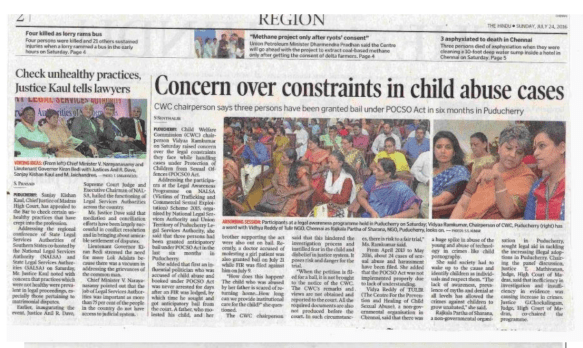
Photo Source: Sharana Official Website) Sharana in the News

The Gayatri House is more than a daycare. In addition to providing shelter for children and support to the families of the slums they also provide education, art therapy, medical care, nutritional care and psychological support. As I mentioned earlier, this is just one of many programs that Sharana offers to its communities. This organization doesn’t simply type out a set of values in efforts to get donors, the values are brought to life and lived by through its employees and its programs.

Writers ByLine Peacock Plume.PNG

Mohanam: Keeping Local Culture Alive

By Jessica Voorhees

The day after Christmas, we boarded the bus early to drive to the Mohanam Village Heritage Centre, a non-profit that works to build a bridge between Auroville and its surrounding villages through knowledge and cultural exchange. Mohanam also works to keep alive rural Tamil cultural heritage through workshops, classes, and events.

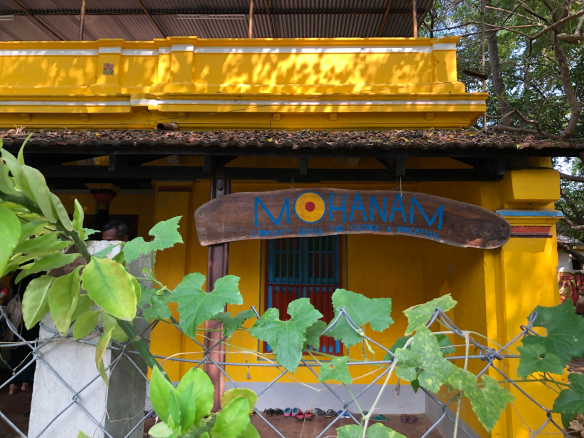
Established in 2001 by young people from the villages, Mohanam is the first center of its kind in this bioregion. With walls papered by animal stickers and hand-drawn maps of India, the colorful building where Mohanam holds many of its activities is one of the oldest houses in the village.

Balasundharam, the founder and director of Mohanam, greeted us upon arrival and told us about the center’s history and goals.

The continuing effects of globalization and a history of imperialism in Tamil Nadu have caused major changes to ways of life that have trickled into the villages surrounding Auroville. The influence of Pondicherry and various development initiatives have caused further changes throughout the years.

Noticing these changes, Balasundharam wants to ensure the incredible cultural heritage in these villages is not only preserved but also cherished by future generations. He seeks to inspire the next generation of young villagers through cultural activities at the center.

Mohanam also encompasses a Montessori-style kindergarten for 90 village children. Balasundharam told us many schools in India don’t include creative education, such as classes in music, dance, and painting. He sees Mohanam as a space for people to explore all their interests and find a connection with their roots.

Balasundharam said he listens to the needs and wants of people in the village, and Mohanam responds and works to meet their desires. The center also gathers local artisans and community members together each year for a Cultural Heritage Festival.

Keeping Village Art and Culture Alive

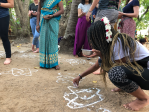
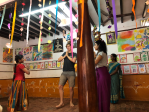
After the presentation from Balasundharam, one of the teachers at the center provided a short workshop on drawing kolams. Kolams are intricate floor designs drawn with rice flour by village women every morning before sunrise and again at sunset.

We learned that the rice flour, which is eaten by insects and birds, shows reverence for life. The kolams are often drawn with white flour, but they can become large, colorful and intricate during certain festivals. The kolams also serve as a signal to Sadhus that they can expect food at a certain house, and a household without a kolam drawn outside may be going through a hard time.

Mohanam offers kolam workshops, as well as cooking classes and other cultural experiences, to people from Auroville and beyond to showcase the ancient practices and knowledge from Tamil traditional culture.

Balasundharam seeks to reignite the value of Tamil cultural heritage, as he’s noticed many young people from the villages overlooking and forgetting ancient knowledge in favor of modern alternatives. Mohanam offers Indian traditional dance classes to children to foster a love for the art form, as well as keep the practice alive in the community.

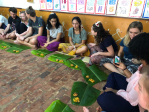
After the workshop, we watched dance performances by girls who take classes at the center, and then, we enjoyed a traditional Tamil lunch on banana leaves.

Working Toward Sustainable Development

Mohanam meets several of the United Nations’ Sustainable Development Goals.

Through its work to provide villagers access to clean drinking water, it meets the UN’s sixth goal of clean water and sanitation for all. The organization addresses the fourth goal of quality education through its progressive kindergarten for children from six villages. Through its village women groups, the center works toward the fifth goal of gender equality.

Additionally, Mohanam seeks to foster responsible tourism in the villages. The organization is creating a “learning village,” where visitors can come to discover Tamil traditional knowledge and cultural practices. They also plan to offer homestay experiences, so travelers can enjoy an intimate taste of local Tamil life.

Mohanam works to keep an open dialogue between villagers and those working in development, so the local community’s needs are met and voices are heard.

Through all its activities and outreach work, the center plays an important role in meeting the challenge of globalization’s impact on traditional Tamil communities, which hold valuable knowledge and rich cultural traditions that risk becoming forgotten.

Balasundharam’s talk and the performances at the center highlighted the incredible value of Tamil cultural heritage. These practices and beliefs hold just as much importance to the local community as Auroville’s knowledge on sustainability, and Mohanam is doing important work in bringing these two communities together.

As the world becomes increasingly interconnected through globalization and development, it’s important to remain respectful of other’s cultures, as each hold value from which we can learn.

Yatra Arts Foundation: Preserving the Heart of Tamil Nadu

Greetings from Auroville, Tamil Nadu, India! My name is Madelaine VanDerHeyden and I am a candidate for a Master’s of Arts in Global Communications for International Development. This practicum in India marks my first opportunity to observe and understand development work in the field and to connect classroom ideas with real-world practice. On our second day in Auroville we started touring NGOs in the Tamil Nadu area. After visiting the Auroville Village Action Group, we arrived at Yatra Arts Foundation. Yatra has been serving the Tamil Nadu region with a mission to encourage positive social change through creativity.

Yatra focuses on using art, dance, and media to educate communities on health, social, and cultural issues. It has specialized programs for children but seeks to include all community members in its outreach efforts in order to foster positive social change among generations. In Sanskrit, yatra means pilgrimage, a meaning that guides the foundation’s vision in seeing culture and development as journeys. Many people we have met in Tamil Nadu have expressed concern over Tamil culture being lost in the midst of India’s industrialization and growth. As a result, groups like Yatra are passionate about keeping traditions alive through engaging with the local communities, especially youth.

Upon arriving we were offered a ceremonious pottu, a red dot placed in the forehead between the eyes. In the Hindu religion, this spot is the most important pressure point that houses energy and concentration, the Ajna chakra,  It’s more commonly known as a bindi in Hindi, but pottu is the term here in Tamil Nadu. 

Yatra’s founder, Yatra Srinivassan, welcomed us and was clearly very proud to show us his foundation’s work. To demonstrate the types of cultural expressions Yatra upholds, his  daughters performed two songs played on a veena, an Indian instrument common in traditional Tamil music, and three bharatanatyam dances. Bharatanatyam is a classical Indian dance that originated in Tamil Nadu more than 2,000 years ago. I couldn’t help but smile during the performances: The moves, facial expressions, clothing, and music were so beautiful and captivating. Dance has always been personally a particularly moving art to watch and this experience was no different.

A more personal note: In watching these performances, I unexpectedly found myself experiencing a deep sense of loss and a strong desire for belonging. Growing up in the United States, I never felt connected to any of my ancestral cultures. My family hails from northern Europe and we have practiced some traditions, though only during the holiday season and without real intention. We’ve set out our shoes in anticipation for the arrival of Sinterklaas (Holland’s Santa Claus) and served traditional British meals for Christmas dinner. But I’ve never mastered the languages/dialects, dances, cuisines, or histories of my family. For that reason I have felt extremely disconnected from the idea of “culture” that is so honored here in India. It’s a disconnect I’ve had to reckon with in my studies by recognizing the integral role culture has in the success and sustainability of development projects. It’s been a challenge to my own identity, which I see as grounded in change rather than tradition. Seeing the pride for one’s heritage here in India has really changed my perspective on tradition’s relationship with modernity. It’s clear the two are not mutually exclusive; it is possible for both to exist and to thrive in different ways. 

We saw this possibility most clearly in several of Yatra’s films, which we would classify as “edutainment” in development jargon. Edutainment concerns educational materials that are produced in the form of films, television programs, games, theatre, etc. — basically anything that makes learning more fun. Srini’s background is in filmmaking so the films were exceptionally made. They’re can be a mix of comedies, dramas, or more artistic, but they each had a central message that was meant to practically inform the viewer and touch them personally. Srini and the Yatra theater group also holds street theatre performances in local communities and there are opportunities for the local people to participate and improvise. Below are a few examples of Yatra’s films and outreach work:

Yatra prides itself on providing community members with opportunities to develop integral social skills, cultural connections, networks outside their homes (many of which are low-income), and artistic interests. Its films are poignant, clever, and carry deep meaning. It’s clear that the communities value Yatra’s work and the culture it honors, which has translated into creating a vibrant, sustainable Tamil Nadu.


Upasana “Design for Change”

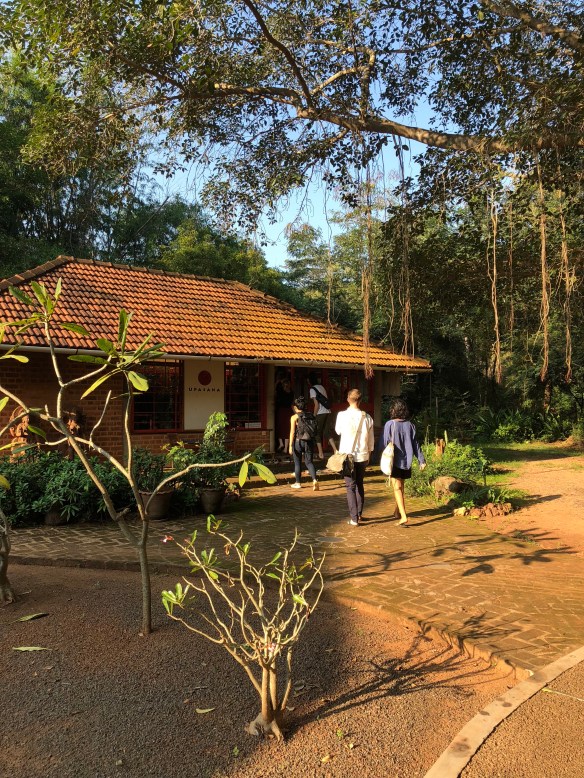
Screen Shot 2019-01-01 at 4.04.38 PM.pngUma, a skilled fashion designer who worked in Delhi, came to Auroville to work on a project. This experience led her to create her own studio in Auroville focusing on textiles and fashion. In 1997 this studio would soon grow into the fashion brand Upasana.  This company strives to create sustainable fashion, focusing on the environmental impacts and costs of clothing production.
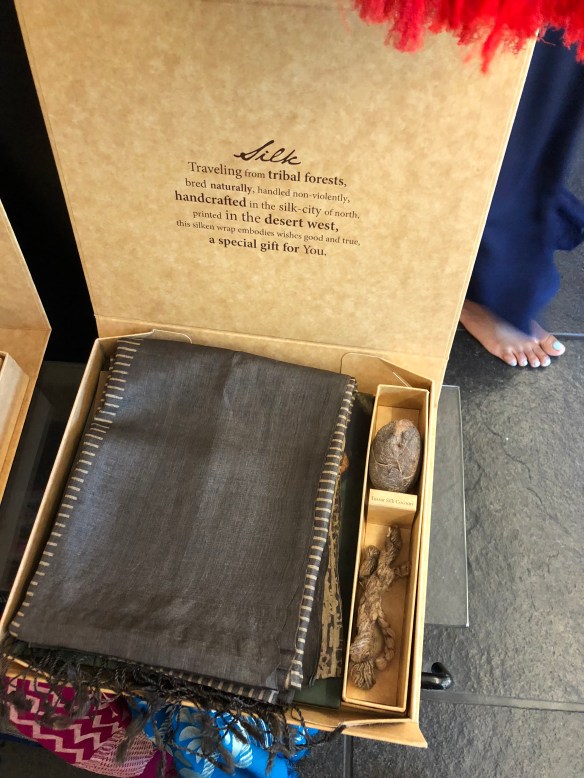
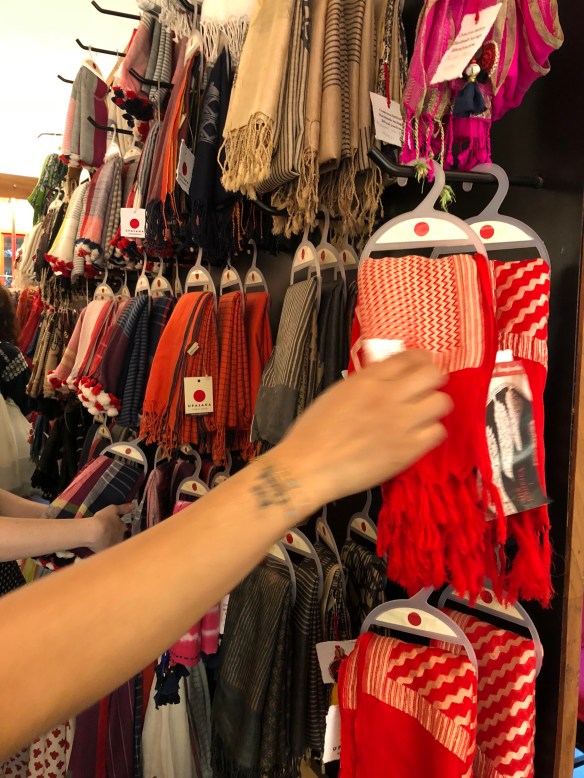
IMG_2225

When we visited Upasana, Uma started by emphasizing the farmer suicide crisis and the problems that Indian farmers face against huge companies like Monsanto.  They are faced with huge debts and forced to buy GMO seeds. Her use of organic cotton helps to support the farmers who grow it and prevent them from debt cycles encouraged by big companies selling seeds. Locally and environmentally conscious production of cotton is supported not only through her use of it in all her clothing lines but also by some of her social projects. Stretching out from the clothing industry, Uma has used her platform to address multiple social issues that she feels strongly about. 

In 2011, Uma took her brand organic with a move to all organic fabrics. Her Kapas project works with Madurai families and supports their organic cotton production. Paruthi, which means cotton in Tamil, is another project Uma is involved with that supports organic farming. The project is focused on sustainable and ethical practices upheld by the Tamil Nadu cotton farmers. Specifically focused on taking care of the land in an ethical and sustainable fashion, to making sure that farming practices and farmers are respected. 

IMG_2227


She also supports Varanasi weavers, making her own brand that supports their community that allows them to continue being able to produce stunning weaved fashion items. Her work with the Varanasi weavers is especially impactful because of her involvement deep in the community. She helps to design, support and offers marketing help to the weavers allowing their designs to spread all over the world.

Besides helping support organic farmers, she is bringing the skills needed to create fashion items such as sewing and weaving to communities such as Tranquebar. By helping to train the locals in fashion, she is investing in the future of this Tamil Nadu town. She markets and invests, helping bring tourism and economy into their town, while also helping to revive and preserve their cultural garments. 


IMG_2226

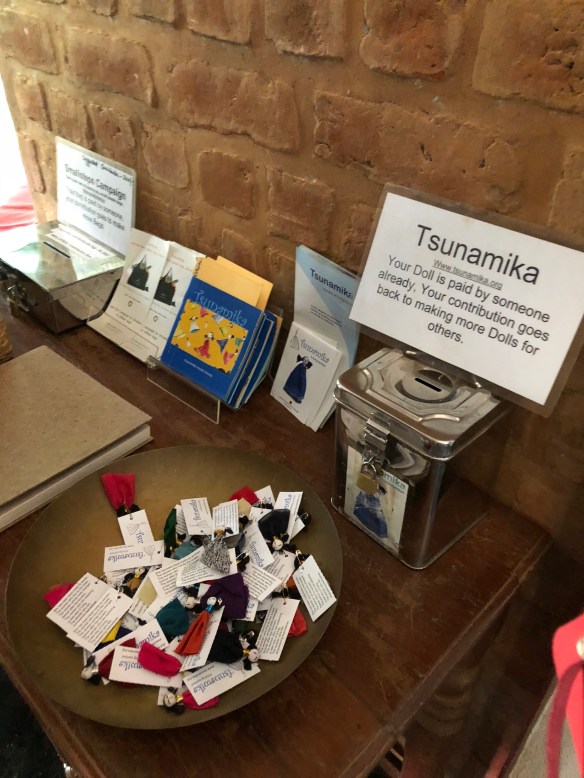
While we visited, we were able to see Upasana’s involvement in two special projects: Tsunamika and the Small Steps.

In 2005, a tsunami traumatized Indian fisherwomen, and Uma wanted to get involved to help the women recover. She found a creative outlet for the women so that they could cope with all of the stress and destruction that hit their village. Making little dolls out of waste and leftover fabric, Tsunamika dolls are traded in a “Gift Economy”. This interesting concept runs on donations, meaning no one ever buys the dolls. The millions of little dolls that have spread all over the world are a symbol of strength and love, further emphasized through their gift economy. It has turned into an income source for the village women, who are now being compensated for their work. Uma has used her creativity and background in fashion to support and uplift women, and now she is even helping to give them livelihoods. This idea is an incredible combination of creativity and empathy, and I was so interested in learning about how these little dolls have spread all over the world. We each received a small Tsuanmika at the end of her presentation, and I am so excited to gift it to someone when I return from India. 

IMG_2222

We also got to see the Small Steps project that was created by Upasana. Small Steps bags are reusable bags that help prevent the use of plastic and single-use bags. As most of Upasana’s projects are, they are more than just about sustainability. The bags are made by women in 14 villages helping to support local economies and women. The name Small Steps carries with it the idea that the even smallest steps towards sustainability will accumulate into greater change and a better future.

Through the names of some of her collections, we can see how important sustainability and ethics are to her. “Upcycling Artwear”, “Conscious Luxury”, and “Cool N’ Conscious” are all lines that are available at Upasana. It is a unique brand in the fact that makes sure that everything from the raw products and farmers, to the environment and lives of those making the clothes, are impacted in a positive and ethical way. Their focus is not only on selling their own items but on the social problems within India. Their projects help to preserve and support local communities and the lands that they live on.

She explains that her prices are a bit higher in order to encourage sustainable consumption and decrease the throwing away of clothes. Uma said that higher priced clothes make the consumer more hesitant in throwing away clothes and more conscious of what they are investing in.


IMG_2228

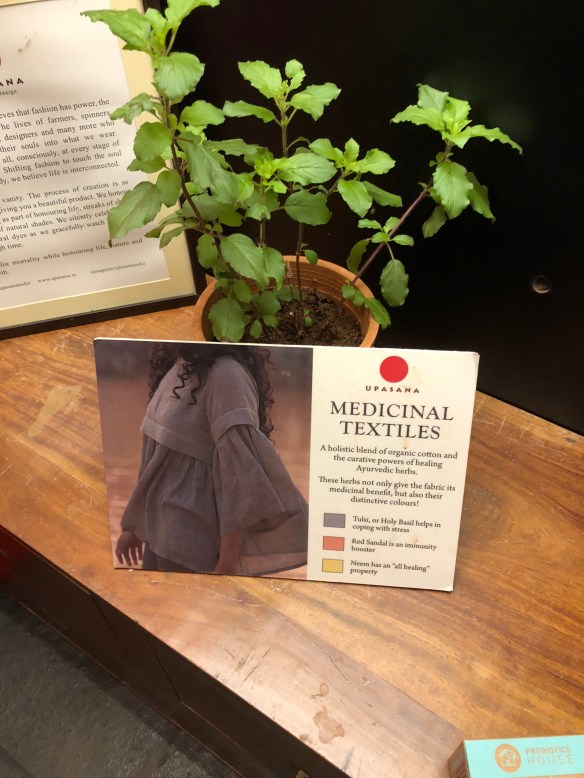
My personal favorite collection was the herbal collection. It mixes cultural herbs and Ayurvedic médecine with fashion. Not only are Umas designs a take on a modern Indian fashion, but she is also combining other aspects of culture into her collections. The healing textiles focus on dyes of 3 different healing herbs. A grey color comes from Tulsa, a light red from Sandal, and a pale yellow from Neem. They each carry medicinal properties and are natural dyes that are helping avoid environmental pollution.


Auroville Village Action Group: Day 1

Beatrix Tobey

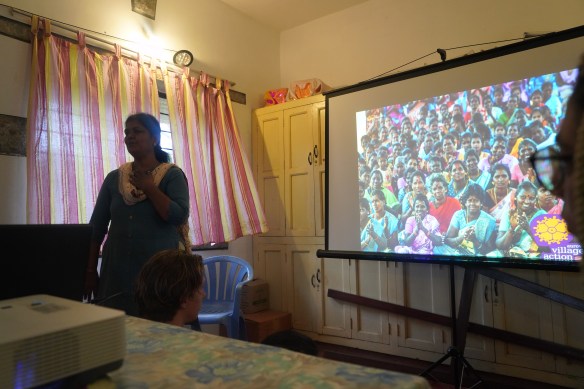
The Auroville Village Action group was the first stop of the NGO trips here. Their main goal was to help the backwards regions of Tamil Nadu, specifically Vanur. Founded in 1983, the organization is a grassroots organization aiming to to form a connection between Auroville and the surrounding villages. Since the foundation the Auroville Village Action Group has helped 50% of Vanur. The main tenants of the organization are inclusion, sustainability, fairness, and cultural richness and manifesting the full potential of the rural village areas. They connect with both disregarded groups such as women and Dalits, members of the lowest caste system, as well as leaders of both traditional and elected entities to help with their projects. They offer four main sectors of service: community development, economic development, capacity building, and psychosocial services. The most surprising program is the sports program for married women, who are usually not allowed to participate. They play kabaddi, a traditional game that consists of running back and forth without being tagged, all while saying “kabaddi, kabaddi” over and over in one breath. They have taken their league from a casual game to one with uniforms and a tournament of teams formed from each individual village. At the start of the program women were playing in colorful saris, and today they look like a professional team. The organization also offers summer camps for both boys and girls 7-18 for 6 weeks of the summer. They offer training in English, math, drawing, painting, as well as field trips to cities and museums they wouldn’t normally have the chance to visit. Another main project they offer is their self help initiative. There is a large problem of suicide rates in India among adults and children. There is a fear for parents that their children will take their own lives because of the pressure they’re under. Suicide is still not accepted in the Indian culture, and deaths are still reported to police as ‘normal deaths’ without further investigation. Most people suffering from suicidal thoughts are often told to go to temple or to a family member’s home. The Auroville Village Action Group provides a safe space for counseling and for these members to talk and repeat an affirmation that reminds them of their value.

The most surprising aspect of the NGO is how many people they are able to reach. They targeted the looked over people of the greater Auroville community. Similarly their goals are not just the physical well being of the people, they want to help the psycho-social aspect as well. In addition to the affirmation, they council while keeping the cultural richness alive through song, dance, language and sport, all the while helping the individual and connecting traditional cultures with the modernization of today.

The Auroville Village Action Group is looking for students that are self motivated, organized and passionate about their causes. They are looking to expand their fundraising potential by utilizing Crowd Funding and Global Giving. They also want to launch new campaigns and fresh ideas for communicating their purpose. Grant writing, data analytics, and both photo organization and composition skills are needed. They’re looking for a story teller that can express the vision of the Auroville Village Action Group.

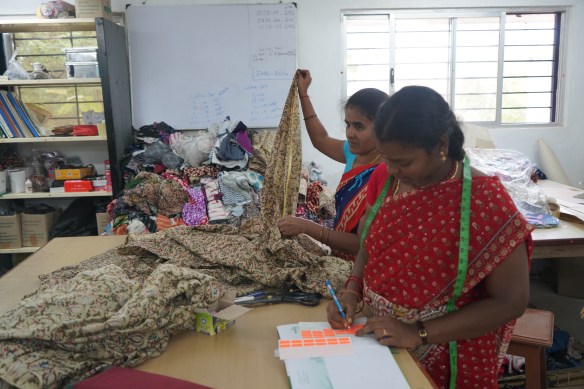
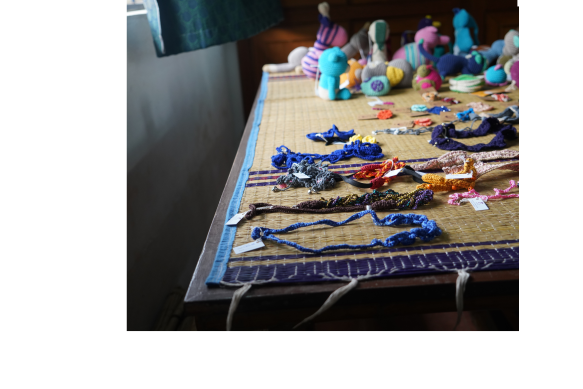
After the presentation, we got to meet with their current interns and take a tour of where they make sewn garments and crocheted goods to sell at the Auroville Visitors Center to raise money for the organization. The beautiful fabrics were turned into saris, dresses, shirts, and pants. Yarn was crocheted into cute little animal figurines. The Auroville Village Action Group is an amazing organization that looks to connect Auroville with the outside villages to the aid they need in the four specific areas. It connects to the Sustainability Development Goals set by the United Nations under the gender equality and the quality education indicative. Auroville Village Action group aims to level gender equality  for women through quality education as well as through other social aspects such as sports. 

DSC00303DSC00306DSC00310

Sustainable Living Institute: A Small Suggestion

The Sustainable Living Institute is an advocacy group based in Auroville, India. Founded in 2015, this organization wants to bring the principles of Auroville to the rest of Tamil Nadu, by working with government to instil policy. Their ideology is based directly on the Auroville charter. According to their website the SLI is a

 “… unique initiative by the Government of Tamil Nadu- It is the only Institute of its kind in all of South Asia offering Sustainable Livelihood Capacity Building solutions. The Institute conceptualizes, designs, organizes and delivers programmes for skill, knowledge and perspective building on sustainable livelihoods to the officials of the Rural Development Department as well as leaders of the Rural Communities.”

The website sounds great but wasn’t very clear about its goals. Upon visiting the Institute in person, further clarity was not provided. The purpose of the visit was to learn how AUP communications students could contribute to their cause. After an hour presentation we still couldn’t grasp the significance of the entire project.What specific actions were taken? How did their actions enable sustainable living within the local community?

Honestly I felt as though the presentation could have been more effective. The first slide  focuses on training, innovation research, consulting, outreach, documentation and communication.  Each slide had the right words but after about the 15th slide I began to disengage. I still didn’t know their purpose. To put this into perspective, the other organizations were clear from the beginning about their purpose. They shared their personal stories, passions and values, which allowed us to connect to their mission clearly. The presenters at SLI presented an informative, well structured power point presentation, but lacked this connection to the people in the room and to the essence of the movement.  They under utilized the power of personal testimony, which is the quintessential component to advocacy. It is what moves people to come together under a common cause.

Eco Femme: Changing the Relationship between Women and Their Periods!

By Sanna Rasmussen

Have you ever wondered what is the difference between an NGO, for-profit business, and social enterprise? NGO’s are non-profit organizations whose aim is to help a community in need. A for-profit business is a company whose goal is to make a profit and accrue capital. A social enterprise is somewhat a combination of the two. Located in Auroville, Eco Femme is a social enterprise that produces and sells re-usable sanitary napkins, also known as menstrual pads, while simultaneously supporting the community of women who are behind the production. More than that, Eco Femme has created development programs, connected to the global consumption of their products, which educate women about menstrual hygiene in rural villages around India.

Around the world, many women choose to use disposable menstruation hygiene methods, as it has been marketed as being the normal, if not only option available. However, with increasing focus placed on the environmental impact of single-use plastic, menstruation hygiene has a place within this dialogue. Disposable sanitary pads and tampons are made of plastic that cannot be recycled, therefore, after the six-eight hour viable life span, these plastic products sit in the landfill for over 800 years before beginning to break down. Clearly the women of the world have been shown a norm that does not benefit anyone besides big industry; the giants who produce all of these single use products. Although pollution is a global issue, India in particular is a country that is highly populated, where many women do not have access to menstrual hygiene. In 2000, in a quest to redesign how women in India engage and manage their periods, Eco Femme was created.

Eco Femme’s re-usable menstrual pads are fabricated from layers of organic cotton, which is sourced in Tamil Nadu, India. They produce four varieties of pads; heavy night, day plus, day regular, and panty liner. The nighttime pad is made with seven layers of cloth, the day plus with six, the day regular with five, and the liner with three. All pads include a finishing cloth layer that is coated with poly urethane and is anti-leak. The pads are made with wings that have a snap, so that they fascine around the underwear and do not move while being worn. Once the pad is soiled, or for means of transporting it, the pad can be discreetly folded and fastened with the snap from the wings to create a small square of fabric.

Eco_Femme_2_1024x1024

For the logistics of cleaning the cloth pads, Eco Femme harnessed the power of mother earth. Once the pad is soiled, the wearer is to soak it in cold water and then hang to dry under the sun, which acts as a natural disinfectant. That being said, the pads are also machine washable.

In every step of the supply chain, the cloth pads are produced by women from villages near Bangalore and Auroville, India. The empowerment of women is a pillar of Eco Femme’s mission, and has led them to function as a social enterprise, with two developmental programs; Pad for Pad, and Pad for Sisters. Pad for pad involves international customers of Eco Femme, where for every pad bought, a pad is sponsored for an economically disadvantaged girl in rural India. Up to date, over 10,000 girls have been sponsored. Pad for Sisters is a program that subsidizes pads between 50 and 80 Rupees. On average, Pad for Sisters subsidizes 1,500 pads a month.

According to Eco Femme’s co-founder, Kathy, re-usable cloth menstruation pads have acted as a trojan horse by opening the once taboo dialogue around what menstruation is, and how women can understand it. Eco Femme promotes the message that women and girls should feel empowered by their periods, and embody all that it means to go through the transformative change of the body. Through the work of their development programs, Eco Femme is a model of what a social enterprise can do to benefit a community, while still engaging in a competitive business market. Eco Femme re-usable pads can be purchased in Auroville, throughout India, and on their website directly.

Eco-Femme-P4P-for-website.jpg

Roads and more.

The sound of bus horns invades your mind to the extent that hearing yourself think becomes a distant memory. The movement of motorbikes weaving in and out of cars with buses in hot pursuit is constant creating the sense that one is in the midst of a hurricane. It is a miracle that any one survives the journey to and from work, yet surprisingly it works. The motorbikes move to the side of the barreling buses in a fluid motion and the cars as if polite neighbors signal to one another as they pass back and forth from their respective lanes.  

The scenes that play out on the roads of India are unparalleled in ability to shock a newcomer and often leave individuals paralyzed at the side of the road unwilling to enter the fray. As a foreigner entering the country I had been made aware of the fact that the “traffic regulations” may differ from say Paris or New York, but although it may have seemed like madness when I first entered it there was a method to this madness. 

Having worked as a bicycle currier in the past, one learns very quickly that you are at the bottom of the food-chain on the road, and as a result one must become hyper-aware of what is going on around them just to get from point A to B. This is the case in London, in New York, in Paris, and in Pondicherry (the closest city located to where we were staying in India) it seems. This axiom, that carriers across all cultures, forces cyclists from all corners of the world to notice details on the road that are not always clearest to someone that has spent their entire life driving in a car.  

Europeans and Americans are always quick to warn you about two places in particular: New York and Paris. Both are major metropolises known for their diverse cultures, incredible architecture, and, among other things, their low quality of drivers. This is a surprising fact seeing as these are some of the most heavily regulated roads in the world—there are cameras on almost every corner, you have street lights on every other street, and during rush-hour you can always count on the appearance of an overzealous traffic warden. It would seem that all you would need to do is follow the intricate guidelines and there would be an avoidance many traffic fatalities, however this is not the case. The majority of drivers in big cities act and drive in a way that says, “I shall be going first as I am the most deserving.” Whether they are on a scooter, a motorcycle, a car, a bus, or a truck. There is no acknowledgement of the hierarchy that naturally exists on the roads.  

In India however, there seems to be less of an individualistic mentality when it comes to the rules of the road. It is true that a motorcyclist will always find a way to the front of the queue when it comes to a traffic light and will be quick to overtake you on a corner, but for the most part there is a natural tendency to fall into the natural hierarchy of the roads. A bus or a truck, being one of the larger vehicles, will just continue driving oblivious to what or who may lie in its path, and when this happens there is no panic on any of the smaller vehicles parts they just move. They do not claim a right of way. They do not stand their ground under the assumption that this small win will garner them some pride for the day. They just get on with it. They understand that the truck is bigger than them so they have to move.  

This idea of just getting on with it, even with the lack of guidelines, seems to be applicable much more to those on the streets of India than those on the roads of European cities. Europeans, and Americans, have become so caught up in the luxuries and the small details of life that they seem to get hung up on things that really carry little weight. Why does it matter that the barista did not say “your welcome” when you said “thank you”? Why does it matter that that person with the silly black briefcase got served at the bank before you? The truth is it does not. If we could all just shift our mentalities to be a little more like the small vehicles on the roads of India then there might be less crashes and more movement.