Seeds of Suicide in India

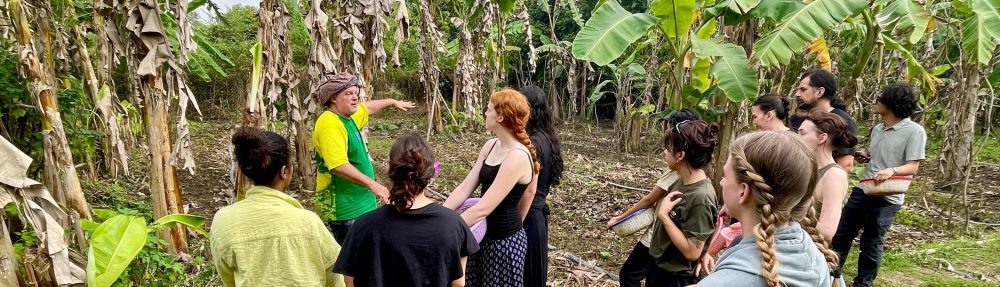
“Producing more, conserving more, improving farmers life” Behind this phrase from Monsanto Corporation, there is a cotton seed monopoly in India that used this phrase as a merely marketing strategy, and their operations induced a series of farmer suicides in India.

How this happened?  Before Monsanto’s settlement in India, local farmers used to produce their cotton in small scale and in traditional ways. However, globalization allowed the introduction of Monsanto Corporation into the Indian market. Monsanto introduced a Genetic Modified Organism (GMO) seed that contained a toxic gene (Bt toxin). Farmers got trapped and started to get in debt because they continuously needed more and more fertilizers and pesticides to keep their GMO’s crops alive. This created a vicious circle in which farmers would buy a cheaper seed but at a long term the outcome wouldn’t ensure any profit because they needed to buy more pesticides, at the end they were only in debt and generating no profits. This situation lead to an alarming chain of farmer suicides.

“Control over seed is the first link in the food chain because seed is the source of life. When a corporation controls seed, it controls the life of farmers.”

Monsanto overpassed the Indian rules regarding GMO’s and managed to control 97 percent of India’s cotton seeds. The Research Foundation for Science, Technology and Ecology sued Monsanto but it was too late because they had changed the agricultural practices in India.

For some profit businesses like UPASANA (an Indian fashion company), this situation was alarming and they felt that something had to be done. Umah Haimavati Prajapati created a project name Paruthi, which is a sustainable business and its main objective is to promote and protect the cotton communities in the region of Tamil Nadu. The brand was unwilling to let their farming society fall apart; therefore, they leveraged partnerships with local organization with the purpose of using only organic crops that require all-natural fertilizers and to develop a business strategy that empowers and improves livelihoods of farmers and weavers. Today, Paruthi is a socially and environmentally sustainable project using only the most ethical practices and the cotton communities of rural India. In words of Umah “ I am interested in creating a world that is better and fair”.

Marcos Lopez Manrique

images.png

The Heavenly Scene Inside the Matrimandir

matrimandir-viewing-point-auroville-org

Matrimandir – Viewing point (Auroville.org)

At the very centre of Auroville, you can find the “soul of the city”, the Matrimandir. It is situated in a large open area called “Peace”, from where the future township will radiate outwards. The atmosphere is quiet and charged, and the area is beautiful, even though the work continues in the Gardens.

The Matrimandir will be the soul of Auroville.
The sooner the soul is there, the better it will be
for everybody and especially for the Aurovilians.

– The Mother

The Matrimandir can be viewed as a large golden sphere, which seems to be emerging out of the earth, symbolizing the birth of a new consciousness.

Entering the Matrimandir:

In order to obtain your free tickets or passes, you should sign up a day or 2 in advance. You can get them any day, besides Tuesday, from the first floor of the Auroville Visitors Centre. There is a strict rule of collecting passes in person and a prohibition on transferring or passing on passes to friends.

On the scheduled day, we assembled again at the Visitors centre at the scheduled time, which is usually 8.45am. At 9 am, we were shown half hour video clip on the history behind Matrimandir, its construction and the plans for its future.

We went in a bus from the visitor’s center to the Matrimandir, where we have deposit all our belongings and got a 20-minute explanation about the significance of the place.

The building was impressive, grand, unwittingly towering and invoking discipline. We all stood in a line as we removed our footwear and cautiously entered the Dome.

the-inner-chamber-auroville-org

The inner chamber (Auroville.org)

You will have to wear white socks provided by the staff before you can go inside Matrimandir. An elliptical curve leads you to the “Inner-Chamber”. The spacious Inner Chamber in the upper hemisphere of the Matrimandir is completely white, with white marble walls and white carpeting. There is a radiant crystal placed right in the middle of the hall. You will have to occupy on the seats out there, and stay calm. Silence is the key; this is a place for real meditation.

It echoes a lot inside Matrimandir, hence if you feel like coughing or sneezing, you should go out and come back again (yes, there’s actually a note that tells you to go outside to complete your coughing and sneezing business).

I saw a lot of energy and golden radiations when my eyes were shut, it was a surreal and a humbling experience. When the light turns off and turn on twice, it means it’s time to leave.

The energy that you derive from Matrimandir meditation will linger in your mind and body for a few days. The heavenly scene you saw there will never fade from your memory.

Source: http://www.auroville.org/contents/678

– Julien El-Hajj

IndiArt

By: Hibaq Dougsiyeh

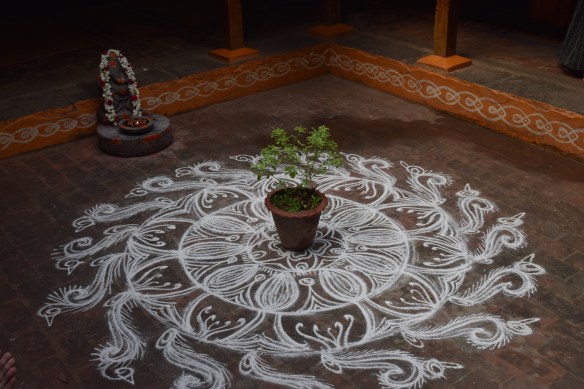
Upon my arrival to India, one aspect that I immediately noticed was the appreciation for all forms of art. Art seems to come very natural to the people of India and a design as complicated as a kolam, for example, is simple and easy to the majority of them. A kolam is a geometrical design that is drawn on in front of homes and are thought to bring in prosperity. One morning, at the entrance of the guesthouse where we are staying, I observed one of the women who work there designing an intricate kolam freely, with no traces to assist, while laughing and talking with her co-workers. After seeing the finished result, the first thing I thought of was how amazing this design would be as a tattoo! I know plenty of tattoo artists who make similar designs, but not free-handedly or as fast as the women in India. Not to mention how this beautiful design is created using chalk dust. Not chalk, as I imagined it was when I first saw one, but the dust. What they do is they take a pinch of dust and create dots to help with the alignment of the design, and as they release the dust on the ground, they make the kolams. After taking brief lessons at the NGO Mohanam and witnessing how difficult it actually is to make a kolam, it made me appreciate it so much more.

dsc_0860


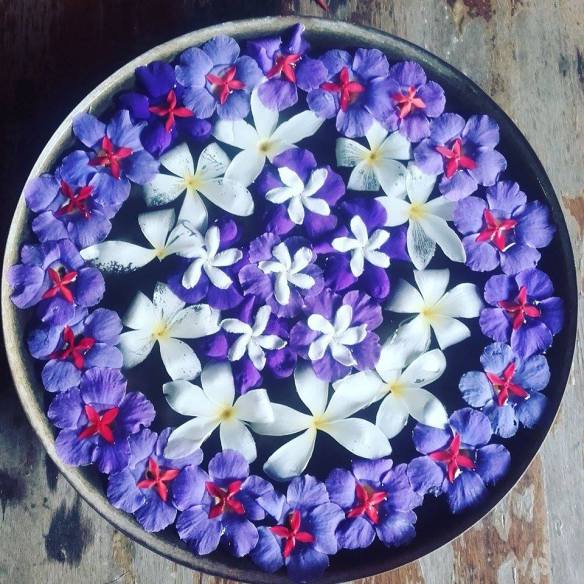
Another simple yet beautiful artistic gesture I’ve come across many times are the flowers on floating water. The first time I saw this was, again, at the entrance of the guesthouse we resided in. The colorful flowers were laid out on a bed of water in a circular pattern and are changed every so often to different patterns based on what flowers are available that day. In other locations, you can see the bowl of flowers placed near statues of Ganesh, the God of Beginnings and Remover of Obstacles, as well as some lighted incense. Again, something to creative, artistic and a norm in this culture and you can’t help but appreciate its beauty and the vision behind the artist.

flower2flower1flower

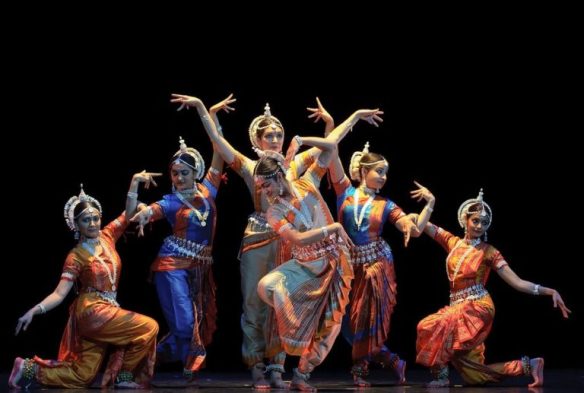
There is an abundance of plays, films, dance performances, and art exhibitions around Tamil Nadu and what’s great about them, besides the obvious creative and beautiful pieces, are the fact that the viewings are mostly free. Tamil Nadu’s appreciation for the arts is so full that it is shared with the public at no cost. You can’t help but see that the people of India are so rich in their creative talents. I was lucky enough to attend a dance performance at Sri Aurobindo Auditorium of a traditional Indian dance performed by a group of very talented girls. This free performance was absolutely breathtaking, with each precise dance move resembling a pose from a sculpture and every movement imitating the sound of an instrument. The performers were each wearing solid colored saris with jewelry from head to toe that made beautiful ringing sounds with every step. They each had henna designs on their hands and feet that were visible to the audience thanks to the precise dance moves that accompanied the dance called Odissi. Odissi is the classical dance style from the city  of Odisha in Eastern India that was ritually performed from 10th century through the 16th. After India gained its independence in 1947, the dance decreased in performance because of its dislike from powerful Hindi rulers; however, in the late 50s, it was picked back up thanks to the locals of Odisha.

india

(photo credit: http://allindiaroundup.com) 
It’s very admirable to see something traditional being practiced by the youth. It shows how the conservation for culture continues to be implemented in communities across India and although this developing country utilizes modernization as a template for development, they maintain traditional values to not lose their identity which I find to be very important.

The Forgotten Community

img_6222

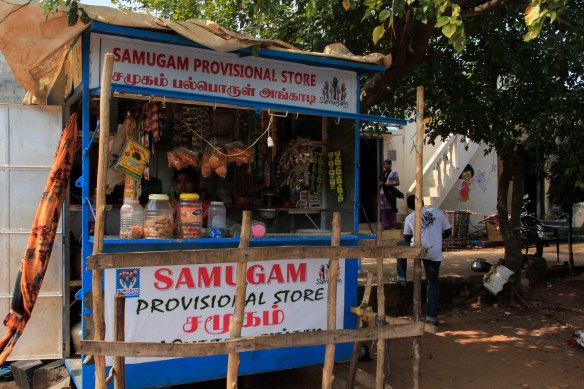
We got out of the car after a 15-minute car ride down a winding dirt road. One way in, one way out, this narrow road is unpaved and lined with tall grass and no street lamps. Nothing could have possibly prepared me for the education I was about to receive. Mr. Bruno, Founder and Director of Samugam Foundation gave Julien and I a brief overview of what we were about to encounter. “(Waving to the right and left) This is the tuk tuk that Samugam Foundation has donated to the village for any medical emergencies, and this little shop we provide and stock for them to have necessities. Before this was here, they would have to walk down this dirt road to get anywhere, which is very treacherous if you are ill. 130 families live here in 75 houses. Also, 3 people have died in the last year of snakebites walking along this road in the dark. Okay, lets go.” (Casual.)

_mg_6221

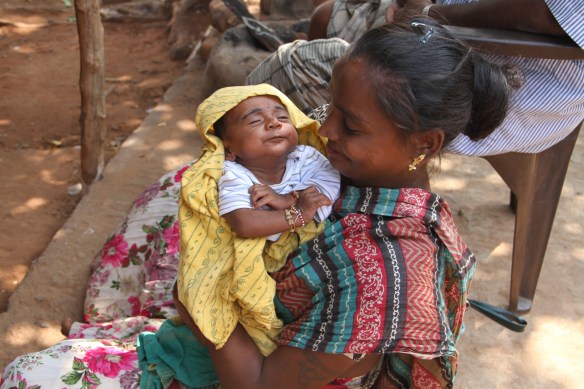
As soon as we walked up to the village, we were met with many smiling children that were curious to know what we were doing there. Bruno was a celebrity and everyone met him with hugs. To my right, I noticed a tiny woman emerge from her modest shack with a few week-old baby attached to her. She was very excited to see Mr. Bruno and greeted us all with such a beautiful big smile one can only find on a proud new mother. Mr. Bruno took the baby from her arms with ease and explained that the child was born with a stomach problem, most likely due to malnutrition of the mother, and Samugam helped pay for the procedures needed. Behind the woman was a young girl, whom Bruno explained was visiting home for holiday from Samugam Foundation where she lives. She is 13 years old. Her mother died of health complications, and her 60-some year old father, had re-married the young 22 year-old woman with the few-week-old baby we just met.

img_6353-1

Continuing through the village, lined with chickens roaming around, trash scattered about, and pigs off in the field, many young dirty children sat on the road eating modest portions of rice with their hands.
img_6951
Two young boys washing at the water bucket lingered, and a young man smiled at us while washing clothes from another bucket. You could tell that water was hard to come by in this village.
img_4384
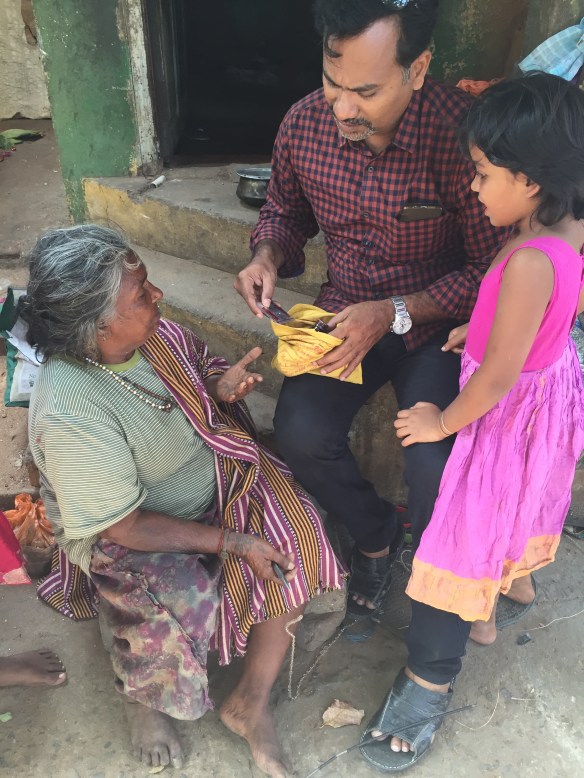
An old woman waved Mr. Bruno over to talk to him. She had recently been ill and needed help from him to explain how to use the medicine she received. As literacy is not common in the village, she could not read the instructions on her own.
img_6960-1
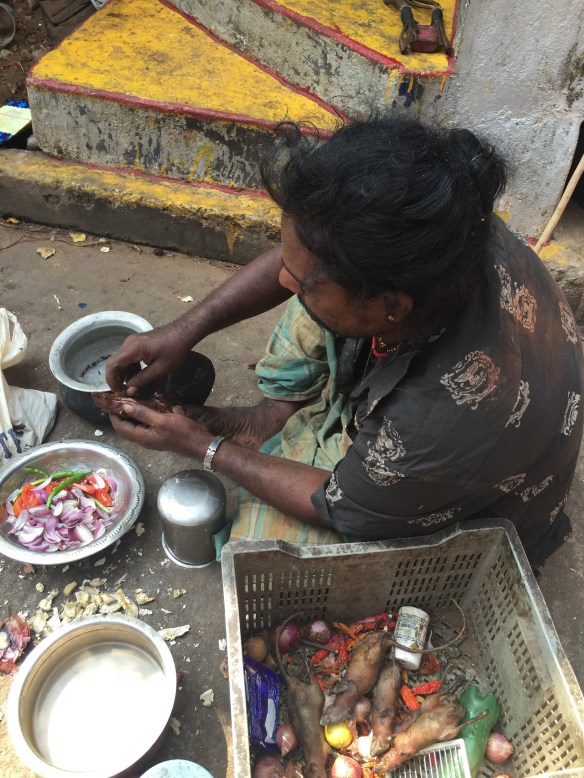
A little further down, a family was preparing dinner. This community lives well below the poverty line and eat whatever they can find. I am not sure if I will ever be able to get the image of a grown man gutting a rat he pulled out of a carton of trash out of my head.
img_6963
This community was so kind and welcoming, despite having nothing. A group of women smiled at me, and one woman waved me over. We do not share a common language, but I squatted down next to her and returned her smile to see what she was doing. She reached into a bag next to her, pulled out a beautifully carved stamp, dipped it into a can of paint, and pointed to my hand and smiled. I gave her my palm, and she started stamping my hand, producing a beautiful design. These stamps are made by the women in the community out of the rubber of shoes they found in trash dumps and sold on the streets to make some cash.
img_6304
A young boy curiously played with me, checking out how our hands differed.
img_6973

Most empowering of all was this beautiful 16-year-old girl. She studies at Samugam and was practicing her English with me.
img_6393
“In two years, I will be finished with my education from Samugam. After this, I hope to continue to study and become a teacher. I want to help all the children become educated, like Samugam has helped me. Right now I am on leave, so I am staying back in my village. I wake up early and go for a run and do yoga with the smaller children. I then help them all clean themselves, as they are often very dirty. I come back to help with the children on every holiday.”

I was not prepared for everything I witnessed during my short visit to this village. As much as you imagine what extreme poverty is like, it is a very different experience seeing it for yourself and meeting the wonderful humans whom are victim to it. I have always been aware how fortunate I have been in my life, but this experience forced me to FEEL it to my core. I will never forget this community and know in my heart that I will spend the rest of my life trying to help them and many others in the world like them, break the harsh barriers of poverty.

Website: http://samugam.org/#about
Social Media : @Samugam_Foundation
Donate: https://www.generosity.com/fundraisers/1996914/csfb?ref=gogo__fblk__15810376

By: Morgan Speece

Getting OUT of your OWN WAY!!!!!

 By: Faith Toran

One week into working with the organization New Colors and I was both excited and frustrated at the same time. Was it possible to be navigating in the wrong direction? If one was headed in such a direction, where was the point of return? I became frustrated in my working relationship with my colleague and that created tension that seemed to escalate. It was not so much about the tension we were both experiencing but I had to realize where the fault in behavior or perspective was. I wrecked my brain to try and finally understand and there it was, my cultural baggage staring at me. How could one work from a participatory framework with the organization, when there was the lack of dialogue with my colleague.


I tend to be aware of this baggage in my daily morning meditation and try to recycle it in a way that is conducive to cultural exchange. So, when one becomes aware of this baggage, one goes directly to successful tools that have been used in similar situations. I was listening but was I understanding?


My colleague and I arrived at New Colors for the Christmas and New Year’s celebration and were greeted with lots of smiles and joy. This environment of honesty, curiosity, freedom and innocence was contagious. I realized that there was something beyond self-reflection. 

 dsc00100

 What might have worked before, may not be useless, but in need of expansion. So, I added a very important tool to my development field work toolbox. I added a simple yet profound tool, one  Dr. Tanya Elder said to me “you must do more than just reflect you must learn”.

So, I decided to reflect and learn!

I realized that acknowledging your wrongs is one thing but it is equally important to learn your rights.


Practice vs. Theory: The Auroville Economy

The economy of Auroville is ran on a system pertaining to a “gift economy.” Despite having such an ideal, there is still a significant circulation of cash and monetary exchange amongst “Aurovillians.” The budget that the FAMC receives is already below what would be required for “maintenance” (or salary) and most have to have some background capital and money in order to be able to subsist (along with their family members) if they wish to live comfortably. Maintenance refers to the monthly sum which is typically enough to meet the basic needs of living in Auroville which Aurovillians receive from the commercial unit or community service they work for.  unity-fund-14-15bcc

It is considered a “risk” to invest in joining the township, for there is no private ownership of land, housing or businesses in Auroville. Aurovillians invest in land that is collectively owned. 81% of their Unity Fund budget is specified whereas the other 19% is unspecified. That is to say, less than 20% of Auroville’s budget goes to what its members believe needs funding. (more information available at http://www.auroville.org/contents/2836). There are several umbrella branches (or departments) that must report to the FAMC, such as SHIIER which deals with education and related services. Is it sustainable? Not quite at the moment. There currently exists around a 50/50 ratio of Indians and foreigners who are recognized Aurovillians. Thus, there is an application process required for someone to start a unit or project. There is a long way to go before Auroville’s economy becomes self-sufficient and sustainable, yet they are headed in the right direction toward their ideal vision of exchange.

Serene Obagi

Auroville Bamboo Centre

Karlee N.
“Who likes sugar?”
Do not look at each other and say “ We do!”  (what I remember most at the bamboo tour)

“What do you know about Bamboo?”  asked Sirach, an architect who started as a volunteer at the Auroville Bamboo Centre, and is now working permanently with new interns and volunteers to benefit from bamboo making.  Sirach’s simple question created a short silent moment among all of us, AUP Scholars?  “You can make A LOT OF things out of bamboo,”  “It is food for pandas,” “Bamboo makes good fishing rods” etc.

Auroville Bamboo Centre founded in 2009 as a sister branch of the Mohanam Community Centre, by “the man of ideas,” Balu.  Balu is also the co-founder/director of the Mohanam Community Centre of Cultural and Education.  The Centre was created with his vision to bring modernity and traditions together.   Balu stated that he started the bamboo center initially as a hobby.  His hobby has become an influential organization today due to his passion and hard work.  The center export bamboo products to funds for the variety of cultural projects.  The Bamboo Centre takes all volunteers and interns from all over the world for special workshops and seminars in bamboo products, construction, and design.  The Centre also invests in research for new sustainable bamboo products such as interior furniture for household needs.  Volunteers and interns at the center can benefit from gaining knowledge on bamboo, hands-on workshops and most importantly networking experience with their peers from around the world.  Moreover, the Bamboo center is empowering women and drop-outs in the rural areas to get training on making bamboo products to improve their living standards.

A day at the Bamboo Centre in Auroville is nothing but a fascinating experience.  During the tour of the center, while most of us were captivated by the attractiveness of Sirach’s passion for bamboo as an architect, we were more intrigued by the many things that created by women and volunteers at the center. Small house, furniture, bed frame, instruments, toys, scarfs, pencils, notebooks, jewelry, chopsticks, and other kitchen utensils,…  One will learn not only how to create the product out of bamboo at the bamboo center, but Sirach will also educate you on how to efficiently grow bamboo and what is the most efficient to utilize the different kinds of bamboo.  The bamboo center of Auroville is a safe place for expanding education, networking, and a pleasant environment.

Extraordinary!

“Not once had I seen an event this grandiose!”

Karlee N.

After enjoying a small yet warm Christmas Eve dinner with the 2016 India Practicum team at the Well Cafe in Auroville, India.  Three other classmates and I took a taxi to Pondicherry to attend the midnight mass, a Catholic tradition of my family.  It was a delightful and extraordinary to be shared between the four of us in a foreign land without our family.  We only had each other.  No words can explain my experience at the Christmas Eve midnight mass at La Cathedral de Notre Dame de L’Immaculée Conception in Pondicherry, India.

   Have you ever attended or drove by a church on Christmas, and the church building look like it will explode due to the capacity of people?

The taxi driver pulled up on Mission Street, but he could not enter the street as usual.  The entire road was closed and reserved for pedestrians who go to church.  Police and securities were guarding the area.  The bright decorations vanquished the stars in the sky.  The road filled with beautiful, vibrant dresses and sparkling jewelry.  Everyone came to celebrate the holiday with a mirthful heart.  People filled up seats on the benches inside the

cathedral and plastic stools outside in the cathedral’s yard.  People were sitting on the floor,  and it is not because the cathédrale is small.  Despite that, the astonishment was not their clothes, their jewelry, their decoration, but their faith.  Evidently, India is a nation dominated by Hinduism.  Holding the second largest population in the world with the total of 1,241,492,000 people, 80% of Indian practices Hinduism, and only less than one percent of the population is Catholic.  There are only 19,762,000 people are Catholic.  In comparison to the 20% of Americans who are “Catholic,” how many go to church regularly to practice Catholicism.  The old plastic statues outside of the churches in the U.S, an old painting of the nativity, and most importantly, the Christmas spirit in the U.S is incomparable to what I’ve discovered here, in India.
Have you ever had to make a decision between going to midnight mass or go to a house party?  It is not an option here, but a plan.  People had planned and prepared to go to midnight mass and no other options.

Is Christmas for us [in the West] all about the presents?

Are we actually celebrating the birth of Jesus?  The Indian Catholic is certainly a “small but mighty” group.  An eventful Christmas night in India complete with sitting on the ground with local women tentatively attends mass in Tamil and enjoy the cultural differences.

https://indiankanoon.org/doc/631708/
http://www.pewforum.org/religious-landscape-study/

Seed-to-Cup

Image

By: Morgan Speece

Everyday the Sun rises, alarm clocks go off and humans all over the globe drag themselves out of bed to perform a similar morning ritual. Autopilot to the kitchen, open the cabinet, pull out coffee, grab a mug, pour the grinds into a machine, press a button and wait impatiently while the machine produces a delicious aromatic caffeinated liquid. Day after day, we repeat the routine without stopping to wonder where those grinds we pull out of the cabinet came from, or who helped to produce that cup of coffee we will enjoy once the machine is finished brewing.

1-1024x1024-768x768

India is one of the top ten producers of coffee in the world, exporting approximately 300,000 tons per year. This may be shocking to many Starbucks-Coffee lovers whom are only familiar with coffee from places such as Kenya, Ethiopia, Columbia and Indonesia. The lack of knowledge and accessibility of fine Indian coffee is mainly because the majority of India’s exported coffee is blended into big brand coffees such as Nestle and never is cultivated purely as 100% fine Indian Coffee.

2-1-683x1024

Marcs Coffee in Auroville, India has transformed Indian Coffee production from the ground up. Driven by the idea that no one in his or her right mind would want an anonymous cup of coffee, Marc Altimira became obsessed with seed-to-cup mentality. Seed-to-cup essentially means just that, to be intimately involved in every step of the coffee making process. From the planting of the seed to the beautiful smell of coffee brewing that fills every cafe on this globe. In 2008, Marc founded Coffeeideas!, one of the very first companies in India to roast high quality certified coffees (bio-dynamic, organic, fair trade and UTZ certified). To this day, Marc consistently meets with his farmers, teaching them how to farm organically and continually goes to harvest to achieve the best quality coffee.

img_6741

Marc’s journey with coffee did not start in India. At the age of 23, he started a boutique coffee shop with his sister in Barcelona. Since then, he has traveled all over the world studying and working with coffee to hone his knowledge in producing world-class coffees.

“If you deeply specialize in something, there will always be a job for you,”

Marc reflected to us as we were sipping on cups of his delicious and carefully cultivated coffee. Marc runs two cafes in Auroville, Marc’s Coffee, which is located in Kuilapalayam village and Dreamer’s Café, in Auroville’s visitor center. He gets about 2,000 visitors per day to his shops. Dreamer’s Café, is actually entirely solar powered, and everything in both shops, besides the machines that roast his coffee, are made out of recycled materials, bringing his concept to whole new level of social consciousness. With eight different varieties of coffee currently, Marc is passionate about continually evolving and expanding the seed-to-cup mentality to seed-to-plate mentality in all of his baked goods.

Check out Marc’s Coffee here: https://www.marcscoffees.com/

img_6742

Naturellement Café: A Love Experiment

By: Jon Daniel McKiever

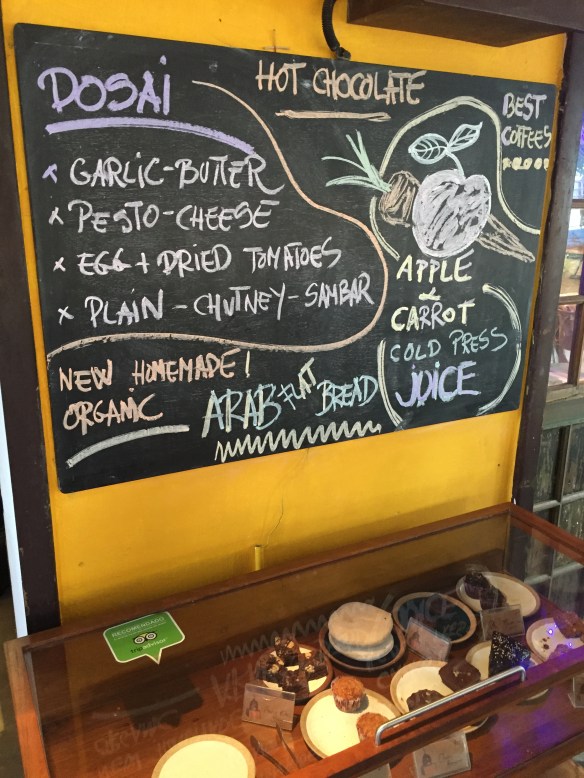
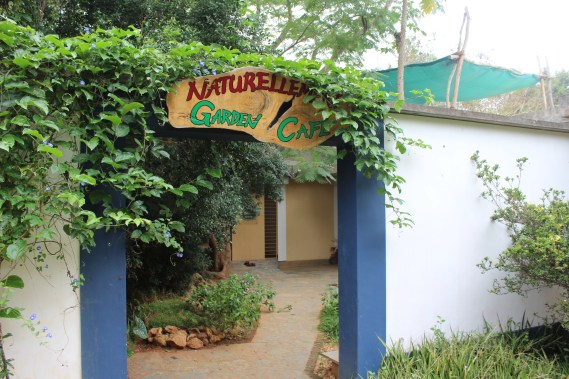
This past week has been filled with meeting incredible individuals who are impassioned by the desire to improve the lives of those around them. Martina Ljungquist is one of these people as she embarked on a journey 26 years ago to empower the local Tamil women by establishing the Naturellement Café.
img_0277

From the Naturellement’s website, one can see the aims of the restaurant are to (1):

  1. Empower women from disadvantaged back grounds by providing them meaningful work.
  2. Engage in socially responsible and fair trade business practices.
  3. Support sustainable farming by using organic raw-material whenever possible.
  4. Provide natural handmade fine foods of the highest quality to our customers.

Martina’s quest has always been to “bring down into the matter, something higher. The question is, ‘how do you do that?’” This question inevitably led Martina to Auroville where she claims, “the startup of this company created itself and I’m always trying to catch up!” The rise of this social enterprise has allowed its workers to create a livelihood for themselves all while learning an array of skills from cooking to operational management for their restaurant.
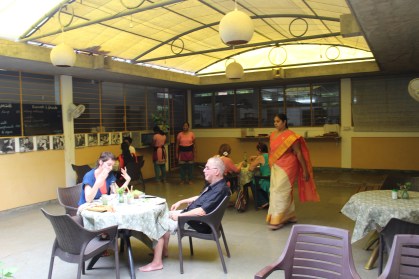
img_0274It’s evident Naturellement’s success is due to the combination of Martina’s love for her workers and the motivation her love spurs within the ladies to generate a solid work ethic amongst the restaurant staff.

Martina makes it very clear she’s never been well versed in typical “business” operations but she actually began her career as a Kindergarten teacher! She’s an educator at the end of the day; yet, she’s using the café to educate and empower the local women through the lens of business.
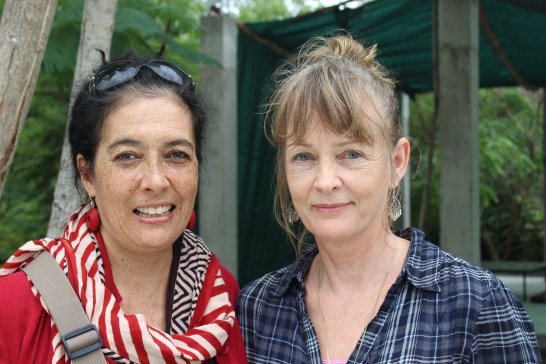
img_0271                                           (Left: Tanya Elder, Right: Martina Ljungquist)

Through her past jobs, Martina learned how not to be a boss. She’s learned this and has applied to it be an effective manager for the Naturellement café. Her model for success is never benchmarked by maximizing profits. Instead, Martina’s desire for the well-being of her ladies if the focal point of the café.

“When your aim is to have maximum profits, you start making short cuts.” – Martina.
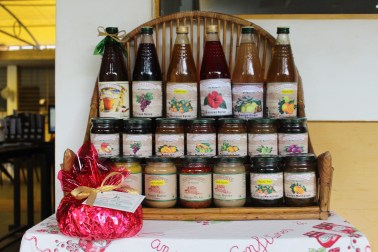
img_0279

Products for sale at Naturellement Café
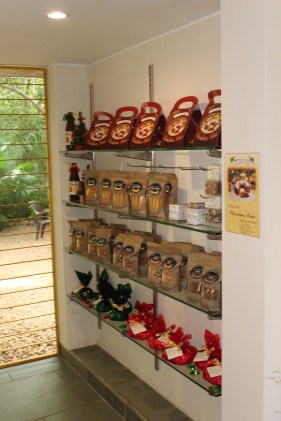
img_0284

A shot of the café’s store

Her dedication to maintaining a sustainable supply chain while setting higher standards of living for her workers has established a more ethical approach to business operations. The company’s revenues are making a positive impact for the 35 ladies that are employed here today.

When “profit maximization” is removed from the worker’s mindset, it cultivates a more personable environment where the ladies are free to unwind and be themselves while working.

Her love for these women is evident as she elaborates on the various ways she strives to provide for these women. Some of her stories are more light-hearted as she illustrates how they all took a break last week to turn on a movie in the office during a work break. Her other stories are more serious as she expresses the difficulties she faced when she’s learned some of her employees have been beaten by their husbands.

According to the Times of India, around 60% of men throughout India admit to wife-beating. (2). While it’s shocking to learn these cruel and archaic practices are still prevalent throughout India, one can only imagine the ethical dilemma it creates between Martina and her ladies.

Martina is in a unique work environment where her business model is centered around the well-being of her employees. Thus, it may seem necessary to intervene as a manger when your employee is physically assaulted because it harms the core of this restaurant’s business structure. However, Martina is a Swedish entrepreneur who may come across as a “westerner” or “foreigner” to her employees’ husbands. What do you do when your good intentions to protect your employees conflicts with cultural norms that you were never born into?

This is a complex issue which Martina has artfully navigated throughout the years with her fellow workers. She mentioned her initial reaction was to ask the ladies if she could speak to their husbands about this issue; however, she learned the women didn’t want this as it would only make the situation worse.

This experience must have taught her how to help where she can by being a listening ear and a support system for these incredible women. Her efforts yield results as we learned none of her current employees are beaten today! Progress here at Naturellement café could be perceived as being “shwiya ba shwiya” or “little by little,” yet the progress made within the lives of the Tamil women that work here is interminable.
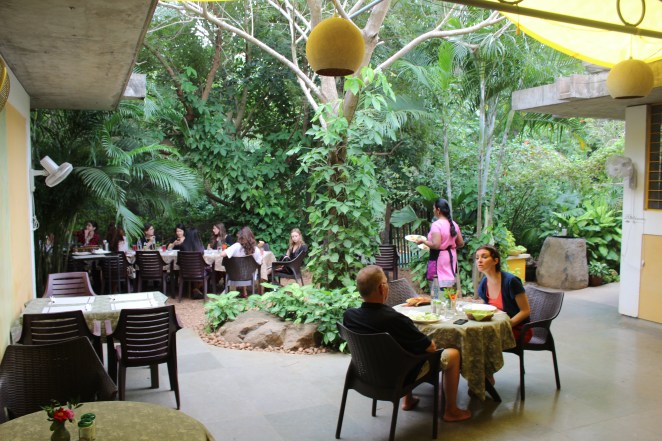
img_0281

References:

  1. http://www.naturellement.in/
  2. Dhawan, Himanshi. “60% of Men Admit to Wife-beating: Poll – Times of India.” The Times of India. Bennett, Coleman & Co., 11 Nov. 2014. Web. 26 Dec. 2016.