Sybilla’s Forest
Reply
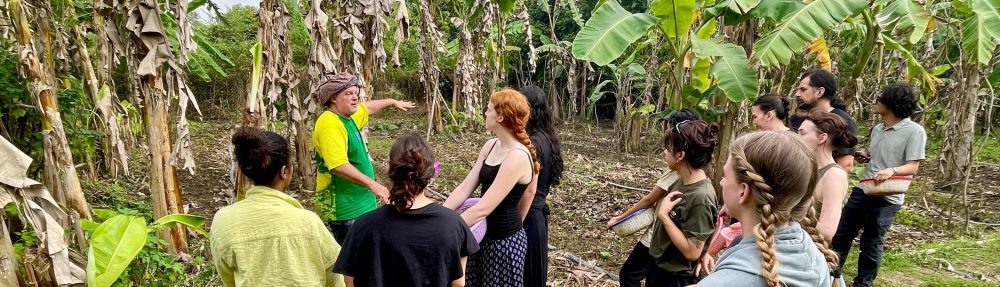
I have been spending a lot of time with Biggie, a woman who works at the Botanical Gardens. Biggie is a small, energetic woman who always seems to have a purposeful bounce in her step. She moved here in ‘72, and helped build Auroville. Although she has been back and forth between France, Germany and Santa Barbara over the years, she said Auroville is her home and she could not imagine living anywhere else.
Biggie invited me to her home for tea and then took me to see some of her favorite parts of Auroville. I was pleasantly surprised by her home. She said she had it built 15 years ago. The arched, wooden frames of the doors and windows are made with the Acacia trees she planted in the 70’s and the walls are made from white, painted cement/dirt bricks that Auroville started using as a sustainable building material. The Acacia trees or what the Mother named the Work trees, are also very sustainable because they grow quickly.
In addition to her house being sustainable because it is made from materials that are easily found (or that she herself planted years ago), she found Tamil boys looking for a trade to be trained in and paid them to help build her house to help them learn architecture and construction.
She lives back a windy road off of the Green Belt that has a round boulder with her and her two neighbors names and arrows pointing in the directions in which they live. The Green Belt is the outer ring of Auroville which makes an effort to be completely sustainable. It runs on solar power and the water used is pumped by windmills.
While I was with Biggie, she took me through what used to be called The Seven Banyan Forest because of it’s giant Banyan trees.

Biggie Walking through Banyan Roots
She showed me one in particular that was next to a giant gorge they dig for drainage. Later that day, she showed me the picture of the same Banyan tree when it existed alone in the red, laterite desert amongst a few Palmyras.

Banyan Tree by Biggie's House

The Same Banyan in the 70's
Another picture she showed me from the beginning of Auroville was of Johnny, one of the first people to come to Auroville.

Johnny Building Auroville
I went with her later that day to meet him and see the part of the Seven Banyan Forest he developed. Where Biggie lives appeared as more of a neighborhood with more clearings for the houses and defined roads; where Johnny’s area reminded me more of a camp only accessible by paths.

Biggie and Johnny
Johnny told me how the Banyan tree had very tasty leaves for animals and doesn’t survive if it grows from the ground. Instead, the birds eat the leaves and carry the seeds to the branches of the other trees which is where the Banyans grow from. If you look closely, you will usually notice another tree, such as a Palmyra rooted in the middle of the Banyan tree. 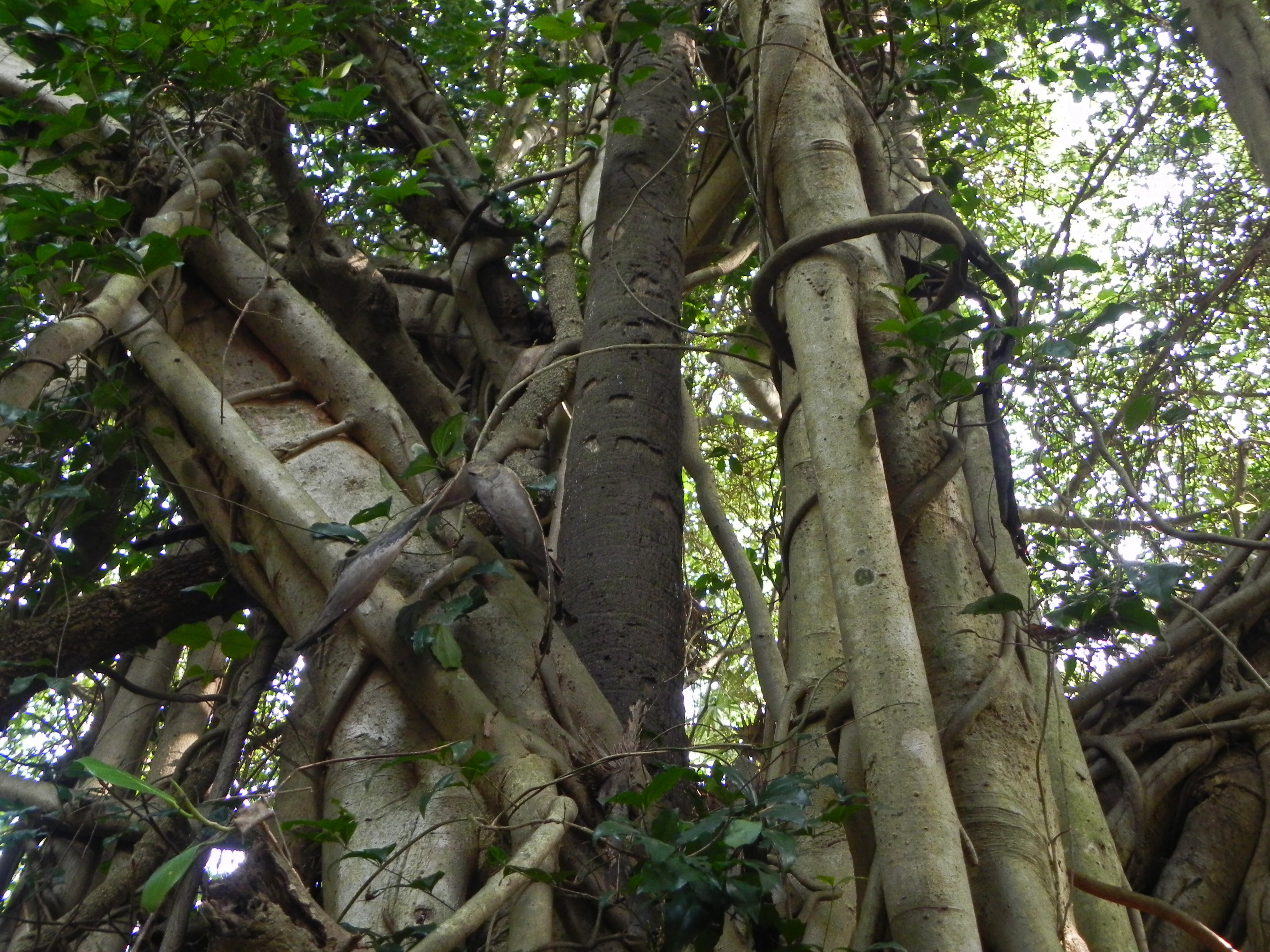
I asked Biggie why the Banyan tree had aerial roots and Johnny did not know, but one of the little girls running around told me it is so the branches can grow out further. I am thinking now that because the Banyan tree starts growing in another tree, rather than it shooting it’s roots into the tree it grows off of and potentially killing it, perhaps it has adapted to grow it’s roots down from the tree into the ground (but that is just a speculation on my part.
Johnny also told me stories about the Tamil people believing that the Banyan trees are inhabited with evil spirits, but those stories have nothing to do with sustainability so I’ll leave them out…Especially so I don’t scare anyone 🙂
Johnny’s son is building a house next to Johnny’s, which makes Johnny’s house look like a shack. I saw the inside and it looked like a house you would see in parts of California or Florida. It is a very large, solid house that has about five rooms and walls and ceilings that appear to be made from cement. The doors on the house have very intricate carvings in them, are two or three times as thick as a normal door and are made from very solid wood (which would be less sustainable because the solid wood takes much longer to grow than the softer wood of the Acacia tree). It was funny to see Johnny, who looked like he is a hippy straight out of the 60’s and then his son who is very well groomed. I am not sure what his son does, but he had just come back from Spain and brought a lot of high fashion magazines. The contrast between Johnny and his son reminded me how Paul, from the Botanical Gardens, said that it is not Auroville’s goal as a whole to be sustainable. Auroville is everything to everyone. To Johnny, it is more of a sustainable lifestyle where to his son, it seems to be a playground away from the Western world.
A world community can only exist with world communication, which means something more than extensive software facilities scattered about he globe. It means common understanding, a common tradition, common idea’s and common ideals.” ~ Robert M. Hutchins, American writer and educator
On a regular morning in Kuilapalayam you can find village women walking together, water barrels atop their heads, headed for the community water tap. Men stand close together, chatting, arguing, watching passersbys. The street is hurried and frantic, with rickshaws (and AUP graduate students riding worn scooters) dodging cows, goats, oncoming farm equipment, and large passenger buses. Young school girls, their hair in braided pigtails with ends that have been tucked back into colorful elastic bands, giggle together as they walk alongside the morning madness. There is a buzz in the air, weighted by humidity, that is reminiscent of something known yet foreign.
Morning village life demonstrates a sense of community, a detached closeness that binds together beings existing together in a small space. Community is ever-present here, in the daily rituals such as kolam drawing in the entryway of homes, as well as in the rituals surrounding death. .
However, community is slowly falling apart here, according to Balasundaram (Balu) Ponnusamy, 31, a founder of the Mohanam Cultural Centre in Sanjeevinagar village, outside of Auroville. Up until the last few decades, small Tamil communities were relatively protected from the outside and villagers relied on one another to learn basic skills and cultural traditions. “People looked up to their elders, they listened to their wisdom,” he said. “If a woman had a problem, such as domestic fight, the neighbors, hearing the quarrel, would intervene and stop by to see what was going on.” Balu told me, however, that today villagers are more likely to call the police, or perhaps just turn a blind eye. This change in behavior has been the most dramatic in the last decade, he noted.

Pondicherry Community
Balu, who grew up in the village, sees a direct correlation between economic development and the change to community life in the villages. As Western influences seep into village life, people grow more focused on their individual needs and desires. Today, he said, it is common to find villagers at home flipping between the more than 200 channels of satellite television available to them or sitting alone sending text messages to friends kilometers away. Not that globalization is all bad, he noted. Western investment and development efforts have helped to improve the education system as well as improve health standards in the communities.
However, influences from abroad have widely altered the way the villagers, especially the youth, view themselves in a global landscape. Balu added that as people begin to isolate themselves focus on their material needs, cultural traditions erode. Young people no longer look to the elders in their community for advice. Neighbors no longer take time to support one another through hard times. With the deterioration of community comes a weakening of common cultural knowledge, including the rituals and traditions that bind people together.
One could argue that this shift is the natural progression of things–teenagers rebelling and seeking freedom from their parents. Yet, Balu views the impact that globalization has on his community as more threatening. As India becomes a larger player in the world economy, he questions what will happen to the communities he knew as a child.
It is for this reason he created the Mohanam Cultural Centre, a non-profit organization devoted to inspiring creativity in village youth by teaching them traditional Tamil arts and crafts. Through this endeavor he aims to keep alive traditions and rituals that have held the local community for centuries. He also brings the children and teenagers on visits with the local elders, in an effort to share knowledge from one generation to another.

Mohanam Children
Yet, as a Western student considering work in development, I am reminded to consider what influences I bring to communities I want to help. Does my very individualistic, market-driven take on life help or hinder the people with whom I work? Can I instead learn something important about human connectedness and interdependence? And if we are going in the direction of a global community, where do we find balance between improving ourselves and looking out for others?
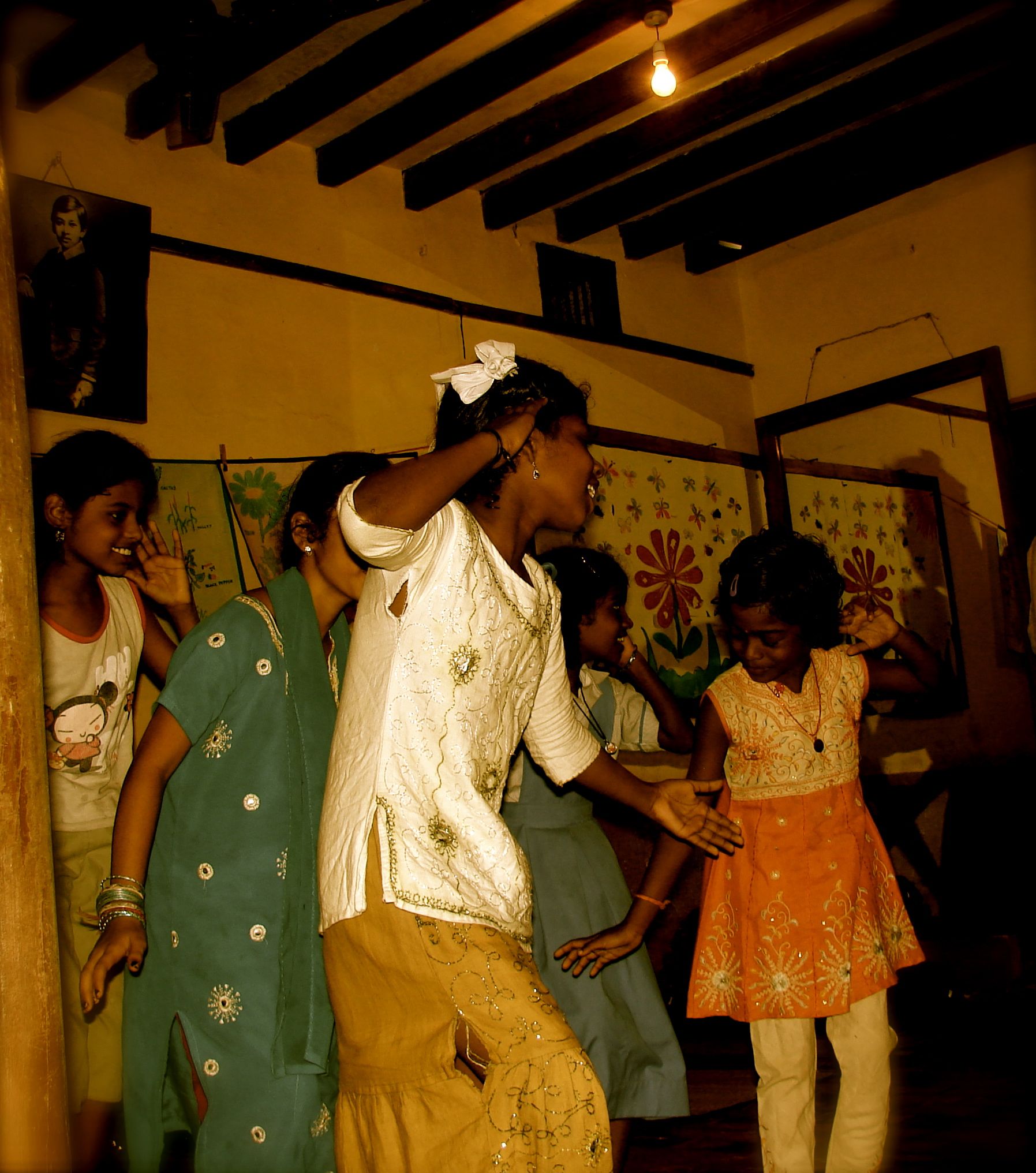
Children Dancing at the Mohanam Centre
“Learning is the first step in making positive changes within yourself. Other factors are conviction, determination, action and effort. Learning and education help develop conviction about the need to change and increase your commitment. Conviction then develops into determination. Next, strong determination leads to action: a sustained effort to implement the changes. This final factor of effort is critical.” ~ Dalai Lama
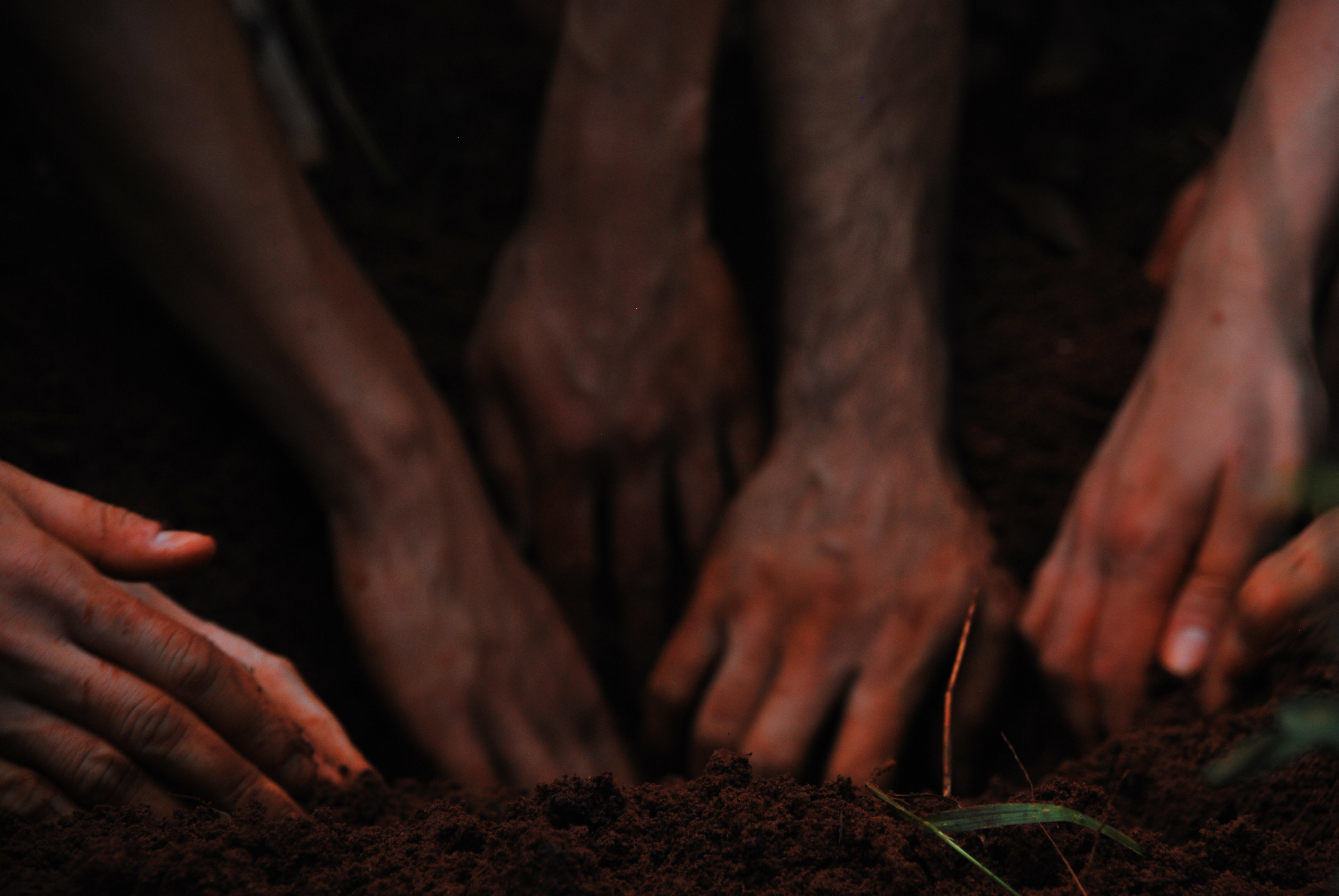
Simply by flying Paris –> Chennai, blissfully giddy and naively wide-smiling, we were each individually in the process of terrorizing the planet with a nearly two ton carbon emission. Two TONS. Not to get all India on you, but that’s roughly two elephants. EACH. And that was only flying one way. As we collectively sat today among animals and trees, filling out our carbon footprint calculators for our time spent in Auroville, this realization and several more were happy to smack us in our faces. I got all excited, checking off boxes with zeroes for my vegan diet and Auroville bike riding mastery which was seemingly causing my number to dwindle. What I realized is that that’s just the problem- I, and perhaps “we”, are too quick to laud our small steps toward making a difference and don’t always keep the big picture in mind. Today, with my hands in a whole lot of cow excrement and red clay warpaint on my face, everything came full circle.
Katherine, an AUPer of previous years but now more appropriately titled Aurovillian Carbon Reduction Queen, came on this same trip last year. She ended up not leaving. She took on this project with Martanda, who is the lucky and happy “inheritor”* of the land they are reforesting on. There are innumerable reforestation projects taking place in Auroville, and for good reason. This place began as a massive expanse of red earth (ironically, or not, sounding very much like mars) which was deemed impossible to cultivate and dead. Now it exists as a lush green jungle of various types of trees and lots of dedication from stewards like Martanda. The green belt, one of the concentric circles that makes up the space-ageish layout of Auroville, consists primarily of reforestation projects and communities which engage with them. Hence, it is a great place to support these initiatives while also carbon offsetting by planting trees- tropical deciduous evergreen trees in particular.
To offset our flight one way, we planted five mahogany trees today. Whether or not this is enough I’m not entirely sure, and that’s one of the problems with carbon offsetting that Katherine explained- Are we just putting a band-aid on a much larger problem? Are we taking part in these offsetting tactics as a means for pretending we’re not doing any harm? There are, of course, a million and five ways you can look at this issue. Primarily, I was just happy to get dirty and help something grow. Being in close contact with the earth and helping to be part of something larger, like contributing positively to the environment, is not only good for bragging rights but it’s also a huge part of the Auroville mindset. I asked Martanda if he had grown up with an interest in forestry or if it simply developed with him having to take care of this massive playground of plant life. He explained that it was serendipitous (like many things in Auroville ostensibly are), that as a child he always had a very close relationship with the land and he rediscovered that and how truly important it was to him once he was put in a position of caring for something so delicate.
This consciousness of the delicate and all-powerful quality of the earth, of the environment, is something that the Mother (grand initiator of all things Auroville) recognized and theorized about. She named several trees and flowers, imbuing them with human qualities and characteristics of encouragement. I heard from Martanda about things like “Courage” and “Certitude” as pseudonyms for trees, and how she came up with similar deviations for flowers based on their vibrations. Even in writing it, it certainly sounds crazy but after being in direct contact with something alive, with it’s roots and arms, I couldn’t deny that maybe I understood what he meant. We had dug, churned, composted, planted and finally danced our way into a unity with these little saplings. I say danced, because in order to culminate our project we had to devise some great ritual to signify the birth of a new tree in the forest- my group painted everyone’s faces and started a conga line. Other groups sang in high-pitched Oms or started an eyes-closed hand holding circle where we all did the Wave. Another group encourage everyone in their hand-holding circle to finish the sentence “If I were a tree…”, which rounded out with a great variety of things from “I would be taller” to “I would house fairies”.
We then schlepped our tools and tired limbs back for some lemongrass tea and conversation. I think we all felt accomplished and maybe even a little bit taken over by that “energy” we were in touch with (whether it exists or not is arbitrary, we were proud of our new tree children and our dance moves). Above all of these things, my favorite quote from the day was this:
“Trees never die. They would live forever, it’s always something else that kills them. Disease, insects or humans take their lives but otherwise they would exist forever.”
*Lest we forget, nothing belongs to anyone in Auroville, so nothing can truly be bought or owned or inherited.
The Auroville Bamboo Research Centre
Today the centre’s employees got to work burning and smoking bamboo. This might seem bizarre, since bamboo is the centre’s prime area of research and product development. Actually, the bamboo is set on a low-burn and smoked which gives it a rich golden color and protects it from insects. The men placed the bamboo sticks on bricks about a foot off the ground and lit a fire underneath. Women raked leaves into large baskets and carried them over to be used as fire starters. This continued in rhythm; 30 minutes later the bamboo pile was deserted, while smoke wafted up between air pockets. The smoking will take place over a duration of two days.
In the meantime, everyone quickly got back to other tasks, while the smoke remained in the backdrop. Many of the young girls began sanding and shaping bamboo jewelry. The older women talked and laughed together while polishing bamboo frames. The men found a pile of bamboo stalks and used quick strokes with machetes to peel the outer layer of the bamboo.
And so the work continues.
This slideshow is meant to offer an inside peak at the Bamboo Research Centre’s buildings and grounds and the people, products and “pets” found within.
The transformation begins.


Saris are wrapped, makeup is applied, jewelry is put on, and wigs are donned.

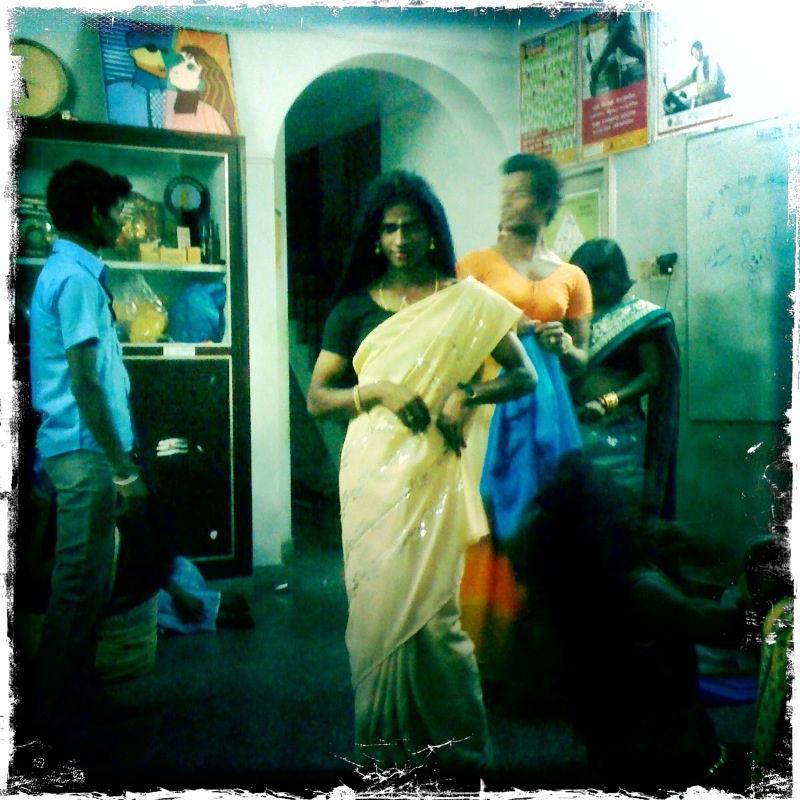
The train leaves in 2 hours from Pondicherry towards the village of Villupuram. There awaits a new sister- a new hijra– India’s third gender.
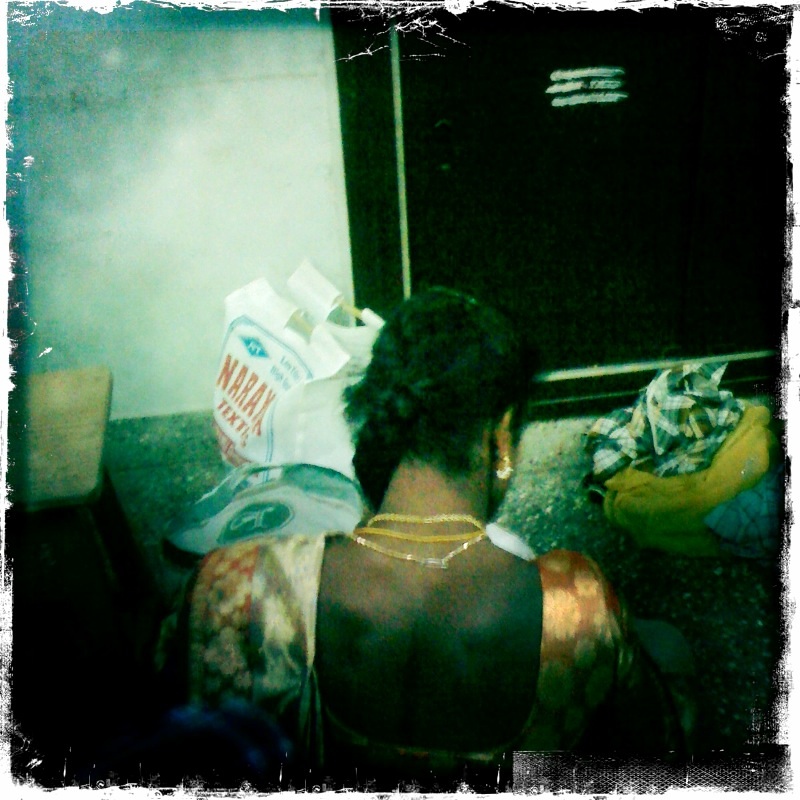

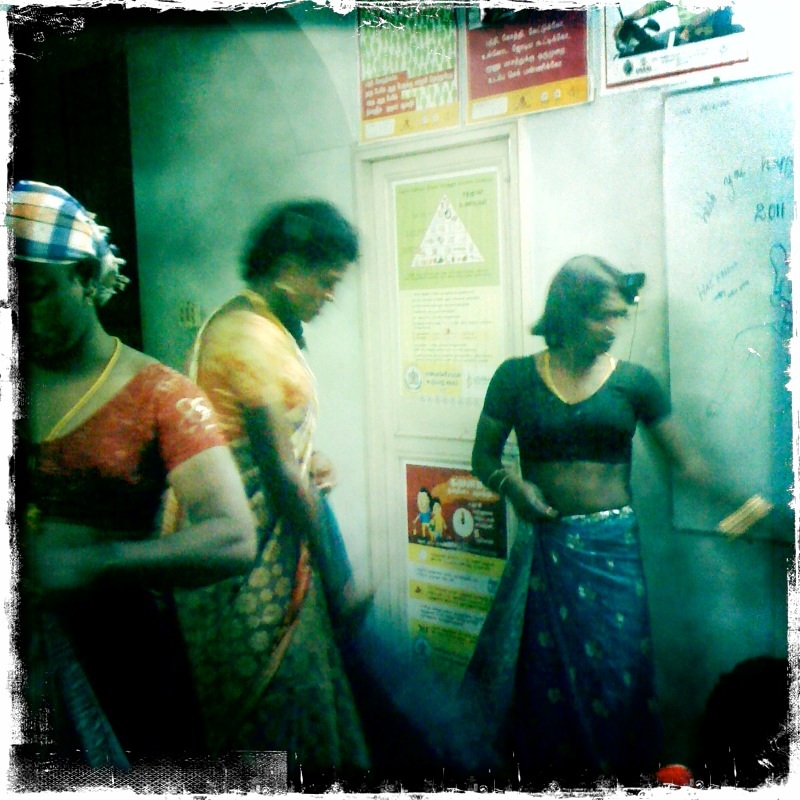
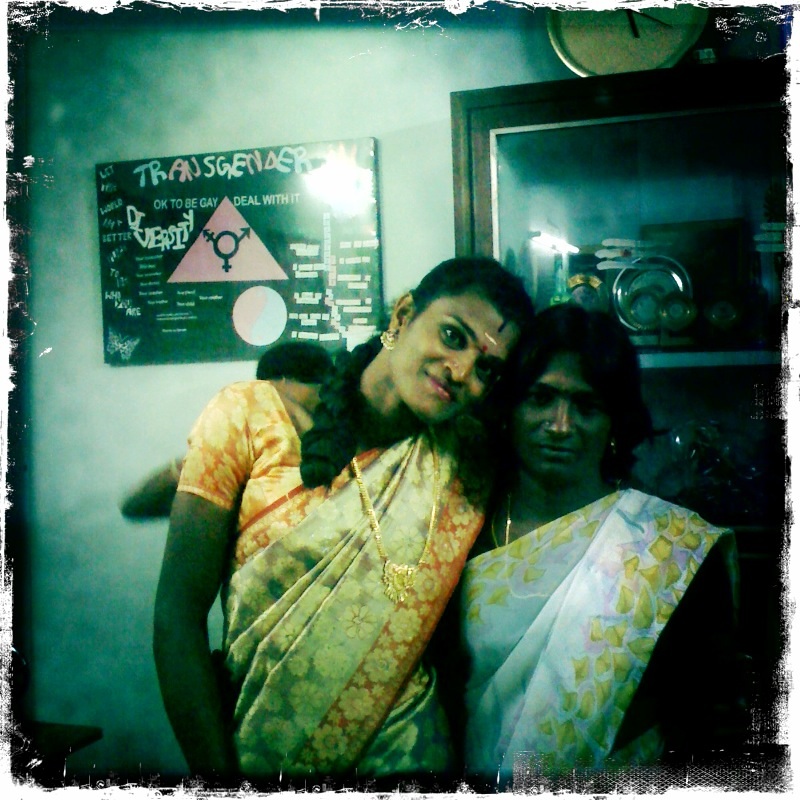
Hijras are also called aravanis in this region of India, for the epic Sanskrit tale of the Mahabharata, in which the character Aravan, sacrifices himself to stop a war. His last wish is to be married, and as no woman would willfully marry a man who is doomed to die, the god Krishna changes himself into a woman, granting Aravan’s wish before his certain death.
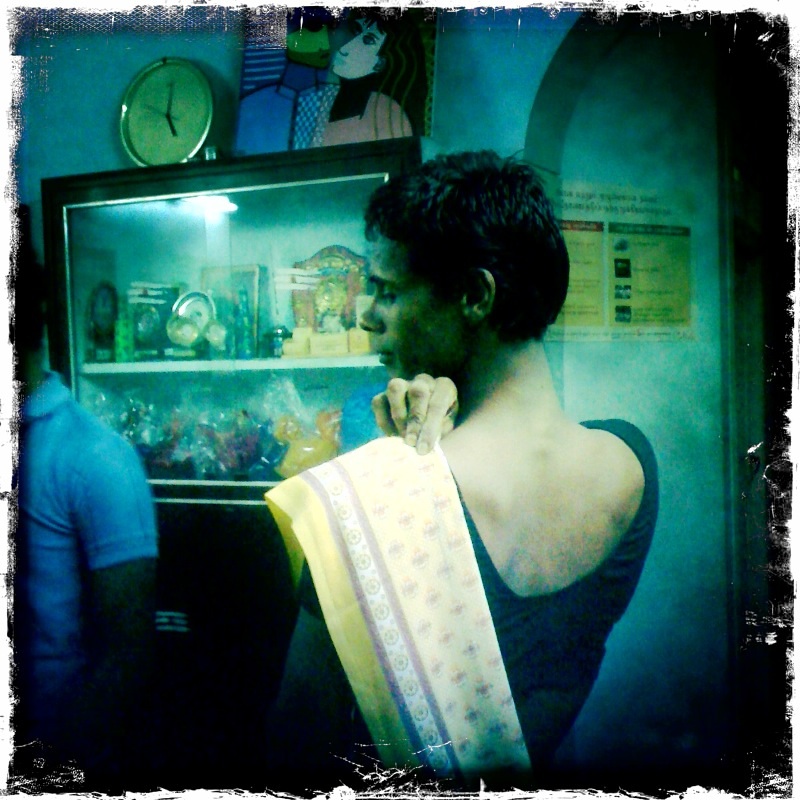

This newly transformed aravani has undergone surgery to change her sexual organs from male to female, and has waited and recovered indoors. For forty days she has hidden and avoided being seen by any man, and tonight she will be born in a ceremony of song, dance, food, and drink. She will be seen as a sort of mystic, as many hijras are. They largely remain, however, poor, outcast members of society.
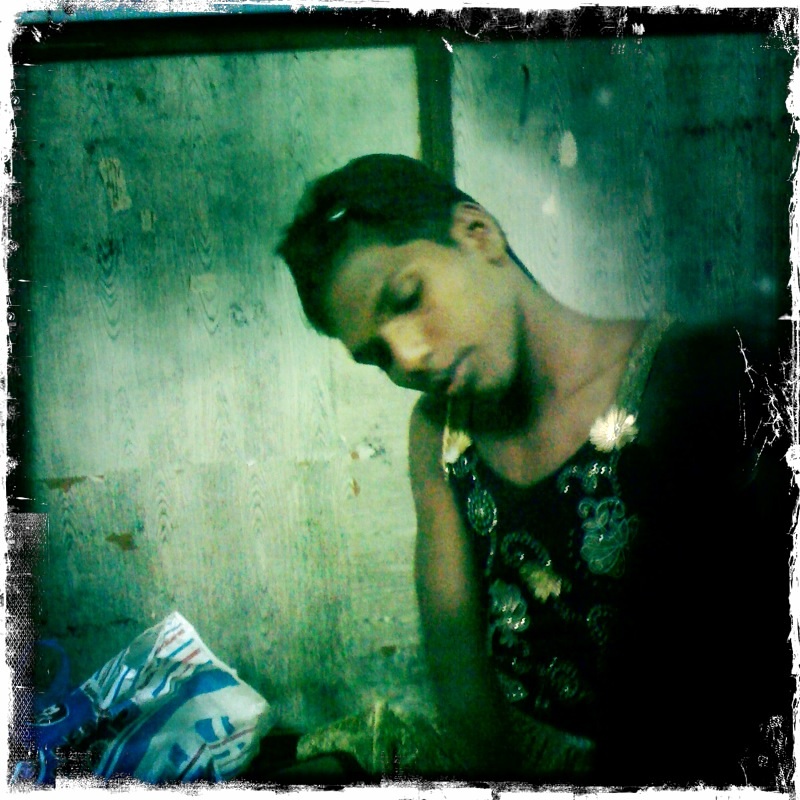

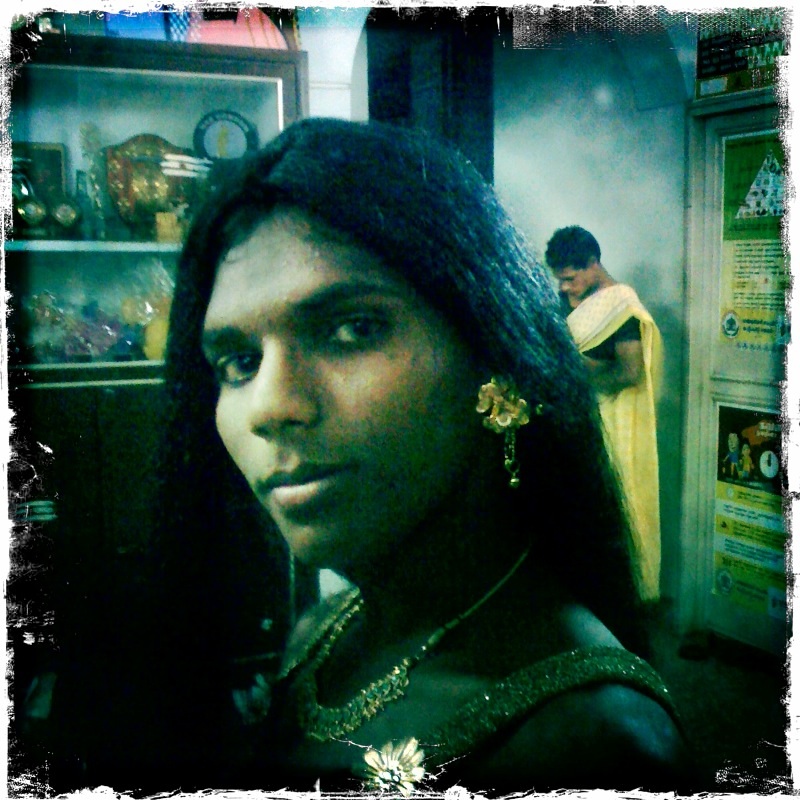
This also serves as an important opportunity for these particular aravanis to increase awareness and visibility. They are all members of a community organization called Sahodaran Society, a sexual health clinic and community center for the LGBT population of Pondicherry. It is the only safe space and meeting place for this portion of the population in the area.
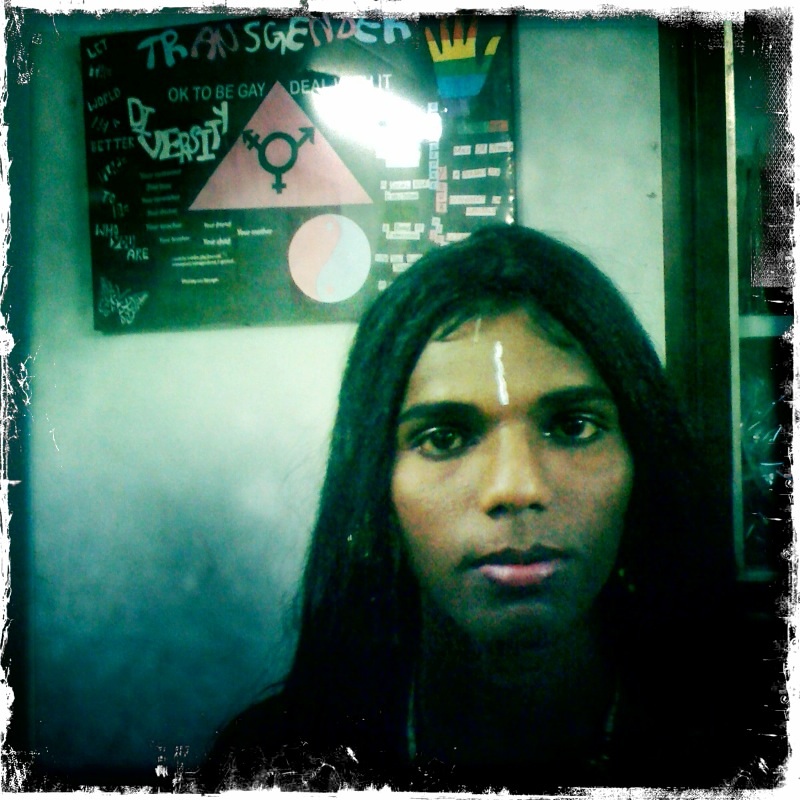
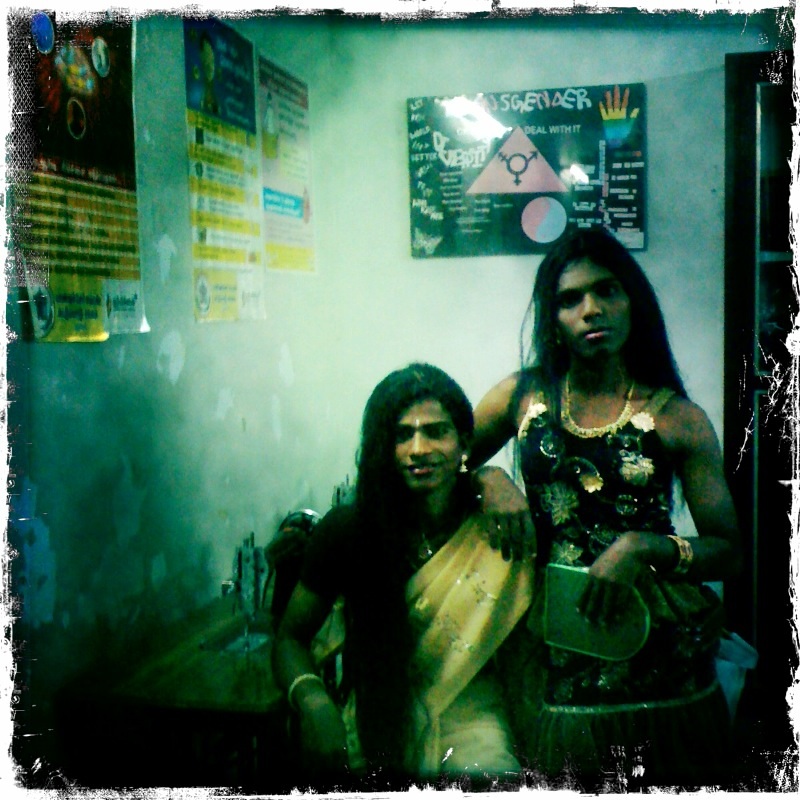
Tonight, in celebration of the birth of a new woman, strength and courage bind these individuals together towards the hope of a future of understanding, tolerance, and acceptance.
-David
While walking down the street in Pondicherry it is important to be alert. With the motorcycles, cars, cows, and goats coming from every possible direction, one second of daydreaming may be terminal. The real reason I’m so alert on the street, however, is because of the smells, sounds, and colors of India. The constant honking, the sizzle of a stove, the waft of curry and spices, the steaming of idlis (soft rice cakes), and the crinkle of newspaper, which is the main thing used to wrap food on the street, are examples of the plethora of sounds and smells on the streets of Pondicherry.
Some of the best food in India is on the street. Street food is made by locals, who have been making a certain dish their entire lives, no doubt passed down through several generations. This food is also made with locals in mind—it is not dumbed down for sensitive western palates. Street food is also affordable for everybody; it’s nice to know that everyone in India can have a nice meal!
Many people find street food scary (stomach-wise). It is true they haven’t scraped the grime off the stove in several years. Oh, and there’s a mini garbage dump right by the kitchen. I’m not convincing you, am I? But these are ancient recipes, perfected on the side of the road to make the perfect combination of spices and flavors, and if you get sick . . . oh well, it is damn worth it. This food may not be served in the comfort of a restaurant, but this is some of the best food I’ve had in India, and that’s saying a lot.
Ok, I’m off to get some street chai.
Aurelie and I would like to share with you some of the children we have grown to know over the last 2 weeks at SALT Children’s Home in Tamil Nadu… These children were found living on the street with no adult support, food or education. At SALT they are given a safe home and a chance to live and play as children. Check back at: http://www.SALTchildrenshome.org (the site will be up this week)
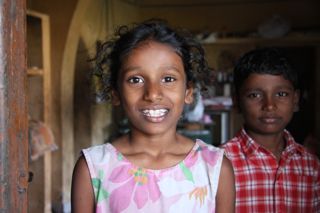
Nishanti and Saran
This is Nishanti (9) but we know her better as ‘Roje’ (Rose) because of her beautiful nature and spirit. She is one of the only girls at the SALT Children’s Home and is living here with her brother Saran (7). Both children came to the live at SALT when their father could no longer look after both of them by himself after they lost their mother to Tuberculosis. The children enjoy playing in the tent they built in their backyard and sharing afternoon cookies.

Venugopal
Venugopal (13) has been living at SALT for the past four years after his mother fell sick to HIV. As one of the older children at SALT, he keeps a watchful eye over the rest of the children, making sure the cars stop when they cross the road after school. Venugapopal loves to learn and he can often be seen bright-eyed and smiling.

Prakesh

The youngest of the SALT Children’s Home is Prakesh (6) but he is by no means the smallest, with great charisma and full of energy, he stands out in a crowd. Prakesh came to SALT when he was found sleeping alone on the streets and begging for food and money. Although young he is very talented and loves to draw pictures.
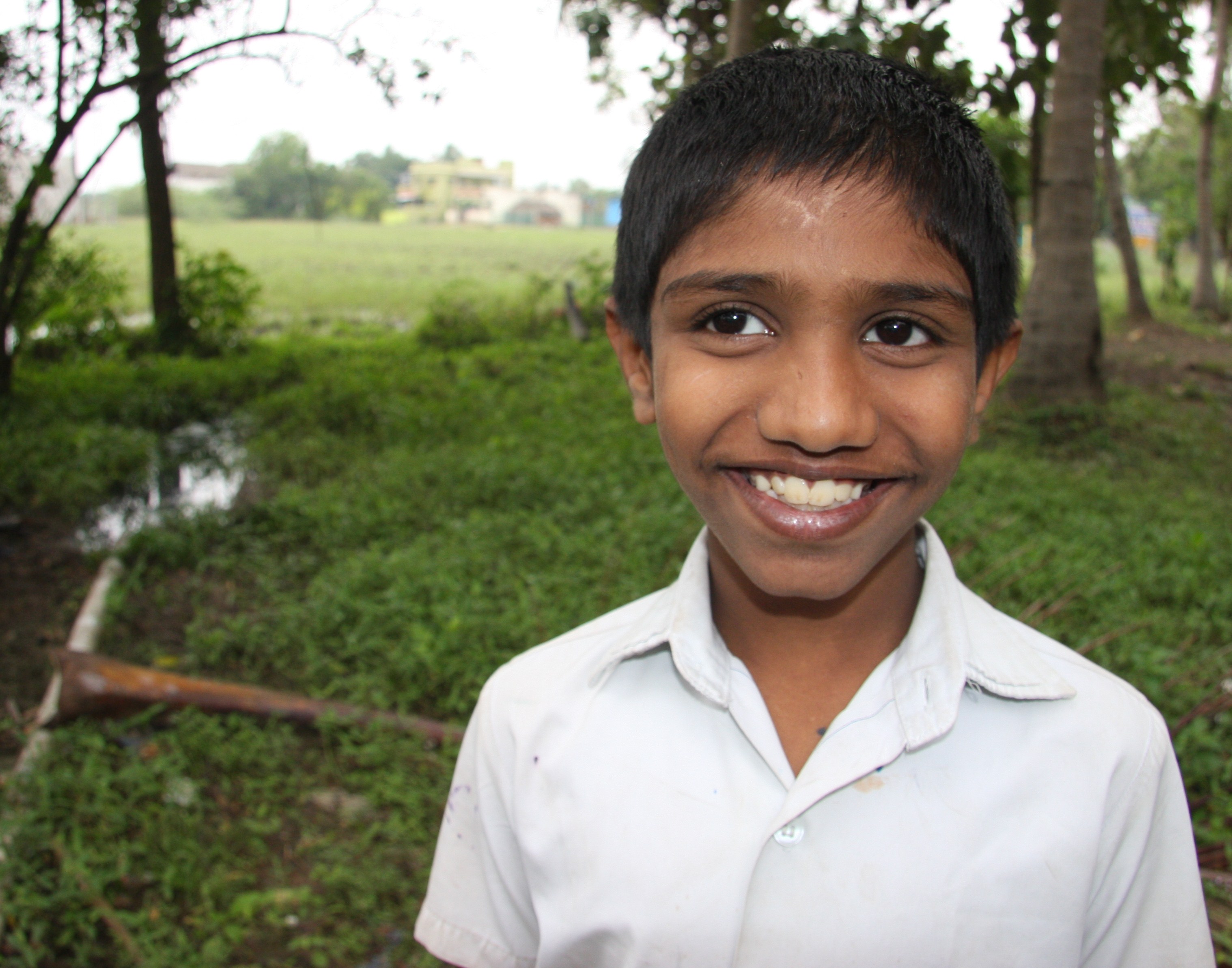
Selvam
The newest member to SALT is Selvam (8) who came to the home when his mother who is living alone and working as a servant could no longer provide for him. Selvam loves to get involved and can be usually found spending time with Anitha one of SALT’s child guardians and English teachers.
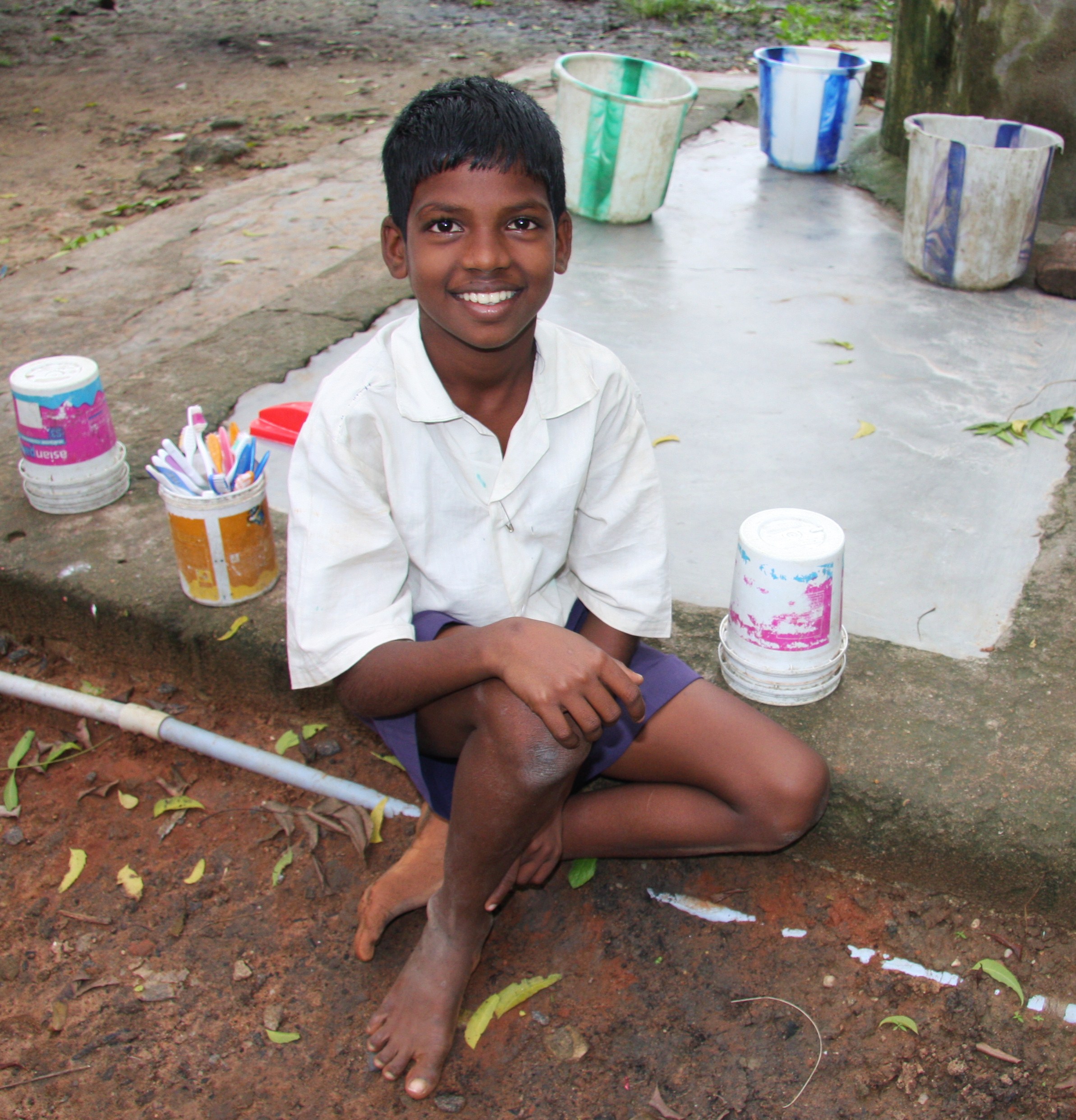
Dinesh
Dinesh (9) was rescued from his life working on the streets after the death of both his parents. He spent his days as a watchdog for businesses conducting illegal activities and when he came to SALT he was dangerously undernourished and emaciated. Now, Dinesh loves doing weekly Karate lessons and has grown both physically and mentally stronger since his time as a street child.
Thank you for taking the time to read all of these children’s stories…
Before I started this project I was so concerned with what I thought the children would be feeling as a result of the unimaginable hardships they have faced, neglected and abandoned and living with no one to love and care for them. But working with SALT I can see that these children are full of life, love and kindness.
With no money or support from the government, SALT scrapes by every month with just enough money for food and the capacity to send the children to school. In April this year they face eviction from their home, the home that has housed 35 children for the last nine years. SALT’s vision for a better life for the children is something Aurelie and I are hoping to make a reality…
Nevertheless, amongst all the seriousness, when we are spending time with the children we can’t help but laugh, their smiles and happiness are rather contagious!
Sybilla
 AUP Sustainable Development Practicum in Auroville, India