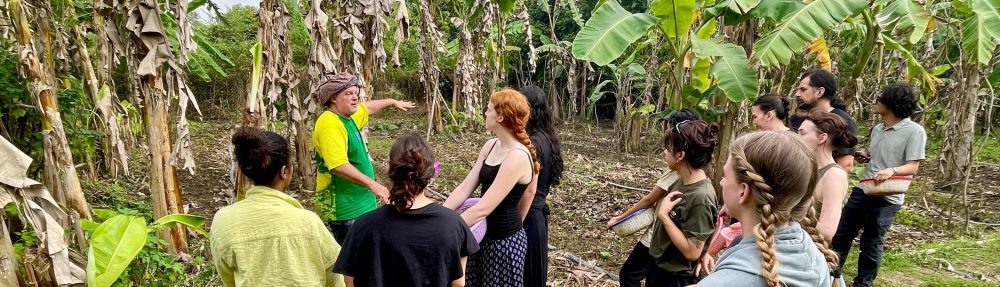
AVAG: Weaving Dreams of Empowerment and Resilience

By Kathryn Galloway

In the heart of Auroville, a beacon of participatory development shines bright, driven by a simple yet profound mantra: empower communities to shape their destinies. The Auroville Village Action Group (AVAG), since its modest inception in 1983, has blossomed into a powerhouse of collaborative efforts, breathing life into the dreams of marginalized groups and striving for a harmonious, secure, and resilient society.

At the core of AVAG’s mission is the belief in inclusive development. Their stakeholders form a diverse mix, including women, men, youth, school children, teachers, farmers, and both traditional and elected leaders. Yet, it is the most marginalized—the single women, the elderly, dalits, farmers, artisans, and small business owners—who occupy the center stage of AVAG’s unwavering commitment.

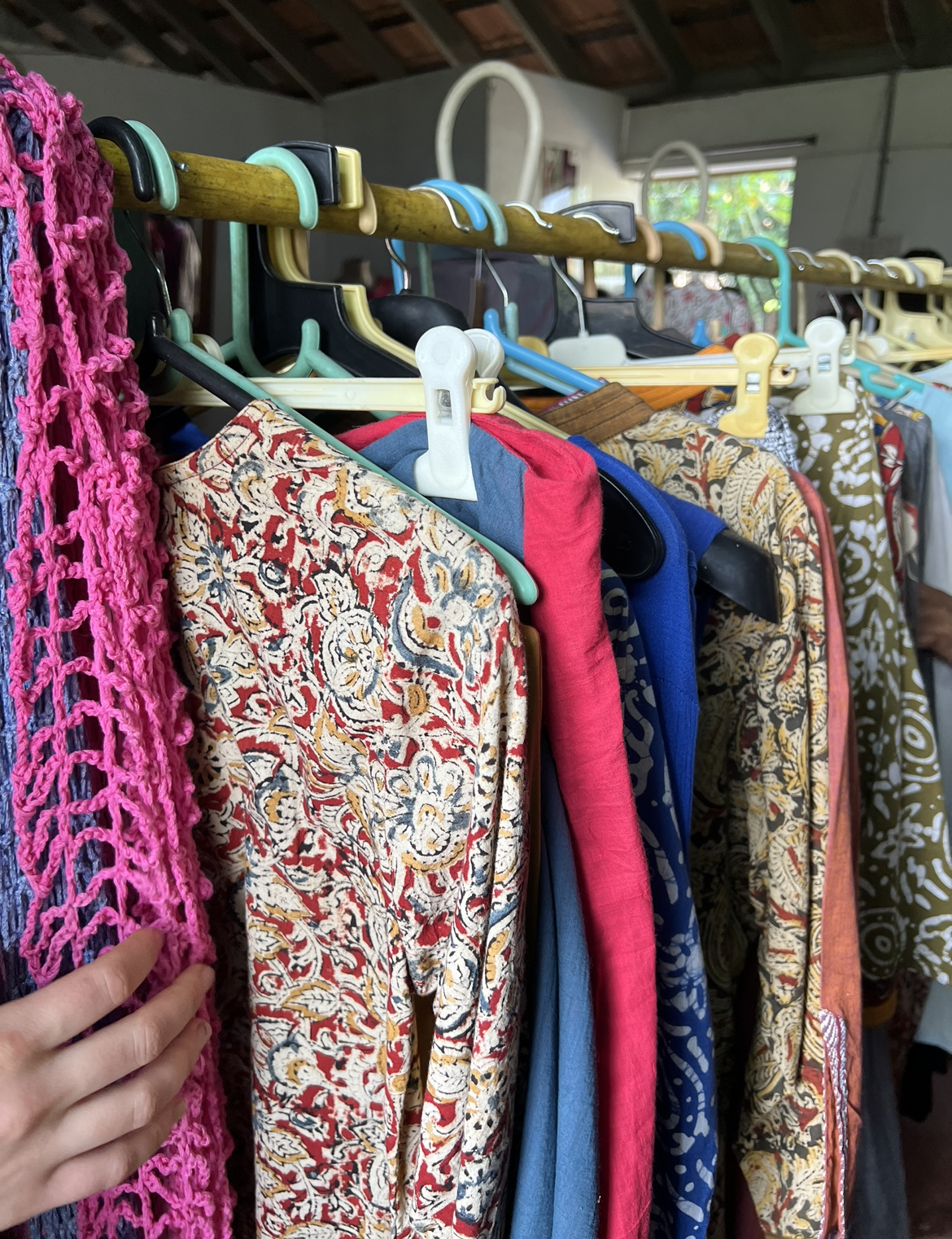
To begin our visit, Makizh Selvam, the office manager, welcomed us into the world of AVAL—a brand crafted by women for the benefit of women. AVAL, meaning ‘she’ or ‘her’ in Tamil, is a social enterprise born from the nurturing hands of AVAG that seeks to uplift the aspirations of marginalized women through skill development in tailoring and crocheting. Every handcrafted product emanates love and devotion, a tangible symbol of self-reliance and self-empowerment. AVAL stands as a testament to the convergence of rural women and urban designers, creating products that embody beauty both inside and out. In a span of 7-8 years, AVAL has become a sanctuary where conscious consumers find more than just products; they find a connection to a cause.

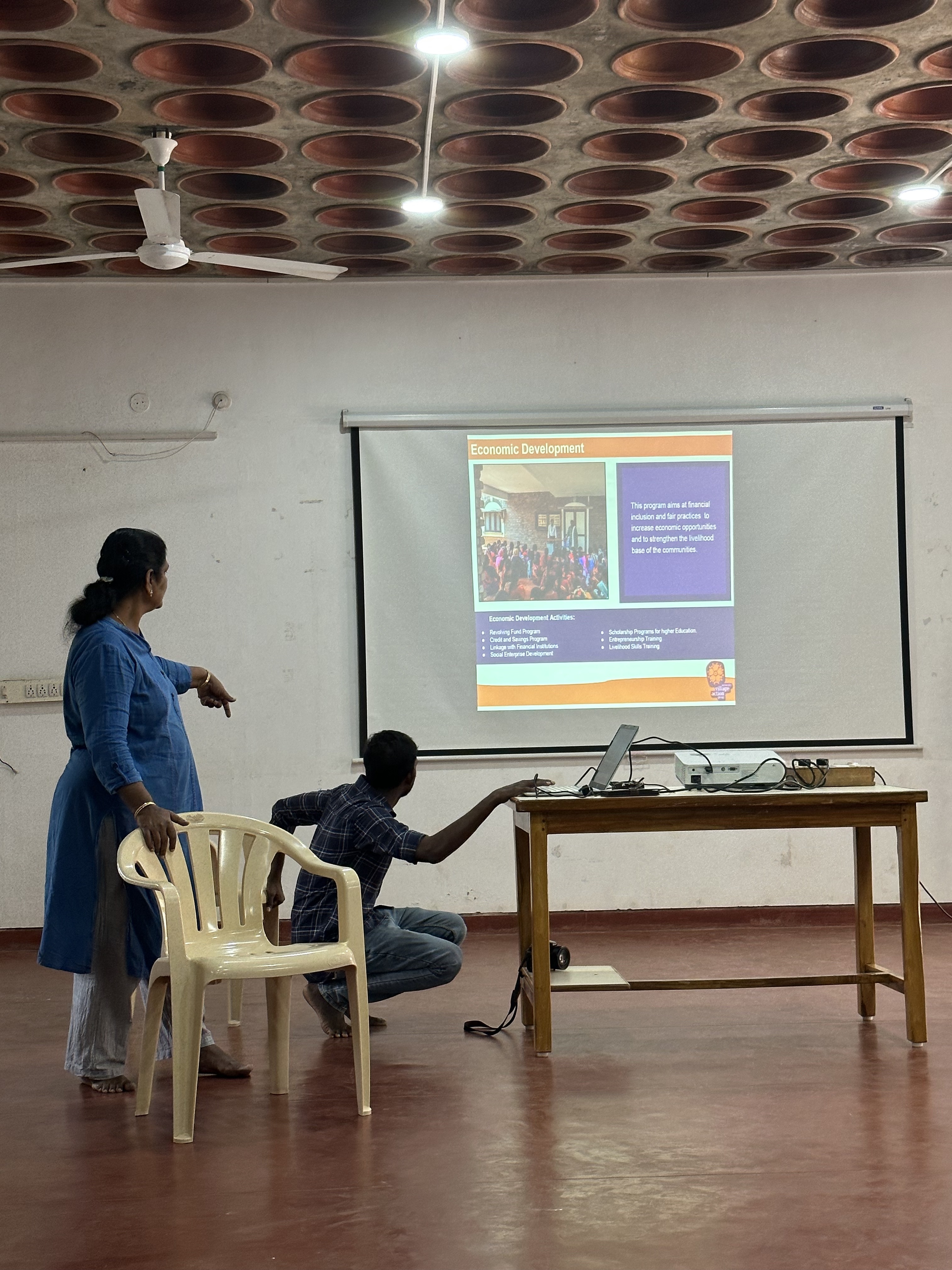
After we perused the racks of the AVAL shop, Anbu Sironmani, AVAG’s Director, shared more information on the organization’s key initiatives. Community development, capacity building, economic growth, and psychosocial support form the pillars of their holistic approach. From personality development to agriculture, AVAG’s initiatives encompass a spectrum as diverse as the communities they serve. Particularly noteworthy is their emphasis on participatory economic growth, ensuring that the development of marginalized groups is rooted in genuine needs and inclusive practices.

AVAG doesn’t just offer support; it nurtures resilience. The psychosocial support they provide is a lifeline, weaving a safety net of mental and emotional well-being for individuals facing stress and trauma. In AVAG’s world, empowerment is not just a concept; it’s a tangible reality carved out of genuine understanding and collaborative effort.

If Auroville is a tapestry, AVAG and AVAL stand as vibrant threads, weaving dreams of empowerment, resilience, and a community where every voice is not just heard but celebrated. They are crafting a narrative of inclusivity that resonates far beyond the borders of Auroville—a testament to the transformative power of community-led development.

Electric Mobility with Kinisi

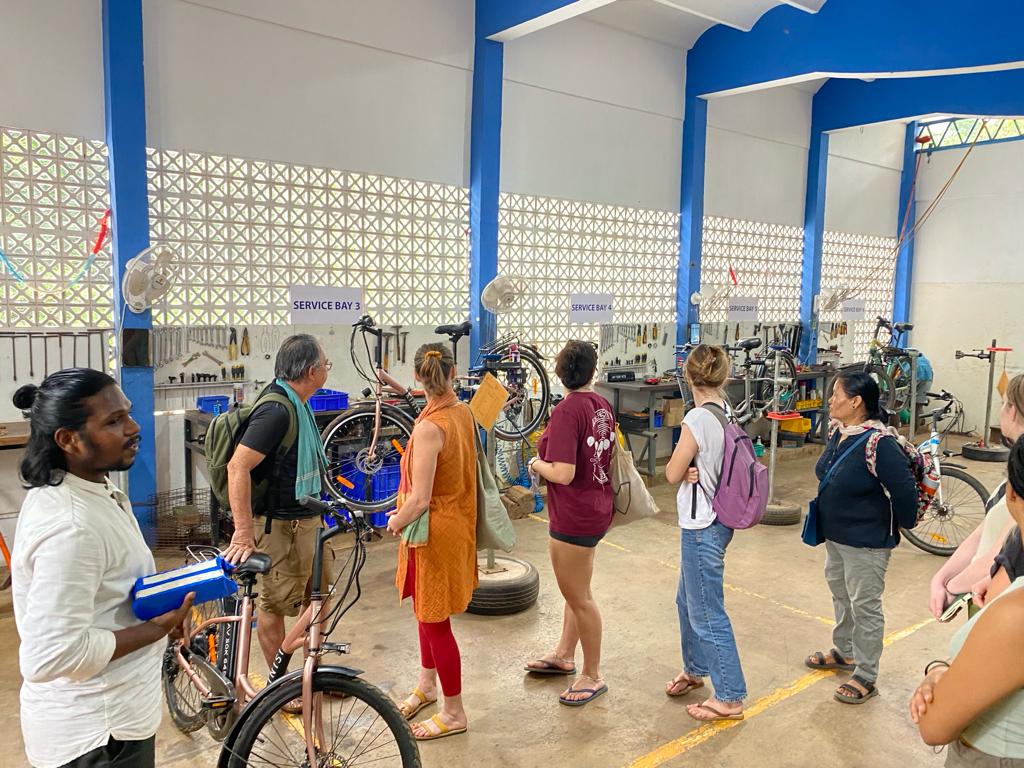
A lovely and quaint white, yellow, and blue building sits amidst the bustle of the Center for Science Research. Here you can find a garage, workshop, and co-working space belonging to Kinisi. This organization works around supplying Aurovillians, their guests, and tourists with electrical cycles in a move to shift the heavy reliance on diesel. Their newest path of expansion has been targeted towards the thousand workers that commute to and from Auroville  Not only reducing people’s carbon footprint, the initiative is helping save money as well. The average litter of diesel costs 100 rupees. In contrast with their subscription program for a monthly fee of 1,000 rupees including any repairs, maintenance, and modifications for ease of use, this saves commuters a hefty sum. (When they say, repairs and maintenance, they mean it! On my way around Auroville, my Kinisi bike chain popped off. I parked it, and after getting in contact with them, I went off to complete my errands. When I returned it was fixed and left right where I had left it!)

They estimate that within Auroville, they have a constant 350 subscriptions. All the technical work that goes into the program happens in the workshop out back where they house a Research and Development department, a maintenance department, and a storage space for old batteries. One of the biggest critiques of electronic travel is the problem with pollution and waste generated by batteries. Batteries have a complicated disposal process due to the components and acids in their makeup that can cause dangerous situations if not managed properly. However, Kinisi has put forward an initiative to repurpose these batteries for solar panel energy collection. In our short tour, our guide explained to us how their batteries are made of 20 to 30 cells. The moment a single cell has lived out its lifetime, the battery is unusable. Thus, they collect these in hopes of making use of the rest of the cells or finding a way to repurpose them or dispose of them properly after the fact.

            Located upstairs in a building behind their workshop, you’ll find their unique co-working space. With strong broadband Wi-Fi, coffee, meeting spaces, and places to take work calls, this new initiative has started to take off quickly. With the many different types of visitors that enter Auroville, the co-working space is an important tool. Especially because in my limited experience here, wi-fi and a quiet place to work are two things that are rarely found together. Thus, this dynamic and quickly improving organization is one to keep your eye on, whether for finding a place to work or finding a quick and easy way to zoom around the areas of Auroville. But move quick! The e-bikes are in high demand!

By: Alexandra Shao

Auroville Village Action Group: Bridging the Gap

by Angelina Bouchard

The Auroville Village Action Group is an organization that works with local villages to develop programs that benefit the members of rural communities, focusing especially on the marginalized. As the first organization visited during the practicum, we were all eager to learn about the impact of AVAG’s work. Upon arrival, we were greeted with a brief tour of a workshop, where a group of women crocheted, sewed, and trimmed fabrics. Next door, a small boutique displayed the finished goods. There, I noticed some products that are also available for purchase at the Visitor’s Center. Nearly everyone in our group walked out of the shop with a new shirt, bag, pouch, or pair of pants. Some even adopted a new animal, albeit a crocheted one.

We met Anbu, who currently runs the NGO. Founded in 1983, the Auroville Village Action Group is one of the oldest organizations in the area, and their mission continues even after the founder, Bhavana, passed away in 2011. In societies that place men in superior positions to women, inequality is so ingrained that it becomes normalized and internalized. As explained by Anbu, AVAG’s efforts to combat social injustice result in initiatives such as the Economic Development Program, which aims to reduce poverty by increasing financial opportunities within these communities. They provide women with profitable skills training and then employ them at AVAL, their own fashion brand. Working women gain confidence in being financially supportive members of their households, families, and communities. Strategies extend beyond economic security and delve into emotional and physical wellbeing as well. They offer psychosocial services, which have decreased the suicide rate among women by holding counseling sessions and collaborating with self-help groups. Additionally, the organization’s emphasis on community development encourages people of all genders, castes, and religions to find solutions to common problems and build a better bioregion for all to succeed.

AVAG is a central pillar that bridges the gap between Auroville and surrounding villages. They not only advocate for progress but actively create change.

Sistri Village

IMG_20191220_085503Image Credit: Stella Sagini

Sistri Village began in 2013, as an orphanage for mentally and physically challenged children. The Founder Karthik, had difficulties in the beginning getting the children admitted in Indian public schools. The ones who did were often ignored by both teachers and students therefore remained idle for days on end. The teachers lacked the patience or training for special education to give these children and the other children were often afraid of them.

Karthik didn’t like that his children were idle, he said that it created bad energy and aggressive behavior within the child.

Indian culture has a great believe in re-encartnation, a disability is a re-birth of a person cursed by the gods and therefore the family shuns or abandons these children. Some of these children get locked up by their families to hid them from the society.

He sought out vocational training, certificate courses and when they grew in adulthood, he worked with local businesses to get job opportunities for them. He faced many challenges one been local businesses in need of labor, would make up lame excuses to avoid hiring Sistri Village members. He then overcame this barrier by initially placing his students in missionary based institutions and slowly as the community began to see a transformation, they slowly accepted to hire some of his students.

IMG_20191220_085149Image Credit: Stella Sagini

However, a majority of his students work and live at Sistri village. He began vegetable gardening as a form of Green Therapy for his members. He believes that nature heals and restores balance to mental retardation. Sistri Village members have continually shown improvement in their mental and physical state. Medical volunteers come over to offer free medical treatment and physiotherapy sessions for the members. Mental and Psychical challenges are very different from Celbral Parlsey, Autism, and Down Syndrome require accurate diagnosis to begin a succeful therapy treatment.

IMG_20191220_090031Image Credit: Stella Sagini

Sistri Village members earn a living from their work on the farm, by selling fruits and vegetables. They also rear a lot animals for sustenance use and for sale. Sistri members all have daily chores but work out of their own volition, work is never forced on any member. Keeping busy through work is also a form of therapy that creates a meaningful routine that members can look forward to. Sistri members are contributing to the society instead of a hand out thus significantly increasing self-esteem. The Capacity Building efforts of Sistri Village have enabled its members to make a productive contribution to the society.

IMG_20191220_090359Image Credit: Stella Sagini

In the past, they received donations from the government and organisations like Rotary International Club. They have managed to donate desk, chairs and help build part of the new administration block. However, for day to day running of the farm they rely on a mix of proceeds from farm sales and support from the Tamil Nadu government.

IMG_20191220_090210Image Credit: Stella Sagini

Living a meaningful life that’s the mission of Sistri village and the stigma of disability has slowly been lifted within the community. Families are now more accepting and engaging with mentally and physically challenged members of their community.

Eternal Divers Presentation


cropped-logo-eternal.jpg Eternal Divers

https://eternaldivers.com/

Eternal Divers is based just outside of the Auroville on the Bay of Bengal. The first thing we noticed as we approached the location is the beauty of the house, Eternity. Situated on the beach and surrounded by bush and sand, Eternity features a large, open patio that connects to the home and office of Jonas and Tracy of Eternal Drivers. Zeus, their grand Rottweiler greeted us with kisses and just a little bit of fur and slobber. The dog lovers amongst us were thrilled to meet him but we get situated quickly and open our hearts and ears to listen to “Joni” explain the mission of Eternal Divers and the issues that his team, Tracy and he are passionate about.

When Eternal divers first began, it was just another diving company and they wondered how to set themselves apart and make better use of their skills, talents and location. How to be a sustainable business and spread environmental concern and solutions is paramount for them. Yoni discussed something that caught his attention called “ghost nets” which are extremely concerning. A ghost net is a fishing net that has (most likely) become caught on something which makes it impossible for a fisherman to free it or has escaped the control of the fisherman and can’t be reeled back on to the boat. It is left behind, unattended and unchecked forever as it collects, catches and kills without consideration. In addition to the ghost nets, sewage, overfishing and erosion are all concerns for Joni and Tracy and their team. Joni told us that there is a visible line of sewage and ocean water and to help us understand just how detrimental ghost nets can be, he explained that ghost nets cause about 20, 000 US dollars loss per year. Nearby, a ghost net was discovered that had over 30 sharks caught in it and had been floating for what an estimated three years. Of course, nothing in a ghost net can be salvaged for food. It is just a true waste of resources.

Eternal Divers was enraged at the finding and asked us to consider what a tragedy this is when we reflect on the beauty and majesty of all the sea has to offer us. The pointless loss of life and the pollution caused by humans is unacceptable. Naturally, Eternal Divers found a way to expand the teaching and education of scuba and diving to the fisherman and villagers themselves to help them understand how precious their resources were and how carelessness could hurt their livelihood more than they had ever comprehend before.

We learned from them that what they are most proud of and would really like to continue, improve upon and increase the reach of is the education of the fisherman and villagers. Too many humans take the sea and all she has to offer for granted. What lies below the surface… or more importantly what is being harmed and killed off below the surface is unknown until we dive down and see for ourselves. All the incredible colorful life, both flora and fauna, are unseen, under-appreciated and unprotected. It is only through the education and the collaboration with locals that behavior change can occur. Seeing the deep for oneself may be the only way for many to understand what is at risk.

Within global communications, behavior change is the most challenging of all the goals. Behavior change, as in this instance, little to no money can be gained through the education of the locals. In fact, Eternal Divers may find that time and money are lost in their efforts; however, they feel that what India and the earth may gain is far more important if the sea and its life can be preserved through this tactic. The benefits of behavior change are often long-term rewards that seem less important in the moment. For example, a fisherman may be more concerned with how much money he can earn this week, as opposed to the concept that he may not be able to earn any money in a few years if the fish are either overfished or die off because of pollution.

Eternal Divers needs funding to help support the education of the locals, a strategic creative plan and social media revamping/attention, as well as social media viral campaign. I felt very strongly about joining their team and helping. The ocean and all the life in it and that it gives is incredibly important to me. Choosing my NGO was tough when I had to compare Eternal Divers to Marc’s Café, where I had so many ideas from the start, but I’ve loved hearing all about it from my classmate, Beatrice.


IMG_0856.jpg

Mason listens to the Eternal Divers presentation.

The first field note…

16.12.17 Rubini & the Samugam Foundation 

by Dorothea Mursch-Edlmayr

We’ve started our second day in India with our first yoga session on the roof of our Guesthouse Mitra at 7 in the morning, before we took the bus to Pondicherry. On this Saturday we had four NGO visits schedule. The ride to Pondicherry – such a loud, crowded, colorful and culturally different place and the overall heat – was overwhelming. We were confronted with the real Indian experience already. And then we stopped at our first NGO, the Samugam Foundation. I was so fascinated with the city trying to absorb everything I saw, that I didn’t mentally prepare myself for the Samugam Foundation. So I stepped out of the bus and was completely surprised by the children that were waiting for us. They grabbed our hands, talked to us, introduced themselves, hugged us and pointed at different things. It happened so quickly and suddenly every one of us got picked by a child, taken by the hand and accompanied to the house they live and get educated in.

PC160062.jpg

Rubini (r.) and one of her friends

My girl was Rubini. She is 6 years old and wore a beautiful blue dress, my favorite color. She was smiling the whole time and was full of energy and excitement. She showed me the kitchen, the bedroom, the music room, she introduced me to her friends and taught me a clapping-singing game that they all love to play. She seemed happy and like a normal child. Although we didn’t speak the same language we communicated through gestures, pointing at things and facial expressions and hand signs. We spent 20 minutes together before she showed me my seat in the room we were about to hear a presentation from the founder of the Samugam Foundation.

This nonprofit organization gives shelter to the gypsy, street and poor children, providing them with a home, food, education, sanitarian care and overall protection with the mission of giving them a chance to become a part of the society. These children grow up in poverty and misery facing illness and death because of non-existing hygiene standards concerning food and body care, being unaware of their destiny because of a lack of education. This NGO tries to give the children a chance for a better life. I was sitting in this room, watching the videos about gipsy children eating dirty food from the dump, living so close to this polluted area being excluded from society with no possibility for a change. It was hard to take and almost overshadowed the fun playful 20 minutes with Rubini. She was one of them and I felt very helpless. My eyes were wandering around in the presentation room and suddenly I saw a quote by Ghandi on the wall that gave me hope in this moment of brutal reality; “only through education we can change the world”. Inequality and unfairness exist and there is no sense in being upset with the world how it is, we just need to keep this words in mind and help the people through education to change their destiny towards a better one. I went back to the bus with gratitude for my life and hope for Rubini and all the other beautiful children that welcomed us so friendly at our first NGO visit in India.

PC160071.JPG

Read more about the Samugam Foundation on their website: http://www.samugam.org

A Day With Disposable Cameras

By: Beatriz Salgado


My day started out with the usual morning breakfast at Morgan’s, scrambled eggs with toast and milk coffee. Then, I went to the Matrimandir for the first time, one of the most intriguing experiences yet, but I’ll leave that for another blog entry.

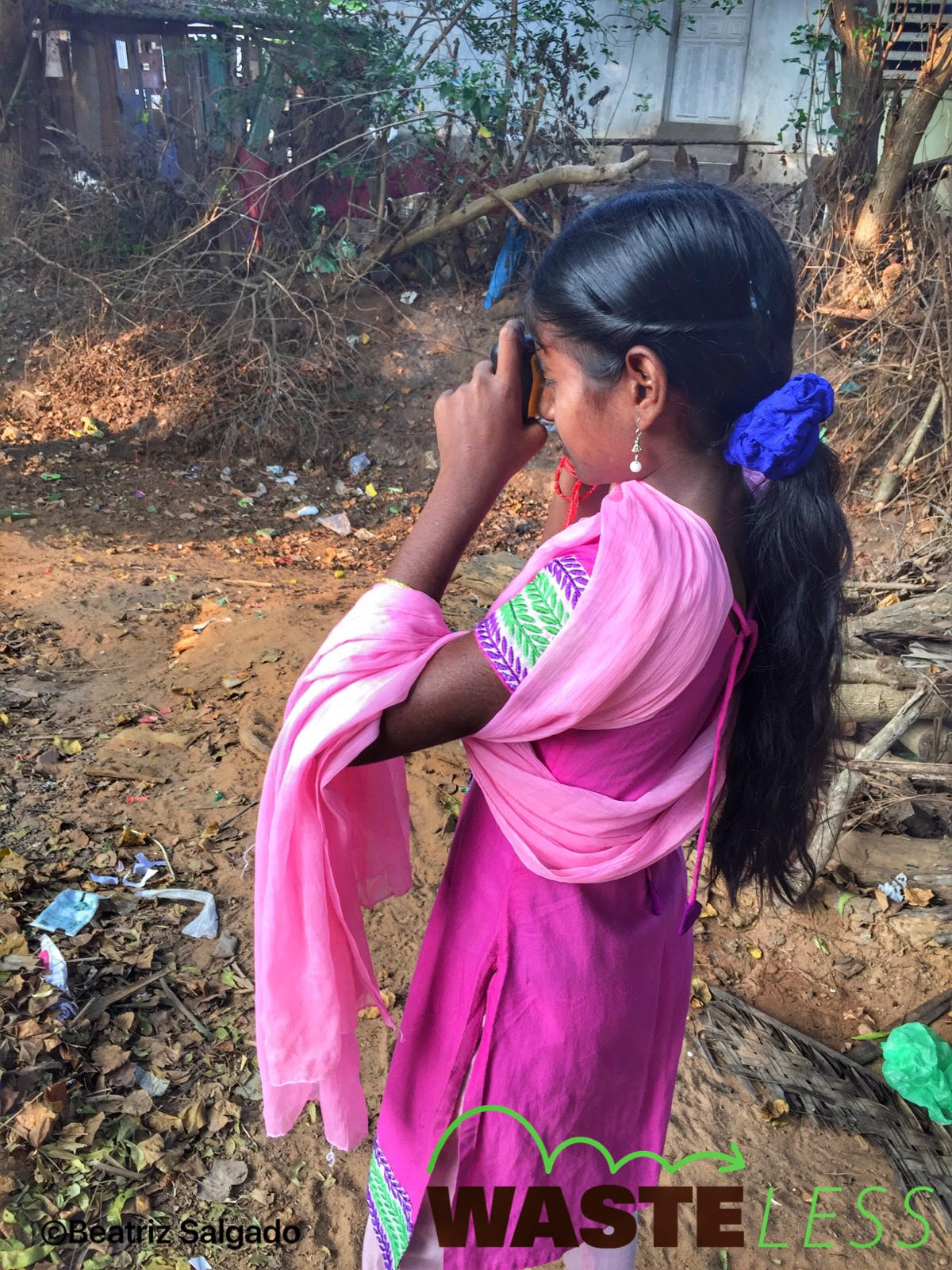
I’ve had an idea for my personal project before I even left for India. Working with children in Brazil and establishing a genuine relationship was always something I felt passionate about. So, my idea was basically to get children to walk around Auroville and take photos of something, I hadn’t really thought about what that something was until I started volunteering at Wasteless. I mentioned my idea with Rihbu, the organization’s founder, and thought he could help. He really liked the idea and thought it could be great if the project complemented Wasteless’ new educational program kNOw PLASTICS. Together we decided the kids would take pictures of plastics. They were to think about where they got their plastics? How did they use plastics? And where they threw their plastics away?

wastelesskids.jpg

I had already been to Aikiyam School the day before to observe the pilot testing for Wasteless’ new educational program, so I had met the principal of the school, Shankar and he said I could meet with the kids on Saturday afternoon. The next day, I got all my gear, which included three disposable cameras, a laptop, water bottle, my journal, and a charger and headed for Kulapalyum Road. While I waited for Shankar to confirm, I had a delicious lunch at Frites with my classmate Imani and later coffee and brownie at Marc’s café, an indispensable place to drink coffee while in Auroville.

Finally, I heard from Shankar and walked to Aikiyam School under the hot afternoon sun, not to mention it was winter. I went to the science room where the teacher and students were doing extracurricular work and waiting for my arrival. They usually have some activities during the weekends to keep the students busy. Before heading out for our photography exploration, I decided to talk to some of the students and interview them about plastics. Though they were a bit shy in the beginning, I was surprised by how much they knew about the issue.

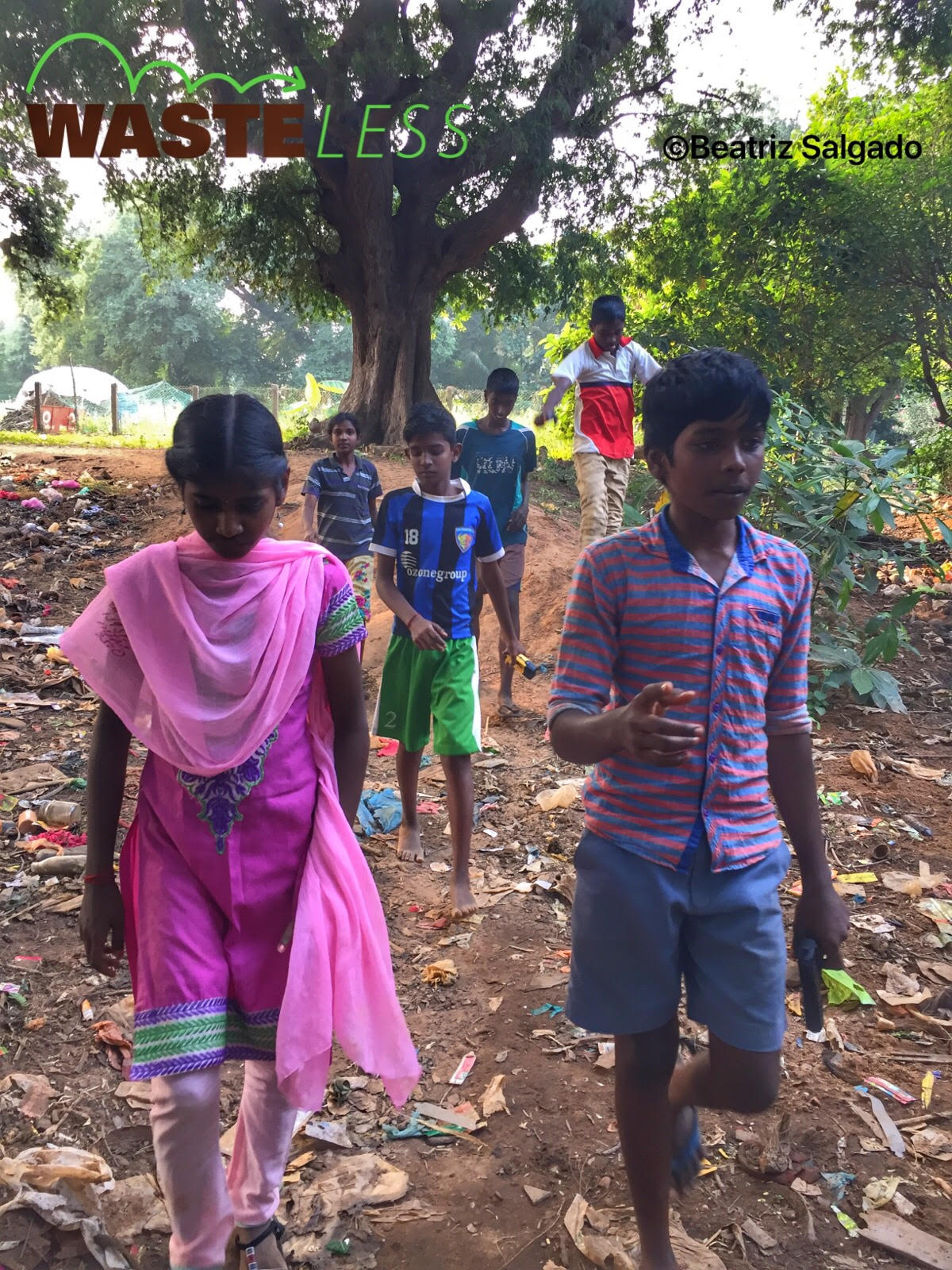
To start our photography hunt, I divided them in groups, two girls, Deepa (13 years old), Roshini (13 years old) and two boys, Chandru (14 years old) and Chander (13 years old). Later, we met up with two other students, Arjun (13 years old) and Thiru (13 years old) who decided to join our expedition. I gave each group one disposable camera and explained to them the objective of taking the pictures.

wastelesskids2

The purpose of the assignment was to take photographs of plastics in their point of view by keeping in mind the three questions mentioned above. As soon as we stepped out of the school, they immediately started taking pictures of the waste they found right outside the school: plastic bottles, bags and even a CD! We walked along the main road and headed towards Kulapalyum village where the kids lived. As we strolled around, the students entered different shops and interacted with people explaining to them what they were doing and why they were taking photos of plastics. Then, we started heading to each of their homes. What was interesting to observe were the different perspectives they had on what was clean and dirty. One of the questions was if they thought where they lived was a little, medium or a lot dirty. Most of them answered little or medium and that it’s sometimes clean and sometimes dirty. I remember thinking, ok, so they live someplace decent. I was wrong though, what was surprising was their notion of somewhere clean turned out to be a completely different conception from my reality.

wastelesskids4

During the interview, they all answered that they threw their trash and plastics in dustbins in their homes and that they don’t throw waste on the streets. One student even said they separated organics from non-organics at his house and that after it was separated, the “people that do the duty comes to pick it up” (Arjun).

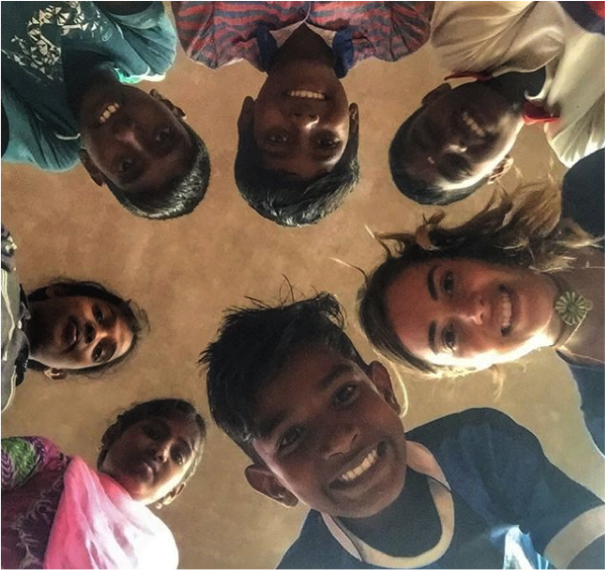
The small comfort that I did have, despite seeing those kids’ environment and their reality, was that they were still being kids and had so much fun taking photos with a simple disposable camera.

meandthekids

Eating With Your Hands

By Sam McKeown

Upon an aluminum plate sits a fragrant mélange of bottle squash kootu, vegetable curry, and seasoned rice. My belly rumbles from the scents of mustard seed, onion, turmeric, and coriander powder that perfume the air. My colleagues and I sit patiently upon the wood floor awaiting the completion of the prayer. Under the supervision of Devi, head of the Life Education Center, we’ve prepared our meal with careful consideration for the three doshas—pita (fire), kapha (water), and vhata (air). In traditional South Indian cuisine, each meal is meant to combine ingredients that help balance the dosha within the body, thus attaining both physical and spiritual balance.

By participating in the preparation of our meal, we’ve not only exchanged laughs, techniques, and stories, but also a small piece of our personal culture. For some, cooking represents a reflection of the self, a means for us to share small, non-verbal pieces of information of our personal journeys. Where did you learn to salt the water before you boil it? Why do you cook the onions first? Why do you use sunflower oil versus olive oil? For others, cooking is a source of anxiety, an exploration of opposing elements that threaten at any moment to taint the flavor of your meal and thus your self-representation. In a broader sense, cooking is a codification of collective values that has been and is continually reinforced generation after generation. Regardless of what cooking means for you, it can unanimously be considered a form of communication. An equally important form of non-verbal communication, however, is eating.

Upon my aluminum plate sits a small, plastic spoon. I glace around the room and notice that our Tamil hosts aren’t eating with the spoons, but rather their hands. Despite having eaten with my hands several times during the course of my stay in Auroville, there’s always a brief moment of anxiety before I begin. Being American and having seen a few different parts of the world, South India has been the first time I’ve experienced the culturally normative practice of eating with your hands. But what drives the fear behind this interaction with food? Is it fear of being thought of as messy, as I inevitably get rice on my nose every time I eat with my hands? Is it that most Western cultures have effectively created an implicit fear to the sense of touch in eating through reinforcing the use of utensils? Or is it simply a fear of trying something new? Perhaps it is a combination of the three. I take a breath and dig my hand, specifically my right, into the rice that has been doused in curry and kootu, scoop, and eat. The texture is both foreign and familiar at the same time, a texture I expected but still can’t necessarily put into words. It’s not slimy; it’s not hard or rough; it’s possibly a little sticky and creamy.  I glance around the room again and realize that not a single person has reacted to the rice that has clung itself to my right nostril. What has seemed to me a personal victory of overcoming neophobia to others is the simple act of eating.

When interacting with cultures inherently different than our own, eating is a meta-lingual exchange that can reveal an underlying dialogue. By picking up the spoon, I’ve reinforced my own culture and therefore my otherness from my hosts. By eating with my hands, there is the removal of a small but noticeable barrier between my cultural subjectivity and acceptance. The flavors of the meal are strong but complementary, subtle hints of spice balanced with the tangy acidity of tamarind. Before I’ve  realized, my plate is completely empty, my belly is satisfied, and my doshas presumably balanced. A collective lull has settled over the group, one that seems to transcend conventional cultural boundaries—the ubiquitous satisfaction of a good meal.

Naturellement Café: A Love Experiment

By: Jon Daniel McKiever

This past week has been filled with meeting incredible individuals who are impassioned by the desire to improve the lives of those around them. Martina Ljungquist is one of these people as she embarked on a journey 26 years ago to empower the local Tamil women by establishing the Naturellement Café.

img_0277

From the Naturellement’s website, one can see the aims of the restaurant are to (1):

  1. Empower women from disadvantaged back grounds by providing them meaningful work.
  2. Engage in socially responsible and fair trade business practices.
  3. Support sustainable farming by using organic raw-material whenever possible.
  4. Provide natural handmade fine foods of the highest quality to our customers.

Martina’s quest has always been to “bring down into the matter, something higher. The question is, ‘how do you do that?’” This question inevitably led Martina to Auroville where she claims, “the startup of this company created itself and I’m always trying to catch up!” The rise of this social enterprise has allowed its workers to create a livelihood for themselves all while learning an array of skills from cooking to operational management for their restaurant.

img_0274It’s evident Naturellement’s success is due to the combination of Martina’s love for her workers and the motivation her love spurs within the ladies to generate a solid work ethic amongst the restaurant staff.

Martina makes it very clear she’s never been well versed in typical “business” operations but she actually began her career as a Kindergarten teacher! She’s an educator at the end of the day; yet, she’s using the café to educate and empower the local women through the lens of business.

img_0271                                           (Left: Tanya Elder, Right: Martina Ljungquist)

Through her past jobs, Martina learned how not to be a boss. She’s learned this and has applied to it be an effective manager for the Naturellement café. Her model for success is never benchmarked by maximizing profits. Instead, Martina’s desire for the well-being of her ladies if the focal point of the café.

“When your aim is to have maximum profits, you start making short cuts.” – Martina.

img_0279

Products for sale at Naturellement Café

img_0284

A shot of the café’s store

Her dedication to maintaining a sustainable supply chain while setting higher standards of living for her workers has established a more ethical approach to business operations. The company’s revenues are making a positive impact for the 35 ladies that are employed here today.

When “profit maximization” is removed from the worker’s mindset, it cultivates a more personable environment where the ladies are free to unwind and be themselves while working.

Her love for these women is evident as she elaborates on the various ways she strives to provide for these women. Some of her stories are more light-hearted as she illustrates how they all took a break last week to turn on a movie in the office during a work break. Her other stories are more serious as she expresses the difficulties she faced when she’s learned some of her employees have been beaten by their husbands.

According to the Times of India, around 60% of men throughout India admit to wife-beating. (2). While it’s shocking to learn these cruel and archaic practices are still prevalent throughout India, one can only imagine the ethical dilemma it creates between Martina and her ladies.

Martina is in a unique work environment where her business model is centered around the well-being of her employees. Thus, it may seem necessary to intervene as a manger when your employee is physically assaulted because it harms the core of this restaurant’s business structure. However, Martina is a Swedish entrepreneur who may come across as a “westerner” or “foreigner” to her employees’ husbands. What do you do when your good intentions to protect your employees conflicts with cultural norms that you were never born into?

This is a complex issue which Martina has artfully navigated throughout the years with her fellow workers. She mentioned her initial reaction was to ask the ladies if she could speak to their husbands about this issue; however, she learned the women didn’t want this as it would only make the situation worse.

This experience must have taught her how to help where she can by being a listening ear and a support system for these incredible women. Her efforts yield results as we learned none of her current employees are beaten today! Progress here at Naturellement café could be perceived as being “shwiya ba shwiya” or “little by little,” yet the progress made within the lives of the Tamil women that work here is interminable.

img_0281

References:

  1. http://www.naturellement.in/
  2. Dhawan, Himanshi. “60% of Men Admit to Wife-beating: Poll – Times of India.” The Times of India. Bennett, Coleman & Co., 11 Nov. 2014. Web. 26 Dec. 2016.

A Visual Insight Into a Sustainable Fashion Business

By Mia Windisch-Graetz

Check out some pictures I took during my time working for Uma Prajapati, ethical fashion designer and founder of Upasana based in Auroville, India.