Yatra Arts Foundation: Empowering Communities Through Arts and Culture

By Kendall West

Nestled in the heart of Kuilapalayam, the Yatra Arts Foundation stands as a beacon of creativity and empowerment, transforming the lives of youth in Tamil Nadu’s villages through the enriching power of education and the arts. Founded by a visionary from this very village, Yatra bridges the gap between Auroville and the surrounding communities, fostering opportunities, preserving cultural heritage, and driving social development. At its core, Yatra embodies the belief that art is a tool for empowerment. Through street theatre, traditional dance, music, and modern educational programs, the foundation equips children and young adults with the means to express themselves, address societal challenges, and build a brighter future.

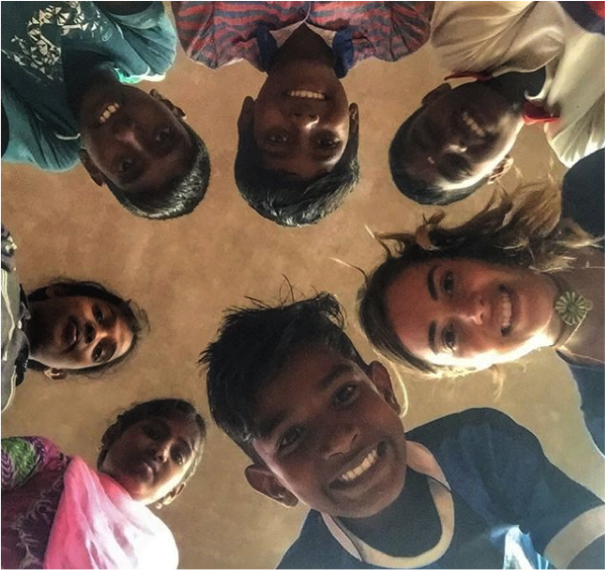
The Yatra Team, with founder Yatra, second from left

Preserving Heritage by Telling Stories

A cornerstone of Yatra’s mission is the preservation of traditional arts, and during our visit, we had the privilege of witnessing these efforts firsthand. We were captivated by a mesmerizing Bharatanatyam performance, where young girls—many of whom have been learning since they were ten years old—used intricate hand gestures (mudras), facial expressions, and precise body movements to tell powerful stories. This ancient dance form, steeped in history and meaning, showcased emotions such as joy, anger, and surprise, preserving the art of storytelling through movement and tradition.

Before Auroville’s establishment, many villages in Tamil Nadu had little access to education or the arts. Yatra has become a vital bridge, connecting these communities with opportunities for growth and development. Children, in particular, have been the most impacted, as they embrace change and learning with enthusiasm. Through its performances, classes, and workshops, Yatra ensures that these opportunities reach every corner of the village.

We were also treated to evocative Parai drumming demonstrations, which brought this traditional form of Tamil percussion to life. The resonant beats of the Parai, traditionally used to mark life events or draw crowds to performances, were not just musical but deeply practical, reminding us of its historical and cultural significance. These performances served as powerful reminders of the region’s rich artistic heritage and the importance of passing these traditions to future generations.

Girls practicing the Bharatanatyam

Art as a Catalyst for Change

Beyond preserving heritage, Yatra uses art as a catalyst for social and environmental change. Before we left, we were shown a compelling short film on the importance of waste sorting and proper waste management techniques. The film highlighted how waste, when sorted correctly, can be transformed into compost, offering valuable resources for the community while reducing landfill waste and preventing illnesses. It was a vivid example of how art—specifically film—can be used to spread awareness, educate, and engage communities in meaningful discussions about critical issues. The film not only underscored Yatra’s commitment to environmental conservation but also demonstrated the potential of the arts to inspire action and create lasting impact.

Yatra’s street theatre performances and films address a wide range of societal challenges, including cleanliness, solid waste management, environmental conservation, and alcoholism. After each performance, the foundation hosts open mic sessions, encouraging villagers to share their thoughts, voice frustrations, and collectively discuss solutions. This interactive approach fosters dialogue and empowers communities to think critically and collaborate to overcome challenges.

Modern Education Meets Cultural Preservation

In addition to its focus on traditional arts, Yatra offers a variety of modern educational programs that prepare youth for the future. These include after-school tuition classes, yoga sessions, painting workshops, puppet shows, and theatre classes, all designed to integrate life lessons with hands-on, enjoyable activities. By blending fun with learning, these programs engage students while teaching valuable skills, from environmental conservation to social responsibility.

Students in an after-school tuition session

Yatra’s work aligns closely with the United Nations Sustainable Development Goals (SDGs), particularly SDG 4 (Quality Education) and SDG 15 (Life on Land). Through initiatives like the Yatra Social Docu Series on YouTube, they reach both local and global audiences with impactful stories about pressing social and environmental issues. Collaborations, such as those with the Lufthansa Health Alliance, further amplify their reach, demonstrating the potential for art to drive systemic change.

As the foundation looks to expand its efforts, it remains deeply committed to its mission of fostering joy and learning through the arts, creating a ripple effect that benefits not just individuals but entire communities.

The Yatra Arts Foundation is growing rapidly, with its impact extending to new villages and communities. Their YouTube channel, Yatra Talkies, recently received the Silver Play Button for reaching a significant milestone of over 150,000 subscribers. The channel continues to share impactful stories, amplifying their message and engaging audiences worldwide. To explore their inspiring content, check them out at the link below:

Yatra Talkies YouTube Channel

What sets Yatra apart is its ability to inspire through joy and creativity. Whether it’s a child mastering the rhythms of the Parai, a young girl expressing herself through Bharatanatyam, or a community coming together to discuss an impactful film, Yatra proves that art is more than just a medium of expression—it’s a tool for transformation.

The Yatra Arts Foundation is not just an organization; it’s a movement. A movement that preserves heritage, addresses societal challenges, and empowers individuals to dream, create, and thrive. In an ever-modernizing world, Yatra serves as a powerful reminder of the enduring value of culture, community, and curiosity, lighting the way toward a brighter future.
Sharana: Transformative Holistic Development Beyond Conventions

By Sarah Glavan

In the midst of the colorful tapestry of Pondicherry, the Sharana Social and Development Organization stands as a hub of holistic development, breaking away from traditional models to shape a narrative that spans across various facets of community life. A warm breeze is blowing through the entrance lobby of the foundation‘s building in which 17 AUP students stand shoulder to shoulder, listening to the charismatic and passionate founder Rajkala Partha. Sharana (शरण) means shelter in Sanskrit, she explains to us, and that the organization was founded in the year 2000 to address critical educational needs of socio-economically disadvantaged children and communities in urban Pondicherry and its surrounding villages. 

We are told that the organization has multiple programs spanning from children‘s empowerment over women‘s empowerment to rural development. Sharana’s various projects collectively aim to provide access to education, access to employment through micro-credit lending and vocational training schemes and access to healthcare. A key focus is on supporting children to pursue their education, breaking barriers that might hinder their path to knowledge. Sharana goes beyond the classroom, offering counseling and skill development programs, recognizing the importance of emotional and practical tools in a child’s journey. We are allowed to look at one of the classrooms which has a variety of art pieces in the back of the room. Small statues made out of paper-mache and vivid watercolor paintings reveal the creativity, learning and healing that is fostered at Sharana. Manuel, Sharana’s empathic expressive arts therapist, explains that he recently established a therapy program specifically for fathers who are struggling. Employing expressive arts for therapeutic purposes further demonstrate Sharana’s innovative and holistic approach, integrating diverse elements to create a harmonious symphony of development.

According to Rajkala, a defining moment in Sharana’s trajectory was their departure from conventional sponsorship models. Rejecting the notion of children being tourist attractions in “sponsor a child” funding schemes, the organization shifted to a collective sponsorship system in 2015. The new model allows Sharana to operate autonomously and to address the needs of each child more precisely. Sharana‘s deep commitment to transparency further allows them to operate freely and to build relationships of trust with donors.  Today, Sharana is able to support 2000 children, showcasing not only organizational success but also the effectiveness of a local, grassroots approach. Collaborating closely with the local government, Sharana emphasizes a synergistic relationship for more impactful, community-driven development in Pondicherry. In the realm of development, Sharana serves as a model, demonstrating the efficacy of innovation, transparency, and collaborative efforts in fostering lasting change.

We felt grateful for the opportunity to learn about the insights that Rajkala, Manuel and their colleagues gained throughout the years of working on the improvement of livelihoods in Pondicherry. The foundation shines bright as an example of an impactful grassroots development organization established by the community for the community. Sharana and its lasting impact remind us all that the process of development is just as important as the results.

More about Sharana on their Website: https://sharana.org/

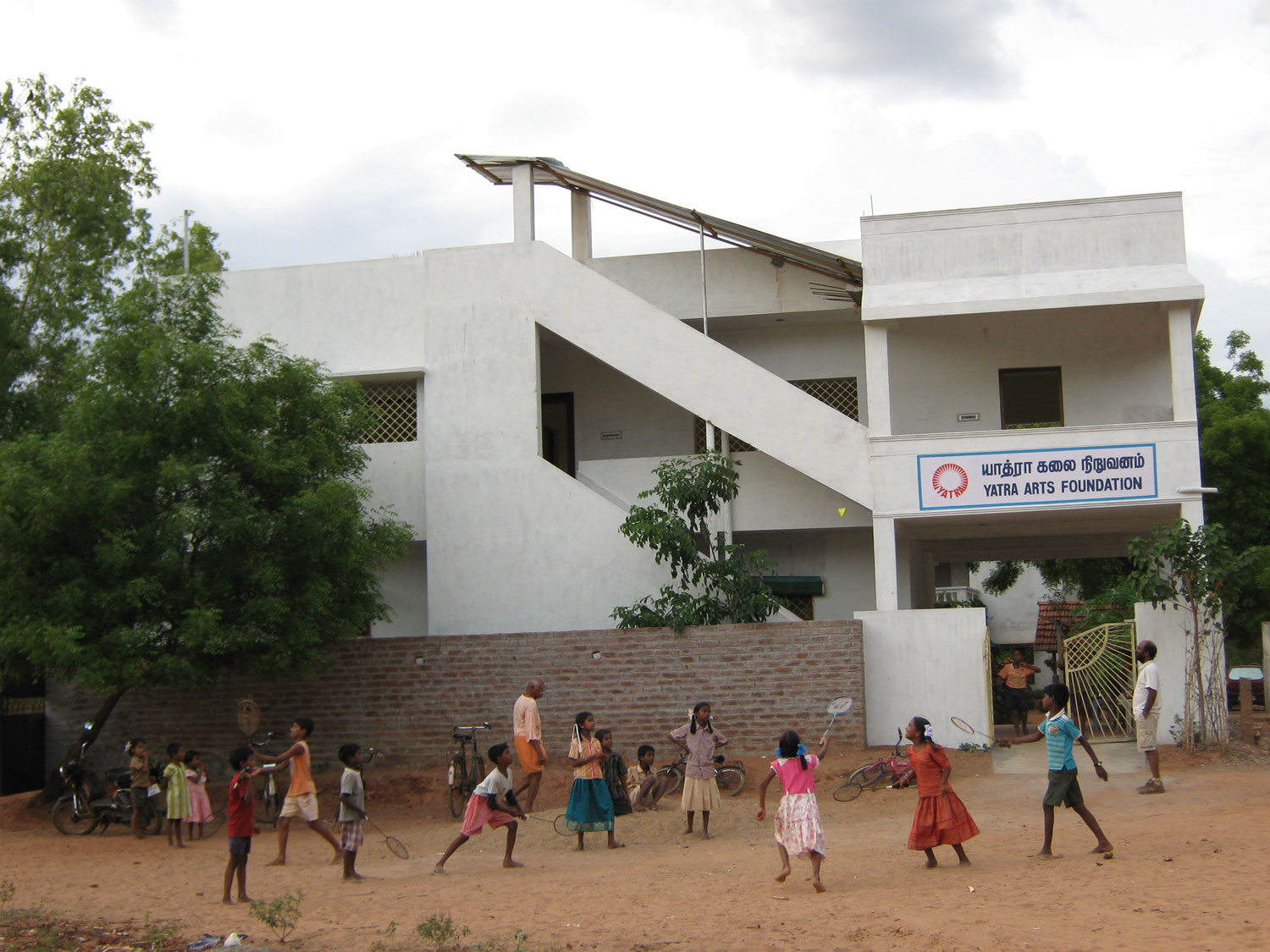
From left to right: (1) Artwork in a classroom at the Sharana Social Centre. PC: Sarah Glavan
(2) Sharana Social Centre in Pondicherry. PC: Grant Weekes

AVAG: Weaving Dreams of Empowerment and Resilience

By Kathryn Galloway

In the heart of Auroville, a beacon of participatory development shines bright, driven by a simple yet profound mantra: empower communities to shape their destinies. The Auroville Village Action Group (AVAG), since its modest inception in 1983, has blossomed into a powerhouse of collaborative efforts, breathing life into the dreams of marginalized groups and striving for a harmonious, secure, and resilient society.

At the core of AVAG’s mission is the belief in inclusive development. Their stakeholders form a diverse mix, including women, men, youth, school children, teachers, farmers, and both traditional and elected leaders. Yet, it is the most marginalized—the single women, the elderly, dalits, farmers, artisans, and small business owners—who occupy the center stage of AVAG’s unwavering commitment.

To begin our visit, Makizh Selvam, the office manager, welcomed us into the world of AVAL—a brand crafted by women for the benefit of women. AVAL, meaning ‘she’ or ‘her’ in Tamil, is a social enterprise born from the nurturing hands of AVAG that seeks to uplift the aspirations of marginalized women through skill development in tailoring and crocheting. Every handcrafted product emanates love and devotion, a tangible symbol of self-reliance and self-empowerment. AVAL stands as a testament to the convergence of rural women and urban designers, creating products that embody beauty both inside and out. In a span of 7-8 years, AVAL has become a sanctuary where conscious consumers find more than just products; they find a connection to a cause.

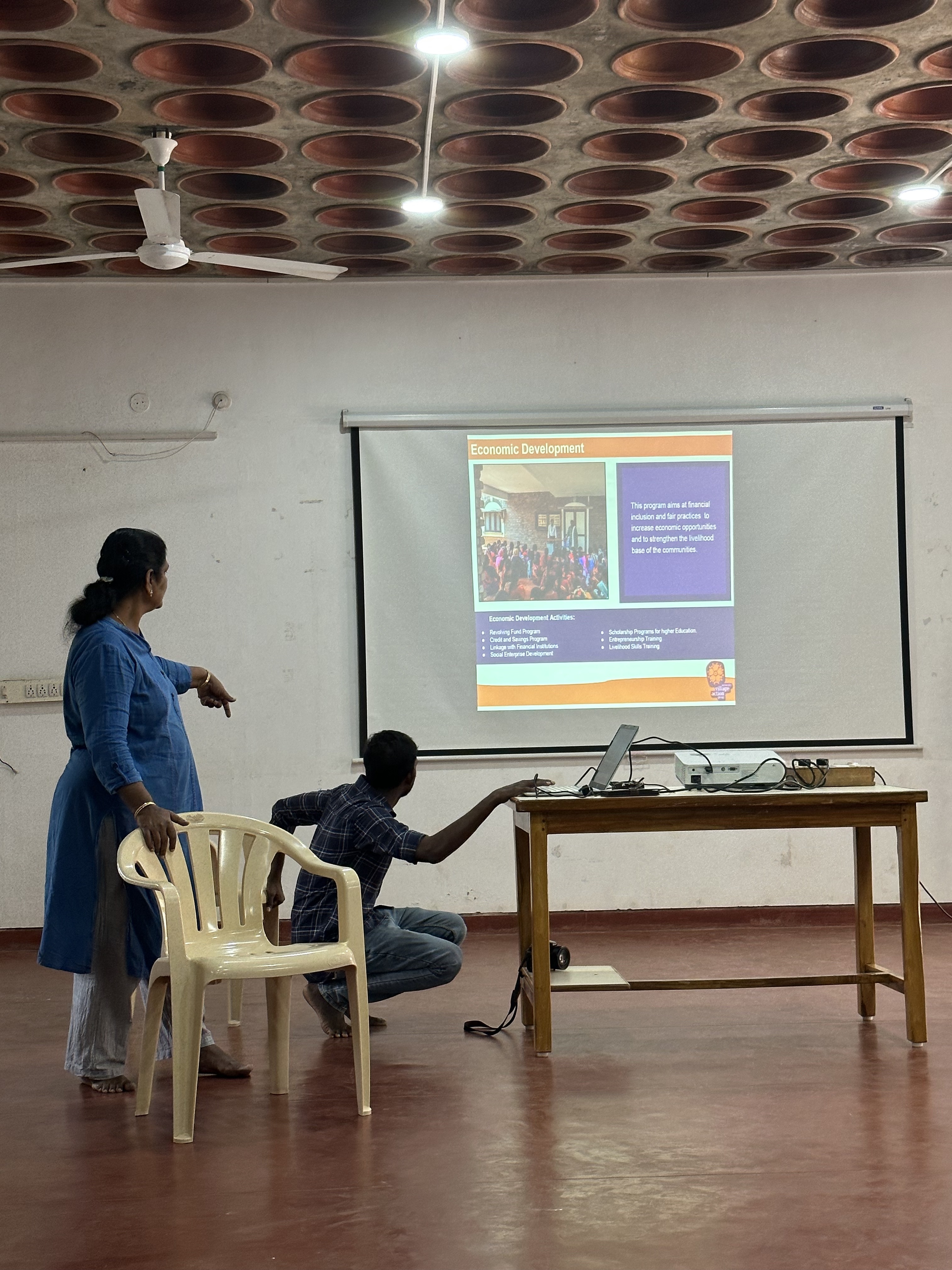
After we perused the racks of the AVAL shop, Anbu Sironmani, AVAG’s Director, shared more information on the organization’s key initiatives. Community development, capacity building, economic growth, and psychosocial support form the pillars of their holistic approach. From personality development to agriculture, AVAG’s initiatives encompass a spectrum as diverse as the communities they serve. Particularly noteworthy is their emphasis on participatory economic growth, ensuring that the development of marginalized groups is rooted in genuine needs and inclusive practices.

AVAG doesn’t just offer support; it nurtures resilience. The psychosocial support they provide is a lifeline, weaving a safety net of mental and emotional well-being for individuals facing stress and trauma. In AVAG’s world, empowerment is not just a concept; it’s a tangible reality carved out of genuine understanding and collaborative effort.

If Auroville is a tapestry, AVAG and AVAL stand as vibrant threads, weaving dreams of empowerment, resilience, and a community where every voice is not just heard but celebrated. They are crafting a narrative of inclusivity that resonates far beyond the borders of Auroville—a testament to the transformative power of community-led development.

Mohanam Cultural Center by Shandiin Vandervere

Launched in 2001, this community cultural center was designed to serve as a needed connection between Auroville and its surrounding Tamil villages. While the majority of Aurovillian residents hail from international origins, the communities in the surrounding bioregion are mostly Tamil. While each are connected in their appreciation of spiritual and environmental protection, Mohanam Cultural Center adds another layer of protecting the art, music, and literature indigenous to Auroville’s chosen setting. It focuses on preserving and showcasingthe traditional and cultural heritage of Tamil Nadu’s people, self-described as a, “hub for bio-region art, culture, education. 

Balasundaram, the Founder and Creative Director, has led the center and its experimental bamboo farm for its full two decades of existence and has experienced each success and hardship in tandem. Mohanam began in the oldest building in Sanjeevinagar, after being restored by the initiating group. The current five-acre campus of the new Heritage Center and Activity Hall plans to celebrate their official inauguration in February 2023 after undergoing final infrastructure renovations.

The center itself hosts an impressive array of events, both educational and engaging,that invite all in the area to learn more about the culture they are surrounded by. Mohanam works to educate youth on local, traditional history through activities like yoga, folk dances, class trips, art therapy, and many more. Because of the challenge felt by increasing globalization, many traditional customs are more vulnerable and subject to loss. In direct resistance of this possibility, the center chooses to focus on preserving, “the beauty, traditions, innovations and the continuing evolution of South Indian arts and culture.” 

They also organize a night school, summer art camps, and a heritage kindergarten to help foster education of many different generations. They have held Village Heritage Festivals, offering traditional Tamil games, craft markets, and performances with the help of the Puducherry tourism department.

A strong focus of the center is also water conservation education, headed by women in the community. This water project has been in place for over 20 years and reinforces the shared responsibility of clean water stewardship. Our group was taught the strong cultural link to water in Auroville’s bioregion, specifically with lakes being used as sites for weddings, ceremonies, and other sacred gatherings. The project also serves as part-time livelihood for the women, providing both income and a safe environment to share. This unique blend of environmental sustainability and inner development is truly emblematic of Mohanam’s guiding values.

Our French program visited the center within the large array of Aurovillian NGOs and non-profits to learn more about their unique position striving to serve as a bridge between different crafts, cultures, and generations. Specifically attempting to bridge the gap between Auroville residents, who often come from other countries, and the Tamil speaking communities that surround the eco-city has been a difficult task. Balasundara shared some of the innate obstacles that come with trying to realize their mission, for instance becoming a scapegoat for many issues or facing stagnancy from governments when discussing environmental protection.

This governmental hesitation comes from, again, a unique obstacle faced by many environmental sustainability NGOs in the region. Because of the preceding colonial French territories, Puducherry is made of geographically disconnected areas within Tamil Nadu. This makes any project aiming to help protect or revitalize the environment difficult to pass through two separate bureaucratic approvals. 

But the split between Tamil communities and Auroville was among the most interesting dynamics our group learned through our visit. Many within Auroville’s core leadership team that hail from the overarching government have been advocating for the city’s expansion of both infrastructure and population. A proposed numerical goal of 50,000 within the next 10 years has failed to include the surrounding Tamil villages as part of the existing community. These numbers plan to bring more residents from outside countries instead of incorporating these communities that are already in place. To hear from this community center about these issues was very illuminating and could serve as a case study for others to learn more about techniques used to connect different cultures in a united cause while being cognizant of its unique history.

Sistri Village

IMG_20191220_085503Image Credit: Stella Sagini

Sistri Village began in 2013, as an orphanage for mentally and physically challenged children. The Founder Karthik, had difficulties in the beginning getting the children admitted in Indian public schools. The ones who did were often ignored by both teachers and students therefore remained idle for days on end. The teachers lacked the patience or training for special education to give these children and the other children were often afraid of them.

Karthik didn’t like that his children were idle, he said that it created bad energy and aggressive behavior within the child.

Indian culture has a great believe in re-encartnation, a disability is a re-birth of a person cursed by the gods and therefore the family shuns or abandons these children. Some of these children get locked up by their families to hid them from the society.

He sought out vocational training, certificate courses and when they grew in adulthood, he worked with local businesses to get job opportunities for them. He faced many challenges one been local businesses in need of labor, would make up lame excuses to avoid hiring Sistri Village members. He then overcame this barrier by initially placing his students in missionary based institutions and slowly as the community began to see a transformation, they slowly accepted to hire some of his students.

IMG_20191220_085149Image Credit: Stella Sagini

However, a majority of his students work and live at Sistri village. He began vegetable gardening as a form of Green Therapy for his members. He believes that nature heals and restores balance to mental retardation. Sistri Village members have continually shown improvement in their mental and physical state. Medical volunteers come over to offer free medical treatment and physiotherapy sessions for the members. Mental and Psychical challenges are very different from Celbral Parlsey, Autism, and Down Syndrome require accurate diagnosis to begin a succeful therapy treatment.

IMG_20191220_090031Image Credit: Stella Sagini

Sistri Village members earn a living from their work on the farm, by selling fruits and vegetables. They also rear a lot animals for sustenance use and for sale. Sistri members all have daily chores but work out of their own volition, work is never forced on any member. Keeping busy through work is also a form of therapy that creates a meaningful routine that members can look forward to. Sistri members are contributing to the society instead of a hand out thus significantly increasing self-esteem. The Capacity Building efforts of Sistri Village have enabled its members to make a productive contribution to the society.

IMG_20191220_090359Image Credit: Stella Sagini

In the past, they received donations from the government and organisations like Rotary International Club. They have managed to donate desk, chairs and help build part of the new administration block. However, for day to day running of the farm they rely on a mix of proceeds from farm sales and support from the Tamil Nadu government.

IMG_20191220_090210Image Credit: Stella Sagini

Living a meaningful life that’s the mission of Sistri village and the stigma of disability has slowly been lifted within the community. Families are now more accepting and engaging with mentally and physically challenged members of their community.

Eternal Divers Presentation


cropped-logo-eternal.jpg Eternal Divers

https://eternaldivers.com/

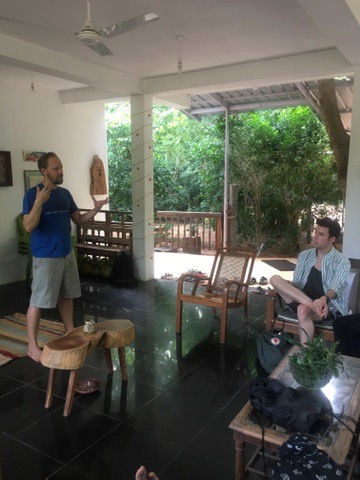
Eternal Divers is based just outside of the Auroville on the Bay of Bengal. The first thing we noticed as we approached the location is the beauty of the house, Eternity. Situated on the beach and surrounded by bush and sand, Eternity features a large, open patio that connects to the home and office of Jonas and Tracy of Eternal Drivers. Zeus, their grand Rottweiler greeted us with kisses and just a little bit of fur and slobber. The dog lovers amongst us were thrilled to meet him but we get situated quickly and open our hearts and ears to listen to “Joni” explain the mission of Eternal Divers and the issues that his team, Tracy and he are passionate about.

When Eternal divers first began, it was just another diving company and they wondered how to set themselves apart and make better use of their skills, talents and location. How to be a sustainable business and spread environmental concern and solutions is paramount for them. Yoni discussed something that caught his attention called “ghost nets” which are extremely concerning. A ghost net is a fishing net that has (most likely) become caught on something which makes it impossible for a fisherman to free it or has escaped the control of the fisherman and can’t be reeled back on to the boat. It is left behind, unattended and unchecked forever as it collects, catches and kills without consideration. In addition to the ghost nets, sewage, overfishing and erosion are all concerns for Joni and Tracy and their team. Joni told us that there is a visible line of sewage and ocean water and to help us understand just how detrimental ghost nets can be, he explained that ghost nets cause about 20, 000 US dollars loss per year. Nearby, a ghost net was discovered that had over 30 sharks caught in it and had been floating for what an estimated three years. Of course, nothing in a ghost net can be salvaged for food. It is just a true waste of resources.

Eternal Divers was enraged at the finding and asked us to consider what a tragedy this is when we reflect on the beauty and majesty of all the sea has to offer us. The pointless loss of life and the pollution caused by humans is unacceptable. Naturally, Eternal Divers found a way to expand the teaching and education of scuba and diving to the fisherman and villagers themselves to help them understand how precious their resources were and how carelessness could hurt their livelihood more than they had ever comprehend before.

We learned from them that what they are most proud of and would really like to continue, improve upon and increase the reach of is the education of the fisherman and villagers. Too many humans take the sea and all she has to offer for granted. What lies below the surface… or more importantly what is being harmed and killed off below the surface is unknown until we dive down and see for ourselves. All the incredible colorful life, both flora and fauna, are unseen, under-appreciated and unprotected. It is only through the education and the collaboration with locals that behavior change can occur. Seeing the deep for oneself may be the only way for many to understand what is at risk.

Within global communications, behavior change is the most challenging of all the goals. Behavior change, as in this instance, little to no money can be gained through the education of the locals. In fact, Eternal Divers may find that time and money are lost in their efforts; however, they feel that what India and the earth may gain is far more important if the sea and its life can be preserved through this tactic. The benefits of behavior change are often long-term rewards that seem less important in the moment. For example, a fisherman may be more concerned with how much money he can earn this week, as opposed to the concept that he may not be able to earn any money in a few years if the fish are either overfished or die off because of pollution.

Eternal Divers needs funding to help support the education of the locals, a strategic creative plan and social media revamping/attention, as well as social media viral campaign. I felt very strongly about joining their team and helping. The ocean and all the life in it and that it gives is incredibly important to me. Choosing my NGO was tough when I had to compare Eternal Divers to Marc’s Café, where I had so many ideas from the start, but I’ve loved hearing all about it from my classmate, Beatrice.


IMG_0856.jpg

Mason listens to the Eternal Divers presentation.

Sahodran and LGBTQ+ Rights in India

Ari Price

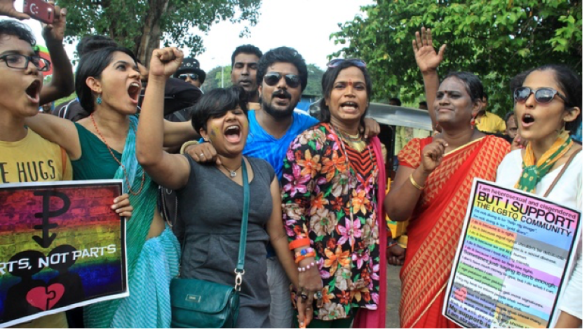
During the expansive world HIV and AIDS crisis in the 1980’s, Sahodran was established in South India. While it was one of many Non-Government Organizations created to educate society about HIV and AIDS, it was unique from other organizations. Sahodran, also known as the Sahodran Community Oriented Health Development (SCHOD) Society, specifically targeted the education, support and advocacy of men who have sex with men, as this population had a higher risk for acquiring HIV due to a lack of safe sex practices and support. As they only worked with men in the beginning, they decided on the name Sahodran, which means brother in the local language, Tamil. Presently, the SCHOD society has drop-in centers in both Chennai and Puducherry to aid in the education and peer support of all LGBTQ+ persons who face discrimination in the state of Tamil Nadu, India. Since 1988 Sahodran has continued to expand and provide interventions at the individual, community and national level. They currently work with a variety of professionals and volunteers including physicians, advocates, academics and researchers. According to staff, approximately 130 people were served in 2003 whereas about 1233 people were served last year. This shows the community demand for services continues to be necessary and to grow.

MEMBERS OF SAHODRAN AT THE LOCAL 2018 LGBT PRIDE MARCH

The work the Sahodran is taking on is not easy, but it is immeasurably beneficial not just for the LGBTQ+ community, but the society at large. In terms of the United Nations Sustainable Development Goals for , SCHOD aims first and foremost to promote the goal of good health and wellbeing, but it does this while also addressing the goals of gender equality and reduced inequalities for those in the LGBTQ+ community. Since their inception, they have continued to see progress for equality in the Indian society, at least in part due to their national advocacy efforts. Beyond the decreased rate of HIV and AIDS in the Tamil Nadu area, SCHOD has also seen the recent overturn of section 377 of the India Penal Code a law in 2018, which criminalized intercourse between men and the national recognition of a third gender, transgender, in 2014. While these policy changes are steps in the right direction, the staff at the Puducherry branch of Sahodran informed AUP students that there was still no policy to promote and protect LGBTQ+ peoples in cases of discrimination and definitely no marriage or family law in place for LGBTQ+ couples. As time moves forward they hope to see a society that understands, supports, and cares for all of its people, regardless of HIV status or LGBTQ+ Identity.

The first field note…

16.12.17 Rubini & the Samugam Foundation 

by Dorothea Mursch-Edlmayr

We’ve started our second day in India with our first yoga session on the roof of our Guesthouse Mitra at 7 in the morning, before we took the bus to Pondicherry. On this Saturday we had four NGO visits schedule. The ride to Pondicherry – such a loud, crowded, colorful and culturally different place and the overall heat – was overwhelming. We were confronted with the real Indian experience already. And then we stopped at our first NGO, the Samugam Foundation. I was so fascinated with the city trying to absorb everything I saw, that I didn’t mentally prepare myself for the Samugam Foundation. So I stepped out of the bus and was completely surprised by the children that were waiting for us. They grabbed our hands, talked to us, introduced themselves, hugged us and pointed at different things. It happened so quickly and suddenly every one of us got picked by a child, taken by the hand and accompanied to the house they live and get educated in.

PC160062.jpg

Rubini (r.) and one of her friends

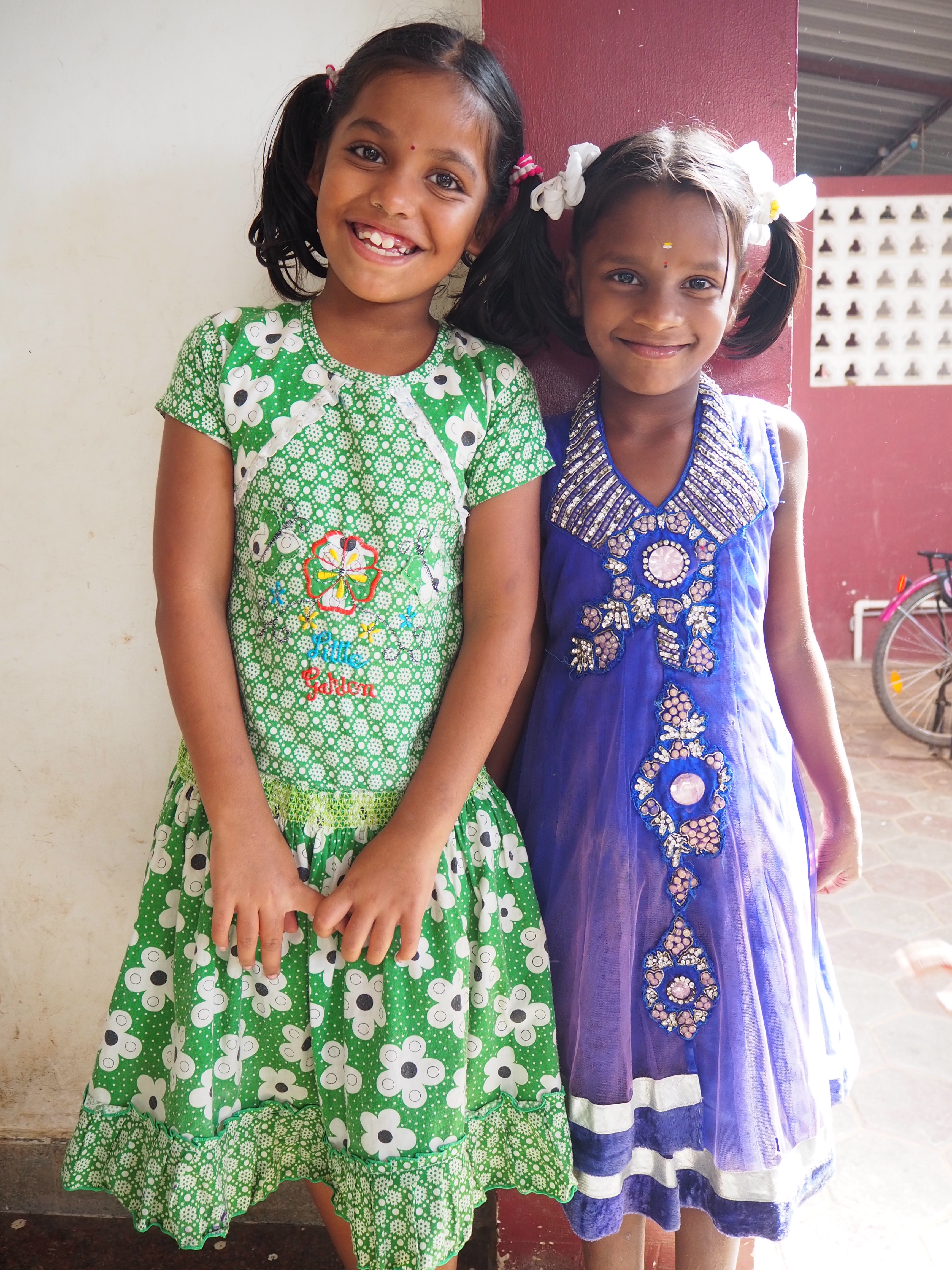
My girl was Rubini. She is 6 years old and wore a beautiful blue dress, my favorite color. She was smiling the whole time and was full of energy and excitement. She showed me the kitchen, the bedroom, the music room, she introduced me to her friends and taught me a clapping-singing game that they all love to play. She seemed happy and like a normal child. Although we didn’t speak the same language we communicated through gestures, pointing at things and facial expressions and hand signs. We spent 20 minutes together before she showed me my seat in the room we were about to hear a presentation from the founder of the Samugam Foundation.

This nonprofit organization gives shelter to the gypsy, street and poor children, providing them with a home, food, education, sanitarian care and overall protection with the mission of giving them a chance to become a part of the society. These children grow up in poverty and misery facing illness and death because of non-existing hygiene standards concerning food and body care, being unaware of their destiny because of a lack of education. This NGO tries to give the children a chance for a better life. I was sitting in this room, watching the videos about gipsy children eating dirty food from the dump, living so close to this polluted area being excluded from society with no possibility for a change. It was hard to take and almost overshadowed the fun playful 20 minutes with Rubini. She was one of them and I felt very helpless. My eyes were wandering around in the presentation room and suddenly I saw a quote by Ghandi on the wall that gave me hope in this moment of brutal reality; “only through education we can change the world”. Inequality and unfairness exist and there is no sense in being upset with the world how it is, we just need to keep this words in mind and help the people through education to change their destiny towards a better one. I went back to the bus with gratitude for my life and hope for Rubini and all the other beautiful children that welcomed us so friendly at our first NGO visit in India.

PC160071.JPG

Read more about the Samugam Foundation on their website: http://www.samugam.org

A Day With Disposable Cameras

By: Beatriz Salgado


My day started out with the usual morning breakfast at Morgan’s, scrambled eggs with toast and milk coffee. Then, I went to the Matrimandir for the first time, one of the most intriguing experiences yet, but I’ll leave that for another blog entry.

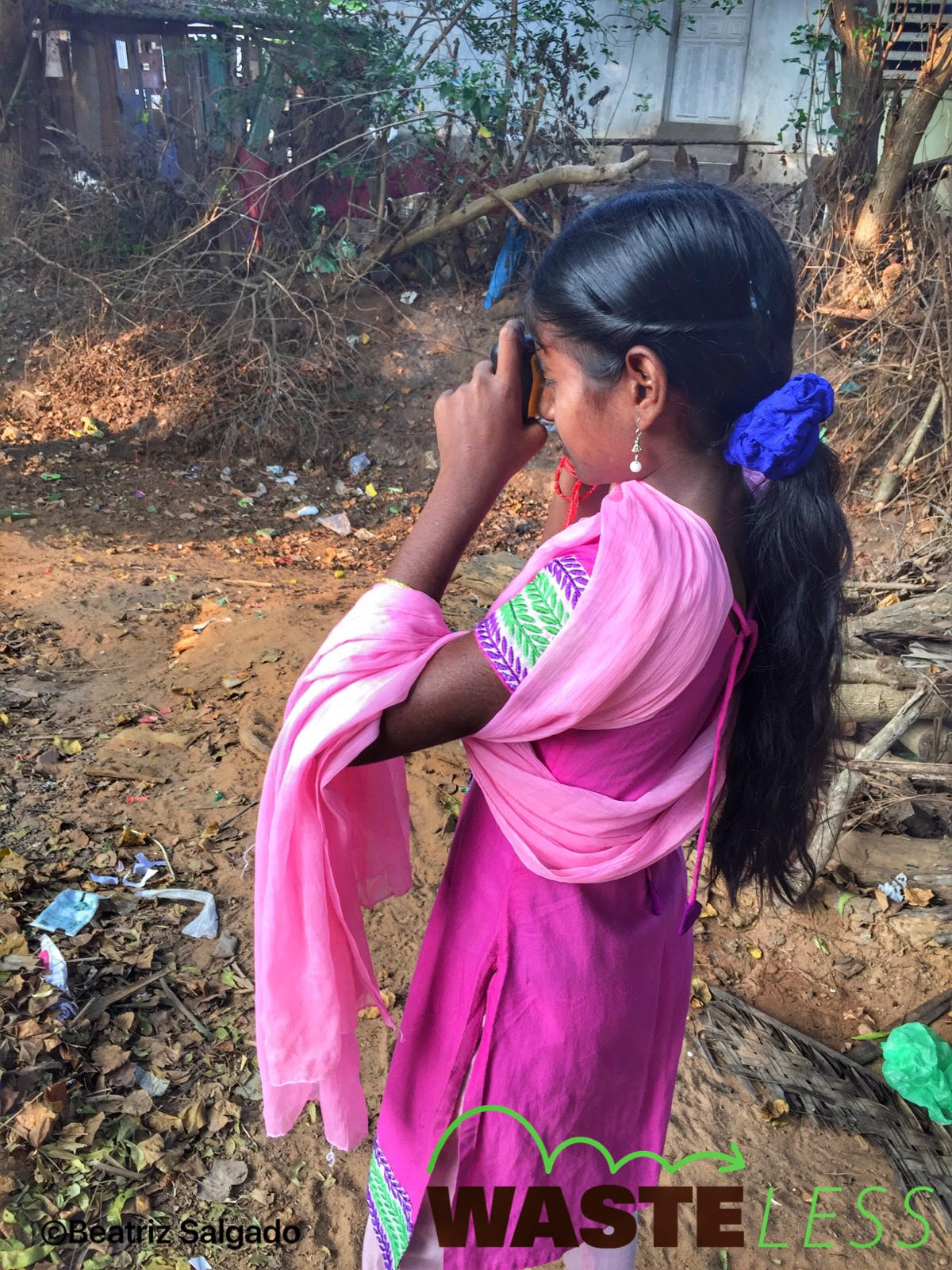
I’ve had an idea for my personal project before I even left for India. Working with children in Brazil and establishing a genuine relationship was always something I felt passionate about. So, my idea was basically to get children to walk around Auroville and take photos of something, I hadn’t really thought about what that something was until I started volunteering at Wasteless. I mentioned my idea with Rihbu, the organization’s founder, and thought he could help. He really liked the idea and thought it could be great if the project complemented Wasteless’ new educational program kNOw PLASTICS. Together we decided the kids would take pictures of plastics. They were to think about where they got their plastics? How did they use plastics? And where they threw their plastics away?

wastelesskids.jpg

I had already been to Aikiyam School the day before to observe the pilot testing for Wasteless’ new educational program, so I had met the principal of the school, Shankar and he said I could meet with the kids on Saturday afternoon. The next day, I got all my gear, which included three disposable cameras, a laptop, water bottle, my journal, and a charger and headed for Kulapalyum Road. While I waited for Shankar to confirm, I had a delicious lunch at Frites with my classmate Imani and later coffee and brownie at Marc’s café, an indispensable place to drink coffee while in Auroville.

Finally, I heard from Shankar and walked to Aikiyam School under the hot afternoon sun, not to mention it was winter. I went to the science room where the teacher and students were doing extracurricular work and waiting for my arrival. They usually have some activities during the weekends to keep the students busy. Before heading out for our photography exploration, I decided to talk to some of the students and interview them about plastics. Though they were a bit shy in the beginning, I was surprised by how much they knew about the issue.

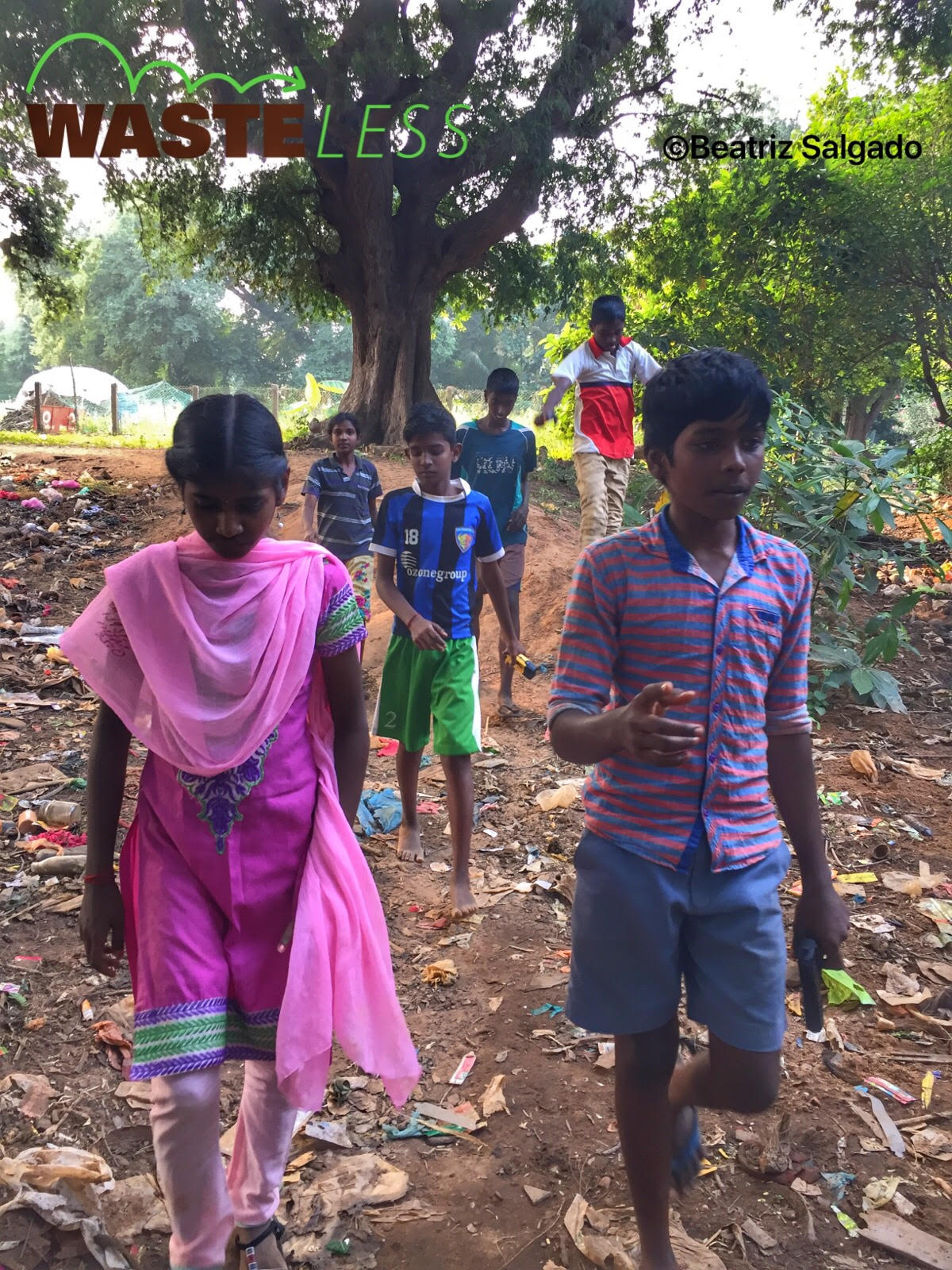
To start our photography hunt, I divided them in groups, two girls, Deepa (13 years old), Roshini (13 years old) and two boys, Chandru (14 years old) and Chander (13 years old). Later, we met up with two other students, Arjun (13 years old) and Thiru (13 years old) who decided to join our expedition. I gave each group one disposable camera and explained to them the objective of taking the pictures.

wastelesskids2

The purpose of the assignment was to take photographs of plastics in their point of view by keeping in mind the three questions mentioned above. As soon as we stepped out of the school, they immediately started taking pictures of the waste they found right outside the school: plastic bottles, bags and even a CD! We walked along the main road and headed towards Kulapalyum village where the kids lived. As we strolled around, the students entered different shops and interacted with people explaining to them what they were doing and why they were taking photos of plastics. Then, we started heading to each of their homes. What was interesting to observe were the different perspectives they had on what was clean and dirty. One of the questions was if they thought where they lived was a little, medium or a lot dirty. Most of them answered little or medium and that it’s sometimes clean and sometimes dirty. I remember thinking, ok, so they live someplace decent. I was wrong though, what was surprising was their notion of somewhere clean turned out to be a completely different conception from my reality.

wastelesskids4

During the interview, they all answered that they threw their trash and plastics in dustbins in their homes and that they don’t throw waste on the streets. One student even said they separated organics from non-organics at his house and that after it was separated, the “people that do the duty comes to pick it up” (Arjun).

The small comfort that I did have, despite seeing those kids’ environment and their reality, was that they were still being kids and had so much fun taking photos with a simple disposable camera.

meandthekids

I cannot help my self

It has been argued that one can only recognize the self through the “other”. This is because the “other” confirms what the self is not. This argument is one which is salient when people promote “colour blindness” as a solution when it comes to racial prejudice. Those who are in favour of the understanding of the self through the “other” bash the notion of colour blindness because of the perceived inevitability involved in self identity formation of identifying the other and participating in “othering”.

Some collectivist societies openly recognize that the notion of the self is one that cannot exist independently without the other. There are languages that do not have an equivalent word for “the self.” The pronoun “I” is often the closest word to the self. In South Africa where I am from, the philosophy of ubuntu summarizes how the self cannot endure independently from others.  Ubuntu is the belief that you are who you are because of your interactions with those around you who also contribute to your development.

In India this inability to exclude the self from community is apparent.  All of the NGOs within and beyond Auroville all participate in contributing towards developing India in a sustainable way for future citizens of India and of the world. Auroville’s charter is one that candidly echoes the sentiment of ubuntu and selflessness:

  1. Auroville belongs to nobody in particular. Auroville belongs to humanity as a whole. But, to live in Auroville, one must be a willing servitor of the divine consciousness.
  2. Auroville will be the place of an unending education, of constant progress, and a youth that never ages.
  3. Auroville wants to be the bridge between the past and the future. Taking advantage of all discoveries from without and from within, Auroville will boldly spring towards future realisations.
  4. Auroville will be a site of material and spiritual researches for a living embodiment of an actual human unity.

Here, the definition of the self is dependent upon the recognition of constant interaction with the other. In order for Auroville to keep evolving, individuals would need to continue to learn and share from each other.

The NGO that I am working with is called Auroville Village Action Group (AVAG). The organization has self-help group sessions for its members who reside in the local villages. This may seem a little contradictory in some ways right? A self-help group in a community that doesn’t fully recognize the self without considering its community and “others”.

Self-help is a process embedded within psychology. The field of mainstream psychology often promotes the self through wholly focusing on the individual and personal development. How then does personal development resonate within a society that prioritizes the need for the development of the self through others? AVAG has managed to integrate this within its organizational practices.

AVAG self help group health seminar which took place yesterday at the AVAG premises

AVAG self-help group health seminar which took place yesterday at the AVAG premises

AVAG’s self-help groups reflect the NGO’s ability to incorporate the concept of the self in a relevant, contextual manner.  This could also be an indicator of perhaps why the self-help groups have been sustainable. Anbu Sironmani is the Director of AVAG. She argues that AVAG combines the self within its collectivist context by putting emphasis on the fact that individual development is a precursor to the sustainable development of the community. Anbu mentioned that since the self-help groups have started, the suicide rates have dropped significantly within the villages.

AVAG’s model for its members recognizes that multiple factors contribute to the self reaching its highest potential. AVAG’s services include: self-help groups, education, microcredit, community service, social enterprise and community development.

The sustainable development of the community is the utopian ideal for AVAG.  It is the reason behind why I, as a self that is not mutually exclusive from my colleagues, have come to learn from this community. I cannot help my self but be inspired by the work of AVAG and its members.

One of the AVAG self help group members

One of the AVAG self-help group members


Nolwazi Mjwara