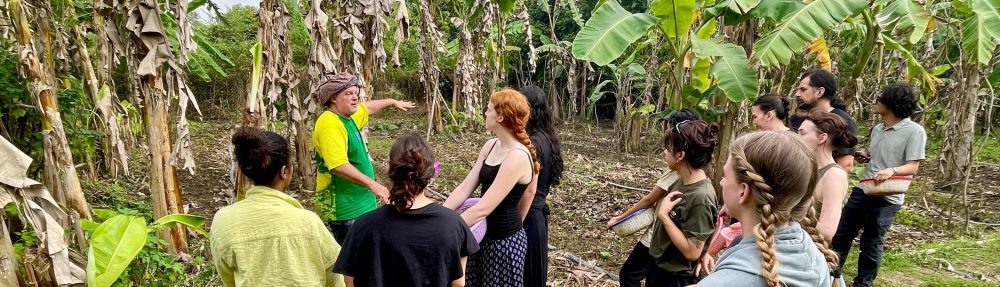
Learning about Tibet during our stay at the Pavillion of Tibetan Culture

While staying at the Tibetan Pavillion I had the chance to read a couple of books from the library to learn about this nation and how politics has influenced it’s culture and day-to-day management. Tibet, or as it’s often called ‘the Roof of the World’ because of its Himalayan plateau, remains one of the most politically sensitive and internationally debated regions on the planet. As of this year, the situation now reflects decades of historical struggle, contested sovereignty, cultural resilience and human rights controversies.

A Brief History

Before the middle of the 20th century, Tibet operated as a theocratic polity centered around Lhasa with the Dalai Lama serving as both a spiritual and political leader at its apex. Tibetan society as a whole was structured around Buddhist institutions and distinctive local traditions and its interactions with the neighbouring powers like China and Mongolia had varied over centuries. Modern Chinese claims to sovereignty were very drastically strengthened under the People’s Republic of China (PRC) after its foundation in 1949. 

In 1950-51, the People’s Liberation Army entered eastern Tibet. What came out of this was the Seventeen Point Agreement signed in 1951 between the PRC and representatives of the Tibetan government. The treaty promised to guarantee autonomy and respect for Tibetan culture under Chinese sovereignty. However, many Tibetans have argued that the agreement was out of coercion and not free consent from Tibet. Little by little, tensions over Chinese rule escalated and on March 10, 1959, a widespread uprising broke out in Lhasa. Chinese forces brutally suppressed the rebellion, leading to thousands of deaths. The 14th Dalai Lama fled into exile in India, where he established the Tibetan Government – in – Exile (in Dharamsala), a focal point for global advocacy of Tibetan autonomy and rights. Since then, March 10 has become Tibetan Uprising Day observed by Tibetans and supporters worldwide. 

In 1965 China designated Tibet as the Tibet Autonomous Region (TAR), intending to institutionalise minority rights within the PRC framework. Although the autonomy is largely symbolic and that real authority lies firmly with Communist Party structures. Tighter controls, especially after periods of unrest, have contributed to the ongoing political and cultural tensions. 

As of 2025

Looking at reports by Human Rights Watch, there is documentation of systematic restrictions on daily life and expression in Tibetan areas. Chinese authorities have been arresting ordinary Tibetans for using cellphones, posting content that those same authorities have deemed ‘banned;, or celebrating Buddhist figures and cultural heritage online. Similar to that many Tibetan language websites have been shut down and those who advocated for their functioning have faced detention and harsh sentences. As I mentioned earlier, March remains a particularly sensitive month, authorities prepare heightened security for this period of historical commemorations. Deployments in Lhasa and at monasteries intensify that month to preempt gatherings or protests. 

Religious expression is a cornerstone of Tibetan identity but numerous reports, including European Parliament resolutions, highlight violations of religious freedom, interference in the selection of spiritual leaders and the transnational repression of Tibetans abroad including those in Southeast Asian countries. Cultural advocates argue that measures such as the cancellation of Tibetan language instruction, replaced by Mandarin Chinese in schools and monitoring of religious institutions are part of broader forced assimilation policies. Local restrictions even extend to symbols traditionally important to 

Throughout 2025. Tibet has remained a subject of international concern. EU authorities have expressed serious concern over deteriorating human rights that point to limits on freedom of speech, movement and religious practice. Countries at the UN Human Rights Council including more than two dozen democracies, have raised the situation in Tibet and called for stronger protections. During the various General Assembly debates on the topic (1950, 1959, 1961, 1965), several members spoke passionately, denouncing the Communist government’s aggression against Tibet as a violation of its independence. However, while two of the resolutions referred to the principle of self-determination, all three skirted the issue of Tibet’s status under international law, focusing instead on human rights violations. To this day, the United Nations’ unfinished consideration of the question of Tibet remains one of the global body’s most notable and longstanding acts of omission.

China on the other hand, routinely pushes back, accusing foreign governments like the United States of ‘meddling’ and labeling Tibetan advocacy as separatist or anti-China activity. China maintains that Tibet is securely and peacefully governed within the PRC and rejects external criticism as interference in internal affairs.

Tibetan Exiled Leadership

Even as security tightens in the region, Tibetan activists and the Central Tibetan Administration work internationally to keep the issue visible. In August of 2025, activists protested outside the Chinese Embassy in New Delhi during a high-level visit by China’s foreign minister. In the diaspora, political life remains active. Preparations are underway for the 2025-2026 general elections of the Tibetan Government – in – Exile, signaling continued democratic engagement among Tibetans worldwide. 

Economic and Infrastructural Developments

The Chinese government often highlights economic transformation in Tibet, emphasising infrastructure achievements and development goals. In 2025, Tibet marked the 60th anniversary of TAR, with celebrations focused on modernisation, enhanced transportation networks and energy projects. One of the most ambitious and controversial developments is the Yarlung Zangbo (Brahmaputra) hydropower project which could potentially be the world’s largest hydroelectric series of dams when completed. Construction, including a mammoth dam at Medog/Fengdu began in July of 2025. Proponents argue these projects enhance power supply, economic growth and carbon reduction, critics of the project have highlighted the environmental degradation, displacement and threats to downstream water security for India and Bangladesh. 

Despite systemic pressures, Tibetan culture, especially Buddhism, remains resilient. Pilgrimages, monastic scholarships, arts and diaspora celebrations reinforce identity. Communities that have gathered outside Tibet such as the one in Portland showcase traditional music, dance and food. Inside, religious festivals and ceremonies like the Sakya Monlam draw thousands of devotees, a reminder that sacred traditions endure even under surveillance. 

Looking to the Future 

The core dispute over Tibet remains one of human rights and cultural autonomy versus centralised state control. Many Tibetan activists, exiles and international observers see the situation as one of cultural survival. Meanwhile Beijing keeps stating stability, economic development and territorial integrity. 2025 marked the Dalai Lama’s 90th year. A milestone that has stimulated a global reflection and discussion on his role and succession. Recently the talk of succession has opened potential negotiations about reincarnation and underscores how spiritual leadership remains central to Tibetan identity and political symbolism. 

China day by day increasingly asserts control over the recognition of future Tibetan Buddhist leaders, a policy that directly affects the future of the Dalai Lama’s institution – a point of continued dispute. Global attention to Tibet will likely continue rising. Calls for diplomatic pressure, sanctions and human rights monitoring features prominently in European and US policy discussions. At the same time geopolitical priorities, including China’s economic influence, temper how far governments are willing to challenge Beijing. 

In conclusion, Tibet remains a disputed region with day to day life being impacted and the government being in exile. Staying at the Pavillion I had the opportunity to learn even more about Tibetan food, culture, music, ceremonies and Buddhism as a whole through my daily interactions with Kalsung.

by Sofie Mihaylova
A Day With Disposable Cameras

By: Beatriz Salgado


My day started out with the usual morning breakfast at Morgan’s, scrambled eggs with toast and milk coffee. Then, I went to the Matrimandir for the first time, one of the most intriguing experiences yet, but I’ll leave that for another blog entry.

I’ve had an idea for my personal project before I even left for India. Working with children in Brazil and establishing a genuine relationship was always something I felt passionate about. So, my idea was basically to get children to walk around Auroville and take photos of something, I hadn’t really thought about what that something was until I started volunteering at Wasteless. I mentioned my idea with Rihbu, the organization’s founder, and thought he could help. He really liked the idea and thought it could be great if the project complemented Wasteless’ new educational program kNOw PLASTICS. Together we decided the kids would take pictures of plastics. They were to think about where they got their plastics? How did they use plastics? And where they threw their plastics away?

wastelesskids.jpg

I had already been to Aikiyam School the day before to observe the pilot testing for Wasteless’ new educational program, so I had met the principal of the school, Shankar and he said I could meet with the kids on Saturday afternoon. The next day, I got all my gear, which included three disposable cameras, a laptop, water bottle, my journal, and a charger and headed for Kulapalyum Road. While I waited for Shankar to confirm, I had a delicious lunch at Frites with my classmate Imani and later coffee and brownie at Marc’s café, an indispensable place to drink coffee while in Auroville.

Finally, I heard from Shankar and walked to Aikiyam School under the hot afternoon sun, not to mention it was winter. I went to the science room where the teacher and students were doing extracurricular work and waiting for my arrival. They usually have some activities during the weekends to keep the students busy. Before heading out for our photography exploration, I decided to talk to some of the students and interview them about plastics. Though they were a bit shy in the beginning, I was surprised by how much they knew about the issue.

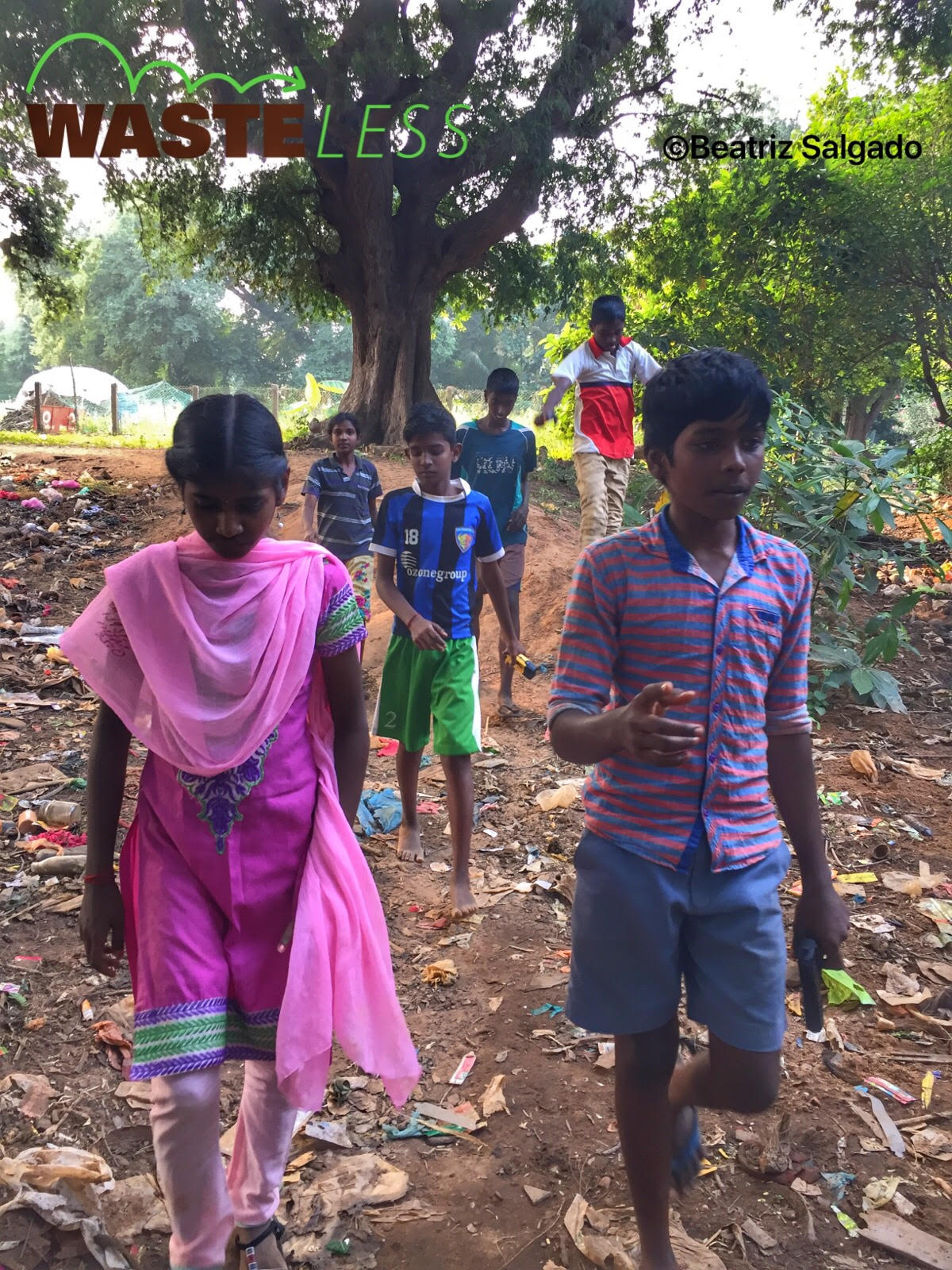
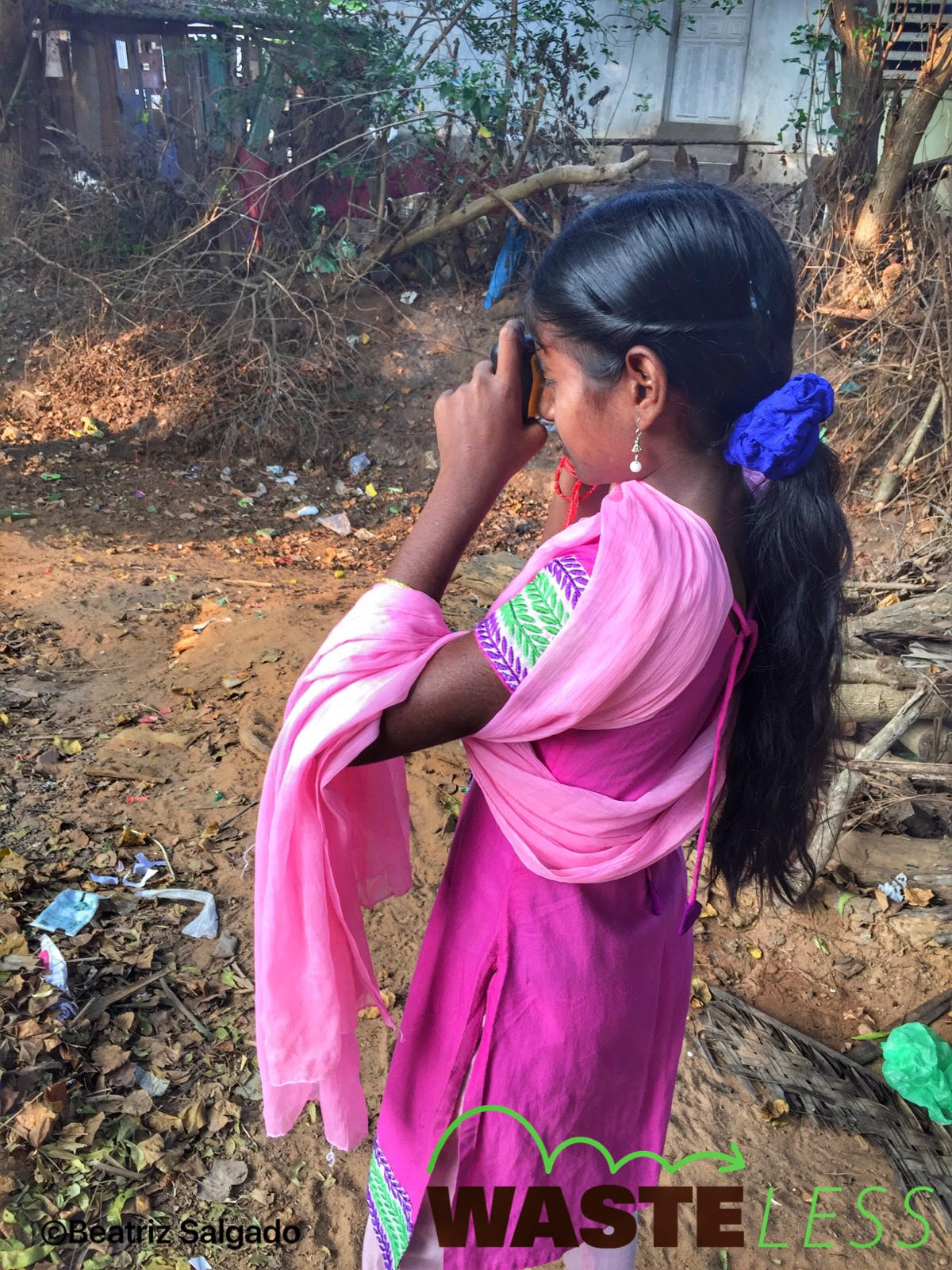
To start our photography hunt, I divided them in groups, two girls, Deepa (13 years old), Roshini (13 years old) and two boys, Chandru (14 years old) and Chander (13 years old). Later, we met up with two other students, Arjun (13 years old) and Thiru (13 years old) who decided to join our expedition. I gave each group one disposable camera and explained to them the objective of taking the pictures.

wastelesskids2

The purpose of the assignment was to take photographs of plastics in their point of view by keeping in mind the three questions mentioned above. As soon as we stepped out of the school, they immediately started taking pictures of the waste they found right outside the school: plastic bottles, bags and even a CD! We walked along the main road and headed towards Kulapalyum village where the kids lived. As we strolled around, the students entered different shops and interacted with people explaining to them what they were doing and why they were taking photos of plastics. Then, we started heading to each of their homes. What was interesting to observe were the different perspectives they had on what was clean and dirty. One of the questions was if they thought where they lived was a little, medium or a lot dirty. Most of them answered little or medium and that it’s sometimes clean and sometimes dirty. I remember thinking, ok, so they live someplace decent. I was wrong though, what was surprising was their notion of somewhere clean turned out to be a completely different conception from my reality.

wastelesskids4

During the interview, they all answered that they threw their trash and plastics in dustbins in their homes and that they don’t throw waste on the streets. One student even said they separated organics from non-organics at his house and that after it was separated, the “people that do the duty comes to pick it up” (Arjun).

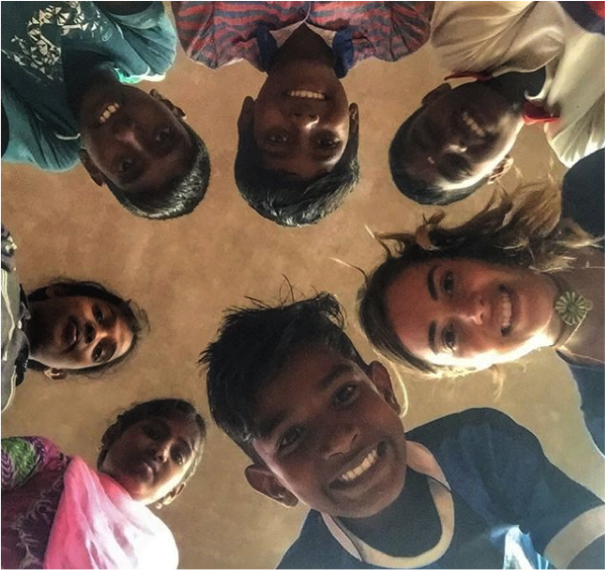
The small comfort that I did have, despite seeing those kids’ environment and their reality, was that they were still being kids and had so much fun taking photos with a simple disposable camera.

meandthekids

The Impossible is Possible

By Mia Windisch-Graetz

Three dead bodies carried away by a bunch of six-legged murderers – in India one can have interesting encounters in the bathroom. I will never forget the moment when I discovered an ant colony that evidently split into three small groups in order to carry away three (still living) wasps. Attracted by the light in the sanitary facility, the wasps apparently got tired and while having a rest, they offered the perfect opportunity for an ambush attack by a hungry ant family.

Screen shot 2016-02-18 at 2.13.45 PM(Unfortunately, one can’t embed a video, so WATCH it HERE)

Without a doubt, an ant alone has no chance to defeat a wasp, but their teamwork as well as their extraordinary communication skills make them invincible.

Ants are considered as one of the best communicators among all beings worldwide: The lone ant follows the path marked earlier by her companions. Along the way, if it stumbles into a giant wasp that would feed many in their family, it releases a complex cocktail of chemicals to summon reinforcements which soon arrive. Not only do they know how to find the hunt, but they also bring the necessary tools and personnel to kill the wasp and bring the body back to their nest.

It sounds scary but is indeed clever: The ants’ efficiency at foraging has even inspired business and computer problem–solvers, who are looking for new techniques to come up with quality answers in the quickest time.

However, the wasp itself was never regarded as a problem. Instead, they transformed the ‘problem’ into a solution from the start. We should consider these brilliant little beings in the bathroom as role models. By transforming waste, ‘the problem’, into something useful through recycling, we kind of already did. Also, by creating communities, such as Auroville, that unifies people with similar aspirations in order to change the world and make it a more sustainable place, we kind of already did.

Furthermore, this encounter reminded me of our group: How they carry something big together, they move things together, solve problems together, think and act collectively, help and support each other.

Let’s do it the anty way and make the seemingly impossible possible. Let’s move things together that seem to be too big for an individual to carry. Let’s fight together against these waspish wasps, no matter if they are called Monsanto, pollution or waste.

I cannot help my self

It has been argued that one can only recognize the self through the “other”. This is because the “other” confirms what the self is not. This argument is one which is salient when people promote “colour blindness” as a solution when it comes to racial prejudice. Those who are in favour of the understanding of the self through the “other” bash the notion of colour blindness because of the perceived inevitability involved in self identity formation of identifying the other and participating in “othering”.

Some collectivist societies openly recognize that the notion of the self is one that cannot exist independently without the other. There are languages that do not have an equivalent word for “the self.” The pronoun “I” is often the closest word to the self. In South Africa where I am from, the philosophy of ubuntu summarizes how the self cannot endure independently from others.  Ubuntu is the belief that you are who you are because of your interactions with those around you who also contribute to your development.

In India this inability to exclude the self from community is apparent.  All of the NGOs within and beyond Auroville all participate in contributing towards developing India in a sustainable way for future citizens of India and of the world. Auroville’s charter is one that candidly echoes the sentiment of ubuntu and selflessness:

  1. Auroville belongs to nobody in particular. Auroville belongs to humanity as a whole. But, to live in Auroville, one must be a willing servitor of the divine consciousness.
  2. Auroville will be the place of an unending education, of constant progress, and a youth that never ages.
  3. Auroville wants to be the bridge between the past and the future. Taking advantage of all discoveries from without and from within, Auroville will boldly spring towards future realisations.
  4. Auroville will be a site of material and spiritual researches for a living embodiment of an actual human unity.

Here, the definition of the self is dependent upon the recognition of constant interaction with the other. In order for Auroville to keep evolving, individuals would need to continue to learn and share from each other.

The NGO that I am working with is called Auroville Village Action Group (AVAG). The organization has self-help group sessions for its members who reside in the local villages. This may seem a little contradictory in some ways right? A self-help group in a community that doesn’t fully recognize the self without considering its community and “others”.

Self-help is a process embedded within psychology. The field of mainstream psychology often promotes the self through wholly focusing on the individual and personal development. How then does personal development resonate within a society that prioritizes the need for the development of the self through others? AVAG has managed to integrate this within its organizational practices.

AVAG self help group health seminar which took place yesterday at the AVAG premises

AVAG self-help group health seminar which took place yesterday at the AVAG premises

AVAG’s self-help groups reflect the NGO’s ability to incorporate the concept of the self in a relevant, contextual manner.  This could also be an indicator of perhaps why the self-help groups have been sustainable. Anbu Sironmani is the Director of AVAG. She argues that AVAG combines the self within its collectivist context by putting emphasis on the fact that individual development is a precursor to the sustainable development of the community. Anbu mentioned that since the self-help groups have started, the suicide rates have dropped significantly within the villages.

AVAG’s model for its members recognizes that multiple factors contribute to the self reaching its highest potential. AVAG’s services include: self-help groups, education, microcredit, community service, social enterprise and community development.

The sustainable development of the community is the utopian ideal for AVAG.  It is the reason behind why I, as a self that is not mutually exclusive from my colleagues, have come to learn from this community. I cannot help my self but be inspired by the work of AVAG and its members.

One of the AVAG self help group members

One of the AVAG self-help group members


Nolwazi Mjwara


A Commercial Project by Unilever: Discrimination of Skin Color in India

As internet users, we are all exposed to a number of YouTube advertisements every time we are connected, unless we blocked them. During my time in India, I witnessed a few interesting online videomercials that were designed to be geographically-targeted. In India, it does not require watching more than one or two ad campaigns to understand that the media exclusively employs light skinned actors. However, a commercial for a so-called anti-pollution cream especially got my attention. Knowing that pollution is a tremendous issue in India and often seeing women in Pondicherry, putting a scarf around their head to protect their faces in traffic, I was intrigued from the start. In the video, a young light-skinned female plays a typical Indian woman washing her face with the product after realizing that a scarf does not protect her skin “against dullness caused by pollution particles”. The face wash promises to “extract all pollutants from the inside” and yield a “glow and fairness on the outside”, owing to its activated carbon “that has purifying power”. I was completely confused as soon as I heard the advertisement and saw what was written on the packaging: “Pond’s pure white face wash.” However, what really shocked me was at the end, when I saw Unilever’s logo.

1

Pond’s is a brand of beauty and health care products owned by Unilever, world’s third-largest consumer goods company. When I visited Pond’s website, their brand philosophy expressed how each product brought out the best in women’s skin that was linked to its fairness. Valuing fair skin can carry two definitions: fairness either implies beauty and physical attractiveness, or suggests being light in color, meaning a skin of light complexion. Here the direct association made between beauty and light skin is patently clear, furthermore, the idea of a whiter skin connected with “purity”. This “purifying power” is what Pond’s promises to provide to their customers. The “purity” again seems to hold a dual denotation here: it does not only indicate being hygienically-clean, but it also qualifies being of unmixed ancestry or origin. Pond’s does not solely rely on rhetorical techniques to persuade women in buying their products but carefully exploits and accentuates discrimination of skin color, on the pretext of offering a solution to avoid pollution effects.

In a country like India, where both race and caste underlie extreme inequalities and prejudices that are based on birth, Unilever commercializes these deeply-entrenched social stigmas to peddle skin-whitening products for profit. After further research into their advertisement campaigns, I encountered no shortage of more disturbing content. The Anglo-Dutch corporation offers a prescription for those who have dark skin: buying Pond’s products makes you whiter, more desirable, and even helps you find love.

The Advertising Standards Council in India published certain guidelines in May 2014, concerning skin lightening and fairness improvement products. Communicating discrimination of skin color through advertisement, using post-production visual effects to enlighten the skin of the model or associating the darkness or the lightness of the skin color with a socio-economic strata were articulated as a major concern for the sector. As a matter of fact, Pond’s advertisement campaigns seem to have gotten less negligent of these issues through the years, if not completely ethical, nor sensitive about the matter.

Click to see difference between a recent campaign (2014) and an old campaign (2008).

The more I discovered different advertisement campaigns, the more my ears got used to hearing the slogan: “Pond’s – White Beauty”. If Unilever wants to invest in creating a positive social impact in the countries where they sell their products, they should have undertaken the responsibility by changing their brand’s message before they dedicated a whole section of “Sustainable Living” on their website.

1

-Cansu

Holistic Approach

Organisationen

A lot of the lectures I have attended here in Auroville frequently mentions the importance of thinking holistically. Essentially it would mean not trying to implement sanctions against a problems as soon as you see it arise but rather research to get to the root level or to see what is actually causing the problems in the first place. Many initiatives in Auroville attempts to think more about all of the aspects the intitiative or project might have an effect on. I think of it like the cyclical events that governs all  events in nature beyond man’s control. To me it makes sense to incorporate this thinking into all ventures we engage in as it would be more viable long-term as I see our current systems of long-term thinking failing all the time, they do not solve the problems they say they will, i.e development goals etc.

Today many areas of development are still too concentrated on to the short-term way of thinking of economics which limits it’s scope to taking into consideration the  long-term perspective. The lectures continually brought up the long-term economic benefits of ones actions as less money would be spent trying to fixe the new problems that aroses from not analyzing in deepth  the root problems.

I am thinking specifically about the Pondicherry Harbor which is supposed to stand for development, but actually caused a lot of environmental damage because it disturbed the natural distribution of sand along the coastline. This sand is what constantly recreates the shoreline, or the beach. The beach is needed to stop the ocean from eroding land mass higher up from   the beach. This also apparently led to more salt water leaking in to underwater aquifers which is used by people in general and in agriculture. This also meant the soil became less fertile due to increased salt levels. The solutions at first were to build sea-walls which solved the problem along one part of the beach but then added to erosion further up the beach thus adding to the problem.

A lot of money was spent trying to mitigate all of these side effects instead of actually seeing the root cause of the problem, which was the harbor itself. Problem however is that even if the root problems is identified it is still not being taken care of because the harbor is needed for “development”. However the cost to solve this problem far exceeds what it would cost to adress the root problem. As a consequence of one act carried out in the name of development thousands of people are loosing their livelihood that was dependant on the beach. To this must be added the innumerable effects it will have  on the agriculture side. My point is that it would be far more economically viable to scrap the ideas of constructing harbors in favor of finding a better solution that does not damage the natural occuring processes that we inevitably depend on.

//Joel Hellström

Linnaeus University

Internal economy of Auroville

eco economy

Auroville attempts to distance itself from the conventional sense of economics by having implemented their own debit card system. The Aurocard, as it is named, serves to eliminate the use of cash in everyday life transactions. The philosophy behind it seems to be that by eliminating the use of cash and thereby reducing the negative visual/psychological impacts that money can bring. The way it works is that you visit Auroville’s financial center to charge your card whenever you need it. This money can then be used at any of the enterprises that are a part of Auroville. For the Indian people I am sure that this has it’s positive impacts. But for me as a foreigner visiting Auroville, the use of the Aurocard essentially just replaces the card I use back home.

To further distance itself from the conventional economy, Auroville has a few cooperatives to encourage a deeper sense of community. One is in the form of a sort of supermarket store where people who want to be a part of parallel/alternative economic system contributes a certain amount on a monthly. This enables members to shop entirely for free without ever seeing a price tag on anything. It works by encouraging and building on a recognition of needs before greeds/desires,. This means that people that are a part of the cooperation shifts their thinking more towards a needs based economy. People are also encouraged to contribute by donating excess products for others to consume.

It is an interesting social experiment of sorts where conventional consumerism is questioned by actually initiating reflection on the origin for the different products that comes from your own community. It makes one think more carefully about the production process and that you actually contribute your money towards your own community. This was a very interesting initiative that contrasts with the intense consumerism culture back at home where most people don’t think that much about the origin of the things that they buy. Perhaps there will bemore similar initiatives all over the world to bring us back to a point where we no longer over-use the resources which are far from contributing to a sustainable future.

//Joel Hellström

Linnaeus University Sweden

Link

India India Aims to Keep Money for Poor Out of Others’ Pockets

Yesterday, during an outstanding talk by Dave at Evergreen (several people said it was the best of the entire experience here), we learned, among other things, about the problem of corruption in India and elsewhere, especially where locals were not receiving the money that was supposed to be coming to them from the government. Today, the New York Times talks about it in this article.