Water in the closet?

Clean drinking water, hot showers and toilets you can flush on: these are actually only a few of the things that I/we who are living in a more developed country expect always to work and are taken for granted. When it does not work, we got big problems.

The things we take for granted to exist is what others take for granted not to exist, at all times, everywhere. Here in Auroville, in India, I can not always find; clean drinking water, hot showers, running water, toilets you can flush on and so on. I am happy that I have all of these things at home and all people should also have that. Where to find something as basic as clean water should not be a daily question or headache when trying to make a livelihood and a life for one self.

At home we take long showers and baths, letting the water run while brushing our teeth etcetera etcetera. Why? Because we can. We can use (cold) freshwater without affecting for example India only because of our country´s privileged geographic position in the world. But what can we in for example Sweden or any other water-rich or capitalistic country do to help the world’s water scarcity?

Our hot water usage is wasting the Erath’s energy resources, so be aware of that and practise short showers and not leave hot water running is important. However, Amrutdarma talked about the water we do not see or know about, how much water it takes to produce clothes and food, “virtual water”. According to www.drickkranvatten.se 97 percent of our daily water consumption is invisible water, 2700 litre water is used to produce one shirt and what people living in the highest coffee consuming country should know is that it takes 140 litre (!) water to make one cup of coffee. As much as countries who are effected by a water scarcity needs to think about water-efficient alternative for producing textiles, we water-rich and capitalistic countries need to take responsibility in our consumption and way of thinking. The Auroville way of addressing the issue of consumption is interesting. For example at the Pour Tous Distribution Center you do not buy more than you really.

In Sweden we are usually rather good at looking up what additives our food contains and now days even more about which companies that produces it and are critical and try to be as environmentally aware as possible. I believe that we should add to that list an awareness regarding the virtual water that goes into food, products and clothing during the production phase and which countries the stores buy their clothes and fabrics from. We should demand that stores and purchasers are “water friendly”. How many times do we hear “do not buy too many clothes, think about the water”? Not once. How many people know that their shopping bags with clothes and food contains thousands of litres of water, that does not come from their “own” water supplies? How many people know that theirs overconsumption of food and the food waste contributes to wasting the worlds water supplies. That leads me to think about how much water we store in our wardrobes and closets that will not return to its owner, the earth? Hundred of thousands, some of us probably store millions of litres. Walking closets are just waterparks and runways during fashion weeks are just a lot of fancy and designed water.

//Jonna, Linnaeus University
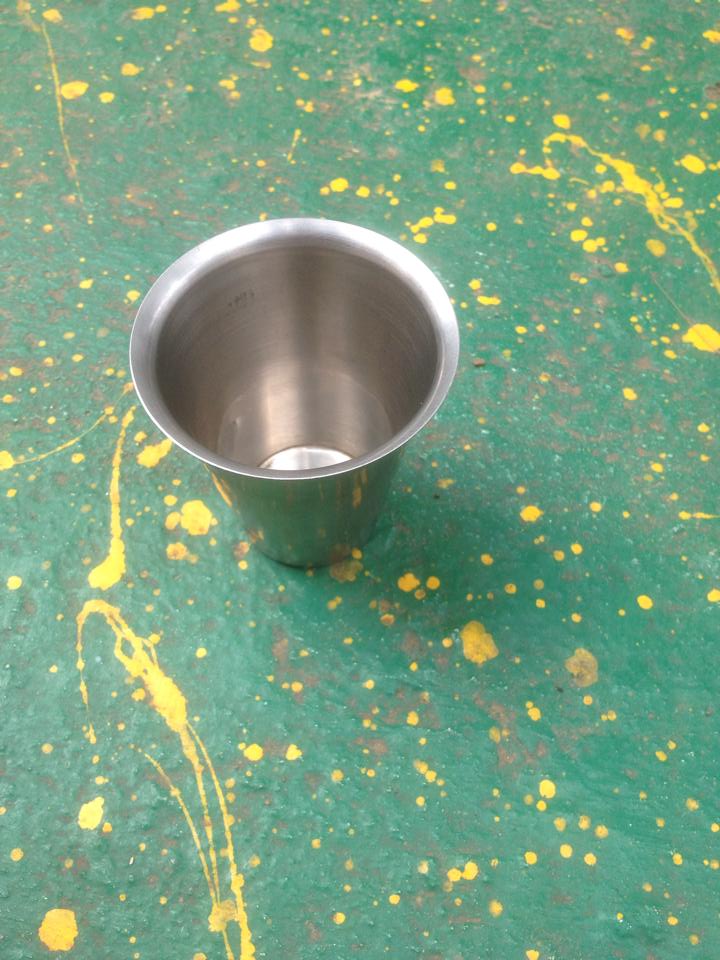
vattenkopp

Smiles & Fun at New Colors

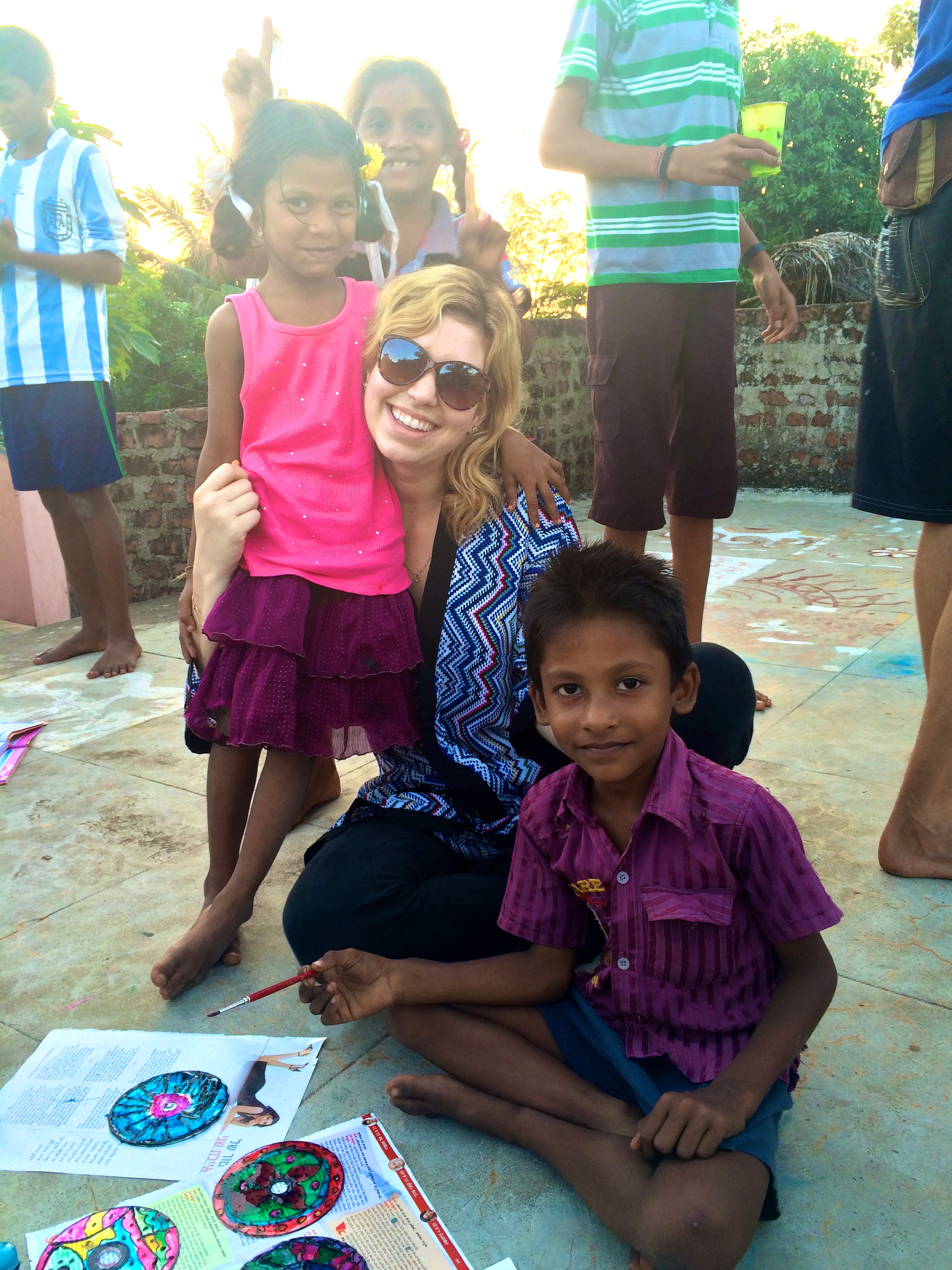
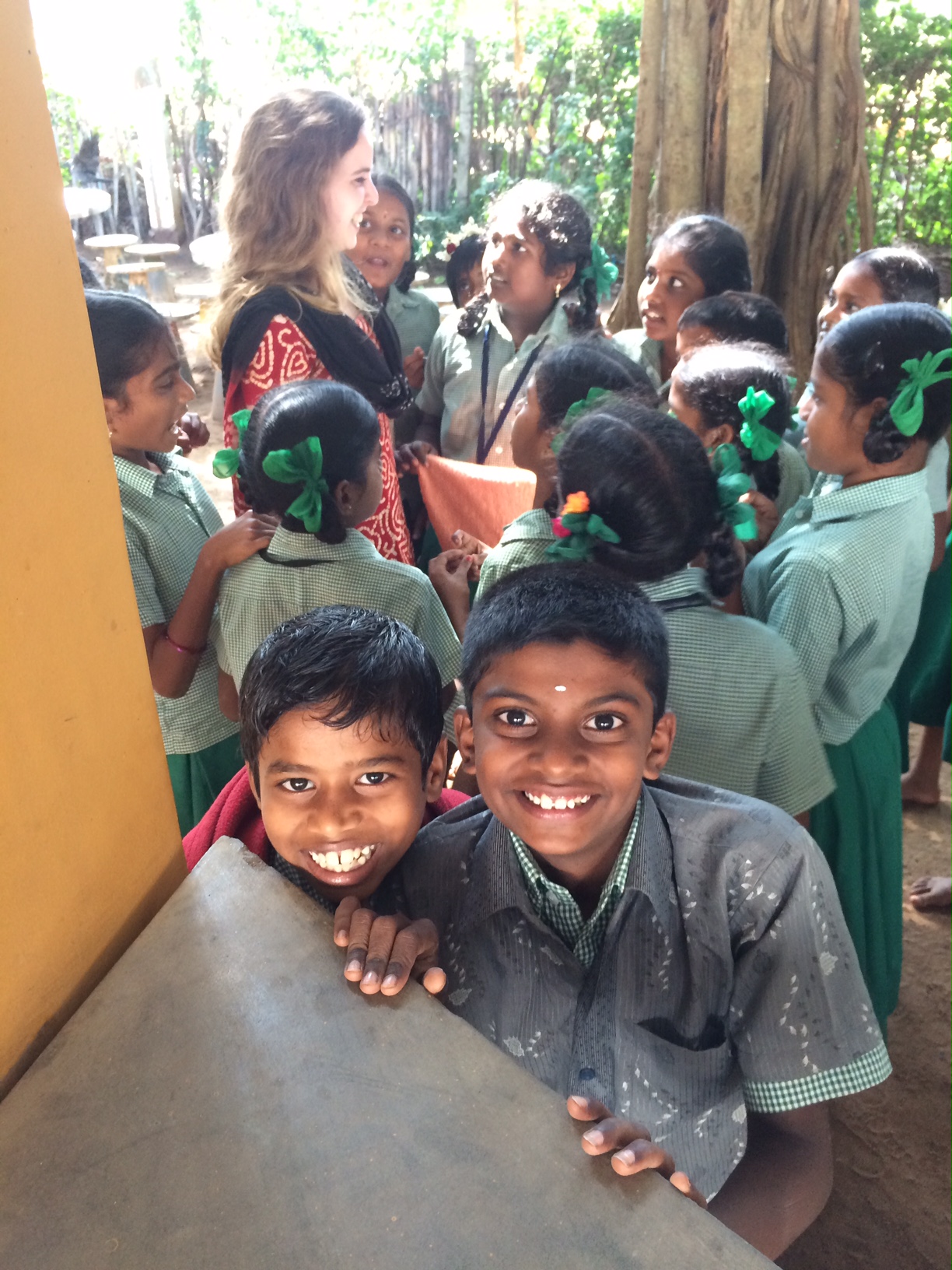
This evening I had the pleasure of going to New Colors and visiting the (adorable) children who go there after school.  New Colors works with underprivileged children of the local village, Edayanchavdy, helping to provide them with not just homework help, but personal development skills.  After speaking with the organization’s founders, married couple Kumar and Renana, I learned some surprising things about education in India (as provided by the government schools).  For instance, one classroom can have up to 60 students.  This creates immense pressure for teachers and is problematic to students, given that their chances of individualized attention are slim.  Even in classes of 20, which I was accustomed to in primary school, students are all at different levels and possess different understandings.  In a setting of 60 young students, I can imagine the frustrations a teacher might have in attempting to teach them all; Kumar explained that the teacher thus becomes a “police officer,” which is, in my opinion, not conducive to a positive learning environment.  Coupled with that, many of these children experience violence in their homes and very few are able to get academic support, due to various circumstances.  This is sad to me, because I think every child, regardless of where they are born or to whom, should have the right to education in a safe place.  This is also the reason why I was drawn to New Colors.  They understand how fundamental it is not only for the children to actually understand what they are being taught in school (opposed to just memorizing what is in their workbook for exams) but also to develop their personality and build their confidence as community members.  New Colors lets their children (both boys and girls!) play and learn in a peaceful place, and I noticed all the children were very happy to be there and be participating together in various activities.  During my visit there, I helped the young students paint CDs for an upcoming Pongal festival, able to see how eager they were to use the different colors and the special glitter paint.  I also played ping-pong (on a home-made table) with the older students, who were having a blast.  All the children were very enthusiastic, despite not having much at home, which to me, was evidence of the resilient human spirit.  I also think the efforts of Kumar and Renana are extremely honorable; they both work during the day, and come home every evening and have the energy and heart to open their home to twenty-something children.  They are also adamant to providing quality attention to the children, and at one point had to limit the amount of children to retain this value.  More notably, they do this all for free because they are committed to making this environment accessible to “all” (i.e. not just those who can afford it), which really is incredible.

//CLH

Arts & Crafts for Pongal at New Colors!

Arts & Crafts for Pongal at New Colors!

Sadhana Forest, some lightning, thunder and reforestation

Friday the 2nd of January, we went to Solar Kitchen, got on a bus and drove for 15 minutes. I knew we were going to a place called Sadhana Forest, and that the people living there were living a “hippie eco life” as someone expressed it. Judgmental, I know, but that was my knowledge of the place before coming there.

Sadhana Forest was like the way I sort of expected Auroville to be. Auroville has got electricity, Wi-Fi at several hot spots, water running from the taps and other necessities. Sadhana Forest had, besides the communal electricity for lighting the kitchen hut, none of that. They were living their life with a minimal impact on nature around them; eating only organic vegan food, not drinking alcohol, smoking or using other drugs, and dedicating their time there to reforestation. A life in a house made of cement is luxury in Sadhana Forest. The huts were made of bamboo and tied together with coconut ropes.

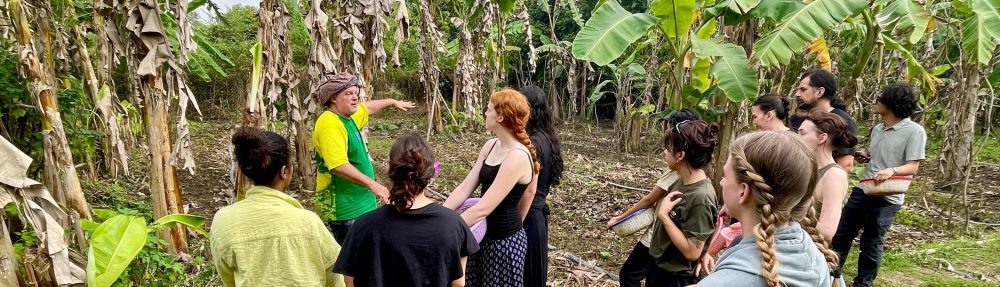
We were given a tour of the area and they sure had done remarkable things; by developing planting techniques to better fit the area they live in, they have a reforestation success rate of 80-90%. They are aiming to replant the Tropical Dry Evergreen Forest, the indigenous forest destroyed by the inhabitants of this part of India. After the tour, we got to see Cowspiracy, a film about how the cattle industry and its affects on the environment which were portrayed as worse than fossil fuel emissions.

Yes, the movie showed shocking propaganda and the numbers are probably manipulated to scare the audience as much as possible. However, maybe we need to be shocked when it comes to these questions? Isn´t it better to be shocked out from ignorance than fed with the usual “don´t eat meat” or “save our seas”? What if you do not have a understanding of the environmental crisis in any way; you do not live in an area at risk of flooding, you do not live in an area that is drought prone. It sure is easy to live with your head in the cloud, but for you to get your feet back on the ground you need some thunder and lightning, and I believe shock-tactics might not be entirely wrong.

I am therefore very thankful to Sadhana Forest for arranging these tours, where they expose their significant work and show movies within the genre of Cowspiracy. Thank you for the thunder and lightning.

//Anna, Linnaeus University

My challenge with saying thank you

The first word that I learned here in Tamil Nadu happened to be “nandri” and since then, I received various reactions from locals when I pronounced this word, which gave me the urge to look deeper into its use. A local Tamil from the village Kuilapalayam taught me how to say “thank you” in his mother tongue. I enjoyed using it until my first evening in Pondicherry, outside of Auroville. As the only tourist in a tiny, modest restaurant where I was having dinner with two local friends, it caught my eye that I was the only one who kept saying “nandri” to the waiter. Later on, as the waiter was posing a plate of dosa on our table, my friend softly tilted his head from left to right. I immediately recognized that gesture: the famous Indian head shake. During the following week, I observed locals doing the Indian head shake in different contexts and realized that it carries more than one meaning. The Indian head shake simply suggests that the person acknowledges the action or word of the other, but it can imply different responses. If someone pours you a drink, doing the Indian head shake would tell the person to stop, as “that is enough” in a certain way. If someone asks permission to go to the bathroom, on the other hand, the same gesture would mean “yes, go ahead”. The same gesture can also mean “thank you” in a given situation like between a customer and a waiter.

Hoping to seem less touristy, I started using the gesture instead of saying “nandri”, but this did not last for a long time either. On my second week here, while I was out having a drink with an Indian friend, he saw me doing the gesture and started laughing at me. I shared my confusion about the ways of thanking people but his only explanation was: “You do not have to thank the waiter; it is his job to do so. You thank God.” His thought first made me question if Indians cared about being polite with each other, but when I gave more thought to it, I remembered quite a contrasting experience that I had in France. Four years ago in Paris, I took the bus and bought a ticket from the driver. As I had to move towards the back of the bus in a hurry to let other people at the station get in too, I forgot to thank the driver. Suddenly, in a very brutal and severe tone, the driver grabbed my arm, looked me in the eyes and said: “On dit merci?” (We say thank you?). Without even thinking about it for a microsecond, I apologized and thanked him. As I was moving forward, all I could hear was my heartbeat: I felt ashamed of what I did not do. Yet, I wondered if the French driver’s behavior was justified.

Being polite requires love and compassion for the other, rather than being civilized. Thanking someone should come from the heart and not the rules of society. Most importantly, being thankful to someone cannot be fully translated by the simple pronunciation of a word. Whereas the Western culture suggests using the “thank you” word like the air that we breathe in, as if it was given, as if it was free, I wonder if the word is not losing its sense. We came from a University in Europe to spend a whole month in the South of India to study communication and sustainable development. While we observe situations with an ethnographic eye, I wonder if every idea that we perceive as “developed” should be reflected on the Eastern culture. Is the Western way always the best way?

Here the use of “thank you” as a cultural, communicational and linguistic aspect is to be seen as an example, in order to expand the same view on how we imagine sustainable development. While studying development, one should always remember to keep a certain balance in his thoughts: the “West”, recognized as the carrier of Reason, technology, and civilization, should also learn from the “East”. Sustainability is about both giving and receiving, investment and impact. Whether it is moral or material investment, social or economic impact, sustainable development is the achievement of a great balance. The idea of Development with a capital D should therefore stand at the midpoint of the “West” and the “East”, in order for both to potentially benefit from it.

-A student from Istanbul.

Clothes Aren’t Going To Change The World: Uma Prajapati Is

IMG_7899

Uma Prajapati, the founder of Upasana, embodies this quotation to the fullest. Based in Auroville, India, Upasana is the overarching company comprised of multiple different brands of sustainability from organic clothing, tsunami relief, waste management, social responsibility, empowerment and growth. Since working with the brand to increase consumer literacy about organic cotton, I’ve been completely inspired.

Uma Prajapati. Image courtesy of aurovilleradio.org.

Uma Prajapati. Image courtesy of aurovilleradio.org.

I spent some time talking with Uma today and what she had to tell me absolutely overwhelmed me. I wasn’t overwhelmed in the sense that I felt panic or loss of control, but in a sense that I was utterly affected by her story.

Uma came to Auroville in 1996 and after a year founded Upasana. Her aim was to bring India’s textiles to Auroville, so after sourcing from around 16 different states, the company began to develop traditional textile and fashions. It wasn’t until the devastating tsunami hit India in 2004 that Upasana started to transform. This devastating natural disaster killed nearly 230,000 people and affected the lives of 1.7 million in 14 different countries. The company was working to help pick up the pieces through various social projects. Uma ended up working with organic cotton farmers and became profoundly changed with what she learned.

“When I began to work with cotton farmers, I began to know our big brother, Monsanto. I had no idea. I didn’t know there was a seed mafia. I didn’t know that there was a chemical mafia. I didn’t know farmers were committing suicides due to the way the whole economy is structured. They feel so vulnerable. The whole thing hit me so hard,” she said.

Because of this, in 2010 Upasana declared that it was consciously taking the step into becoming organic to support the farming community. She told me that it just blew her mind when she found out that 25% of the world’s insecticides and pesticides get used in one single crop of cotton. She continued to reveal that fashion is corrupt at the very base level, that it can’t even support the people working to produce the crops necessary to create clothing.

Uma questioned her role in all of the mess. “And in that process I chose to align my action and my thought process to the future and the light of the future, not so much thinking about who has to change right now. It’s me who will change and it’s my organization who will change and I will align myself to the future. This is where the sustainable fashion as an option came to me, that if I had to continue doing fashion, it will be only this or I’m done.”

It was this point in the conversation that really made me sit back and examine the world and the people who comprise it. What are we doing to our planet, to our people? If all fashion companies and all of the segments that make it up changed to operate in an ethical and sustainable way the total global carbon footprint could be drastically reduced and countless lives could be saved. If more leaders of companies had Uma’s mindset, the world would be in a much better state.

The future of Upasana lies in international expansion. “It’s time to tell the story to the larger community.” Uma had purposely avoided that route because she wanted to serve her own country and domestic market within India, first. She continued, “now, I’m ready to take this story of a small brand venturing into a fashion and trying to bridge from the farmers to the wearer to the whole line of organic.”

I asked her where she thinks the future of sustainable fashion is headed and without any hesitation asserted “sustainable fashion, it’s the only way!” If we want to we can choose to continue to do what we are doing and destroy the planet, but eventually we have to think about the future. The future lies in sustainability and a conscious lifestyle. It’s not just the fashion industry; many things need to change.

Uma’s passion and dedication to making a difference is exactly the inspiration that the world needs to achieve the larger goal. In a world filled with people and companies whose only concern is to make money over everything else, Uma is so refreshing. But, in addition to her commitment to make this world a better a place, her positivity and optimism for the future makes me hopeful that change can actually happen. I hope my contribution to the effort has even a minor impact upon perceptions of sustainability as a whole. I hope people make the change.

By Alexa Pizzi

Grassroot edutainment – the solution to garbage and waste problems in India?

One thing that was pointed out to me before coming to India was the problem with the garbage. It was explained to me that they did not seem to have any particular understanding of how to take care of their garbage other than throwing it out in the street. It was the first smell that hit me, and it has constantly been present ever since I got off the plane.

We have been consistently educated in how diseases are transmitted and how we should use hand sanitizer to keep healthy. Just because we come here for a month, we suddenly need to act as we are in the middle of an epidemic or sanitary crisis. And yes, I understand we are not adapted to the bacteria here and that of course we need to be careful. But what about all the people who live in these conditions? Not, as we do while staying here, in a nice hostel with a regular toilet, a sink, and access to clean filtered drinking water. What about the rural villages?

image2Pondicherry dump

Since this has been in the back of my head ever since we left Sweden, I was really impressed when we visited an NGO called Yatra Arts Foundation. They work with what one would categorize as edutainment, or social marketing. They sing and perform plays with important social messages regarding health education. We got to see a movie about the issues raised dumping garbage, and how it could make you sick if not taking care of it in an appropriate manner. A few of us were even able to attend one of their live street performance later that evening where they sang in Tamil, and performed a play that focused on how dirty water could make you sick. It was truly wonderful to see how the children watching (and they were many, maybe, close to 50!) were laughing and participating in the play and in the vocal performance. They even took part in the dances on the little lit up area the artists were using.

image1

Live performance by Yatra Arts Foundation

The work being done by Yatra is really important, and I believe it should be spread across India and to other countries that are facing similar problems. Grass root level edutainment comes across as a very effective way of teaching children about these issues, since they may not have access to other sources of information. How could they be exposed to a national television campaign regarding these issues if they don´t even own a TV or if they barley have electricity?

//Anna, Linnaeus University

Bargaining in India – Paige Nelson

Coming to Auroville, India there is an unique custom of bargaining with store and shop owners that  is not available in fixed price shopping in the European world. By making the price negotiable, there is an opportunity to satisfy consumers whose willingness to pay is significantly less than the shop owners asking price. Bargaining is a system of exchange by which goods or services are directly exchanges for other goods or services such as money. The bargaining system enables two parties to exchange goods or services based on mutually perceived value. It is enacted by an individual picking one or more items and bargaining the price with the producer of a product.

An instance in which I chose to bargain shop in the town of Kulapalayam, there was a negotiation of the price of a scarf that was initially 1,000 rupee. After many attempts to bring the price down to 800 rupees I chose to purchase two scarfs for 1,800 rupees. In the specific shop there were two brothers who were the workers under the direction of their mother who sat in the middle of the store as an overseer and keeper of the money. Realizing the relation between the three individuals, I recognized quickly that this was a family business who relied on the money to survive. Upon this realization I came to the question of “When is it alright to bargain when the consumer is in need when the family is in need to survive?” Is it proper to meet their asking price or is it proper to to honor your willingness to pay?

Finally, it is not a question of “who is more in need?”, but of “how can we both benefit from this process?” Watching the mother in the of the shop laugh at her sons attempt to negotiate made me realize that she is having fun with the process and was not counting on the profits of the night to sustain and was impressed with my bargaining skills. The process is not black and white and is built on a system of understanding. There has to be a middle ground to satisfy both parties that takes into account all of these elements. You get your scarves for a fair price and the family is able to sustain itself on their profits. 

Outside the Mother’s Bubble

Whether you choose to lap up the new-age and mosquito laden kool-aid or not, the beauty of Auroville is undeniable. Lush, green, and tranquil; it possesses a sense of calm (and western toilets, hallelujah) absent outside the Mother’s territory.

     But it’s not Auroville which made me fall in love with a country so different from my own. Yes, there are countless problems and visible disparity wherever you look, but there is also an indescribable beauty. Behind the garbage and questionable roadways lies an energy that draws me in. It’s the buzz- the chaos, the confusion, the friendly smiles that have me yearning to explore the surrounding cities and villages.
     It tends to be the little things that catch my eye; the hand painted trucks, the most beautiful (albeit toothless) smile I’ve ever seen, pops of color on perfectly derelict buildings, or the outright impressive amount of people or items which seems to crammed or tied on to every tuk-tuk and scooter.
While words can attempt to describe my own feelings, pictures allow you to have your own. Below is a tiny portion of the things which have brought one of those brief but profound moments of joy which I seem to only find when presented with the freedom of travel– the excitement of not knowing where I am and the overwhelming reminder to stay both open and humble.
DSC_0039

DSC_0986

DSC_0043

DSC_1037

DSC_0967

DSC_1324

DSC_1001

DSC_1115

DSC_0964

DSC_0968

DSC_1256

RMK

India Has a Stray Dog Problem and It’s Breaking My Heart (Warning: Graphic Images)

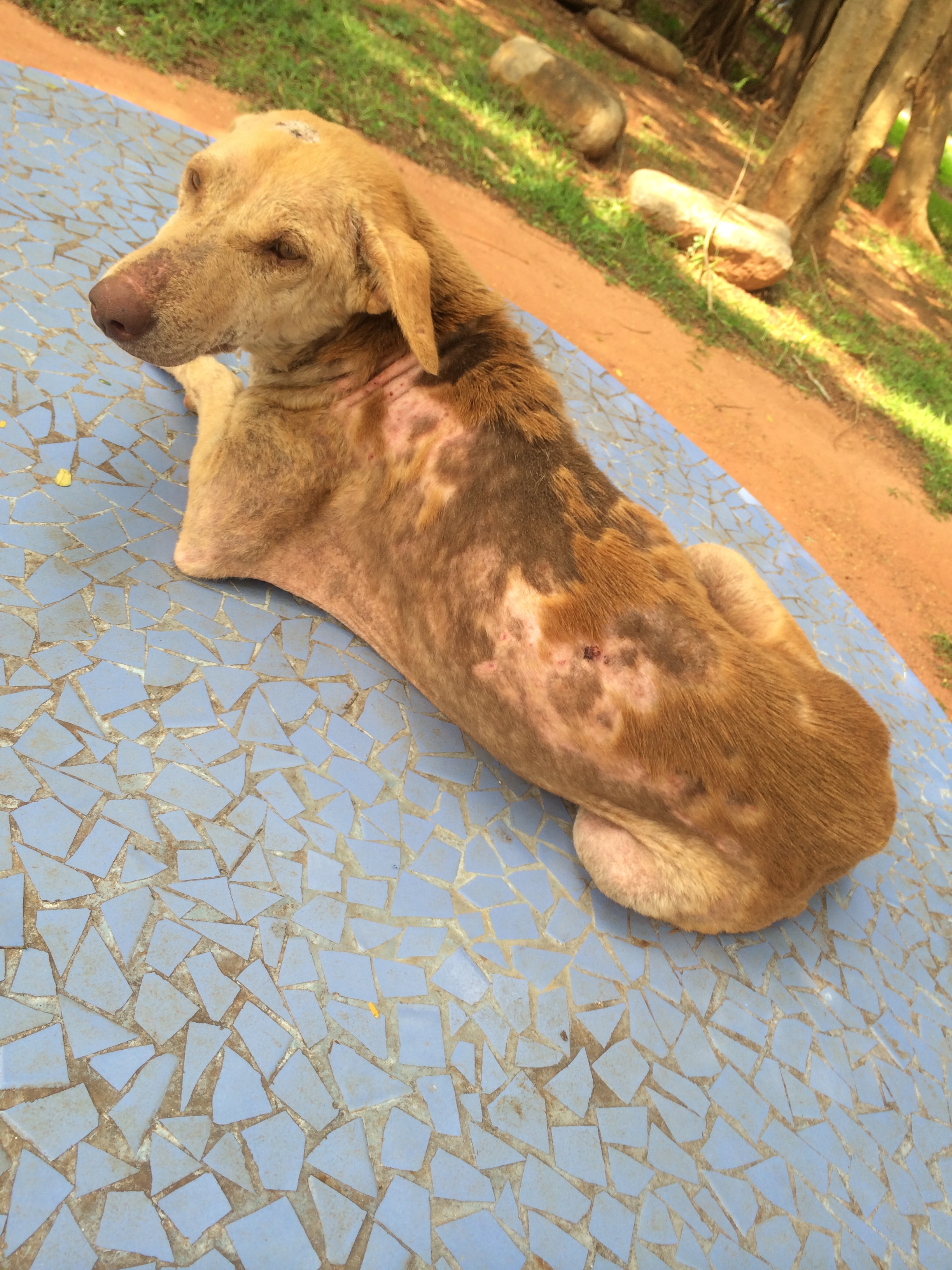
This little guy has been spotted in several areas of Auroville, emaciated and starving.

This little guy has been spotted in several areas of Auroville, emaciated and starving.

I’m a serious dog lover and the situation I found as I arrived in India has been eating away at me. It’s breaking my heart, more and more every day. It doesn’t matter if I’m walking through Auroville, sitting at the hostel, or eating at a restaurant, stray dogs are everywhere.

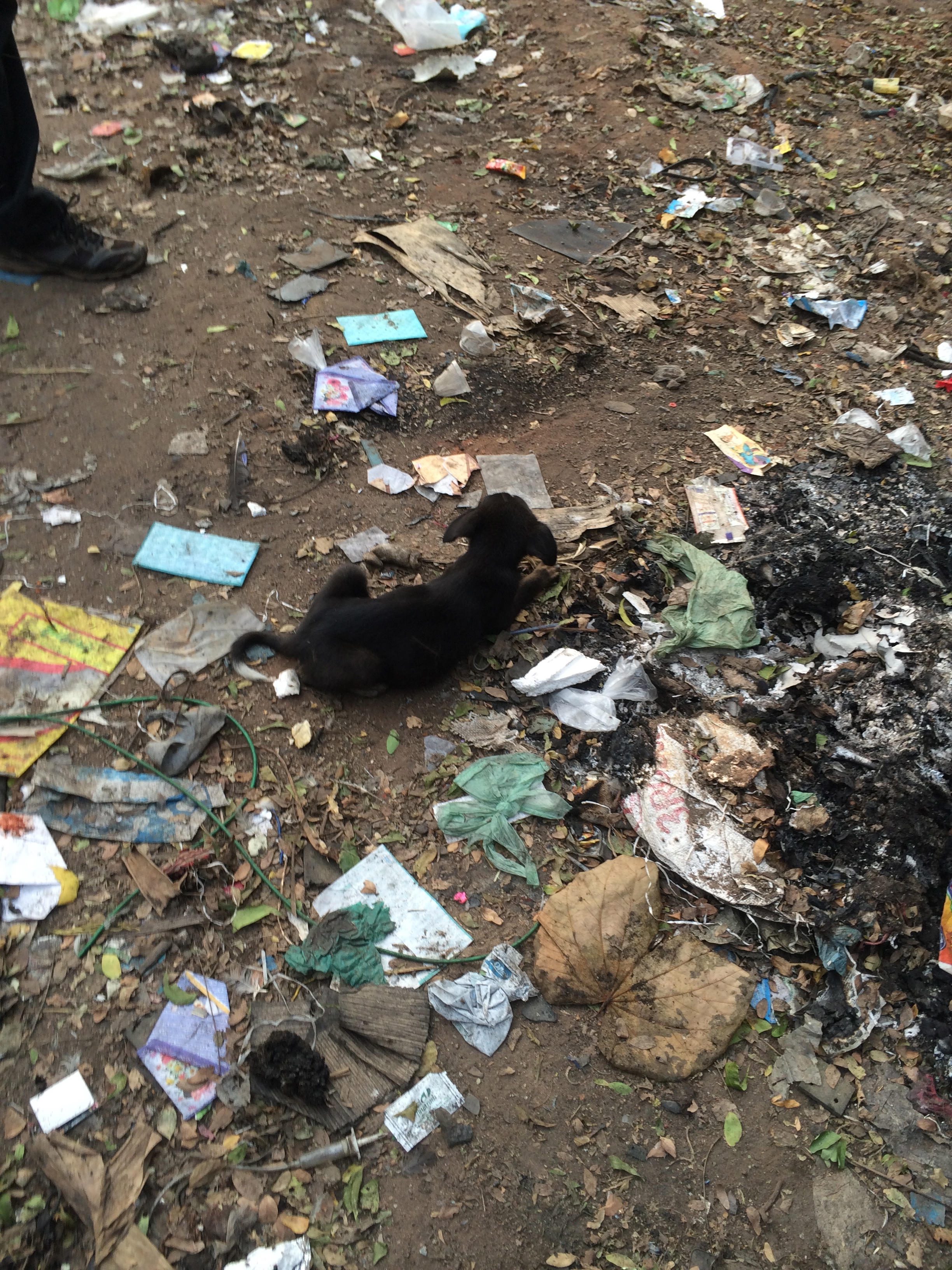
We visited a recycling center outside of Pondicherry and this little guy followed me around.

We visited a recycling center outside of Pondicherry and this little guy followed me around.

I’ve visited cities where stray cats are running rampant, but never have I ever seen so many helpless dogs. From the absolutely tiniest puppies to full grown matted muts, they are emaciated, hungry and in need of a loving home. Most of the free-roaming dogs are of an ancient canine race known as the Pariah Dog, which exist all over Asia and Africa. In addition to being scavengers who live mostly on human-created garbage, they are often kept as pets by rural and urban slum households.

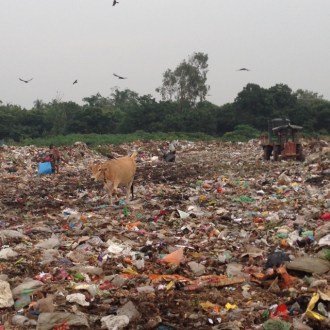
Stray dogs are often found eating garbage to stay alive. This was taken at the Pondicherry dump.

Stray dogs are often found eating garbage to stay alive. This was taken at the Pondicherry dump.

Most of the dogs I see roaming around are covered in mange, fleas and ticks with chunks of hair missing all over and dark bloody scabs. They are also typically very thin with most of their ribs popping out. Every time I see one of the dogs, my initial instinct is to run over and give them the best petting of their life, but I restrain myself. I want to feed all of them and take them home to give them all the life my dog has. Every dog deserves a warm fluffy bed, fresh food, water and basic health care.

This dog hangs around our hostel and occasionally sneaks up the stairs near our rooms. The sadness in this dogs eyes is overwhelming.

This dog hangs around our hostel and occasionally sneaks up the stairs near our rooms. The sadness in this dogs eyes is overwhelming.

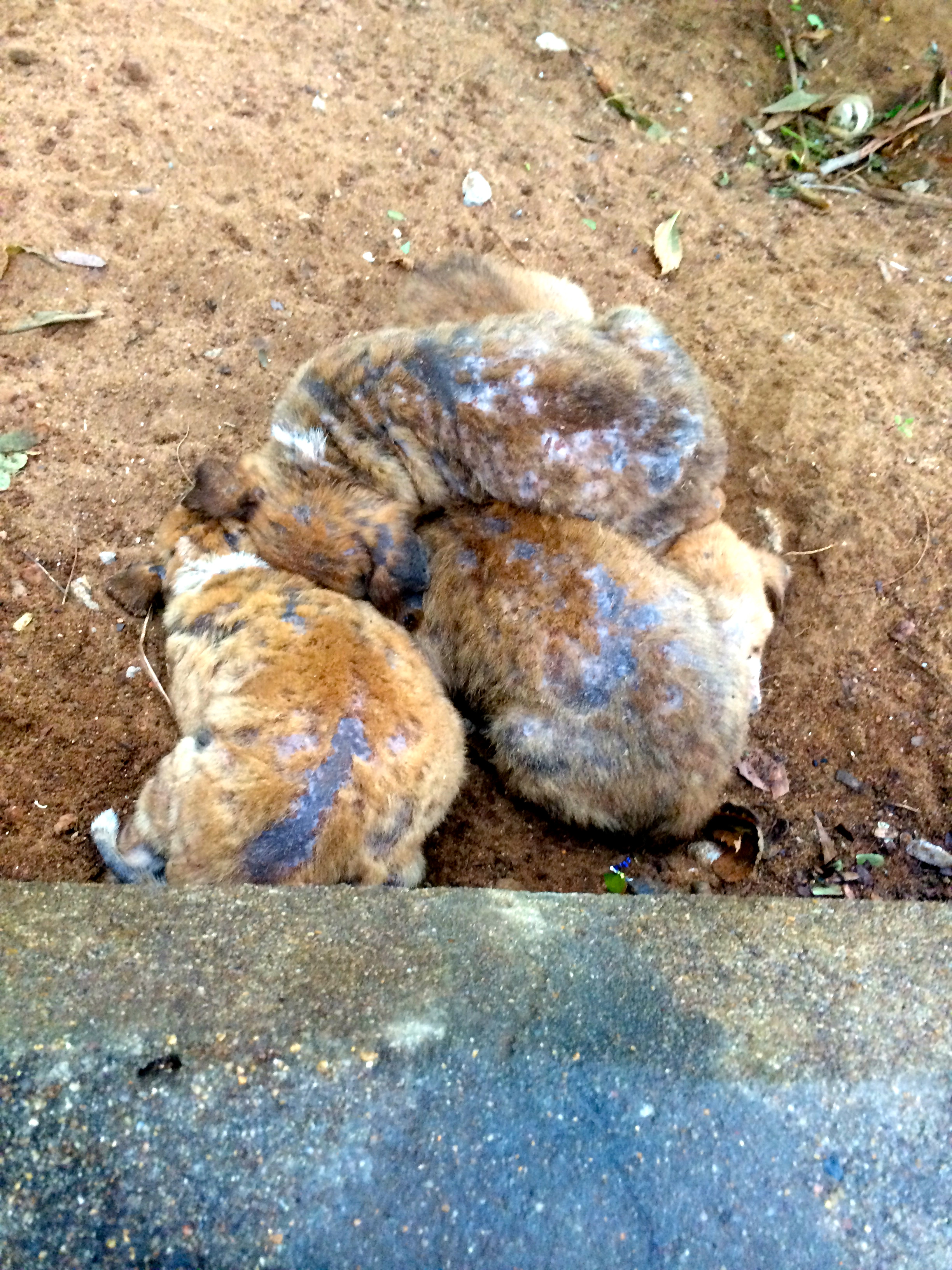
These four pups were on the side of a walk way in Malappuram, India. They were just fighting to stay warm.

These four pups were on the side of a walk way in Malappuram, India. They were just fighting to stay warm.

It’s not uncommon to see an adult dog lying with her freshly birthed puppies on the sides of the roads or near food markets. It’s so sad to see them struggling from the second they are born. The outlook for their lives are so grim.

I saw this mom and her babies lying on the side of the spice market in Pondicherry.

I saw this mom and her babies lying on the side of the spice market in Pondicherry.

India is home to nearly 30 million stray dogs and in 2012 WHO estimated that India had around 20,000 rabies cases. These numbers are not only heart breaking, but should be an alarming wake up call to the Indian government to create change. The Animal Welfare Board of India (AWBI) has been trying to implement the recently approved National Rabies Control Pilot Project, however due to lack of governmental funds and outdated policies, the program has remained stagnant. NGO’s around the country are working hard, but without needed funding, cannot fully implement the program. It’s very expensive to vaccinate and sterilize the dogs, not to mention that there are so few NGO’s in comparison to the excessive amount of dogs. It takes a lot of effort to control the disease and the overpopulation.

With a population of over two billion people, millions of which have no guaranteed food, water or shelter, it may be hard to justify spending precious time and resources on saving the dogs of India. But, all hope is not lost. In the nation’s capital of New Delhi, police officers have been dispatched to safely collect and find homes for hundreds of street dogs. The dogs will be given proper care and veterinary attention before they begin training to become service dogs. The thought is to control the street dogs, giving them purpose by engaging them with society to benefit the people.

I’m not sure if this issue will ever be fully resolved, but with the right plan of action and support, many dogs could be saved and sheltered.

-Alexa Pizzi

Slowing down; making space

sunset, auroville 31 dec 2014
31/12/2014 :: Glimpsing the last of this sunset through the palm trees, I slipped off my bike and found a spot to have a seat ; pausing just long enough to catch my breath, take this snapshot, and indulge in the peace and quiet of the moment.
   Earlier this morning during sunrise yoga, we worked to bend and twist through anything that needed to be released, both physically and emotionally, before the start of the new year. Each person was encouraged to identify her own internal toxins and empowered via this practice (and lots of laughing) to let it all go. Easier said than done, of course, but still quite an effective practice worth repeating often. Simply directing attention to the presence of this physical/emotional/psychological waste helped to shift the paradigm of what it might mean to really work through this often-uncomfortable process of making peace with the past in order to clear more open space for the present and/or future.
   With only a few minutes between the end of yoga and the start of my “commute” to work, I was soon flying over the red-rocky backroads of Auroville on my bike en route to Aikiyam School in New Creation. Getting to the gate of the school exactly on time at 8h45 was nothing less than a sweat-soaked miracle; but there to welcome me was Shankar the school’s Head Master. Fortunately since he already gave me a walking tour of the campus yesterday afternoon, we were able to get straight to work on the task at hand which included taking inventory of the school’s communication collateral and evaluating their presence online.
   When the bell rang at 12h45, I was invited to join the staff and students for lunch where I got to meet other volunteers from Europe that had been working at Aikiyam for several months. Although it was certainly an inspiring discussion, the most energetic and entertaining exchange came from the group of 4th grade boys who crammed around the small table under the banyan trees with us to “be cool” as they said; boasting loudly to their friends that they were “especially invited” to join us for lunch that afternoon. Like any other group of fourth grade boys anywhere else in the world, the tall tales these boys were spinning were truly hilarious and seemingly endless until the bell finally rang to get us all up and moving again; beaming over our shoulders at each other as we spread back out over the small campus and got back to work.
 IMG_8667
   After work, I went to meet Kalsang at the Tibetan Pavilion for some meditative “karma yoga” volunteering which involved setting out hundreds of small bowls along every conceivable edge of the complex, including every ledge and window sill in sight. After all the bowls were set, we went around and coiled tiny cotton wicks into each bowl and then filled them all with oil in preparation for the evening’s New Year’s Eve festivities. During this experience, I learned from another volunteer about her family’s meditative traditions regarding the use of similar oil candles and am still deeply inspired by how this ritual can be used in such a quotidian, reflexive way. This time of transition, from the end of one year to the beginning of another, invites us all to slow down and make space for the possibilities present in the here, and now; in both the inhale and the exhale.
Suzanne