Creating Independence Through Solarization

AUP students met with Auroville Consulting to learn about the Solar Village, a project dedicated to eradicating electricity inequalities in rural India.

By: Nicole Curren 

Solar Village Initiative – Solarize 100 Villages by 2030
blog1

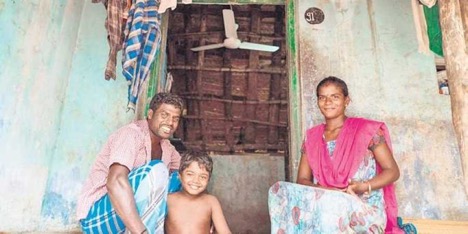
As dusk falls upon the villages of Tamil Nadu bright red clouds of dust fill the air, marking the return of children from school and husbands from work. Mothers and wives prepare dinner while daughters fulfill their daily chores and start homework.

Without warning, the power suddenly shuts off throughout the community. Street lights darken, and simple tasks become near impossible, not to mention dangerous. Cast in shadows, villagers adapt to these regular outages which can last anywhere from 4-6 hours on any given day. During festivals and holidays, energy consumption skyrockets and villages are forced to go days without power.

Yet, in nearby Pondicherry the energy required to maintain the hustle and bustle of city life endures without interruption. This is not by chance, nor is it based on a computer run schedule or automated response. Systems operators of Tamil Nadu’s government-run electric companies manually shut down power to villages and divert electricity to major cities.

Maintaining this hierarchical scheme is strategic. Due to water scarcity coal-fired power plants, which account for 70% of India’s power generation, regularly shut down. Because ownership remains concentrated, current Indian law allows for the prioritization of cities over villages.

This clear-cut inequality is the driving force behind the Solar Village’s goal to solarize 100 villages by 2030. Working alongside the government and its electric companies, the organization intends to provide independence through the implementation of sustainable technologies. The Solar Village is also ensuring that 10% of the revenue from the sale of solar energy is to be returned to the villages and used for development.

AUP students got the chance to speak with Jaswanth, a representative from Solar Village, to learn more about the project. By providing this type of independence to villages, Jaswanth assured us that if residents are able to produce more energy than they consume they can actually redo their paperwork to reflect city status. In other words, during limited power supplies they will not be subjected to power cuts. Empowering villages to produce their own electricity is the first step in reducing this disparity.

Throughout the discussion students dug deeper into the logic behind solar, learning that Tamil Nadu’s infrastructure is much more easily adaptable to harvesting energy through solar panels, rather than wind turbines. Not to mention, in terms of sustainability, panels typically last 25 years whereas the lifespan of turbines ranges between 5-7 years. Amidst climate change and the pressures of rapid urbanization, Jaswanth outlined the instability of the current power distribution for the future of India. Indian electric companies simply cannot create enough for everyone, making a shift toward more sustainable energy sources absolutely critical.

Despite roadblocks in the initial planning phases, Jaswanth remains confident panels will be installed over the next three months in the first village, Irumbai.

Making the World a Better, Greener Place

blog2

Founded in 2010, Auroville Consulting follows a multi-faceted approach to sustainable development, focusing on collaborations within the public and private sector both nationally and abroad. From research and innovation techniques to operational planning and policy work, the organization provides a multitude of resources both to producers and consumers. This is accomplished through workshops, capacity building and training, and the maintenance of partnerships with major organizations like Pricewaterhouse Coopers (PwC).

Get Involved

blog3

The next time you need to search for something on the web simply go to www.thesolarvillage.org. It works through the support of Bing, just like other major engines online. Search ads then generate income that return directly to the Solar Village to support their efforts in the purchase and installation of panels. With the click of a button you can help provide a renewable source of energy to rural communities across India. You can also support their initiative by going online and making a donation.


Offsetting our Carbon Footprint With Sristi Village

Today we calculated how many trees we would have to plant in order to offset the carbon footprint of our travels to India.

CALCULATION INCLUDED: **actual calculations are a little more complex than this.**

✈️ Round-trip air travel (Paris to India) + Total estimated auto travel (1 month in India).😅Turns out i have to plant 4.13 trees to offset 16,032 km (air)+ 1,250 km (auto)

IMG_2854.jpg

To makes things even better we had the privilege to work with this beautiful farm (The Sristi Foundation, or Sristi VillageSristi Village (Joachim)) which was founded by G. Karthikeyan. He conceptualized and built this beautiful community on the passion to include and empower people with intellectual and development disabilities from the local villages by offering shelter, general education, farm training/certification, a role in society and most of all love and support. The man who created this Non-Profit Organization saw first hand the life these types of people had to look forward to. In the villages, people with any kind of disability are often hidden away as their families are ashamed. Most believe these disabilities are a punishment from something evil/wrong the person, or the parents, may have done in a past life. While living in an orphanage as a child he witnessed children with disabilities being drugged in order for people to be able to easily manage them. Their life was a cycle of eating, sleeping, taking medication, sleeping & repeat. He knew they deserved more and wanted to create an environment that supported this idea. 🙏🏽 Today this idea has evolved into an entire village with an inclusive society whose focus is to be self-sustaining and Eco-friendly.

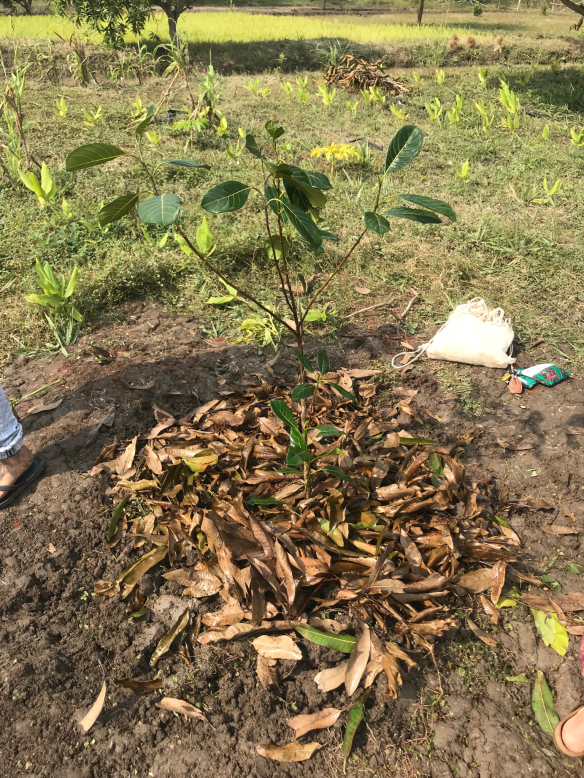
image1.pngThe people living there were so happy, knowledgeable and extremely passionate with their work on the farm, from the type of soil to creating efficient unconventional planting strategies, THEY KNEW IT ALL! 👨🏽‍🌾👨🏽‍🏫 They taught us how to plant our trees and they will be the ones to care for them from this point forward…I can’t even put into words how incredible this experience was🙏🏽

IMG_2863.jpgActual footage of a thugg planting a tree. 🌳 🍃🌾🌵👩🏽‍🌾#Offset #CarbonFootPrint #CounterAct #Travel #Plant #Trees #Build #Clean #Energy
DID YOU KNOW: Travel is one of the biggest sources of personal emissions that can be offset. Transportation comprises nearly 30% of all U.S. greenhouse gas emissions, and this number is only increasing. With carbon offsets, like planting trees, you can counteract your personal carbon footprint by helping build clean energy and carbon-reducing projects. These types of acts also contribute to sustainable development in the project region. This means that it is not only the climate that benefits; the local population does as well.

image1kkk.png

THE MORE YOU KNOW 💫

Writers ByLine Peacock Plume.PNG


The Gang Goes to Gingee

Photos by Jessica Voorhees

A Legacy of Empowerment

The Sharana Social and Development Organization is engraving a legacy of uplifting, educating and empowering the women and children of Puducherry, India.

Gabriel Green

Since its creation in July, 2000, Sharana has set its sights to working alongside individuals and families living in rural areas, slums and on the streets in and around the city of Puducherry, India.  The organization’s primary focus is set upon providing children from socio-economically disadvantaged groups, including low-income families, dalit–also known as ‘untouchables’ within the Hindu caste system–communities, or Irular villages, with the tools and support necessary to ascend to a more stable, prosperous future.

Sharana also attempts to take a holistic approach to development, using the skills, knowledge and abilities of its beneficiaries to promote community advancement. As their mission statement asserts, Sharana holds the belief that “all human beings are equal in rights and dignity, and everyone is entitled to food, clothing, and shelter.” The organization also has a firm belief that those who benefit from its programs should simply be given the tools necessary to help themselves and should not become dependent on its services.

In order to put this belief into practice, Sharana intends to and has ended several of its programs as soon as those who benefit from them become self-sufficient. In previous years, the organization provided a great deal more material support than it now does. However, as the needs were reduced or replicated by another organization or the state, Sharana has stepped back its provision of material support and now focuses more on what it calls ‘value addition’. This ‘value addition’ has come in the form of providing zero-interest loans to women in order to start small businesses, increasing educational programs for children  and other programs aimed at empowerment.

Today, the organization serves over 1,000 people, including 620 families, throughout 56 areas in the region.

A legacy of Social Entrepreneurship 

One of Sharana’s most successful and innovative programs to date has been the provision of zero-interest loans to 25 enterprising women and mentoring them as they use those loans to create small businesses. The businesses have allowed these women to access a sustainable source of income for themselves and their children. With this income, they have been able to escape from cycles of debt created by borrowing money at high-interest rates from money lenders. It has also provided them with a sense of independence, agency, self-esteem and confidence.

Amsam

sharana-112

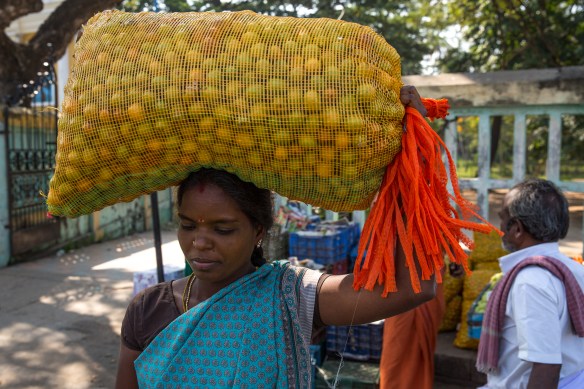
Amsam received a interest-free 15,000 rupee loan in order to start her fruit stand. She now makes around 200 rupees per day to support herself and her children.

sharana-115

Parameshwari

sharana-63

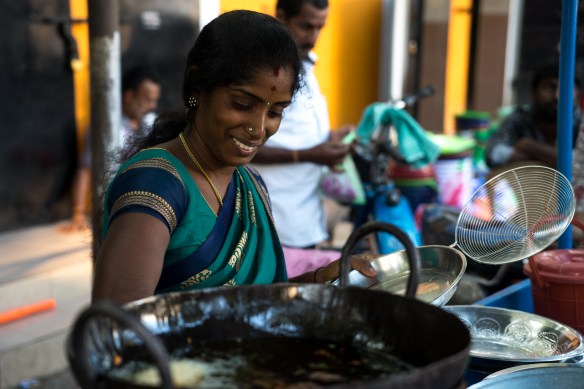
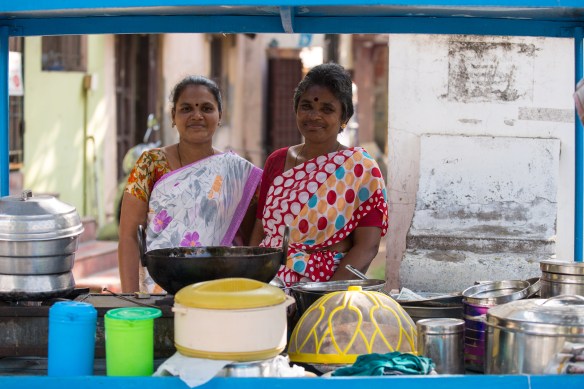
Parameshwari opened her snack cart, where she cooks and sells fried plantains, fried fish and other items, after receiving a 25,000 rupee loan from Sharana.

sharana-62

Manjamatha

sharana-110

Manjamatha, left, was able to open a breakfast cart near the Puducherry railway station because of a 15,000 rupee loan from Sharana.

sharana-109

Latha

sharana-153

Latha, right, received a interest-free 8,000 rupee loan from Sharana in order to start a fish-selling business in Puducherry.

sharana-156

A legacy of education 

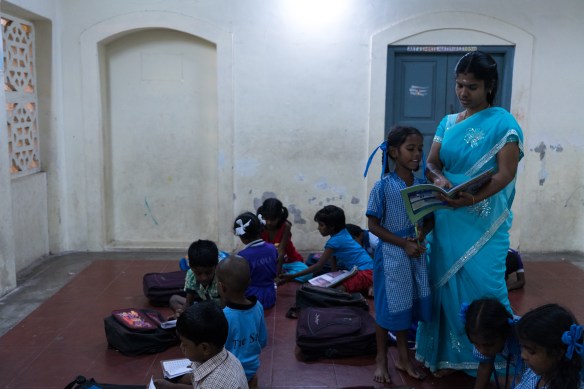
Sharana is helping to create the first generation of children in many families in Puducherry to advance to higher education. A number of these children had previously been required to stay at home and help their parents with their businesses, maintain the house and other children in the family, struggled to have a safe, comfortable and well-lit environment to complete their school and faced many other factors which prevented them from going to, or performing well in school. The after-school homework help program, créche and pickup/drop off program provided by Sharana has enabled hundreds of children to overcome these obstacles and excel in their studies.

sharana-74

sharana-55

sharana-56

sharana-68

sharana-199

Sharana means shelter

Translated from Sanskrit, Sharana means shelter or refuge. When I first came to Sharana, it not only felt like a shelter, but was accompanied by a humbling sense of hospitality and familiarity. In talking with Vandana, Sharana’s coordinator and the advisor for my and my partner’s brief internship, she spoke of an old South Indian tradition of the front porch of a home being offered as a resting place for weary travelers. If the traveler chose to take their rest at your house, it was considered an auspicious sign and a great privilege. Guests resting upon the porch would be treated as family; being given food and drinks in order to make them feel comfortable and at home. This was the treatment and atmosphere my parter and I were greeted with throughout our stint working with Sharana. There was never a moment that we felt like outsiders or as though we did not belong there. We were indeed treated as the traveler who landed upon the front porch of their home. We were treated as family. For that hospitality, generosity and kindness on expressed by all those at Sharana we are deeply touched and eternally appreciative.

sharana selfies-1

sharana selfies-2

sharana selfies-9

SAMUGAM Trust: A look into vulnerability and empowerment

By Jamie Nyqvist

A Peak Into SAMUGAM

In 2015, the United Nations set up a roadmap for sustainability marked by 17 global Sustainable Development Goals. As part of this agenda, several NGOs in India have been working hard (even before the goals were set, mind you) towards a more sustainable future. One of these NGOs is SAMUGAM trust (Social Awareness for Mutual Upliftment through Guidance and Motivation), registered under the India Trust Act since 1991. It is a community-based organisation that provides education and support for the gypsy community.

IMG_7620.jpg

Bruno, an advertising producer and radio personality turned metaphorical “father” for hundreds of children, presented SAMUGAM trust to the group. He has been involved with the trust for 10 years now, building a safe space for gypsy children residing in Narikuravar Colony outside of Pondicherry. Bruno grew up within an Indian context and has always been close to the community he seeks to help. SAMUGAM began as a dream to provide support for children in impoverished conditions, but also as a way to support these children’s community as a whole.

The Pillars

The trust works under six pillars of development: JALY Home, SamuPlan, Livelihood Support, Gypsy and Tribal Communities, Leprosy Victims, and Revolving Goat Project. The ones that will be honed in on are the first three. 

SamuPlan is the “umbrella” plan that encompasses JALY Home and the Sewing the Seeds project. In essence, this pillar’s goal is to improve the communities that the children come from. By doing so SamuPlan provides for the educational and nutritional needs of the gypsy children with a goal of 100 percent literacy amongst the children in these communities.

JALY Home was established in 2008 as a day home and safe space for children. Since then, Bruno has built one home for girls that houses 70 children; a second home for boys is currently under construction. In 2015, JALY Home received recognition from the Indian government for its efforts to support and house 250 children in need. What is important to note about JALY Home is that Bruno intends to provide each child with opportunities that he or she would not have access to at home while also granting the children access to their parents. Bruno is passionate about what he does and explains that “every child has problems that they bring in.” He speaks of children who have traumatic pasts that are brought to JALY home, and these issues are addressed through psychologists and social workers.

1

Child development is not the sole way that SAMUGAM helps within these gypsy communities. The trust also focuses on vocational training through its Sewing the Seeds project, an initiative that empowers women by teaching them valuable skills such as sewing and screen printing that can be applied not only within the Sewing the Seeds project, but also in enterprises throughout India. Sewing the Seeds is a sustainable fashion project that works with the gypsy women to create eco-friendly products such as bags and necklaces.

Open Reflection

After spending time with SAMUGAM, I starting to ponder a few things. While the organisation in itself is an attempt to eliminate poverty in India by targeting an “at risk group of people,” there are several aspects of the organisation that led me to ask further questions, not about the intention of the organisation, but the direction in which it is moving. One of the red flags that immediately came to mind is their use of video as a tool for manipulating emotion. This is also prevalent in several other NGOs that are looking to fund their projects – so not an isolated incident. The common discourses surrounding these so-called promotional videos are that the children within them are helpless and are desperately seeking a saviour. In my opinion, these children are being dehumanised from individual thought and emotion and shown without livelihood. This concept is further propagated through individual sponsorship – telling individual “sad” stories of children in order to create enough empathy to donate money. The problem with this scheme is that it does not promote strength, independence and determination. Instead it propagates the idea that those who are below the poverty line are lazy, undetermined and have no future.

2014-01-25-5277.jpg

So rather than “promote” the vulnerable, I would flip that perspective and show how SAMUGAM actually empowers those who have been through his program and can attest to his intentions. Rather than enforcing negative stereotypes, the NGOs should walk their talk and show those potential donors that the child or adult they are sponsoring truly has the chance to be more successful in life through education and other fields.

While contemplating this revelation, I came across RADI-AID, an annual campaign that raises awareness of NGOs who utilise empowering imagery surrounding poverty and children. RADI-AID awards the best videos (as well as the worst videos) annually in order to challenge stereotypical perceptions around poverty and development. Each year the campaign invites filmmakers to provide share documentaries that portray dignity and strength, thus changing the way fundraising campaigns are communicated.

Don’t get me wrong, SAMUGAM represents an NGO with good purpose and intention striving to reach its goal of establishing a safe space for children. Unfortunately, its communications, particularly what is being communicated to those who donate, is not one that empowers those who live in the home. The active role Bruno has in these children’s lives is incredible and has potential for lasting impact on the sustainability goal to eradicate poverty through the SAMUGAM projects.


Image credit to SAMUGAM Trust


We went to the Chidambaram Temples and Mangroves on January 6th. The Nataraja Temple is a Hindu temple dedicated to Shiva the god of dance. The temple itself showed a connection between spirituality, religion, and the arts. Just how much they are connected and the meaning behind them. It showed me and the group how much art is connected with not only Hindu culture but also Indian culture in general. The displays all 108 Karanas which is the basis of the classical indian dance Bharatanatyam. The current temple was built in the 10th century and you can see bits of the old 10th century temple and the renovations that are being made by contemporary artists. To me it’s quite interesting that renovation isn’t that big of a discussion because in the west when you see the Sistine Chapel or something that is considered to be a sacred piece of art it is always discussed in order to renovate it with the argument that the artists work shouldn’t be messed with, but in this case it is not about the artist it is about the story. When going in the temple we had a guide that explained all about the temple. The biggest thing I learned when experiencing the temple was that the idols of the gods are not necessary the gods themselves. It is a representation of the gods. the gods can go where they please and can come and go where they see fit. The statues are just representation of the spirits of the gods. When going in the temple it was a very magical experience, because meeting holy cows and having such a connection with them and then understanding why they are so sacred. When looking at them you see that they have personalities and maybe there is something magical about that animal.

When going into the temple it was an experience like nothing you would have before. To see the dedication to the religion is something you don’t really see that much in America. To see the people in the temple chanting and focusing and to see all of those people lined up willing to pay what little money they had for a blessing from a god. That just for a moment they would be touched for a moment by something that is beyond this world. In someways a visit to the temple is a space to really believe in magic. To see the belief and to see what belief and faith can do to people and what it does for people. Believing is the opposite of seeing, you don’t have to believe in something to believe in it or have faith in it, but all of those people lined up knew in their hearts that something was better than nothing and the possibility of a blessing coming through could be life changing. In some ways I feel like a blessing has been seen by those believers and their dedication for their religion and belief system is really a testament that being apart of something and the dedication and love you have for something brings people together and really does something for the soul.

Caring Cotton Blogpost

Caring Cotton is a textile company that was started by Rhibu. It works as an agency for businesses outside of India to find sustainable and consciously dyed cotton. When manufacturers are looking to bring their brand more green friendly. The business focuses on textiles and defines itself as a fashion business. The brand also gives training to women in embroidery; continuing the idea of sustainability allowing women to earn money for themselves and their family. Giving women independence and new skills that can be passed down to generations. Rhibu has worked for 17 years to create relationships with artists and mills in India to keep her business going. The personal collaboration she has done with dyers and cotton mills in India gives her a unique position in the transport of cotton to Europe and the world. The business started in 2012 and has been a one woman job since then. Caring Cotton has become India’s second biggest exporters of organic cotton in India.

The company looks at where the cotton comes from and how the cotton is created in order to keep with their sustainable model. The company focuses on exporting rolls of cotton to make the transport as green as possible. When exporting the rolls of cotton they usually try to send it when the company is doing other exports; but when smaller brands are buying pieces of textile it is hard to avoid the issue of creating excessive greenhouse gas. Caring Cotton works with three to four mills; relationships she has worked to build over the last 17 years. Though she has worked for many years to create sustainable materials she has only been able to work with 1 house that uses natural dyes to dye their cotton. The cotton that she uses come from the middle of India. She is constantly working with the dye house to find new shades where you can create natural dyes.

When listening to the presentation I had many questions that I asked to the owner of Caring Cotton, but after the seminar ended I found myself wondering a few more things. Cotton is a natural substance that grows out of the ground. I wonder when did it happen that we started using synthetic cotton and what were the reasonings behind it? Something that is natural, that can create jobs for many people. Where and why is there a need for this industry of organic cotton. Why and when did cotton become inorganic in first place? Because I am from the south cotton to me is very accessible, you can walk down the street and pick some for fun. She said she ships her cotton mostly to Europe, but I’m wondering where it is shipped mostly. Why is India the main place where Cotton is being shipped from. What other places in the world have huge organic cotton industries. If cotton has to be shipped to other places can it actually be sustainable? Can organic cotton be curated within the homelands of the businesses that are using them? Do we really need to ship organic cotton places? And if so, isn’t that kind of counterproductive to ship things that we are trying to create that are good for the earth?

The Caring Cotton brand can be compared to the Upsana brand. The brand of clothing that tries to use sustainable cotton but admits to not being completely sustainable. Especially when using black dyes. There also isn’t a model of how to recycle or up-cycle and get rid of their clothes. To me there’s a thought of how the clothes are created, but not how they are disposed of.

Another thing I wanted to learn was difference between how and which the inorganic and organic cotton affects the farmers and the weavers process of creating the textiles. In Upsana’s presentation we talked about a bit how the farmers have a high rate of suicide. I am wondering if the Indian government has taken action about this? Is there a way to fix the issue of the cotton industry. Would it be beneficial to switch to completely organic cotton or would why has it been switched to mostly inorganic cotton? What has the biggest impact on the Indian people?

My main interests is how does the idea that inorganic cotton has become the norm. How in which, does that change the state of where we are in the world? The fact that for so many years we were using organic cotton, with unfair labor, but organic cotton non the less;and at this point in time we have decided to live off of synthetic cotton that stays on our bodies and absorbs to our skin. How in our human existence have we come to this?

Deaf Enabled Foundation

Ari Price

While a lot of Indian dances include beautiful storytelling through the hands, many deaf children in India still struggle to receive access to sign language and proper education. In the Indian Census of 2011, 1.3 million persons were listed as “hearing disabled.” They are faced with teachers in their youth who do not know sign language and do not make sure they understand all of the course material. However, in Pondicherry, adjacent to Auroville, there is one branch of an NGO which hopes to aid in the inclusion of Deaf adults in the Indian society through their programs in educational and professional skill building.

def logo full

The Deaf Enabled Foundation (DEF) aims to achieve equal access for deaf people in every area of their lives. They are dedicated to work for the development of the Deaf community, enhancing the quality of life, providing educational facilities, promoting social and cultural awareness while working towards independence and barrier free communication for the Deaf.

I was lucky enough to sit down with a few students who shared their stories with me. One of which was Anusuya Ramasamy who will become a teacher for the Deaf Enabled Foundation in the near future.

img_4098

“I grew up with hearing parents and a Deaf sister. I did most of my learning through reading and writing. Before, I was studying in a college with hearing people and struggling. That’s when I came to Deaf Enabled Foundation. They told me that I could go to St. Louis College for the Deaf. At this college, I still had many hearing teachers who were not fluent in sign language, but I was able to earn my Bachelor of Commerce degree. After I finished, I struggled to find work with all the barriers for the deaf in the Indian society. So I decided to enroll in the vocational training program at DEF to keep developing myself. I learned so much and improved my English and computer skills a lot. After finishing the program, I decided I wanted to become a teacher with the Deaf Enabled Foundation here in Puducherry and will soon complete my training!”

Stories like this show us that the work of NGO’s such as the Deaf Enabled Foundation can really aid in creating a brighter future and a sense of community. Almost everyone I talked to had told me about their great experience and the ease of learning through sign language rather than oral communication. Other students I talked to in the Hyderabad location are even working toward their master degrees!

Sahodran and LGBTQ+ Rights in India

Ari Price

During the expansive world HIV and AIDS crisis in the 1980’s, Sahodran was established in South India. While it was one of many Non-Government Organizations created to educate society about HIV and AIDS, it was unique from other organizations. Sahodran, also known as the Sahodran Community Oriented Health Development (SCHOD) Society, specifically targeted the education, support and advocacy of men who have sex with men, as this population had a higher risk for acquiring HIV due to a lack of safe sex practices and support. As they only worked with men in the beginning, they decided on the name Sahodran, which means brother in the local language, Tamil. Presently, the SCHOD society has drop-in centers in both Chennai and Puducherry to aid in the education and peer support of all LGBTQ+ persons who face discrimination in the state of Tamil Nadu, India. Since 1988 Sahodran has continued to expand and provide interventions at the individual, community and national level. They currently work with a variety of professionals and volunteers including physicians, advocates, academics and researchers. According to staff, approximately 130 people were served in 2003 whereas about 1233 people were served last year. This shows the community demand for services continues to be necessary and to grow.

MEMBERS OF SAHODRAN AT THE LOCAL 2018 LGBT PRIDE MARCH

The work the Sahodran is taking on is not easy, but it is immeasurably beneficial not just for the LGBTQ+ community, but the society at large. In terms of the United Nations Sustainable Development Goals for , SCHOD aims first and foremost to promote the goal of good health and wellbeing, but it does this while also addressing the goals of gender equality and reduced inequalities for those in the LGBTQ+ community. Since their inception, they have continued to see progress for equality in the Indian society, at least in part due to their national advocacy efforts. Beyond the decreased rate of HIV and AIDS in the Tamil Nadu area, SCHOD has also seen the recent overturn of section 377 of the India Penal Code a law in 2018, which criminalized intercourse between men and the national recognition of a third gender, transgender, in 2014. While these policy changes are steps in the right direction, the staff at the Puducherry branch of Sahodran informed AUP students that there was still no policy to promote and protect LGBTQ+ peoples in cases of discrimination and definitely no marriage or family law in place for LGBTQ+ couples. As time moves forward they hope to see a society that understands, supports, and cares for all of its people, regardless of HIV status or LGBTQ+ Identity.