Sweeter than chocolate

The word sustainability is foreign to most commoners. It carries connotation of complexity and difficulty. In Auroville, there is a chocolate factory that does it simply with the cocoa beans.

Mason & Co creates more than chocolate products. It empowers Indian women and farmers and also helps its customer to be aware of their health by eating their products.
The management of Mason & Co employs women from the villages. It also try to teach its employees the skills including chocolate product making and management skills that can use elsewhere.

By implementing export standards and fair trade standards on cocoa beans, it helps to raise the quality of the beans. It is beneficial for both the farmer and the company.
The company’s standards on the cocoa beans directly goes into its customers mouth. By making its products with less sugar, dairy free and palm oil free, it allows the high quality cocoa beans to be consumed at the stage. Also it’s quality is transparent because it is not mass produced like most of the chocolate brands.
Sustainability does not have to be complicated, it can be achieved simply and sweetly with bars of chocolate.

– Stella Kim

WELL


The approach organization WELL (Women’s Empowered through Local Livelihood) has adopted is helping women sustain their livelihood and to gain freedom outside of their household by incorporating independent social enterprise concept.
The independent work model of WELL has adopted is the women workers purchase the papers and other necessary material to make the products. Then, the organization buys back the products and the ideas that these women have created. This system allows the organization to create quality regulation on the products
By allowing Indian women who have been excluded from the economic sector and suppressed culturally for decades to work independently, it creates an outlet for women to gain monetary freedom. And most importantly, non-monetary benefits of the workshops impact the livelihood of these women, her household moreover her community. It teaches how to speak for herself in the public sphere and to gain leadership experience without being tied down by the cast system. The cast system in India is almost 3,000 years old, is the world’s oldest forms of surviving social stratification. The system sanctions repression of the lower castes by the upper castes. Among the women who are working for WELL, that cast system is invisible and work in unity to develop equality within the organization. These women exchange techniques and ideas for the products, allowing the group empowerment to happen naturally. Also, instead of having a leader to represent the unit, the creation of the “Future Group” allowed the women to plan and to discuss for the progression of the organization and for their own future livelihood.
The women working with WELL used one umbrella term to summarize how the organization has impacted their livelihood in 12 non-monetary elements. It was love. These women understand the importance of loving oneself, loving others without boundaries and segregating anyone based on social class. This concept should be universally adopted like it does in a country of the world’s oldest surviving social caste system.

– Stella Kim

LGBTQ: A Worldwide Struggle for Human Rights

By: Vanessa Charlot

blog2.jpg

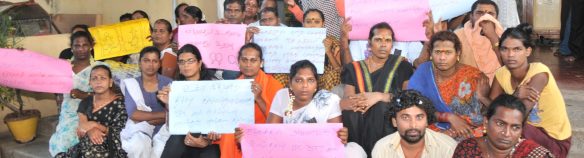
As a group we visited the Sahodaran Community Oriented Health Development Society (SCOHD), a community based organization network in Tamil Nadu and Pondicherry where a group of community members took initiative to address the problems related to the sexual health and human rights of sexual minorities. While their stated purpose is focused on health and lessening the level of sexually transmitted infections, I left with a different impression. What I saw was the infrastructure for a safe haven that protects a community unsafe in their own country.

The United States Declaration of Independence states that “We hold these truths to be self evident that all men are created equal.” These are the words the United States of America was founded upon in 1776, yet African American slaves weren’t “freed” until 1963, and didn’t even get the illusion of right to vote until 1965. Japanese Americans were forced into concentration camps in 1942, and the Supreme Court only ruled same sex marriage legal in all 50 states on June 26, 2015.

blog3.jpeg

While this was a major breakthrough, incidents like the 2015 Orlando nightclub shooting serve as unfortunate reminders that there’s still much to be done within the realm of human rights. This is by no means a United States specific issue, it’s a global issue that demands the attention, understanding, and respect of every person walking the face of this earth. Listening to members of this organization speak to us was an eye opener of the difficulties LGBTQ persons face in India.

In seven days we visited 20+ organizations with some sort of a social cause/advocacy effort, and when it was all said and done, I saw one fundamental problem. We all know gypsy communities need support, that waste accumulation is a sustainability issue, education efforts are the future, and culture preservation is essential; but the fact that no one is acknowledging this particular cause as an issue is problematic. How can a sub-community move forward if no one from the surrounding community is willing to acknowledge it as a problem in the first place. I’d be surprised to find any civil rights movement that has been successful without the support of third party advocates.

History has proven that the root of change regarding human rights, or anything at all really, stems from systematic change. The unfortunate reality is that without the guidance and support of governmental officials, the human race seems to function without a moral compass. Hate crimes against the LGBT community, which are very prevalent in India, never get justice.

bog.jpeg

Personally, I was puzzled by the unspoken elephant in the room. How is being transgender legally acceptable, and being gay, lesbian, or queer not? With my limited exposure to LGBTQ related issues, I have been under the impression that social acceptance of lesbian, gay, and bisexual issues progress at a faster rate than that of transgenders. But we were informed that in India, its technically legal to be a transgender (it was even an option on my e-tourist visa application) but it’s illegal to have “unnatural sex.” It was later brought to my attention that this may possibly stem from the fact that some Hindu traditions conceive God as both female and male.

blog 1.jpg

The organization was founded by K. Sheethan Nayak, who was unavailable to meet with us that day. After her four years of college, she moved back to Pondicherry where she found out that members of the LGBTQ* community were being abused with no one to turn to. This discovery came to her one evening when she and her friends witnessed a man being beaten by two other men. The man was a prostitute and the two assaulters had refused to pay him for the sexual favors they had received. This led to a double discovery for Sheethal – there were other homosexual and transgender people in Pondicherry and they were an exposed group with no safety. In 1998 Sheethal started to work with the issue on a grassroots level since she felt that the poor LGBTQs were more vulnerable than those from the upper- and middle class since they cannot afford to buy security. Sheethal arranged group discussions and get-togethers in safe places with members of the LGBTQ* community since they could not be in public places without being assaulted – and this was the conception of SCOHD.

Cultural Preservation for Development (CP4D)

Written By: Faith D. Toran

MOHANAM COMMUNITY CENTER FOR CULTURE & EDUCATION

“[T]he more radical the person is, the more fully he or she enters into reality so that, knowing it better, he or she can transform it. This individual is not afraid to confront, to listen, to see the world unveiled. This person is not afraid to meet the people or to enter into a dialogue with them. This person does not consider himself or herself the proprietor of history or of all people, or the liberator of the oppressed; but he or she does commit himself or herself, within history, to fight at their side.”

― Paulo Freire, Pedagogy of the Oppressed

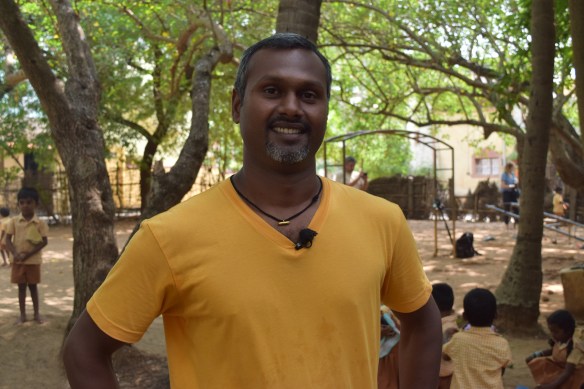
In the Auroville village of Sanjeevi Nagar, I was in community with one who is a champion. I would like to introduce you to a champion, as Ramirez states in Communication in Another Development as one who has successfully created change from a participatory framework in the development field. Balu, co-director of the Mohanam Community Center for Culture and Education, is committed to cultural preservation through education and has created a space that is conducive to creativity, education, inclusivity, cultural appreciation and preservation. It was inspiring to be in the presence of such a change agent.

 dsc_0896

I took a few moments to try and observe the context, the culture and the breath of the moment. I was captured by a feeling of authenticity, one that I could not fully contextualize. I tried to understand through language and landscape, so I focused my eyes on the signs and architecture. Was it the signs and architecture that gave life to the culture or was it the traditional kolam, that spoke to the management of life through art and meditation? I asked myself, in a whisper, is cultural preservation a foundation to sustainability and improved livelihood? Was it possible for one to draw from the depths of indigenous knowledge systems, to counteract the systems that wreaked havoc on their lives?

I quieted my mind so that I could listen. 

img_6817

DSC_0867.JPG

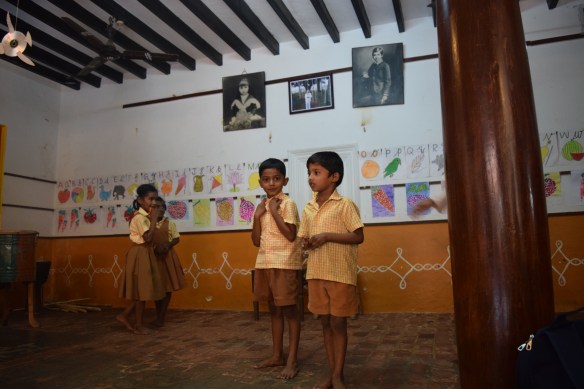
Mohanam – “comes from one of the most harmonious ragas of Classical Indian Music and evokes the power of fulfillment of our aspiration for beauty and harmony” a 85-90-year young building, filled with education, cultural preservation and little precious children, playing, running, smiling through the school yard was alive and well, in the sense that it was successfully addressing the issues of the village through cultural heritage preservation. Mohanam was birthed in 2001 as a Non-Profit Auroville service unit.

 img_6816


In addressing the problem of the lack of cultural preservation or the threat of extinction, Mohanam implemented a progressive Kindergarten for 60 village children from 6 different villages, performance art and summer camp programs with a central focus on cultural sharing and preservation. 

 dsc_0898

Preserving culture in the work of Mohanam has transcended the original reach of children, through discursive community groups such as the local village women. The local village women have created and implemented a successful replicable model for access to clean drinking water, this project is both participatory and empowering for the development of the community. Amidst modernization, Mohanam seeks to preserve the Tamil Nadu culture as a means of development and improving the livelihood of their communities. It was inspiring to see the validation of culture as a resource to development rather than battle with the notions of lack of cultural relativism, that one has had to navigate while working in the field under the dominant modernization paradigm in development communications.

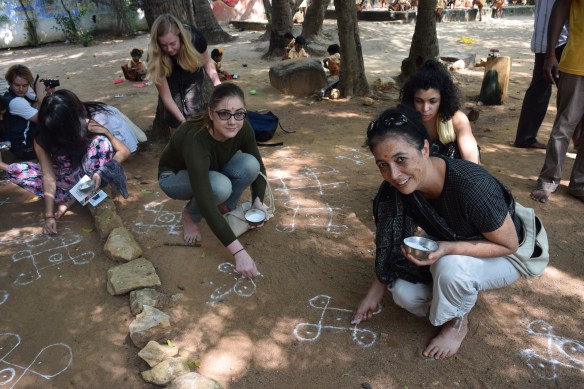
 As we drew kolam in the earth, each line and dot I placed made me smile. I held not only culture in my hands, I held the power that is resourceful and working to address the disparities that these communities face. It was not my knowledge or ideas, it was as Paul Freire describes as “The greatest humanistic and historical task of the oppressed: to liberate themselves..

 dsc_0879

Pondicherry: The Captivating Experience

Julien El-Hajj

This wasn’t the first time I hear the name of this city: Pondicherry. I remember in secondary school, my biology teacher used to give us Pondicherry’s French baccalaureate session, because it is the first one to happen around the world and is the hardest as well. Since then, I knew that Pondicherry has some kind of relation with France.


In fact, there is indeed a strong influence of French culture on Pondicherry town, especially on it’s architecture, a result of the centuries-old relations this place maintained with France. In fact, In the 16th century, the Portuguese first arrived to the city and then the following century the Danes made an appearance. In 1673, the French arrived. Till then, Pondicherry was a weaving and fishing village. The French quarters started along the sea and extended to the south, all along the sea.


Around the 1760’s, the British destroyed the city including the fort. When the French reoccupied it, most of the buildings were reconstructed but not the fort. In the latter part of the 18th and early 19th century, Pondicherry again fell into British hands and all construction activity came to a standstill. Most of the present day buildings came up in the 19th century, which also marked the advent of water supply in the city and the railway link with British India. The French colony became a part of the Indian Union in the early 1950’s.

Once you arrive to Pondicherry, you feel that it has a distinct spiritual vibration, notably when you enter the street of the Ganesha temple.

At the entrance of this temple, you will see locals as well as foreigners clicking pictures and taking videos of the elephant named Lakshmi. It is no less than a celebrity. When people offer money and food to her, the elephant blesses them with its trunk.


Quiet beaches and peaceful resorts in the north and south of the city balance the town’s busy, yet easy going life. You can find lots of people walking along the beach, especially that the region becomes pedestrian in the evening. There you find one famous statue of Gandhi.


When you’re in Pondicherry it is impossible to not splurge in the shopping strips. You can check Auroville’s outlet store or Casablanca for international brands (Guess, Ralph Lauren, Gap, Tommy Hilfiger, Timberland, etc) sold at unbelievable prices. Moreover you can surely find hand-painted silk clothing, perfumed candles, incense, oils, ceramics, jewelry, and traditional Indian clothes in mostly every corner. For me, visiting this city is in itself a captivating experience.

Empowerment: a Sustainable Approach

The Auroville Village Action Reach is a long-running program to help develop regional villages within the Auroville spirit of unity and consciousness. It began with four or five villages doing charity work in 1983, but has since grown and developed into its current role as a development organization. The difference is that instead of working for the people, they are now working with the people. In addition, they’ve chosen to focus specifically on women’s empowerment in villages within the 20km radius around Auroville. Through their participatory and ethological approach, they have been making positive changes in women’s lives in the Tamil Nadu region.

A key component of their program is providing access to credit and savings. Government and donors like to fund building projects which result in a tangible, finished product, but there is almost always difficulty in maintaining them afterwards. For example, sanitation and open defecation are affecting the health of Indians. The government will easily find the funds to build toilets at the public school, but they won’t plan for maintenance costs. The teachers don’t want to clean them, and if they make the students do it, the parents will complain. What actually happens is that the teachers lock all the toilet stalls except one for the teachers. It is in examples such as this that AVAG steps in to bridge the gap with the support of the community. They work with the community and involve them in all stages. For example, they will ask the community to contribute to funding whether it’s matching funding, a percentage, or just a contribution of labor, depending on the project. If they need to do administrative applications for government funding, they will teach the women how to do it themselves so they can do it again in the future.

However, development and empowerment isn’t sustainable if it’s only focused on economic empowerment. Especially after having several women in the villages commit suicide, AVAG was motivated to promote well-rounded development by offering emotional, mental, spiritual, and physical health services for their women. Their work is sustainable because they recognize the challenges and needs of the women they work with. For example, they help women question and think critically about taboos in a safe environment. One myth in India is that when a woman is menstruating, they can’t feed the dog or else it will go blind. Instead of telling the woman that it’s wrong, they ask the group, “Is there anyone who has fed their dog while they were menstruating?” Then one woman who doesn’t have any males in her household will share her story that she has been feeding the dog for ten years, and nothing has ever happened. Through sharing experiences in an open and safe environment, the women begin educating themselves and learning how to speak up.

But AVAG’s work is not yet done. After bringing the women into a safe zone and speaking about empowerment, they still have to return to their daily lives in their villages. AVAG’s goal is to prepare them for re-entering that environment by giving them the ability to engage in participative discussion.

These self-help groups are a powerful tool of change in the region surrounding Auroville. Also among AVAG’s initiatives are community building projects such as festivals and sports events, exchange programs, livelihood training, financial support for girls, and educational and leadership training.

Connie Moreland


Hole-y Shit: Eco-Pro and Ecological Sanitation

“The history of mankind is the history of sanitation. It’s the history of shit.”

– Dr. Lucas Dengel, Founder executive of Eco-Pro


You can tell a lot about a city from its sanitation policy. It defines and sets a precedent for the cleanliness and technological advancements of a city. Not only do sewage systems keep a city looking sparkly but also keeps the citizens healthy – as fecal matter carries many harmful diseases that if not controlled safely can spread quickly and become fatal. In India alone, every minute a child dies of dysentery as only 40% of the population have access to a closed sewage system defining a sad part of a beautiful and colorful country.

100 million of the population defecate openly on the street without a toilet. This is problematic because diseases such as Hepatitis, Enteroviruses, Rotavirus, Poliovirus, Giardia, Norovirus acute gastroenteritis, and Dysentery are carried in feces. If a fly, dust particle, fingers, or animals touch the feces and then food the diseases infect unsuspecting victims quickly and efficiently. The governmental also spends extra funds on medical coverage as it reacts to the negative affects of a poor sanitation system – instead of investing in a proper system preventing the diseases where they begin.

So for now the cost of the energy, water, drains, sewage pipes, power supply, operation, and maintenance are expensive, large, and difficult to operate leaving the poorer Indian population to suffer from fecal oral infections – or as Dr. Lucas Dengel, founder executive of Eco-Pro, says: “shit-mouth infections.”

Dr. Lucas Dengel moved to India in 1988 and worked in the Auroville Health Center for ten years and was deeply horrified by the health problems caused by the poor sanitation systems so he developed Eco-Pro, an organization dedicated to providing ecological sanitation solutions on a small scale. Eco-Pro has developed an alternative ecological solution that saves water, re-uses the nutrients found in human waste while at the same time eliminating possible diseases.

Their main weapon, the Urine Diversion Desiccation Toilet, is designed to provide a sanitary, green, and safe solution to sanitation in small villages.


This toilet has three sections:

  1. Composting and drying chamber for the feces. The user must add sawdust, ashes, bio char, coconut ash or sand to the feces and it will become completely dried out into a dirt safe to use as compost and containing absolutely no smell.
  2. Urine diversion desiccation toilet (UDDT). This section collects the urine and must be collected regularly and can be put directly into the soil as a fertilizer. And just like the feces – this has zero smell.
  3. Drain for anal cleaning. This drain also has to be deposited by the user into a soak pit. With a light low pressure cleaning system this will save water and also remain stink free.


Since 2013, Eco-Pro has built 54 of these toilets in small villages in the surrounding Pondicherry area and frequently monitors 48 of them. They also give lectures and workshops in the villages on why sanitation is important and conducted science experiments proving the cost benefits from using urine to fertilize crops.

Eco-Pro has started the beginning of a long process in overcoming the “purity-pollution” gradient in Indian society which is conditioned into a caste system. But it is simple to install toilets, pipes, and an entirely new sewage system into rural villages – the question remains on how to include this model into a larger modern city. Sewage systems in the western world are complicated and gigantic making an ecological approach to sanitation seem daunting and nearly impossible in even a medium sized town. Is it possible to change the social taboos surrounding defecation and urination? As Dr. Dengel explained, we have been conditioned by the media and cleaning products commercial propaganda.

Mindsets need to be molded and brains need to be educated but we remain hopeful, as one large act always begins small. The Aurovillian ecologically sustainable spirit may be able to carry the green sanitation toilet into a larger sphere as Eco-Pro continues to write their own “history of shit” in India one UDDT at a time.


-Sarah Harper-Johnston
The forgotten Children

img_0099img_0098img_0100img_0093img_0082img_0077I have always noticed that people tend to regard the term “Gypsy” as a derogatory one, no matter where in the world and even here in India. The situation is tragic for the gypsy living in Tamil Nadu, especially those suffering from poverty, unemployment, and lack of education and health care. Thus, we are facing a global crisis. On December 17th, AUP students visited the Samugam Foundation and met with Mr. Bruno Savio–the present director of Samugam. The Samugam Foundation is working for the deprived gypsy community along with street children in Pondicherry’s radius. It seeks to provide shelter for approximately 100 disadvantaged children (who are often deemed the “gypsy children”), by providing proper education and extra-curricular activities (such as music, drawing and handicraft works). The latter are assisted and carried on by qualified staff within the organization.
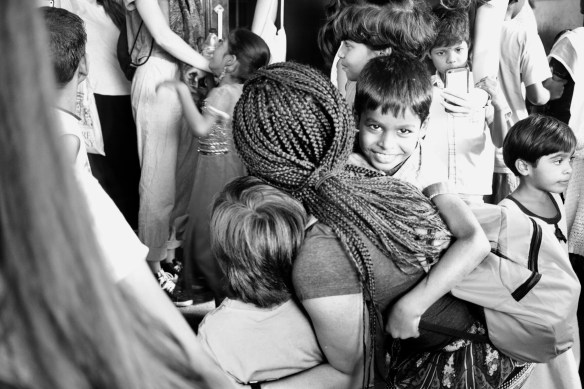
Once we entered the building, the children started to sing an inspiring piece in Tamil, the native language of the region. The happiness that our visit brought them was evident from their warm greeting, playful dancing, and constant laughter. They were as foreign and unfamiliar to us as we were to them. A genuine bond was felt in the atmosphere, along with feelings of happiness and joy. We all believed that these sweet children desperately needed love. Mr. Bruno gave a tour of the building that he called “home,” as a reassurance that the children have a place to belong to. Then, he described the services offered for the children as well as the needs of the organization. They incorporate a number of programs such as JALY Home (Justice Awareness Loyalty for Youth) and SAMUPLAN which both aim to provide a better life for these deprived kids. We had a chance to watch a short film made by the AUP interns from last year, and then received an explanation regarding how the organization works hard to provide a healthy educational and social life for them. What struck me the most was how shocking the process is of removing the children from their initial (and deprived) upbringing.
Mr. Bruno explained how the main goals of Samugam are to provide a better education for the children, to commit to helping the underprivileged, to contribute to the economic development of the oppressed class, and to empower the disabled and marginalized. In short, the organization strives for a better future.
The major challenge of financial maintenance is the main concern for Mr. Bruno; he explained this in detail to us at the end of the presentation. Samugam is dependent on the support of donations given in cash and kinds, whether they be donors, individuals and various local organizations. The obstacle remains that donors usually provide only for fixed costs such as a new facility or necessary equipment. Yet their main challenge is to establish a way to maintain financial sustainability in regards to keeping his foundation running. We left the home with promising thoughts on the practices which Samugam may adopt to overcome these challenges. The tasks will revolve around a sustainable solution for providing better opportunities in life to these wonderful gypsy children.

Nehal AbuMarahiel

A Garden in the Rough

by Callia Barnard

The Auroville Botanical Gardens were created sixteen years ago with two missions in mind: conservation of forestation, and environmental education for local school children.

copyimg_9424

Paul Blanche Faulkner, originally from the UK, moved to Auroville in the 1990s with his knowledge of botany to create a garden on his purchased undeveloped land. An avid seed collector, Faulkner brought species from all around the world to be cultivated in Auroville. Since then, the 50 acres of land have flourished with around 2500 species of plants. The success of the greening of the land is astonishing, considering that when Auroville began as a settlement almost fifty years ago there was nothing but a sandy plateau of barren, undeveloped land. It only rains here an average of thirty days per year, so the gardens must use alternative sources of water for the survival of their plants. Around 30,000 litres of water per day are required to sustain the garden, which raises the question if it is actually sustainable at all, considering the fact that Auroville does not have much access to natural water sources and only sees rain around 8% of the entire year.

img_9418-copy

Just under 20 acres of the garden are dedicated solely to the conservation of tropical dry evergreen forest, which was almost extinct thirty five years ago. These kinds of plants have waxy leaves to retain their water as they are used to a dry climate, making them very suitable for Auroville. Another primary focus at the garden is their medicinal section: plants such as aloe, lemongrass, and wheatgrass are used all around the world as alternatives to expensive and damaging medicines. Auroville Botanical Gardens grows a variety of medicinal plants and educate visitors on their healing properties.

copimg_9421

Throughout the practicum, we have constantly been reminded of India’s trash problem. Lack of knowledge on proper waste management, combined with lack of resources for proper waste management, has resulted in the trash we see along the roads. This societal issue has derived and thrived from the fact that the people of India have lost their connection with nature, not giving a second thought before dumping their trash on the street. Auroville Botanical Gardens says “only when we understand the importance of the environment to our society we will work together, more energetically, towards the creation of a sustainable future for both ourselves and the planet.” This vision begins with the education of children.

oopimg_9419

Once a week, local school children can come to the gardens for free and spend a full day in nature to rediscover the beauty and vitality of a clean, green space. After a day long of discovering new plant species and playing in mazes, the students are offered an organic meal with local vegetables grown right in these gardens. Hoping to aid the reconnection of humans and nature, the gardens do their best to engage with and spark an interest in the almost seven thousand annual student visitors. This positive message is conveyed in the hopes that this knowledge will stay with these kids, and inspire them to take care of their environment. The education of children has been a constant theme throughout our visit to Auroville, and the education on forestation is essential for the future generation of India if they hope to find solutions to their garbage problem.

Not only do the gardens aid children, but they also provide education for women and school teachers. The gardens are a space for women to come together and share their knowledge with each other on the utilisation of local plants for medicine. Groups of teachers can visit the gardens for training and environmental education. This is a great step towards a society fully aware of environmental factors, as the teachers will pass down their knowledge to the next generation to utilise and build on for a healthier future.

opimg_9423

Though the United States is more regulated in terms of garbage disposal and cultivating green areas for educational and conservational purposes, I have learned how difficult it is to take care of trash in a responsible and effective manner. There are many steps before and after you yourself dispose of something, and they are never given another thought because it’s out of sight. The information I’ve learned while on the practicum have inspired me to be more thoughtful in my consumption choices as well as my efforts to dispose of trash properly. I hope that this sentiment is shared with students all across India to create a green, sustainable future.

Auroville – A Spiritual Quest

By Tara Jamali

“Give yourself entirely to the Divine and you will see the end of all your troubles” – The Mother

vsco-photo-116

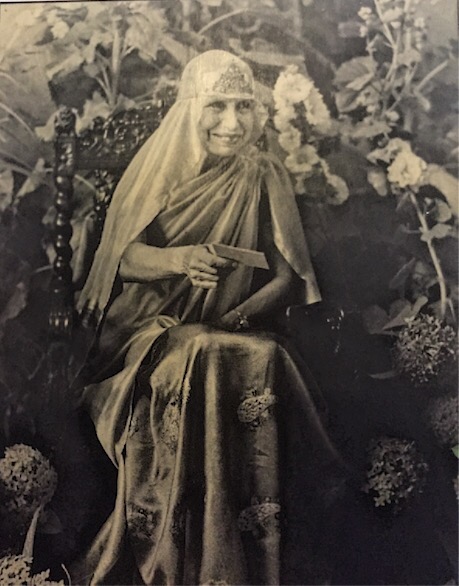
Signs containing quotes by the Mother are a ubiquitous sight in Auroville. One finds them at the entrance of stores, at the town hall, in restaurants, and in hostel lobbies. The Mother’s image is equally ubiquitous in this township of less than 3000 residents. Her penetrating yet peaceful gaze, once beheld, tends to be etched into one’s memory.

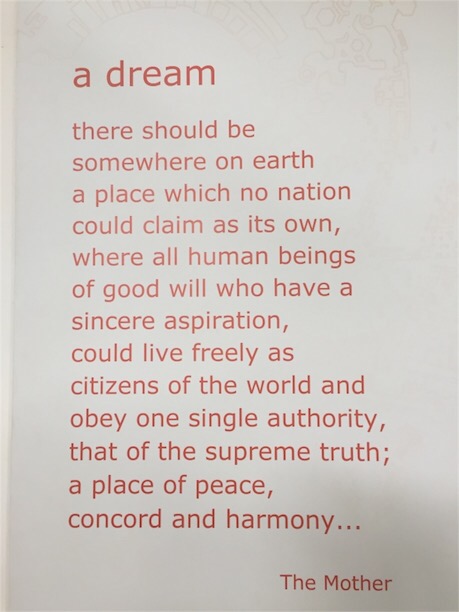
The Mother founded Auroville as an international township dedicated to realization of the ideal of human unity in diversity. A site of spiritual and material research, Auroville accepts all kinds of foreigners on its soil as long as they come to serve in some way. But the major field of work in Auroville is one’s self – one cannot remain here without engaging in self work and emerging as a changed person by the end of one’s stay. A precondition to surviving here is open-mindedness – the firmly held belief is that holding firm beliefs about everything makes for a closed mind.

It was serendipitous to realize that I shared certain characteristics with the Mother. Both of us are of Middle Eastern origin. Both of us were studying in France before ending up in this part of India, but unlike the Mother, I was not necessarily led here by a series of visions of one she came to know as Krishna. I like to believe, however, that I have come here for a purpose, one that will not end with the completion of an internship at a local NGO, as outlined by my academic program. Because almost every Aurovilian I encounter seems to have felt led here for reasons defying mainstream logic and culture. Why else would a CEO choose to leave behind a successful corporate life in Europe or South America to found a school for underprivileged Tamil children, or head a center dedicated to empowering and educating rural women in a highly patriarchal society, if not for a higher purpose or calling?

It was such a calling that led the Mother to sacrifice a promising future as an artist in Paris to found a city in rural India, never looking back. For the Mother, one dream defined by personal ambition was replaced by another in line with a vision concerning humanity’s evolution and the ideal of human unity. For her, it was about creating a place where individuals of all nationalities could feel a sense of belonging. When Aurovilians are asked why they chose to stay here, a common answer is that they felt at home, or in the words of Dr. Jacques, a French dental surgeon who settled down in Auroville shortly after receiving his medical license in 1981, “It is the spirit of Auroville that has kept me here all these years.”

As a Global Communications major, the spirit of Auroville as a hub for uniting individuals of all nationalities defines what I pursue academically and personally. I have always taken pride in my multiculturalism, and before coming here, believed myself to be pretty experienced in terms of seeing and understanding the world – I grew up in California, lived in Iran for a number of years, stayed in Europe regularly, and majored in Communication and Italian at the University at Buffalo. But Auroville is opening my eyes to a whole new dimension in multicultural consciousness and what it means to belong to a place undefined by political, cultural, or religious boundaries. I am certain that my time here will have engendered a heightened sense of empathy guiding my interactions with people, regardless of their nationality or political or religious persuasion. Here, I feel accepted just the way I am, with my age, life accomplishments, academic standing, or which parts of the world I was in before coming here almost irrelevant. What matters is a willingness to be open to the spirit of Auroville and all that it offers, knowing that wherever I end up in the course of life, I will always take a little of Auroville with me, acting as its ambassador to a certain degree.
I see it as a spiritual quest in line with a Mother’s wish for a peaceful way of living, and thank her for calling me here. At a time where sexism, racism, and xenophobia still abound even in nations considered democratic, the realization of her dream is more relevant than ever, but possibly simpler than we may think. For Auroville remains simple in all its complexity – a place for those wanting to know liberation from extremes.

vsco-photo-117