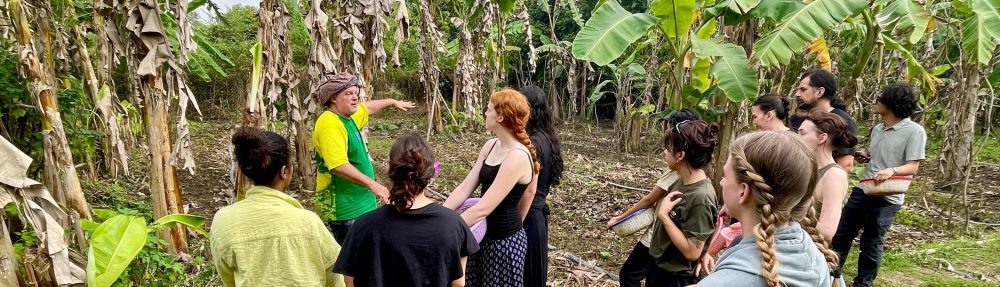
Participating in a process

This is the last day of internship work. Tomorrow we present the output of our projects. I cannot wait to see all of what we have been able to achieve in 10 days. 10 days!! Many of us set out worrying that might not be enough time to do anything substantial; we needed more time to make any kind of impact.

My perspective changed earlier this week when I met to interview Gijs, director of Unltd Tamil Nadu, an organisation that supports social enterprises to anchor and scale their investments. When discussing the objectives of Auroville, he said that the ultimate aim is to participate in the process of human evolution. We do not know what the human race will evolve into or if the process will ever come to an end and so the most we can do is cherish the opportunity to participate in something meaningful towards that evolution.

It is not about the results at the end of the process; it is about what we have been able to contribute to the process.

A new website, updated social media, a fundraising campaign launched, a new package design, a documentary video or even an information brochure… that is us participating in the remarkable things these organisations are doing.

My internship assignment is to Yatra; a two-pronged organisation. One arm is the Arts Foundation that teaches Indian traditional singing and dance, gives painting lessons and offers evening tuition classes to village children at no cost. These activities are funded by the other arm, Yatra Multimedia that is engaged in film making and community theatre with the motive to educate for social change.
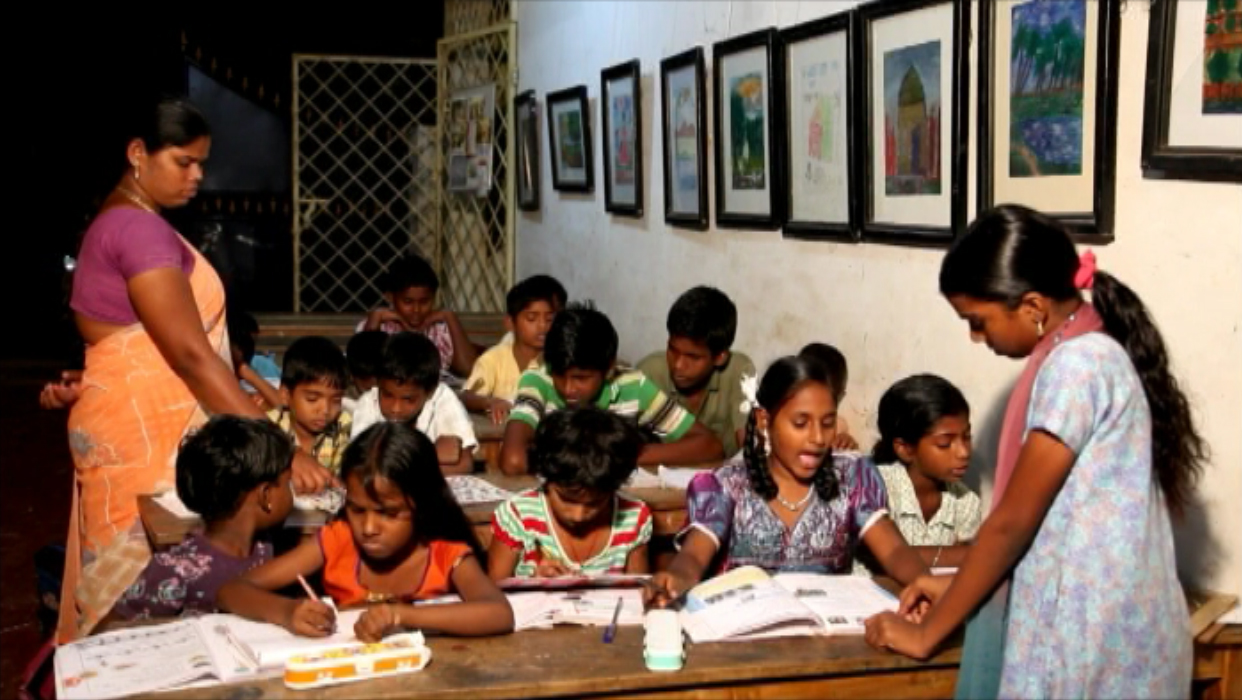
Evening tuition class at Yatra

Evening tuition class at Yatra (Courtesy photo)

The founder, Yatra Srinivassan, is an artist who confesses inability to discuss money. So he works more than he is paid and then what he earns he puts into his village outreach through the Arts Foundation. Why bother? Srini says he does it for the love of the children and his village, Kuilapalayam. As a child, he had to go to Pondicherry for dance and drama lessons and he knows it is too far and expensive for the children who would want a similar opportunity. Yatra Arts Foundation is his way of bringing the service closer to them. It is something meaningful – the children have somewhere to get help with their homework and an opportunity to learn the arts of their ancestry.

I realise that what I am contributing to Yatra, like the volunteers before me is like a drop of rain to patched ground; they need so much, we have time to do so little. It is frustrating to not watch over the implementation of the various proposals we have made, to evaluate and revise them to ensure the most impact. However, like Gijs says,

“Just doing something of value is worthwhile.”

I don’t have to witness what Yatra will evolve into; I simply have to do something meaningful towards the process of their evolution. That is both comforting and energising.

-P.Otali
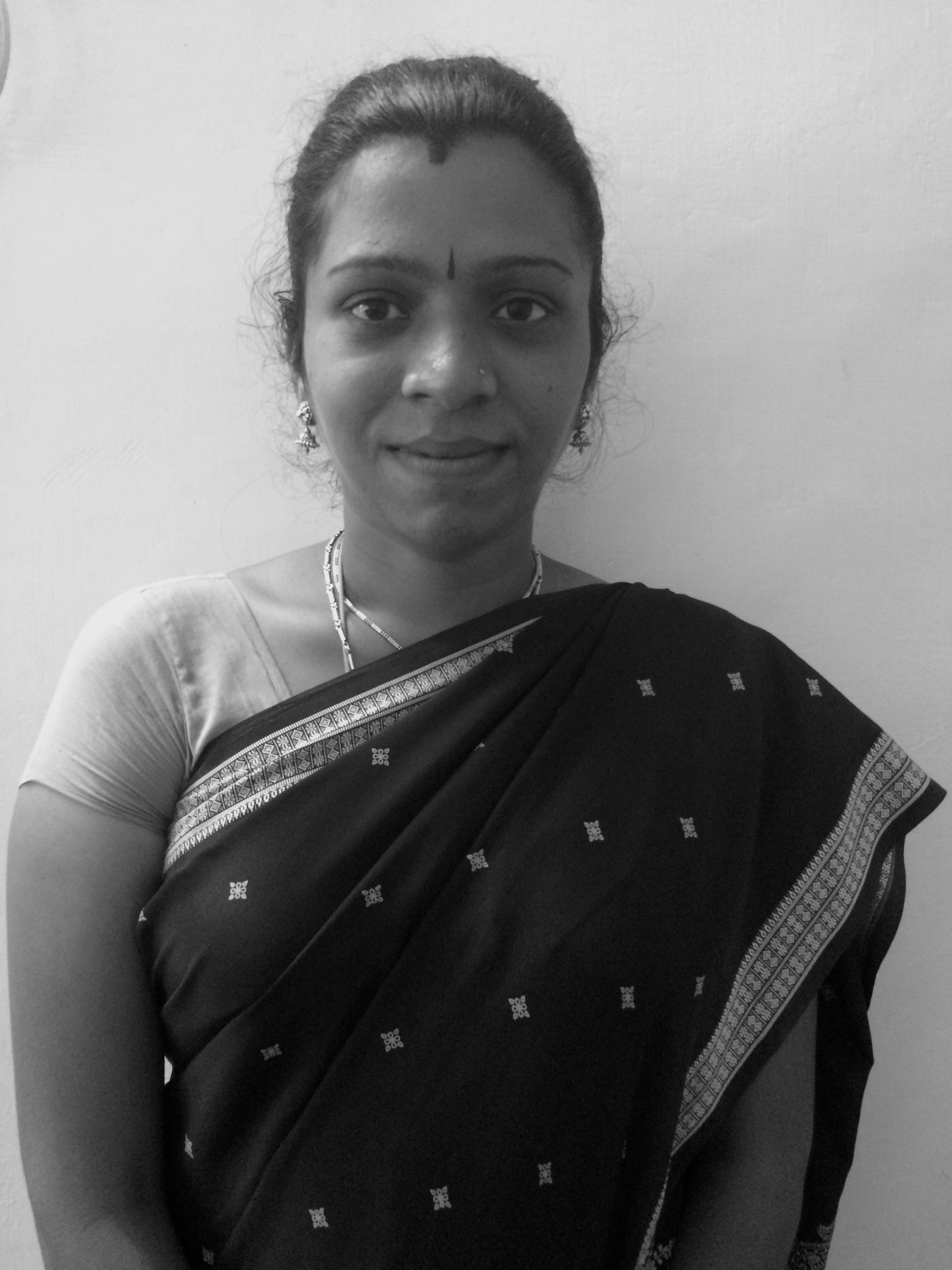
Rukshana and Article 377

IMG_5761

Rukshana is a Muslim and a transgender. Her family always knew that she was different than other boys her own age and she was therefore kept inside the house of her parents throughout most of her childhood. She wanted to become a teacher, but when she went to Chennai in order to pursue her dream, some of her old classmates told her parents that she had gone to Chennai just to undergo the sex reassignment surgery (SRS). When she came home to her family after a couple of weeks in Chennai they all turned against her. She was forbidden to go back to Chennai and at home she was tortured on a regular basis, beaten by her father and brothers, she was often not allowed in the house and she was deprived of both food and water. Thus, she was forced to move, and as many other transgender men, she moved to Mumbai, where she was quickly inducted into the “transgender community”. This is a harsh community run by gangsters, and due to lack of education, social acceptance and her looks, she was forced into prostitution. She managed to escape and moved back to Pondicherry. Her neighbors in Pondicherry were, however, far from welcoming. One evening in Auroville seven of them attacked her, took her into a cashew field, held a knife to her throat and raped her. They told her that she deserved it and that “this was the way she should have sex with men.” After years of low-wage jobs in Pondicherry, she finally saved up the money for the SRS procedure. After coming home to Pondicherry from the operation in Mumbai, her neighbors were standing outside the building waiting for her to come home. They ripped the drain out of her stomach and beat her to the point where she could no longer stand on her feet. She was thrown on the streets covered in blood and it was made clear that she was not welcomed in the house again. At that point, Rukshana was ready to commit suicide. But instead she called Sheetal, who saved her. And her life has not been the same since. At Sahodaran she has found a place where she belongs, a place that accepts her for who she is and for the first time of her life, she has found real friends. Sheetal, the founder of Sahodaran, has helped her to get an identity card as a transgender, she has helped her to get a job and first and foremost she, and the community at Sahodaran, has helped her heal the psychological scars her life has left her with. When her father died a couple of years ago she was not allowed to attend the funeral. She came anyway, and as a consequence a grave was dug next to her fathers and her family told her that this grave was for her and if she ever came back, they would kill her.

“Everyday was a struggle and I wanted to kill myself, because I thought that society didn’t want me. Sahodaran has given me a reason to live. They’ve given me an identity. For that I’m forever grateful.”

Article 377 of the Indian Penal Code is the law against “unnatural offences.”—Whoever voluntarily has carnal intercourse against the order of nature with any man, woman or animal, shall be punished with imprisonment for life, or with imprisonment of either description for a term which may extend to ten years, and shall also be liable to fine.

Article 377 entails the complete prohibition of the penetrative sexual acts engaged in by homosexual men, which initially criminalizes their sexual expression and identity. Furthermore, article 377 has a severe impact on their dignity and self-worth. Police harassment, social exclusion and legal discrimination have become everyday-life for most homosexuals in India. As in the case of Rukshana, homosexuals are often shunned by their families when they come out to their parents and they are often forced to live in the streets. It is very hard for homosexuals to enter the job market and discrimination on the workplace and by employers is common. This often forces them into prostitution and begging in the streets.

The stigma and prejudice has fostered a culture of silence around homosexuality, which results in a vast number of male rapes and male prostitutes in India. Before Rukshana became a woman, she was stopped one night by the police in the streets of Pondicherry, where they ordered her to take off all of her clothes in front of a crowd of people. The police officers pocked her genitals with their knight sticks and made fun of her to great amusement for the surrounding bystanders. Sadly this situation is far from unique. Thus, many are forced to hide their sexuality because they are afraid. However, hiding one’s sexuality is difficult and often the family will find out eventually. One week ago Sheetal helped save a boy from a middle class family in Pondicherry, whose parents had wrapped him in a fishing-net with the intention of setting fire to him and drop him into the sea. Luckily he escaped.

Please help Rukshana and Sahodaran raise awareness of the devastation article 377 has caused homosexuals in India by making a small contribution to their Rainbow Walk! 

https://www.indiegogo.com/campaigns/lgbt-rights-in-india/edit/#/?tab=story

One gender, and two half-genders?

Once upon a time in India, and no this is not a tale, a person that was transgender (or the “third gender”) was met by great respect. They are mentioned in the ancient Hindu scripts and they played a prominent role in the royal courts during medieval India. Today, the situation is extremely different. People who are transgender in India today usually live on the outskirts of society and often in poverty. It is hard to find someone who would employ people that are transgender and most families in India would not accept if their son became a transgender, and a lot of the times they get disowned or evicted. The main ways of making a living for transgendered people is therefore working as dancers, prostitutes or begging.

In mid-April this year, 2014, the Supreme Court in India recognized transgender as a third gender, which hopefully will help mainstream transgender issues in Indian society. According to a UNDP report from 2012 this was the third suggestion that they had concerning how to go about legally recognizing the transgender community. The three options were to either have transgender identify as men or women, secondly to recognize transgenders as a separate, i.e. third gender or to recognize transgendered people based on their own choice; male, female or transgender. Why this was such a contentious issues was due to the legal consequences and rights associated with the issues especially, since India has specific laws concerning men and women.

I feel like the transgender debates therefore automatically should have facilitated two debates in India. It should also have raised the issues of women’s rights when talking about whether the transgender community would be able to choose their own gender. The issues for the transgender community can be summarized to: would transgender community choose to become men just to get the privileges of a man? And what happens to the privileges of a man if he becomes a woman? I strongly believe that the attitude against women in India is something that in turn hinders the further development for transgender rights.

It is extremely important for families in India today to have a boy in the family, for many reasons. Three of them being that instead of paying dowry when getting married they receive dowry, a son can also more easily get a paying job and look after the family and finally a son will light the funeral fire when the parents die. With this in mind, the idea of a family’s only son being transgender is devastating. However, if there was no dowry to be paid and if women could have the same possibility to get an education and to work, maybe there would not be as great a resistance to having a son that is transgender.

This is an extremely complex issue, but nevertheless one thing seems obvious to me. When the Indian government was discussing the issue of transgender and making a third gender, the issues of women’s right should also have been brought to the table! India now has a third gender, but when not discussing the rights of women, can India really claim 3 genders or do they only have 1 gender and two half-genders?

Malin Persson – Linnaeus University in Sweden

Water in the closet?

Clean drinking water, hot showers and toilets you can flush on: these are actually only a few of the things that I/we who are living in a more developed country expect always to work and are taken for granted. When it does not work, we got big problems.

The things we take for granted to exist is what others take for granted not to exist, at all times, everywhere. Here in Auroville, in India, I can not always find; clean drinking water, hot showers, running water, toilets you can flush on and so on. I am happy that I have all of these things at home and all people should also have that. Where to find something as basic as clean water should not be a daily question or headache when trying to make a livelihood and a life for one self.

At home we take long showers and baths, letting the water run while brushing our teeth etcetera etcetera. Why? Because we can. We can use (cold) freshwater without affecting for example India only because of our country´s privileged geographic position in the world. But what can we in for example Sweden or any other water-rich or capitalistic country do to help the world’s water scarcity?

Our hot water usage is wasting the Erath’s energy resources, so be aware of that and practise short showers and not leave hot water running is important. However, Amrutdarma talked about the water we do not see or know about, how much water it takes to produce clothes and food, “virtual water”. According to www.drickkranvatten.se 97 percent of our daily water consumption is invisible water, 2700 litre water is used to produce one shirt and what people living in the highest coffee consuming country should know is that it takes 140 litre (!) water to make one cup of coffee. As much as countries who are effected by a water scarcity needs to think about water-efficient alternative for producing textiles, we water-rich and capitalistic countries need to take responsibility in our consumption and way of thinking. The Auroville way of addressing the issue of consumption is interesting. For example at the Pour Tous Distribution Center you do not buy more than you really.

In Sweden we are usually rather good at looking up what additives our food contains and now days even more about which companies that produces it and are critical and try to be as environmentally aware as possible. I believe that we should add to that list an awareness regarding the virtual water that goes into food, products and clothing during the production phase and which countries the stores buy their clothes and fabrics from. We should demand that stores and purchasers are “water friendly”. How many times do we hear “do not buy too many clothes, think about the water”? Not once. How many people know that their shopping bags with clothes and food contains thousands of litres of water, that does not come from their “own” water supplies? How many people know that theirs overconsumption of food and the food waste contributes to wasting the worlds water supplies. That leads me to think about how much water we store in our wardrobes and closets that will not return to its owner, the earth? Hundred of thousands, some of us probably store millions of litres. Walking closets are just waterparks and runways during fashion weeks are just a lot of fancy and designed water.

//Jonna, Linnaeus University

vattenkopp

Smiles & Fun at New Colors

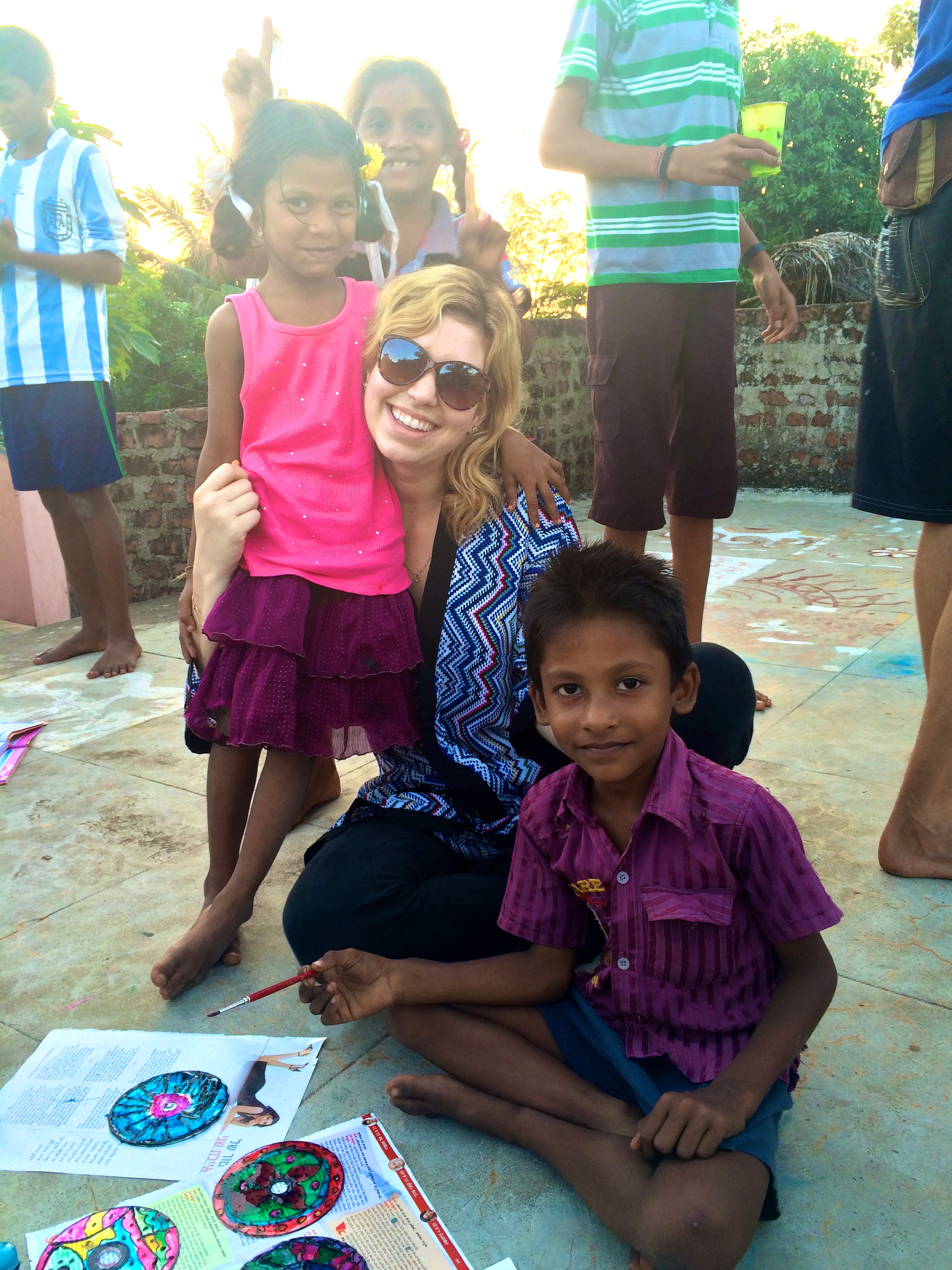
This evening I had the pleasure of going to New Colors and visiting the (adorable) children who go there after school.  New Colors works with underprivileged children of the local village, Edayanchavdy, helping to provide them with not just homework help, but personal development skills.  After speaking with the organization’s founders, married couple Kumar and Renana, I learned some surprising things about education in India (as provided by the government schools).  For instance, one classroom can have up to 60 students.  This creates immense pressure for teachers and is problematic to students, given that their chances of individualized attention are slim.  Even in classes of 20, which I was accustomed to in primary school, students are all at different levels and possess different understandings.  In a setting of 60 young students, I can imagine the frustrations a teacher might have in attempting to teach them all; Kumar explained that the teacher thus becomes a “police officer,” which is, in my opinion, not conducive to a positive learning environment.  Coupled with that, many of these children experience violence in their homes and very few are able to get academic support, due to various circumstances.  This is sad to me, because I think every child, regardless of where they are born or to whom, should have the right to education in a safe place.  This is also the reason why I was drawn to New Colors.  They understand how fundamental it is not only for the children to actually understand what they are being taught in school (opposed to just memorizing what is in their workbook for exams) but also to develop their personality and build their confidence as community members.  New Colors lets their children (both boys and girls!) play and learn in a peaceful place, and I noticed all the children were very happy to be there and be participating together in various activities.  During my visit there, I helped the young students paint CDs for an upcoming Pongal festival, able to see how eager they were to use the different colors and the special glitter paint.  I also played ping-pong (on a home-made table) with the older students, who were having a blast.  All the children were very enthusiastic, despite not having much at home, which to me, was evidence of the resilient human spirit.  I also think the efforts of Kumar and Renana are extremely honorable; they both work during the day, and come home every evening and have the energy and heart to open their home to twenty-something children.  They are also adamant to providing quality attention to the children, and at one point had to limit the amount of children to retain this value.  More notably, they do this all for free because they are committed to making this environment accessible to “all” (i.e. not just those who can afford it), which really is incredible.

//CLH

Arts & Crafts for Pongal at New Colors!

Arts & Crafts for Pongal at New Colors!

Sadhana Forest, some lightning, thunder and reforestation

Friday the 2nd of January, we went to Solar Kitchen, got on a bus and drove for 15 minutes. I knew we were going to a place called Sadhana Forest, and that the people living there were living a “hippie eco life” as someone expressed it. Judgmental, I know, but that was my knowledge of the place before coming there.

Sadhana Forest was like the way I sort of expected Auroville to be. Auroville has got electricity, Wi-Fi at several hot spots, water running from the taps and other necessities. Sadhana Forest had, besides the communal electricity for lighting the kitchen hut, none of that. They were living their life with a minimal impact on nature around them; eating only organic vegan food, not drinking alcohol, smoking or using other drugs, and dedicating their time there to reforestation. A life in a house made of cement is luxury in Sadhana Forest. The huts were made of bamboo and tied together with coconut ropes.

We were given a tour of the area and they sure had done remarkable things; by developing planting techniques to better fit the area they live in, they have a reforestation success rate of 80-90%. They are aiming to replant the Tropical Dry Evergreen Forest, the indigenous forest destroyed by the inhabitants of this part of India. After the tour, we got to see Cowspiracy, a film about how the cattle industry and its affects on the environment which were portrayed as worse than fossil fuel emissions.

Yes, the movie showed shocking propaganda and the numbers are probably manipulated to scare the audience as much as possible. However, maybe we need to be shocked when it comes to these questions? Isn´t it better to be shocked out from ignorance than fed with the usual “don´t eat meat” or “save our seas”? What if you do not have a understanding of the environmental crisis in any way; you do not live in an area at risk of flooding, you do not live in an area that is drought prone. It sure is easy to live with your head in the cloud, but for you to get your feet back on the ground you need some thunder and lightning, and I believe shock-tactics might not be entirely wrong.

I am therefore very thankful to Sadhana Forest for arranging these tours, where they expose their significant work and show movies within the genre of Cowspiracy. Thank you for the thunder and lightning.

//Anna, Linnaeus University

Clothes Aren’t Going To Change The World: Uma Prajapati Is

IMG_7899

Uma Prajapati, the founder of Upasana, embodies this quotation to the fullest. Based in Auroville, India, Upasana is the overarching company comprised of multiple different brands of sustainability from organic clothing, tsunami relief, waste management, social responsibility, empowerment and growth. Since working with the brand to increase consumer literacy about organic cotton, I’ve been completely inspired.

Uma Prajapati. Image courtesy of aurovilleradio.org.

Uma Prajapati. Image courtesy of aurovilleradio.org.

I spent some time talking with Uma today and what she had to tell me absolutely overwhelmed me. I wasn’t overwhelmed in the sense that I felt panic or loss of control, but in a sense that I was utterly affected by her story.

Uma came to Auroville in 1996 and after a year founded Upasana. Her aim was to bring India’s textiles to Auroville, so after sourcing from around 16 different states, the company began to develop traditional textile and fashions. It wasn’t until the devastating tsunami hit India in 2004 that Upasana started to transform. This devastating natural disaster killed nearly 230,000 people and affected the lives of 1.7 million in 14 different countries. The company was working to help pick up the pieces through various social projects. Uma ended up working with organic cotton farmers and became profoundly changed with what she learned.

“When I began to work with cotton farmers, I began to know our big brother, Monsanto. I had no idea. I didn’t know there was a seed mafia. I didn’t know that there was a chemical mafia. I didn’t know farmers were committing suicides due to the way the whole economy is structured. They feel so vulnerable. The whole thing hit me so hard,” she said.

Because of this, in 2010 Upasana declared that it was consciously taking the step into becoming organic to support the farming community. She told me that it just blew her mind when she found out that 25% of the world’s insecticides and pesticides get used in one single crop of cotton. She continued to reveal that fashion is corrupt at the very base level, that it can’t even support the people working to produce the crops necessary to create clothing.

Uma questioned her role in all of the mess. “And in that process I chose to align my action and my thought process to the future and the light of the future, not so much thinking about who has to change right now. It’s me who will change and it’s my organization who will change and I will align myself to the future. This is where the sustainable fashion as an option came to me, that if I had to continue doing fashion, it will be only this or I’m done.”

It was this point in the conversation that really made me sit back and examine the world and the people who comprise it. What are we doing to our planet, to our people? If all fashion companies and all of the segments that make it up changed to operate in an ethical and sustainable way the total global carbon footprint could be drastically reduced and countless lives could be saved. If more leaders of companies had Uma’s mindset, the world would be in a much better state.

The future of Upasana lies in international expansion. “It’s time to tell the story to the larger community.” Uma had purposely avoided that route because she wanted to serve her own country and domestic market within India, first. She continued, “now, I’m ready to take this story of a small brand venturing into a fashion and trying to bridge from the farmers to the wearer to the whole line of organic.”

I asked her where she thinks the future of sustainable fashion is headed and without any hesitation asserted “sustainable fashion, it’s the only way!” If we want to we can choose to continue to do what we are doing and destroy the planet, but eventually we have to think about the future. The future lies in sustainability and a conscious lifestyle. It’s not just the fashion industry; many things need to change.

Uma’s passion and dedication to making a difference is exactly the inspiration that the world needs to achieve the larger goal. In a world filled with people and companies whose only concern is to make money over everything else, Uma is so refreshing. But, in addition to her commitment to make this world a better a place, her positivity and optimism for the future makes me hopeful that change can actually happen. I hope my contribution to the effort has even a minor impact upon perceptions of sustainability as a whole. I hope people make the change.

By Alexa Pizzi

Grassroot edutainment – the solution to garbage and waste problems in India?

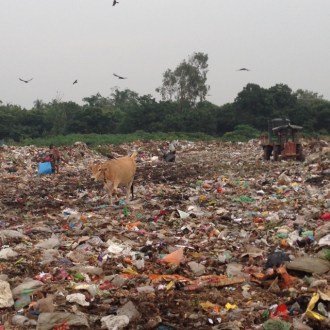
One thing that was pointed out to me before coming to India was the problem with the garbage. It was explained to me that they did not seem to have any particular understanding of how to take care of their garbage other than throwing it out in the street. It was the first smell that hit me, and it has constantly been present ever since I got off the plane.

We have been consistently educated in how diseases are transmitted and how we should use hand sanitizer to keep healthy. Just because we come here for a month, we suddenly need to act as we are in the middle of an epidemic or sanitary crisis. And yes, I understand we are not adapted to the bacteria here and that of course we need to be careful. But what about all the people who live in these conditions? Not, as we do while staying here, in a nice hostel with a regular toilet, a sink, and access to clean filtered drinking water. What about the rural villages?

image2Pondicherry dump

Since this has been in the back of my head ever since we left Sweden, I was really impressed when we visited an NGO called Yatra Arts Foundation. They work with what one would categorize as edutainment, or social marketing. They sing and perform plays with important social messages regarding health education. We got to see a movie about the issues raised dumping garbage, and how it could make you sick if not taking care of it in an appropriate manner. A few of us were even able to attend one of their live street performance later that evening where they sang in Tamil, and performed a play that focused on how dirty water could make you sick. It was truly wonderful to see how the children watching (and they were many, maybe, close to 50!) were laughing and participating in the play and in the vocal performance. They even took part in the dances on the little lit up area the artists were using.

image1

Live performance by Yatra Arts Foundation

The work being done by Yatra is really important, and I believe it should be spread across India and to other countries that are facing similar problems. Grass root level edutainment comes across as a very effective way of teaching children about these issues, since they may not have access to other sources of information. How could they be exposed to a national television campaign regarding these issues if they don´t even own a TV or if they barley have electricity?

//Anna, Linnaeus University

Bargaining in India – Paige Nelson

Coming to Auroville, India there is an unique custom of bargaining with store and shop owners that  is not available in fixed price shopping in the European world. By making the price negotiable, there is an opportunity to satisfy consumers whose willingness to pay is significantly less than the shop owners asking price. Bargaining is a system of exchange by which goods or services are directly exchanges for other goods or services such as money. The bargaining system enables two parties to exchange goods or services based on mutually perceived value. It is enacted by an individual picking one or more items and bargaining the price with the producer of a product.

An instance in which I chose to bargain shop in the town of Kulapalayam, there was a negotiation of the price of a scarf that was initially 1,000 rupee. After many attempts to bring the price down to 800 rupees I chose to purchase two scarfs for 1,800 rupees. In the specific shop there were two brothers who were the workers under the direction of their mother who sat in the middle of the store as an overseer and keeper of the money. Realizing the relation between the three individuals, I recognized quickly that this was a family business who relied on the money to survive. Upon this realization I came to the question of “When is it alright to bargain when the consumer is in need when the family is in need to survive?” Is it proper to meet their asking price or is it proper to to honor your willingness to pay?

Finally, it is not a question of “who is more in need?”, but of “how can we both benefit from this process?” Watching the mother in the of the shop laugh at her sons attempt to negotiate made me realize that she is having fun with the process and was not counting on the profits of the night to sustain and was impressed with my bargaining skills. The process is not black and white and is built on a system of understanding. There has to be a middle ground to satisfy both parties that takes into account all of these elements. You get your scarves for a fair price and the family is able to sustain itself on their profits. 

Outside the Mother’s Bubble

Whether you choose to lap up the new-age and mosquito laden kool-aid or not, the beauty of Auroville is undeniable. Lush, green, and tranquil; it possesses a sense of calm (and western toilets, hallelujah) absent outside the Mother’s territory.

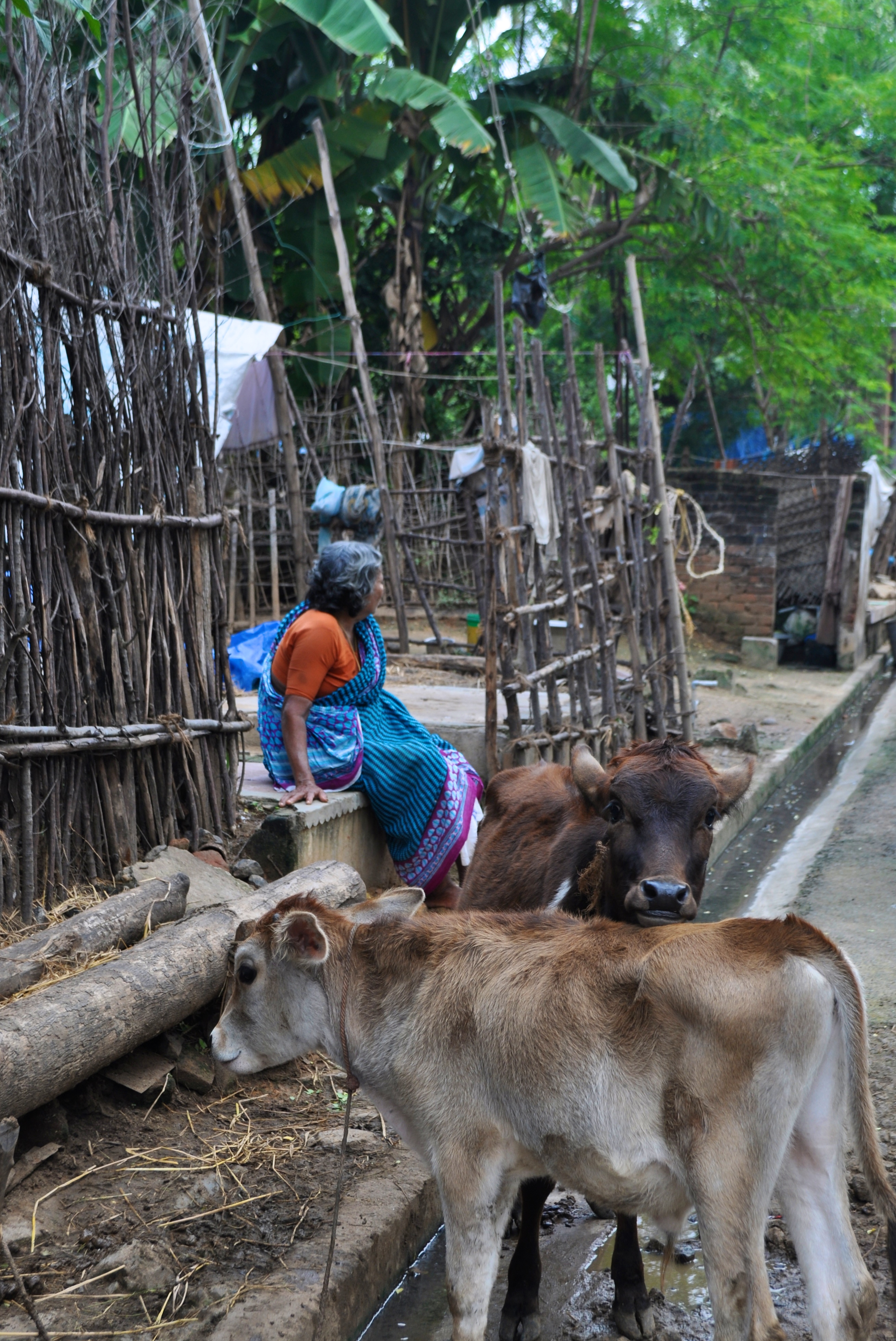
     But it’s not Auroville which made me fall in love with a country so different from my own. Yes, there are countless problems and visible disparity wherever you look, but there is also an indescribable beauty. Behind the garbage and questionable roadways lies an energy that draws me in. It’s the buzz- the chaos, the confusion, the friendly smiles that have me yearning to explore the surrounding cities and villages.
     It tends to be the little things that catch my eye; the hand painted trucks, the most beautiful (albeit toothless) smile I’ve ever seen, pops of color on perfectly derelict buildings, or the outright impressive amount of people or items which seems to crammed or tied on to every tuk-tuk and scooter.
While words can attempt to describe my own feelings, pictures allow you to have your own. Below is a tiny portion of the things which have brought one of those brief but profound moments of joy which I seem to only find when presented with the freedom of travel– the excitement of not knowing where I am and the overwhelming reminder to stay both open and humble.
DSC_0039

DSC_0986

DSC_0043

DSC_1037

DSC_0967

DSC_1324

DSC_1001

DSC_1115

DSC_0964

DSC_0968

DSC_1256

RMK