Changing the World with Sustainable Bacteria by Jzan Tamielle Villanos

According to the Pacific Institute for Studies in Development, Environment, and Security, about 2 million tons of water pollution is produced globally on a daily basis. Water pollution includes toxic chemicals from industrial and agricultural waste and sewage. Contamination of precious water sources directly affects areas with low income communities, where people do not have easy access to clean water. This contributes to diseases, lack of sanitation, and even water related deaths. So one solution to remediate water resources to make clean environments is the production of probiotics. 

 Probiotics are beneficial to sustain the health of life. It is bacteria that is good for the body and the environment. It helps remediate areas in the body and environment by eliminating bad bacteria. It can be found in everyday foods such as yogurt and other fermented food and drinks. Ingesting probiotic foods can help increase good bacteria to support the immune system and fend off illnesses caused by bad bacteria. Probiotics can also be found in water systems and can be used to create a well balanced environment. 

Probiotics is a revolutionary tool to use to push towards sustainability. Our daily routines and the products we use can harm water systems as it drains down the sink or shower. Margherita Correa saw this as a problem and found how people are not thinking about the effects they have on the environment by doing their daily routines. She believed that if “you have a problem, you solve it at the origin.” So, she developed MGEcoduties and subsequently Probiotics House to solve this issue of pollution caused by our daily routines and produce products that are safe to drain and safe for water. MGEcoduties and Probiotics House is the first probiotic company of its kind to produce probiotics in powder form which has become useful to other partnering companies like TATA to use to develop more sustainably safe products. These microbes can produce bioconcrete, bio buildings, beautylines, safe agriculture, and safe livestock. It also helps breakdown compost faster, which is useful to create a more environmentally friendly area. Probiotics promote a safer and more sustainable way of living daily life as it remediates water and the environment. 

MGEcoduties and Probiotics House accomplishes and suits the UN Sustainability Goals of Clean water and sanitation and Responsible consumption and production. Probiotics can help clean up the water systems and using products that have probiotics promote more sustainable routines of daily life. Moving towards a society that uses probiotics can really change how we produce and handle waste as it returns to the oceans. Probiotics will help prevent diseases, and control the balance of water.

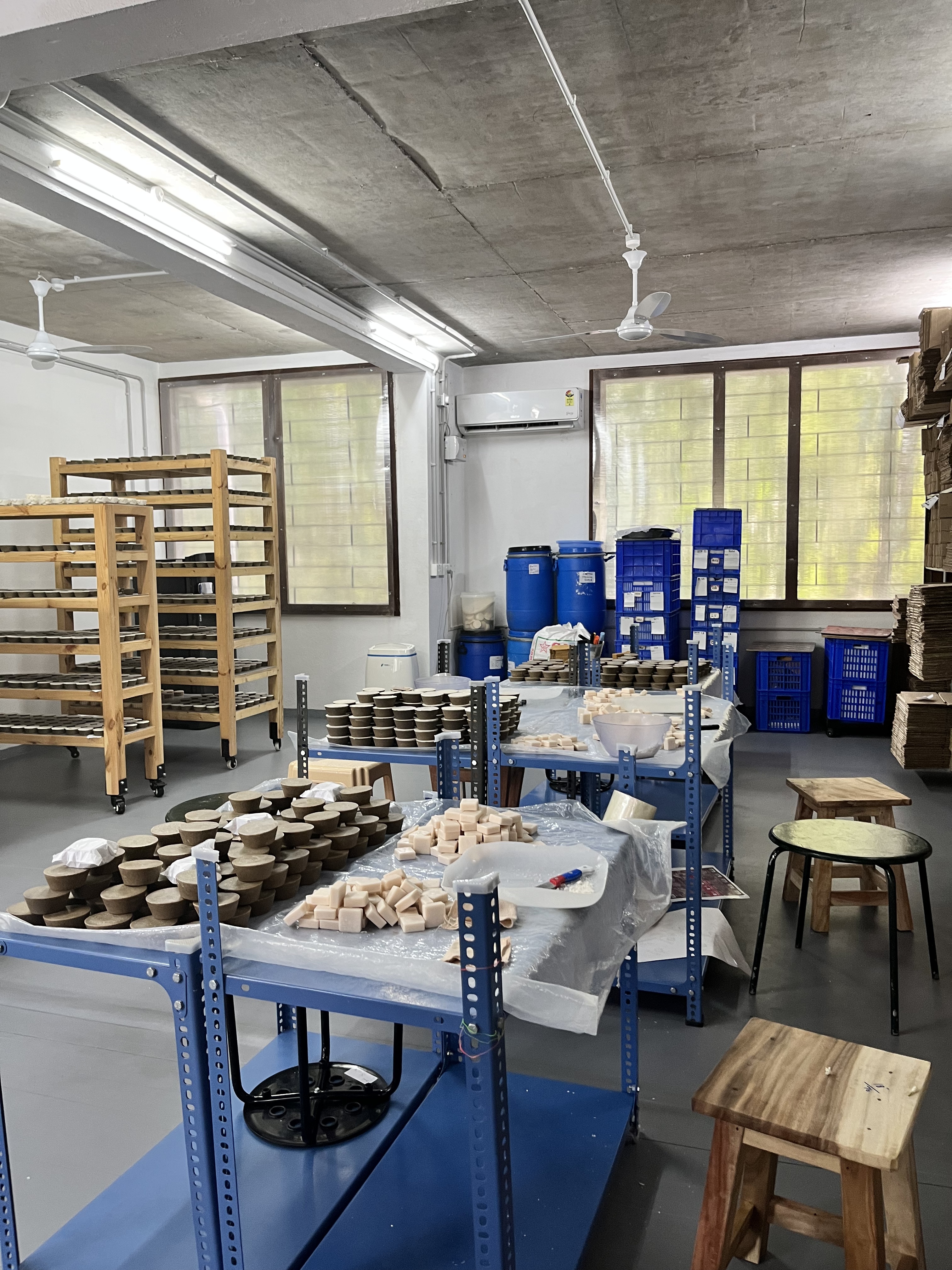
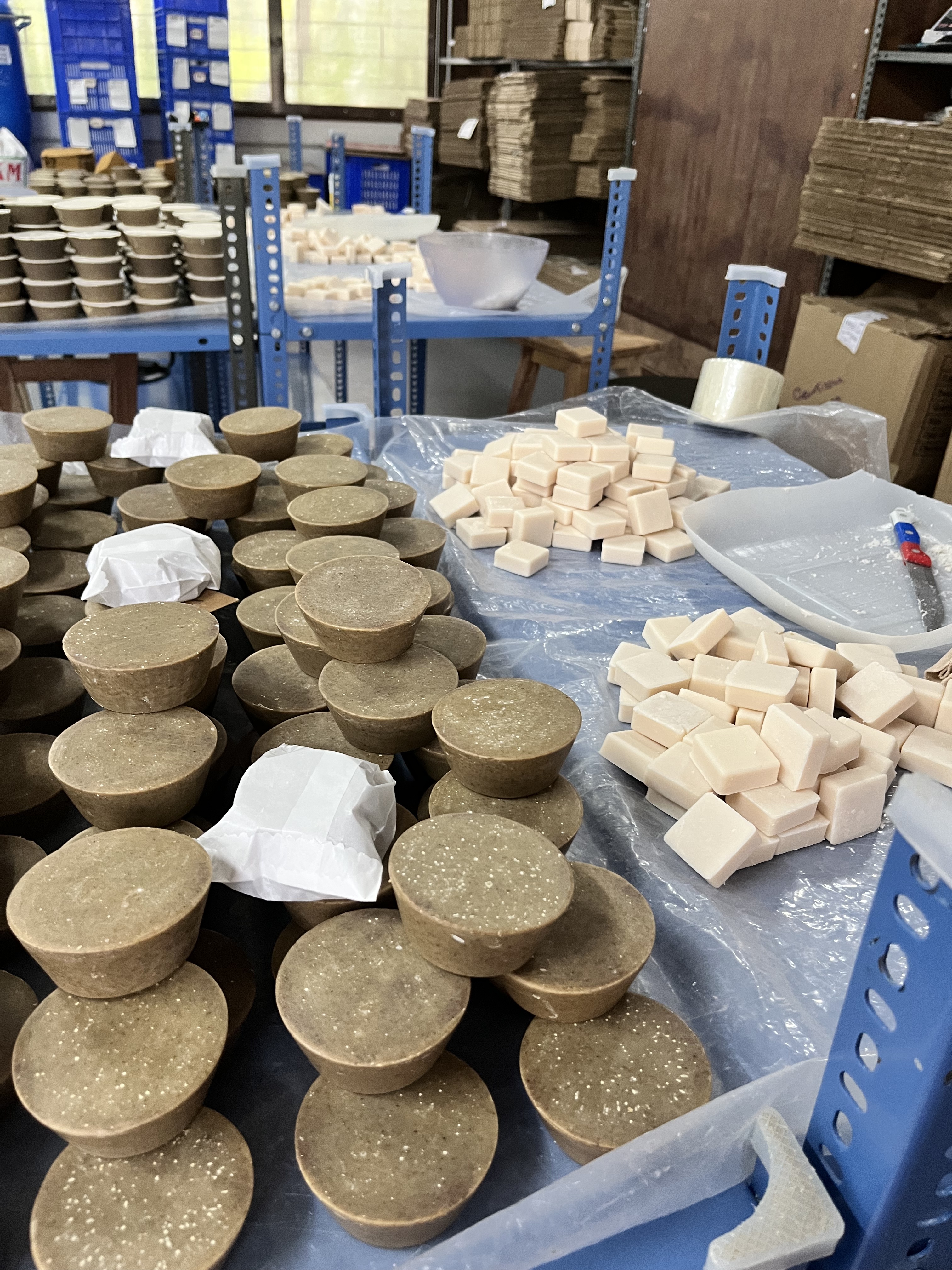
images: Soaps produced by MGECODUTIES that is full of probiotics so when the user uses the product, the probiotics will help remediate the water going down the drain.

Pichavaram Chidambaram Mangrove Forest by Shandiin Vandervere

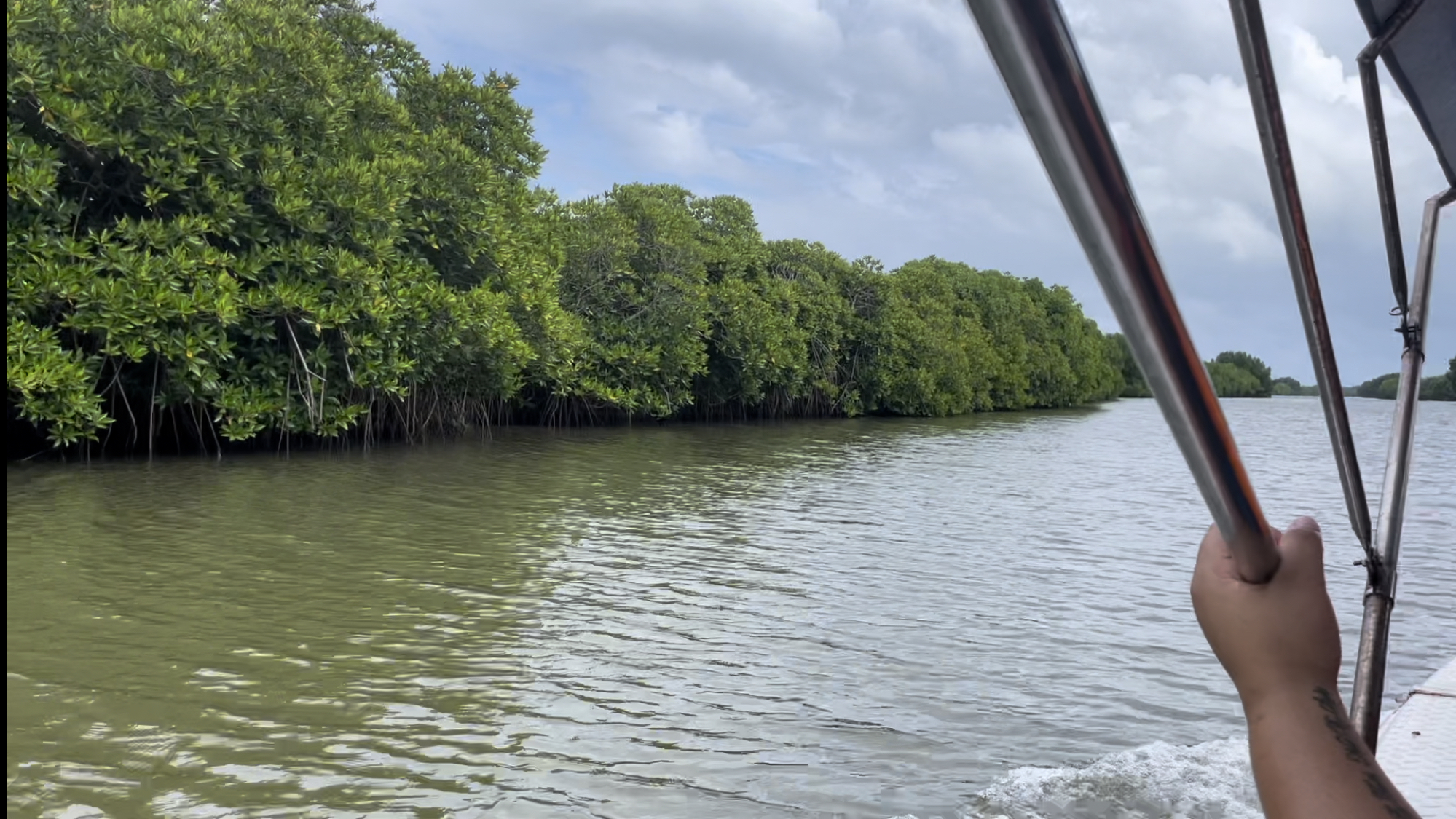
The Pichavaram Chidambaram forest, resting within the Cuddalore District of Tamil Nadu, is the world’s second largest mangrove forest. Its expansive growth covers about 45 square kilometers along southern India’s Uppanaru River and offers immeasurable ecological value.

The river’s freshwater mixes with saltwater from its source, the Bengal Bay, forming the calm Killai backwaters that saturate the mangroves. Protected by a sandbar, the river runs smoothly and slowly through the bottom of the country. Though the water’s depth is no more than 3-4 feet, its ecosystem flourishes with countless plants and animals.

Interconnected by more than 400 river system routes, the diverse range of unique habitats offers ideal territories for countless species of birds and animals. So far, over 170 different species of both migrant and local birds have been identified within the Pichavaram Mangrove Forest. These distinct environments range from channels, creeks, gullies, mudflats, sandflats, to the neighboring seashore.

The area is designated as a national forest but is situated between two large estuaries, the Velar in the north and the Coleroon in the south, which makes environmental protection even more of a priority.

Apart from offering an incredible level of biodiversity to the area, the mangroves themselves hold immense value for the human populations nearby. The dense roots of the tree help provide natural infrastructure and protection by absorbing storm surges from extreme natural events like tsunamis. Tamil Nadu experienced this in 2004 when a large tsunami hit the coast, killing over 100,000 people. Without the mangroves, the death toll would have been much worse.

Visual representation of mangroves’ effect in extreme natural events.

They also help stabilize the ecosystem year round by mitigating coastline erosion. Their roots, again, help bind and build soil below the ground. Above the earth, they slow down water flow and allow sediment deposits to increase. In a simple scientific process, mangrove root systems filter nitrates, phospates, and other pollutants from the water as it passes by. By improving the water quality at the start of the river, the mangroves help ensure all other ecosystems downriver have clean, healthy water.

Bamboo Center by Christopher Hussey

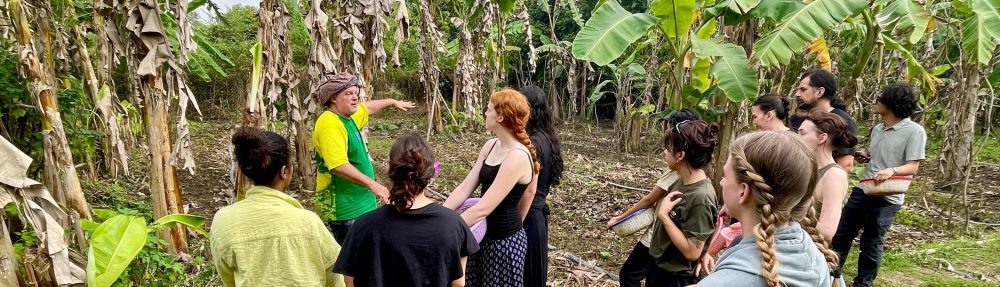
Bamboo is one of the most diversified natural resources in the world. Unbeknownst to us, India also happens to be the second largest natural producer of the grass, overrun just by China. Tamil Nadu once hosted forests of bamboo which were eventually limited through years of colonization and eco-destruction, as discussed with our group by a local expert at the Mohanem Cultural Center and Auroville Bamboo Center. In Auroville, a community of forward-thinking experts of Tamil Nadu ecology and culture are working to bring back bamboo as a key member of the local environment. Through testing various versions of the plant, a specific strain called Beama has been successfully grown to uphold to the climate here and provide a sturdy substance for sustainable architecture, art crafting, and daily use. 

Aurovillians are paving the way for sustainability and their cultivation of bamboo is no different. Through our exploration of the bamboo forests and subsequent shops selling bamboo goods, we came to find that bamboo can be used in myriad ways. The photos below show a collection of bamboo-reinforced home construction, soap, teas, and much more. Additionally, bamboo does not require fertilizer making it eco-friendly and environmentally conscious. As a result, the planting of Aurovillian bamboo forests has also been subsidized by the Tamil Nadu government. Evidently, Auroville is once again lending a shining light on the innovations of sustainable technology with a respect for tradition and consciousness.

A Visit to Sharana by Christopher Hussey

Hidden behind some mother’s side a child peers out with tear-filled, begging eyes. They are bathed in a hazy light and animals run around wildly. With your money, you can help, save, and fix their problems. Their story, after all, must be identical to everyone others’ in their village, state, and country… right?

Many fundraising campaigns and NGOs pride themselves on aiding the ‘sickly village child’ and ‘impoverished family,’ smearing images of such likenesses across their social platforms. Though indeed food insecurity and economic inequality are realities of our global community, supporting those experiencing these circumstances should never be based on guilt and shame which perpetuates ‘othering.’ This is precisely the unlearning that we have to do. 

Sharana is an organization of about 53 members whom work to support and uplift approximately 900 village children of the Pondicherry area. With 6 centers within their vicinity, Sharana provides myriad services from homework help to art therapy. Created out of an effort to facilitate structured learning in the lives of Tamil Nadu children, Sharana has now grown immensely— receiving financial support from many foreign governments, including the French government. Nonetheless, Sharana has made it very clear that they adopt a ‘no nonsense’ policy when it comes to donor coverage and support. ‘Donors do not drive our vision,’ says Rajkala Partha, founder and President at Sharana. The premise of Sharana is that it must be guided by those the needs of those it seeks to work with, not those who seek to work with it. This philosophy, along with the truly remarkable leadership at Sharana, maintains a sense of integrity to its work which is quite unlike many of the savior-complexed NGOs we see coming from the West. 

More on their work, Sharana gives daily after school lessons in language, computer literacy, mathematics, and art to the participating children. Recognizing that the homelife of these kids may also be an impediment to their growth and learning, as alluded to by Rajkala by mention of Pondy’s high rate in domestic and sexual violence, Sharana also provides art therapy services to the fathers of the children and a space for understanding to the mothers. Ultimately, Sharana realizes that inspiring the language necessary to comprehend one’s scenario often leads to the reparation of it. Just below is an image of paintings made by some of Sharana’s fathers, led through an exercise of emotional release via art with Sharana’s art therapist Manuel. 

There simply is so much that could be said of the fantastic work which Sharana does. I invite you to check out their website and, if possible, reach out to get involved!

For some additional understanding on ‘unlearning,’ take a look at this video which briefly summarises the malfeasance of many NGO communications projects:

CSR Geomatics monitors the rainfall within Auroville. They have various rain tracking systems in place all over the city to keep track of how much it rains. There is also a team of people to manage it.    

Not all soils are created equal, some soils collect more water than others, while others are unable to collect any water at all. Sometimes this has to do with how much water is taken from the aquifers.  

Using ground water is not inherently a danger, instead it’s how much of the water is drained. Giulio explains that if too much water is taken, there is a risk of permanent damage. When too much water is taken, subsidence occurs. Subsidence means that the soil becomes compact and no longer absorbs as much water as before or at all. CSR Geomatics emphasizes that there is a danger of constantly utilizing ground water. Subsidence can lead to increased amounts of flooding because the water does not have elsewhere to go. Subsidence can also negatively affect buildings, causing them to erode. 

This is important because some cities and states heavily rely on the use of ground water to access water during droughts. The state of California estimates that some communities within the state rely solely on ground water to get by. Before 2014, the amount of water taken from the aquifers was unmonitored. This led to the introduction of the Sustainable Water Management Act.  The San Joaquin valley is over drawn about 2/3 more than the state average. To combat this, the state has made plans to refill the aquifers with water but the problem of where to find the water remains.  

California is constantly in a state of drought, as are many other parts of the world. Climate change will only exacerbate this problem; extreme droughts in some areas while others flood. Taking care of the aquifers is a drought prevention method.  

Despite the bleak outlook, Giulio proposes to stop waste from running off into the ocean after it rains. There are many methods that can be used; using water basins, treating wastewater.

The Mystic Art of Sustainability by Jzan Tamielle Villanos

“Art should not be restricted to a wall of a room,” says Puja, the co-founder of Myths in Art. Founded in 2020 by Puja and Kevin, Myth in Art is a local visionary art store that not only sells beautiful and unique art pieces, but also promotes sustainability through their art, goals, and production. They believe that art should be shared and expressed with others, so they sell their art in forms of clothing, active wear, tarot cards, postcards, and more. They have the goal to be as sustainable as possible within their artwork and the products they produce. 

Inspired by dreams and nature, Puja creates her art from the heart, making pieces authentically unique and vibrant. She primarily uses watercolor where she can feel emotions and produce a frame that can stimulate the psychological process with color. The fine line pen strokes accentuate the mythically themed story that is being told. Making pieces so personable, relatable to many, and beautiful at the same time. Connecting art through dreams, feelings, and emotions. 

With nature and beautiful life around us in mind, Puja believes that “As artists, [they] are very conscious about not to make artwork out of plastic material” and produce sustainably made products. She mentions how large retailers and fast-fashion cause so much harm. For example, 85% of textiles created by fast fashion are disposed of unsustainably and are responsible for about 10% of global carbon emissions. Puja and Kevin refuse to follow this model so to follow the sustainable goal of following responsible consumption and production, Myths in Art uses biodegradable material for their quality products. They also follow a production after purchase model where a product will only be made when it is purchased online in order to prevent overproduction. Another way that they follow sustainability is working with companies that follow the same values such as an American company which produces recycled polyester swimwear for their swimwear line. However, Puja recognizes a problem within the art world where busy artists who do not have time or the materials to make their own paint are dependent on paint companies that use chemicals. She notes how companies should start producing environmentally friendly paint materials with pigments coming from naturally found minerals. This way, art would become more sustainable. 

Puja and Kevin want to show how art and sustainability could be combined and how it can be beautifully displayed on shirts, swimwear, active wear, and more. They network with other local artists around Auroville like jewelers, sculptures, and painters to organize exhibits or pop-up shops to promote their work with the promotion of sustainability in mind.

Auroville Finance

Coming to Auroville and listening to different residents reveals that there are as many projects and perspectives as there are represented nationalities. To help us understand the financial structure and functioning of Auroville, along with the intentions behind this, students attended a talk about the financial functioning and maintenance of Auroville.

Auroville is an international town created as a charitable foundation by an act of Parliament, based on a cooperative concept, where the city purchases for group, and everyone contributes. It has 3,000 residents, but has an economic aim to sustain an eventual population of 50,000. Right now, 30% of residents are Tamil from the local area, and there is pressure from the Indian government to promote the residency of more Indians because the population of Pondicherry is expanding so rapidly. Auroville management within the central foundation begins with the Governing Board, selected by the Indian government, which manages a Finance Committee, and under that is the FAMC Finance and Asset Management Committee. This last one is managed by Auroville residents, and it sets budgets, stewardships, and approves projects. Substructures to that include the Unity Fund, which is the accounting structure, followed by Financial Services, then followed by Executive Bodies, which are trusts. This then breaks down into the 800 commercial units and activities, who contribute 33% of their profits back into the Auroville budget. There are also 3 trusts set up for Bioregional Development in the local area outside of Auroville, for environmental, educational, and microfinance projects.

Auroville was founded with certain ideals of what a healthier, more equitable, peaceful, and sustainable future would be. For example, ninety percent of the trees in Auroville were a part of a reforestation effort that began with its founding 50 years ago, a testament to the residents’ ability to act on big picture dreams through small changes. The same can be said for Auroville’s finances. Auroville has a program they call the KIND System, which operates off of a cash-less accounting system passed through a card per each person. City Maintenance, the amount of money every citizen is entitled to, is intended to provide citizens with basic needs, including food, health, education. It is not meant to sustain all expenses, and will mostly meet the basic needs of a modest lifestyle, but will not cover habits such as consuming meat, drinking alcohol, smoking, or the purchasing of one time expenses, like an appliance.

Leadership in Auroville is on a volunteer basis, unpaid, with the hope that responsibilities will emerge from duty, and decisions will be from consensus. Those who are employed by City Services receive a small stipend, not a living wage. The city of Auroville only formally employs about 500 people, about 25% of the adult population. Because of the standards and regulations involved in becoming a citizen, including a set amount of volunteer hours, many people will choose to go elsewhere for seasonal work, unless they are able to run a successful commercial unit.

Per the Auroville philosophy, no one is supposed to own housing in Auroville. Almost all land is owned by the city trust, and people pay for stewardship. They can secure housing with the Housing Service with a contribution between $30,000 to $60,000 to the Unity Fund, and the Housing Service connects potential residents and developers. On a side note, if a resident decides to leave for an extended period, they must relinquish the housing between 3 and 5 years. There is a small Repatriation Fund for those who leave within the first five years of moving to Auroville, where they receive a small portion of their initial contribution back.

After reviewing the financial structure, spending, and philosophy, one can see that Auroville aims to contribute to achieving the UN Sustainable Development Goals #1 (No Poverty), #2 (Zero Hunger), #3 (Good Health and Well Being), #10 (Reduced Inequalities), #11 (Sustainable Cities and Communities).

EcoFemme

IMG_3389Our visit to EcoFemme was a much anticipated one for the group.  Started in 2010, EcoFemme creates washable cloth pads that are, “good for you body and the environment”.  EcoFemme is a social enterprise, a commercial organization that has a specific social objectives that serve as its primary purpose. It was developed out of the founder’s work with Village Action, a neighboring NGO that works to empower village women.  She was looking for an alternative to relying on donor money and searching for a sustainable way to generate income to support village women.  While in New Zealand she stumbled across a no brand name cloth pad, and the idea was born. 

IMG_2881

Feminine hygiene products, pads, tampons, and panty liners, create hundreds of thousands tonnes of waste every year.  All of that waste contains plastics that do not biodegrade easily.  In fact, it can take over 500 years for one pad to degrade. This is a world wide issue, but it is front and center in India, where waste management leaves much to be desired. Eco friendly feminine hygiene products, like menstrual cups and cloth pads, can be life changing for everyone, men included.

A few years ago I ditched disposable feminine hygiene products in favor of a menstrual cup.  I no longer had to carry around boxes of tampons in my purse or worse, have to ask around if anyone had a spare one if I’d forgotten to bring some with me.  However menstrual cups are not ideal for every woman for a variety of cultural or personal reasons.  In India especially, feminine hygiene product disposal is more than just an embarrassing hassle, it also negatively affects the environment. 

After beginning to sell the cloth pads, The founder of EcoFemme realized that most women who lived in local villages were not receiving proper education around menstruation. Many women were still being subjected to ritual seclusion, a practice based on the belief that during the menstruation period the woman is unclean. 

She realized that this product would benefit more than the women in the western world who wanted a more natural feminine hygiene product, and so she started the Pad 4 pad and pads for sisters programs.

Pad 4 pad is a program in which every pad purchased also helps to pay for holistic education around menstruation for young girls in government schools.  In 2011 the Indian government started giving free disposable pads to girls aged 10-19 in an attempt to prevent young girls from missing school during their menstruation. Because habits are formed early, EcoFemme tries to reach young women as early as possible so that they know there is an alternative to disposable pads.  The other program is Pads for Sisters, which works to help economically disadvantaged women over the age of 19 to afford the cloth pads.

Overall I think we were all greatly inspired by our visit to EcoFemme.  If you’re interested in learning more or supporting this awesome social enterprise you can here: https://shop.ecofemme.org/int/

Dahistki Physical Exploration Center


IMG-20191226-WA0033Image Credit: Stella Sagini

This is not a Gym. This is a Physical exploration center where we train the body in relation to the mind and the spirit”Vikram explains.

IMG_20191226_102843Image Credit: Stella Sagini

Vikram is the founder and chief trainer at Dahistki Physical exploration center at Auroville. He began training back in 2000 and so far has trained 3,000 people, tailoring a custom based training for each individual.

He came from a rough neighborhood in Chennai and overcame physical abuse to pursue a successful career in cricket for the Indian League. He was catapulted to great wealth and splendor when he played cricket, however, he walked away from it all to start his journey of self healing.

In Dahistki there are no mirrors, he explains that there is no time for vanity here just working on the body, mind and spirit. We are invited to explore and tinker with the gym equipment and feel free to ask any questions.

IMG-20191226-WA0041Image Credit: Stella Sagini

Vikram is calm and speaks in a low monotone, and I listen closely to every answer he gives. I start with a light question. “How many Tatoos do you have?” Which he responds “95”.

Most of them are Hindu and others connect with The Mother’s teachings. On his forehead he has the words inscribed in French “Raison d’etre’’loosely translated in English as the reason for being. He explains that we all need to know why we are alive, once you don’t you are dead.

Vikram came to Auroville because of the Mother’s teachings. During his study and journey of spiritualism and self-healing, he came across her teachings and was inspired to visit. While he was at Auroville he was inspired by how Aurovillians used their work in service of others and wondered how he could contribute. He decided to open the Dahiksti Exploration center to train and guide others on their own self-healing experiences as well.

IMG_20191226_102422Image Credit: Stella Sagini

Vikram has more peace and balance in his life but admits that he still struggles with his own personal baggage. “I know, I look like Gorgio Armani on the outside, but inside I was rotting”. We all struggle as a human race but life is journey and we all stumble from time to time.

IMG_20191226_102451Image Credit: Stella Sagini

Dahistiki is free of charge to all Aurovillians and he doesn’t accept any gifts or donations from clients. He notes that some clients are ecstatic about the major transformation in their lives after the program and prod to donate. Rejecting one’s money makes clients uncomfortable as they aren’t accustomed to this in the outside world. However, he insists if you want to give back, clients should do it in service.

IMG-20191226-WA0047Image Credit: Stella Sagini

We have visited social enterprises and other non-governmental organizations that deal with climate change, capacity building and recycling but this was unique, as it falls under physical exploration. Its vision isn’t run by any goals like the MDG’s but a growing need to reflect on Mental Health. In 2019, Prince Harry   launched Heads Together and initiative aimed at changing the conversation and stigma around Mental Health. Prince Harry has called for the “grin and bear it” culture of mental health to be reassessed in the wake of his controversial decision to step back from the Royal Family. The Duke of Sussex and Oprah are currently working on a TV series to be launched this year discussing the importance of mental health.

According to the World Health Organisation report in 2015, over 56,000,000 people suffered depression, that is 4.5% of the Indian population. India is arguably the most depressed country in the world.

Similar to some of the discussions we encountered at Upasana and RainFed Alliance, India farmers are battling depression and anxiety more today than previous years. Whether its due to low yields, societal pressures and family dynamics, there is a growing need to make mental wellness services accessible to more people.

“So how does it work?” I ask curious about this life changing experience. “You will have to come and find out” Vikram concludes, Its an indescrible experience that can only be explained through emersion.

IMG-20191226-WA0025Image Credit: Stella Sagini

I did not go back. I am already set in my ways but I recommend this experience to anyone who is seeking mental wellness and is open to receiving new life lessons.

EcoPro: Sustainable Toilets

When we think of India two characteristics come to mind, low sanitation standards and poverty. There is much more to the country but often India is associated with these negative connotations that still affect many parts of the country. Dr. Lucas Dengel is trying to create a sustainable alternative to the issue of the hygienic management of human bio waste or in simple terms: pooping. Sanitation is one of the biggest public health issues on the globe, causing diarrhea and other major health problems. In India alone there are over 1,600 deaths per day related to sanitation.

In his presentation Lucas points out the flush method is highly Western. He asked the question, “why do you use a toilet?” He pointed out that much of this is due to comfort. Being able to sit and have privacy for as long as needed, but that is not that only toilet or the only method that should be considered. The toilet was invented in the late 1500s. This invention was first used by for Queen Elizabeth made by Sir John Harington. This new device was a two foot deep bowl that required water to flush, a system that is still used today in most washrooms around the world.

Of course this method is very sanitary but also extremely wasteful in the amount of water that is used for a flush system. This use of sanitation also neglects the use of bio-waste as a resource, wasting plant nutrients. This is when Lucas pointed our an alternative to sanitation that is much more ecological while fitting into the cultural norms of India and other nation-states. This is referred to as the Ecosan which is a system of sanitation that saves water, reuses plant nutrients and is hygienic. The model is a flat toilet with an opening for urine with the other for fecal waste. This is placed above a compost (better known as a drying chamber), where there is moisture cause the fecal matter to dry up. What often spreads diseases is through the moisture. Urine will be cleansed and drained separately.

EcoPro has already yielded a few of these toilets with positive results, which include improving the purity-pollution gradient. The fecal matter takes up to a year to completely dry and is no longer a sanitation issue to the local population.

IMG_5930

Sanitation is not just an issue of sustainability but also of social class. Often, the issue of sanitation relates directly to the caste system in India. Those called untouchable or ‘Dalit’ are at the bottom of society and often have to make a living as scavengers in the sewer system.

This involves cleaning septic tanks and sewers without any protection. This is start contrast to countries like the United States or France where extensive protective gear is used when going into the sewer system. In tackling the issue of sanitation in India is is important to know who is taking the direct hit in society and how to improve societal norms for all.