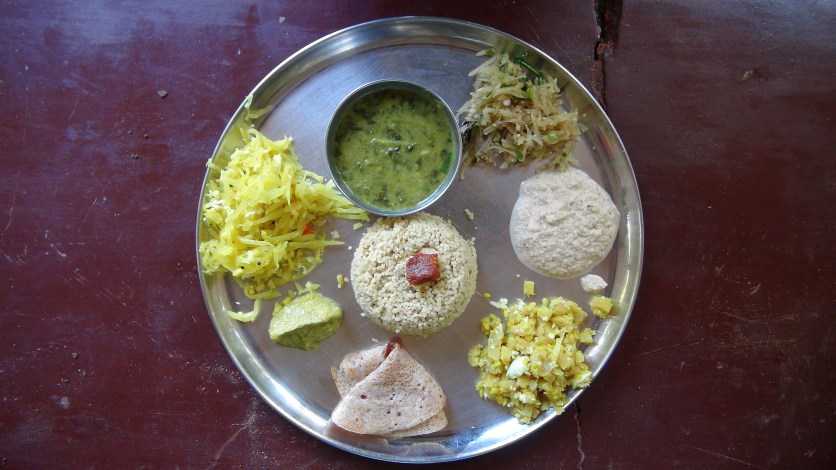
Creating a Sustainable Supply Chain: For the Love of Coffee.

By Jon Daniel McKiever

To say my internship at Marc’s Coffee Café was a rewarding experience is a gross understatement. I initially chose this organization two weeks ago because I knew it would provide me with the unique challenges I was seeking…plus, I love coffee!

I wanted marketing experience by designing promotional material for one of the local organizations. Marc needed a photographer and I had luckily purchased a new camera the day before we left for India! I knew photography would provide the creative outlet I desired and this experience would force me to work with unfamiliar software to design a marketable product for Marc and Mati.

My assignment was to tell a story of coffee from “seed to cup” through photography. Then I needed to incorporate these photos into a 2017 calendar I would design for the café. While my initial motives for choosing Marc’s café were of pure self-interest, I quickly realized this enriching work experiment would teach me much more than I’d initially anticipated.

By centering the theme of my calendar around the value chain of coffee and those involved in the process, I recognized the opportunity this experiment provided to educate prospective customers at Marc’s café about where their coffee originated.

But first….

Some Quick Coffee Facts about India:

  1. In India, “there are approximately 250,000 coffee growers; 98% of them are small growers. Over 90% of them are small farms consisting of 10 acres or less.” (1).
  1. Coffee is predominately an export-commodity in India; however, “coffee planters in India are finding significant traction in the domestic market.” (2)

Due to recent campaigns to source locally, coffee plantations are able to find more business with local coffee suppliers throughout India. It’s businesses like Marc’s Café who’ve realized the importance of maintaining a sustainable supply chain for commodities like coffee. Their endeavors have helped “develop a deeper and sustainable sourcing relationship with Indian coffee growers.” (2).

One of the coffee farms Marc’s café purchases their coffee from is Julien Peak (located up the mountains from Yercaud). This particular coffee plantation sees the value of certifying their organic and sustainable farming practices through an organization called UTZ.

UTZ’s motto is “Better Farming. Better Future.” They are one of the certification companies that are similar to what people know as being “Fair Trade.” This organizations mission and vision are posted below.

UTZ Mission

Our mission is to create a world where sustainable farming is the norm. Sustainable farming helps farmers, workers and their families to fulfill their ambitions and contributes to safeguard the world’s resources, now and in the future. (3).

UTZ Vision

A world where sustainable farming is the norm is a world where: farmers implement good agricultural practices and manage their farms profitably with respect for people and planet; industry invests in and rewards sustainable production, and consumers can enjoy and trust the products they buy. (3).

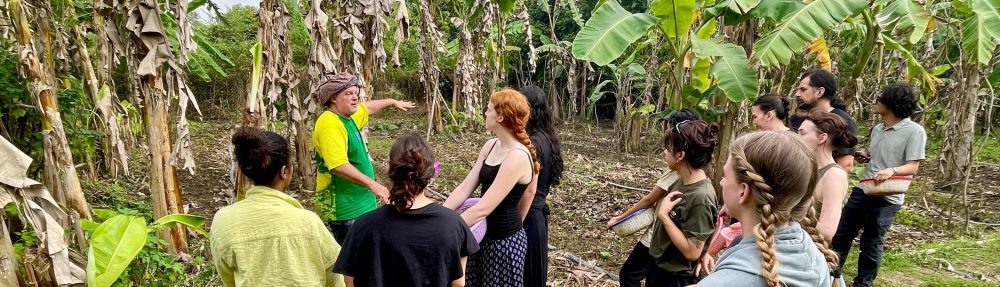
During my internship, I was able to visit Julien Peak in order to meet the coffee laborers. This experience has helped me realize I now want to work in supply chain management for a sustainable business to ensure all workers who help create finalized products are compensated with fair wages and respectable living standards. I’d also like to continue to gain experience in marketing for a sustainable company through storytelling like I did for Marc’s Café. Below you fill find photos from the 2017 Coffee Calendar with an explanation of the calendar’s purpose.

Enjoy!

photo-5-copy

This slideshow requires JavaScript.

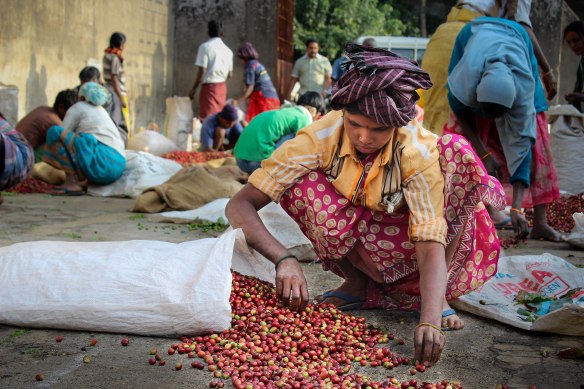
Found above are some of the laborers who’ve planted, cultivated, harvested, sorted, pulped, picked, cleaned, and packed up coffee beans to provide a robust cup of coffee for customers of Marc’s Cafe.

The purpose of this calendar was to tell their story.  It’s easy to forget the labor that goes into producing a seamlessly simple product such as coffee. The aim of the calendar was to reveal the complexities, and beauty, of the coffee supply chain.

This calendar sought to expose the value chain of coffee. By taking the viewer on a visual journey from seed to cup, Marc’s Café hopes consumers will appreciate the labor of love required to produce coffee. By purchasing products at Marc’s Café, costumers are directly supporting the livelihoods of the coffee laborers shown throughout this calendar. For further information about products and Marc’s story, please follow the links below.

Website: http://www.marcscoffees.com

Instagram: @marcscoffees

Facebook: Marc’s café, Roast & Taste

References:

  1. Lee, Hau Leung; Lee, Chung-Yee (2007). Building supply chain excellence in emerging economies. pp. 293–94. ISBN0-387-38428-6.
  1. India Brand Equity Foundation. “Coffee Statistics.” Coffee Production in India, Coffee Industry, Cultivation, Statistics. N.p., 2016. Web. 10 Jan. 2017.
  1. UTZ. “About UTZ.” UTZ.org. N.p., 2016. Web. 10 Jan. 2017. <https://www.utz.org/who-we-are/about-utz/&gt;.

No Pictures Please

By Fasia Hardy

How we dress, speak, and walk are all apart of our culture. The best part about traveling is experiencing the new in the other. But I  question when appreciation of someones beauty goes too far.  Where is the line between fascination and improperness?

My first day in India would set the tone for my month stay.  Once my classmates and I stepped off the plane onto Indian soil it was a free for all for pictures of women in their saris and of their children. No one asked if they could take a picture. Some classmates went as far as to pick up a woman’s child to take a picture for Instagram.  None of them learning who these people are, let alone their name.  I can only imagine what they’re thinking as they wake up to start their day and a stranger is taking pictures as if they found a UFO.

For many of my classmates, they will never experience the awkwardness of being the other but I had the bizarre experience of being the other in a land I didn’t call home from people I found fascinating. I notice I was on display when I was at a museum and people were not taking pictures of the sounding facts but of me! Women gathered around me to take a picture as if I was Beyonce touching my clothes and pulling at my hair.  Many of the women wanted to know how I did my hair and if I could teach them.  From this point on my hair would introduce me before I could introduce myself.

DSC00234.JPG

I found it interesting how the Indian culture values hair similarly to African Americans. Long think hair seems to be everyone’s goal around the world. Instead of beads or clips, the women put flowers in their hair. My gold clips were fascinating to the women and even men. I honestly felt joy from some women or little girls who giggled and smiled as we exchanged complaints and hair advice.  Although at times the constant question about my hair can be awkward or out of place.  Car rides, conversations, and meetings have been stopped to ask me about my hair. Followed by a hand that immediately makes me cringe. This wave of irritation is fleeting and comes with mix emotions.

I can not control the actions of others but I can simply state; I am sensitive about my hair. My hair is my crown just like a child is a mothers world.  Please be mindful.

Arranged Marriage in Tamil Nadu

Force, inequality and oppression are what I think of when I hear arranged marriage. I picture young girls pressured to marry older men – having their voice and power ripped away from them as they are reduced to a dowry. But this westernized impression was turned upside-down once I actually met people who have the first-hand experience with an arranged marriage.

The first explanation came from a 40-something-year-old Tamil man who grew up in Kuilapalayam and now owns not only a successful production company but an arts education foundation the promotes positive social change for children through multimedia. After casually mentioning his arranged marriage over small talk at lunch he explained that this marriage was a relief for him. He trusted his parents’ judgement and did not want to worry about finding a wife out of love. Meanwhile his wife, who speaks little English, sat and smiled at me while more questions burned in my head. But before I worked up the courage to speak he continued. He is a modern man and understands how quickly India is changing and therefore his daughters (ages 13 and 19) have the option to decide if they want a love or arranged marriage. He just wants them to be happy. But what if they don’t want either?

A week later, his 19-year-old daughter continued this inside perspective.  Our conversation began over lunch because her mother wanted to know about my plans for marriage. After a few jokes about becoming a dog lady or marrying for EU citizenship (which unfortunately got lost in translation) I reluctantly explained that I do not see myself getting married anytime soon or even at all. This answer was met with their understanding and enthusiasm as the 19-year-old daughter proudly explained that she just recently decided to have an arranged marriage by the time she would be 22 – my age.

She echoed her father’s explanation as she didn’t want to worry about finding a husband out of love and trusted her parents’ decision. She also wouldn’t be marrying somebody she didn’t know, or even didn’t like, because in an arranged marriage there is a five-month process where should would get to know the suitors and ultimately will the final decision out of the men her parents would select for her. If after they were married they decided to get divorced (although she reiterated many times that it is rare) she would have the financial and emotional support of her family. If she were to have a love marriage divorce would be entirely her fault and neither person would have familial support. She added that her family has no sons and must think about the dowry her family will have to pay while emphasizing that this marriage is for the benefit of her entire village and not just for her personal future.

She continued with a story about her “selfish” friends that had just married unexpectedly for love out of a passionate affair. In Tamil culture, a marriage should take both families and the entire community’s benefit into consideration as it is not about what just the couple wants. This is an important part of her culture that she sees fading with modernization and this 19-year-old girl does not want to see it completely disappear. She wants to be a strong, independent and intelligent woman and plans on studying to become a nurse and having a boyfriend or love marriage would only become a distraction.

So my expectations were wrong. Still it confuses me, as there were so many more questions I had but again was too shy to speak candidly about sex, love, and marriage. I know the roots of arranged marriage are patriarchal and there are situations in India and other parts of the world where young women are pressured into horrible marriages but part of me shared excitement with this girl as she was so excited for her future and had strong career goals as well as an arranged marriage.

In western culture marriage is entirely about love but still carries pressure. Pressure to find a soulmate and have a perfect fairytale wedding – while almost half of the marriages we are surrounded by ironically end in divorce.

I have no idea what is better and hate that I feel like I need to come to that type of conclusion at the end of this journal entry. An important part of traveling is to learn about cultural differences through non-judgmental observations and understand that my own upbringing in the western world completely frames my own perceptions. And today I had this demonstrated perfectly in front of me and is what I will remember about this trip.

So I may not understand why this 19-year-old girl wants an arranged marriage but I know she also does not understand why I do not. But what I do know is that as promised if I do get married I will invite my new 19-year-old friend to the celebration – as I already have an invitation to hers in 2019.

-Sarah Harper-Johnston

Conscious Fashion: a hope for India’s young generation

For the past two weeks, I have been working at Upasana on our new Conscious Fashion Team. Upasana is a fashion company which takes a holistic approach in everything it does. Instead of focusing on maximizing profits, they take into account people, planet, and profit into everything they do. My fellow team member and intern Shraddha Mahajan has been working on Upasana’s 2017 launch of our conscious fashion hub. Shradda is a student at the National Institute of Fashion Technology (NIFT) in Mumbai. As an up and comer in the fashion industry, I wanted to get a feel of what the sustainable and ethical fashion scene is like in India amongst the younger generation.

shraddha photo.jpg

Shraddha Mahajan

Shraddha’s passion is creative writing. At Upasana, she has already begun writing for our new blog which is scheduled to go live this week on www.upasana.in

“Though at our school, we have been taught to communicate through various design means (that include visual merchandising, graphic design, styling, photography, strategy management, marketing, fashion journalism, exhibition design, etc.), I feel myself more inclined towards creative writing as I love the art of language and expressing through words.”

As much as she loves fashion, Shraddha also acknowledges the negative impacts this industry has on the world. At Upasana, she has been doing extensive research on its effects with a focus on India. Through her work on the upcoming blog she will cover topics such as building a more ethical closet, consumption and consumerism, and slow fashion* in order to educate and increase awareness among the fashion community.

“Fashion has been a vital part of our curriculum at school and we as a fashion student must not only be specialized in contributing our skills to the industry in the field of design but must also try to look at the negative impacts caused to the environment and humankind in order to develop solutions for awareness and encourage the idea of sustainability. I think embracing an ethical lifestyle is everyone’s responsibility.”

UKPFB (65).JPG

Scarves made from Paruthi brand organic Indian cotton. Source: Upasana

Although most of her research has been about the dark side of fashion, Shraddha still has hope for the future because of her generation’s potential to educate itself and challenge the status quo.

“Being a fast fashion market and majority of the population being a middle class economy, people are less aware of the idea of sustainable and ethical fashion. But since a large group of population (nearly 70%) now includes youngsters, there is a strong hope and scope for education regarding sustainability and adoption of ethical lifestyle.”

Grid1.jpg

Upasana’s Japanese collection. Source: Upasana

Shraddha’s positive outlook has also been inspired by Auroville, the universal township where Upasana is located. Auroville’s goal is to realize human unity and the transformation of consciousness, but is also concerned with sustainable living and the future cultural, environmental, social and spiritual needs of mankind.

“I already knew about Auroville before coming here and the lifestyle always fascinated me which tempted me to experience it. The life at Auroville is much better than I had expected. People are conscious and behave ethically in whatever way they can. For example, waste management, disposing of plastic, paper and vegetable waste separately. In other parts of India, you may not find this.”

It is clear that positive messages about sustainability are already creating positive change in India so that students across India such as Shraddha are drawn to work in Auroville with socially responsible companies such as Upasana. As someone who has seen her passion about conscious fashion, I wish her the best in her journey here and can’t wait to see her work in this space continue.

“I look forward to extend my skills in communication and design. I would also like to empower and please people with what I write.”

Best of luck, Shraddha

*Slow fashion: High quality, timeless, long lasting clothing that is produced ethically.

Connie MORELAND

Flexibility of Inherent Communication

By Caitlyn Fitzgerald

The NGO I have been fortunate enough to work with here in India is Sristi Village Foundation. Sristi Village is a residential, eco-friendly community for mentally disabled and marginalized adults and children. It houses about 20 residents and 10 live-in staff members and preaches self-sufficiency and independence of residents through daily hands-on farming experiences, schooling, and therapy. Karthik, the founder, is truly one of the most selfless individuals I have ever had the pleasure of meeting. After purchasing 9 acres of land in 2013, he built Sristi Village quite literally from the ground up with no prior construction experience. During my time here, I had the unique opportunity to interview one of the volunteers. His name is Peoumal, and below is our discussion. A brief commentary on my thoughts about the interview follows to conclude.

Participants:
Caitlyn Fitzgerald: AUP Interviewer
Peoumal: Volunteer Interviewee at Sristi Village Foundation in Tindivanam, India

Caitlyn Fitzgerald: Can you tell me your name and your role?
Peoumal: I’m Peoumal. I’m a volunteer in Sristi Village.
C: Okay.
P: In the eco-village. And I’m here for last eight weeks, this is my eighth week. And I love it with children and it’s make you understand yourself better when you use it on children and you understand, try to understand them, but they understand you. But children, they have capacities and they have different capacities so its easier to come from higher capacity to lower capacity and of course you’ve got to have lot of tolerance, patience, and must take it in a big spout. This is a secret of living in a community I guess. And with everybody, you’ve got to have a smile and its great. And it gives you a lot of patience; you can learn almost anything. If you work here, you can win the world, the rest of the world, you know, humanity, so much. Nowadays, nobody has time. And when you’re here, you have all the time to yourself and children need that. Time is the most important crucial, not even the food. They want somebody to hear them and understand them. Of course, you keep on letting them and repeating the same thing but that’s the ongoing process. And I’ve seen lot of progress in eight weeks, some, some boys here, inmates. They’ve improved so much; they would be like stone when they came here. Now they’re able to hold, use their strength, they are to talk. Now, they’re telling me, do this,s do that, do that, oh it’s fantastic. So, its a great improvement in eight weeks. It’s impossible, I do not think – this is not possible in hospitals because they only give attention to them. Of course, we need to do a lot more for many more people. I hope we will do it.

C: Okay.
P: I’ll tell you my honest opinion.
C: Okay, so it is important for you, for Sristi Village to be seen as an NGO?
P: It’s just a title. The most crucial is how you can help these people. So whatever you may call them, NGO, non-governmental organization, whatever it is. See, the meaning of NGO is that you are funded by the government or non-government. It’s a non-

government, inaudible, but they can make this expansion to a village and create in more places, so it doesn’t matter what they label you. You are you, whatever you are. So, name is just for tombstone, you know. It’s just, so it’s good enough. But if they still want to call us, we have no objection to it.

C: What is the biggest challenge in communicating your methods and what Sristi does as an organization to people who are not aware of Sristi or who have never heard of them, or you?
P: Communication is how – what they want to understand. And how i can communicate to you what exactly I communicate, you know? Sometimes we say yes but we are not – may not have understood what they said or what they meant, so we have to understand each other more and more in the world order. More and more in the world order, communication is such a big gap. And we know each other, I think we know the world, we can win the world, so it’s so, so, so, so important – communication. No matter who is talking, who wants to communicate what, but you have to – but- you have to have time to hear and listen and this is the most crucial part of this century but nobody has time. So you want to make everything short and you forget the essence. So communication is, what you say, you have to express it and you have to also know that the other man has understood what you exactly meant and that means a lot of tolerance. So you know a lot of human habits here thats fantastic. Communication is so, so important, in this age of communication let’s not forget that. Right?

C: Yes. What have you found is the most effective way to empower people?
P: Give them what they want.
C: Laughs. Okay.
P: And just tell them how to use it. So just because you gave them just freely, a freedom, doesn’t mean that they can use it any old way they want. See that they use it effectively and give them a consciousness that they know how to use it, you know? And what, adopt a way they can use it so its most effective. Otherwise everybody does everything, but sometimes, most of the time it’s not effective. So we have to crucially show them how to apply it, how to use it, of course again, communication is skill. And the subject that you’re dealing with people, and you and the opposition, you know? How to understand, to come closer I think is the best way to do it.


I chose to interview Peoumal because he was consistently welcoming and helpful each time we visited Sristi Village, but I also found his professional background to be really interesting; before becoming a volunteer at Sristi Village, he spent several years as a consultant in multinational firms. I envision working in a business environment such as that, then ultimately transitioning to living in an environment such as Sristi Village is a really significant and seemingly difficult transition to make. The different forms of communication and mediums required in each of these environments would vary significantly depending on audience, resources, cultural norms, and the purpose of the communication. The ability to transition between these is significant because of the differences in each. The first thought I had on his interview was how lengthy Peoumal’s response was to my intentionally simple, first question; (Can you tell me your name and your role?) He divulged into so much additional information than simply stating his name and role that it made me wonder that perhaps since he doesn’t have an opportunity to share his personal thoughts, experiences, and views on the world very often, he took this opportunity to share what he could. I did enjoy his sharing of an abundance of information, just found his responses interesting and reflective based on my questions. I wholeheartedly agreed with a few of the points he made; for example, the work which a company does needs to be more focused on the people it is helping than on the governmental categorization of a company. I really enjoyed speaking with Peoumal during our visits to Sristi Village, commend his ability to transition between business environments, and am grateful he was willing to share his personal insight with me.sristi-1sristi-2

Fashion Action

By Fasia Hardy

Some people say fashion is a self-expression but Upasana says fashion is a call for action. Upasana is a clothing brand used to empower women, rebuild India and stop farmer suicide. How can one brand try to make so much change? Two words, sustainable fashion. Clothing can be a great communication tool to influence change. The act of making and buying sustainably can help build awareness, motivation, and knowledge. In addition to enabling people to take-action connecting to the cause by each conscience purchase or change in behavior. At Upasana they believe in using fashion to tie threads to the larger issues of sustainability.

I visited Upasana on a class trip to meet with the owner Uma Prajapati and to fully understand the fashion company and its concept for a change. The trip began with the tour of the store. The clothing and scarfs were inviting, beautiful and bright. Each piece with intricate design and a woven factor. The idea that they are made with organic cotton, natural dyes and women in the area immediately pulls on my pocket and heart.  But the prices stopped me in my tracks. I wondered if sustainable fashion can really facilitate change if affordance is always an issue. Furthermore, the number of resources used to make these pieces. The fashion industry is the second biggest polluter of freshwater resources on the planet. It can take 2,700 liters to produce the cotton needed to make a single t-shirt. Making clothes might be more of a problem than a help. I believe up cycling might be the better way to go.  We must start from what’s to the earth now rather than make more waste.


After window shopping, the class moved to the next room to meet the passionate owner. She advocated for the fashion industry to shift away from maximum profit towards social responsibility.  In addition to reinforcing the notion that everyone has the ability to make a change. The only difference is asking the hard question and acting upon them. She stated “, What is the good I can create while making clothes ..can I help the printers, can I help the weavers, can I help the women in the village. We are good at asking this question and it’s not the most comfortable thing to do but it pushes us to act… we did not do this once… we do this many times.”  This is true as she is a business with octopus hands fighting in many revolutions. The most grabbing are Tsunamika, Small Steps, Yaranasi Weaver, and Paruthi. Tsunamka is a tsunami-related project providing livelihood to fisherwomen. Small Steps is a project where women in 14 villages are employed to make reusable bags. Varanasi Weavers are inactive to employ weaves from the communities of Varanasi in order to preserve this amazing skill. Finally, Paruthi is India’s local organic brand to support India’s organic farming community. Tsunamka seemed to be the owner’s proudest foundation.  The project was formed by a gift system to be self-sustainable, “for them by them”, stated Uma. The women make a dolls discarded materials as a way release their emotions from such a traumatic experience.  The dolls became more than craftwork to them but a symbol hope.

IMG_3491.JPG

Although Upasana is making many strides ecologically and fundamentally stimulating in women’s rights to work and maternity leave, the question of progression still lies in the clothing.  The women still depict the status of male hierarchy.  Women cover themselves in bright saris as men wear modern clothing.  This is seen through the streets in India but more notably in the shop. Why don’t the women wear or own a piece of clothing they made?  If clothing is a communication tool for change the message is muted or a quiet revolution.

Life Education Center

As its name would suggest, the Life Education Center is the embodiment of educational activity as a sustainable practice. Since it was established in the early nineties, the LEC has embraced diverse projects with the intention of empowering local women through the development of skills and confidence. While tailoring is currently the programs centralizing activity, LEC students also participate in the preservation of traditional cultural knowledge through local produce based cooking classes and nutrition workshops among others. The workshops and programs, some of which are open to the public, facilitate an interesting balance between progress and preservation, which serve local women in different ways.

dsc00200

After speaking with some of women currently enrolled or working at the LEC the notion of progress on a social and personal level was clear. All of the women described a childhood which is typical of young women in India, especially in the villages. The girls were expected to stay home, caring for their families before being married and managing the house for a husband and children. Meanwhile the describe how their brothers were supported financially and given opportunities to pursue higher education and professional training. The women often gravitated to the LEC later in life after hearing about the program from a friend or acquaintance. After winning the approval of family members, the women were able to join the small learning community at their center in Auroville. During the program women learned not only tailoring skills which are taught in such a way as to allow the women’s creative input, but a myriad of practical tools which develop a practical and emotional independence. Women learned to speak with confidence in public and on the phone, to drive scooters, manage work schedules and even become teachers themselves.dsc00293

While LEC strives to abandon the confines of traditional gender roles, their programs selectively hold on to some of the cultural practices at the heart of Indian society. The integration of traditional knowledge as a sustainable practice creates a balanced environment in which women can comfortably explore their identities through dynamic activities. The cooking workshops hosted by LEC emphasize the importance of local produce and holistic nutritional knowledge in the traditional cuisine of the region. Through the presentation of the information and processes associated with meal preparation, the women of LEC are able to celebrate their heritage while simultaneously defying oppressive social structures. During the workshops the women act as cultural ambassadors, communicating systems of nutritional wisdom and local tradition which are unique to India and the Tamil Nadu region. As India compromises it cultural history and environmental wellbeing in the face of rapid development, the LEC embraces elements of an inspiring traditional culture. Ultimately, their approach to women’s empowerment is being defined in terms which are appropriate and unique to local culture, rather than a western standard, facilitating a practical progression toward women’s independence.

Zoe Zissovici

The Perpetual Divide

by Callia Barnard

Today I spent the majority of my time in Bread & Chocolate, a small, trendy cafe on the outskirts of Auroville. I sat there most of the afternoon with my work while I listened to the lulling sounds of coffee being prepared and bread being sliced.

The first thing I noticed walking up to the cafe was the outside seating area. Not one person there had a skin tone darker than my own western European tone. I heard a variety of western languages being tossed around, a sign of diversity, but not the kind of diversity expected in a small town in India. I wondered if this demographic congregated here in Bread & Chocolate because they found comfort in the familiarity of this cafe setting, making it a more appealing unit for individuals who previously lived in the western world. Anyone could spend an afternoon in B&C with its stylish decor and contemporary design and forget they are in rural India.

Many westerners are enticed by the idea of Auroville, and of course have a financial leg up on those who have lived here their whole lives or in the surrounding villages. I believe this to be a big reason there was not one Tamil person having lunch in this overly-priced-for-India cafe. The trendy cafes and restaurants seem to be dominated by middle-age white folk who have saved enough to be “extravagant” in Auroville. For a community that places a heavy emphasis on equality and being free from material possessions and needs, it seems inconsistent for westerners to come into this community with their savings and live above a majority of the population, which happens to live just slightly above the poverty line. For those who haven’t come from the same background, and when the average “maintenance”, or monthly earnings, for Aurovillians is around 200 euros a month, it is not sustainable to spend 6 euros on lunch on a random Tuesday afternoon.

After scanning the crowd’s demographics, I turned to the kitchen. Every individual preparing food and coffee was Tamil. This dynamic of native Tamil people serving westerners made me uncomfortable. Why is it that those in the kitchen seem to always be native Tamil people, and where do these white Aurovillians work? I found a partial answer to this question when I spotted a white woman with an air of authority breezing in and out of the cafe. She must have been the manager or some higher position than kitchen staff, because it is seemingly uncommon for a Tamil person and a white person to occupy the same position. I find the fact that westerners come in to Auroville and run these “units” with a staff of Tamil-only individuals very strange for an “intentional community” striving for equality in all aspects.

This experience of watching white folk spend money they have acquired probably outside of Auroville while Tamil people work in the background has been reoccurring throughout the practicum, in both units and restaurants. The only place I have seen a bit of diversity in the workspace is at the Financial Services. I am unaware of any demographics, employment laws or rules, or customs that might explain this incongruous aspect of Auroville, and I wonder about the answer that lays beyond these components. I wonder if it is my own lack of knowledge that makes the situation appear as I interpret it. I intend to look deeper into this dynamic in order to understand why this evident divide can still exist in a community that drives towards human unity.

Sristi Foundation

img_0291

By Samantha Gilliams

For the past week and a half, I have been working with Sristi Foundation, which is an inclusive, eco-friendly village and learning space for those who are intellectually disabled and/or marginalized in rural India. People with intellectual and developmental disabilities in India are not able to fully utilize their inherent human rights. Their talents, skills, and potential remain largely untapped, unconsidered, and underdeveloped. While their employment rate is very low, they have higher than normal living expenses and are one of the most impoverished groups in India.To end the cycle of poverty and disability, access to livelihood opportunities is fundamental. In 2013, a man named Karthikeyan Genesan created Sristi Village in order to establish a safe working, living and learning space for the disabled community in Thazhuthali, Tamil Nadu, India.

As a child, Karthik grew up in a mixed orphanage with disabled and non-disabled children. Over the years, he realized that disabled people were not considered equally in society, even though they had real skills. When he was old enough to leave the orphanage, he decided that he needed to create a place where these people could put their skills to work and recognize their worth. He created Sristi Village (“Sristi” means “creation” in sanskrit) as a home and as an employment and learning opportunity for this marginalized group. Over the past 3 years, he has acquired 8.39 acres of land near Thazhuthali and built approximately 10 huts by hand, including bathrooms and a kitchen, from natural materials with the help of the surrounding disabled community. Now, there are 30 residents at Sristi Village (20 members and 10 staff/volunteers) who are transforming the land around them. They have an organic farm fit with fruit trees, vegetables, a dairy barn, and a place for honey and mushroom cultivation. Karthik, the staff and the volunteers have taught their members valuable skills in farming and in life. One of Karthik’s main goals is to teach the members of Sristi that they are functioning individuals, who have skills and rights like the rest of us.

Frequently visiting Sristi Village during my time in Tamil Nadu has been an eyeopening experience. Karthik is an incredible man with a huge heart, who has devoted his life to making others comfortable. He cares for each of the members intimately and values the work that they do on the land. He is gentle and understanding, but knows the potential of each member at Sristi Village. He is not afraid to put them to work or sit them down to make them learn. The village functions in a structured and relaxed manner. I have not seen anyone raise their voices or acting out of hand. The village itself is pretty incredible, and knowing that it is functioning because of one man, a bunch of kind-hearted workers, and a lovely group of intellectually disabled folks (who are all working and learning from morning until night), makes it impressive beyond words. I am so grateful to have been able to work with, and spread the word about, Sristi Foundation during my time in India.

  • If you would like to learn more about Sristi Foundation, please visit: sristivillage.org
  • If you would like to see the “School Bus for Sristi” funding page we made, visit: https://www.generosity.com/education-fundraising/school-bus-for-sristi-village/x/15797840

img_0301

Edutainment: alternatives to hegemonic teaching

By Patricia Molinos Ruperez

How to combine education with entertainment? Yatra Arts Foundation comes up with the perfect answer: using entertainment and visual arts to make learning for children more effective. The Yatra team, led by Srini Vassan, believes in an alternative way of teaching that gives more weight and importance to practice through visual arts rather than to theory and books. Thus, theatre, painting, traditional dance, and cinema are the activities kids practice at Yatra on a daily basis. The organization also tours the villages around Auroville to perform street theatre plays and organize free workshops.

screen-shot-2017-01-06-at-13-12-43screen-shot-2017-01-06-at-13-08-07

Their ultimate mission is creating awareness among the youngest on the social issues of the country that become obstacles to India’s development. The main topics they want to educate children on are the poor or inexistent waste management and its negative impact on the environment; the high alcoholism rate; the need of women empowerment in a patriarchal society; the discrimination and inequality that go along with the prominent cast system; and the lack of clean water. In order to accomplish this goal, they engage in practical learning through the production of short movies that are entertaining for kids but carry a strong message.

When our group visited Yatra, Srini’s daughters performed some traditional dances as we were served chai and Indian snacks. He also screened two of his short movies (he produced more than twenty-five); one was on alcoholism and the other was a comedy to raise awareness on the poor waste management in India and its fatal consequences. Most of us agreed that both movies were lengthy and that can be problematic since the ultimate audience are children and they get distracted easily.

img_1672

However, the idea of an alternative way of learning that goes away from books and strict theory is becoming a trend in Auroville: the same concept can be found in the work of Auroville Institute of Applied Technology (AIAT), which aims to provide vocational training to young people. The main common point to highlight here is that they believe in creativity as a source of inspiration and motivation, and therefore they stimulate it on their children so that they learn as they enjoy. This perspective on education is a model many institutions in Europe and all over the world could adopt, since assuming everybody is the same and has equal learning capacities does not make any sense. As Srini says, “each kid is a whole unique world” and therefore “it is ridiculous to have only way of educating that tries to position itself as the only valid one”