The Other Side of Sustainability

By Shannon Warren

This morning Auroville was abuzz with the whirring of chainsaws slicing into fallen trees, the frantic beeping of the suddenly plentiful rickshaws, and the general chaos of people trying to make sense of the destruction around them.  It has been three days since cyclone Thane hit Auroville and the devastation is still astounding.  The heat and humidity bring into sharp relief the lack of drinking water and electricity as people venture out in the glaring sun to procure necessities and try to clear debris from the roads.  Some of our group has experienced natural disasters and many of us haven’t (I am included in the latter group).  Certainly none of us expected anything like this when we came to India for a practicum in communications and sustainable development.  I suppose the thing about learning, about self-improvement, is that you must be confronted with the unexpected and unknown to progress.

The night of the storm, while I curled up afraid but safe in my sheets and behind sturdy brick walls, I listened to the howling winds, shattering glass, and falling trees as peoples’ homes and livelihoods were destroyed in a matter of hours.  The next morning I woke up in disbelief.  Just one day earlier we were carefree, hiking up to a temple on top of a hill and swimming in a beautiful freshwater lake.  That morning we were not only in an unfamiliar landscape and culture, but had just been through the worst cyclone that had ever hit Auroville, according to local sources.

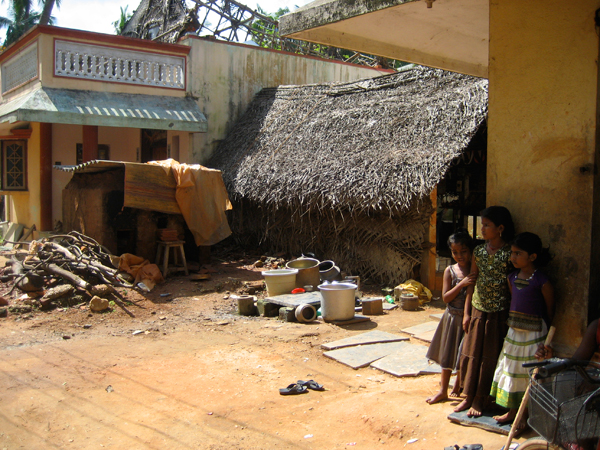
Although the situation could have escalated to the point of hysteria very quickly, we chose instead to play cards by flashlight and sit together singing familiar songs, letting our apprehension out through laughter rather than tears.  Some of us ventured out on the roads, clad in our raincoats and ponchos, to see how the villages had been affected and to search for food and water.  After climbing through the fallen giants blocking the roads and seeing that being in a mud hut during a cyclone as opposed to a sturdy brick building made a world of difference, we knew that we had our work cut out for us the next couple days.

The next day, New Year’s Eve, we donned our work clothes, picked up machetes, and started chopping and clearing up the trees and debris around our pavilions.  Suddenly it seemed as if we were no longer a group of semi-strangers brought together by wanderlust and a course requirement, we were all kindred spirits, working together to realize a common goal.

While traipsing through the grass behind my classmates with my arms full of branches and my heart full of determination, it became clear to me that there are two sides to sustainability: the physical side that involves composting toilets and cold showers as well as the emotional support that comes from being a member of a community which takes care of all of its members as well as the physical space that it inhabits.

So, while it may not have been the lesson we set out to learn, we have all discovered the emotional side of sustainability over the past few days.  Although the people who live here may not have many of the comforts we enjoy back home, they do have one thing that many of us don’t: the sense of security and assurance that comes from living in a community where people are connected and take care of one another.   I think I’d take that over an iPad any day of the week.

A New Year

By Lindsay Hebert

Seventeen years ago, Kalsang planted a service tree in preparation for a road that was to run through Auroville by way of her yard. The tree was a service tree, named for the cover it provides from the hot Indian sun. The road never came, but the tree grew to shade the pavilion where her daughter was born nine years later and where we have lived since we arrived in India. Someday, Kalsang wanted to build a house beneath that tree. But yesterday, in service to her, we used machetes to cut it into pieces.

Continue reading

Rethinking Sustainability Practices

By Tendayi O. Chirawu

Being in Auroville is an experience like no other because it totally changes your perception on constructs of waste and in applicable, everyday situations. I have been impressed and amazed at the concept of zero waste and how it is put into practice in a ‘waste not, want not’ way.

However, there are some leakages in the way people actually live sustainably, for example: we visited the Bhudda Garden, which is a vegetable garden that aims to make Auroville self sustaining by growing and supplying all organic produce. One of the problems the Bhudda garden faces is that people in Auroville are accustomed to the kind of fruits and vegetables that their diets were comprised of before coming to Auroville and as a result those are the fruits and vegetables they want. These however, are not indigenous to the region and so the things that can be grown may go to waste as there is not a large market for them.

On the 30th and 31th of December the entire Tamil Nadu region was hit by a category 1 cyclone called Thane. The effects were devastating and it is my observation that the places most severely hit in my immediate proximity are the ones that chose to build sustainably such as the Bamboo Center. A young man named Diego who was visiting our media mentor, Puxan, walked for hours in the rain on Friday morning to the Tibetan Pavilion to ask for shelter because he was staying at the Bamboo Center and the roof of his room was blown away and the collapse of the remainder of the structure soon followed. Everything at the center, infrastructure wise, was made from Bamboo because it is renewable and strong but most importantly it is a sustainable building material.

Incidentally, the last two talks we received before the natural disaster were about water management and beach erosion. Water in the region is a scarce resource which has now been aggravated by Cyclone Thane. Being that Auroville was founded by the Mother and Sri Aurobindo, the society is embodied by a spiritual aspect which is bound to sustainability. However, the spirituality aspect has in one instance stood in the way of sustainability in the creative water solutions. I posed the question as to why sewerage water is not recycled and used for drinking as is the case in my home country, Namibia, which also has water shortages as the country is predominantly desert. The answer given was that because researchers have found that water retains memory drinking water that has sewer memories would be ungainly for the well being of its drinkers.

I feel as though sustainability appears to be occurring and is based on selectivity such as in the case of the vegetables whereby people will eat sustainably by eating vegetables, but it is ineffective because it demands unsustainable production based on the type of vegetables people in the area prefer. Additionally, some sustainable options are not implemented because they are incompatible with the perceptions in the minds of people as is the case with the creative solution for water which ends up being an enemy of progress. Finally, using sustainable building material may not be the best way to be sustainable because should disaster hit, nothing remains. The conundrum is how to be sustainable in an inclusive and progressive manner? There is some dissonance with the way sustainability occurs. Sri Aurobindo said that all problems of existence are problems of harmony.

Destruction: a lesson in acceptance

By Lacy Wood

Level one cyclones are not generally considered destructive. In the case of the one that touched the Pondicherry and Auroville area, a lack of structural preparation made cyclone Thane extraordinarily damaging. There was ample warning of its arrival, and as we returned from a long day’s hike and swim in the countryside, no one seemed concerned of a system that in the West we call a hurricane. Auroville felt indestructible somehow.

After a long night of wind gusts of up to 150 km/hour, we survived that first day on the graces of Kalsang and her family, who run the Tibetan Pavilion where many of us live. That afternoon, the rain slowed long enough to venture to the nearest village for water and food. Along the way, we examined the extent of the damage. Every twenty feet a tree was down across the road. With electrical wires interspersed, the roads were virtually impassable.

She made us lunch, led us to the nearest vegetable sellers, and opened her home to us. Despite being wet and tired, it was because of her, that our rain day was actually quite enjoyable. The following morning, our clean up began with the tree in front of the pavilion, planted on its commencement. Even though Kalsang was there for its construction, dedication, the hosting of his holiness the Dali Lama, I was the one crying as the tree was cut into pieces. Stoic and wise, she understood that this storm is an opportunity for rebirth.

I only saw her get emotional when she announced later in the day, that she would not be hosting her New Year’s Eve celebration.  Instead of spending the entire day moving trees and clearing roads, her family and friends would get up early to put out over five thousand oil candles, cook food, and prepare the pavilion for the guttural chanting. Busloads of people show up every year to witness the memorial of those that have died in support of the Tibetan people.

Watching the stars this New Years eve, Kalsang described to me how the scent of the oil, the sights of people packed into every corner lit up by the glow of endless candles, and how the throbbing of the chants surrounds you. That night, the absence of light in the pavilion became a symbol of the devastation of thousands of homes, the loss of many lives, and the upending of the glory days of development in Auroville. As we watched the moon poke in and out of the clouds, waiting for the midnight to strike, Kalsang, was stoic as ever, making her resolution to be positive in every situation. Even though I struggled to be optimistic about the coming year, I decided to leave our fate in the hands of Shiva. It is obvious that the god of destruction and rebirth has visited us this New Year, forcing us to accept what the future holds.

A Touch of SALT

During the course of our NGO site visits, the group observed a sequence of amazingly productive organizations working in Tamil Nadu, South India. From areas encompassing sustainable forestry and organic farming to village empowerment projects working mainly with the untouchable community, women and children, I felt each organization had something extremely valuable to offer through a two week internship during my brief stay in Auroville. This one special children’s home, however, left a lasting imprint and I was instantly moved to work and become a part of “Melquie’s” beloved SALT.

My first encounter with the home ironically took place in the evening, the first impression enveloped with the unpreventable darkness of rural India night sky. The sun collapsing behind a gold encrusted Tamil horizon, it was not long before I would need to remove my pink colored headlamp from my handbag as its replacement to comfortably move around the property. As we sauntered through the rooms I began to notice the house was merely a skeleton for these orphaned twenty-five boys, a place very different from the home in which I was raised back in Texas.

Rickety shelves here and there with random small piles of children’s belongings upon them – clothes, books, and a few toys stacked in a disheveled manner. The walls were bare and without paint, made of cement and chipped in various places of every room. The floors even barer if this could be possible. As I saw no beds, blankets, or pillows I realized the boys were using torn straw mats for sleeping on the cold cement floors of the home.

The director, a charismatic middle-aged single man, introduced himself as the father to each of these children. I have never felt so much love by one man for a cause. Some of the children dashed and darted with obvious excitement among members of the group as we walked within the home, others stood and observed intently, huge glowing smiles upon each of their faces. I couldn’t help but smile back at them.

By Michelle McAdam

One Person’s Trash is Another’s…Livelihood?

By Jeomar Montelon

Our class recently toured Pondicherry’s Kurumbapet dump yard with EcoPro, a local NGO, to become familiar with the city’s trash problems. As we walked over bubbling puddles of methane gas caused by the decomposing trash, most of us covered our mouths to prevent the smell from entering our noses and mouths. Some of us even went as far as wearing sunglasses, despite the sun setting behind the horizon. Although having lived in two world cities where there are bad smells on a good day and vile smells every other, the odor from this mid-sized south Indian city’s trash site was a little nauseating, even to me.

Pondicherry’s Kurumbapet dump yard

At one point during our tour, three little children appeared over one of the waste mounds, curiously observing the oddity that was us in a place like this. As our conversation with the NGO continued, the children gradually came closer to us, as though they were timid animals feeling out the strangers before them. Before I knew it, they were within an arm’s length of us; we could have hugged them had we wanted.

Pondicherry’s Kurumbapet dump yard

Had it not been for the tattered clothing and sludge-covered feet, one would have assumed from their cheerful and easygoing dispositions that they were just ordinary children mischievously playing amongst the city’s trash — but they weren’t. They were gypsy trash collectors; a social status in India lower than the Dalit (untouchables). For these three young children, their job is to roam the dunes of waste hoping to find anything of value that they can collect and exchange for Rupees to support their family and community. Holding their trash-collecting bags, they smiled at us and giggled secretly amongst each other as we gave them candies and empty plastic bottles, one of the prized articles found in the landfill.

Trash-collecting children at Pondicherry’s Kurumbapet dump yard. Photo by Chantelle Lusebrink

I was astonished at how they were unfazed by the very smell that kept reminding me of where I was with every breath I took. I guess it’s safe to assume they were used to it. At that moment I remembered something a friend once told me: If you are born an American, consider yourself the luckiest person on planet Earth. A title like that weighs a lot when you’re the select few chosen in a genetic lottery. Suddenly, I got that knot in the throat one gets when you feel you’re about to cry. I didn’t even understand why. It could be because of what I was witnessing at that moment, and maybe a feeling for something I didn’t even understand­ — and never will.

Trash-collecting child at Pondicherry’s Kurumbapet dump yard

Later that day, some colleagues and I discussed revisiting the Pondicherry landfill to give the children some shoes, maybe even a hot meal for their little tummies. For me, this dialogue engendered a promise I’d like to accomplish while here. There are few personal promises I make to myself that when fulfilled, I feel thoroughly satisfied. Most promises we make in life relieve only temporary feelings of superficial requirements we think are necessary. Our time here in Auroville is brief; let’s hope we can create a benevolent memory for ourselves by doing our best to help as many people as we can.

Few will have the greatness to bend history itself; but each of us can work to change a small portion of events, and in the total; of all those acts will be written the history of this generation.
– Robert F. Kennedy

The American Pavilion

By Robert Barnes

The American Pavilion was designed by University of Washington students to be a sustainable house. They designed the building, travelled to Auroville, and built the pavilion in six months. It is a very well designed building, a little rough around the edges (it is, afterall, basically a prototype), and almost self-sufficient.

The pavilion is almost entirely off the electrical grid. Solar panels collect energy from the sun and store it in batteries which can last several days depending upon use. The limit to the solar electrical system is 2,000W, which severely limits the use of heavy draw equipment like washers, hair dryers, and blenders (anything that draws a lot of electricity to start or function). There are outlets in the bathroom, connected to the city electrical grid, that can handle heavy draw electronics. There are limitations on even this, however. The city currently cuts power twice a day for two hours each time, during which these outlets don’t receive power. For daily life electronics, such as computers and fans, the electricity cuts are never noticed.

The bathroom was originally designed with a composting toilet, a toilet that converts non-liquid bodily waste into compost and filters liquid bodily waste. These were designed as two separate sit down toilet seats. A person can poop in one and pee in the other, but doing both at one toilet seat breaks the system. There is also a splashing problem due to the shallow bowl design of the liquid waste section of the toilet. The people running the pavilion adapted the compost sit down toilet to the traditional Indian squat toilet. The benefits of this toilet is that changing toilet seats is not necessary, there is a small ridge that separates the two sections of the toilet so the waste does not mix. This is the first time I’ve seen a squat toilet more convenient to use than a sit down toilet. To “flush” either toilet, a scoop of sawdust is poured into the solid waste hole to cover things and a spray hose is used to wash down everything else. While it is traditional in India for people to use the hose to clean themselves after using the toilet, the compost system is able to handle toilet paper and tissue. About the only solid thing related to bodily waste it cannot handle is tampons that have plastic in them, these have to be burned.

The potable water system is self-contained. Rain water is collected and stored for later use for drinking and washing. The potable water from this system is notably free from bacteria and parasites that plague many travelers in India. The showers and washing machine use only unheated water and is usually cold, though on hot days it can be on the cool side instead of cold. There is one faucet that has hot water. This is because a lot of water is wasted waiting for the hot water to come out after turning the knob, so the hot water faucet for the building was situated directly below the water reservoir to minimize waste while waiting for the water to turn hot. Waste water, including liquid waste from the bathroom, goes through a marsh filtration system before being used to grow crops. The marsh system used here is similar to the one used by the cities of Martinez and Arcata in California state. The marsh plants and habitat, either manmade or natural, filters nitrates, nitrites, toxins, and metals out of the water and it becomes clean enough to drink. Environmental and food regulations in California prohibit the use of reclaimed water like this from being used for humans or crops to be eaten by humans, though humans can eat animals that eat crops watered with this water. There doesn’t seem to be any regulations regarding this in India. The reclaim water is used for crops after it goes through the marsh. Besides the natural (and cheap) filtration of this system, it also provides habitat for animals and plants as well as being able to help restore lost or damaged marsh and wetlands.

Crops are grown on site using the reclaim water after it’s filtered through the marsh. These crops provide a notable portion of the food consumed in the pavilion, though actual figures for this have been rather elusive so far. Coming after the crops are cows. There are many cows in the area, and they just kind of wander and eat whatever is tasty for them, which can often be what the poor humans find tasty as well. The pavilion’s answer to this are two dogs that live on site. The dogs’ primary responsibility is to keep the cows away from the crops as well as away from the roads. A secondary job they do is to bark at trespassers (it often seems like anything that moves). I’ve never seen one of the dogs actually bite a person, but I’ve seen them climb to an elevated position and bark constantly at someone until they eventually leave. A little tidbit regarding the dogs is that if you run towards the gate, the dogs will run after you and then end up in a wrestling match with each other.

The roof design for the pavilion is rather odd, but functional and economical. It’s also rather intriguing or attractive to those who like innovative architectural designs. Each of the buildings (four bedrooms and bathroom) have their own separate roof. Above all these buildings is a larger megaroof that covers everything but leaves a significant amount of space between the individual building roofs and the site roof. The megaroof provides shade over the entire site and the gap between building and site roofs provides for cool air circulation, keeping the rooms noticeably cooler than the surroundings.

While a lot of sustainable or renewable materials were used in the construction of the American Pavilion by the University of Washington students, the people here at the site have decided to build another sustainable house based upon the design of the American Pavilion but using a lot more sustainable or renewable material than the original building. The new building is a good example of how a prototype build by an outside group can be adapted by local people with more daily life knowledge of the environment and resources and a superior structure or object can be created that would have been beyond the capabilities of either group by themselves.

Merry Christmas from India!

By Chantelle Lusebrink

Wile we may not have the hope of anything close to a white Christmas or a Christmas tree, we do have sweeping vistas of the Indian Ocean’s warm waters lapping sandy shores and busy country roads endlessly dotted with rows of coconut groves and brightly colored houses in fuchsia and electric orange. All things considered, and after you’ve heavily sprayed yourself with DEET to ward off the local mosquito population, this isn’t a bad way to spend Christmas.

Hurtling down the dirt country roads by Moped, dodging cows, dogs and sari-clad women carrying bundles of wood for the evening cooking fires, the sun begins to set here on Christmas Eve in Auroville, India and while it may seem worlds from what we’re used to, Christmas is still found here.

Few Indians, though colonized by the British and the French —as in the case of Pondicherry and its surrounding areas —have converted to Christianity (roughly 3 percent to 6 percent of the country’s population identifies themselves as Christian or about 24 million people), according to information by the U.S. State Department. Instead, the majority prefer to keep their local heritage and religions alive through Hinduism, predominately. Despite this, or perhaps because of this, Christmas is readily found in India, be it a curiosity, a symbol of the other or simply just a way to drive sales as tourist season picks up.

In India sale signs and gleeful Santa Clauses are still found waving in front stores downtown and local tradesmen are producing their wares in bulk to accommodate the tourists. While we may be limited in our decoration colors, predominately red, white and green, Christmas in India is as colorful as the silk saris worn by the women here. Even the ornamentation of Sacred Heart Church’s nativity and building in the city of Pondicherry are dripping in colors rarely seen outside the tropics.

Sacred Heart Church Pondicherry, India

Pint-sized Santa costume...no problem fitting down the chimney here!

But it goes further than just the decoration of Christmas and the child-sized Santa Claus outfits, displayed in every other window of side street shops. Education about their past, their present and their future is also important in the cities and among the villages that had been colonized and today, lay so near to the international township of Auroville. As an expression of human society and development Auroville attracts people from all walks of life, religions and cultures throughout the world, said Nick Klotz, an Australian living in India and a volunteer at the Mohanam Cultural Center in the village of Sanjeevi Nagar that hosted a morning Christmas event and play about Jesus.

“Here, the learning for children, is not just of one religion but to learn about many of them,” Klotz said about the morning’s festivities. “While there are no Christians, nor will there be Christians in this village we are still near to Auroville and there is a population that celebrates, just as there is a population that celebrates in Pondicherry because of its roots to French colonization.”

Christmas tree at the community center

Poster for Christmas at the community center.

The children’s play focused on Jesus’ trial and crucifixion, so it was more about the Easter story of Jesus rather than his birth but it provides context for the children as to why this figure is so important to the others that live in the area. They also sang Christmas carols and decorated crafts.

“Indians are very absorbed in religion and they also really like a party, especially one with religious connotations,” he said. “So this is a fun event for them.”
Many of us share in this same type of education around the world, this cross cultural exchange of knowledge, spirit and culture that helps us better understand our place in the world and how others fit with us. It is a privilege to watch the celebration of something so foreign to this culture and watch how it fits into their perspective.

Watching the sun sink below the tree line of thick palms, the sky illuminates with lavender and bright orange. The smell of coconut, saffron, jasmine and curried spices fill the air, instead of the smells emanating from the family turkey, Christmas cookies and homemade pies.

While many of our families were waking and preparing for guests, we celebrated our Christmas Eve beside a lovely tree decorated by the residents here at the Tibetan Pavilion in Auroville, replete with shimmering lights, and of course, packages under the tree for our White Elephant gift exchange. For me, the sounds of Christmas in India will come back to Paris with me in the form of Baul ‘n’ Beyond a greatest hits compilation, which I’m sure will get plenty of use now and for many years to come.

White Elephant gift exchange.

From India, what we wish for our friends, family and patrons of this blog is a wonderful holiday filled with treasured memories for years to come. Merry Christmas!

You Know Your Cow Like You Know Your Kid

India 1 355

By Mariel Sites

Upon arriving in Chennai from our long (long!) plane ride from Paris, we piled into a bus heading into Mamallapuram. As the sun was rising, I was way too excited to sleep on the bus so I gazed forward out the window towards all the Indian country had to offer me. Like a child, I turned to my friend Madeline, excitedly pointing and shouting “A cow! A cow!” She quickly responded “Where? I don’t see any cow!” (I have to admit I was a bit worried that I may have started to hallucinate from Malaria pills or lack of sleep!) But as the big orange sun continued to rise over the Indian horizon, I started seeing more of them (real cows, not hallucinations).  And as I looked closer I began to notice that the cows weren’t marked in any way. I had heard about the sanctity of cows in India but I wasn’t exactly sure how they functioned in everyday society. Were the cows wild? Did they belong to someone? Why were they loose in the street? I didn’t see any kind of brands on these cattle, nor colored ropes or markings of any kind. I turned to our unofficial guide and local Aurovillian, Perumal, and asked him how people knew which cow was theirs. He promptly replied, “Well, you know your cow like you know your kid”. He told me that during the day, people let their cows roam free in the village and use their milk to drink and manure mixed with hay to create floors in homes. When cows become too old to produce milk they are turned out and allowed to wander through the streets, living out their last days in peace. Coming from Texas, I am familiar with people owning a couple hundred head of cattle at a time, and meticulously making sure each one is branded with the ranch’s symbol. In my mind, all cows looked alike and I would have never thought that a person would equate the knowledge of their cow to that of their child. This was the beginning of a series of realizations and understandings that I’ve had in just these first few days. It is amazing to learn about differences and similarities between my home culture and this one. Coming from a small town in West Texas, I saw Paris as “exotic”, never thinking I would ever have the opportunity to visit India! The more time I spend here in Auroville and the surrounding villages, the more I begin to understand (or at least try to understand) their way of life.
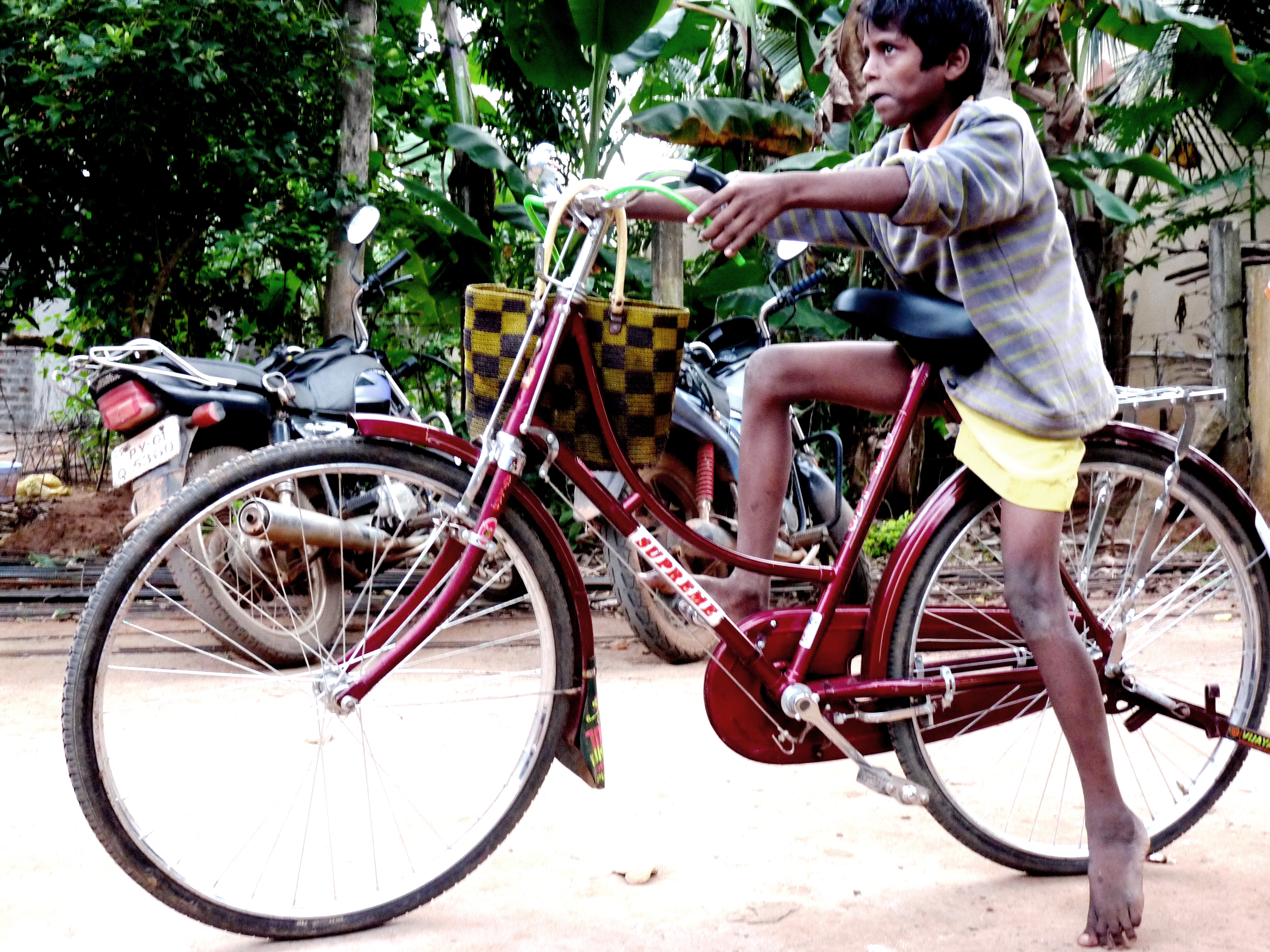
Today we had an especially interesting presentation given by Ribhu Vohra from Soma Waste Management, who explained some obstacles faced by his waste management initiatives. He described the dangers of both burning the trash (releasing toxic fumes into the air) and dumping trash in the street (contaminating the drinking water and attracting insects). He explained that people often are just not motivated to pick-up the trash, and when asked to recycle they simply don’t have the time or energy. One interesting solution to this problem that was suggested was the idea of hiring adolescents to ride bicycles around the villages, giving cash for recyclables on the spot. By going door-to-door, the women would simply have to hand over their plastics and metals to the boys, who would then pay the women in cash. Although recycled bottles and milk cartons don’t bring in an abundance of income, these women have the opportunity to possibly make enough money to pay for a meal for their family by simply separating their waste. This is just the tip of the iceberg of one of the many sustainable practices that I’ve come into contact with here, and it’s only day seven! I can’t wait to learn more about these exciting initiatives and how I can get involved to help!

Grow

By Rachel Hardy

This used to be a cashew plantation, I thought to myself, staring at the tall forest around me. If I hadn’t been told that, I would have never known.

Standing in the middle of the Evergreen Forest in Auroville, I paused to glance around me. Trees towered above my head, leaves carpeted the ground around my feet, a woman sat reading in one of the open-air guest houses; I was a far cry from the busy city life of my familiar Paris, a city where I had begun to feel quite stagnant in life. I inhaled deeply and smiled; the fresh air seemed to begin my personal renewal.

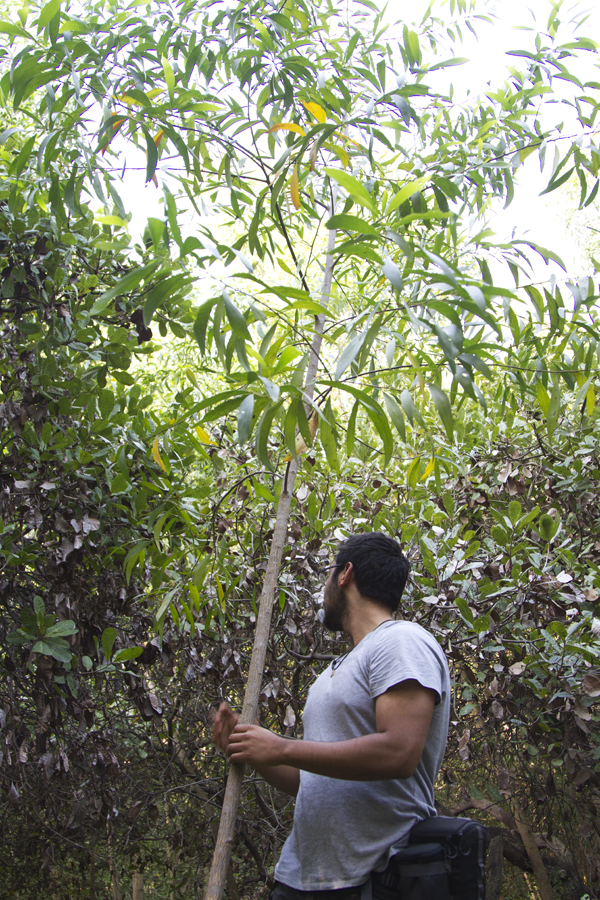
While following a path through the underbrush, I happened to overhear a conversation between Sasha Elder—our Aurovillian chief of sorts—and one of the other students. Sasha described the hunting adventures of his youth when the area used to be a cashew plantation years ago. He reminisced about his childhood as he pointed out landmarks; I was fascinated at the change one piece of land could undergo in a matter of fourteen years. When describing the relatively young landscape and the goals of the forest management team, Sasha stated, “In order to be sustainable, it must grow.”

Though Sasha’s remark was simple, it struck me as more profound than an unassuming observation on the future of the forest. Yes, the forest needed to be managed properly to reinstate the indigenous tropical evergreen forest in an area that hadn’t seen such vegetation in years. As our forestry expert Dave said, trees had to be planted and thinned, biomass had to be encouraged, and careful watering schemes had to be implemented in order for healthy forest growth and development to occur.

But perhaps Sasha’s statement went a bit deeper. Sasha meant to describe the evergreen forest but had also inadvertently defined the purpose of every individual in the practicum. While we’re here to give back to the community, we’re also here to grow personally. Every person we meet in India contributes another piece to our life landscape and teaches us a lesson. Every experience deepens our understanding of the world and brings us closer to the purpose we’re meant to fulfill. Our own growth is vitally important to our lifelong individual sustainability.

Personal planting, growth, pruning and change allow the growth necessary to create meaningful and sustainable lives. My wish is that each of us can grow from this experience in a way where if someone were to hear our life story, he would think, That person used to be very different, but if I hadn’t been told that, I would have never known.