CSR Geomatics monitors the rainfall within Auroville. They have various rain tracking systems in place all over the city to keep track of how much it rains. There is also a team of people to manage it.    

Not all soils are created equal, some soils collect more water than others, while others are unable to collect any water at all. Sometimes this has to do with how much water is taken from the aquifers.  

Using ground water is not inherently a danger, instead it’s how much of the water is drained. Giulio explains that if too much water is taken, there is a risk of permanent damage. When too much water is taken, subsidence occurs. Subsidence means that the soil becomes compact and no longer absorbs as much water as before or at all. CSR Geomatics emphasizes that there is a danger of constantly utilizing ground water. Subsidence can lead to increased amounts of flooding because the water does not have elsewhere to go. Subsidence can also negatively affect buildings, causing them to erode. 

This is important because some cities and states heavily rely on the use of ground water to access water during droughts. The state of California estimates that some communities within the state rely solely on ground water to get by. Before 2014, the amount of water taken from the aquifers was unmonitored. This led to the introduction of the Sustainable Water Management Act.  The San Joaquin valley is over drawn about 2/3 more than the state average. To combat this, the state has made plans to refill the aquifers with water but the problem of where to find the water remains.  

California is constantly in a state of drought, as are many other parts of the world. Climate change will only exacerbate this problem; extreme droughts in some areas while others flood. Taking care of the aquifers is a drought prevention method.  

Despite the bleak outlook, Giulio proposes to stop waste from running off into the ocean after it rains. There are many methods that can be used; using water basins, treating wastewater.

The Mystic Art of Sustainability by Jzan Tamielle Villanos

“Art should not be restricted to a wall of a room,” says Puja, the co-founder of Myths in Art. Founded in 2020 by Puja and Kevin, Myth in Art is a local visionary art store that not only sells beautiful and unique art pieces, but also promotes sustainability through their art, goals, and production. They believe that art should be shared and expressed with others, so they sell their art in forms of clothing, active wear, tarot cards, postcards, and more. They have the goal to be as sustainable as possible within their artwork and the products they produce. 

Inspired by dreams and nature, Puja creates her art from the heart, making pieces authentically unique and vibrant. She primarily uses watercolor where she can feel emotions and produce a frame that can stimulate the psychological process with color. The fine line pen strokes accentuate the mythically themed story that is being told. Making pieces so personable, relatable to many, and beautiful at the same time. Connecting art through dreams, feelings, and emotions. 

With nature and beautiful life around us in mind, Puja believes that “As artists, [they] are very conscious about not to make artwork out of plastic material” and produce sustainably made products. She mentions how large retailers and fast-fashion cause so much harm. For example, 85% of textiles created by fast fashion are disposed of unsustainably and are responsible for about 10% of global carbon emissions. Puja and Kevin refuse to follow this model so to follow the sustainable goal of following responsible consumption and production, Myths in Art uses biodegradable material for their quality products. They also follow a production after purchase model where a product will only be made when it is purchased online in order to prevent overproduction. Another way that they follow sustainability is working with companies that follow the same values such as an American company which produces recycled polyester swimwear for their swimwear line. However, Puja recognizes a problem within the art world where busy artists who do not have time or the materials to make their own paint are dependent on paint companies that use chemicals. She notes how companies should start producing environmentally friendly paint materials with pigments coming from naturally found minerals. This way, art would become more sustainable. 

Puja and Kevin want to show how art and sustainability could be combined and how it can be beautifully displayed on shirts, swimwear, active wear, and more. They network with other local artists around Auroville like jewelers, sculptures, and painters to organize exhibits or pop-up shops to promote their work with the promotion of sustainability in mind.

Auroville Finance

Coming to Auroville and listening to different residents reveals that there are as many projects and perspectives as there are represented nationalities. To help us understand the financial structure and functioning of Auroville, along with the intentions behind this, students attended a talk about the financial functioning and maintenance of Auroville.

Auroville is an international town created as a charitable foundation by an act of Parliament, based on a cooperative concept, where the city purchases for group, and everyone contributes. It has 3,000 residents, but has an economic aim to sustain an eventual population of 50,000. Right now, 30% of residents are Tamil from the local area, and there is pressure from the Indian government to promote the residency of more Indians because the population of Pondicherry is expanding so rapidly. Auroville management within the central foundation begins with the Governing Board, selected by the Indian government, which manages a Finance Committee, and under that is the FAMC Finance and Asset Management Committee. This last one is managed by Auroville residents, and it sets budgets, stewardships, and approves projects. Substructures to that include the Unity Fund, which is the accounting structure, followed by Financial Services, then followed by Executive Bodies, which are trusts. This then breaks down into the 800 commercial units and activities, who contribute 33% of their profits back into the Auroville budget. There are also 3 trusts set up for Bioregional Development in the local area outside of Auroville, for environmental, educational, and microfinance projects.

Auroville was founded with certain ideals of what a healthier, more equitable, peaceful, and sustainable future would be. For example, ninety percent of the trees in Auroville were a part of a reforestation effort that began with its founding 50 years ago, a testament to the residents’ ability to act on big picture dreams through small changes. The same can be said for Auroville’s finances. Auroville has a program they call the KIND System, which operates off of a cash-less accounting system passed through a card per each person. City Maintenance, the amount of money every citizen is entitled to, is intended to provide citizens with basic needs, including food, health, education. It is not meant to sustain all expenses, and will mostly meet the basic needs of a modest lifestyle, but will not cover habits such as consuming meat, drinking alcohol, smoking, or the purchasing of one time expenses, like an appliance.

Leadership in Auroville is on a volunteer basis, unpaid, with the hope that responsibilities will emerge from duty, and decisions will be from consensus. Those who are employed by City Services receive a small stipend, not a living wage. The city of Auroville only formally employs about 500 people, about 25% of the adult population. Because of the standards and regulations involved in becoming a citizen, including a set amount of volunteer hours, many people will choose to go elsewhere for seasonal work, unless they are able to run a successful commercial unit.

Per the Auroville philosophy, no one is supposed to own housing in Auroville. Almost all land is owned by the city trust, and people pay for stewardship. They can secure housing with the Housing Service with a contribution between $30,000 to $60,000 to the Unity Fund, and the Housing Service connects potential residents and developers. On a side note, if a resident decides to leave for an extended period, they must relinquish the housing between 3 and 5 years. There is a small Repatriation Fund for those who leave within the first five years of moving to Auroville, where they receive a small portion of their initial contribution back.

After reviewing the financial structure, spending, and philosophy, one can see that Auroville aims to contribute to achieving the UN Sustainable Development Goals #1 (No Poverty), #2 (Zero Hunger), #3 (Good Health and Well Being), #10 (Reduced Inequalities), #11 (Sustainable Cities and Communities).

EcoFemme

IMG_3389Our visit to EcoFemme was a much anticipated one for the group.  Started in 2010, EcoFemme creates washable cloth pads that are, “good for you body and the environment”.  EcoFemme is a social enterprise, a commercial organization that has a specific social objectives that serve as its primary purpose. It was developed out of the founder’s work with Village Action, a neighboring NGO that works to empower village women.  She was looking for an alternative to relying on donor money and searching for a sustainable way to generate income to support village women.  While in New Zealand she stumbled across a no brand name cloth pad, and the idea was born. 

IMG_2881

Feminine hygiene products, pads, tampons, and panty liners, create hundreds of thousands tonnes of waste every year.  All of that waste contains plastics that do not biodegrade easily.  In fact, it can take over 500 years for one pad to degrade. This is a world wide issue, but it is front and center in India, where waste management leaves much to be desired. Eco friendly feminine hygiene products, like menstrual cups and cloth pads, can be life changing for everyone, men included.

A few years ago I ditched disposable feminine hygiene products in favor of a menstrual cup.  I no longer had to carry around boxes of tampons in my purse or worse, have to ask around if anyone had a spare one if I’d forgotten to bring some with me.  However menstrual cups are not ideal for every woman for a variety of cultural or personal reasons.  In India especially, feminine hygiene product disposal is more than just an embarrassing hassle, it also negatively affects the environment. 

After beginning to sell the cloth pads, The founder of EcoFemme realized that most women who lived in local villages were not receiving proper education around menstruation. Many women were still being subjected to ritual seclusion, a practice based on the belief that during the menstruation period the woman is unclean. 

She realized that this product would benefit more than the women in the western world who wanted a more natural feminine hygiene product, and so she started the Pad 4 pad and pads for sisters programs.

Pad 4 pad is a program in which every pad purchased also helps to pay for holistic education around menstruation for young girls in government schools.  In 2011 the Indian government started giving free disposable pads to girls aged 10-19 in an attempt to prevent young girls from missing school during their menstruation. Because habits are formed early, EcoFemme tries to reach young women as early as possible so that they know there is an alternative to disposable pads.  The other program is Pads for Sisters, which works to help economically disadvantaged women over the age of 19 to afford the cloth pads.

Overall I think we were all greatly inspired by our visit to EcoFemme.  If you’re interested in learning more or supporting this awesome social enterprise you can here: https://shop.ecofemme.org/int/

Dahistki Physical Exploration Center


IMG-20191226-WA0033Image Credit: Stella Sagini

This is not a Gym. This is a Physical exploration center where we train the body in relation to the mind and the spirit”Vikram explains.

IMG_20191226_102843Image Credit: Stella Sagini

Vikram is the founder and chief trainer at Dahistki Physical exploration center at Auroville. He began training back in 2000 and so far has trained 3,000 people, tailoring a custom based training for each individual.

He came from a rough neighborhood in Chennai and overcame physical abuse to pursue a successful career in cricket for the Indian League. He was catapulted to great wealth and splendor when he played cricket, however, he walked away from it all to start his journey of self healing.

In Dahistki there are no mirrors, he explains that there is no time for vanity here just working on the body, mind and spirit. We are invited to explore and tinker with the gym equipment and feel free to ask any questions.

IMG-20191226-WA0041Image Credit: Stella Sagini

Vikram is calm and speaks in a low monotone, and I listen closely to every answer he gives. I start with a light question. “How many Tatoos do you have?” Which he responds “95”.

Most of them are Hindu and others connect with The Mother’s teachings. On his forehead he has the words inscribed in French “Raison d’etre’’loosely translated in English as the reason for being. He explains that we all need to know why we are alive, once you don’t you are dead.

Vikram came to Auroville because of the Mother’s teachings. During his study and journey of spiritualism and self-healing, he came across her teachings and was inspired to visit. While he was at Auroville he was inspired by how Aurovillians used their work in service of others and wondered how he could contribute. He decided to open the Dahiksti Exploration center to train and guide others on their own self-healing experiences as well.

IMG_20191226_102422Image Credit: Stella Sagini

Vikram has more peace and balance in his life but admits that he still struggles with his own personal baggage. “I know, I look like Gorgio Armani on the outside, but inside I was rotting”. We all struggle as a human race but life is journey and we all stumble from time to time.

IMG_20191226_102451Image Credit: Stella Sagini

Dahistiki is free of charge to all Aurovillians and he doesn’t accept any gifts or donations from clients. He notes that some clients are ecstatic about the major transformation in their lives after the program and prod to donate. Rejecting one’s money makes clients uncomfortable as they aren’t accustomed to this in the outside world. However, he insists if you want to give back, clients should do it in service.

IMG-20191226-WA0047Image Credit: Stella Sagini

We have visited social enterprises and other non-governmental organizations that deal with climate change, capacity building and recycling but this was unique, as it falls under physical exploration. Its vision isn’t run by any goals like the MDG’s but a growing need to reflect on Mental Health. In 2019, Prince Harry   launched Heads Together and initiative aimed at changing the conversation and stigma around Mental Health. Prince Harry has called for the “grin and bear it” culture of mental health to be reassessed in the wake of his controversial decision to step back from the Royal Family. The Duke of Sussex and Oprah are currently working on a TV series to be launched this year discussing the importance of mental health.

According to the World Health Organisation report in 2015, over 56,000,000 people suffered depression, that is 4.5% of the Indian population. India is arguably the most depressed country in the world.

Similar to some of the discussions we encountered at Upasana and RainFed Alliance, India farmers are battling depression and anxiety more today than previous years. Whether its due to low yields, societal pressures and family dynamics, there is a growing need to make mental wellness services accessible to more people.

“So how does it work?” I ask curious about this life changing experience. “You will have to come and find out” Vikram concludes, Its an indescrible experience that can only be explained through emersion.

IMG-20191226-WA0025Image Credit: Stella Sagini

I did not go back. I am already set in my ways but I recommend this experience to anyone who is seeking mental wellness and is open to receiving new life lessons.

EcoPro: Sustainable Toilets

When we think of India two characteristics come to mind, low sanitation standards and poverty. There is much more to the country but often India is associated with these negative connotations that still affect many parts of the country. Dr. Lucas Dengel is trying to create a sustainable alternative to the issue of the hygienic management of human bio waste or in simple terms: pooping. Sanitation is one of the biggest public health issues on the globe, causing diarrhea and other major health problems. In India alone there are over 1,600 deaths per day related to sanitation.

In his presentation Lucas points out the flush method is highly Western. He asked the question, “why do you use a toilet?” He pointed out that much of this is due to comfort. Being able to sit and have privacy for as long as needed, but that is not that only toilet or the only method that should be considered. The toilet was invented in the late 1500s. This invention was first used by for Queen Elizabeth made by Sir John Harington. This new device was a two foot deep bowl that required water to flush, a system that is still used today in most washrooms around the world.

Of course this method is very sanitary but also extremely wasteful in the amount of water that is used for a flush system. This use of sanitation also neglects the use of bio-waste as a resource, wasting plant nutrients. This is when Lucas pointed our an alternative to sanitation that is much more ecological while fitting into the cultural norms of India and other nation-states. This is referred to as the Ecosan which is a system of sanitation that saves water, reuses plant nutrients and is hygienic. The model is a flat toilet with an opening for urine with the other for fecal waste. This is placed above a compost (better known as a drying chamber), where there is moisture cause the fecal matter to dry up. What often spreads diseases is through the moisture. Urine will be cleansed and drained separately.

EcoPro has already yielded a few of these toilets with positive results, which include improving the purity-pollution gradient. The fecal matter takes up to a year to completely dry and is no longer a sanitation issue to the local population.

IMG_5930

Sanitation is not just an issue of sustainability but also of social class. Often, the issue of sanitation relates directly to the caste system in India. Those called untouchable or ‘Dalit’ are at the bottom of society and often have to make a living as scavengers in the sewer system.

This involves cleaning septic tanks and sewers without any protection. This is start contrast to countries like the United States or France where extensive protective gear is used when going into the sewer system. In tackling the issue of sanitation in India is is important to know who is taking the direct hit in society and how to improve societal norms for all.


SLI: Sustainable Livelihood Institute

SLI is a joint venture of The Auroville Foundation and The Tamil Nadu Corporation for Development of Women aiming to provide stainable livelihood solutions to vulnerable sections of the population of both Auroville and surrounding areas. Through capacity-building programs, research and outreach solutions SLI works with marginalized communities to curate a more sustainable future for communities in and around Auroville. IMG_3208The building conveys this message of commitment to Tamil Nadu as it is completely adorned with artwork done by local children both inside and out, the welcoming facade is matched with a smiling staff made up of Indians from across India. Abel a program manager from Delhi guided the group through the building offering explanations about the artwork and crafts which cover the walls. IMG_0156He explained that SLI’s team is small made up of only six members each with a specific set of skills and tasks be it in the Research, service or commercial units of SLI. Across these units, the institute offers countless programs that focus on six main strategies for success: perspective building, skill-building, network building, social mobilization, social innovation, and knowledge creation. Through these strategies, the team produces programs to empower the disenfranchised from herbs for health, a program aimed at teaching farmers about local plants and their medicinal properties to sustainable tourism, a one-month intensive program aiming to help locals capitalize on India’s booming tourism market in a sustainable way. The Institute offers these programs not only to the disenfranchised but policymakers and business heads to affect the most change having given workshops at The World Bank, OCTMP (Orissa Community Tank Management project, The Ekam Foundation, and many others. SLI has trained over 3500 community leaders, more than 400 officials in the R&D Department and had its pedagogy adopted across schools in Tamil Nadu. SLI’s commitment to the population of Tamil Nadu extends beyond class, race, and gender rather they are a small group set out to make a big difference. 

IMG_4103

Sistri Village

IMG_20191220_085503Image Credit: Stella Sagini

Sistri Village began in 2013, as an orphanage for mentally and physically challenged children. The Founder Karthik, had difficulties in the beginning getting the children admitted in Indian public schools. The ones who did were often ignored by both teachers and students therefore remained idle for days on end. The teachers lacked the patience or training for special education to give these children and the other children were often afraid of them.

Karthik didn’t like that his children were idle, he said that it created bad energy and aggressive behavior within the child.

Indian culture has a great believe in re-encartnation, a disability is a re-birth of a person cursed by the gods and therefore the family shuns or abandons these children. Some of these children get locked up by their families to hid them from the society.

He sought out vocational training, certificate courses and when they grew in adulthood, he worked with local businesses to get job opportunities for them. He faced many challenges one been local businesses in need of labor, would make up lame excuses to avoid hiring Sistri Village members. He then overcame this barrier by initially placing his students in missionary based institutions and slowly as the community began to see a transformation, they slowly accepted to hire some of his students.

IMG_20191220_085149Image Credit: Stella Sagini

However, a majority of his students work and live at Sistri village. He began vegetable gardening as a form of Green Therapy for his members. He believes that nature heals and restores balance to mental retardation. Sistri Village members have continually shown improvement in their mental and physical state. Medical volunteers come over to offer free medical treatment and physiotherapy sessions for the members. Mental and Psychical challenges are very different from Celbral Parlsey, Autism, and Down Syndrome require accurate diagnosis to begin a succeful therapy treatment.

IMG_20191220_090031Image Credit: Stella Sagini

Sistri Village members earn a living from their work on the farm, by selling fruits and vegetables. They also rear a lot animals for sustenance use and for sale. Sistri members all have daily chores but work out of their own volition, work is never forced on any member. Keeping busy through work is also a form of therapy that creates a meaningful routine that members can look forward to. Sistri members are contributing to the society instead of a hand out thus significantly increasing self-esteem. The Capacity Building efforts of Sistri Village have enabled its members to make a productive contribution to the society.

IMG_20191220_090359Image Credit: Stella Sagini

In the past, they received donations from the government and organisations like Rotary International Club. They have managed to donate desk, chairs and help build part of the new administration block. However, for day to day running of the farm they rely on a mix of proceeds from farm sales and support from the Tamil Nadu government.

IMG_20191220_090210Image Credit: Stella Sagini

Living a meaningful life that’s the mission of Sistri village and the stigma of disability has slowly been lifted within the community. Families are now more accepting and engaging with mentally and physically challenged members of their community.

The Buddha Gardens


IMG_8349

Situated throughout Auroville are gardens and farms created and curated by and for members of the community. One of these around 20 farms is The Buddha Garden operated by Priya Vincent. IMG_0715Over the span of 20 years, she has manufactured a sustainable and dependable system of farming that provides locals with fresh products year-round. Her agriculture revolves around respect for nature present in every step of the farming process from cultivating microbes in the soil to welcoming a diverse range of insects to operate as a natural pesticide, she aims to support natural methods to grow food organically. The garden is segregated into four different subsections with four different names for the four languages of Auroville (Tamil, Sanskrit, English, and French), each utilized in a cyclical growing pattern that preserves the soil in each garden. Depending on the season, only certain gardens are used to their full capacity allowing unused parcels of land time to recover lost nutrients from the previous season’s harvest. This farm has managed to remain completely solar-powered despite the general tendency towards dependence on energy produced by wind turbines throughout Auroville. However, one problem Vincent has been unable to solve is that of water scarcity. Throughout Auroville, the community relies on water tanks created 1500 years ago to sustain the region during the dry season only to be replenished during the monsoon season. Though with such a substantial population boom, the tanks have been unable to keep up with increasing demand, additionally lakes and water beds, which allow for an alternative water source, are quickly being depleted via evaporation due to ever-increasing temperatures in the region. One lake on the property was only able to replenish to half of its original size during the most recent monsoon season, and Priya predicts it will be completely dry going into the next one. IMG_5421Obviously, agriculture is dependent on these water sources, and thus, so too is the community, but as water becomes increasingly more scarce, how can this community remain at all self-sustaining? Priya is desperate for this answer, her commitment is to Auroville first, and she has made every effort to keep the population fed even switching to crops that require less water and digging more wells throughout her property. She is realistic in her position; however, claiming outright, she does not think they will solve the issue of water. One option, however, is hydroponics, an agricultural system that can produce just as many crops as traditional farming techniques with one third the water, but implementation of such a system is expensive and time-consuming. To convert each of the 20 odd farms across Auroville to hydroponic farms would cost half a million dollars and take at least 5 years, time, and money that unfortunately these individuals do not currently have. For now, Priya continues to get up early, put on her work boots and feed the community the only way she knows how, but for how much longer? Only time will tell.

IMG_3297

MGEcoduties

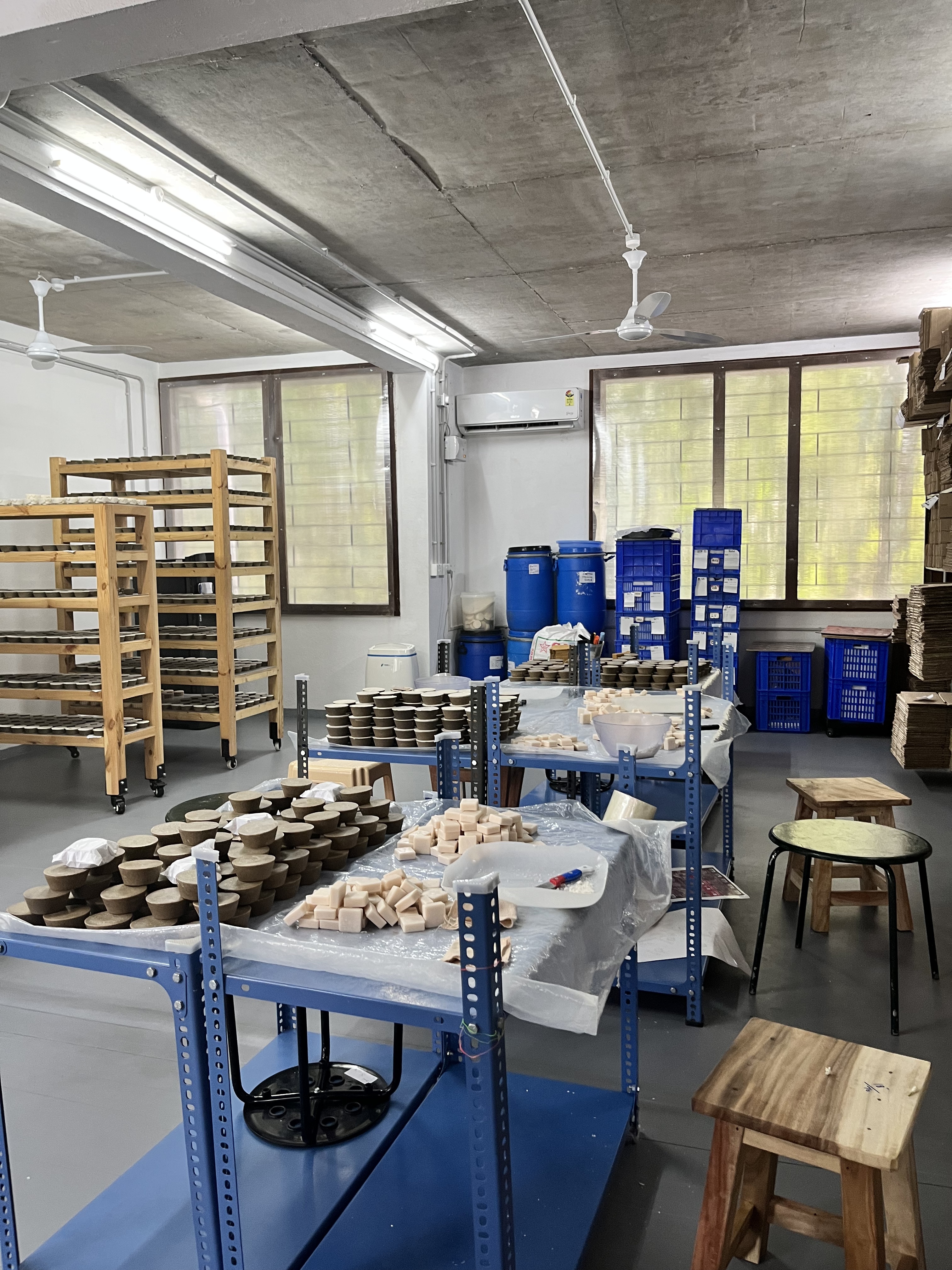
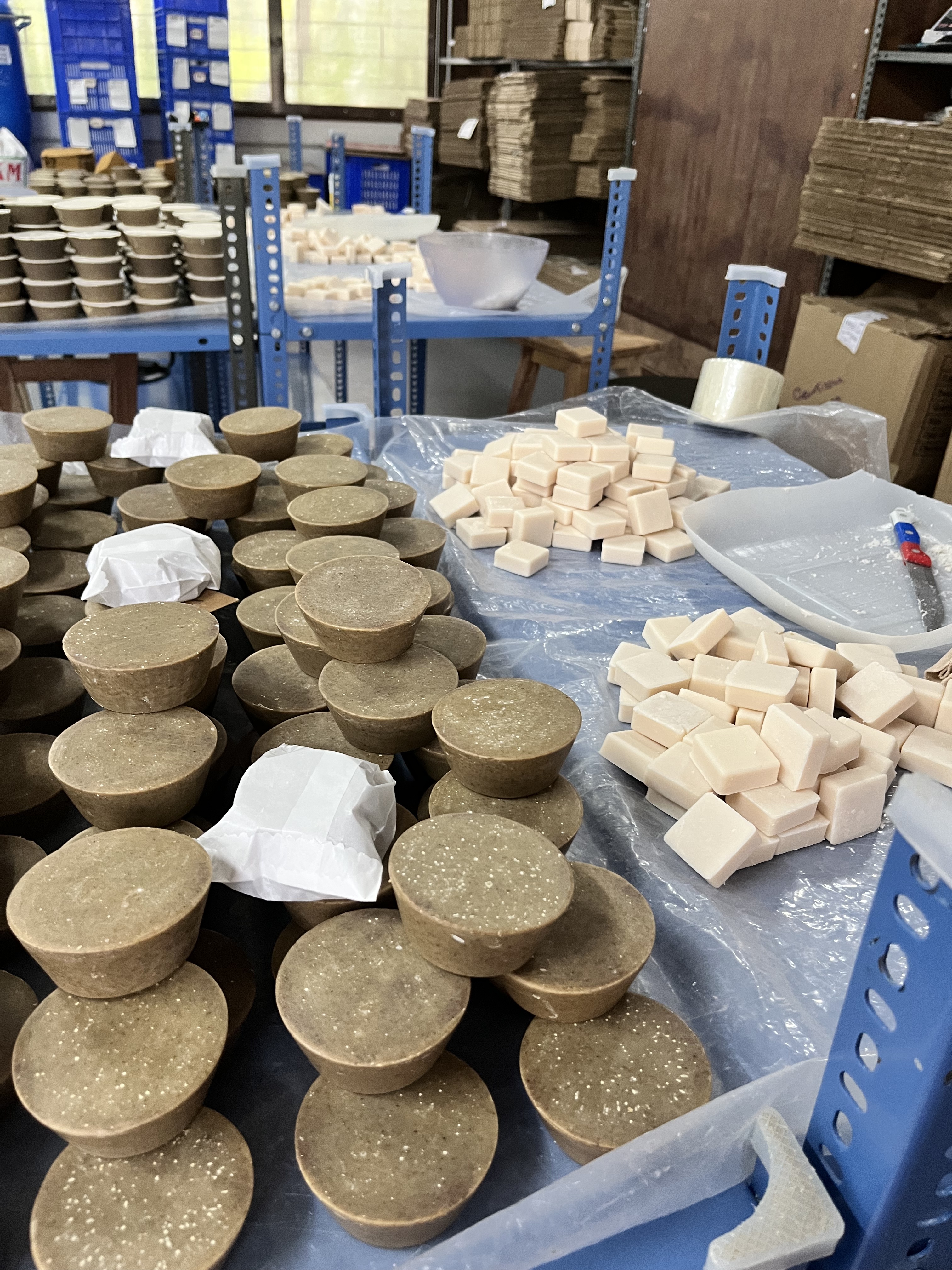
MGEcoduties is an Auroville Commercial Unit under the Kattida Kalai Trust – Auroville Foundation, based in Auroville, India- established in 2011. It involves the replacement of chemical products for: well-being, cleaning products for hospitality, waste rehabilitation, and bio-remediation. Its products are based on unique Probiotic Technology using certified probiotic mother culture to manufacture our products.

We assisted to a speech of Margarita Correa, who is one of the two founders of this organizaton. She told her about her life, and here I am going to highlight the contrast between what is really her “previous” life and her “current” life. Before coming to Auroville 25 years ago, she was an extremely high-ranked person for Coca-Cola company in South America. She had worked there for 7 years, without taking any vacations, any rest… So, her doctor prescribed her 6 months vacations in order to rest and take some time for herself. She came to India, and 25 years later, she is still there.

Once she was in Auroville, she heard about micro-organisms by Dr. Teruo Higa, and more precisely the PNSB bacteria that has no Ph, no temperature and that you can burn but not kill. This bacteria was also found on Apollo 12 after a journey through space, as a proof of its resistance. They came up with this project to clean rivers, sewers… by using microbiotics. So, with MGEcoduties, they created soaps and such products that contained microbiotics and commercialized them, so that people would, just by taking a shower for example, actively use these microbiotics and contribute to this project of cleaning the rivers, oceans…

We all know the negative impact big companies like Coca-Cola have on the environment. Margarita was a big figure in Coca-Cola for 7 years, so we can assume that she participated largely to this negative impact on the environment. During her speech, she talked about Karma, and how what she is doing now is in a way making up for what she did in her “previous” life. This is the contrast I mentioned earlier: after living a corporate life, always wanting to make more money, having the best apartment and so on, she is now doing everything she can to impact the environment in a way that will be positive and helpful.