Transgender and HIV+ Rights at SCHOD

SCHOD

Sahodaran Community Oriented Health Development Society

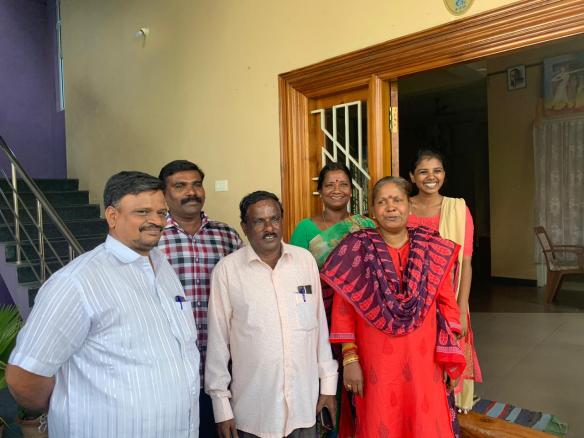
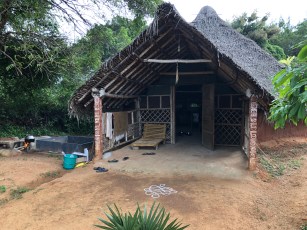
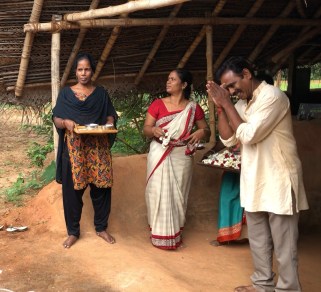
This is a community development center that works with the transgender and HIV+ population of Pondicherry. It’s on a beautiful, tree-lined street with colorful buildings that definitely put into perspective the grey monotone of Paris. We were welcomed whole-heartedly by a group of transgendered women, their “mother” and a few other people. We spent most of the time discussing transgender issues as that seemed to be the most pertinent. HIV treatment is fully covered by the Indian government so although it’s a serious issue, it is at least fully taken care of.

In India, transgender people are officially recognized as a 3rd gender. There’s a huge amount of discrimination at the societal level, but officially, it is permitted. They are also given ration cards, which act as an identity card. This center works with approximately 1500 people in both the transgender and HIV+ community. Some people live on-site whereas others use it as a center where they are free to be themselves.

We spent quite a bit of time discussing the stigma and abuse these brave people face. Many of them lose their family and their friends and are not able to find much in the way of employment. When asked why they continue the process they said that they’re so determined to live their true selves that they’re willing to live with the consequences. We learned that male-to-female is the most common by far and that female-to-male is even more rejected by society and to pay for the process many resort to begging and sex work. Sexual abuse as children is very common as well.

Again, HIV wasn’t discussed as much. The center links HIV+ people to hospitals and care networks. The government pays a 1500-rupee stipend every month. That amounts to approximately 19euro. It isn’t much, but it’s something. And as mentioned earlier, treatment is fully covered by the Indian government.

In terms of UN Sustainable Development Goals, SCHOD promotes good health and well-being (goal 3), gender equality (goal 5), reduced inequality (goal 10) and peace, justice and strong institutions (goal 16).

This center was so full of warmth. As a gay, HIV+ man, it recalls the various community centers I’ve been in throughout the years. They’re centers in which you can feel both pain and warmth. These are communities who have been marginalized by society and who turn to each other for love and support. These are networks that look out for each other; groups of people who form close bonds that often last a lifetime. From a Western perspective, this center itself is fairly rudimentary in appearance, but it doesn’t matter for these brave people. It was a beautiful place to see.


Sustainable Dentistry with ADCERRA

ADCERRA is a 25-year-old dental clinic that serves the Auroville community and several regions around it. Founded by a French dentist named Jacques, it is a public health center designed to promote basic dental health in order to reduce the need for serious dental procedures. It centers around the “0 Concept” which will be explained in more depth below. Jacques, his friend (and sometimes coworker) Jean-Claude, and his team of exceptional women warmly welcomed us.

The clinic aims to provide basic dental treatment for the general population using 10 sub-centers in areas around Auroville. It seeks to promote general health and well being, mostly to children in schools. The clinic aims to empower women, which they see as a key to a better functioning society (I agree). As such, all hygienists working in the sub-centers are women. He believes female hygienists help demystify dental care and make it less scary so young children won’t be as intimidated by dental practices. The idea is that the vast majority of dental procedures (up to 75%) can be taken care of with a basic level of training and at a reasonable cost and Jacques provides a 3-month hygienist training course after which these women are fully ready.

In India it is estimated that 250,000,000 children have no access to dental care. It is said that 2% of dentists are available for 72% of the population. As such dental hygiene is a huge public health issue and one that this clinic seeks to provide a treatment framework for, which can be exported on a national level.

Examining ADCERRA through the lens of the UN Sustainable Development Goals I think we could argue that his clinic provides good health and well being (goal 3), gender equality (goal 4), and decent work and economic growth (goal 8). The atmosphere in the clinic was really wonderful and quite unique.

As mentioned earlier, the clinic operates on the “0 Concept,” based on an ancient Indian theory from Vedic times. “0” is both a number and a symbol representing both “nothing” and “all” and as it applies to health care, the “0” represents a perfect state of health and also the absence of care. It is with this theory that this clinic aims to promote basic dental health so that people don’t have to come to the dentist office except for more serious procedures.

Jacques’ methodology is certainly unique as it flies in the face of a typical business. His aim is not to make as much profit as possible. Naturally he needs to sustain the business so it can continue, but the traditional view of profit is upended here. As a management student who views traditional business practices with skepticism, it was wonderful to witness something so novel.

D. Saravanan and Aranya Forest and Sanctuary

The entrance of Aranya Forest and Sanctuary

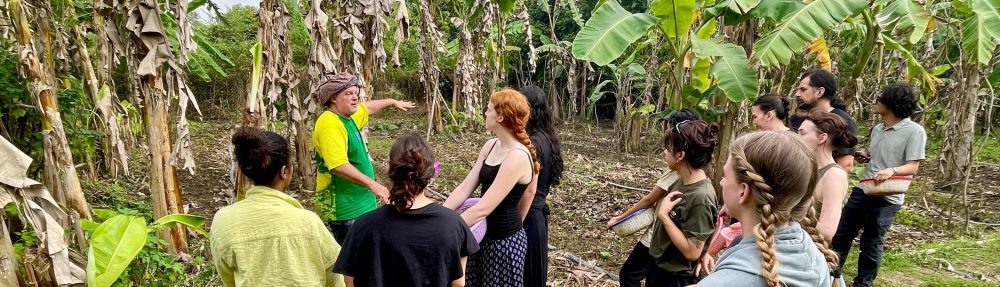
The Aranya Forest and Sanctuary is a sprawling and lush forest that sits just west of the border of Tamil Nadu and Pondicherry. The proprietor, D. Saravanan, walks the slight paths cutting through the forest easily, over the brush and under the branches of trees. “Look around you, how do you feel?” he asks openly but not rhetorically, stopping in a modest clearing. Answers to his question range from cool to peaceful. Though the forest is lush, full of various trees, plants, and wildlife, it is only 25 years old. Saravanan built it himself, from soil that was mostly sand and rocks, with topsoil that had been completely depleted and eroded from farming.

D. Saravanan walking through the forest that he built.

Though it has been over 20 years, Saravanan says that he still does not have topsoil in some places. The difficulty lies in the fact that in Tamil Nadu, as well as India as a whole, water and rain levels have been progressively depleting. Saravanan blames this on the lack of forest as well as the continual destruction of existing forests, as this is what keeps the topsoil and holds water. “This is life for us,” he says emphatically, “This is the main source.” By his estimates, the world needs to keep about 30% forest to survive, at least 11% in India.

D. Saravanan talking with our group.

Saravanan is not a botanist, something he makes clear early on in our tour but, he says, “I am learning.” While he started planting hearty trees that could survive the weather and lack of nutrients in the soil, he is now focused on planting what is indigenous to the tropical environment. Some of the 250 plant varieties that Saravanan started planting with include ebony, yellow satin wood, santolina, and sandalwood. He says that after a recent study, he found that there were now a variety of over 700-800 plants because of plants and animals. While his ambitions and forest fall under the United Nation’s goals for Sustainable Development #13, Climate Action, as well as #15 Life on Land, perhaps it is his wise words that really send the message home. “This land belongs to whom?” He asks rhetorically, “The future.”

Plants donated and planted by our AUP group.


Jaly House and Sewing the Seeds


The Jaly House, which has locations at 1st and 11th Cross in Pondicherry, houses over 100 children between its two buildings. The name ‘Jaly,’ pronounced like ‘jolly,’ stands for ‘Justice, Awareness, and Loyalty for Youth,’ the energetic owner Bruno Savio divulges to us on our visit on the 18th of December, 2019. The center, which houses children, ages five to 18-years-old of the local gypsy (or ‘Dalit’) population.

The Jaly House is part of the Samugam Foundation, which was started by Savio’s late father as a home to help those suffering from leprosy. The foundation takes its name from a word that means ‘society helping other society,’ as well as Savio’s personal acronym of ‘Social Awareness, Mutual Upliftment, Guidance and Motivation.” When Savio’s father had a stroke in 2006, he decided to take on the responsibilities of the foundation alongside his media and advertising career. In 2008, he opened up the foundation to include the housing and schooling of local gypsy children. Currently, they work with over 300 children and house 240.

Savio standing in one of the boys dormitories.

While Savio’s goals fall under the UN’s Sustainable Development goals for good health and well being as well as quality education, he still has trouble regularly finding funding. The foundation was voted ‘the best child welfare center’ this year, however, the foundation is still waiting for a grant from the government. To combat this, Savio opened up his program ‘Sewing the Seeds’ which teaches skills like sewing to local gypsy women to give them a source of income. Right now, they crafts they make such as tote bags are being sold to countries like Belgium and France through their web shop.

Examples of work made by members of Sewing the Seeds.

Savio has many success stories that have come out of the foundation. He speaks proudly of the four women who have gone on to become nurses, two of which are working in Chennai. Another one of Savio’s students is to be featured on BBC Tamil for doing well in school and winning awards. Though the foundation has yet to hear back from the government for financial support, Savio is still hopeful, saying “when there are children, the community comes to help.” While volunteer donations help the foundation significantly, he says it costs over 450,000 rupees in expenditures to feed, clothe and house over 100 children per day. In his words, “I’m getting an elephant, but I’m not getting food for it.”

Eternal Divers Presentation


cropped-logo-eternal.jpg Eternal Divers

https://eternaldivers.com/

Eternal Divers is based just outside of the Auroville on the Bay of Bengal. The first thing we noticed as we approached the location is the beauty of the house, Eternity. Situated on the beach and surrounded by bush and sand, Eternity features a large, open patio that connects to the home and office of Jonas and Tracy of Eternal Drivers. Zeus, their grand Rottweiler greeted us with kisses and just a little bit of fur and slobber. The dog lovers amongst us were thrilled to meet him but we get situated quickly and open our hearts and ears to listen to “Joni” explain the mission of Eternal Divers and the issues that his team, Tracy and he are passionate about.

When Eternal divers first began, it was just another diving company and they wondered how to set themselves apart and make better use of their skills, talents and location. How to be a sustainable business and spread environmental concern and solutions is paramount for them. Yoni discussed something that caught his attention called “ghost nets” which are extremely concerning. A ghost net is a fishing net that has (most likely) become caught on something which makes it impossible for a fisherman to free it or has escaped the control of the fisherman and can’t be reeled back on to the boat. It is left behind, unattended and unchecked forever as it collects, catches and kills without consideration. In addition to the ghost nets, sewage, overfishing and erosion are all concerns for Joni and Tracy and their team. Joni told us that there is a visible line of sewage and ocean water and to help us understand just how detrimental ghost nets can be, he explained that ghost nets cause about 20, 000 US dollars loss per year. Nearby, a ghost net was discovered that had over 30 sharks caught in it and had been floating for what an estimated three years. Of course, nothing in a ghost net can be salvaged for food. It is just a true waste of resources.

Eternal Divers was enraged at the finding and asked us to consider what a tragedy this is when we reflect on the beauty and majesty of all the sea has to offer us. The pointless loss of life and the pollution caused by humans is unacceptable. Naturally, Eternal Divers found a way to expand the teaching and education of scuba and diving to the fisherman and villagers themselves to help them understand how precious their resources were and how carelessness could hurt their livelihood more than they had ever comprehend before.

We learned from them that what they are most proud of and would really like to continue, improve upon and increase the reach of is the education of the fisherman and villagers. Too many humans take the sea and all she has to offer for granted. What lies below the surface… or more importantly what is being harmed and killed off below the surface is unknown until we dive down and see for ourselves. All the incredible colorful life, both flora and fauna, are unseen, under-appreciated and unprotected. It is only through the education and the collaboration with locals that behavior change can occur. Seeing the deep for oneself may be the only way for many to understand what is at risk.

Within global communications, behavior change is the most challenging of all the goals. Behavior change, as in this instance, little to no money can be gained through the education of the locals. In fact, Eternal Divers may find that time and money are lost in their efforts; however, they feel that what India and the earth may gain is far more important if the sea and its life can be preserved through this tactic. The benefits of behavior change are often long-term rewards that seem less important in the moment. For example, a fisherman may be more concerned with how much money he can earn this week, as opposed to the concept that he may not be able to earn any money in a few years if the fish are either overfished or die off because of pollution.

Eternal Divers needs funding to help support the education of the locals, a strategic creative plan and social media revamping/attention, as well as social media viral campaign. I felt very strongly about joining their team and helping. The ocean and all the life in it and that it gives is incredibly important to me. Choosing my NGO was tough when I had to compare Eternal Divers to Marc’s Café, where I had so many ideas from the start, but I’ve loved hearing all about it from my classmate, Beatrice.


IMG_0856.jpg

Mason listens to the Eternal Divers presentation.

Water: It’s Kind of Important

The Center for Scientific Research (CSR) in Auroville is exploring many avenues toward a sustainable future, including “renewable energy systems (wind, solar, biomass), appropriate architecture & building technologies, waste water recycling and sanitation, and the transfer of these technologies through training programs” (https://www.auroville.org/contents/356 – CRS Website). From our visit to CRS, we learned of the Auroville Geometrics project.

Geometrics is essentially the process of translating any and all physical geographic features into statistical data points that can be easily read and interpreted. This involves mapping topography and elevation, vegetation, water tables, land use, meteorology, and even human populations to name a few. The focus of the Auroville Geometrics Project is mapping all of the above in Auroville and addressing the water stress that is currently facing both the city of Auroville and the surrounding regions. Some of the main challenges in addressing the water crisis is that groundwater alone won’t be enough to sustain all activities and therefore water management needs to address sustainability in the long run.

Because water stress affects the whole region, it has been a focus for several of the organizations we have visited. EcoPro is working to reduce water waste through the invention of sustainable toilets, for example. In taking similar action, the Geometrics project has several proposed solutions that include rainwater collection, recycled water, desalinated water, ground water, and perhaps most importantly, water saving. With only a team of three, they are collecting and mapping all of Auroville’s geographic data to see where water usage is excessive or inefficient, and sources from which water can be collected. For example, they analyze which areas receive the most precipitation and integrate topographical data to see which directions rainwater flows. They are also keeping a very detailed record of water levels – which are decreasing in volume.

It is normal for the water table to fluctuate. In this region, the dry season of very little or no rain at all lasts about 5 months. Under stable climate conditions, the water levels replenish when the rain seasons come. However, with the growing threat of climate change, the water levels are not recuperating from the loss incurred in the dry season. In tracking yearly sum of rainfall over the last three years the levels of precipitation have fallen from 1090 cm in 2017, 900 cm in 2018, and only around 720 cm in mid-December of this year. This trend is not unique to Auroville. The latest 2019 IPCC Special Report on Climate Change and Land and on the Oceans and Cryosphere released this August show harrowing projections for earth’s conditions with our current emissions trajectory. (https://www.ipcc.ch/srccl/ – Land) (https://www.ipcc.ch/srocc/ – Oceans and Cryosphere)

This work is clearly important. Though the goal of the CSR is sustainability, the man who spoke to us stated “I’m not a fan of sustainability. I’m a fan of collapsology.” He went on to explain that the damage humans have done to Earth and our climate system in the last thirty years cannot be repaired. Sustainability, he said, is not a possibility because not only are almost no human activities sustainable, but 1.5 degrees of warming is, at this point, inevitable. Once we reach that global mean temperature many positive feedback loops (such as permafrost thaw) are triggered, and our climate systems will be characterized by uncontrollable chaos. Unlike the mindset of sustainability, collapsology accepts that the world is, well, collapsing, and shifts all capacity toward adaptation. Adaptation is truly the aim of the Geometrics project in Auroville.

Aside from the water and climate related challenges, the program is also staring down the barrel on a major fundraising challenge. In addition to being important, this program is expensive. The project received a $100,000 grant for the last three years. Of those funds, $45,000 go toward equipment alone.  Geometrics budget is ending this coming March. They asked us to help with a fundraising video but none of us chose to help. It was very surprising to me that the funding is not coming directly from the government. As one of the most climate-vulnerable countries in the world, if this project is continued and completed it could be broadly applied as a water-management template in areas throughout India.

A great historical tragedy (and major theme of this practicum) is the power of indigenous knowledge and the implications of its loss. Indigenous populations throughout India used to have reliable and inexpensive water management techniques involving massive tanks underground resembling a man-made aquifers. When the British came to colonize areas of India, the knowledge of these techniques was effectively erased. But with the knowledge and technologies available, if the goal of the Auroville experiment is to create a sustainable utopic community, clean and well managed renewable sources of water seems like a sound investment.


Written by Clark Marchese.

From Useless to Useful: Upcycling Studio

Most people are, or at least should be, familiar with recycling. The process breaks down municipal solid waste to its most basic form in order for the materials to be used again. It is a fairly simple concept that requires little thought or energy from us. Both in Paris and in Auroville it doesn’t go much further than throwing certain items into a yellow bin. However, with the world of waste in which we all reside, it is time to start exploring other, more creative methods of waste management. Upcycling is the innovative concept of taking waste in its current form, which would otherwise be discarded or recycled, and renewing its purpose. The Upcycling Studio is a small business in the Auroville community with that goal.

Our group from AUP was fortunate enough to visit the Upcycling Studio as well as two other organizations on the subject of waste in the same day: Wasteless and Ecoservice. At Wasteless, we learned of all the different types of plastic that exist and what can be done with each of them. For example, there are some plastics like PVC which can never be recycled. At EcoService, we were able to see how and where all the municipal solid waste in Auroville is managed. Both were very effective in contextualizing the magnitude of waste humans produce and all the challenges that follow.

The founder of the Upcycling Studio, “OK,” as we have come to call her, spent 20 years working for a French fashion company in South Korea. After coming to Auroville in 2008, she started the Upcycling Studio in order to find originality from waste and to reject the commercialism which dominates the fashion industry and has contributed to the consumerist economy and mindset responsible for our mass global accumulation of waste. In her studio, her team of six takes in waste that has found its way to the EcoService facility in order to create a range of products. Perhaps most common in the Upcycling Studio is the production of handbags. That said, they produce a range of products including furniture, cushions, jewelry, notebooks, key chains, bookmarks, art installations, electrical outlets, home décor, and many others.

One of the most used materials in the Upcycling Studio is PVC plastic, which as we learned from Wasteless cannot be broken down and recycled, so in this case upcycling is more effective than recycling. Additionally, recycling consumes a significant amount of energy. Upcycling at the Upcycling studio often only uses a needle and thread. Every product begins as a craft and each is unique. The business model is quite sound as well since all their materials are obtained for free. In addition to EcoService, a lot of the Upcycling Studio’s materials comes directly from Aurovillians. If anyone has a unique or large material, they can suggest it to the Upcycling Studio and many of the customers are local so there is a high degree of community building as well.

Several boutiques throughout Tamil Nadu carry products from the Upcycling Studio and they have their own kiosk in the Auroville Visitor’s Center. Currently, the products are not available for online purchase as they are still looking for help building a website. The operation is very localized. From a global perspective, thankfully there has been an increase and a shift in the discourse on consumption and waste generation. Upcycling as a concept is gaining momentum in that discourse. Applying the concept in a local context at a global scale would significantly reduce energy consumption, reduce the amount of un-recyclable waste, and serve as an outlet for human creativity. The Upcycling Studio acts as a pioneer in making our useless waste useful.


(https://www.facebook.com/upcyclingstudioauroville/ – Upcycling Studio Facebook Page)

Written by Clark Marchese; Photos by Clark Marchese.

Education in the Slum of Pondicherry Thanks to Sharana


A Walk to Remember

On the last cultural excursion, AUP students awoke before dawn to witness traditional Kolams being drawn in preparation for the biggest festival of the year: Pongal. 

By: Nicole Curren

IMG_7220.jpeg

There was a haze on the horizon. Waking up before dawn, the sun had not quite touched the corners of Viluppuram, yet there was a distinct dimming of orange and gray.

As we drove through the village on our motorbikes, smoke filled the air. The only source of light came from small fires burning in front of each house and storefront, forcing us to weave in and out to avoid the noxious fumes. Our guide, Balu, later informed us that these fires were intended to cleanse and purify the house, ushering in the new year with new energy. Villagers burned anything and everything from their past: old blankets and sheets, pillows or mats, even literature. Apparently, the local government had made this ritual illegal a few years prior based on its environmental impacts, but locals here held fast to tradition.

It was Monday, January 14th, the first day of Pongal. In the southern state of Tamil Nadu, Pongal is the biggest celebration of the year, marking the journey of the sun northwards, referred to locally as Uttarayan. Dating back to the Sangam Age around 200-300 A.D., this festival pays tribute to nature and gratitude for the recent harvest. Literally, the word Pongal translates to “spilling over,” which is associated with the tradition of cooking rice in a pot until it starts to overflow. We got the chance to taste sweet Pongal while participating in a morning margahzi ceremony.

IMG_7217.jpeg

Throughout the course of the morning, Balu took us through two sections of the village and shed light on the beautiful intricacies of the Pongal festival. He identified various plants that protruded from every gate or doorway. The traditional nochi herb wards off darkness and mosquitos. Moringa trees are antioxidant and anti-inflammatory, acting as an antiseptic. We also saw yellow splotches on every house, with red circles in the center. These were painted on with turmeric and various other spices to bring brightness and another form of antiseptic capacity. Perhaps the most popular was the tulsi plant, often referred to as a Krishna tulsi, which cleanses the air.

Walking through the main road of houses we passed beautiful drawings on the ground. Kolams, also known as Rangoli, are intricate drawings made of rice flour and chalk powder. Typically, these geometric shapes are done in white, but during festivals like Pongal a bright array of colors are often used. Our guide, Balu, told us that every doorway in the village would have one, as they welcome good energy and wellbeing.

img_7233.jpeg     IMG_7225.jpeg    img_7227

Before concluding the walk, Balu took us out for one more tea (or coffee for the Parisians). It was here that he outlined the next major event for the Pongal festival: the running with the bulls. This is a tradition for the men, an opportunity for them to showcase their strength. Yet, after the death of a cow a few years ago, the media and animal rights organizations banned the event. This year would be the first renewal of the pandemonium!

img_7204  .  img_7223

Planting, Picking, Processing: Sustainability in Every Step

Written by: Jamie Nyqvist

I have a confession. I used to be what you call an ego-centric consumer – always asked myself “what an item is worth” or “what can I get from it.”. Often times the answer was related to convenience and practicality. It never occurred to me to dig deeper and ask, “what is the value of the item to those who produce it.”

Screen Shot 2019-01-23 at 22.42.41.png

With the adoption of the UN Sustainable Development Goals in 2015 came the rise of the ethical consumer: a consumer who considers not only the individual, but the social goals, ideals and ideologies of a company as well. With this new type of ethical and eco-minded consumer comes the idea of sustainable livelihoods that focus on allowing people to not only maintain and enhance activities required for a means of living, but also focus on extending this livelihood to future generations. Together, in a purely consumerist context these work hand-in-hand to create an entire chain of production that gives instead of takes.

Screen Shot 2019-01-23 at 22.43.06.png

In the small village of Nadukuppam, Amirtha Herbals works with rural women and provides them with a livelihood by including them in every step of the production process of their medical herbal products. What this enterprise is wholesomely accomplishing is providing opportunity and community building at every step. Paravathy, founder and mentor of the enterprise, focuses on the impact that Amirtha Herbals has on the Pichandikulam forest in Auroville to keep it alive, and teaches women how to move from a labor-based work environment to that of an entrepreneurial work environment, as well as provides products to rural women at a subsidized price.

Screen Shot 2019-01-23 at 22.43.17.png

This quote from one of the women who works at Amirtha Herbals says it all: “The extra income not only helps support my family, but we don’t have to rely as much on our husbands.”

Screen Shot 2019-01-23 at 22.42.55.png

What can be learned from social enterprises such as these is that a product is far more than the product itself. It is only as good as its production, and what comes out of the Amirtha Herbals production is  an herbal medical product that can be purchased on a commercial level. But what is actually created is a sustainable livelihood for the women of Nadukuppam so that they can provide for themselves and their families.

Now I can proudly say that after witnessing first-hand how to run a truly sustainable enterprise, I can call myself an ethical and eco-minded consumer.

Photos by: Jamie Nyqvist